What is active recovery? It is low-intensity movement — a walk, an easy cycle, a swim or a mobility session — done on the day after hard training or on a rest day, keeping your effort around 30-60% of your maximum heart rate so you feel rested afterward rather than more tired.
Most people meet the idea in a strange way. They get told to “take a rest day,” they lie on the couch guiltily, and two days later they feel stiff and flat. Light movement on that day would have felt better and worked better. That gap is where active recovery sits.
This guide covers what it is, what it does, which exercises qualify, how long a session should be, and when full rest is the smarter call. It is general information, not training or medical advice — if you are managing an injury, a condition or a long-term health issue, talk to your doctor or a physical therapist first.
Table of Contents
- What Is Active Recovery?
- What it is not
- How Does Active Recovery Work?
- Blood flow without added fatigue
- Less stiffness after hard training
- Keeping the habit when you are not training
- What Exercises Count as Active Recovery?
- Easy cardio
- Mobility and mind-body
- Keeping the effort easy
- How Is Active Recovery Different From Rest and Passive Recovery?
- How Much Active Recovery Do You Need?
- How do you know when something counts as active recovery?
- When Should You Choose Rest Instead of Active Recovery?
- How to Add Active Recovery to Your Weekly Routine
- Start with a 20-minute no-equipment sequence
- Where it fits in a weekly schedule
- Frequently Asked Questions
- Is active recovery the same as stretching?
- How long should an active recovery session last?
- Should active recovery be done every day?
- Can active recovery help with weight loss?
- Is walking active recovery after a workout?
- When does soreness mean I should rest instead?
- The Bottom Line
What Is Active Recovery?
Active recovery is any easy, deliberate movement you do on purpose to help your body settle after training, instead of training harder. It sits between doing nothing and doing a real workout.
The intensity is the whole point. If you can hold a full conversation without pausing for breath, you are in the right zone. If you are counting breaths, you have turned a recovery day into a second training day.
What it is not
It is not a normal workout. It is not the only form of stretching. And it is not a loophole for skipping sleep or eating badly. People who treat “active” as a green light to train hard end up more tired than when they started.
One more distinction matters. Rest means no training load. Passive recovery means recovery techniques done while you’re basically stationary — massage, compression, a bath, foam rolling while sitting. Active recovery means your heart rate lifts and your muscles work, lightly.
How Does Active Recovery Work?
The mechanism is unglamorous: gentle movement keeps blood moving through tissue that was hammered an hour or a day earlier. That is the main reason it feels better than lying still.
Blood flow without added fatigue
Muscle work needs oxygenated blood to deliver nutrients and to clear byproducts from the effort itself. Light movement keeps that traffic moving without asking your body for new energy. Hard exercise would add stress; easy movement mostly redistributes what is already there.
Less stiffness after hard training
Feeling sore and stiff the morning after leg day is not damage so much as a temporary change in how tissue moves and feels. Gentle range of motion tends to make a stiff hip or hamstring feel more usable than total stillness, which is why a short walk often feels good on a sore morning.
One honest correction: soreness is a poor measure of whether you are ready to train. A session can leave you sore and productive, or leave you pain-free and overreached. If you want a better signal, watch your resting heart rate and your performance at the start of a session. Both tend to degrade before soreness does.
Keeping the habit when you are not training
Beginners often describe rest days as guilt days. Movement they enjoy is easier to stick to than nothing, and it removes the all-or-nothing thinking that derails a lot of routines. A rest day spent walking around the block is still a rest day.
What Exercises Count as Active Recovery?
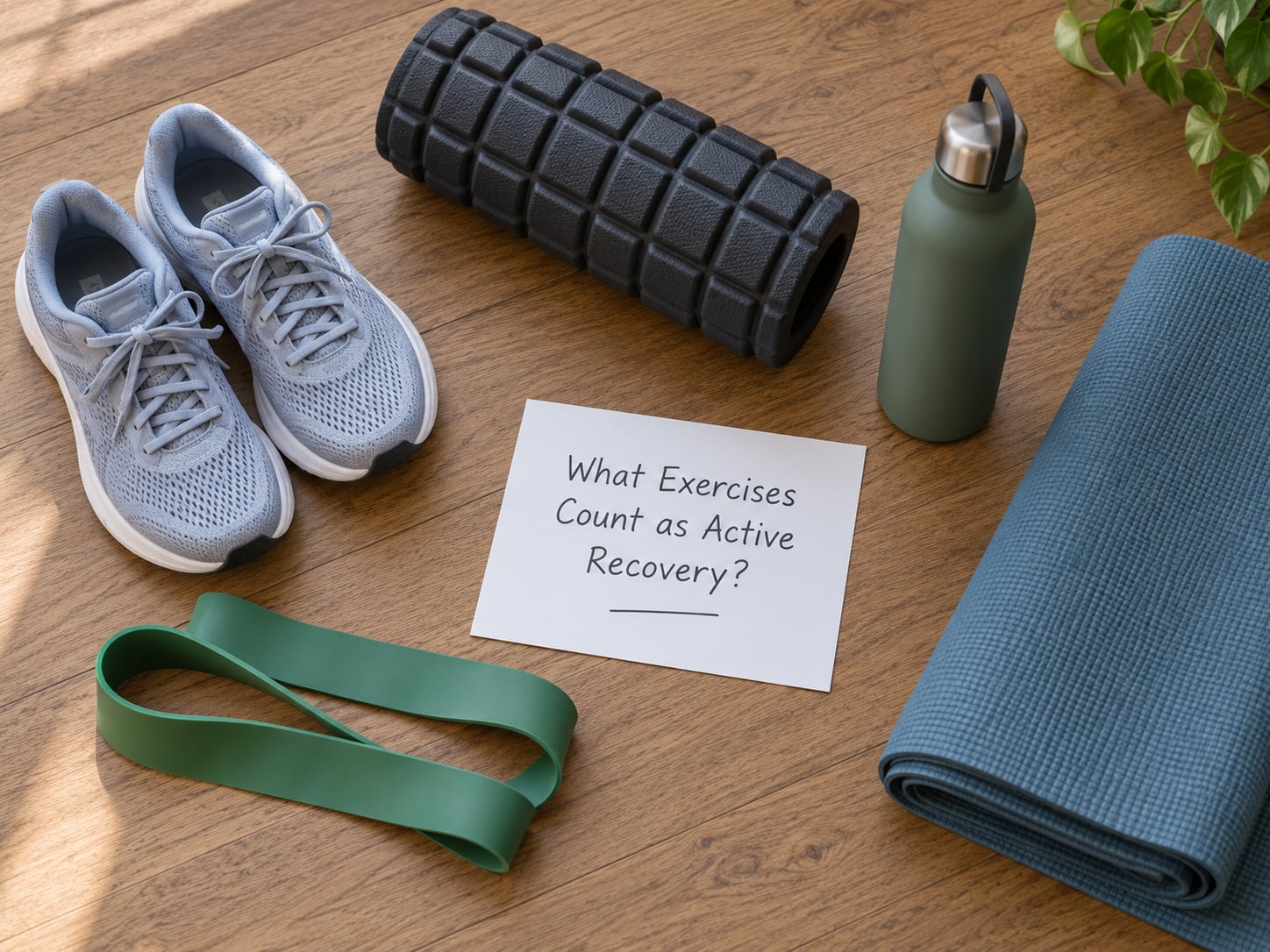
Most examples fall into two buckets: easy cardio, and mobility or mind-body work. Both work. The cardio options get your heart rate up; the mobility options move joints through range without much cardiovascular load at all.
Easy cardio
- Walking — by far the most popular, and it needs nothing but shoes.
- Easy cycling — flat ground, relaxed pace, no intervals.
- Swimming — gentle freestyle or easy aqua jogging.
- Slow elliptical or light rowing — short and unhurried.
- Very slow jogging — only if it stays conversational; faster than that, it stops being recovery.
Mobility and mind-body
- Gentle yoga, especially slow-paced styles rather than heated vinyasa.
- Daily-style mobility flows for hips, shoulders and thoracic spine.
- Tai chi or qigong, which are slow by design.
- Self-myofascial release with a foam roller, done at a walking pace of thinking.
- Active stretching: short holds at the end of your range, no bouncing.
- Desk-worker mobility work — shoulder circles, hip openers, a short walk between calls.
No foam roller? A rolled towel under your calves, a lacrosse ball against a wall, or even just rocking gently back and forth works fine. The tool is not the point.
Keeping the effort easy
Two checks are enough. First, the talk test: you should be able to speak a full sentence without gasping. Second, the heart rate range: roughly 30-60% of your maximum, which for many adults lands somewhere in the low 100s to low 130s.
If you are drenched in sweat or your breathing is ragged, dial it back. Twenty calm minutes beats forty hard ones.
How Is Active Recovery Different From Rest and Passive Recovery?
The three are complementary, not competing. Here is the cleanest way to separate them.
| Recovery type | Type of movement | Typical effort | Best for |
|---|---|---|---|
| Active recovery | Walking, cycling, swimming, mobility work | Conversational, roughly 30-60% max heart rate | Soreness, stiffness, keeping a daily habit, extra daily movement |
| Passive recovery | Massage, compression, baths, foam rolling while seated, sleep | None or near none | Reducing tension after very hard sessions |
| Full rest | No planned exercise at all | None | Illness, injury, exhaustion, after unusually heavy training blocks |
One honest note on calories: recovery is not where fat loss happens. Easy cardio burns fewer calories than a real workout. Its value on a weight loss plan is that it keeps your daily movement count up on days you would otherwise be completely sedentary — which matters more than the modest burn.
Beginners who hate stillness often do better with active recovery on rest days. Experienced lifters doing heavy blocks often need genuine rest. Both are correct for their situation.
How Much Active Recovery Do You Need?
There is no universal number. The honest answer depends on your training load, how you are feeling, and how your schedule is built.
As a starting point for most adults:
- A cool-down after training: 6-10 minutes of easy walking or cycling.
- A stand-alone recovery session on a rest day: 20-30 minutes at an easy pace.
- Between hard strength sessions: one or two light days in between, which is roughly the 48 hours many people find works.
- After an unusually hard session: 10-15 minutes, then genuine rest.
How do you know when something counts as active recovery?
Ask two questions. Is your heart rate in the low range, and do you finish feeling more loose than when you started? If yes, that is active recovery. If you are breathing hard, count it as training and decide whether you needed a training day.
More is not better here. Two hours of gentle walking on a rest day is not an upgrade — it eats sleep time and can leave you more tired than a hard session would.
When Should You Choose Rest Instead of Active Recovery?
Rest is not a failure state. It is one of the three tools, and there are times when it is clearly the right one.
- Sharp or localised pain. If moving a specific joint or muscle produces sharp pain rather than general achiness, stop and get it looked at.
- Movement makes symptoms worse. If a gentle walk increases pain, swelling or stiffness, that is information, not a challenge.
- Real fatigue. Resting heart rate up, motivation gone, poor sleep for several days in a row.
- Heavy training blocks. Deload weeks and back-to-back intense days need genuine rest.
- Illness. Fever, chest symptoms or an infection do not get trained through lightly. Rest and see a clinician.
For soreness that does not settle, joint pain that keeps returning, or any symptom that worries you, stop reading articles and talk to a doctor, physical therapist or other healthcare professional. Persistent or concerning symptoms deserve a professional look, not a workaround.
How to Add Active Recovery to Your Weekly Routine
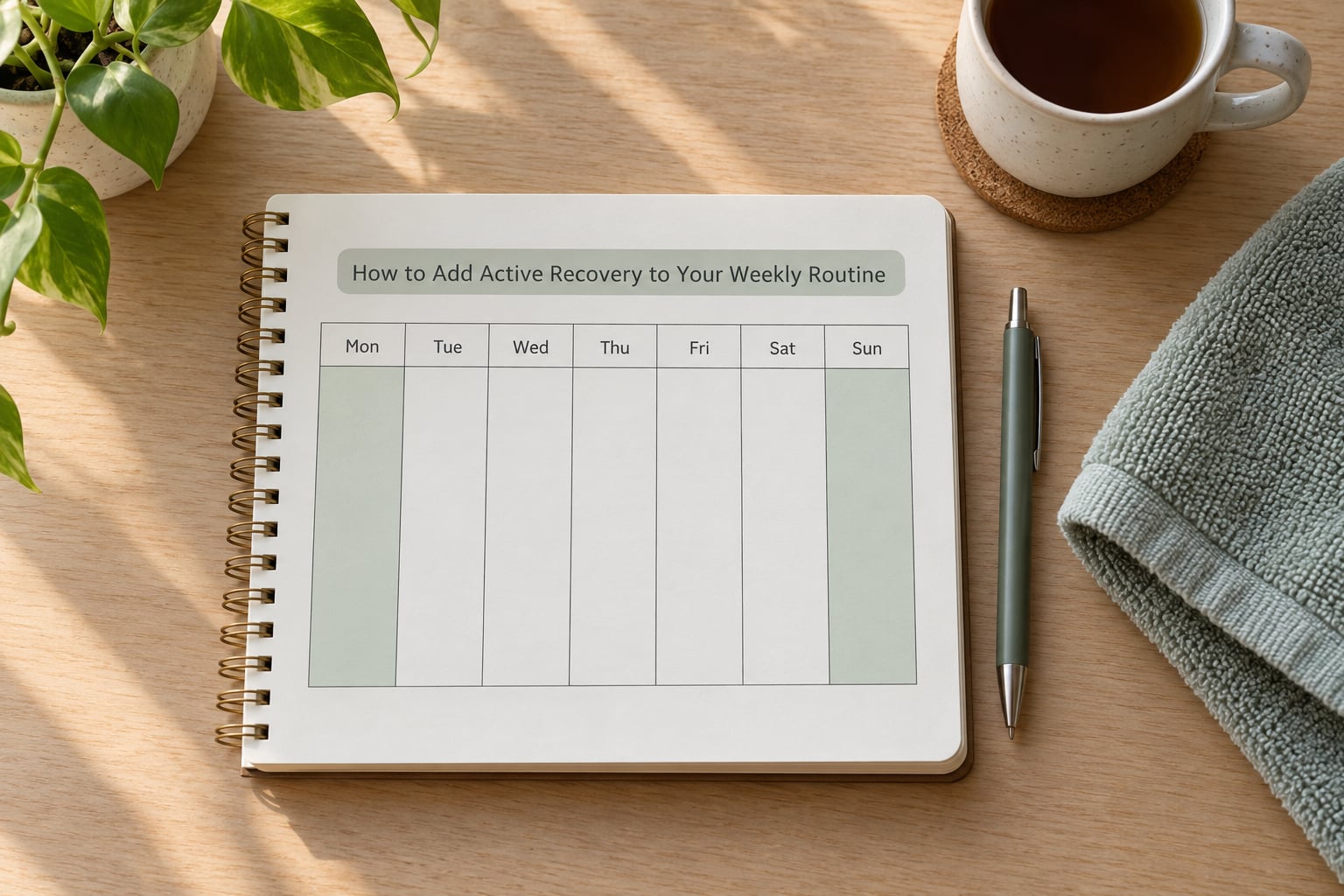
The easiest way to make this stick is to attach it to something you already do, rather than scheduling it as a separate decision.
Start with a 20-minute no-equipment sequence
This is a straightforward template. Do it on the day after training, or any day that feels too sedentary.
- Easy walk, 5 minutes. Relaxed pace, shoulders down.
- Hip and hamstring mobility, 4 minutes. Leg swings and a half-kneeling hip opener, 30 seconds each side, two rounds.
- Shoulders and spine, 4 minutes. Shoulder rolls, thoracic rotations, 8 to 10 reps each.
- Bodyweight squats and calf raises, 3 sets of 10. Slow and controlled, no fatigue.
- Easy walk again, 4 minutes. Finish with the breathing relaxed.
Nothing in that sequence should make you breathe hard. If it does, you are working too hard for a recovery day.
Where it fits in a weekly schedule
Most lifters place light movement on the day after each hard session. With three training days, that is two to three recovery blocks. With four training days, it is usually a mix of light days and one full rest day.
For weight loss, keep your usual daily movement habits on these days. A recovery session is a floor, not a ceiling — your normal walking and daily steps still count, and they count for more than the 20 minutes of mobility work.
Frequently Asked Questions
Is active recovery the same as stretching?
No. Active recovery is a broader category: any easy movement that raises your heart rate a little and keeps blood flowing, such as walking, cycling, swimming or yoga. Stretching is one option inside it, but a session that only stretches and never lifts your heart rate is closer to passive mobility work. Most people get more from a short easy walk plus some mobility than from stretching alone.
How long should an active recovery session last?
Most adults land somewhere between 20 and 30 minutes for a standalone recovery session. A cool-down straight after training can be shorter, around 6 to 10 minutes. The better test than the clock is how you feel at the end: looser and calmer, or tired and sweaty. If it is the second one, cut the length or the intensity, not both.
Should active recovery be done every day?
It can be, and for most adults light movement every day is a healthy habit on its own. The difference is that on training days the session is short and easy, while on rest days it can be a fuller 20 to 30 minutes. The people who should not do it daily are those managing an injury or recovering from illness, where a professional should guide how much movement is appropriate.
Can active recovery help with weight loss?
Not directly. Easy movement burns far fewer calories than a real workout, so it is not a substitute for training or a calorie deficit. What it does is keep your daily activity up on days you would otherwise be sedentary, which supports fat loss over weeks and months. Think of it as protecting a habit rather than adding a big burn, and keep your usual walking and steps in place.
Is walking active recovery after a workout?
Yes, it is the most popular form, because it is easy to gauge and requires no equipment. Walk at a pace where you can talk in full sentences, usually 6 to 10 minutes after training or 20 to 30 minutes on a rest day. If you are out of breath and cannot speak easily, that is a workout, not recovery, whatever you planned it to be.
When does soreness mean I should rest instead?
Soreness on its own is usually not a reason to stop moving — light movement generally feels better than stillness. Rest instead when pain is sharp or localised to one joint, when movement makes swelling or stiffness worse, when you are genuinely exhausted or sleeping badly, or when you are ill. Persistent pain that does not settle deserves a visit to a doctor or physical therapist.
The Bottom Line
Active recovery is low-intensity movement on the day after hard training or on a rest day, kept easy enough that you can hold a conversation throughout.
Start with one thing: after your next session, walk for ten minutes at a pace where talking is comfortable. That is the whole habit. Everything else — mobility work, foam rolling, longer easy cycles — is a bonus on top of it, and full rest still belongs in the plan for the days you genuinely need it.