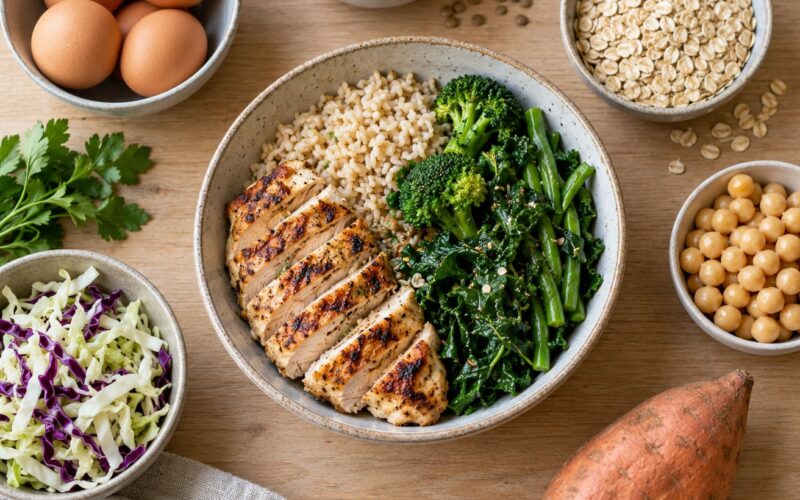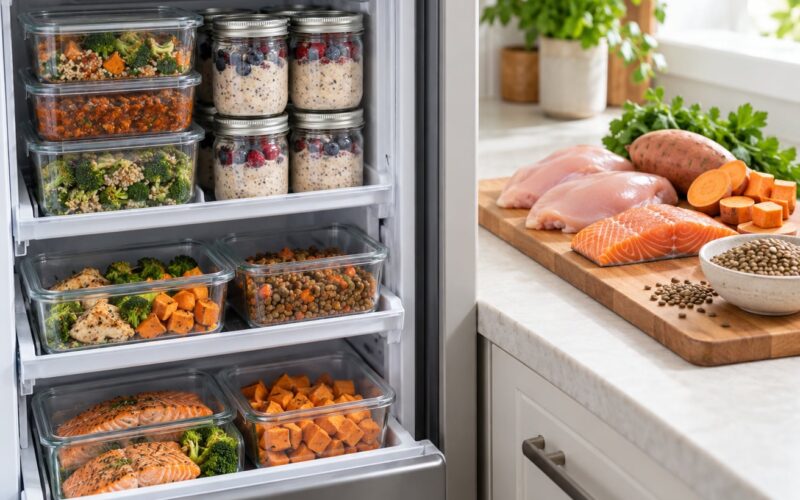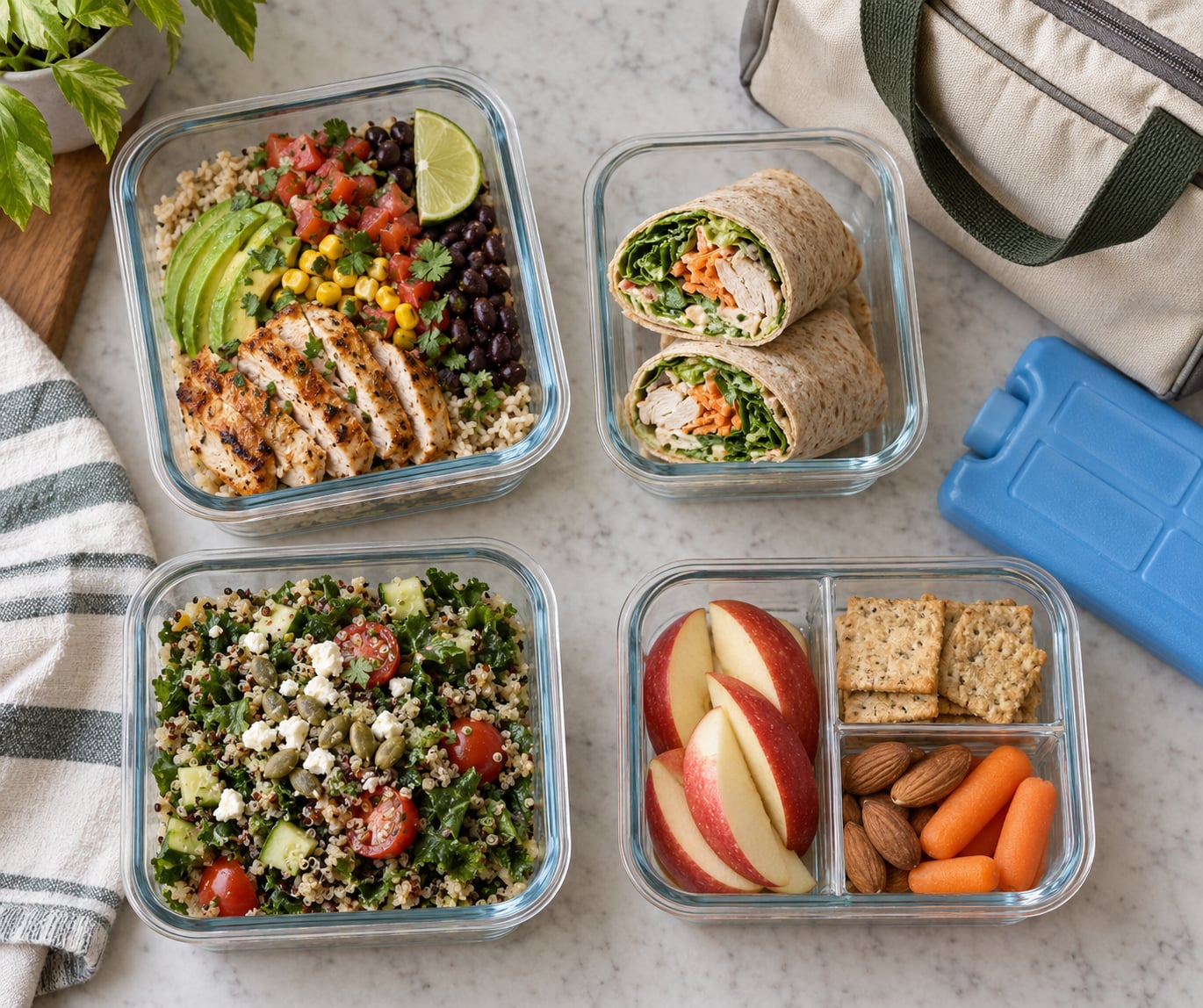
Easy high protein lunches for work are meals you can build ahead on a Sunday and eat cold, at your desk, without a microwave. The twelve below all deliver roughly 25 to 45g of protein per serving, survive a commute in a lunch bag, and taste decent on day four.
Most people who say they want high protein lunches actually want three simpler things: a lunch that fills them up until dinner, a lunch that does not leak or smell, and a lunch that takes under ten minutes to assemble on a Tuesday morning. That is what this list optimizes for.
Table of Contents
- Easy High Protein Lunches for Work at a Glance
- 1. Chicken Burrito Bowls
- Why chicken burrito bowls suit easy high protein lunches for work
- 2. Greek Chicken and Hummus Wraps
- 3. Salmon Quinoa Power Salad
- 4. Turkey and Hummus Lettuce Cups
- 5. Tuna and White Bean Mediterranean Wrap
- 6. Chicken Pesto Pasta Salad
- 7. Cottage Cheese and Tuna Snack Box
- 8. Black Bean and Chicken Quesadilla
- 9. Edamame Soba Noodle Salad
- 10. Mediterranean Chicken and Orzo Salad
- 11. Lentil and Tuna Power Bowl
- 12. Chicken, Apple, and Cheddar Snack Box
- Frequently Asked Questions
- How can I keep a high protein work lunch filling?
- What can I eat for lunch at work without reheating food?
- How long can I safely take a packed lunch to work?
- How much protein should I aim for in a workday lunch?
- What are easy ways to add more protein to a packed lunch?
- Can these lunches be prepared in advance for the week?
- Start With Tomorrow’s Lunch
Easy High Protein Lunches for Work at a Glance
| Lunch | Main protein source | Prep effort | Travels well | Needs reheating | Best workday use |
|---|---|---|---|---|---|
| 1. Chicken Burrito Bowls | Chicken breast | Low, batch cook | Yes | Optional | Monday to Friday meal prep |
| 2. Greek Chicken and Hummus Wraps | Chicken and hummus | Low, no cook | Yes, if packed in foil | No | Cold office days |
| 3. Salmon Quinoa Power Salad | Salmon | Medium | Yes | No | Lunches eaten at a desk |
| 4. Turkey and Hummus Lettuce Cups | Turkey | Low, no cook | Moderate | No | Hot days and light days |
| 5. Tuna and White Bean Wrap | Tuna and white beans | Low | Yes | No | Pantry lunches |
| 6. Chicken Pesto Pasta Salad | Chicken and pasta | Medium | Yes | No | Second-day lunches |
| 7. Cottage Cheese and Tuna Snack Box | Cottage cheese and tuna | Very low | Yes | No | No-fridge or short break days |
| 8. Black Bean and Chicken Quesadilla | Chicken and black beans | Medium | Moderate | Yes | Microwave days |
| 9. Edamame Soba Noodle Salad | Edamame and tofu or chicken | Medium | Yes | No | Vegetarian-leaning weeks |
| 10. Chicken and Orzo Salad | Chicken and chickpeas | Medium | Yes | No | Batches of four or more |
| 11. Lentil and Tuna Power Bowl | Lentils and tuna | Low | Yes | No | Cheap, dense lunches |
| 12. Chicken, Apple, and Cheddar Snack Box | Chicken and cheddar | Very low | Yes | No | Assembled the night before |
Nothing in this table requires anything more advanced than a saucepan, a sheet pan, or a knife. Nine of the twelve are eaten cold, which matters more than people expect: a lunch that needs reheating depends on a microwave you may not control, and microwave lines are where workday lunches go to die.
1. Chicken Burrito Bowls
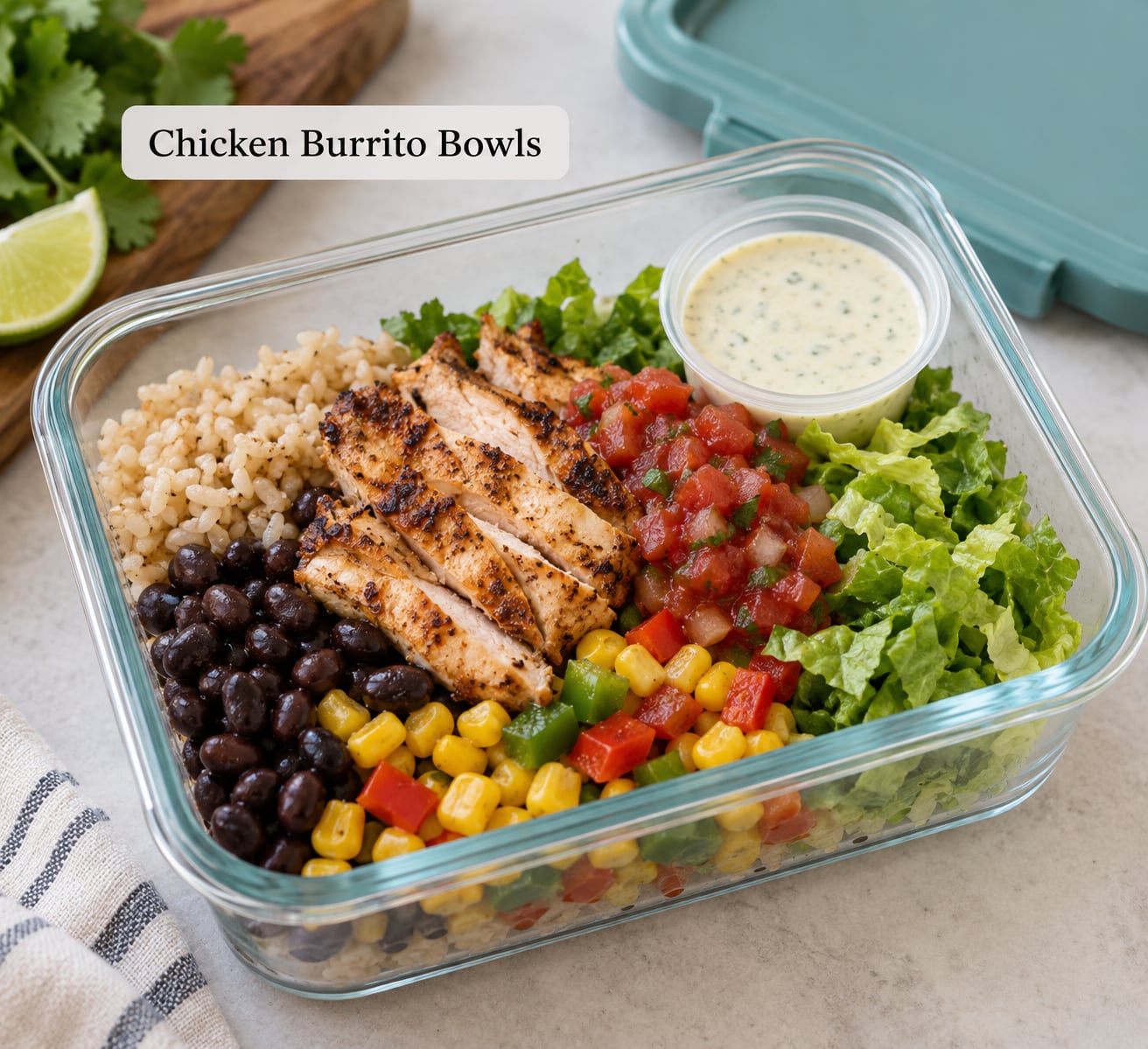
A burrito bowl is the workhorse of the whole list. Cook a batch of chicken breast to an internal temperature of 165°F, cool it, and shred it. Then layer brown rice, black beans, corn, peppers, lettuce, and salsa in a container and top with a yogurt-based cilantro-lime dressing made from plain Greek yogurt instead of sour cream.
What makes it filling is the combination. Protein from the chicken, fiber and slow carbohydrate from the beans and rice, and fat from the avocado or yogurt sauce all arrive together, so the bowl holds you until dinner instead of prompting a 2pm vending machine run.
Why chicken burrito bowls suit easy high protein lunches for work
They scale. One sheet pan of chicken and a pot of rice produce five or six identical bowls in about forty minutes of active work, and the components keep separately, so you can build each morning in under five minutes rather than cooking on Sunday night.
A practical portion is about 4 ounces of shredded chicken, three-quarters cup of brown rice, half a cup of black beans, and a couple of tablespoons of salsa. Pack the dressing in a small leakproof cup and add it when you sit down. Yogurt thickens and dulls if it sits on lettuce for hours, and that is the single most common complaint about prepped bowls.
2. Greek Chicken and Hummus Wraps
This one needs no cooking at all if you have leftover chicken, and it is the lunch I make when I have five minutes and no patience. Spread hummus across a whole-wheat wrap, add sliced chicken, cucumber, tomato, thin red onion, and a handful of greens, then roll it tight.
The packing method matters more than the recipe. Wrap the finished wrap in parchment or wax paper first, then slice it into four or five pieces and put those pieces in a rigid container so nothing gets crushed. Hummus is a thick barrier between the tortilla and the wet vegetables, so the wrap stays crisp rather than turning to mush by lunch.
For a serving, two slices of chicken and about three tablespoons of hummus per wrap will land you in the 25 to 30g range. Add the tomato and any extra greens right before you eat, not before you leave. Dry greens and dry chicken at the edge of the wrap, wetter ingredients toward the middle, and you have a lunch that survives a bag.
3. Salmon Quinoa Power Salad
Salmon and quinoa make an unusually complete cold lunch. Cook the salmon to 145°F, flake it into large pieces, and toss it with cooked quinoa, cucumber, cherry tomatoes, leafy greens, edamame, and a lemon-dijon dressing you pack separately.
The salmon brings protein and fat, the quinoa brings a grain base that actually fills you, and the edamame adds plant protein without being a separate side dish. A balanced portion is about 4 ounces of salmon, three-quarters cup of quinoa, half a cup of edamame, and a small cup of dressing. That is roughly 35g of protein before you count the edamame twice.
For storage, keep it below 40°F the whole time. Salmon salad is safe refrigerated for three to four days if you drain the cucumber and tomatoes well and skip the leafy greens until the morning you eat it. If your commute is longer than an hour, an ice pack is not optional.
4. Turkey and Hummus Lettuce Cups
Chopped turkey, hummus, crunchy vegetables, and herbs in a lettuce cup give you a light lunch that still has staying power. The fix for the word light is a small scoop of whole grain, roughly a quarter cup of cooked quinoa or bulgur, tucked in with the filling.
Assembly method: spoon the turkey and hummus mix into the center of each leaf, then fold the leaf loosely over it. Do not roll it like a taco. The folded shape keeps the filling from sliding out over your keyboard mid-afternoon, which is the failure mode of most lettuce cup lunches.
Watery cups come from wet ingredients and from packing too early. Pat the tomato and cucumber dry with a paper towel, salt the chopped turkey before mixing, and keep the cups in a vented container with a paper towel underneath. If the leaf wilts before lunch, use romaine hearts instead of butterhead, which hold shape better.
5. Tuna and White Bean Mediterranean Wrap
This is a no-cook lunch built from things most kitchens already have. Mix drained tuna and rinsed white beans with chopped cucumber, tomato, olives, arugula, and a lemon-herb dressing made from olive oil, lemon juice, oregano, and a little Dijon.
The beans are doing real work here. Tuna alone is protein-dense but not very satiating because almost all of its calories come from protein and fat. Adding a half cup of white beans adds fiber and carbohydrate, which is the difference between a lunch that holds until five o’clock and one that does not.
Drain everything properly. Squeeze the cucumber dry, drain the tuna until it stops dripping, and go easy on the olives since they carry salt. Pack roughly two-thirds cup of the tuna and bean mixture per whole-wheat wrap, and keep the finished wrap in parchment paper inside a container so it does not steam itself soggy on the commute.
6. Chicken Pesto Pasta Salad
Cold pasta salad travels better than green salad, and pesto makes it taste like a deliberate choice rather than leftovers. Rotini or another short shape holds dressing better than penne, and it eats cleanly with a fork at a desk.
Cook the pasta, rinse it under cold water to stop the cooking, and let it chill completely before you dress it. Toss it with shredded chicken, pesto, halved cherry tomatoes, cucumber, and spinach. A balanced portion is about three-quarters cup of pasta, three ounces of chicken, and one tablespoon of pesto, which brings you to roughly 30g of protein.
Batch prep means dressing half the pasta and leaving the other half plain, refrigerated separately. Add the pesto in the morning or at your desk, because basil wilts and the greens go limp after a night in dressing. Seal the container and keep it cold; a pasta salad left at room temperature for more than two hours is not a lunch, it is a gamble.
7. Cottage Cheese and Tuna Snack Box
Some days the best high protein lunch for work has no assembly and no recipe at all. This is a box with three compartments: cottage cheese in one, a tuna and white bean salad in another, and whole-grain crackers, cucumber slices, and a piece of fruit in the third.
The cottage cheese and the tuna salad together form the savory main of the meal, and both are high protein and low fuss. It is easy to eat at a desk because nothing needs a fork, nothing drips, and you can eat it in the ten minutes you actually have.
Keep the crackers out of the cold compartment. Put them in the dry section or in a separate small bag so they stay crisp, and pack the cottage cheese and tuna with an ice pack if you will be out of a fridge for more than a couple of hours. Buy single-serve tubs so there is nothing to scoop out with a communal spoon at your desk.
8. Black Bean and Chicken Quesadilla
For the days when your office does have a microwave, a quesadilla is the fastest hot option. Fill a flour tortilla with seasoned shredded chicken, black beans, diced peppers, and a small amount of cheese. A second tortilla on top makes it sturdier for the commute.
Cook it in a skillet over medium heat for two to three minutes a side until the outside browns and the cheese melts. To reheat at work, wrap it in a paper towel and give it forty to sixty seconds; the towel keeps the tortilla from going rubbery. Chicken must reach 165°F when reheated, and the same applies if you assemble this with cooked chicken at home.
A practical serving is one quesadilla with a side of salsa and plain yogurt for dipping instead of sour cream. Add a handful of side vegetables or a small apple so the meal has produce and fiber, not just protein and starch. Cut it in half and pack it in a rigid container so it does not fold in your bag.
9. Edamame Soba Noodle Salad
Soba noodles bring buckwheat protein of their own, and edamame brings more, so this salad gets close to 30g per serving without any meat. Toss cooked soba with shelled edamame, shredded chicken or extra-firm tofu, shredded cabbage, carrots, scallions, and a sesame-lime dressing.
The balance to aim for is a third grains, a third crunchy vegetables, and a third protein. That proportion is what stops a noodle salad from turning into a carb pile by 2pm. Rinse soba under cold water until the water runs clear and the noodles stop feeling slippery, which also removes some of their surface starch and keeps them from clumping in the container.
Pack the dressing on the side in a small jar. Sesame dressing is oily enough to pool at the bottom of a container and turn the cabbage soggy by lunchtime, and a separate jar takes three seconds to pour. For batch prep, make four servings of noodles and dressing on Sunday and hold the shredded cabbage and scallions aside until the morning.
10. Mediterranean Chicken and Orzo Salad
Orzo, chickpeas, and chicken make one of the densest cold salads on this list, and it is the one people ask about most when they are trying to eat well on a small budget. Combine cooked chicken, orzo, chickpeas, cucumber, cherry tomatoes, olives, greens, and a lemon-herb dressing.
Both proteins count here. Chickpeas add roughly 7 to 8g per half cup and bring fiber that chicken does not have, so a serving with three ounces of chicken and half a cup of chickpeas lands in the mid-30s for protein. A balanced portion is three-quarters cup of orzo, three ounces of chicken, half a cup of chickpeas, and a tablespoon of dressing.
Batch preparation is the win. Make a large bowl, portion it into containers, and keep the olives and delicate greens out until you pack. Refrigerate covered and eat within four days. Because orzo swells as it sits, a little extra liquid shows up at the bottom by day three; stir it in rather than packing a drier salad that clumped on day two.
11. Lentil and Tuna Power Bowl
Cooked lentils and canned tuna are the cheapest pairing on this page and one of the most underrated. Put them in a sturdy bowl with roasted vegetables, cucumber, arugula, and a tangy mustard vinaigrette.
It works because lentils are dense and fiber-rich while tuna is lean and protein-dense. Three-quarters cup of lentils plus one can of tuna packed in water gives you about 40g of protein before you add anything else, which makes this the bowl to build when you want to hit a high number on a weekday.
Keep the vinaigrette separate and pour it at your desk. A mustard dressing on lentils and arugula will soften the greens and drain into the bottom of the container within a few hours. Store the roasted vegetables separately from the dressed lentils so the bowl does not turn into a warm, watery mix by Thursday, and refrigerate everything until you leave the house.
12. Chicken, Apple, and Cheddar Snack Box
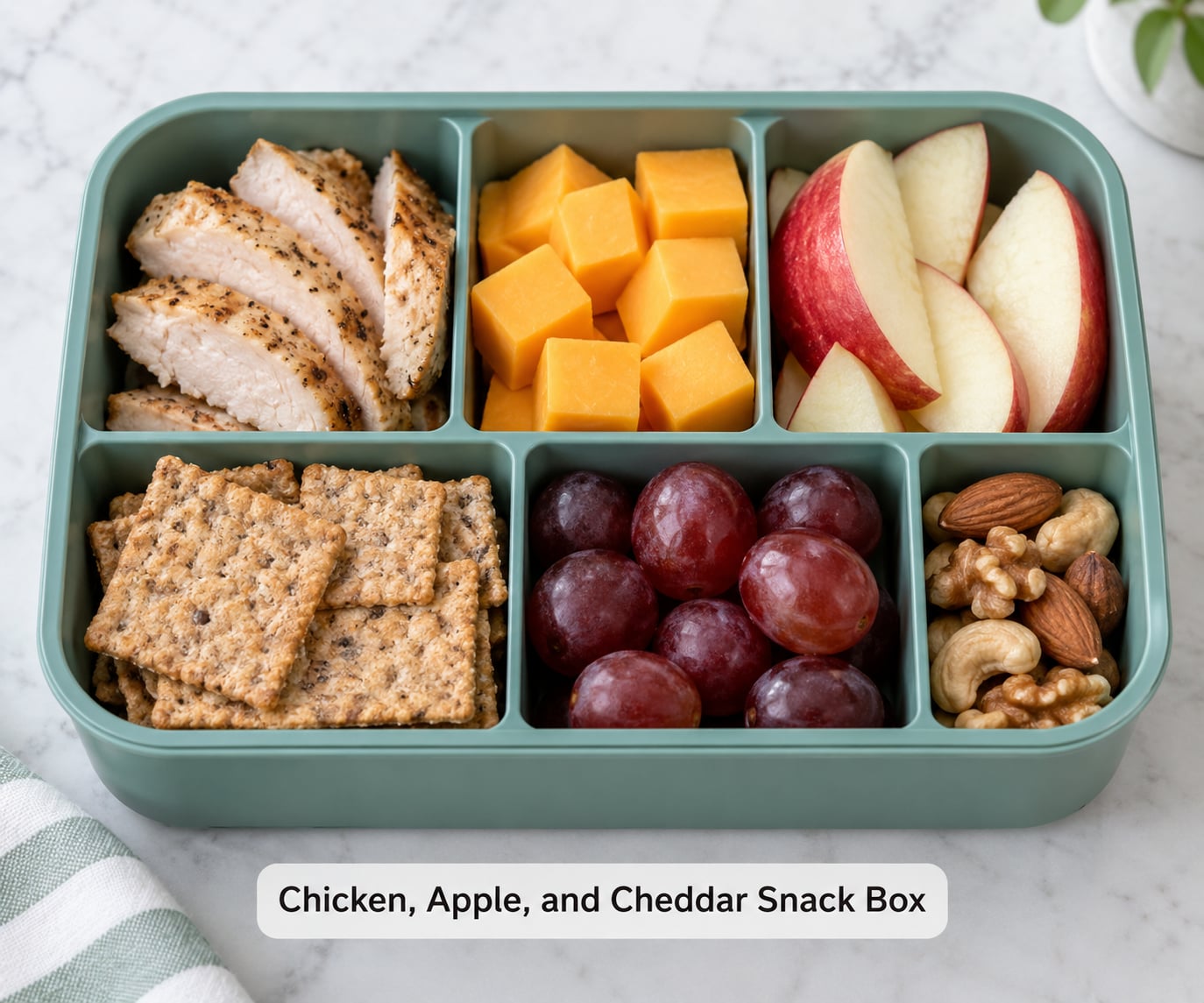
The snack box approach gets dismissed as not really a lunch, which is fair until you build it with intention. Sliced chicken, reduced-fat cheddar cubes, apple wedges, whole-grain crackers, red grapes, and a small portion of nuts or seeds gives you protein, produce, and crunch in one container.
A practical portion is three ounces of sliced chicken, an ounce of cheddar, five or six apple wedges, a small handful of grapes, four crackers, and about a tablespoon of nuts. That is roughly 30g of protein, and it assembles in five minutes the night before, which makes it the best option for people who genuinely cannot cook on Sunday.
Two packing details make the difference. Toss the apple wedges with a little lemon juice so they do not go brown overnight, and pack the nuts in a separate small container so they stay crunchy instead of going soft against the moist chicken. Cut the chicken with a serrated knife so it slices cleanly instead of shredding into dry strings.
Frequently Asked Questions
How can I keep a high protein work lunch filling?
Combine protein with fiber and a slow carbohydrate in the same meal. Chicken with beans and brown rice, or tuna with white beans and cucumber, keeps you full far longer than protein alone because fiber and starch slow digestion. Adding a small amount of fat, like avocado, nuts, or a yogurt-based dressing, also slows stomach emptying. Most people who feel hungry at 2pm are missing either the grain or the fat, not the protein.
What can I eat for lunch at work without reheating food?
Any of the cold options here works without a microwave: burrito bowls eaten cold, Greek chicken and hummus wraps, salmon quinoa salad, turkey lettuce cups, the tuna and white bean wrap, chicken pesto pasta salad, the cottage cheese and tuna snack box, edamame soba salad, chicken and orzo salad, the lentil and tuna bowl, and the snack box. Only the quesadilla needs heat. Cold lunches are also the most reliable choice when you have no control over a shared microwave.
How long can I safely take a packed lunch to work?
Keep refrigerated food at or below 40°F, which means an ice pack if your commute is long or your office fridge is unreliable. Refrigerated lunches are generally safe for three to four days, and cooked chicken, fish, and rice should be reheated to 165°F if you warm them. Discard perishable food left at room temperature for more than two hours, and one hour in a hot car. Vinegar-based dressings are the most forgiving option when chilling is uncertain.
How much protein should I aim for in a workday lunch?
Aiming for roughly 30g at lunch is a common practical target, because it spreads daily protein across three meals instead of forcing it all into dinner. Individual needs vary a lot with body size, activity level, and goals, so treat this as a starting point rather than a requirement. Larger or more active people generally need more, and someone eating in a calorie deficit may need more per meal to stay full. A registered dietitian can give you a number tailored to you.
What are easy ways to add more protein to a packed lunch?
Swap Greek yogurt for mayonnaise in any chicken or tuna salad, add a hard-boiled egg to a salad or snack box, stir roasted chickpeas into a grain bowl, or add edamame to a noodle or quinoa salad. A chicken breast alongside a vegetarian lunch is the fastest single addition. Cottage cheese in place of crackers in a snack box adds both protein and staying power without changing the format.
Can these lunches be prepared in advance for the week?
Yes, with one rule: cook once, but hold back the fragile parts. Keep dressings, leafy greens, and crunchy toppings out of the container until you pack, and cool cooked food quickly in shallow containers before it goes into the fridge. Most of these lunches hold three to four days in the refrigerator, so most people prepare Sunday for Monday through Thursday. Freeze individual portions of cooked grains and roasted vegetables if you want to stretch a batch further.
Start With Tomorrow’s Lunch
Pick two from this list tonight, not twelve. Buy the ingredients, spend forty minutes cooking one batch, and refrigerate four portions of each before you go to bed.
Tomorrow morning you pack a container that already exists. By Wednesday you will know which one you actually want, and by Friday you will have a rotation that takes you five minutes a day instead of an hour on Sunday. That is the whole method behind easy high protein lunches for work, and it is far less complicated than the meal prep videos make it look.