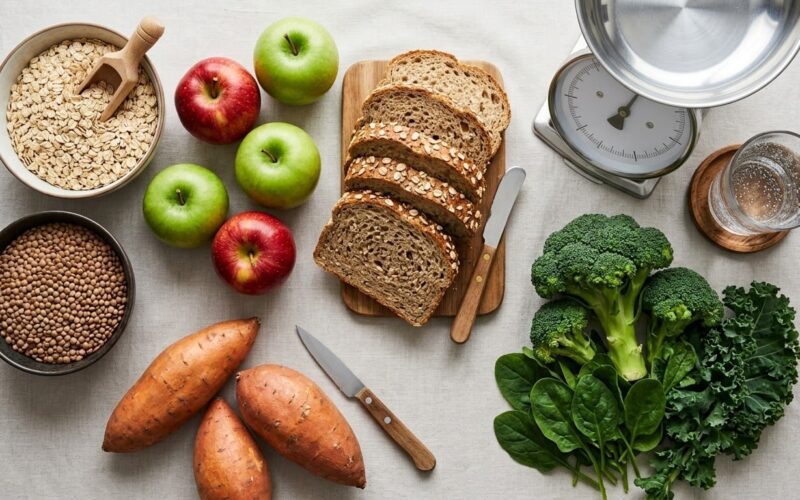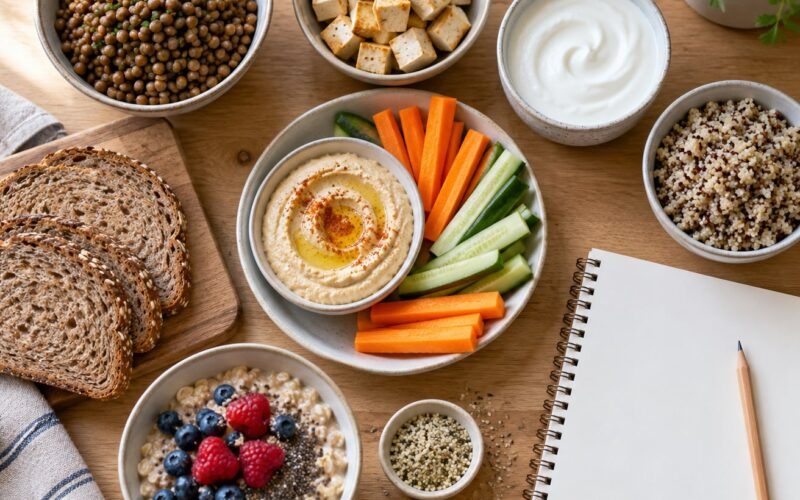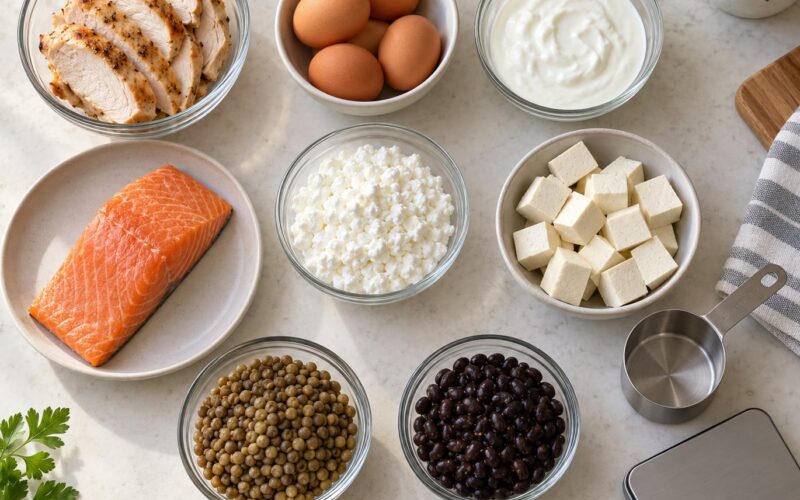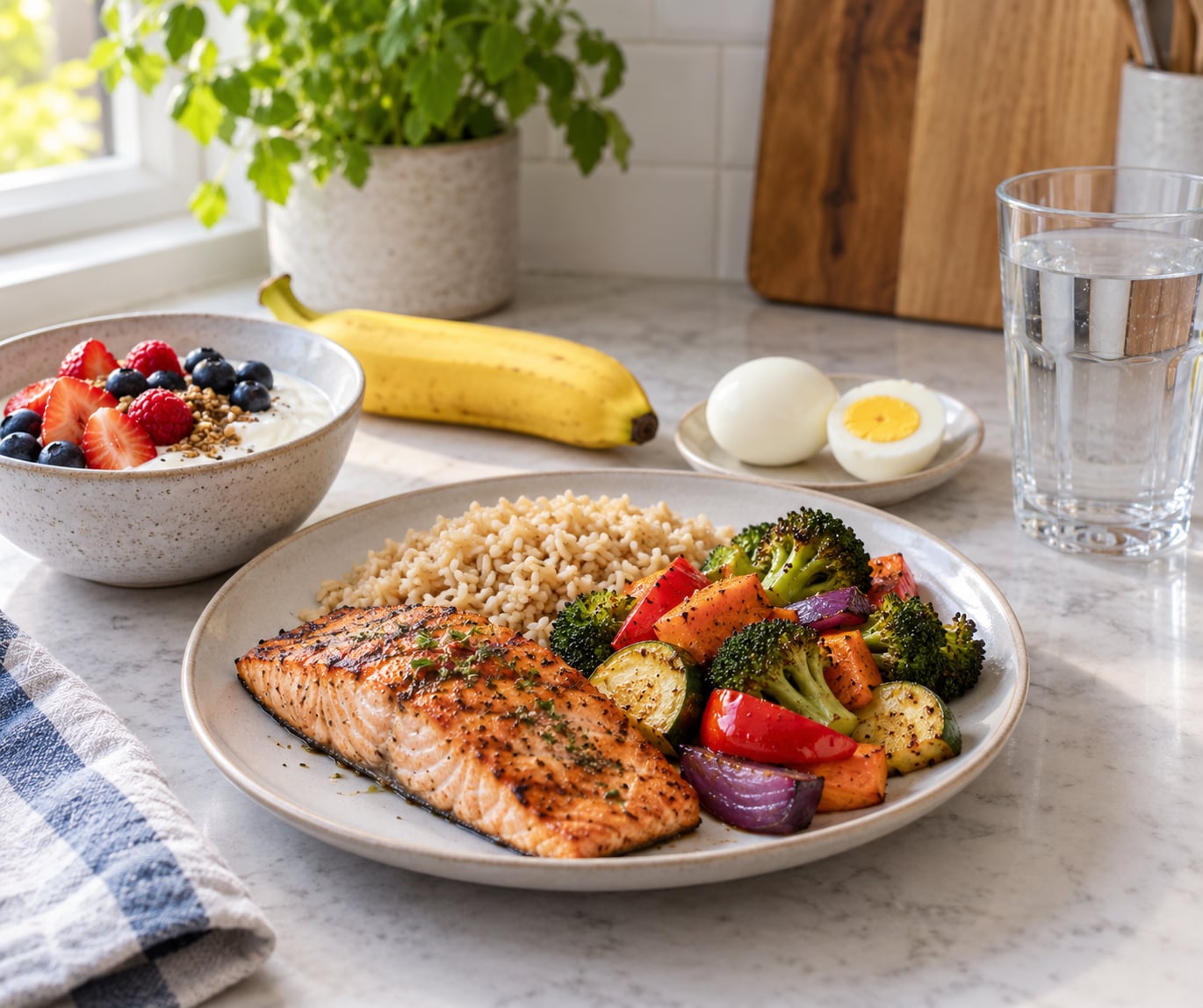
The short answer to what to eat after a workout to recover: 20 to 40 grams of protein with fast-acting carbohydrates within about two hours of training, plus enough fluid to replace what you sweated. Protein rebuilds damaged muscle, carbs refill depleted glycogen, and water restores fluid balance. The exact amounts shift with your workout type and your goal.
The “anabolic window” is the part most people get wrong in both directions. Some eat nothing for hours because they heard the window was a myth. Others shove down a huge meal in the locker room because a trainer said 30 minutes. Both miss the point: what matters most is the protein you eat across the day, split into sensible doses.
Here is how the numbers change depending on whether you want muscle, fat loss, or better running times, and what a normal plate actually looks like.
Table of Contents
- What to Eat After a Workout to Recover, Based on Your Goal
- How Much Protein, Carbohydrates, and Fluids Do You Need?
- Should You Eat Right After Working Out?
- Easy Meals and Snack Combinations
- Fast smoothie
- Yogurt bowl
- Rice and egg bowl
- Turkey sandwich
- Salmon with potatoes
- Lower-effort options
- Best Choices for Strength, Cardio, and Weight-Loss Workouts
- Foods to Limit or Avoid Immediately After Exercise
- Simple Post-Workout Recipes and Prep Shortcuts
- Frequently Asked Questions
- Is it better to eat real food or a protein shake after a workout?
- Is protein powder bad for you in the long term?
- Can I eat after working out at night?
- Do I need dairy to recover faster?
- Will eating the right food prevent muscle soreness?
- A Simple Post-Workout Meal to Start With
What to Eat After a Workout to Recover, Based on Your Goal
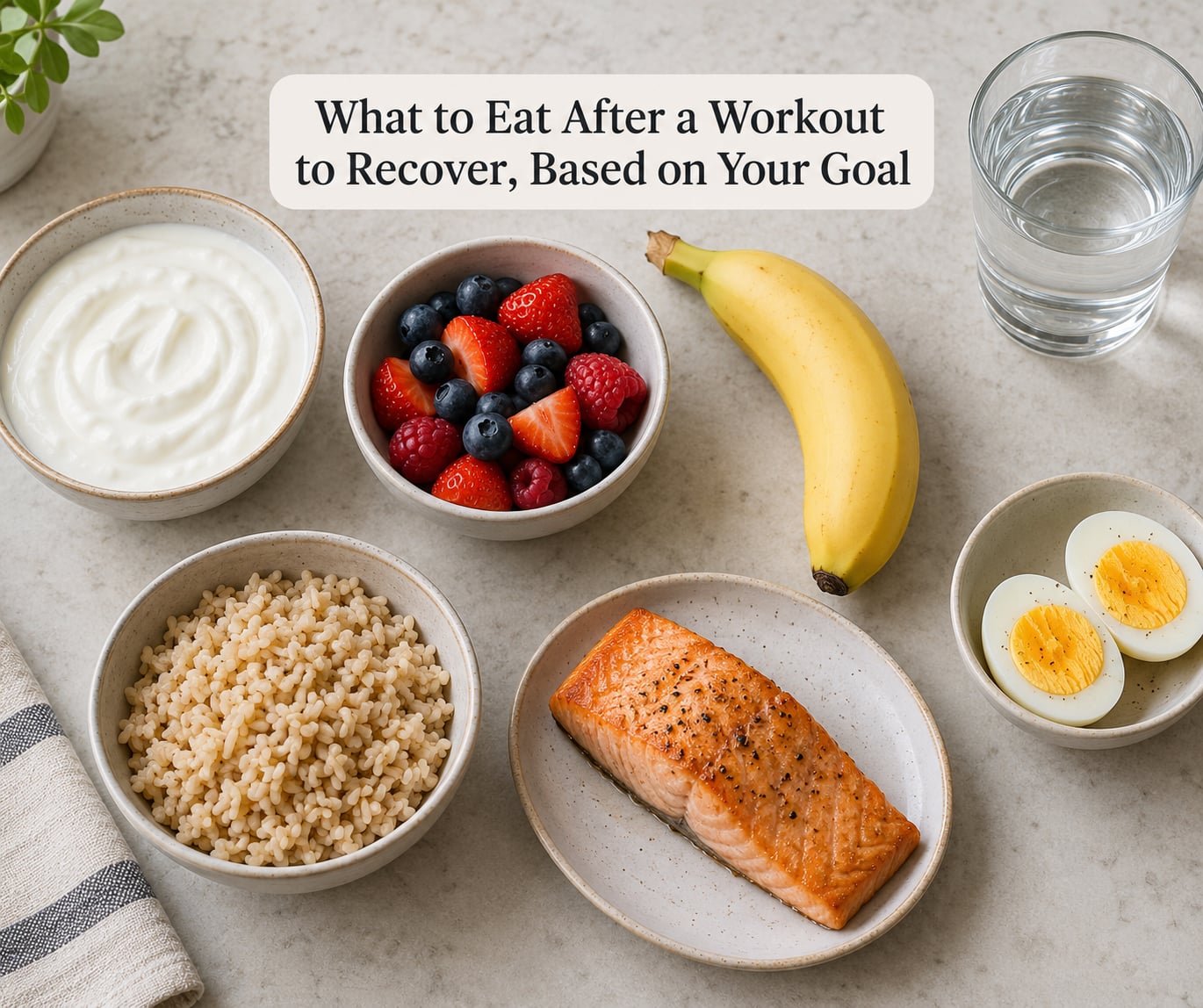
The table below sets out the direct answer by goal. Protein stays fairly constant for anyone training hard. Carbohydrate is the piece that moves most, because a five-mile run and a leg day leave you in very different places.
| Your goal | Protein after training | Carbohydrate approach | Example plate |
|---|---|---|---|
| Build muscle | 0.4 g per kg of body weight, roughly 30 to 45g | Generous. Carbs drive the training you will do next. | Chicken breast, brown rice, broccoli |
| Lose weight while keeping muscle | 0.3 to 0.4 g per kg, the same as lifting | Modest, scaled to how hard you trained. | Greek yogurt, berries, one cup of rice |
| Endurance or long runs | 20 to 30g | High. Long sessions empty glycogen hardest. | Salmon, potatoes, a side salad |
| HIIT or circuits | 25 to 40g | Medium to high, depending on length. | Rice and egg bowl with salsa |
| Yoga, walking, mobility | 15 to 20g if you are hungry, otherwise just your next meal | Whatever fits your day. | Turkey sandwich, piece of fruit |
Long-time lifters on r/workout keep landing in the same place: protein plus carbohydrate, the chicken and rice answer. It is not exciting, but it has survived years of strong opinions about anything more complicated.
How Much Protein, Carbohydrates, and Fluids Do You Need?
Protein is the part with the most solid number behind it. Muscle protein synthesis rises after training and stays elevated for a few hours, and a dose of about 0.3 to 0.4 grams per kilogram of body weight is enough to tip muscle into a building state. Two hundred pounds of body weight works out to roughly 60 to 80 grams per meal across three or four meals.
That per-meal dose matters more than any clock. If you eat 150 grams of protein across the day in doses of 30 to 40 grams, your recovery is fine whether the first one lands at 12:15 pm or 2:00 pm.
| Body weight | Grams of protein per meal |
|---|---|
| 110 lbs / 50 kg | 15 to 20g |
| 132 lbs / 60 kg | 18 to 24g |
| 154 lbs / 70 kg | 21 to 28g |
| 176 lbs / 80 kg | 24 to 32g |
| 198 lbs / 90 kg | 27 to 36g |
| 220 lbs / 100 kg | 30 to 40g |
Across a full day, most people training for muscle land between 1.6 and 2.2 grams per kilogram. Someone exercising casually needs considerably less, and someone walking for pleasure should not stress about hitting a number.
Carbohydrate follows session length more than it follows fitness level. A session under an hour rarely needs much, maybe 0.3 grams per kilogram after a normal workout. Ninety minutes or longer of hard work pushes the range to 0.6 to 1.0 grams per kilogram, because glycogen is what ran out.
Fat slows stomach emptying, so a large fatty meal right after training feels heavy and can sit badly. Keep it in the meal rather than turning it into the entire post-workout plate.
Fluid is simpler than most articles make it sound. Before a workout, drink normally and be pale yellow in the afternoon. During long or hot sessions, sip according to thirst and take in sodium. After training, aim for roughly 1.5 liters for every kilogram of body weight lost in sweat, spread across the next few hours. Losing more than 2 percent of body weight as sweat usually calls for electrolytes, especially sodium, with it.
All of these figures assume an average healthy adult and shift with body size, sweat rate, climate, training age, and any medical condition. A registered dietitian can put real numbers to your situation.
Should You Eat Right After Working Out?
The honest answer is no, not necessarily within thirty minutes. Muscle protein synthesis stays elevated for roughly three to five hours after training, so a meal two hours later still lands in the recovery period. The strict thirty-minute window is repeated constantly and is not supported by the evidence.
That said, some situations make an earlier snack practical rather than mythical. Training twice a day, competing on weekends, or doing a long ride before an evening session all mean the muscles need fuel sooner. A protein shake with a banana, or Greek yogurt mixed with berries, takes two minutes and does the job.
Hunger is a legitimate signal too. Plenty of people finish training with no appetite, especially after a hard set of lifts when the body is still cooling down. If you are not hungry, wait for your normal meal. Forcing food you do not want is how people end up overeating at dinner instead.
Early-morning sessions deserve their own note. If you train at 6 am and do not eat until lunch, that is fine. Many lifters simply treat breakfast as their post-workout meal and split the day’s protein evenly. What fails is training fasted every morning and never catching up at dinner.
The r/Fitness forum thread on meal timing is blunt that things like rigid windows have been oversold. The correction is not that timing is irrelevant. It is that total intake and per-meal dosing carry the result, and timing is a second-order detail.
Easy Meals and Snack Combinations
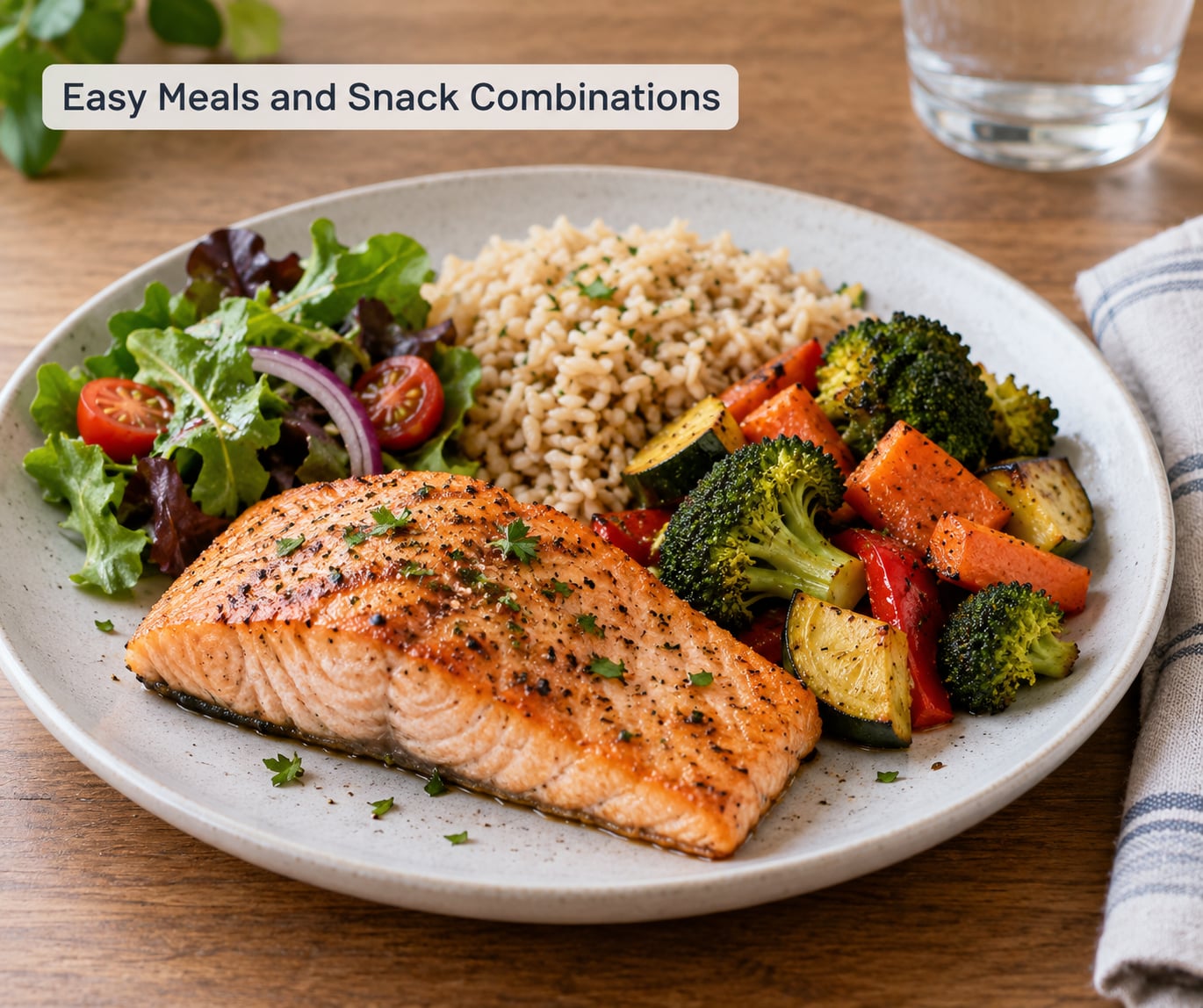
Match the size of the meal to how long until your next real meal. Under an hour to go, choose a snack. Three hours or more, choose a full plate.
Fast smoothie
Blend milk or a dairy-free alternative with a scoop of protein powder, a banana, and a handful of berries. Roughly 30 grams of protein and 40 grams of carbohydrate in about 120 calories. The fastest option when the gym is busy.
Yogurt bowl
Greek yogurt with berries, a spoon of nut butter, and a handful of granola. Between 20 and 25 grams of protein. Watch the granola portion if you are watching calories, since it adds up fast.
Rice and egg bowl
Microwave rice, two scrambled eggs, salsa, and black beans. Around 25 grams of protein for a cup of rice and two eggs. Cheap, fast, and travels well in a container.
Turkey sandwich
Whole-grain bread with turkey, mustard, and vegetables. About 25 to 30 grams of protein with a modest carbohydrate load. Good when you want something you can hold in one hand.
Salmon with potatoes
Salmon carries omega-3 fatty acids and a complete protein of about 30 grams in a normal fillet. Add boiled or roasted potatoes for the glycogen work and a salad for volume.
Lower-effort options
Cottage cheese with pineapple packs casein, the slow-digesting dairy protein, alongside quick carbohydrate. Hummus and pita with vegetables works when appetite is low. Hard-boiled eggs with a banana is a five-minute version of the same idea. Frozen edamame is a plant option that arrives already cooked.
Best Choices for Strength, Cardio, and Weight-Loss Workouts
After resistance training, the priority is a full protein dose plus enough carbohydrate to support the next session. Chicken, eggs, Greek yogurt, tofu, or fish paired with rice, potatoes, or pasta covers it. This is the workout where under-eating carbohydrate is most common and most costly.
After endurance work, glycogen depletion is the story. A runner finishing ten miles needs carbohydrate first and protein second, and runners on r/running asking about long Sunday runs usually get told rice, bread, or a bagel. Fatty fish or dairy covers the protein without crowding out the fuel.
After a workout where weight loss is the priority, protein keeps you full and protects lean mass while you are in a calorie deficit. Scale carbohydrate to how hard you actually trained rather than deleting it entirely, since dropping carbs after hard sessions tends to end in a heavy dinner and poor recovery.
Recovery food will not cancel a deficit, and it is not a punishment. A normal plate after training keeps the plan sustainable, which matters more over months than any single meal.
Foods to Limit or Avoid Immediately After Exercise
Nothing is forbidden, but a few choices work against you in the hour after training.
- Sugary drinks and energy drinks. They deliver fluid but little sodium, and caffeine on top of a hard session can leave you jittery and dehydrated.
- Heavy greasy meals. Fat slows digestion, so a large fried meal often sits uncomfortably while your blood is still directed to working muscles.
- Alcohol. Alcohol interferes with sleep, and sleep is when much of the repair happens. It also adds calories with little nutritional value.
- Oversized meals. Eating three times what you need because you feel you have earned it tends to backfire within a few hours.
- Highly processed snacks with no protein. A plain cookie refills nothing and leaves you hungry an hour later.
Simple Post-Workout Recipes and Prep Shortcuts
Batch cooking on a Sunday removes most of the friction. Cook a tray of chicken or tofu and a pot of rice, then portion five containers. Hard-boil a dozen eggs. That is a week of post-workout meals without cooking on a weekday.
Frozen fruit works nearly as well as fresh in a smoothie, and it costs less. Keep nut butter, oats, canned tuna, and frozen edamame in the pantry so a mix takes two minutes rather than a shop.
Cook chicken, ground meat, and fish to safe internal temperatures: 165°F for poultry, 160°F for ground meat, and 145°F for fish and whole cuts. Let them cool, then refrigerate within two hours.
A plain pot of rice mixed with salsa and canned beans is a reliable low-cost recovery meal, and it scales to any budget.
Frequently Asked Questions
Is it better to eat real food or a protein shake after a workout?
Real food wins on satiety, micronutrients, and fiber, and it keeps most people satisfied longer. A shake wins on convenience and speed, which matters after a dawn session or during a two-a-day routine. Powder is a fine backup when whole food is genuinely not available. The concern dietitians raise is not the powder itself, but letting processed shakes displace meals.
Is protein powder bad for you in the long term?
For most healthy adults, a standard whey or plant protein powder used as a food is not harmful. Third-party testing matters more than the label on the tub, since heavy metal and contaminant levels vary by brand. The real issue is displacement: when a shake replaces meals, you lose fiber, vitamins, and the pleasure of eating. Treat it as a supplement to food, not a replacement.
Can I eat after working out at night?
Yes. If you trained late, a small protein-forward snack such as cottage cheese or Greek yogurt with fruit gives you a slow-digesting dose before bed. Total daily intake governs your results, not the clock, so a late snack only matters when it pushes you past your calorie target. People cutting calories often do better skipping it if they are not hungry.
Do I need dairy to recover faster?
No. Dairy is convenient and delivers a complete protein with calcium, but it is not required. Plant options like tofu, tempeh, lentils combined with grains, edamame, and pea protein shakes cover the same ground. What matters is hitting your per-meal protein dose and getting enough total protein across the day.
Will eating the right food prevent muscle soreness?
Not reliably. Soreness mostly reflects how new or demanding the training was, and nutrition only modestly affects how you feel afterward. Adequate protein, carbohydrate, fluids, and sleep support recovery, but no food erases delayed onset muscle soreness on its own. Progressing training load gradually does more for soreness than any recovery food.
A Simple Post-Workout Meal to Start With
Build one plate: a palm-sized protein, a fist of carbohydrate, a glass of water, and something colorful. On most days that plate is what to eat after a workout to recover, and it beats anything more complicated you will not repeat. Eat it within a couple of hours of training, adjust the carbohydrate to your workout, and stop trying to hit a clock. If you want numbers for your own body, a registered dietitian can set them properly, and a doctor is the right stop for any warning sign during or after exercise.