Yes, you can hit any protein target without eating meat, and the method is simpler than most guides make it sound. Put one protein-dense anchor in every meal, layer secondary sources across the day, and check the running total roughly rather than obsessively.
Most people who try this fail for one boring reason: they eat fewer calories than before. A 1,500-calorie plate of rice and vegetables is a 1,500-calorie plate whether or not the protein made it in there.
Below is the whole approach, with gram counts for real portions, two full day plans, and the prep shortcuts that make it a habit instead of a project.
Table of Contents
- What You Need to Get Enough Protein Without Meat
- Step-by-Step
- How to get enough protein without meat each day
- Choose complete, varied protein sources
- Build meals around a protein anchor
- Add protein to everyday foods
- Plan ahead and check the pattern
- Common Mistakes
- Frequently Asked Questions
- How much protein do I need without meat?
- What are the best plant-based protein sources?
- Can I get enough protein on a vegan diet?
- Do I need protein powder to meet my needs?
- What if I do not eat meat but eat dairy and eggs?
- Can increasing protein help with weight loss?
- Start with one protein anchor per meal
What You Need to Get Enough Protein Without Meat
Protein does four jobs in the body: it builds and repairs muscle, it supplies enzymes and hormones, it supports immune cells, and it keeps you full between meals. You cannot train hard, recover well, or stay satisfied on a diet without it.
Before you shop, decide on a number.
The Recommended Dietary Allowance for healthy adults sits at 0.8 g of protein per kilogram of body weight. Someone weighing 70 kg uses roughly 56 g a day. That number assumes a reasonably active person who is not trying to change their body composition.
Most people who are reading this need more than the minimum.
- Resistance training: 1.4 to 2.0 g per kg is the range commonly used in sports nutrition practice for anyone building or recomposing muscle.
- Adults over 70: 1.0 to 1.2 g per kg. Muscle loss accelerates with age and the body handles protein less efficiently, so the bar moves up, not down.
- Losing weight on a calorie deficit: aiming high matters more here, not less, because protein helps you keep lean tissue while the scale goes down.
- Pregnancy, illness, recovery from surgery: needs go up and so do the reasons to get individual medical guidance rather than following a number from an article.
Now the food list. Instead of one endless catalogue, sort everything into two groups, because that is the distinction that actually changes your meals.
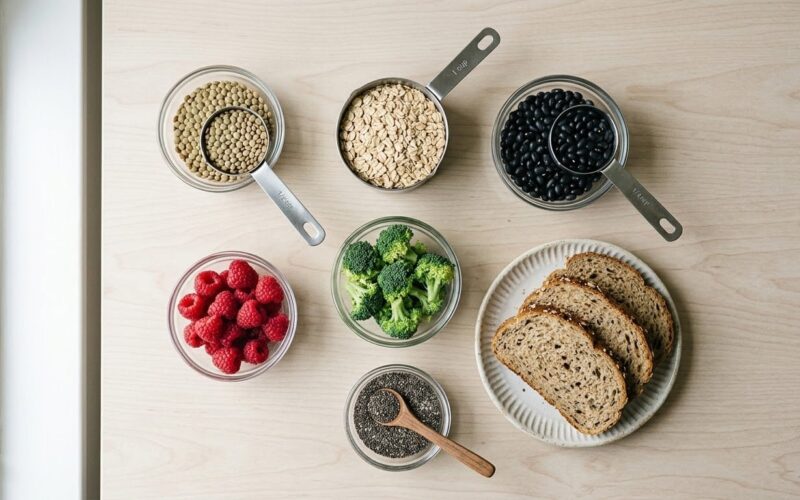
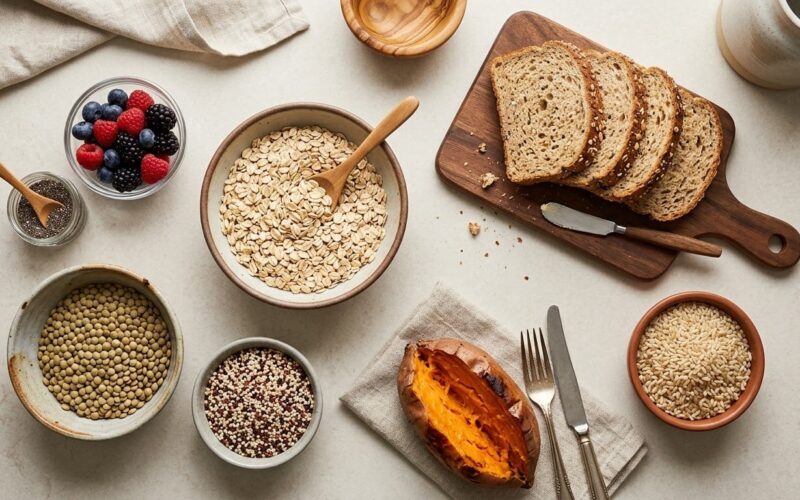
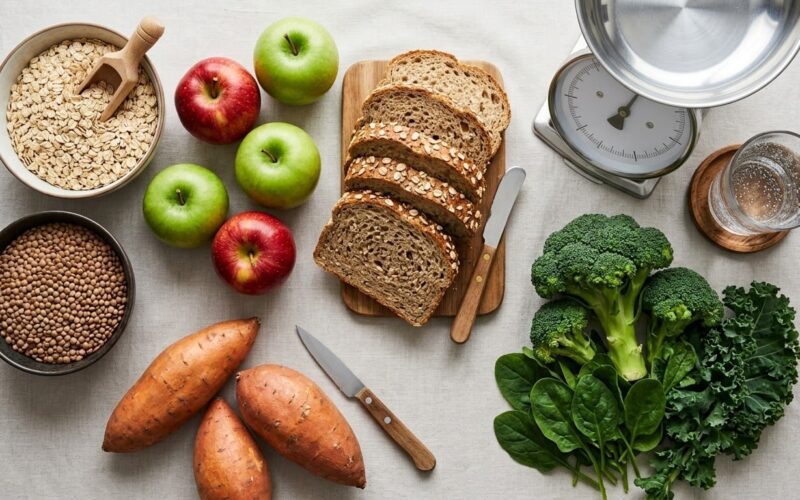
Primary protein sources deliver 12 g or more of protein per 100 calories, and they are dense enough to build a meal around. Secondary sources contribute real protein in smaller amounts, and they matter because they add up across a day of bread, cereal, sauce and seed toppings.
Here is the gram count for a realistic portion of each, which is the only table you really need:
| Food | Realistic portion | Protein | Type |
|---|---|---|---|
| Tempeh | 100 g, about 5 thin slices | 19 g | Primary, complete |
| Firm tofu | 150 g, half a block | 18 g | Primary, complete |
| Seitan | 100 g, sliced from a dense loaf | 25 g | Primary, not complete |
| Lentils | 1 cup, cooked | 18 g | Primary |
| Chickpeas | 1 cup, cooked | 15 g | Primary |
| Black beans | 1 cup, cooked | 15 g | Primary |
| Edamame | 1 cup, shelled | 18 g | Primary, complete |
| Cottage cheese | 1 cup, low fat | 28 g | Primary, complete |
| Greek yogurt | 200 g, plain nonfat | 20 g | Primary, complete |
| Eggs | 2 large | 13 g | Primary, complete |
| Egg whites | 1 cup, about 7 whites | 26 g | Primary, complete |
| Peanut butter | 2 tbsp | 8 g | Primary |
| Soy milk | 1 cup, unsweetened | 7 g | Secondary, fortified |
| Quinoa | 1 cup, cooked | 8 g | Secondary, complete |
| Hemp seeds | 3 tbsp | 10 g | Secondary, complete |
| Chia seeds | 2 tbsp | 6 g | Secondary |
| Nutritional yeast | 2 tbsp | 4 g | Secondary, fortified with B12 |
| Oats | 1 cup, dry rolled | 10 g | Secondary |
| Whole wheat bread | 2 slices | 8 g | Secondary |
| Green peas, frozen | 1 cup, cooked | 9 g | Secondary |
Two notes on that list. Seitan has the highest protein density of anything here, but it is wheat gluten, so it is off the table for anyone with celiac disease or a gluten sensitivity. And tofu, tempeh, edamame, soy milk, quinoa and hemp seeds all contain all nine essential amino acids, which puts them on the same footing as eggs and dairy for amino acid completeness.
Finally, the nutrients that get missed when meat disappears. Cutting animal protein removes the most reliable dietary sources of vitamin B12, and often of iron and zinc. Vitamin B12 has no plant source at all, so anyone eating fully plant-based needs fortified foods or a supplement. Legumes bring plenty of iron, but plant iron absorbs less readily, and pairing them with vitamin C foods at the same meal helps.
Talk to a doctor or a registered dietitian if you are cutting meat while pregnant, managing a kidney condition, recovering from an illness or surgery, or eating very restrictively for any reason.
Step-by-Step
How to get enough protein without meat each day
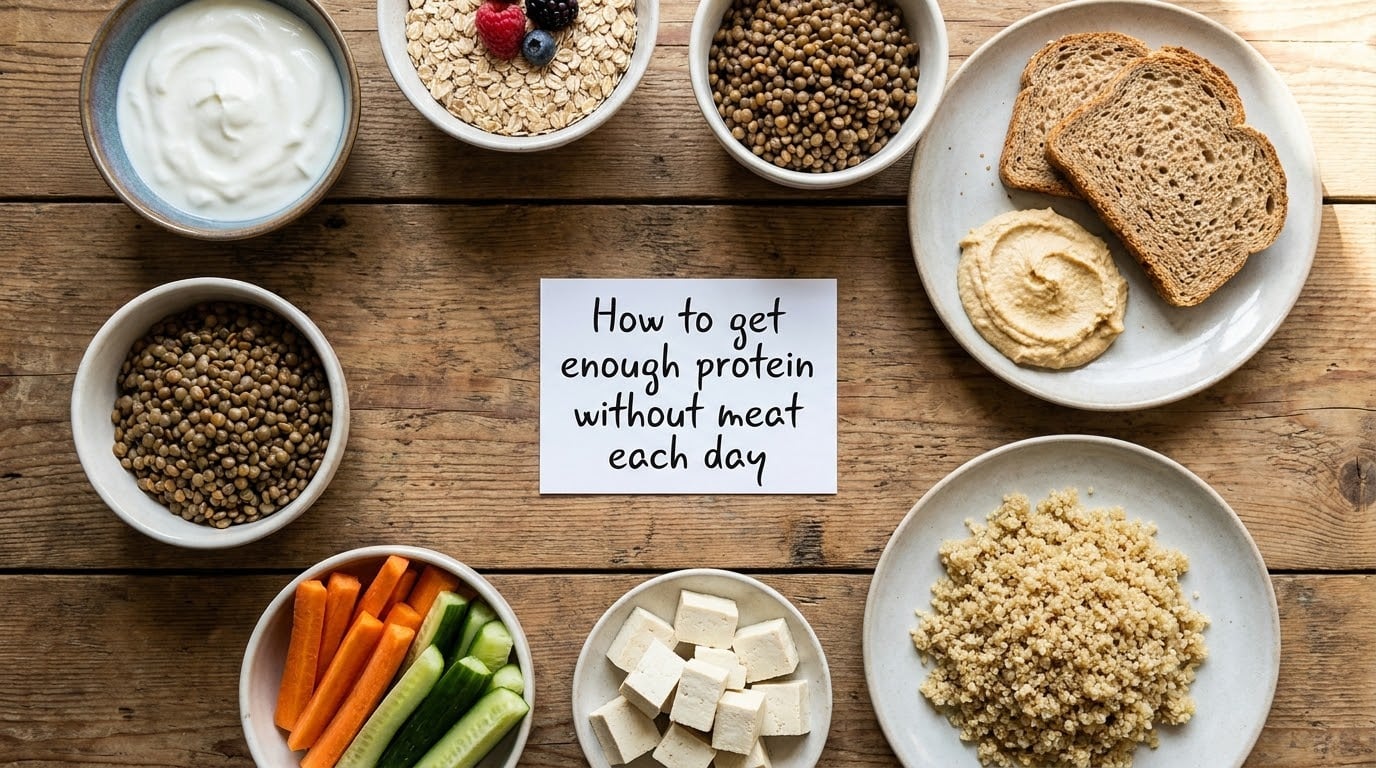
Do not try to cover your whole target in one sitting. Protein is used continuously by the body, and spreading it across four or five eating occasions works better than one enormous dinner, mostly because it keeps you full enough to actually stick to the plan.
A workable day at the low end, roughly 70 g:
- Breakfast (24 g): 200 g Greek yogurt with 1 cup of oats and a handful of berries.
- Lunch (18 g): Lentil soup, about 1.5 cups, with two slices of whole-grain bread.
- Snack (8 g): Two tablespoons of peanut butter on an apple.
- Dinner (20 g): 150 g baked tofu with quinoa and roasted vegetables.
And a muscle-building day at roughly 150 g:
- Breakfast (44 g): Scramble of 4 eggs and 4 egg whites, plus 2 slices of toast and 250 g Greek yogurt on the side.
- Snack (26 g): One cup of cottage cheese with hemp seeds.
- Lunch (36 g): Seitan stir-fry over brown rice, with edamame added at the end.
- Snack (17 g): Soy milk, fruit and a cup of roasted chickpeas.
- Dinner (34 g): Tempeh tacos with black beans, topped with 2 tbsp nutritional yeast.
Neither day needs tracking software. The habit is simply that every entry has a visible protein source in it, and at the end of the day you glance at the pattern rather than the number.
For a quick check, the food label tells you protein per serving, and the serving size is almost always smaller than the portion you actually eat. Double it if you double the bowl.
Choose complete, varied protein sources
A complete protein contains all nine essential amino acids, the ones your body cannot make and has to get from food. Animal foods are complete as a rule, which is why the plant version of the story got stuck in the 1970s.
Every plant food contains all nine essential amino acids. What varies is the proportion and how well you absorb them. Soy, quinoa, buckwheat, hemp and amaranth are complete, and eating a mix of legumes and grains over a day covers the rest easily.
The rule that you must combine beans and rice at every single meal was built on incomplete data and has not aged well. It matters when the entire day is rice and nothing else, which almost nobody eats. Across a day, or even across two or three meals, your body holds an amino acid pool and uses it as needed.
Variety is still worth chasing, for reasons that have nothing to do with the myth: different sources bring different amino acid profiles, different fibre, different micronutrients and different textures. Rotate your anchors rather than eating the same one forever.
Build meals around a protein anchor
Start with the protein, then build around it. This is the opposite of the usual advice to fill half the plate with vegetables first, and it is what makes meatless meals feel like actual meals instead of a side dish with a grain.
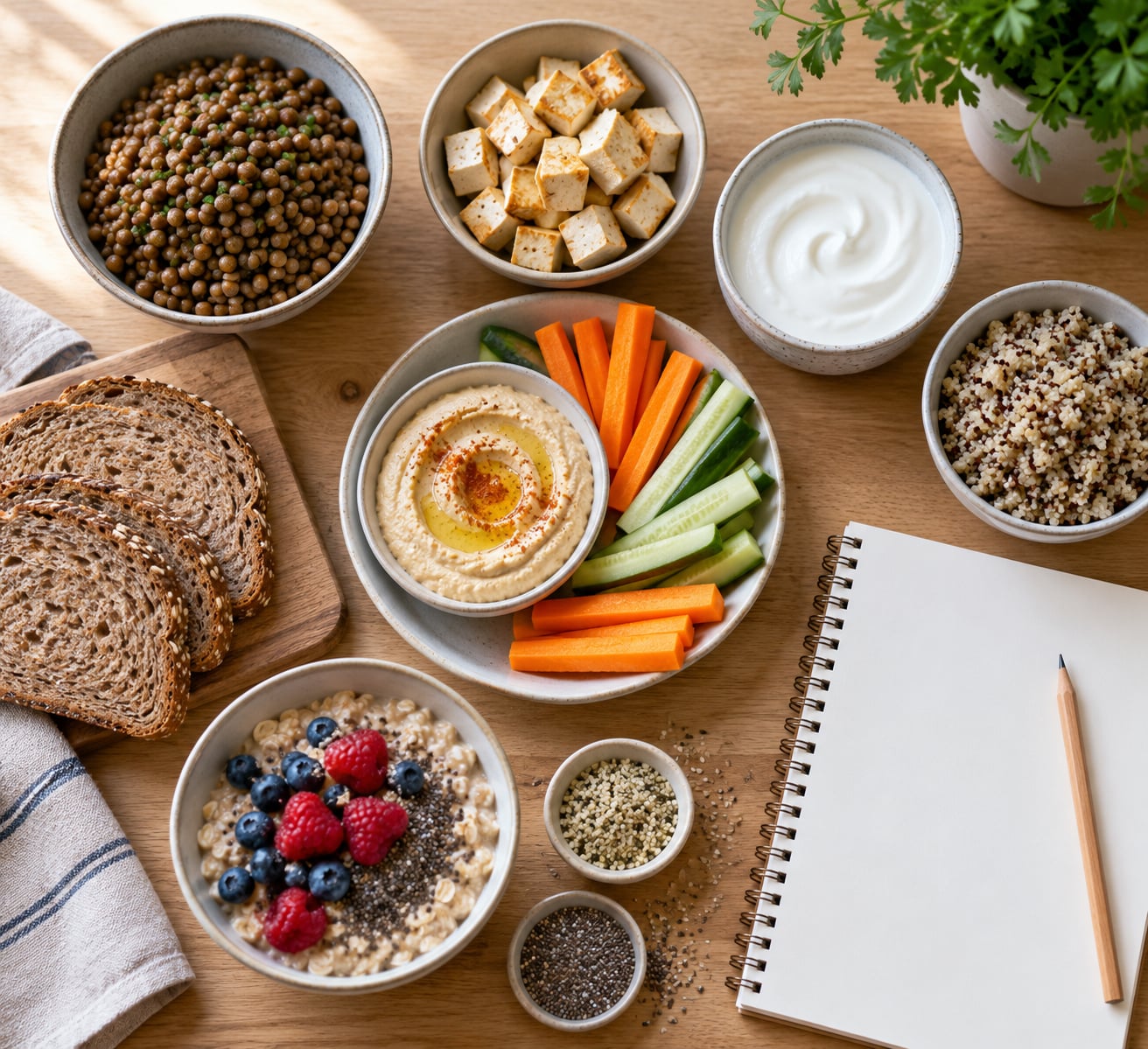
- Breakfast: Greek yogurt and oats, cottage cheese with tomato and toast, eggs with beans, tofu scramble with black beans and spinach.
- Salad: Chickpeas and feta, edamame with soba noodles, lentils with goat cheese and walnuts.
- Bowl: Quinoa, roasted chickpeas, tahini dressing, hemp seeds, a hard-boiled egg or crumbled tofu.
- Soup: Lentil and vegetable, split pea, white bean and kale. Pureed soups make it easy to get a full bowl of beans into one serving.
- Sandwich: Hummus and grilled vegetables with a thick slice of bread, or seitan slices with pesto.
- Dinner: Tempeh or tofu stir-fry, chili with kidney beans and textured soy protein, dal with tofu, pasta with white bean or lentil sauce.
Protein hides in prepared food more often than people expect. A cup of lentil or minestrone soup carries 15 to 20 g. Marinades, salad dressings and stir-fry sauces regularly add 5 to 8 g per serving, and restaurant bowls can land over 30 g without you ordering anything special.
Read the nutrition panel on sauces, soups and plant-based burgers. Many carry 10 to 20 g per serving, and many carry 400 to 600 mg of sodium, which matters more if you eat them daily.
Add protein to everyday foods
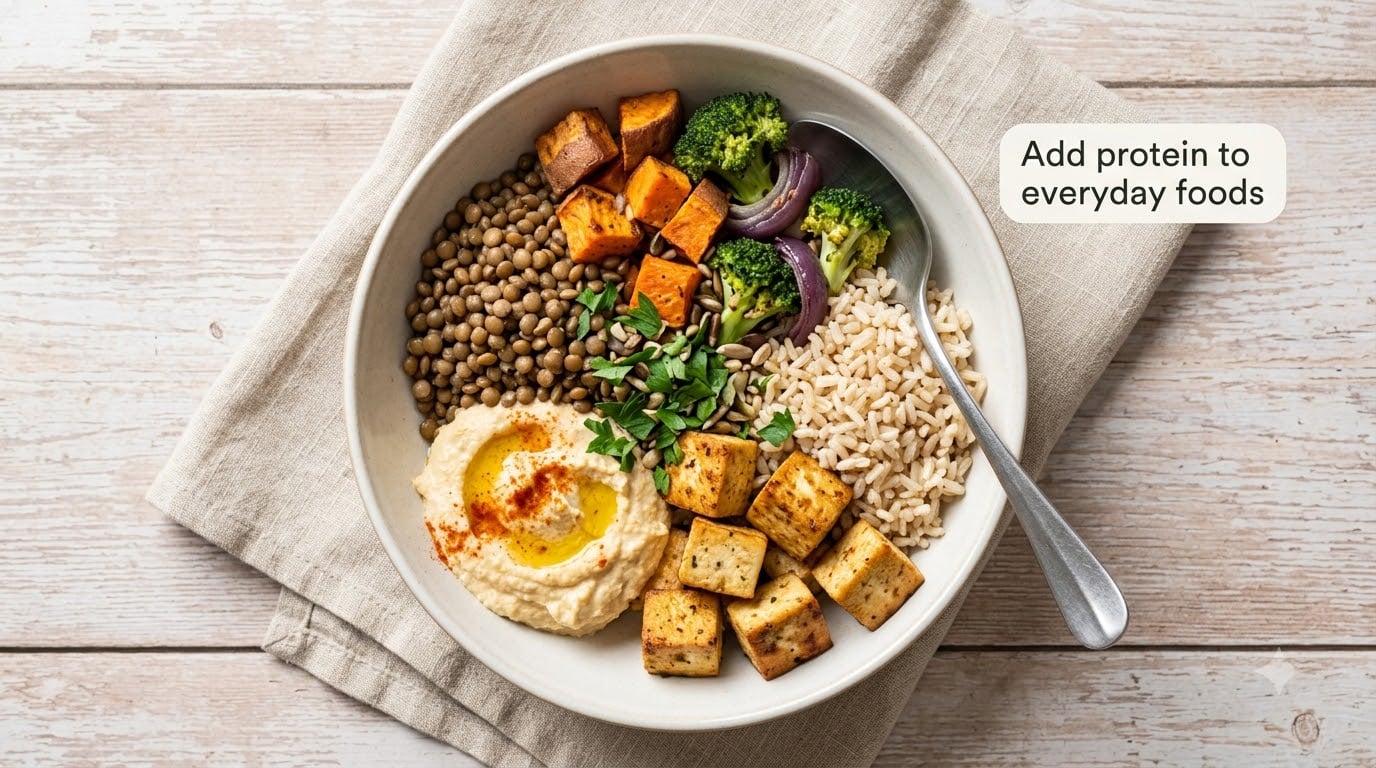
The easiest gains come from bolting protein onto meals you already eat rather than cooking a different dinner.
- Beans or lentils into rice: fried rice with black beans, or white rice folded through cooked lentils with broth.
- Legumes in place of some meat: kidney beans in chilli, chickpeas in a curry sauce, lentils in bolognese. Half the meat, double the volume, similar texture.
- Yogurt or cheese into oatmeal and fruit: stir yogurt into oats while they cook, top a bowl of berries with cottage cheese.
- Cheese into dips: blended cottage cheese works as a dip and as a base for dressings.
- Tofu and tempeh into grain bowls: press, cube, season, and roast. They pick up sauce better than any other meatless protein.
- Nut or seed butter onto things: toast, apple, banana, oats, pancakes.
- Nutritional yeast as parmesan: on pasta, popcorn, roasted vegetables, in sauces.
Protein powders are optional, not essential, and they are a convenience food rather than a supplement requirement. If you use one, compare labels on protein per serving and per 100 calories rather than per scoop, and check the ingredient list. If you have a health condition, take medication or follow a restricted diet, ask your clinician or dietitian first.
Plan ahead and check the pattern
Pick two or three protein anchors you actually like and repeat them. Variety across weeks matters far more than variety within a single day.
Then do one batch job. Cook a large pot of beans or lentils and freeze them in portions, or roast a tray of tofu and keep it in the fridge for four or five days. People on plant-based diets stay consistent mostly because of batch cooking, and it is usually pumpkin chilli, lentil bolognese and soups, because they reheat well and freeze well.
Canned beans, frozen shelled edamame and dry-roasted edamame all count as the same food as the slow-cooked versions. So does tofu from the fridge block if you press it, cube it, salt it, and air-fry at 380 to 390 F for about 15 minutes. That single step is the difference between tofu people like and tofu people avoid, and it comes up constantly as the most repeated fix among home cooks.
Watch the pattern rather than the number: are you eating something with protein at every meal, are you satisfied after eating, is your energy steady, and is your training recovering normally.
Do not cut calories at the same time. Cutting meat while dieting hard is the fastest route to low protein, low iron and low B12 at once. If you are managing a medical condition, a history of disordered eating or a very low appetite, talk to a doctor or registered dietitian before making big changes.
Common Mistakes
Relying on one source. Chicken breast for every meal means you are not really replacing it, and lentils for every meal gets old by week two. Rotate two or three anchors and treat everything else as a bonus.
Counting vegetables as the protein. Spinach, broccoli and peppers are excellent foods. They also contain very little protein per serving, so they fill the plate without supplying the grams. Protein comes from the beans, tofu, yogurt, eggs and seeds on that plate.
Skipping breakfast. The meal most people underweight is the one with the fewest options. Yogurt and oats, cottage cheese and fruit, eggs and toast, or a tofu scramble will get you 20 to 30 g in a few minutes.
Snacks that are just fruit. An apple is not a snack protein plan. Pair fruit with peanut butter, yogurt, cheese or nuts so it carries 8 to 15 g.
Assuming meat-free means high protein. Many plant-based burgers, sausages and meatballs carry 10 to 25 g, which sounds excellent until you notice they also carry fibre or protein isolate to get there, plus 400 to 600 mg of sodium. Fine occasionally. A poor daily foundation for hitting a number.
Pairing foods at every meal to fix an incomplete protein. Never necessary. Variety across a day is a good habit, but you are not repairing anything meal by meal.
Cutting too many calories. This is the big one. If you remove meat and then tighten portions on top, protein is the first thing to go. Eat enough to be satisfied, and add protein to what you already eat rather than to something smaller.
Two habits fix most of it. Read the label once per week for your staples and note the protein per realistic portion, since labels assume a serving smaller than what you serve yourself. And keep three ready foods in the house at all times, whether that is frozen edamame, canned beans or a protein-fortified breakfast option.
Add a little MSG or a drop of liquid smoke to bean and lentil dishes that taste flat without meat. Use nutritional yeast wherever you would have used grated parmesan. These are small changes, but they are the difference between eating this way for a month and eating it for a year.
Frequently Asked Questions
How much protein do I need without meat?
Needs depend on your body weight, age and activity rather than on whether you eat meat. Most healthy adults use 0.8 g per kilogram of body weight, people who lift often aim for 1.4 to 2.0 g per kilogram, and adults over 70 usually benefit from 1.0 to 1.2 g. A registered dietitian can turn those general ranges into a personal target.
What are the best plant-based protein sources?
Lentils, beans, tofu, tempeh, edamame and seitan lead the list, followed by Greek yogurt, cottage cheese, eggs, quinoa, hemp seeds, peanut butter and nutritional yeast. The best choice depends on your preferences, allergies and the rest of the meal, since grains and seeds add meaningful protein on top of the main source.
Can I get enough protein on a vegan diet?
A well-planned vegan pattern can comfortably meet protein needs, usually more easily than people expect from legumes and soy. It does take more attention to variety, and it also puts iron, vitamin B12, calcium, iodine and omega-3 fats on your list, because the plant versions of some nutrients are less readily absorbed. A registered dietitian can help you plan it.
Do I need protein powder to meet my needs?
No. Powders are a convenient food, not a requirement, and a daily pattern built around legumes, soy, dairy, eggs, grains and seeds can hit any realistic target without one. If you do use one, compare protein per serving and per 100 calories rather than per scoop, and check with a clinician or dietitian first if you have a health condition or take medication.
What if I do not eat meat but eat dairy and eggs?
That pattern, often called lacto-ovo vegetarian, makes planning noticeably easier. Eggs and dairy supply complete protein in convenient forms like Greek yogurt and cottage cheese, which solves breakfast and snacks quickly. You still benefit from legumes, soy, whole grains, fruit, vegetables and healthy fats for fibre, micronutrients and variety.
Can increasing protein help with weight loss?
Protein supports fullness and helps preserve lean mass while you lose weight, so it is a useful part of a plan, but it is not a standalone solution. Results come from an overall nutrient-dense eating pattern that is modestly lower in calories, combined with regular physical activity. For significant weight changes or any underlying condition, get medical guidance before adjusting your diet.
Start with one protein anchor per meal
The whole approach collapses into one habit: choose a protein source you reliably eat for breakfast, lunch, dinner and one snack, and keep it in the house. Everything else, the gram targets, the powders, the batch cooking, is a refinement you add later.
Start small. Pick one breakfast and one dinner that reliably get you 20 to 30 g each, and leave the rest of the week alone for two weeks. Consistency beats a perfect plan you abandon in nine days.
If you are eating well, training hard and still not recovering, or you are cutting meat during a restrictive phase of a weight loss plan, book time with a doctor or registered dietitian. They can translate a gram target and a food list into something that fits your medical situation, your appetite and your training.