The fix for a stalled scale is usually better measurement, not more effort. A plateau means three to four weeks of no meaningful change while you have kept your habits, and it is a normal phase rather than a verdict on your discipline. Learning how to stay motivated when the scale does not move comes down to three moves: read the trend instead of the single number, track something the scale cannot hide, and adjust one part of your routine at a time.
It helps to know why this happens. Your body weight is not a fat gauge. It is fat plus water, glycogen, muscle, and whatever is sitting in your digestive system right now, and all of those move daily with salt, carbohydrate intake, sleep, bowel movements, alcohol, and your menstrual cycle. When fat loss continues underneath but one of those other variables rises, the scale absorbs the change and reads flat.
The rest of this guide gives you a step-by-step plan for the next month, plus the honest list of reasons people stall, and what to actually do about each one.
Table of Contents
- What You Need
- How to Stay Motivated When the Scale Does Not Move: Step-by-Step
- 1. Confirm whether the scale has really stalled
- 2. Set progress goals beyond the number on the scale
- 3. Review your routine without starting an extreme diet
- 4. Build a repeatable weekly rhythm
- 5. Protect motivation with identity-based habits
- 6. Use support, rewards, and professional guidance wisely
- 7. Run a four-week experiment instead of demanding instant results
- Common Mistakes
- Frequently Asked Questions
- How many weeks of no weight loss is a plateau?
- How often should I weigh myself on a diet?
- How do I track progress without a scale?
- How do you break a weight loss plateau?
- What is the hardest age to lose weight?
- When should I see a doctor about weight that will not move?
- Conclusion
What You Need
Everything here is free or already in your house. If you have these five things in place, you can diagnose a stall accurately and stay motivated without buying anything.
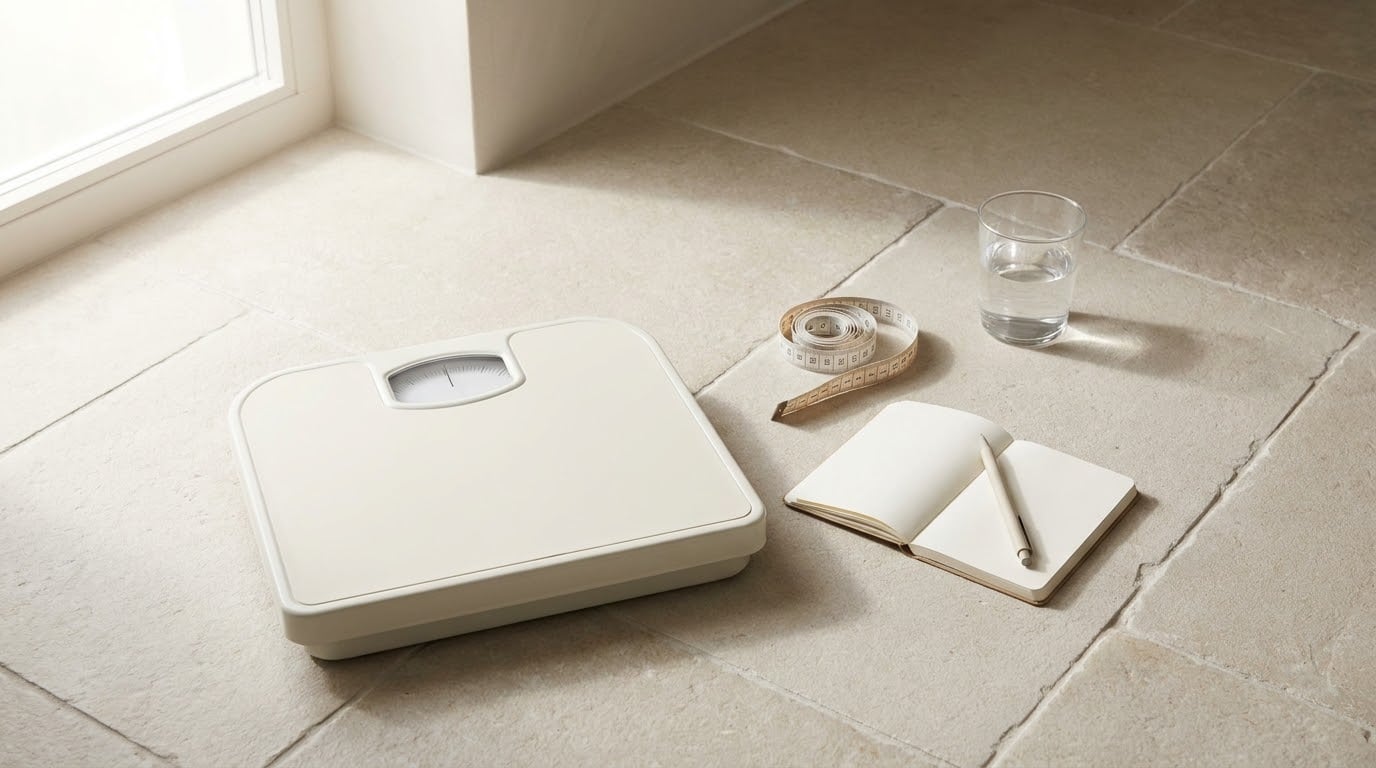
- A scale you trust. Any basic digital scale works. What matters is using it the same way each time, not the model.
- A soft tape measure. For waist, hip, and thigh measurements every two weeks. This is the cheapest and most reliable progress signal most people skip.
- A simple log. A note on your phone is fine. You need four fields: weight, waist, one habit, and one moment of the week you felt good.
- A ten-minute weekly check-in. Same day, same time, calendar blocked. Friday morning with coffee works as well as Sunday evening.
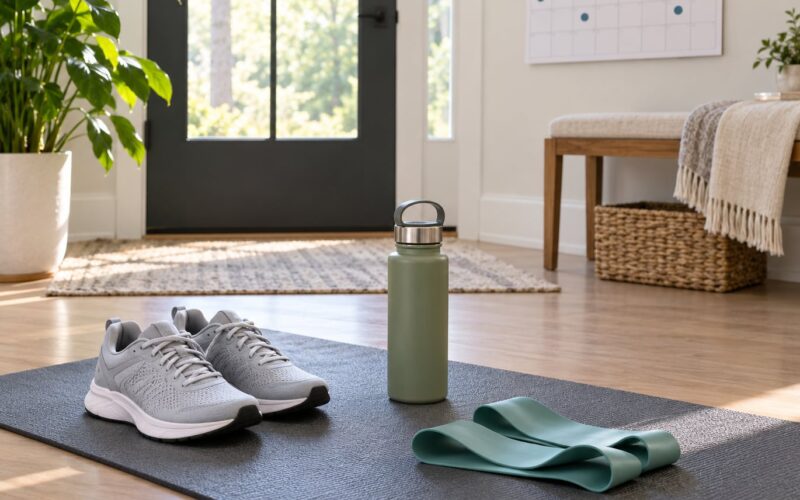
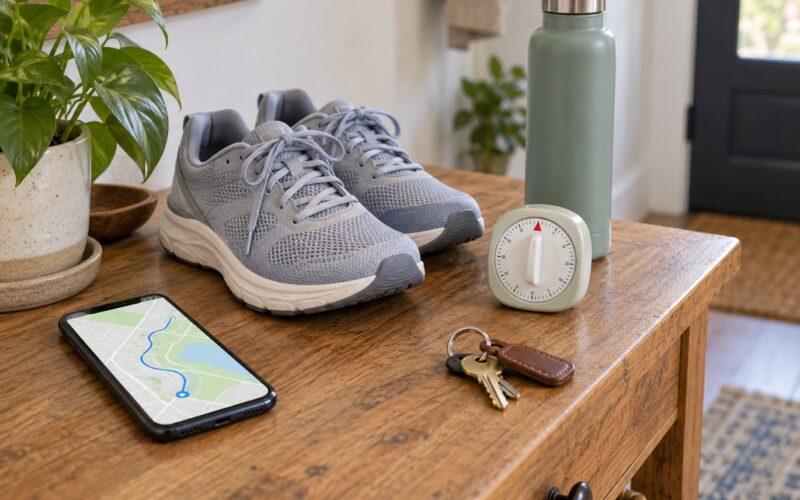
- Clothes that let you move. If getting to the gym or the walk feels like a negotiation, that friction is part of the stall.
- One person who knows your plan. A partner, a friend, a coach, or an online group. Support only helps if it is specific and scheduled.
No special gadgets are required. If you are spending money on a body composition scanner to solve a motivation problem, the scanner is not the problem.
How to Stay Motivated When the Scale Does Not Move: Step-by-Step
Seven steps, in the order that works best. Do not run them all at once. Most people get a clearer answer in week one and a decision in week four.
1. Confirm whether the scale has really stalled
A plateau is three to four weeks of no meaningful change in your weekly average weight, while your eating and movement habits stayed consistent. One flat week is not a plateau. It is Tuesday.
Before you change anything, average the noise. Weigh yourself the same way each day for two weeks, then look at the average of week one against the average of week two. That is your real number. Day-to-day swings of two to four pounds are normal and mean nothing on their own.
Here are the usual reasons the reading jumps around, and roughly how long each one hangs around.
| Cause of the flat or higher reading | What is happening | Typical duration |
|---|---|---|
| More salt or takeout | Sodium makes the body hold water to balance fluid levels | 2 to 4 days after the meal |
| More carbohydrates than usual | Each gram of glycogen stores roughly three grams of water with it | 2 to 5 days |
| Menstrual cycle | Hormonal shifts change fluid retention week by week | The week before and around your period |
| Poor sleep or high stress | Shorter sleep raises cortisol and water retention, and raises appetite the next day | 2 to 3 days per bad night |
| Constipation or bloating | Digestive contents change the number by a pound or more | 1 to 3 days |
| Alcohol | Dehydration then rebound fluid, plus late-night eating | 1 to 3 days |
| Starting strength training | New muscle growth, inflammation, and extra water in working muscles | 2 to 6 weeks |
| Illness | Immune response holds fluid; appetite often drops too | Duration of the illness |
| Under-eating | Lower intake lowers energy expenditure and can flatten the trend genuinely | Ongoing, until intake changes |
Two examples make this concrete. In the first, someone’s scale read flat for eleven days, but their weekly average moved down half a pound and their waist dropped a quarter inch. That is a plateau in appearance only. In the second, someone’s scale held steady for three weeks straight while their waist fell two inches and their lifting numbers climbed, which usually means fat is going and lean mass is replacing some of it.
2. Set progress goals beyond the number on the scale
Pick one or two non-scale measures and leave them alone the rest of the week. Two is the limit, because a longer list turns progress tracking into another source of stress.
Good candidates for a 30-day goal:
- Waist measurement at the navel drops half an inch, measured every two weeks.
- Walking without a break goes from 20 to 35 minutes, twice a week.
- One strength number improves, such as the weight on a squat or a dumbbell press for five clean reps.
- Sleep lands at seven hours or more on five nights a week.
- Afternoon energy holds steady past 3 p.m. without the crash that used to happen.
- Meal consistency: home-cooked dinner five nights a week, which is a habit, not an outcome.
- Jeans fit better at the waist, or the same belt hole works again.
Track these monthly, not daily. Weighing your worth in inches every morning is just the scale with a different number.
3. Review your routine without starting an extreme diet
Audit calmly, one category at a time, before you change anything. Look at portion sizes, protein at each meal, vegetables and fiber, fluid intake, sugary drinks, meal timing, movement, sleep, and stress.
In my experience the audit turns up something unglamorous rather than dramatic. Portions creep by a handful without anyone deciding to change. Breakfast is skipped, so the first solid food arrives at 2 p.m. and the evening stretches. Coffee carries four drinks that used to be water.
Make one adjustment and give it two full weeks. Add protein at breakfast, swap one sugary drink for water, add a vegetable to lunch, or move three scheduled workouts into the calendar. Then change nothing else so you know what worked.
Skip crash diets, skipped meals, punishing workouts, and cutting out entire food groups. Restricting harder usually produces a fast drop followed by a rebound, and the rebound is what people remember. If you have a history of disordered eating or compulsive tracking, talk to a doctor or a registered dietitian before tightening anything up, and consider working with a professional who specializes in that.
4. Build a repeatable weekly rhythm
A routine survives bad motivation days; inspiration does not. Put this shape in your calendar and adjust it to your life rather than starting from an ideal version of it.
- Monday: weekly weigh-in and waist measurement, logged, then the number is closed until next Monday.
- Tuesday and Thursday: strength session, 30 to 40 minutes.
- Wednesday, Friday, Saturday: a 30-minute walk, ideally outdoors.
- Daily: three balanced meals with protein at each, water through the day, and a wind-down that protects seven to eight hours of sleep.
- Sunday evening: ten minutes of journaling, planning meals, and confirming the week’s movement slots.
Two walk days is enough to begin, and easy to keep when a week goes sideways. Consistency at a moderate level beats heroic effort that collapses in month two.
5. Protect motivation with identity-based habits
Outcome goals live outside your control: lose 20 pounds, hit 140 pounds. Identity goals live inside it: I am someone who walks on Saturday, I am someone who cooks dinner most nights, I am someone who protects sleep.
Three tools make this stick. The two-minute rule: start the smallest version of the habit and stop after two minutes if you want. Ten minutes of walking counts, and so does putting on the shoes. An implementation intention ties the habit to a fixed trigger, such as “after I pour my morning coffee, I do ten minutes of walking before I open my laptop.” And a recovery plan decides in advance what happens after a miss: never twice in a row, and the next rep is always the smallest version.
Framing it this way changed how I talk to myself about missed days. A slip is data about a schedule, not a verdict on the person.
6. Use support, rewards, and professional guidance wisely
Pick a non-food reward you can attach to staying consistent rather than to a number. A movie night, new walking socks, a class booked in advance, an hour of reading. Food rewards tend to fight the thing you are trying to do, and they turn every win into another meal decision.
A reward ladder works well: small win gets a small reward, four consistent weeks gets a medium one, a photo set you actually like gets a bigger one. Judge the reward on the behavior, not the outcome, so a flat scale week can still earn one.
Support works best when it is scheduled. A ten-minute Sunday call with a friend who knows your numbers beats vague encouragement. For GLP-1 medications such as semaglutide or tirzepatide, a prescribing clinician or a registered dietitian is a good first stop, because weight loss on medication follows a different and often slower timeline than calorie-led attempts, and they can interpret your trend in that context.
Talk to a doctor or registered dietitian rather than pushing harder on your own if the stall comes with fatigue that does not lift, constant hunger, feeling cold all the time, very disturbed sleep, no menstrual cycles, rapid fluid change in your legs or abdomen, or a medication list that includes drugs known to affect weight. Those are signals worth an evaluation, not a motivation problem.
7. Run a four-week experiment instead of demanding instant results
Choose one change, not five. A good experiment is small enough to keep: eight thousand steps a day on weekdays, protein at breakfast, three strength sessions a week, or a consistent 7:30 p.m. wind-down.
Track four things weekly: energy level, adherence, waist measurement, and the sleep average. Note the weight trend but do not steer by it. At the end of four weeks, make a plain decision: keep it, adjust it, or replace it.
Progress usually shows up on the scale before you notice it elsewhere. Waist drops first, strength holds or climbs, sleep improves, then the average weight follows. Expecting the scale to move first, and only as proof that the plan works, is why so many people quit during a stretch that was actually working.
Common Mistakes
Motivation rarely collapses for one reason. It is usually one of these, and each has a straightforward correction.
Reacting to a single reading. One morning’s number is noise, not news. Correction: weigh daily if you like, but only look at the weekly average on Monday.
Treating the scale as the only measure. If the number is your sole feedback, a flat week wipes out weeks of real change. Correction: keep two non-scale measures and check them monthly.
Changing everything at once. A total overhaul makes it impossible to know what helped, and it is impossible to sustain. Correction: one change per two weeks.
Chasing a fast drop. Rapid loss usually comes with muscle and water, and it usually rebounds. Correction: aim for a rate you could hold for a year, not a week.
Skipping meals to compensate. Missing meals leads to low energy, more snacking later, and less strength in the gym. Correction: three regular meals with protein, and treat a bad day as one bad day.
Using exercise as punishment. Extra hard sessions after a flat reading tend to end in soreness, sleep loss, and another higher number on Monday. Correction: keep the planned session, drop the punitive extra.
Ignoring sleep and stress. Four hours of sleep raises hunger and water retention the next day, so the scale punishes you twice for the same short night. Correction: protect the wind-down, not just the workout.
Comparing your week to someone else’s month. Progress photos and timelines are edited highlights. Correction: compare this month to your own last month, nothing else.
Quitting the whole plan over two flat weeks. A stall is a pause, not a verdict. Correction: set a review date four weeks out, then hold the line until then.
For maintenance, the rules barely change. Keep weighing, keep two strength sessions a week, keep protein at breakfast, and keep the ten-minute weekly check-in. The people who hold their weight longest are usually the ones who never stopped measuring, even after they stopped trying to lose.
Frequently Asked Questions
How many weeks of no weight loss is a plateau?
Most people call it a plateau after three to four weeks with no meaningful change in your weekly average weight, while eating and exercise habits stayed consistent. Two flat weeks is not enough to judge, because water, sodium, carbohydrate intake, and your cycle can move the reading more than fat does in that window. Use the weekly average, and only treat it as a plateau when the average itself has stopped trending.
How often should I weigh myself on a diet?
Daily weighing works well if you only look at the weekly average, because daily numbers average out the noise. Weigh under the same conditions each time: first thing in the morning, after using the bathroom, before food or drink, in the same clothes or none. If a daily number sends you into a spiral, weigh once a week instead and add a monthly waist measurement so you still get feedback.
How do I track progress without a scale?
Use waist and hip measurements every two weeks, progress photos taken in the same lighting, time, and poses, and a strength number from your training. Add sleep hours, resting heart rate, energy levels, and how consistently you are eating and moving. None of these are perfect, but together they catch changes that a weekly weight average misses, especially when fat loss is happening alongside muscle gain.
How do you break a weight loss plateau?
Start with measurement, because many apparent plateaus are water. Then change one variable for two to three weeks: slightly larger portions at meals with more protein, more daily movement, two or three strength sessions, or a consistent sleep window. Avoid crash diets and extra punishing workouts, which tend to cost muscle, energy, and sleep. If nothing has moved in four to six weeks despite consistent effort, a registered dietitian can help you assess intake and medical factors.
What is the hardest age to lose weight?
Many people notice the biggest change in their forties and fifties, during perimenopause and menopause, when shifting hormones, changes in lean mass, sleep quality, and stress all affect weight. It is not a character flaw, and it is not a lost cause. Some changes in that range also need a medical look, especially a stalled loss alongside fatigue, temperature intolerance, or cycle changes, so a doctor or registered dietitian is a reasonable first call.
When should I see a doctor about weight that will not move?
Book an appointment if weight has not changed for four to six weeks despite consistent effort, or sooner if the stall comes with unusual fatigue, constant hunger, feeling cold, disturbed sleep, no menstrual cycles, rapid fluid change, or a medication list that includes drugs known to affect weight. Thyroid problems, PCOS, insulin resistance, perimenopause, and some prescriptions can all slow weight loss. A doctor can also check whether you are under-eating without realizing it.
Conclusion
Do one thing today: pull out the last four weeks of weigh-ins, average them by week, and see whether your weight is genuinely flat or just noisy. Then pick one non-scale measure, a waist number or a walking distance, and write it down for the next month.
From there, change a single part of your routine and give it four weeks. Flexible consistency beats perfect weeks, and the scale is one signal among many, not the scoreboard. If the stall persists with symptoms that worry you, a doctor or registered dietitian is the right next call, not a harsher plan. Reviewed for 2026.