To build an exercise habit that sticks, make the workout small enough that you cannot talk yourself out of it, attach it to a cue you already follow every day, and put it on your calendar at a specific time. Most beginners need 8 to 12 weeks, not 21 days. Start with a 10-minute minimum version and track whether it happened, not how hard it was.
That approach works because habits are less about willpower than about the sequence they run in: a cue, a routine, a reward. When the sequence repeats long enough, the cue alone starts the workout.
The mistake most people make is designing the perfect routine first and shrinking it later. Almost nobody shrinks it. Design the smallest version that still counts, prove you can do it for a month, then build up.
This guide is for beginners, for people restarting after a break, and for anyone who has started five times and quit four. You do not need a gym membership, a fitness tracker or a specific sport to follow it.
Table of Contents
- What You Need
- Step-by-Step: How to Build an Exercise Habit That Sticks
- Choose One Activity You Can Repeat
- Set a Minimum Routine You Can Do on Busy Days
- Attach Exercise to an Existing Daily Cue
- Schedule Specific Times and Places
- Track Completion, Not Perfect Performance
- Use a Missed-Day Recovery Rule
- Increase Difficulty Gradually
- Make Enjoyment and Recovery Easy
- Review the Habit Every Two Weeks
- Common Mistakes
- Frequently Asked Questions
- How long does it take to build an exercise habit?
- What is the best exercise for someone trying to build a habit?
- What should I do after missing a workout?
- How many times a week should a beginner exercise?
- How do I stay motivated to exercise when I do not feel like it?
- How can I make exercising a habit instead of a one-time effort?
What You Need
Four things, and none of them cost money. One activity you can repeat, kit that is ready before you need it, a fixed time and place, and a way to record sessions. Everything else comes later, and beginners can do all of this at home.
- One repeatable activity. Walking, cycling, swimming, resistance training or a body-weight routine. Pick one and stay with it. Adding a second activity in the first month splits your attention across two new things.
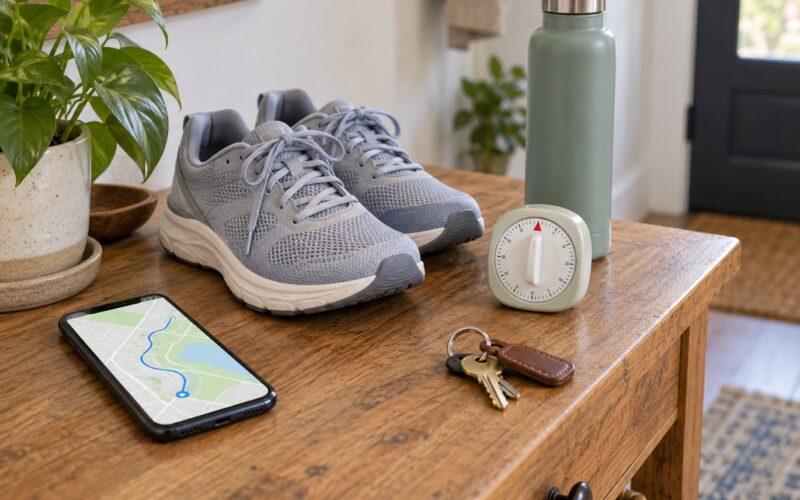
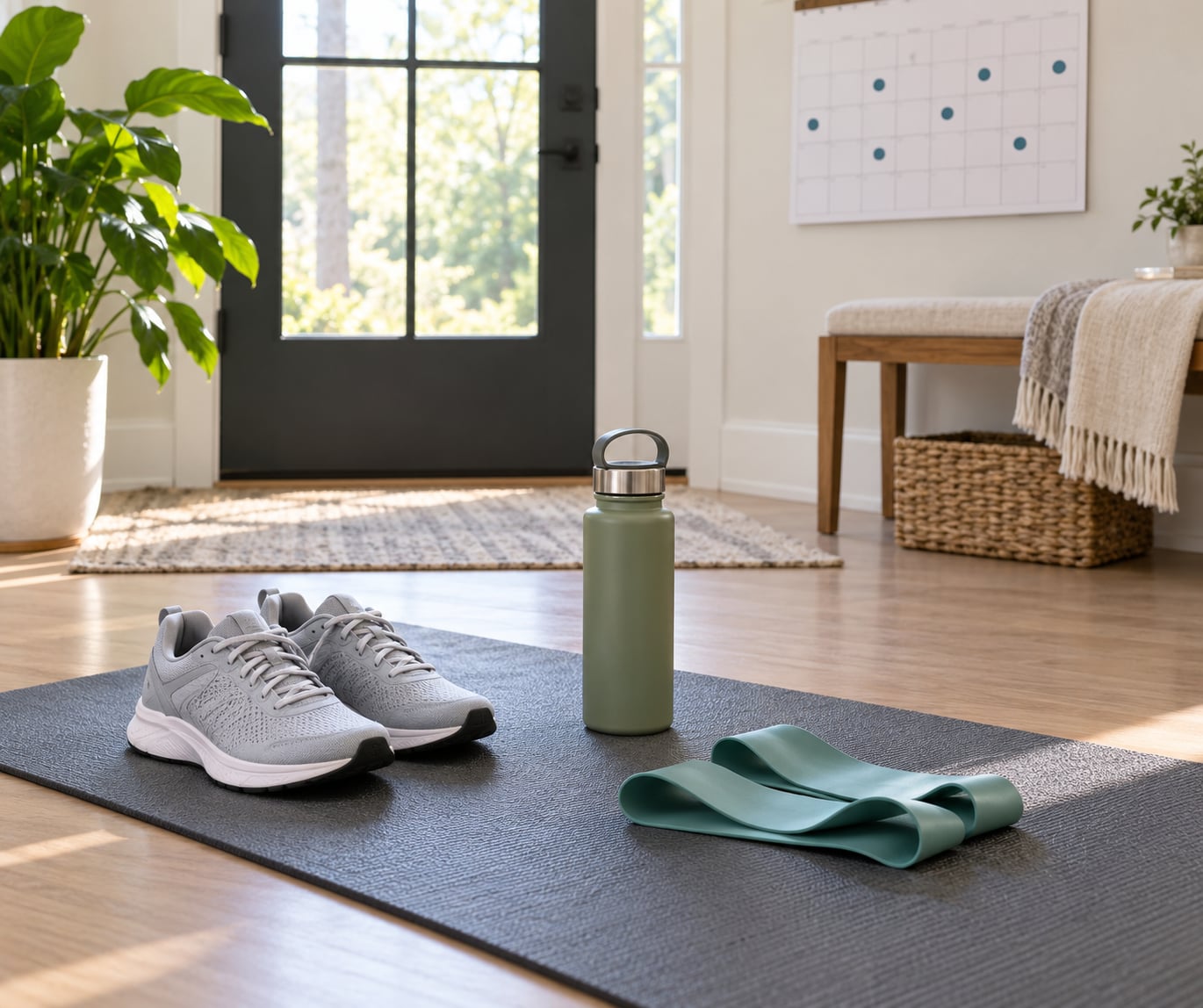
- Clothes and kit ready in advance. Shoes by the door, a mat unrolled, water filled the night before. If getting dressed takes more than a minute, the session is at risk.
- A fixed time and place. Not “sometime this week” but a named slot, with the location decided in advance.
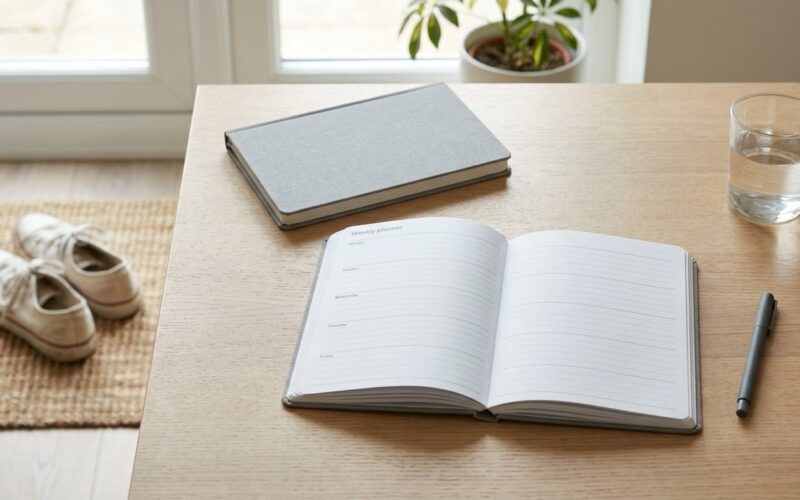
- A tracking method. A paper calendar, a habit app, a checkmark on the fridge or a smartwatch step goal. It needs to take under ten seconds to use.
- A backup plan. A second activity for the days the gym is closed, the weather is bad or you are travelling.
The U.S. Department of Health and Human Services recommends at least 150 minutes of moderate-intensity aerobic activity a week, plus muscle-strengthening work on two days. That is the destination, not the starting line. If you have a heart condition, an injury, are pregnant, or have not been active for years, check with a doctor or physical therapist before you start.
Step-by-Step: How to Build an Exercise Habit That Sticks
Choose One Activity You Can Repeat
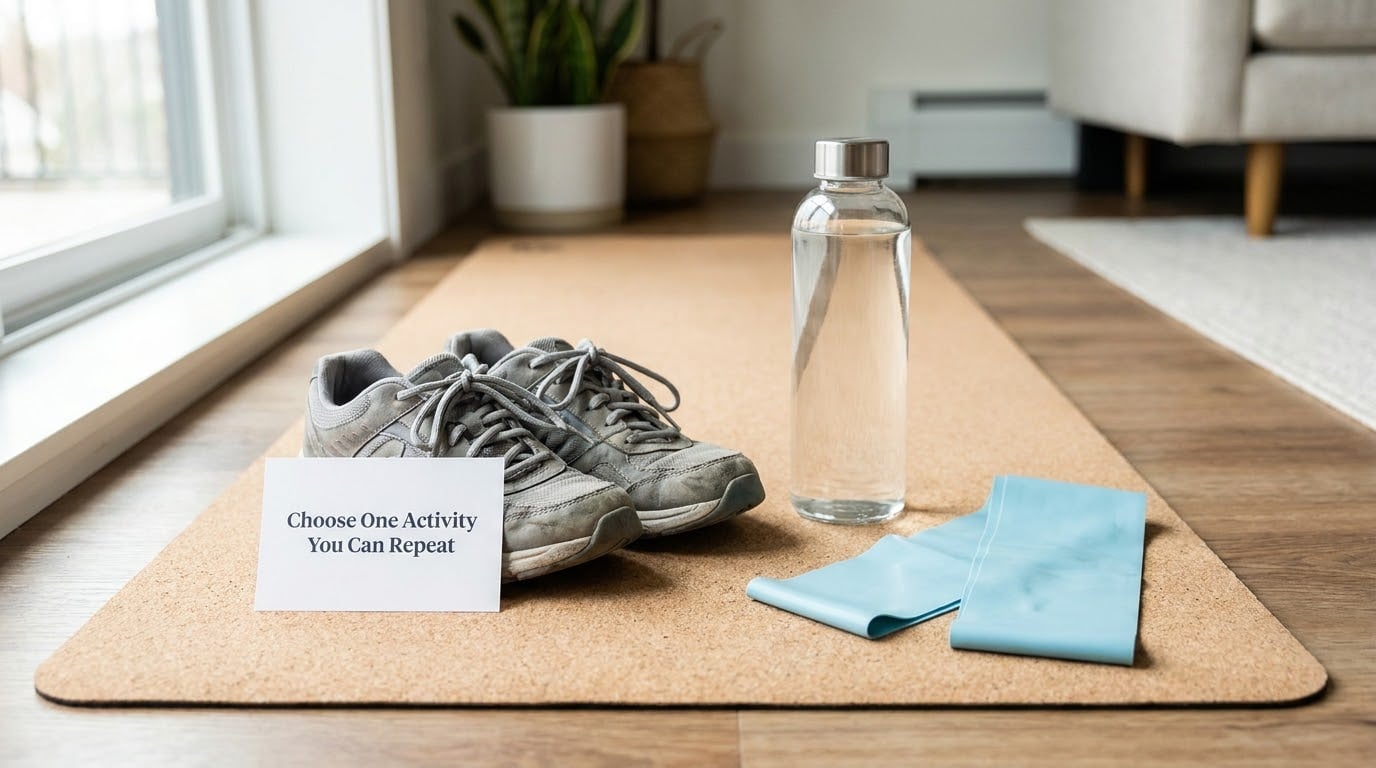
Pick something you can do on a tired evening without negotiation. The test is simple: could you do it tomorrow without booking anything, driving anywhere or buying a single thing? Walking around the block, riding a bike or a body-weight circuit at home passes. A new class with a waitlist or a sport with expensive gear does not.
You are choosing the activity you will still be doing in month six, which is often not the activity that sounds most impressive right now. When in doubt, choose the boring one you would not mind repeating on a rainy Tuesday.
You will know this step worked if you can name the activity, the place and the starting duration without hesitation.
Set a Minimum Routine You Can Do on Busy Days
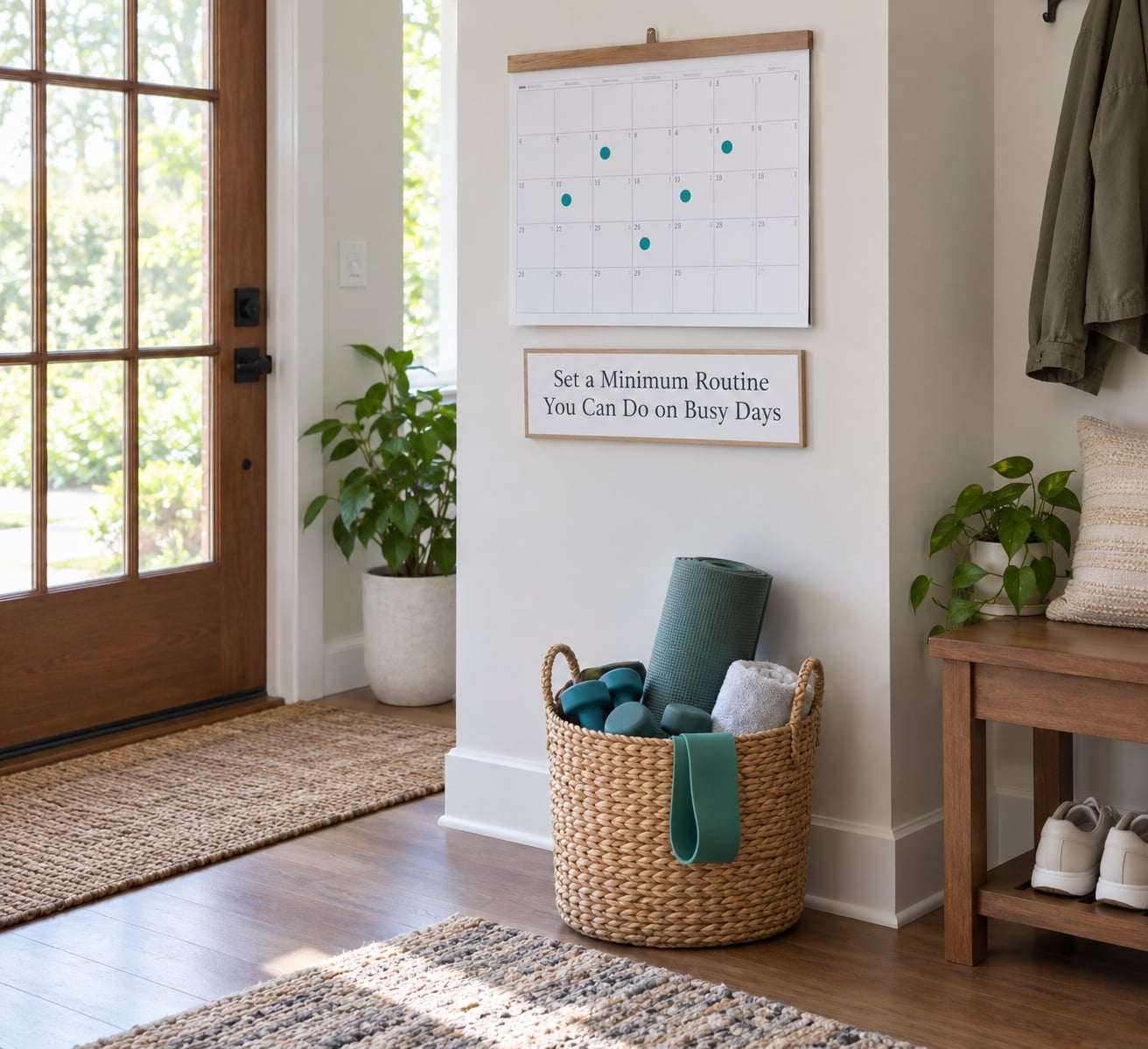
Build two versions of the workout. The full version is your ideal session, maybe 30 to 40 minutes. The floor version is five to ten minutes and should be so easy that you cannot construct a good excuse to skip it.
A floor session might be a 10-minute walk, two sets of squats and push-ups in your living room, or one round of a circuit you have done a hundred times. The point is not fitness gains. The point is protecting the cue-to-reward link, so the habit does not break on a bad week.
Write both versions down. If your floor version lives only in your head, you will negotiate with yourself every time you are tired, and you will lose the negotiation more often than not.
Some is always better than none. This is the single most repeated piece of advice from people who have kept a streak going for months.
Attach Exercise to an Existing Daily Cue
A new habit has no trigger, which is why it needs one borrowed from something you already do without thinking. Cues work best when they are obvious, repeated daily and followed immediately by the action.
Turn it into an if-then plan and say it out loud once: if I finish my coffee at 7am, then I walk for fifteen minutes. If I come in from work, then I change into my training clothes and do the floor routine. Writing it down and reading it before a session measurably improves follow-through, because the decision is already made when the moment arrives.
| Existing cue | Attached exercise action | Example |
|---|---|---|
| First coffee of the day | Walk before work | 15 minutes around the block, no phone |
| Coming in from work | Change into training clothes, start the floor routine | 10-minute body-weight circuit |
| Lunch break at work | Fast walk | 20 minutes out and back without your phone |
| Evening shower | Stretch or mobility | 8 minutes of hips and shoulders |
| Kids’ bedtime | Own session once they are down | 25 minutes of strength training |
| Weekend morning coffee | Longer session | 60-minute cycle or gym session |
Schedule Specific Times and Places
A floating intention like “I will work out more this month” gives your brain an open field to skip. An appointment does not. Put the session in your calendar with a start time, the place, the activity and a minimum duration, then treat it the way you would treat a dentist appointment.
Time of day matters less than consistency. Morning sessions tend to survive busy weeks because nobody can cancel them, but evening sessions survive if you own your evening. If you keep missing the slot you chose, you did not choose wrong, you chose the wrong slot. Move it and give it another three weeks.
Block the time in advance and defend it the way you defend a meeting with people who matter to you.
Track Completion, Not Perfect Performance
Mark whether the session happened, nothing else. A calendar with a checkmark, a paper grid taped to the fridge or a habit app are all fine. What you are tracking is a yes or a no, because that is the only variable you control.
Step counts, calories, pace and load are interesting data, but they turn every ordinary session into a pass or a fail, and one bad number is enough to break the streak in your head. Performance metrics belong in the review every two weeks, not in the daily record.
Set a process goal instead of an outcome goal: “I train four times this week” beats “I lose ten pounds this month.” One describes what you do, the other depends on things that have nothing to do with your effort.
Use a Missed-Day Recovery Rule
Decide now what happens after a missed session, while you are calm. The rule that works best is simple: never miss twice. One lapse is noise, two in a row is the start of a new pattern.
A lapse is a single missed session. A relapse is when you stop trying to get back. Treat them differently. After a lapse, resume at the next scheduled slot with the floor version. Do not add extra minutes to compensate, do not shift the workout to 11pm to make up for it, and do not restart the whole plan from zero on Monday.
Prepare for the lapses you can predict: travel, illness, injury, a new work shift and holidays all interrupt routines. Each one gets a written backup, so recovery is a plan you already have rather than a decision you have to make while tired.
Increase Difficulty Gradually
Add a little only after the routine feels ordinary. If two sessions a week is easy and unremarkable, add a third session, or add five minutes to the sessions you already do. Then hold there for another two weeks before changing anything else.
Increasing load, distance or speed while the habit is still fragile is the fastest way to injure yourself and quit. Fatigue that lasts into the next morning is a clear signal that you moved too fast, not that you need more effort.
Progression is for the months after the habit forms, not for the first month. In the early weeks your job is attendance, not records.
Make Enjoyment and Recovery Easy
Boredom, not exhaustion, ends most exercise routines. People stop repeating a workout they no longer find interesting, so keep a rotation of two or three activities under the same cue. Walking, cycling and a strength session can share the same slot on different weeks without breaking the habit.
Look after the boring parts too: comfortable clothing you are happy to put on, water within reach, a playlist or podcast queued before you start, and real rest days built into the week. Sleeping badly or training on sore legs every session leaves you too tired to keep the habit.
Stay at an intensity where you can still talk in full sentences. That is roughly moderate effort, it is where most health guidelines point, and it is sustainable for years.
Review the Habit Every Two Weeks
Put a 15-minute review in the calendar at the end of every two weeks and answer four questions. How many sessions did I complete? How is my energy during and after? What did I enjoy? What got in the way?
Then change one thing: the time, the activity, the minimum routine or the location. Change only one, or you will not know what helped.
Expect a dip in motivation around weeks three and four, when the novelty wears off and the sessions stop being exciting. That drop is normal and it is not evidence that the habit failed. Keep the cue, keep the slot, and shrink the session if you need to. Automatic behaviour arrives somewhere between two months and a year, and the median in the University College London habit study was 66 days with a range from 18 to 254 days, which is a good argument for protecting the schedule rather than chasing motivation.
Common Mistakes
Most failed exercise habits come down to six repeatable errors. Each has a straightforward fix.
1. Setting a goal you can only hit on a good day. A 60-minute session after work is a wish, not a plan. Set the floor version as your real commitment and treat the longer session as a bonus. You are building attendance first.
2. Changing activity every week. Novelty feels productive, but each switch resets the learning and the cue. Keep one activity for at least six weeks before you judge it. People with the longest streaks in fitness forums usually describe doing the same simple routine for months, not constantly chasing something new.
3. Waiting for motivation to arrive. Motivation is a feeling that peaks and fades, and it rarely shows up on its own. Systems do: a calendar slot, a cue and clothes ready the night before. Act first and the feeling tends to follow the action, not the other way round.
4. Treating one missed day as a broken streak. This is all-or-nothing thinking and it is the fastest route to quitting. One missed session changes nothing statistically. Two in a row is the pattern worth interrupting, which is why the never-miss-twice rule works as a simple guardrail.
5. Progressing too quickly. Adding volume in the first month often ends in soreness, an injury and a break. Increase one variable at a time, only after two easy weeks, and step back when fatigue lingers.
6. Expecting visible change in the first four weeks. Energy and mood often shift within a couple of weeks, while physical changes take far longer. Judge the early phase by completion, not by the mirror. Checking for results before they can arrive is a common reason people quit a routine that was working.
A few motivation tips that hold up better than slogans. Pair exercise with something you enjoy, like a podcast, music or an outdoor route with a coffee stop. Tell one person your schedule so somebody notices when you skip. Keep a visible record, because a calendar of checkmarks is harder to argue with than memory. And give yourself permission to do less: a short session still counts, and a habit built on “some is always better than none” survives contact with real life.
Frequently Asked Questions
How long does it take to build an exercise habit?
Two months is a realistic middle. A University College London study of 96 people found that reaching automatic status took a median of 66 days, with a range from 18 to 254 days. Missing one session did not materially delay the process, but the behaviour had to be repeated on most days. Plan for 8 to 12 weeks before you judge whether the habit worked.
What is the best exercise for someone trying to build a habit?
The one you would still do on a bad day. Walking, cycling, swimming and body-weight routines all work because they need no booking, no commute and no membership. Choose something you enjoy and can repeat without a decision. Intensity matters less at the start than attendance, because beginners drop routines that feel too hard too soon.
What should I do after missing a workout?
Return to your minimum routine at the next scheduled slot instead of adding time to compensate. One skipped session does not undo weeks of work, and doubling up raises soreness and injury risk. If you miss several in a row, restart with the shortest version you would genuinely do on your worst day, then rebuild from there.
How many times a week should a beginner exercise?
Three to five sessions a week is a workable range, and they can be short. U.S. Department of Health and Human Services guidelines recommend at least 150 minutes of moderate-intensity aerobic activity weekly, plus muscle-strengthening work on two days. Short bouts count, so ten minutes on five days meets the aerobic target.
How do I stay motivated to exercise when I do not feel like it?
Lower the bar instead of chasing the feeling. Keep a floor version ready, one you can finish in under ten minutes with no planning or equipment changes. Motivation often dips in the third or fourth week as the novelty fades, and a routine short enough to start on a low day gets you through that stretch.
How can I make exercising a habit instead of a one-time effort?
Repeat the same action at the same cue, in the same place, at the same time, and reward yourself straight afterwards. Write it as an if-then plan: if I finish my coffee at 7am, then I walk for fifteen minutes. The early weeks are deliberate, and later the cue alone starts the workout without a decision.
Start with one small thing today. Pick the activity, decide your floor version, attach it to a cue you already follow, and put the first three sessions in your calendar before you close this page. Everything else, including progression, tracking and recovery, comes after those three sessions exist.