The healthy snack ideas for weight loss that actually hold you until dinner all share the same build: protein, fiber, and a bit of unsaturated fat. That mix lands somewhere between 100 and 250 calories for a normal serving, which is the range most general nutrition guidance points to.
Most of these take under five minutes. Several are make-ahead, several travel, and a few are sweet enough to cover a dessert craving without turning into a second dinner.
Table of Contents
- Healthy Snack Ideas for Weight Loss at a Glance
- 1. Greek Yogurt with Berries and Walnuts
- What makes this combination work for healthy snack ideas for weight loss
- 2. Apple Slices with Peanut Butter
- 3. Hummus with Carrot and Cucumber Sticks
- 4. Cottage Cheese with Pineapple and Cinnamon
- 5. Boiled Eggs with Cherry Tomatoes
- 6. Air-Popped Popcorn with Nutritional Yeast
- 7. Banana and Almond Butter Toast
- 8. Frozen Peas with a Small Bowl of Guacamole
- 9. Edamame with a Pinch of Sea Salt
- 10. Tuna and White Bean Lettuce Cups
- 11. Pear with Cheese and a Few Whole-Grain Crackers
- 12. Dark Chocolate with Walnuts
- 13. Cauliflower Rice Cakes with Black Bean Dip
- 14. Chia Pudding with Raspberries
- 15. Whole-Grain Crackers with Salmon and Cream Cheese
- How Many Calories Should a Weight Loss Snack Have?
- Snacks for Work, Travel and Late-Night Hunger
- Frequently Asked Questions
- What are the best snacks for weight loss?
- Are fruits healthy snacks for weight loss?
- How many calories should a weight-loss snack have?
- Can snacks help with hunger management?
- What healthy snacks can I eat at work or while traveling?
- Conclusion
Healthy Snack Ideas for Weight Loss at a Glance
Use this table to match the snack to your situation rather than picking the same one every day.
| Snack | Best for | Main benefit | Prep time | Portable |
|---|---|---|---|---|
| Greek yogurt, berries, walnuts | Afternoon slump | Protein plus fruit fiber | 2 min | Yes, in a jar |
| Apple slices with peanut butter | Desk or commute | Fiber and healthy fat | 3 min | Yes |
| Hummus with carrot and cucumber sticks | Sharing or grazing | Volume with plant fat | 5 min | Yes, packed separately |
| Cottage cheese, pineapple, cinnamon | Late afternoon | Slow-digesting protein | 2 min | Yes |
| Boiled eggs with cherry tomatoes | Post-workout | Compact protein | 12 min to boil | Yes, peeled |
| Air-popped popcorn with nutritional yeast | Craving something crunchy | Big volume, few calories | 3 min | Yes, in a bag |
| Banana and almond butter toast | Pre-workout fuel | Carbs plus healthy fat | 4 min | So-so |
| Frozen peas with guacamole | Saving a bag of chips | Cold crunch, fiber | 2 min | Keep the dip separate |
| Edamame with sea salt | Plant-based days | Protein and fiber | 6 min | Yes, in pods |
| Tuna and white bean lettuce cups | Lunch replacement | Protein without bread | 8 min | Better eaten fresh |
| Pear, cheese, whole-grain crackers | Evening grazing | Fruit, fat, crunch | 4 min | Yes |
| Dark chocolate with walnuts | Sweet cravings | Antioxidants, small portions | 1 min | Yes |
| Cauliflower rice cakes, black bean dip | Crunchy and savory | Vegetable-forward crisp | 15 min | Yes |
| Chia pudding with raspberries | Make-ahead mornings | Omega-3 fats and fiber | 5 min plus chill | Yes |
| Crackers with salmon and cream cheese | Protein at a party | Omega-3s and carbs | 4 min | Yes |
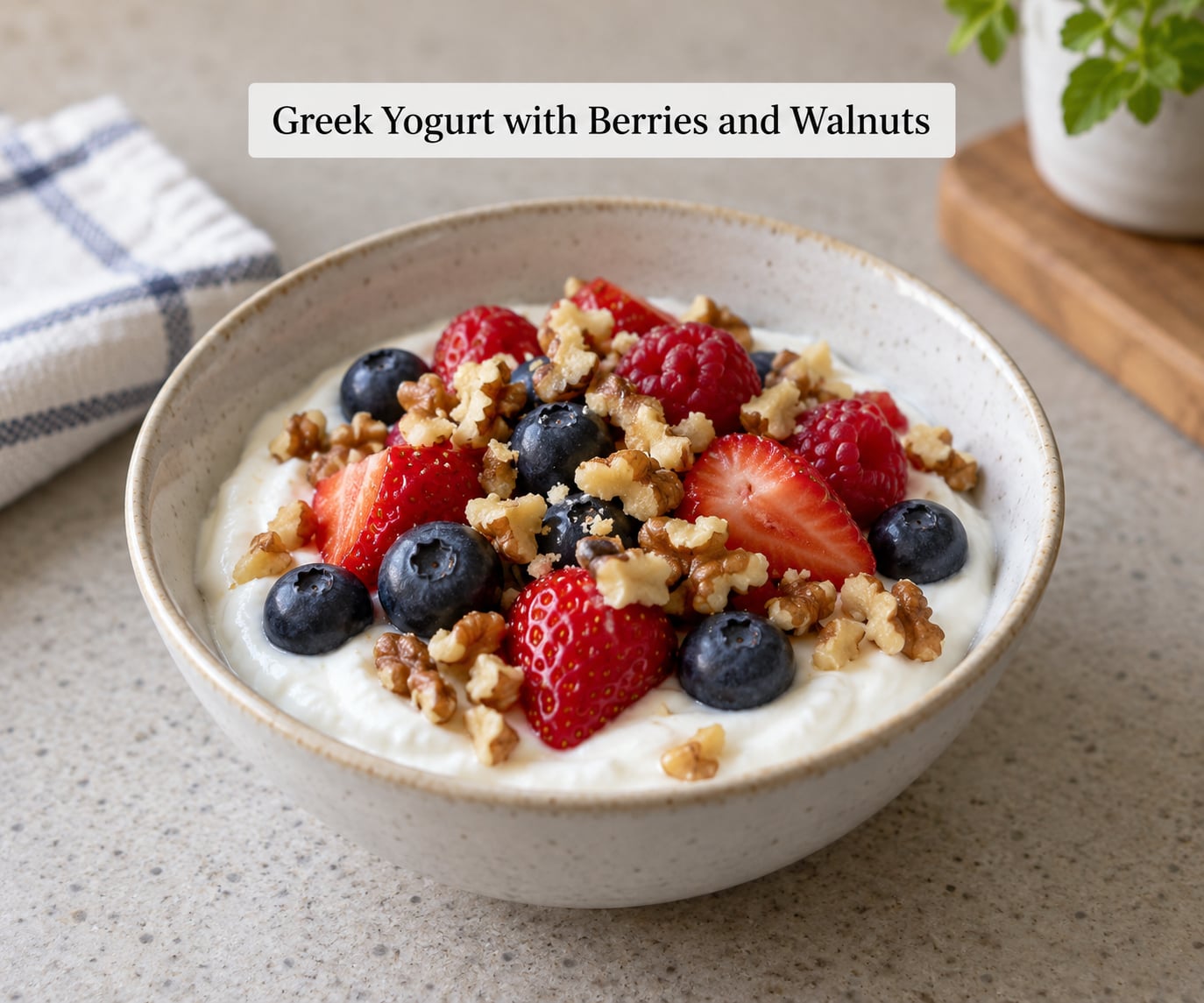
1. Greek Yogurt with Berries and Walnuts
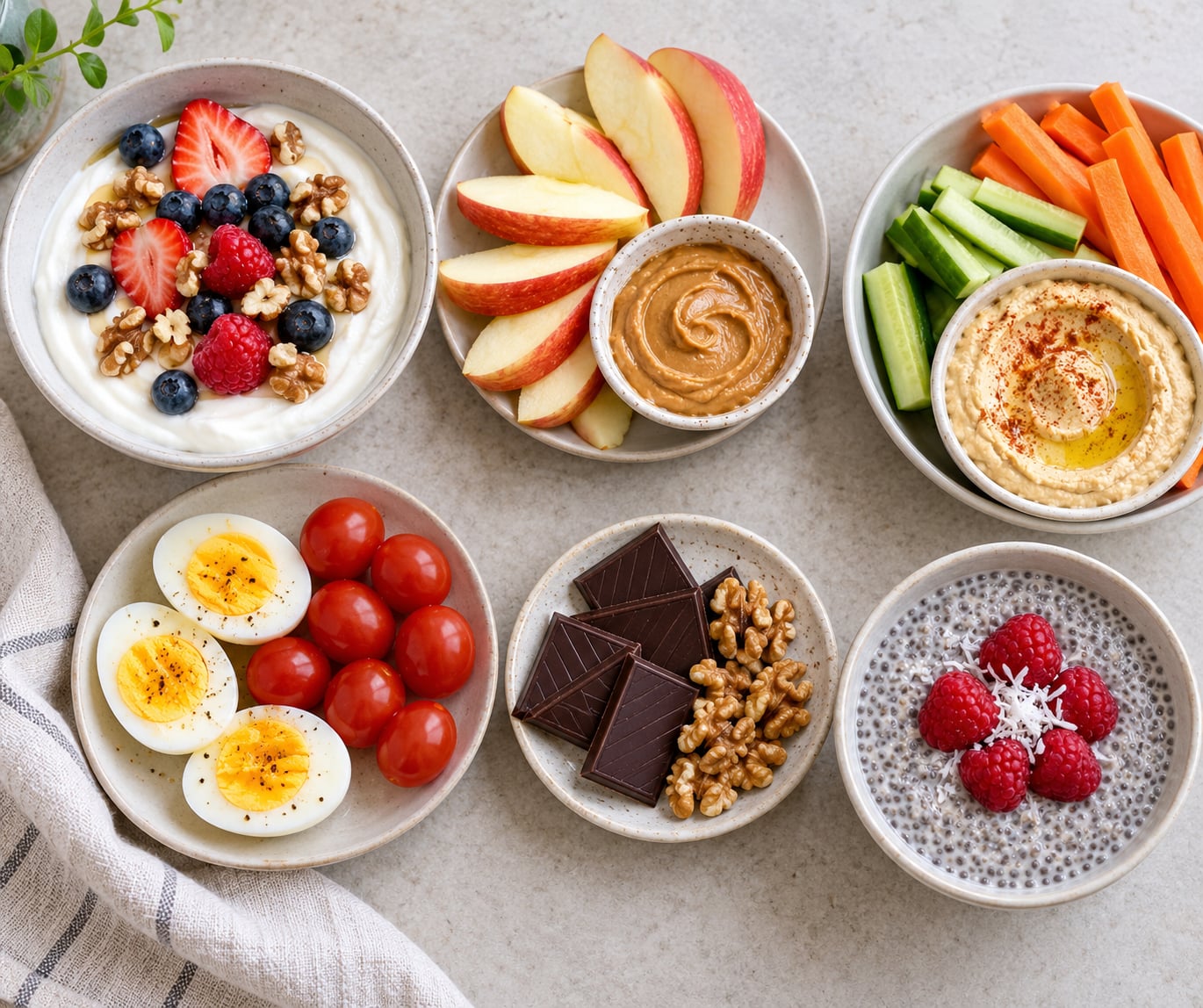
This is the snack I fall back on most often. Plain Greek yogurt brings protein, berries bring fiber and sweetness without a lot of added sugar, and walnuts add a dose of unsaturated fat so you don’t go looking for something else twenty minutes later.
Pick plain, unsweetened yogurt and let the fruit do the sweetening. A 3/4 cup serving is plenty.
To make it: spoon the yogurt into a bowl, add a handful of berries or a few spoonfuls of chopped pineapple, and scatter on a tablespoon of chopped walnuts. Stir once and eat right away.
What makes this combination work for healthy snack ideas for weight loss
Protein and fiber are the two macronutrients that most affect how long you feel satisfied after eating. Yogurt covers the protein side, fruit covers fiber, and the walnuts add fat, which slows gastric emptying and keeps the whole thing from leaving you peckish.
Skip flavored varieties with a long ingredient list. The ones sweetened with sugar can taste fine but don’t do anything extra for fullness.
2. Apple Slices with Peanut Butter
This one travels well and takes almost no effort. Apples have fiber and water in them, and peanut butter adds fat that slows digestion so the snack doesn’t evaporate in twenty minutes.
Slice one medium apple, dip the slices in 1 to 2 tablespoons of peanut butter, and eat it away from your desk. A light dusting of cinnamon on the apple cuts the sweetness without adding anything.
Nut butters are easy to overpour. Measure them with a tablespoon rather than dipping a spoon straight into the jar. r/loseit threads from people losing weight often name exactly this combination, with peanut butter portioned out rather than free-poured, as the trick that makes it work.
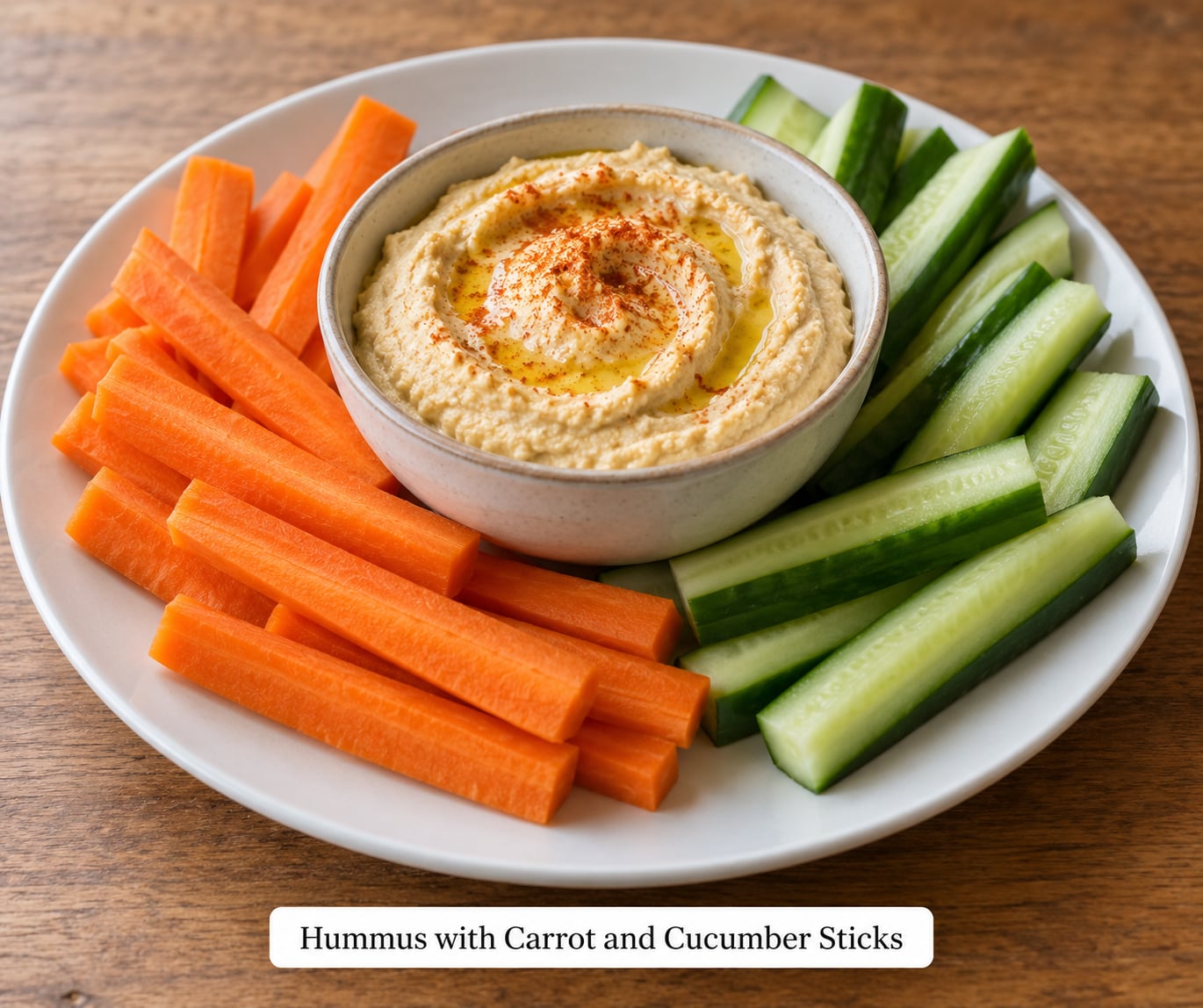
3. Hummus with Carrot and Cucumber Sticks
Hummus and raw vegetables is the swap that forum users in r/AskReddit credit with helping them stop finishing bags of chips. Vegetables add water and volume, hummus contributes fat and some protein.
Cut a handful of carrots and cucumber into sticks, add 2 to 3 tablespoons of hummus to a small bowl, and skip the crackers. Ten minutes of chopping covers roughly three snacks.
Make your own if you want to control the salt. Store it in the fridge for no more than three or four days, and keep it in the coldest part of the fridge rather than the door.
4. Cottage Cheese with Pineapple and Cinnamon
Cottage cheese is one of the highest-protein snacks you can build without cooking, and the texture works with fruit better than most people expect. Fresh pineapple is firm enough to sit on top without turning the bowl watery.
Serve half a cup of cottage cheese with a handful of diced pineapple and a sprinkle of cinnamon. If you like it sweeter, add a teaspoon of honey rather than sweetened yogurt.
There’s no fixed portion that works for everyone. What fits depends on your meal sizes, how much you moved today, and your calorie target. A registered dietitian can help you work out a number that suits you rather than guessing.
5. Boiled Eggs with Cherry Tomatoes
Eggs are compact, shelf-stable and portable, which makes them the reliable choice on days when you can’t plan ahead. Cherry tomatoes add something fresh and watery to balance the richness.
Boil a dozen eggs at once on Sunday. Six hard-boiled eggs sit in the fridge for about a week; refrigerate them in the shell, not peeled.
For one snack: two peeled eggs with a handful of halved cherry tomatoes, a pinch of salt and black pepper, and a small drizzle of olive oil if you want more fat. Eat at room temperature within two hours.
6. Air-Popped Popcorn with Nutritional Yeast
Popcorn is one of the few snacks where you can eat a large volume for a small number of calories. It works best with the air-popper or a microwavable plain bag, since kettle-popped varieties carry a lot of oil.
Fill a large bowl, then add 2 to 3 tablespoons of nutritional yeast for a savory, cheese-adjacent flavor. A little melted butter or olive oil goes on top, but measure it. r/PetiteFitness users commonly cite two cups of plain popcorn at roughly 120 calories as their go-to crunchy option.
Avoid anything coated in caramel or excessive butter. Those are desserts with popcorn mixed in.
7. Banana and Almond Butter Toast
This one sits closer to a small meal, so it’s better as a pre-workout snack or a mid-morning pick-me-up than an afternoon bridge. Bread and banana give quick energy, and the almond butter slows it down.
Toast one slice of whole-grain bread, spread on one tablespoon of almond butter, and slice half a banana over it. If you train in the morning, eat it 45 to 60 minutes beforehand.
Watch the portion on the nut butter. r/PetiteFitness threads include a low-carb tortilla with 1 tablespoon of peanut butter and half a banana at around 200 calories, which is the same principle with fewer grams of bread.
8. Frozen Peas with a Small Bowl of Guacamole
Frozen peas are a vegetable with a portion built right in, so there’s no measuring involved. They taste best straight from the freezer or rinsed briefly in cold water.
For one serving, microwave about 3/4 cup of peas for 2 to 3 minutes, or eat them cold like candy. Put a tablespoon or two of guacamole in a small bowl beside them and use them to scoop it up.
Avocado is easy to overdo. Keeping the dip in a separate small bowl is the whole point of this snack.
9. Edamame with a Pinch of Sea Salt
Edamame is a plant-based snack with real protein and fiber, and it comes out of the pod already portioned. Half a cup of shelled edamame carries roughly 8 grams of protein.
Bring frozen edamame to a boil, cook for 5 to 6 minutes, drain, and salt lightly. Shelled versions eat faster and travel better; pods keep more of the fiber if you have the time.
Choose the plain or lightly salted roasted bags for shelf-stable snacking. If you buy unsalted frozen edamame, a pinch of sea salt or a squeeze of lemon is enough.
10. Tuna and White Bean Lettuce Cups
Mixing canned tuna and white beans with a little mustard and lemon, then spooning it into lettuce cups, gives you the filling part of a sandwich without the bread. It’s closer to lunch than to a snack, so plan for it accordingly.
Drain one can of tuna and half a can of white beans, mash them together with a spoonful of mustard, a squeeze of lemon, and black pepper. Spoon the mixture into eight to ten large lettuce leaves and fold them closed.
When you buy the tuna, check the label for sodium and pick the lower-sodium option if you eat a lot of canned fish. This is general food guidance rather than advice about your diet — if sodium or mercury intake is a concern for you, ask your doctor or a registered dietitian.
11. Pear with Cheese and a Few Whole-Grain Crackers
A ripe pear is naturally sweet, which means a small amount of cheese is enough to make it feel like a designed snack rather than plain fruit. The crackers add something to chew.
Slice one pear, add an ounce of cheese cut into small pieces, and three or four whole-grain crackers. Cheddar, brie and gouda all work, and soft cheese is the better match — a firm slice doesn’t pair as well with the pear’s softness.
This is one to enjoy without rules. Portion control matters here mainly because both cheese and crackers are calorie-dense, so the ounce and the three-cracker count are what keep the total reasonable.
12. Dark Chocolate with Walnuts
A square of dark chocolate with a few walnuts satisfies a sweet craving without the cookie, and it takes about a minute to assemble. Most people stop after two squares once the chocolate is the good kind.
Aim for 70% cacao or higher. Have two squares and a small handful of walnuts, and sit down somewhere other than the kitchen counter if you can, because standing up with the bag is how this one turns into a hundred calories extra.
Read the label, since serving sizes vary a lot between bars. And count it in your day like any other snack. A food that fits your overall pattern is a fine food.
13. Cauliflower Rice Cakes with Black Bean Dip
Cauliflower rice cakes crisp up like crackers but are made mostly from vegetables, so the snack is lighter than a bag of chips without feeling like one. The bean dip is what turns it into a proper snack rather than a bland disc.
Coat 2 cups of cauliflower rice with a little olive oil, salt, and cumin. Spread it on a lined baking sheet and roast at 400°F for 12 to 15 minutes, turning once, until the edges are golden. They crisp further as they cool.
Blend half a can of black beans with lime juice, garlic, cumin, and a splash of water. That’s plenty of dip for several pieces.
14. Chia Pudding with Raspberries
Chia pudding is the one snack here you make the night before. Chia seeds swell in liquid into something with the texture of a loose pudding, and the seeds bring fiber along with omega-3 fats that help with fullness.
Stir 3 tablespoons of chia seeds into 3/4 cup of milk or a milk alternative. Chill overnight, then stir in a handful of raspberries or a spoonful of chopped fruit in the morning.
Keep it refrigerated and eat it within four or five days. Make single servings in jars if you don’t want to commit to a whole batch, since this is the snack most likely to go past its best.
15. Whole-Grain Crackers with Salmon and Cream Cheese
This is the one to make when you want something that looks like party food without the calorie count of it. Salmon brings protein and omega-3 fats, and cream cheese adds richness in a small amount.
Spread two tablespoons of cream cheese on four or five small whole-grain crackers, top each with a piece of smoked salmon, and finish with dill, capers, or a squeeze of lemon.
Look for salmon and crackers made from a short list of ingredients, and keep the cold food in a cooler bag if this is traveling. If smoked salmon is outside what you normally eat, fresh-cooked salmon works too.
How Many Calories Should a Weight Loss Snack Have?
Most guidance puts a snack in the range of 100 to 250 calories, and that range is useful as a sanity check rather than a rule.
A snack under 100 calories often doesn’t do enough to stop you, and you eat again twenty minutes later. A snack of 300 or more is usually a small meal, and if you were counting it as a snack you were quietly undercounting your day. Two snacks a day at that size adds up to a meaningful share of a typical calorie budget, which is why people get frustrated and call it a plateau.
The parts that matter more than the number are protein, fiber, and fat. Those three are what determine whether the snack holds until dinner. Weighing yourself out of a three-cookie stack will get you under 150 calories and back at the cupboard twenty minutes later.
One practical approach from the WhatToExpect community is leaving a small amount of daily wiggle room for unplanned snacks, so the occasional 200-calorie snack doesn’t derail anything. That’s a budgeting method, not a nutrition rule.
Snacks for Work, Travel and Late-Night Hunger
The snack that works depends on where you are. On a desk, the main risks are mindless eating and drink calories, so pick something that requires you to sit and unwrap.
For travel, the practical picks are boiled eggs, yogurt cups with spoons rather than your fingers, apple slices with a pre-measured nut butter pack, whole-grain crackers, and edamame. Skip anything that needs refrigeration unless you have a cooler, and skip anything crumbly in a bag.
Late at night is the hardest case. Hunger then is often less about energy needs and more about habit, tiredness, and stress, which means no snack solves it. A small bowl of plain yogurt with cinnamon or a few cucumber slices with hummus is usually enough. If you keep finding yourself hungry every night at the same time, that’s worth raising with your doctor, since occasionally it points to an underlying sleep or medication issue.
No forums are universal here. The through line across r/loseit and r/PetiteFitness threads is small, specific portions and snacks that need some assembly, rather than food you mindlessly eat from a bag.
Frequently Asked Questions
What are the best snacks for weight loss?
Snacks that combine protein, fiber, and healthy fats work best, because that combination slows digestion and keeps you full longer. Good starting points are plain Greek yogurt with berries, apple slices with peanut butter, boiled eggs with tomatoes, and hummus with vegetable sticks. Portion matters more than the specific food, and most snacks land between 100 and 250 calories. Talk to a registered dietitian for guidance tailored to you.
Are fruits healthy snacks for weight loss?
Fruit fits well into a weight loss plan. Whole fruit gives you fiber, water, and volume that help you feel satisfied, and it is hard to eat large amounts of it mindlessly. Pairing fruit with protein or fat, such as apple slices with peanut butter or berries with yogurt, slows digestion and stretches the satisfaction longer. Fresh, frozen, and unsweetened dried fruit are all reasonable choices.
How many calories should a weight-loss snack have?
Most general guidance suggests roughly 100 to 250 calories for a snack, which is useful as a reference point rather than a strict rule. Anything under 100 calories may not hold you until the next meal, and anything above 300 is generally a small meal instead. Your personal target depends on your daily calorie needs, which vary based on age, size, activity, and health. A dietitian can help you set the right range.
Can snacks help with hunger management?
Yes, when they are chosen deliberately. A snack with protein, fiber, and fat prevents the between-meals crash that leads to overeating at dinner, and it helps you meet your daily protein and fiber targets. Snacking does not have to be part of a weight loss plan; some people do better eating three meals with nothing in between. Pay attention to how you actually respond to hunger.
What healthy snacks can I eat at work or while traveling?
Choose snacks that need assembly, hold their texture, and travel without refrigeration. Boiled eggs, single-serve yogurt, apple slices with pre-measured nut butter, whole-grain crackers, and edamame all travel well and keep you from eating mindlessly. Skip anything crumbly or that needs a fridge unless you have a cooler. Keeping one shelf-stable option at your desk removes the vending machine from the decision.
Conclusion
Pick snacks that combine protein, fiber, and healthy fat, then start by preparing two of them at home this week so they’re there when hunger shows up. Most people do best with something in the 100 to 250 calorie range and a portion they measure rather than pour.
What matters more than any single snack is your overall eating pattern, what you enjoy eating, what your budget allows, and any medical conditions you manage. If you have specific goals or health needs, a registered dietitian or your doctor can turn this list into something more precise.