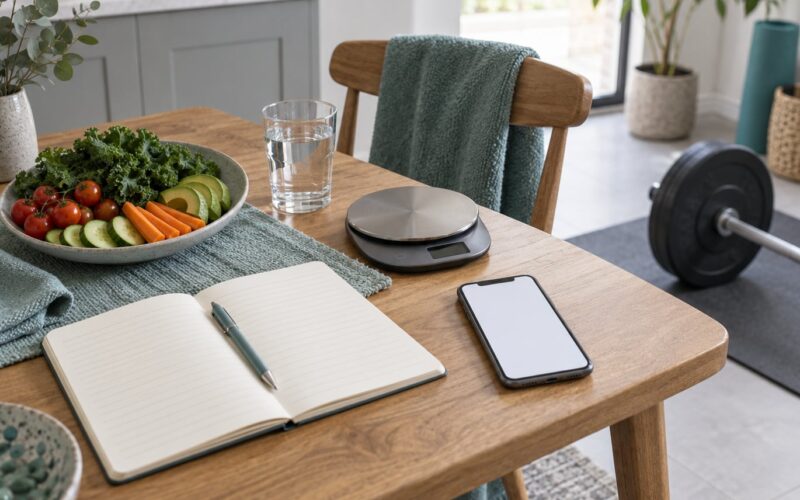
No, you cannot spot reduce belly fat. Spot reduction is the idea that you can choose where your body loses fat by training one area, and the research is clear that it does not work that way. Crunches build the muscle underneath your stomach; fat comes off the whole body as your calorie balance changes.
Last updated October 2026. General information only, not medical advice.
Table of Contents
- Can You Spot Reduce Belly Fat?
- Why Targeted Belly Fat Loss Usually Does Not Work
- One 2023 trial did find localized trunk fat loss, and it was small
- How Fat Loss Distributes Around the Body
- Visceral Fat vs. Subcutaneous Fat
- What Actually Helps You Lose Belly Fat
- Abdominal Exercises: Useful, but Not a Shortcut
- How Fast Can Your Belly Change?
- Simple Progress Plan for the First Four Weeks
- When to Check with a Healthcare Professional
- Frequently Asked Questions
- Can crunches or planks remove belly fat?
- What is the fastest way to lose belly fat?
- Do spot-reducer belts or devices work?
- Does sweating more mean I am burning more fat?
- How long will it take to see results?
- Should I focus on abdominal exercises or overall weight loss?
Can You Spot Reduce Belly Fat?
The honest answer is no, not in the way ab videos promise. When you exercise, your body releases stored fat into the bloodstream as fuel, and it draws that fuel from fat stores all over your body rather than from the muscle group you happened to be using. What ab work does change is the muscle underneath the fat, which is genuinely useful, just not for spot reduction.
There is one wrinkle worth being honest about. A 2023 randomized controlled trial did find a small amount of localized trunk fat loss after ten weeks of a specific kind of abdominal endurance training. It was one small study in overweight men using gym machines most readers do not own, and nobody has replicated it yet.
Here is the short version of what the evidence supports:
- Fat loss is not local. Training a body part builds and conditions that part. It does not decide where fat is taken from.
- Spot reduction studies keep coming back negative. Twelve weeks of core training in 40 overweight women, six weeks of ab training in 24 people, and 12 weeks of upper body resistance training in 104 participants all failed to reduce abdominal fat specifically.
- The order of fat loss is set by your biology. Genetics, sex, hormones, age and insulin resistance decide which area shrinks first.
- Abdominal training still earns its place. It builds core strength, supports posture and your back, and shows definition once body fat drops.
- A deficit plus consistent activity is what moves the number. Everything else is a garnish on top of that.
Why Targeted Belly Fat Loss Usually Does Not Work
Here is the mechanism, and it is where the whole myth unravels. Fat cells store energy as triglycerides. When you exercise or go long between meals, those triglycerides are broken down into free fatty acids and glycerol, and those molecules travel through the bloodstream to feed working muscle.
The body has no mechanism for saying “burn it from the belly, skip the arms.” Those fatty acids pool into the bloodstream together, and the liver and muscles take what they need. Where the fat is drawn from is decided by blood flow, hormone sensitivity, and how fat-prone each storage area is in you personally.
The studies are consistent on this. Twelve weeks of core training in 40 overweight women changed core strength without changing abdominal fat. Six weeks of abdominal training in 24 people produced the same result. Twelve weeks of upper body resistance training in 104 participants did not reduce abdominal fat either, even though the arms got bigger.
| Myth | What the evidence says |
|---|---|
| Doing 1,000 crunches a day burns belly fat | Abdominal muscle training builds and conditions the muscle. It does not pull fat from the abdomen. |
| Sweating on my belly means fat is melting there | Sweat is thermoregulation, mostly water and salt. Sweat volume does not measure fat burned. |
| Ab belts or weighted wraps squeeze fat away | Bending the torso moves skin, water and the appearance of the waist for a short window. No fat leaves the tissue. |
| I feel the burn, so fat is burning there | The burn is muscle fatigue and metabolic stress in the tissue you are training, not localized fat oxidation. |
| Fat burner supplements target stubborn belly fat | No supplement has been shown to selectively remove abdominal fat. Most do very little measurable. |
| Leg lifts target the lower belly pooch | Hip flexor and abdominal strength come from the movement. Lower belly fat changes with total body fat. |
One 2023 trial did find localized trunk fat loss, and it was small
Researchers including Mathias Brobakken and colleagues published a randomized controlled trial in Physiological Reports in 2023 titled “Abdominal aerobic endurance exercise reveals spot reduction exists.” After ten weeks, the training group showed about 697 grams, roughly 1.5 pounds, more trunk fat loss than the control group, training four sessions a week for about 84 minutes each.
That is a real finding and I do not want to bury it. But read the details before you rebuild your routine around it. The participants were overweight men using a treadmill and dedicated torso rotation and abdominal crunch machines, set at 30 to 40 percent of maximum resistance. The sessions were endurance intervals, not crunches, and the study has not been replicated.
The authors themselves suggested that upper body endurance work may mobilize fat differently than lower body work, which is an interesting hypothesis rather than a settled mechanism. The honest read is that abdominal endurance training may help overall fat loss. It is not proof that you can pick a body part and melt it.
How Fat Loss Distributes Around the Body
So why do some people lose belly fat first and others lose it last? Because fat storage patterns are individual, and they shift with age and hormones. r/loseit threads about this question are full of people reporting the same confusing experience: they started running and the belly went before anything else did.
Four factors explain most of the variation:
- Genetics and fat distribution. Where you tend to store fat, and the order your body releases it, is largely inherited. Two people at the same weight can have completely different waistlines and completely different first results.
- Sex and hormones. Estrogen, testosterone and progesterone shape where fat is stored. Women commonly see fat shift toward the midsection after menopause, and lower body fat can be more resistant during periods of hormonal change.
- Insulin resistance and stress. Visceral fat in particular responds to metabolic health. High cortisol from poor sleep or chronic stress, frequent alcohol, and insulin resistance all tend to show up around the middle first.
- Training history. If you have already been strength training, losing fat while keeping muscle changes your proportions, so the same weight can look leaner at the waist.
One more thing gets mistaken for fat loss: bloating and water retention. A month of high-sodium eating, constipation, carbonated drinks, menstrual cycle changes or new medication can all add inches to your waist in days. Many people who assumed their stubborn belly was fat found it was digestive. Worth ruling out before you commit to anything drastic.
Visceral Fat vs. Subcutaneous Fat
Abdominal fat comes in two forms, and they behave differently enough to matter. This is general education, not a diagnosis. If you want to know your own numbers, a clinician can help you interpret them.
| Subcutaneous fat | Visceral fat | |
|---|---|---|
| Where it sits | Under the skin across the whole body | Inside the abdominal cavity, wrapped around organs |
| What it looks like | The pinchable fat, love handles and belly roll you can grab | Largely invisible from the outside |
| Why it matters | Excess is linked with metabolic markers like blood pressure and blood sugar | Higher risk profile for heart disease and type 2 diabetes |
| How it responds to lifestyle change | Shrinks as overall body fat falls, usually later in the process | Tends to respond earlier to consistent activity and a calorie deficit |
| How it is measured | Tape measure, skinfold calipers, DEXA scan, bioimpedance scales | Imaging only, such as CT or DEXA |
That difference explains a common piece of confusion. People often start a program, change how they look and feel, and assume nothing is happening because the pinchable fat has not moved yet. Visceral fat tends to decline earlier. The outside catches up later.
What Actually Helps You Lose Belly Fat
Six habits carry nearly all of the evidence. They are boring, they compound, and they work on every area of the body you actually wanted to target.
- Keep a modest calorie deficit. Losing weight too fast usually means losing muscle along with fat. A steady, sustainable shortfall is easier to hold and protects the muscle that makes your waist look defined.
- Eat enough protein. Protein supports satiety and preserves muscle while you are in a deficit. Most adults do not need anything extreme, just a protein source at each meal.
- Favor whole, fiber-rich foods. Vegetables, fruit, legumes, whole grains and nuts fill you up for fewer calories and keep blood sugar steadier than highly processed options.
- Move for about 150 minutes a week. Brisk walking counts. Moderate activity is where most of the repeatable calorie burn lives for most people.
- Strength train twice a week. Resistance training protects muscle mass during weight loss, and muscle is what gives a flat stomach its shape.
- Sleep and manage stress. Most adults sleep better on seven to nine hours. Short sleep and high stress raise cortisol, and that combination makes waist change harder for plenty of people.
If you want to know which exercise burns the most belly fat, the honest answer is the one you will actually repeat. Consistency beats intensity every time for body composition.
Abdominal Exercises: Useful, but Not a Shortcut
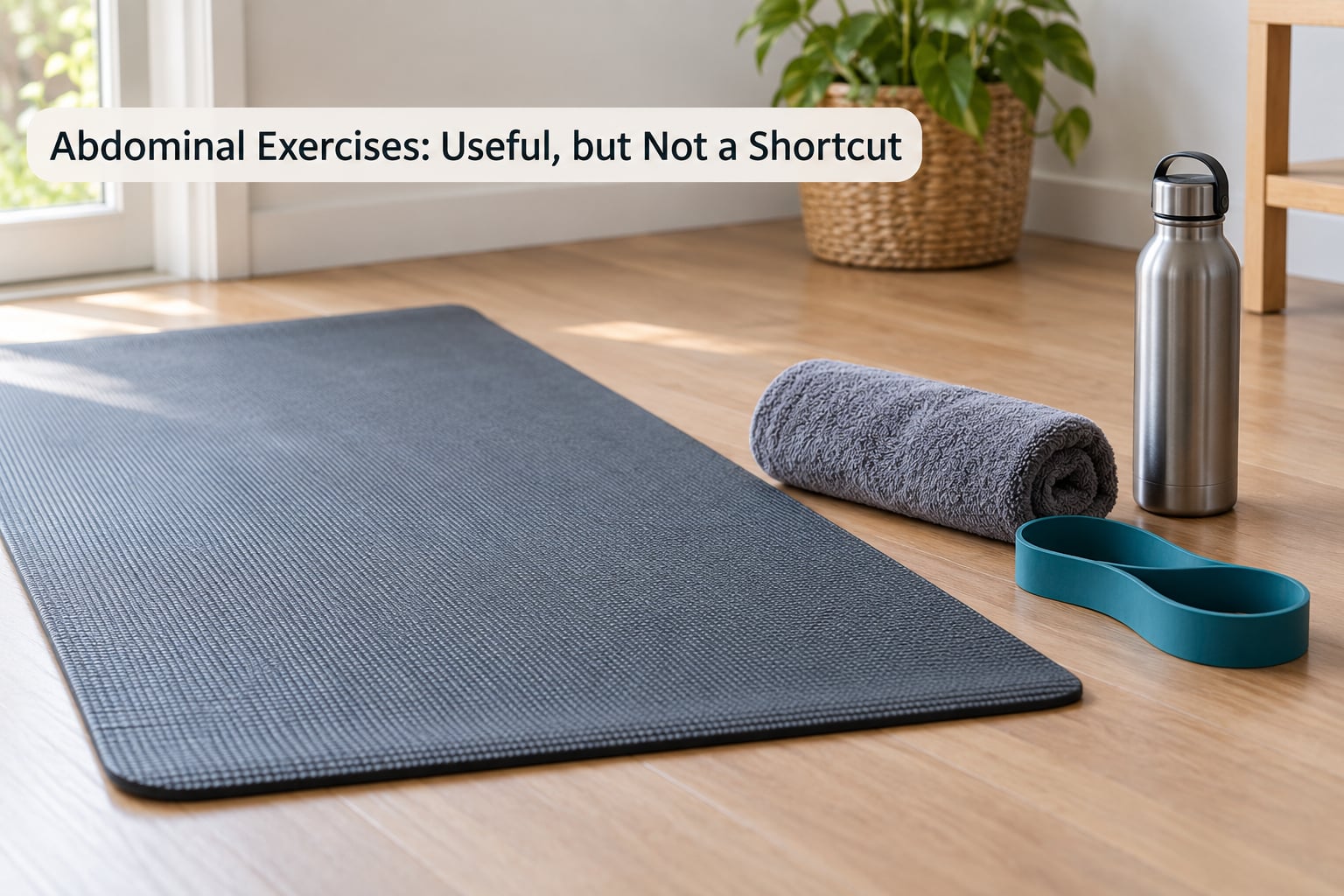
Abdominal training is one of the best-supported things you can do for your back and your movement quality, and none of that depends on fat. Planks and side planks teach your torso to resist movement rather than collapse. Dead bugs and bird dogs build the control that keeps your lower back steady under load.
Then there is appearance. A trained abdominal muscle under a layer of fat still reads as a smoother, flatter stomach, which is often the source of the frustration: the shape improves months before the fat does.
And there is the pump. Feeling your abs burn, sore and worked after a set is genuinely rewarding, and it is easy to interpret as fat leaving. What you are actually feeling is the muscle under fatigue and the local metabolic stress of hard work. That sensation tells you the training worked. It does not tell you where the fat came from.
Two or three short core sessions a week is plenty. Planks, dead bugs, bird dogs, side planks and carry work cover it without wrecking your lower back.
How Fast Can Your Belly Change?
There is no honest timeline, because the variables are too many. How much total fat you had, how much you have to lose, your genetics, your training history and your consistency all matter more than the calendar.
It also helps to separate what is changing early from what is changing late. Strength, posture and control show up in two to six weeks of consistent training. Muscle size takes months. Water weight and bloating can swing within days. Visible fat loss on the midsection usually shows up after real, total fat loss has been going on for a while, and often lags behind progress elsewhere.
That lag is the part that frustrates people. The waist is frequently the last region to visibly catch up, which means if the scale and your clothes say you are progressing, your body is likely doing exactly what it should even when the mirror disagrees.
Simple Progress Plan for the First Four Weeks
Four weeks is long enough to see real change and short enough to stay repeatable. This is the plan I would give a friend starting from zero.
- Same breakfast most days. Protein plus fiber. Aim for something you can make on an automatic Tuesday.
- One deliberate meal a day. Build a plate around a protein, a vegetable or two, and a whole grain or legume. Freeze the leftovers so the decision is already made.
- Walk most days. Aim for 30 to 45 minutes. Add a second walk if you are comfortable.
- Two strength sessions weekly. Squats, hinges, presses, pulls, carries. Then a short core block: plank, dead bug, side plank, carry.
- Measure the waist, not the mood. Tape measure at the navel, same time of day, once a week. Keep the scale weight too, and judge from the trend of both, never a single morning.
- Cut back on the two things that usually stall progress. For most people it is evening snacking and alcohol. Not both at once if that is unrealistic; pick one.
After four weeks, look at the waist tape, not a photo. Photos lie to everyone because the lighting, the time of day and the pose change what you see. Numbers do not.
When to Check with a Healthcare Professional
Some situations belong with a doctor rather than a workout plan. Get checked if your abdomen has enlarged quickly or unevenly, if you have persistent abdominal or upper back pain, if you notice new swelling in your ankles, or if a change in your midsection shows up with no change in your weight or habits.
Weight that suddenly collects around your middle can show up alongside medications such as steroids, some antidepressants, or conditions involving thyroid function, insulin resistance or Cushing syndrome. None of that is something to self-diagnose from a web page. It is a short appointment, and it rules things in or out.
Ask about diastasis recti if you have been pregnant or your abdomen domes or cones when you sit up or lie back down. That is a separation of abdominal tissue, not fat, and it needs different handling. Liposuction removes subcutaneous fat only and does nothing for visceral fat, and GLP-1 medications like semaglutide and tirzepatide are prescription decisions with real side effects and cost implications. A registered dietitian is a good second stop if you want help with the food side without a medical approach.
The bottom line: you cannot point at your stomach and choose it. You can build the muscle, you can eat and move in a way that lowers total body fat, you can measure honestly, and you can ask a clinician when the picture stops making sense.
Frequently Asked Questions
Can crunches or planks remove belly fat?
No. Crunches and planks build and condition the abdominal muscles, which supports your posture and your back, but they do not draw fat from the abdomen. Research on ab-only training, including 12 weeks of core work in 40 overweight women, showed strength gains without reduced abdominal fat. The muscle shows more as your total body fat falls.
What is the fastest way to lose belly fat?
The fastest route is losing total body fat, because the abdomen is not separately controllable. A moderate calorie deficit plus about 150 minutes of moderate activity a week and two strength sessions is the approach the evidence supports. Very fast loss often costs muscle, and the waist catches up last, so a steady pace usually looks better sooner.
Do spot-reducer belts or devices work?
No. Ab belts, rollers and electronic muscle stimulators move or squeeze tissue and water for a short time, which can change how the waist looks and how it measures within hours. They do not remove fat cells or take fat out of the tissue. Reviewers on fitness forums describe them as a temporary visual effect and rarely see the change survive the morning.
Does sweating more mean I am burning more fat?
Not reliably. Sweat is the body cooling itself, and it is mostly water and salt. Wrapping yourself in plastic or wearing extra layers raises fluid loss and core temperature, not fat oxidation. How much you sweat mostly reflects humidity, genetics, clothing and how acclimated you are. Hydrate normally and ignore sweat as a fat-burning metric.
How long will it take to see results?
It depends on your starting body fat, how much you have to lose, your genetics and how consistent you are, so no timeline is honest for everyone. Strength and posture changes often show within two to six weeks. Visible abdominal fat change usually comes later, and the waist is often the last region to visibly catch up. Weekly waist measurements tell you more than the mirror or a single weigh-in.
Should I focus on abdominal exercises or overall weight loss?
Focus on overall weight loss for the fat, and add abdominal training because it is worth doing on its own. Core work improves how you move, supports your back and shapes how the stomach looks once body fat falls. Fat loss responds to your calorie balance and your total activity, not to which muscle you trained on a given day. Two or three short core sessions a week is a good split.
If you do one thing after reading this, put a tape measure on your navel tomorrow morning and write down the number. Everything worth arguing about online comes down to whether your total body fat is moving, and that number plus a weekly weigh-in will tell you sooner than any mirror will.