Most diet myths that are not true got their start from one real observation that got repeated until it stopped being true. Someone cut carbs and lost weight, so carbs became the villain. Someone skipped dinner and felt lighter, so late eating became poison. The pattern repeats, and the myth sticks.
Here is the short version: energy balance over weeks and months, plus food quality and consistency, decides most weight outcomes. No single food, label or meal schedule overrides that. Everything below is a general information guide, not personal medical advice, and a doctor or registered dietitian is the right person for advice about your own eating.
Reviewed and updated for October 2026. This piece follows guidance from public health bodies including the World Health Organization, the CDC and the NHS, and peer-reviewed journals such as the American Journal of Clinical Nutrition and the Journal of the International Society of Sports Nutrition. We sell nothing here, and we do not recommend supplements or programmes.
Table of Contents
- Diet myths that are not true at a glance
- 1. Cutting out all carbohydrates makes weight loss faster
- How to eat carbs without the weight gain myth
- 2. Eating fat automatically prevents weight loss
- 3. Late-night snacks ruin weight-loss results
- 4. You must count every calorie to lose weight
- 5. Detox diets remove toxins and improve health
- 6. Fruit is unhealthy because it contains sugar
- 7. Gluten is unhealthy for everyone
- 8. Eating only once or twice a day is always better for metabolism
- 9. If a food is labeled healthy, you can eat unlimited amounts
- 10. The body only burns fat when you exercise
- How to spot diet misinformation before you act on it
- Why diet myths keep spreading
- Frequently Asked Questions
- What is the most common diet myth?
- Do you need to avoid sugar completely to lose weight?
- Why does body weight change so much from day to day?
- Is eating before bed better or worse for weight loss?
- How can I tell if a diet claim is evidence-based?
- When should I ask a doctor or registered dietitian about my eating habits?
- Conclusion: Start With Sustainable Eating Habits
Diet myths that are not true at a glance
Here is the whole list in one table, so you can scan it before reading the detail. Each row gives the myth, the verdict and the one-line correction.
| Myth | Verdict | What the evidence says |
|---|---|---|
| Cut all carbs to lose weight faster | Mostly false | Carbs supply energy; whole and starchy sources bring fibre that helps fullness. |
| Eating fat stops weight loss | False | Fat is calorie-dense, not fattening on its own. Total intake and food quality matter. |
| A late snack ruins the day | Mostly false | Timing matters far less than the overall pattern, though some late snacks are hard to stop at. |
| You must count every calorie | False | Awareness helps some people, but portion structure and satiety work without numbers. |
| Detox diets flush toxins | False | Your liver, kidneys and gut do the clearing on a continuous basis. |
| Fruit is unhealthy because of sugar | False | Whole fruit brings fibre, water and micronutrients that added sugar does not. |
| Gluten is bad for everyone | False | It is a problem for diagnosed celiac disease or wheat allergy, not the general population. |
| Two meals a day is better for metabolism | Mostly false | Meal frequency does not switch metabolism on, but fewer meals can suit some schedules. |
| Healthy means unlimited | False | A clean label does not remove portion size or how the meal fits your day. |
| Fat only burns off during exercise | False | Walking and daily activity use energy too; exercise is not a fat-melting switch. |
1. Cutting out all carbohydrates makes weight loss faster
Verdict: mostly false. Cutting carbs can produce faster early scale drops, mostly because of water, not fat. Carbohydrate stores in the liver and muscles hold water alongside the glycogen, and emptying them makes the scale drop in the first week or two.
Once those stores refill, the drop stops. Very low-carb approaches can still help some people lose fat, but so can plenty of other patterns, and the strict versions tend to be the hardest to hold for more than a few months.
How to eat carbs without the weight gain myth
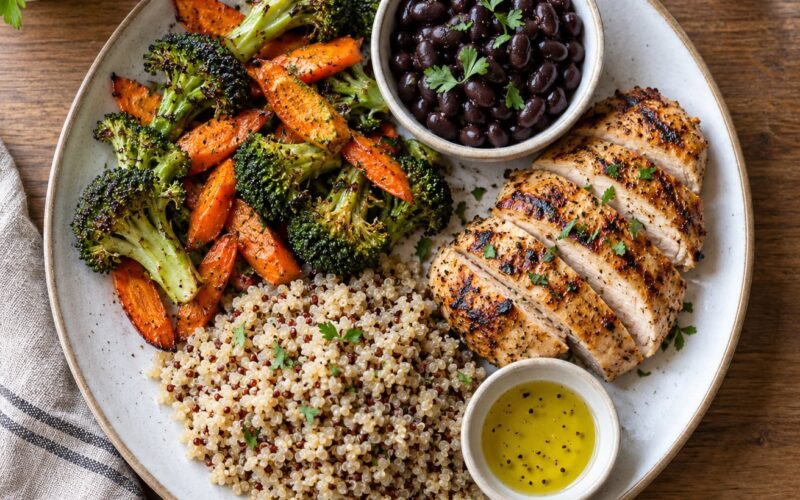
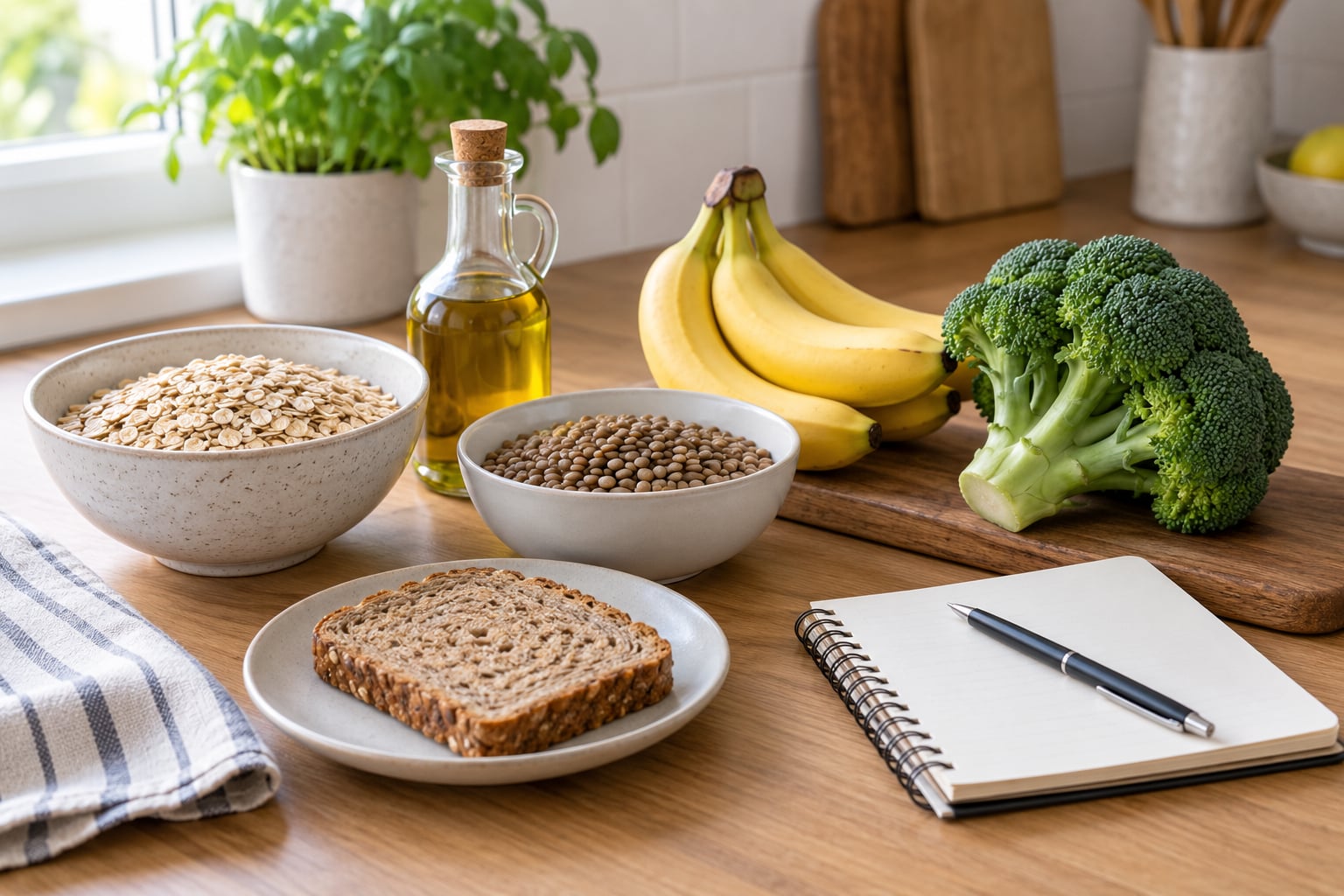
Keep the sources that do real work for you: beans, lentils, oats, brown rice, potatoes with the skin, and plenty of vegetables. The fibre and protein in those foods tend to fill you up, which is the actual reason people eat less.
Plenty of long-term research has found no clear advantage for very low-carb diets once a few months pass, and some studies have found slightly better blood sugar control with higher-carb, higher-fibre patterns. If you like low-carb and it keeps you consistent, that is a reasonable choice. Just know what it is doing.
2. Eating fat automatically prevents weight loss
Verdict: false. Fat is not a switch that turns off fat loss. Fat is the most calorie-dense macro you can eat at roughly 9 calories per gram, compared with about 4 for carbohydrate and protein, so it is easy to add a lot of it without noticing.
That said, foods built on fat are not the problem by themselves. A tablespoon of olive oil, a small handful of nuts, or a quarter of an avocado bring nutrients and slow digestion. The problems show up when fat arrives as large portions, or replaces fibre-rich foods that would otherwise have filled you up.
Some fat is worth keeping. Foods with unsaturated fats, including nuts, seeds, oily fish, avocado and olive oil, feature in the dietary guidance most public health bodies publish. The useful question is not “is there fat” but “how much, and in what form.”
3. Late-night snacks ruin weight-loss results
Verdict: mostly false. A late snack only matters if it quietly pushes your total up or replaces a food you actually needed. For many people, a small snack late at night keeps the next night’s sleep better and the following morning less frantic.
What matters is the size and what the snack is. A handful of nuts or a piece of fruit is a different proposition from a large bag of chips eaten in front of a screen without noticing how far it went. Portion and awareness, not the clock, are the issue.
The genuinely useful rule is whether the late eating is filling, mindful and planned, or automatic and distractive. A planned snack that stops you waking up at 2am craving the fridge is helping you. A stress-eating episode of half a block of cheese is not about the hour.
4. You must count every calorie to lose weight
Verdict: false. Counting is one tool, and it is the only tool many people think they have. Most adults need roughly 2,000 calories a day, though real needs vary widely with size, activity, age and health, so any number you see printed is a rough average rather than a target.
What actually matters day to day is whether you notice roughly how much you are eating. Some people do that well with numbers. Others find that tracking turns every meal into an accounting exercise, and the tracking itself becomes the reason they quit within weeks.
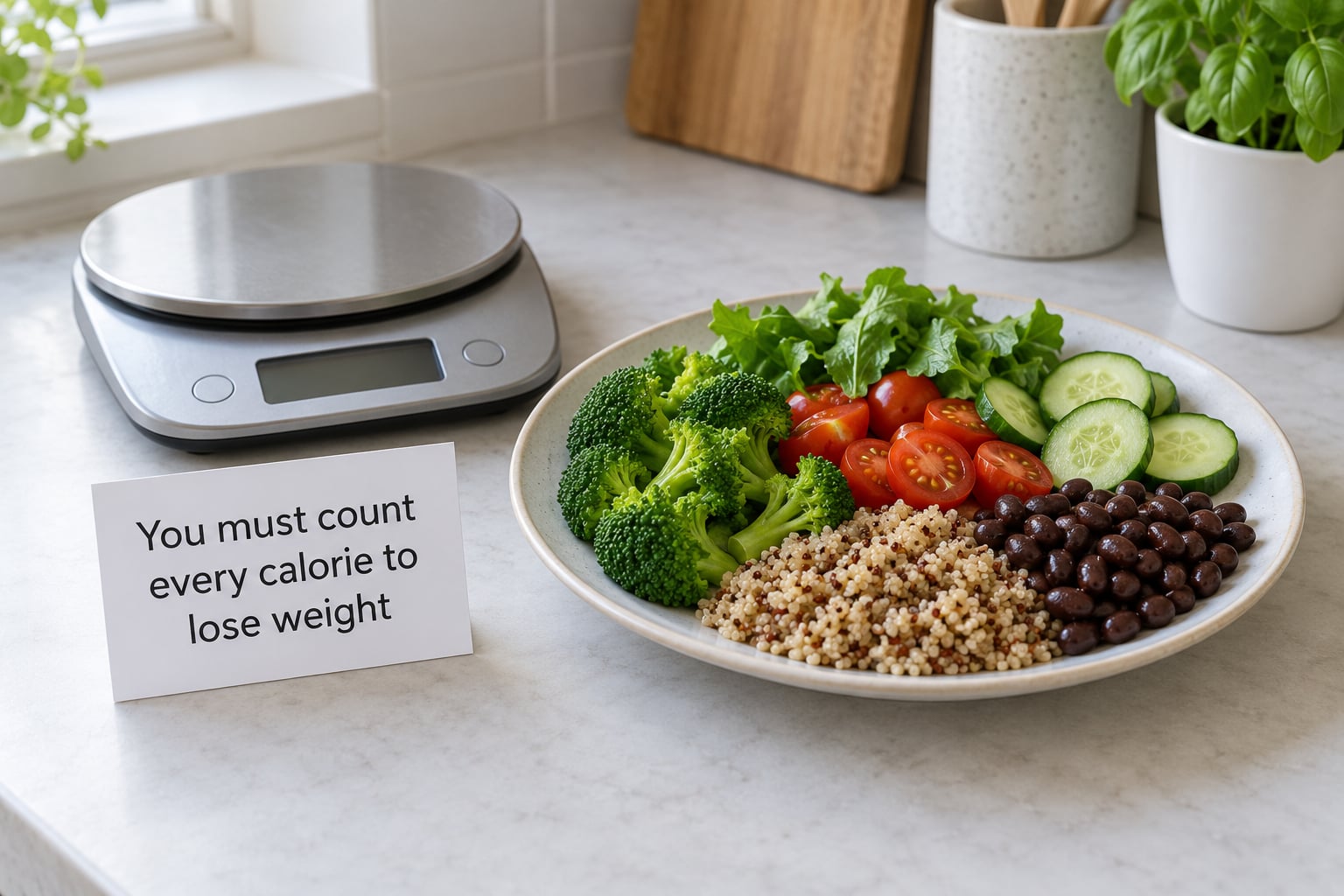
Alternatives that work just as well: build meals around protein, fibre-rich carbohydrates and vegetables, keep most of your food in minimally processed form, and use hunger cues as a check. Portion control, plate structure and cooking most of your own food hit the same result without the mental load.
5. Detox diets remove toxins and improve health
Verdict: false. Your liver, kidneys, lungs and gut already clear metabolic waste around the clock. Detox plans add restriction on top of that, and the most common versions of them replace meals with juice, drinks or a very short list of allowed foods.
People lose weight on these plans for a simple reason: they are eating far less. Losing weight is not the same as detoxifying, and the weight comes back as soon as normal eating resumes. Longer plans are also frequently short on protein, fibre and certain vitamins and minerals, which is not a good trade.
What does support the organs doing that work: adequate water, enough fibre, regular movement and not smoking. If your liver or kidneys need help with something specific, that is a medical question and deserves a clinician, not a tea.
6. Fruit is unhealthy because it contains sugar
Verdict: false. The sugar in whole fruit arrives with fibre, water and vitamins, and it is not the same as added sugar. Naturally occurring sugar inside a whole fruit sits inside intact cell walls along with fibre that slows absorption and increases fullness.
Added sugar is different. It is refined out of the food, added back in a concentrated form and often delivered in portions people do not register, which is why the World Health Organization recommends keeping free sugars under 10 percent of daily energy, and ideally under 5 percent.
For most people, one to two servings of whole fruit a day fits comfortably into a balanced pattern. Juice is the version to watch, because squeezing removes the fibre and makes a glass feel lighter than the fruit it came from.
7. Gluten is unhealthy for everyone
Verdict: false. Gluten is a problem for a specific group, not a universal one. For people with diagnosed celiac disease, gluten triggers an immune reaction that damages the small intestine, and a strict gluten-free diet is the treatment. Wheat allergy is a separate condition with its own risks.
Outside of those diagnoses, evidence does not show a benefit from cutting gluten, and research on non-celiac gluten sensitivity has been unable to separate the effect of gluten from the effects of other things people change alongside it, such as fibre and processing level.
A gluten-free diet also tends to be more expensive and lower in fibre, because many of the products made to replace wheat are made from refined starches. If you suspect you react to something, keep a food and symptom diary and take it to a doctor or registered dietitian rather than starting the elimination yourself.
8. Eating only once or twice a day is always better for metabolism
Verdict: mostly false. Eating less often does not automatically raise metabolic rate. Meal frequency changes how energy is spread across a day, not the underlying rate your body burns energy at.
Time-restricted eating, sometimes called intermittent fasting, does have research behind it for some outcomes in some people, particularly around weight management when it helps people eat less overall. That is the honest summary: it is another way of reducing intake, and it suits some schedules better than others.
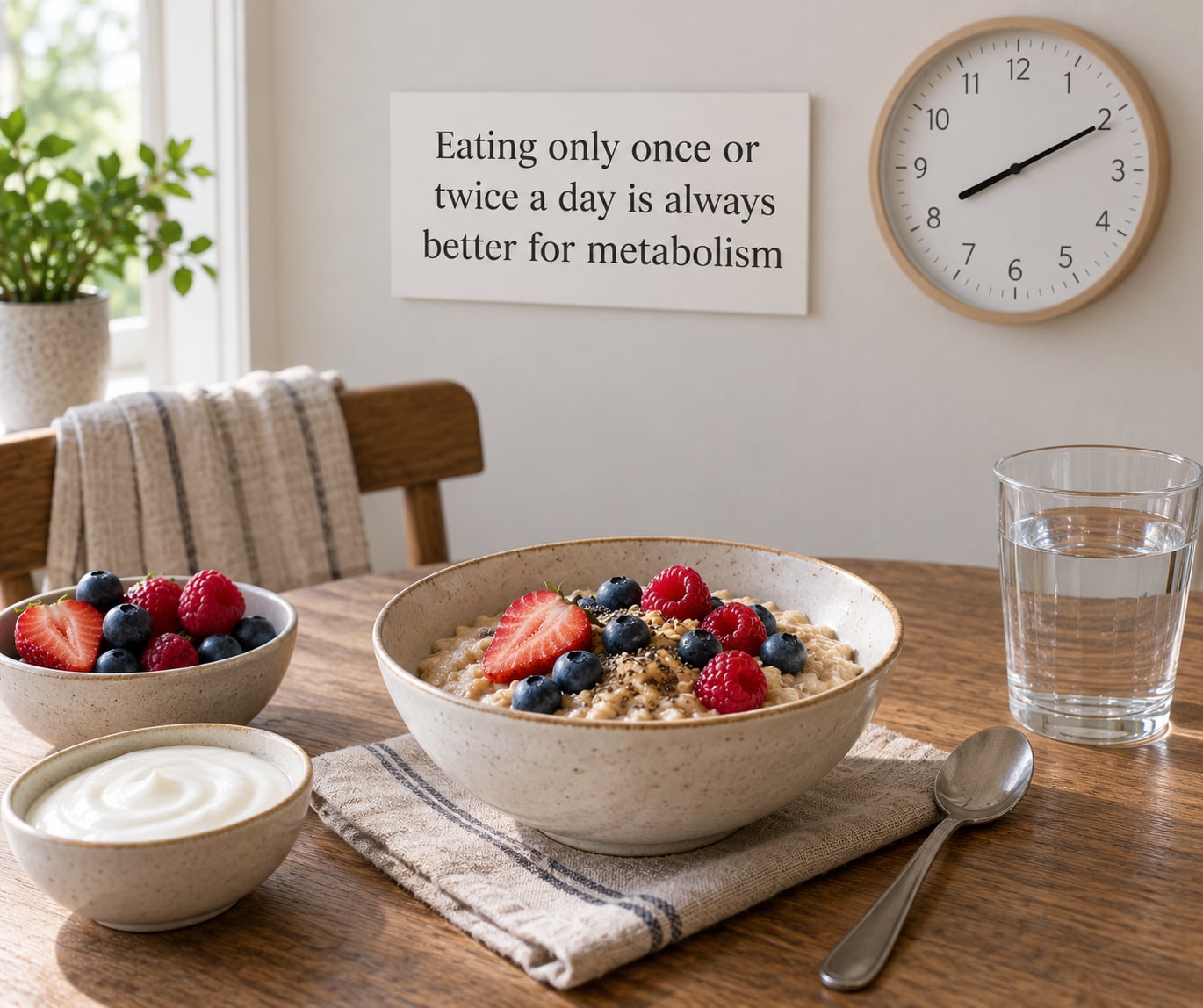
The drawbacks are practical. Compressing everything into two meals raises your chances of overeating at each one, and skipping breakfast reliably makes some people hungrier later in the day. If you are prone to disordered eating, pregnant, under 18, underweight or managing diabetes, the case for skipping meals is not one to make on your own. If eating twice a day leaves you calm and steady, that is a workable pattern. If you are ravenous at 9pm, it probably is not.
9. If a food is labeled healthy, you can eat unlimited amounts
Verdict: false. A label tells you about nutrition per serving, not how many servings are fine. Nutrition labels are per 100 grams or per serving as printed on the pack, and the serving size on the front of the package is frequently smaller than what people actually eat.
There is a version of this myth that does real damage, which is the idea that a food labelled clean cancels out other choices in the day. It does not. Granola, nuts, nut butter and avocado are all nutritious foods, and all of them are easy to eat in far larger amounts than you planned.
The workable approach is to eat these foods deliberately, in portions you chose rather than poured. If you like cereal, buy the one you actually want to eat and have a measured amount of it, instead of buying the low-sugar version you resent and eating twice as much.
10. The body only burns fat when you exercise
Verdict: false. Your body burns energy all day, and your basal metabolic rate is the largest share of it. Walking to the shop, standing while cooking and fidgeting are all activity, and the number of steps in a day often moves further than people expect from a workout alone.
Exercise is still worth doing, for reasons that have little to do with melting fat off a specific area. It protects bone density, helps blood pressure and blood sugar, supports mood and sleep, and helps you keep muscle while you lose fat. But it is a support act for energy balance, not the mechanism itself.
One thing to expect is a short-term scale rise after new training, especially resistance work, from the water your muscles hold while adapting. That is not fat gain, and it usually settles within a week or so. Also worth knowing: you cannot choose where fat comes off. Spot reduction through a specific exercise for a specific area is not a thing.
How to spot diet misinformation before you act on it
Five questions clear up most of the noise, and you can apply them to any claim in about a minute. First, what is the source: a guideline body such as WHO or the CDC, or a person whose income depends on you believing it. Second, what kind of study: a randomised controlled trial in people, or an anecdote from a small group.
Third, read the language. Words like always, never, completely and everyone are warning signs, because a real nutrition finding nearly always has an exception. Fourth, ask who profits from your fear, which in this category is very often a supplement, a programme or a supplement-adjacent product. Fifth, ask whether you could keep the rule for a year, because adherence is where almost every diet is won or lost.
Forum threads are useful for hearing how people actually felt, and they are close to useless for establishing whether something works. The pattern we see repeated on r/loseit and r/nutrition is consistent: people lose weight on wildly different methods, and the method gets the credit instead of the reason. When a diet works, ask what the person was actually doing differently, because usually it was eating less.
On the same note, “metabolic damage” from yo-yo dieting is mostly an inflated word. Metabolic adaptation is real, and it does mean a smaller deficit gives a slower loss after a big drop. It reverses with consistent eating, and it is a reason to plan your deficit gradually rather than a reason to skip meals.
Why diet myths keep spreading
The incentives behind most diet myths are easier to see than the science. Attention rewards shock, and a claim that a food is dangerous travels further than a qualified finding about average effects. Before-and-after photos travel further still, because a picture needs no evidence.
Then there is the commercial layer. Gluten-free, detox, clean and metabolism-boosting labels all sell something, and none of those products has to work for the pitch to succeed. Researchers also tend to study unusual diets because unusual diets are interesting, so the published literature leans toward extremes rather than the boring middle that most people actually eat.
Finally, people repeat what worked for them. If a small change helped, the explanation usually gets attached afterwards, and the explanation sticks better than the change. That is why so much of this advice is about a person’s result rather than a person’s physiology.
Frequently Asked Questions
What is the most common diet myth?
The most persistent one is that a single food group, usually carbohydrates, makes you fat. It spreads because a genuine weight loss gets attributed to the most visible change in the plan. In reality, fat loss comes from a sustained energy deficit, and carbohydrate foods that are high in fibre tend to make that deficit easier to keep.
Do you need to avoid sugar completely to lose weight?
No. Total energy balance is the driver, and there is no evidence that eliminating all sugar outperforms moderate intake over the long term. Cutting back on added sugar is a reasonable idea for dental and heart health reasons, but fruit and plain dairy contain naturally occurring sugar and come packaged with fibre and nutrients, so they do not need removing.
Why does body weight change so much from day to day?
Day-to-day swings of a couple of pounds are usually water, not fat, because glycogen stores hold water and gut contents change hour to hour. To store even half a kilo of body fat as fat would require roughly 3,000 calories of surplus spread over time, which no single day of eating produces. Look at trends over several weeks instead of a single morning reading.
Is eating before bed better or worse for weight loss?
It depends entirely on what the snack is and why you are eating it. A small planned portion of protein and carbohydrate late can help some people sleep better, while large or automatic late eating is more likely to add up quietly over a week. If night eating leaves you wakeful, anxious or out of control, that is worth raising with a doctor or registered dietitian.
How can I tell if a diet claim is evidence-based?
Check five things: whether the source is a public health body or a commercial interest, whether it came from a randomised controlled trial in people rather than an anecdote, whether the wording is absolute, whether a product profits from you believing it, and whether you could follow it for a year. If a claim fails any of those, treat it as a lead to check rather than advice to follow.
When should I ask a doctor or registered dietitian about my eating habits?
Speak to a professional if you have a diagnosed condition such as diabetes, thyroid disease or celiac disease, if you are pregnant, breastfeeding, under 18, or managing an eating disorder history. Also worth a consultation if weight changes sharply without trying, if you feel faint, cold or constantly tired, or if food rules have started to control your day. Those are signals, not character flaws.
Conclusion: Start With Sustainable Eating Habits
Most diet myths that are not true share one feature: they turn a small true thing into a universal rule. Carbs, fat, meal timing, gluten, sugar and detoxes all matter in some way, and none of them works as a switch on its own.
Pick one change you would still be doing in six months. That might be adding a vegetable or a source of fibre to two meals a day, eating protein at breakfast, or keeping nuts and olive oil in the house instead of crisps. Small and boring beats clever and temporary, and boring is what people actually sustain.
If anything about your own situation makes eating harder than it should be, talk to a doctor or registered dietitian. That conversation is free of shame and far more useful than any cleanse.