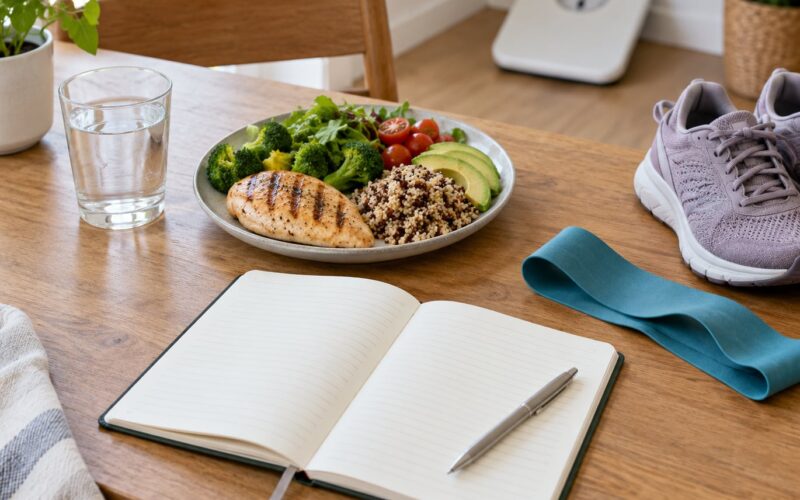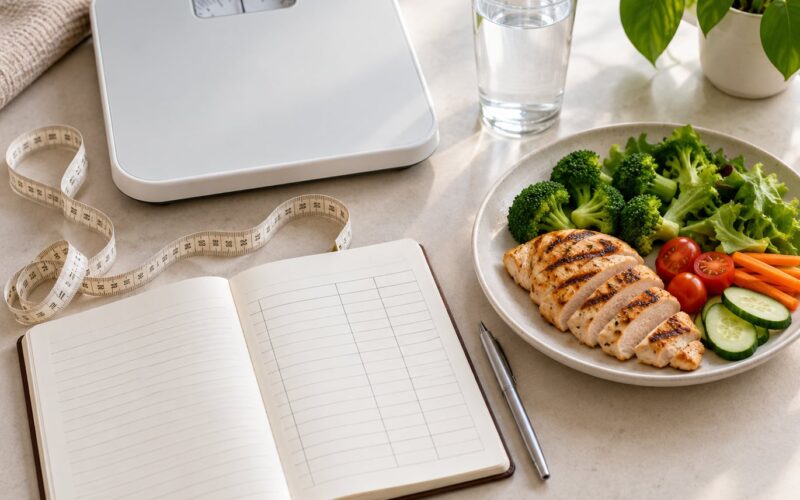
Losing weight after having a baby is slow, gentle work, not a deadline you can hit by dieting harder. Most people lose the first 5 to 6 kg (11 to 13 lb) within days of birth, but that is the baby, fluids and tissue, not fat. Real fat loss takes 6 to 12 months and works best at about 0.5 to 1 kg (1 to 2 lb) per week.
This guide walks through how to lose weight after having a baby without rushing your recovery, skipping meals, or borrowing someone else’s timeline. It is general information, not medical advice. Confirm your own readiness with your doctor, midwife or a registered dietitian at your postpartum checkup, especially if you had a cesarean birth or a complicated delivery.
If you had a baby recently and your number on the scale is the first thing you check every morning, this page is for you.
Table of Contents
- What You Need
- Step-by-Step: How to Lose Weight After Having a Baby Safely
- Set a Realistic Recovery-First Goal
- Eat Enough to Support Recovery
- Build a Simple, Nutrient-Dense Meal Routine
- Plan Ahead Without Making Life Too Complicated
- Start With Gentle Daily Movement
- Adjust the Plan for Sleep, Stress, and Baby Care
- Common Mistakes
- Frequently Asked Questions
- How soon can I start trying to lose weight after giving birth?
- Is it safe to lose weight while breastfeeding?
- How many calories should I eat after having a baby?
- How much weight should I expect to lose in the first few weeks?
- What exercises are safest after a vaginal or cesarean birth?
- Can supplements or detox products help me lose weight after having a baby?
- Start This Week, Not All at Once
What You Need
Nothing expensive. There is no special equipment, no branded program and no restricted food list required to lose baby weight. What you actually need is a cleared medical green light, a fridge with a few repeatable options, and movement small enough that you will still do it on a bad day.
Start by booking or attending your postpartum checkup, usually around six weeks after birth, and ask specifically what you can do. That is the moment most clinicians clear gentle exercise and discuss diet changes, and it is the right place to mention any thyroid condition, diabetes, anemia or pelvic floor symptoms you have noticed.
Then pick three or four foods you can cook while a baby is awake without losing your mind. Eggs, plain yogurt, oats, frozen vegetables, canned beans and whole-grain bread do most of the work, and all of them keep well.
Finally, be honest about your energy. A ten-minute walk during a nap is a better starting point than a 45-minute class you never book. Consistency at low effort beats intensity you abandon in week two.
Step-by-Step: How to Lose Weight After Having a Baby Safely
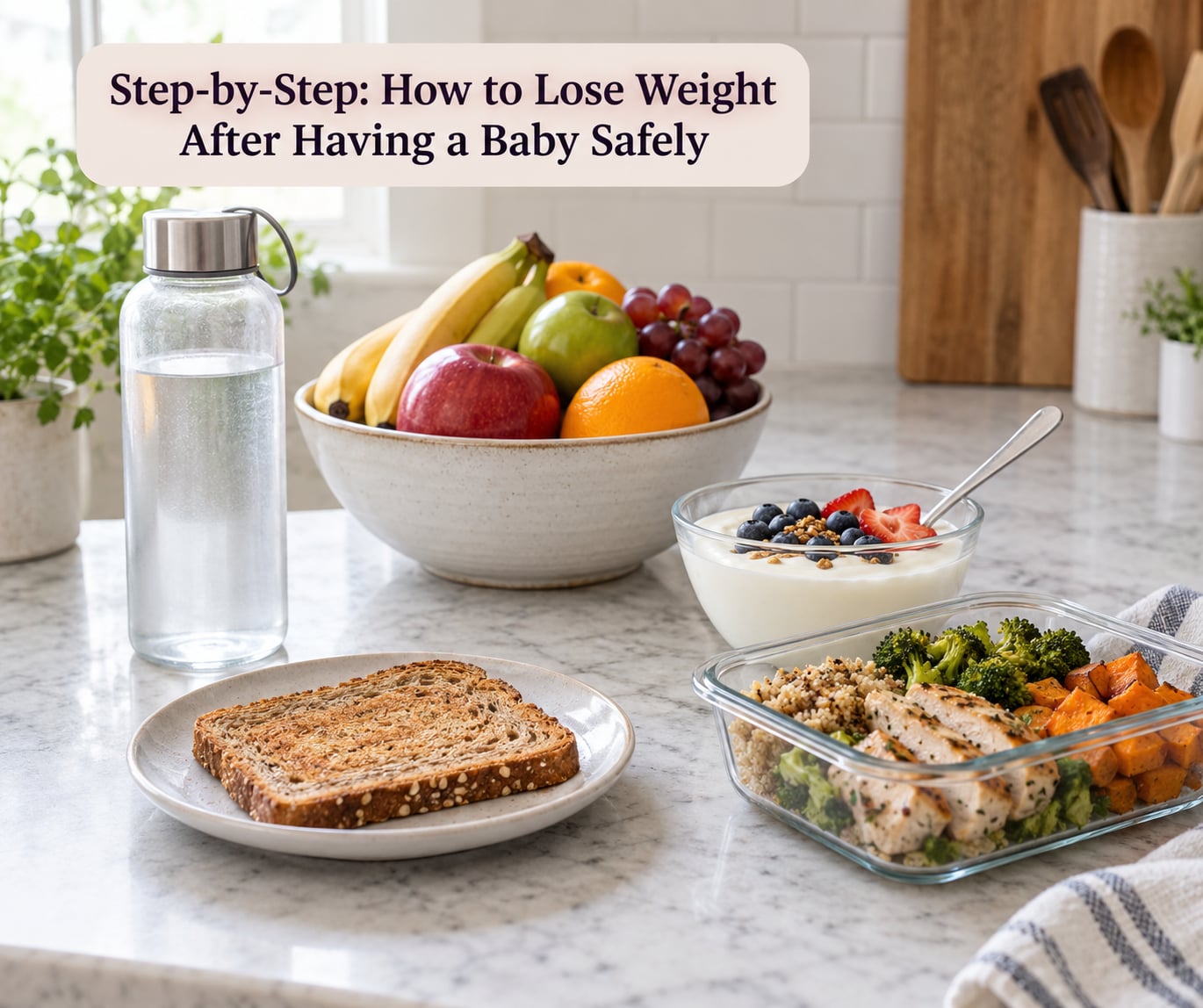
The plan below has six parts. There is no fixed finish line attached to it, because how to lose weight after having a baby depends on your recovery, your overall health, whether you are feeding your baby directly, how much sleep you get and how your own body responds. Two women with the same birth can be in completely different places at six months, and that is normal.
Work through the steps roughly in order, and let the earlier ones carry more weight than the later ones early on. Healing and eating enough come before walking and lifting anything.
Set a Realistic Recovery-First Goal
The first job is separating what is normal postpartum change from what is actually fat. Water retention around the midline, a soft core, sore joints and bloating can all move week to week for reasons that have nothing to do with fat loss.
Aim for a rate, not a date. Half a kilo to a kilo a week is the pace most guidelines describe as safe, and slower is fine when you are recovering from a cesarean, feeding your baby directly, or sleeping four hours a night.
Try a weekly check-in instead of a daily one. On one day a week, ask how your energy is, whether ordinary tasks feel easier, how strong your grip feels, whether your mood is steadier and how often you are ravenous. Those five answers tell you more than a number that can swing two kilos on water alone.
Eat Enough to Support Recovery
Breastfeeding and other postpartum needs raise your energy requirements. Lactation typically burns an extra 300 to 500 calories a day, and many women are handed the 500 calorie figure without the warning label that comes with it: that burn is real, and it is very easy to spend it again on snacks you did not notice eating.
Cutting deeply while feeding your baby can interfere with recovery and with milk supply. The floor most dietitians work from is roughly 1,800 calories a day while breastfeeding, and many nursing mothers actually need 2,200 to 2,500. A modest deficit inside that range works. A deficit below the floor is a different project, and not one to run without medical supervision.
One mother described in a postpartum community comment thread watching her milk fat content visibly change when she cut too hard, and her baby stop gaining as expected. It is a warning she wishes she had read before she started, not a method.
Build a Simple, Nutrient-Dense Meal Routine
Three meals and one or two snacks, every day, beats skipping meals and being ravenous by the evening. Include a protein source at each meal: aim for roughly 1 gram per pound of your goal body weight across the day, which for many people lands around 100 to 150 grams.
Use the plate method as a shortcut. Fill half the plate with vegetables or fruit, a quarter with protein such as eggs, beans, fish, chicken or tofu, and a quarter with whole grains or a starchy vegetable. Eat to about 80 percent full, from a smaller plate than you are used to.
Build from combinations you can repeat without thinking. Beans with vegetables and rice, yogurt with fruit and oats, eggs with whole-grain toast, or lentil soup with a handful of greens all work, and all four keep well for a second meal.
A realistic day might look like this:
- Breakfast: two eggs on whole-grain toast, a piece of fruit, a glass of water.
- Mid-morning: plain yogurt with berries and a small handful of nuts, plus water.
- Lunch: a bowl of bean and vegetable soup with a slice of bread.
- Afternoon: an apple with peanut butter, eaten before the hunger wave hits.
- Dinner: salmon or tofu with roasted vegetables and a baked potato.
Hydration matters more than people expect. Around 1.8 to 2.2 litres (12 cups) of fluid a day is the figure usually quoted, and a glass of water before each meal does more work than most readers expect.
Plan Ahead Without Making Life Too Complicated
The plan fails when it requires daily cooking decisions from an exhausted person. One session of preparation on a good day removes that decision entirely.
Write a short list for the week with items that do three jobs: they can be eaten immediately, they can be cooked in bulk, and they keep in the freezer. Oats, eggs, frozen berries, canned beans, pre-chopped vegetables and rice all qualify.
Batch-cook two or three flexible staples that combine with anything. Roast a tray of vegetables, simmer a pot of lentils, cook a grain, and hard-boil a dozen eggs. Then a dinner becomes a ten-minute assembly job rather than a project.
Keep freezer snacks within reach for the moments you will eat straight from the package: frozen edamame, chopped fruit, yogurt cubes, or nut-butter apple slices. Having them already portioned removes the part where willpower matters most.
If you can only manage one change, make it this: cook once, eat twice. Portion leftovers into containers before you sit down, because portion control works best when it is done before hunger makes the decision.
Start With Gentle Daily Movement
Wait for medical clearance before structured exercise, which most people get at their six-week checkup. Walking is the usual first step, starting at five to ten minutes a day and building by a minute or two every few days.
A cesarean recovery usually runs two to four weeks longer at every phase. Incision pain that increases during movement, heavy or increasing bleeding, pelvic pressure or heaviness, dizziness, and exhaustion that does not settle are all signals to stop and call your clinician rather than push through.
Build toward the guideline of 150 minutes a week of moderate activity, then add strength work twice a week. From week one, that can mean carrying shopping bags, squats at a kitchen counter, or lifting your baby from the floor in a controlled way.
You do not need a gym, and you do not need a workout that outlasts a nap. Fifteen minutes counts. Walking with the stroller counts. Doing it in three five-minute blocks counts exactly the same as thirty minutes at once.
If you plan any core work, check for a gap first. A diastasis recti self-check is simple: lie on your back with knees bent, lift your head and shoulders slightly, and feel along your midline for a soft dip between the two halves of your abdominal muscle. A gap wider than two finger widths, or one that domes or cones down the centre when you press, means skip crunches and situps for now, and ask about a pelvic health physiotherapist.
Adjust the Plan for Sleep, Stress, and Baby Care
Sleep debt is the biggest lever most people underestimate. Leptin, the hormone that tells you you are full, falls with poor sleep, while ghrelin, the hunger hormone, rises. Cortisol sits high too, and the body tends to hold water and store fat around the midsection while it is elevated.
So make the plan smaller instead of abandoning it. Trade a thirty-minute session for three ten-minute ones. On the worst days, do ten minutes of walking and eat the meals you already planned.
Share the load where you can. One evening bottle feed from a partner, one morning of childcare so you can walk alone, one cooked meal handed to you without having to ask twice. Forum threads about this topic keep circling back to the same thing: support is the difference between a plan that runs and a plan that stalls.
And treat missed days as data, not failure. Nobody hits every day at week nine postpartum with a newborn, and the people who make progress are the ones who restart the next morning.
Common Mistakes
Racing to drop the pregnancy weight immediately. Early change is fluid, tissue and the baby. Rushing fat loss while healing slows recovery, especially after a cesarean. Correction: leave the first six weeks to recovery and let fat loss start after clearance.
Aggressive restriction while breastfeeding. Eating far below your needs is the fastest route to fatigue, dizziness, poor mood and, for nursing mothers, a drop in supply. Correction: hold the 1,800 calorie floor and make the deficit small and steady instead.
Borrowing another person’s timeline. The idea that you should be back to your pre-pregnancy weight by six weeks, or that breastfeeding alone handles it, is the single most common source of needless self-blame. Correction: treat 6 to 12 months as the normal window.
Overtraining before clearance. Crunches, situps, planks and high-intensity intervals before your core and pelvic floor are ready can make pressure symptoms worse or prolong recovery. Correction: check for a gap, clear it with a professional, then build.
Chasing detoxes, 21-day fixes and appetite-suppressing supplements. These are heavily marketed to new mothers and poorly regulated. Correction: skip them entirely, and check anything you are considering with your doctor or pharmacist, especially while feeding your baby.
Weighing daily. Postpartum weight swings several kilos with water, feeding cycles and bowel habits, and daily numbers turn normal variation into a mood problem. Correction: weigh weekly at most, and add waist, energy and strength to what you track.
Ignoring warning signs. Increasing or heavy bleeding, worsening incision pain, a breastmilk supply that suddenly drops, palpitations, hair loss with constant cold and exhaustion, or intrusive dark thoughts are not weight-loss problems. Correction: stop the plan and call your clinician. Postpartum thyroiditis is common in the first year and treatable, and mental health conditions are too.
Frequently Asked Questions
How soon can I start trying to lose weight after giving birth?
Most people wait until their postpartum checkup, usually around six weeks, because that is when a clinician confirms healing and clears exercise. Gentle walking earlier is fine if it feels comfortable and does not increase bleeding or pain, but structured diet changes and strength work come after that appointment. A cesarean recovery usually needs another two to four weeks on top. There is no benefit to starting earlier, and several real downsides to trying.
Is it safe to lose weight while breastfeeding?
Yes, at a moderate rate, and with a floor. Lactation burns roughly 300 to 500 extra calories a day, so most dietitians advise eating at least 1,800 calories and often 2,200 to 2,500 before creating any deficit. Going much lower can leave you exhausted and, for some mothers, affect milk supply. A small steady deficit of a few hundred calories is safer than a sharp cut, and worth discussing with your own provider.
How many calories should I eat after having a baby?
It depends on how you are feeding your baby, your size and your activity. Many breastfeeding mothers land between 2,200 and 2,500 calories a day and lose weight slowly inside that range, while not breastfeeding or feeding combination often needs fewer, often 1,800 to 2,000. If you gained very little during pregnancy, your target may be lower still. A registered dietitian can size this properly for you rather than guessing from an online calculator.
How much weight should I expect to lose in the first few weeks?
Expect a quick drop, and understand what it is. In the first days you lose the baby, placenta, amniotic fluid and extra blood volume, often 5 to 6 kg (11 to 13 lb) or more. After that the pace slows sharply, because much of the remaining change is water, tissue and fluid shifting. Rapid early loss is normal and mostly not fat, which is exactly why a crash diet adds little and costs you energy.
What exercises are safest after a vaginal or cesarean birth?
Walking is the safest starting point for most people, five to ten minutes a day and building slowly. After a vaginal birth you may return to gentle strength work once you are cleared and feel ready. After a cesarean, expect to wait longer, often six to eight weeks before walking comfortably and closer to twelve weeks before heavier lifting. Pelvic floor work, or Kegels, can usually start earlier than abdominal work.
Can supplements or detox products help me lose weight after having a baby?
No, and some are genuinely risky for you and your baby. Detox teas, laxative-based cleanses and 21-day fix programs produce fast changes that are mostly fluid, and any of them can reduce milk supply. Appetite-suppressing weight loss medications and fat burners are not appropriate while breastfeeding unless your doctor explicitly prescribes and supervises them. Bring the label to your six-week appointment and ask before taking anything.
Start This Week, Not All at Once
If you take three things from this guide: get to your postpartum checkup before changing anything, eat three meals a day at or above your calorie floor, and walk ten minutes daily. That is a complete starting plan, and it works without a single supplement.
Everything else is refinement. The scale will tell you very little in the first three months. Energy, strength, mood and how your clothes fit will tell you much more, and they move in the right direction long before the number does.
Give it six months before you judge it, and give yourself permission to go slowly. Bodies that were built to grow and feed someone need time to come back down, and the ones that get there usually did it without ever going hungry.
Reviewed for accuracy on October 2026. This article is general information and not medical advice. Please speak with your doctor, midwife or a registered dietitian about your own situation, particularly if you had a cesarean birth or are dealing with any ongoing health condition.