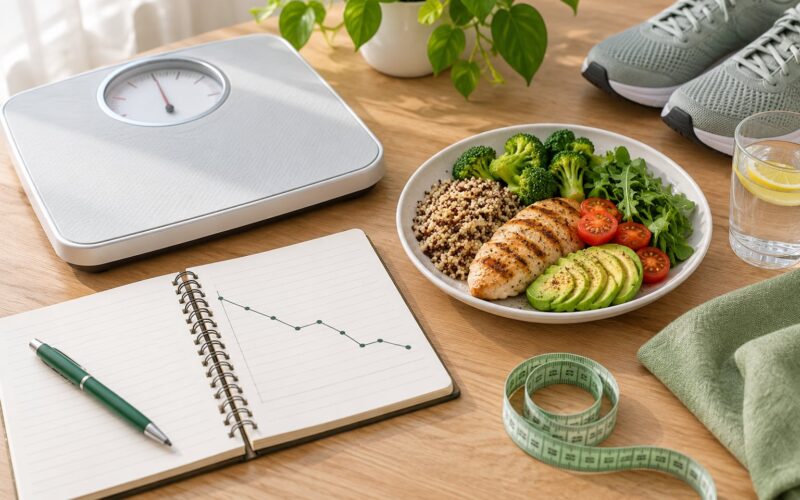
To lose the last 10 pounds, you need a small, precise calorie deficit rather than a bigger one. A lighter body burns fewer calories, so the same habits that worked earlier barely move the scale now, and the fix is to adjust your food, your movement and your expectations without slashing what you eat. Expect this stage to take two to five months, not two weeks.
Most people who get stuck at the final 10 aren’t failing at effort. They’re cutting the same amount they cut 40 pounds ago, when their body needed a much larger deficit to move.
Table of Contents
- What You Need
- Step-by-Step
- 1. Establish Your Current Baseline
- 2. Set a Small, Sustainable Deficit
- 3. Build Balanced, Repeatable Meals
- 4. Keep Moving Every Day
- 5. Improve Sleep and Recovery
- 6. Review, Adjust, and Stabilize
- Common Mistakes
- Tips for Making the Final 10 Pounds Easier
- Frequently Asked Questions
- How long does it take to lose the last 10 pounds?
- Why do the last 10 pounds take longer to lose?
- What should I eat to lose the last 10 pounds?
- How many calories should I eat to lose the last 10 pounds?
- Can I use a weight-loss supplement or meal replacement for the last 10 pounds?
- When should I talk to a doctor or registered dietitian?
- Conclusion
What You Need
Before you change anything, you need an honest baseline. Most stalled final stages begin with a maintenance estimate that was calculated at a much heavier weight, or with a food log that only covers weekdays.
- An honest baseline — a seven-day average weight and a full-week food record, including weekends.
- A modest deficit — smaller than the one you started with, not larger.
- Balanced meals — protein, fiber-rich carbohydrates, vegetables and some fat at every sitting.
- Daily movement plus strength work — steps you actually take and two or three resistance sessions a week.
- Consistent sleep — most adults need seven to nine hours.
- A simple tracking system — a weekly average, a waist measurement and a food log you will actually keep.
You’ll also want a way to measure progress that isn’t the scale alone. Waist circumference, monthly photos and strength in the gym often move before the number does.
If you have a medical condition, take medication, are pregnant or breastfeeding, or have a history of disordered eating, talk to a doctor or registered dietitian before changing how you eat. Individualized guidance matters more here than any general plan.
Step-by-Step
The plan below runs as long as it needs to run. There’s no deadline attached to it, and progress should be judged by trends across weeks rather than by what the scale says on any single morning.
1. Establish Your Current Baseline
Start by writing down your weight, your waist measurement, and how hungry and energetic you feel on a typical day. Note your sleep, your training schedule and anything predictable in your week, like weekend meals or a commute that involves drive-through coffee.
Then weigh yourself every morning for seven days under the same conditions: same time, after using the bathroom, before eating. Add up the readings and divide by seven. That average is your real starting weight, and it is the only number worth tracking weekly.
Day-to-day swings of two to five pounds are usually water, glycogen and gut contents, not fat. A line that bounces up and down while trending slowly downward is exactly what progress looks like at this stage.
Do the same seven-day food record. Most people who stall in the last 10 discover their weekday eating is fine and their weekend eating is roughly a week’s worth of deficit in three days.
2. Set a Small, Sustainable Deficit
Recalculate rather than guess. A body that weighs 40 pounds less needs meaningfully fewer calories than it did a year ago, so the old deficit is now too large. The one you want is smaller than most people expect, and getting the number wrong in the other direction is what stalls the final push.
Trim energy-dense extras rather than protein, vegetables or the foods that keep you functioning. A common approach that people report finally working is a reduction of roughly 200 to 300 calories a day, found by weighing food with a kitchen scale for a week rather than estimating.
Slower loss suits this stage better than fast loss. Losing about half a pound a week tends to preserve muscle better and is far easier to sustain than a pound a week, and it also puts you closer to the rate your body can adapt to.
If you’re already eating very little, do not cut further. That’s the point at which appetite, training quality and sleep start to suffer, and it’s where restrictive patterns tend to begin.
3. Build Balanced, Repeatable Meals
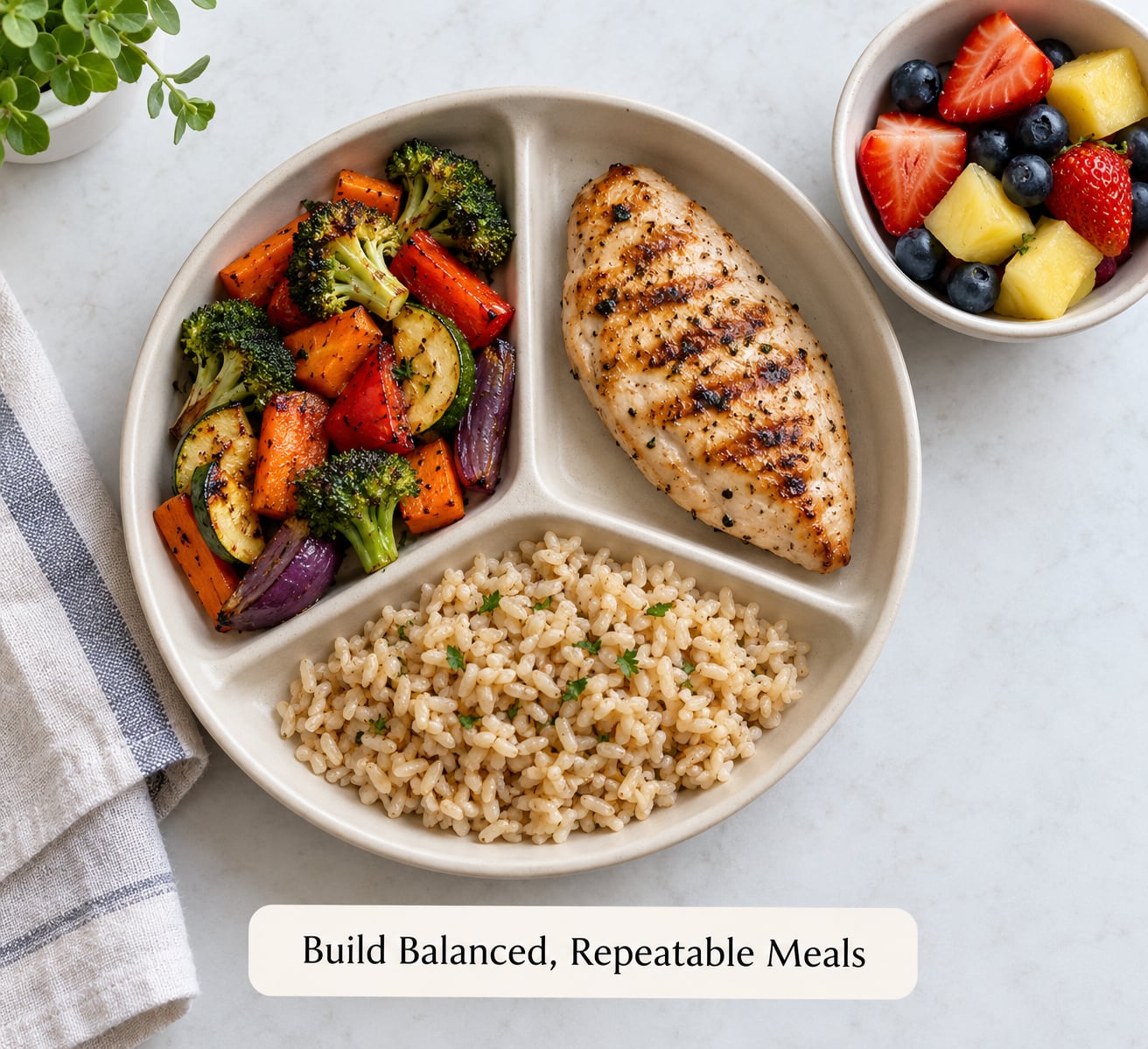
A simple plate formula works better than a complicated meal plan: half vegetables or fruit, a quarter protein, a quarter high-fiber carbohydrate, plus a small amount of healthy fat. Repeat it, and you stop making decisions three times a day.
Protein deserves particular attention in the last 10 pounds because it helps you hold muscle while you cut. A common working range is roughly 1.6 to 2 grams per kilogram of bodyweight per day, and a registered dietitian can help you set a target that suits your own situation.
Volume does the rest of the work. Vegetables, soups, salads and whole fruit fill you up for very few calories, which is what lets you run a deficit without being hungry all evening.
Hidden calories are where most people lose their audit. Check oils, dressings and sauces, restaurant meals eaten on a weekend, alcohol, and drinks like coffee with cream or juice. Each of those is easy to underestimate and easy to fix without cutting a meal.
For portion tracking, measure for two weeks rather than forever. Once you can eyeball a serving of your three or four usual meals accurately, stop weighing and go back to normal eating.
Eating out needs a plan rather than a rule. Decide the protein and the vegetable before you order, choose grilled or baked over fried, and get sauces on the side so you control the amount. Planning the meal in advance is usually the difference between a restaurant day that fits your week and one that undoes it.
4. Keep Moving Every Day
Change your training, not just your cardio. A conditioned body gets less return from the same easy sessions, so the last 10 pounds usually ask for a different kind of movement rather than more of the same.
Add two or three resistance sessions a week. Lifting keeps the muscle you’re protecting, and muscle is what keeps your metabolism higher. Progress the load or the reps slowly over time rather than changing everything at once.
Keep your everyday movement up, because non-exercise activity thermogenesis — the calories burned just by walking around — often drops quietly when people get into a deficit. Ten thousand steps is a reasonable daily target for many people, but hold on to whatever number you can genuinely sustain.
One or two short higher-intensity sessions a week can help, whether that’s intervals, a hard bike ride or a faster pace on a walk. If your joints are complaining, swap them for swimming or cycling.
Watch for compensation. It’s common to eat back calories that a workout appeared to burn, which quietly cancels out the session. Track the workout as part of the week, not as permission.
Nothing kills body fat faster than a specific food, and spot reduction doesn’t exist. You can’t choose where the last 10 pounds come from, but resistance training plus adequate protein heavily biases the loss toward fat instead of muscle.
5. Improve Sleep and Recovery
Poor sleep doesn’t by itself cause weight gain, and it’s not accurate to blame a plateau on stress hormones alone. But consistently short sleep makes hunger harder to control, recovery slower and training quality worse, so it’s worth fixing.
Keep a consistent wake time, even at the weekend. That single anchor does more than any wind-down routine, because your appetite and energy settle quickly once the schedule stops moving.
Hydrate through the day and cut back on alcohol. Alcohol adds calories, disrupts sleep, and brings water retention with it, which is a triple hit right when you’re trying to read the scale.
Manage stress with something repeatable rather than aspirational — a walk, breathing practice, ten minutes of lifting, or simply protecting one evening a week from other people’s plans.
6. Review, Adjust, and Stabilize
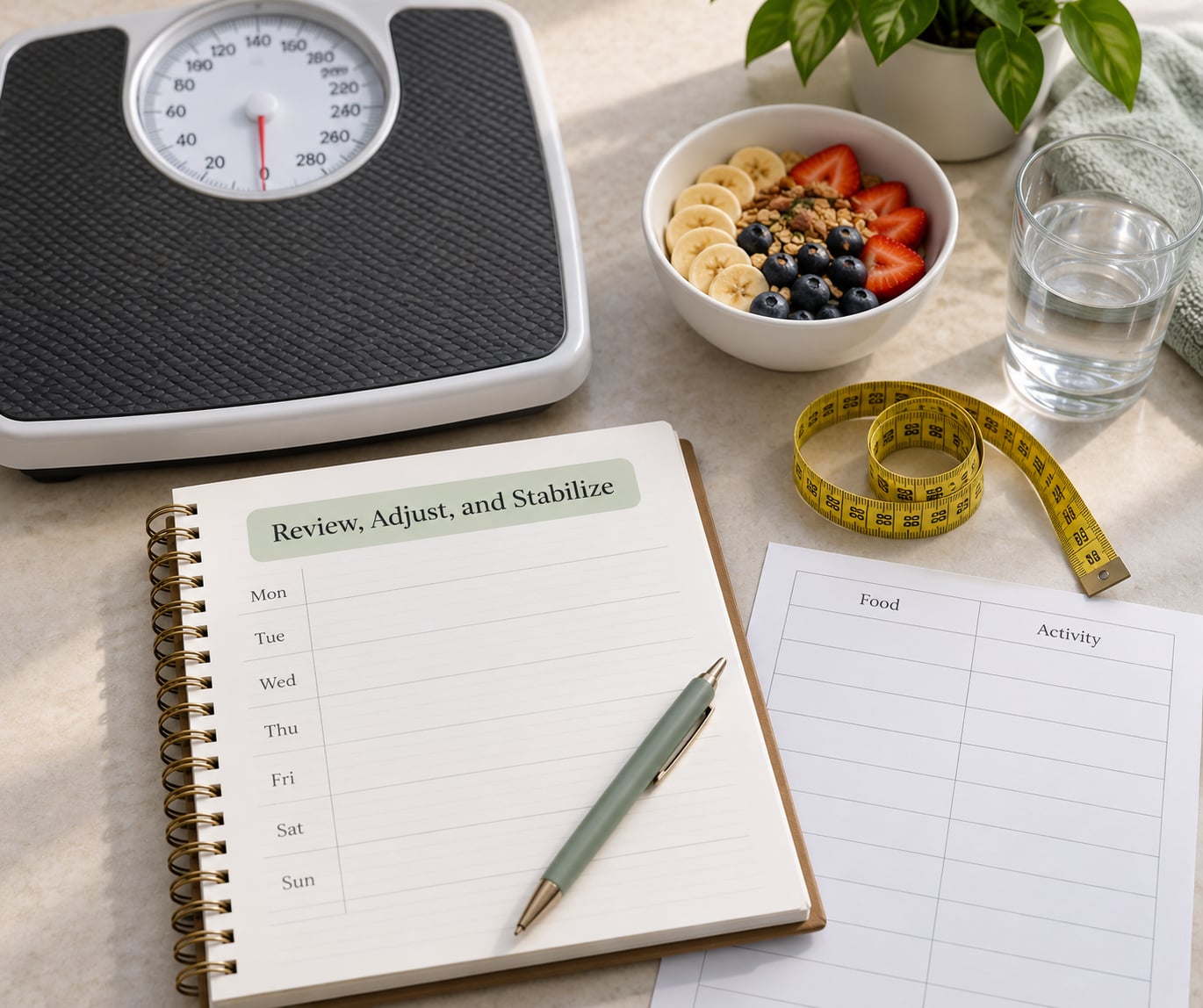
Check in every two to four weeks, using the weekly average. If the average has moved, the plan is working and you change nothing. If it hasn’t moved for three weeks or more, adjust one variable at a time so you know what caused the change.
The most common fix is tightening a habit rather than slashing food. Get more precise with portions for a week, remove one recurring liquid calorie, add one short walk after a meal, or start a weekly strength session. Change one, wait, and look again.
After three or four months of continuous cutting, consider a short diet break at maintenance. Return to roughly your current maintenance calories for one to two weeks. It’s not a reward and it won’t undo progress, and it often makes the next push easier.
When you reach your goal, treat the following two weeks as the transition. Reverse dieting — adding roughly 100 calories at a time every week or two — gives you a maintenance number you can hold without drifting back into a deficit, which is where most regain actually begins.
Then keep the habits that got you here: a protein-forward pattern, two or three lifting sessions a week, and a weekly weigh-in you actually look at. Weighing weekly and acting on trends is what separates maintenance from drift.
Common Mistakes
Expecting a fast finish. Ten pounds in a month while already lean is aggressive. A slow, honest timeline of two to five months protects both muscle and your relationship with food.
Cutting harder than you did at the start. A deficit that was modest at 200 pounds is aggressive at a much lower weight. Tighten accuracy before you tighten intake.
Buying obsolete quick-fix products. Most fat burners, appetite patches and meal replacements produce nothing beyond a calorie effect you can get by adjusting meals. The last 10 pounds are where these get bought, because they cost more per pound and deliver less.
Trusting the daily scale. Salt, a long walk, a new training split and menstrual-cycle water can move the number two pounds overnight. Judge the weekly average only.
Paying back exercise calories. A hard session followed by a large meal is a wash. Write down what a workout actually changes and keep the rest of the day the same.
Chasing perfection, then quitting. Two imperfect weeks beats six abandoned ones. A plan you follow 80 percent of the time, for six months, outperforms a perfect plan you abandon in three weeks.
Tips for Making the Final 10 Pounds Easier
Plan meals once a week and shop from the list. Most stalls trace back to a few unplanned decisions, not to a lack of discipline.
Put protein and fiber in every meal. That combination is the most reliable way to feel satisfied at maintenance-plus-a-deficit.
Take short movement breaks. A ten-minute walk after two meals is an easy addition that people stick to far more reliably than a scheduled hour at the gym.
Record only what you will act on. Weight average, waist, and food intake is enough. Twenty data points is not better than three.
Design maintenance before you reach your goal. Know roughly what you will eat in the first week after you get there, because that first week is when most of the regain begins.
Measure more than weight. Waist measurement, photos every four weeks and your lifting numbers tell you things the scale can’t, especially at this stage.
Frequently Asked Questions
How long does it take to lose the last 10 pounds?
Most people need two to five months for the final 10 pounds, compared with two to four weeks for an early 10. Losing roughly half a pound a week puts you at about 20 weeks. Anyone promising ten pounds in a month at this stage is usually describing water weight, or a loss of muscle rather than fat.
Why do the last 10 pounds take longer to lose?
A smaller body burns fewer calories, both at rest and during movement, so the same deficit that worked earlier barely registers now. Your energy needs also drop partly because you move less without noticing it, and fat tissue stores energy more efficiently than the tissue you lost earlier. The result is a smaller gap for the same effort.
What should I eat to lose the last 10 pounds?
Repeatable, balanced meals rather than a special diet: a protein source, a high-fiber carbohydrate, plenty of vegetables or fruit, and a modest amount of fat. Aim for adequate protein, roughly 1.6 to 2 grams per kilogram of bodyweight daily, and cut the easy extras first, such as alcohol, sweetened drinks, sauces and oils. A registered dietitian can tailor this to you.
How many calories should I eat to lose the last 10 pounds?
There is no universal number, because your maintenance calories depend on your current weight, lean mass and activity. A modest deficit of roughly 200 to 400 calories below your recalculated maintenance is the range most people use at this stage. If you are already eating very little, do not cut further without professional guidance.
Can I use a weight-loss supplement or meal replacement for the last 10 pounds?
Most supplements and meal replacements add little beyond the calories they contain, and several interact with medication or have poorly studied ingredients. Whole foods are cheaper, more satisfying and easier to keep up. If you are already using a GLP-1 medication or any prescription weight management product, take every change through your prescribing clinician rather than adding to it yourself.
When should I talk to a doctor or registered dietitian?
Talk to a professional before changing how you eat if you take medication, have diabetes, kidney disease, heart conditions, a history of disordered eating, or are pregnant or breastfeeding. Seek help sooner if your weight is moving despite consistent effort, if you feel exhausted, dizzy or obsessed with food, or if your period stops while you are cutting. Those are signals, not inconveniences.
Conclusion
Start with the seven-day average. That’s the first action, and it takes one week. Then change one food habit and one movement habit, give each of them three weeks, and judge the result by the trend rather than the morning reading.
If you want a second starting point, add a waist measurement and two resistance sessions a week to that same week. Talk to a doctor or registered dietitian before making changes if you’re on medication, managing a medical condition, or working through a history of disordered eating. General guidance has limits, and knowing where yours are is the useful part.