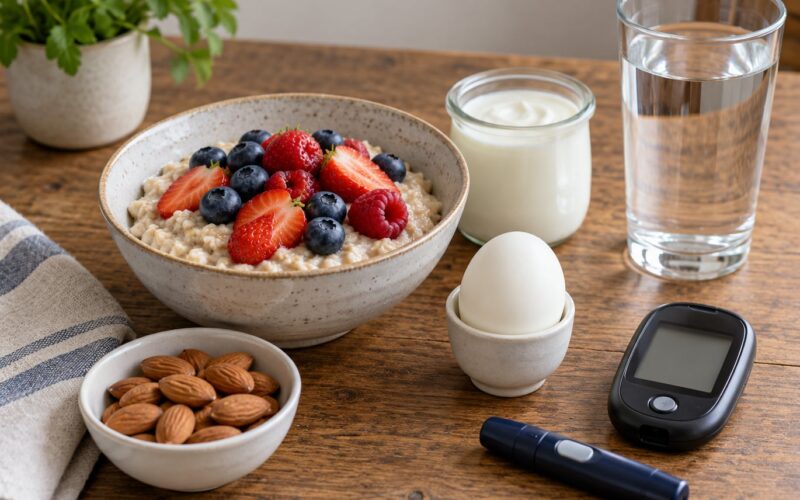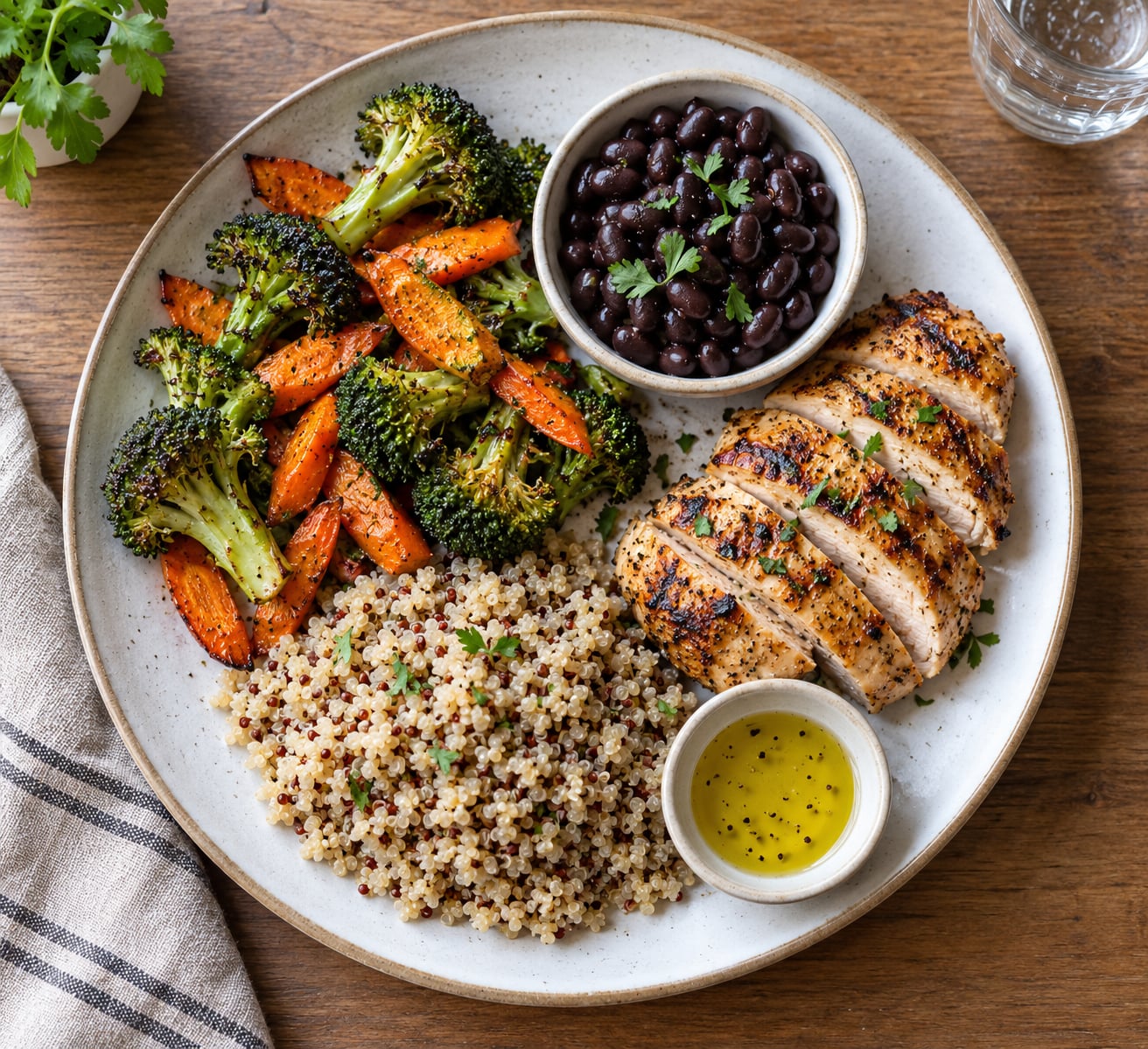
To balance blood sugar with food, pair every carbohydrate with fiber, protein and a little healthy fat, eat your vegetables first and starches last, and take a short walk after the meal. That combination slows how fast glucose enters the bloodstream, which flattens the peak and softens the crash that usually follows.
Most advice stops at the first step. What works in practice is three levers used together: what goes on the plate, the order you eat it in, and what you do in the half hour afterward. Get all three right and you get steadier energy, fewer afternoon cravings, and less of that sleepy-then-hungry feeling two hours after lunch.
Table of Contents
- Quick answer: the five moves that matter most
- How to Balance Blood Sugar With Food
- What Causes Blood Sugar to Rise and Fall?
- Which Foods Help Balance Blood Sugar?
- How to Build a Balanced Meal for Steadier Energy
- How Can Portion Size and Meal Timing Help?
- Simple Swaps That Support Blood Sugar Balance
- How to Read Nutrition Labels for Better Choices
- Common Mistakes When Trying to Balance Blood Sugar
- A One-Day Example of Blood-Sugar-Friendly Foods
- When to Ask a Healthcare Professional
- Frequently Asked Questions
- What foods stabilize blood sugar quickly?
- What is the 15 minute rule for blood sugar?
- Is 200 blood sugar high after eating?
- What flushes sugar out of the body?
- Do you have to cut carbs to balance blood sugar?
- Is fruit bad for blood sugar?
- Start With One Balanced Meal Today
Quick answer: the five moves that matter most
- Build each plate as half non-starchy vegetables, a quarter protein, a quarter high-fiber carbohydrate.
- Eat in order: vegetables first, then protein and fat, then starches and fruit last.
- Swap refined starches such as white bread and white pasta for whole-grain versions.
- Skip sugary drinks and juice, which deliver carbohydrate with no fiber to slow it.
- Walk for 10 to 15 minutes after eating, starting within about half an hour of finishing.
None of this means going without carbs. It means changing what comes with them, and how fast your body has to absorb them.
How to Balance Blood Sugar With Food
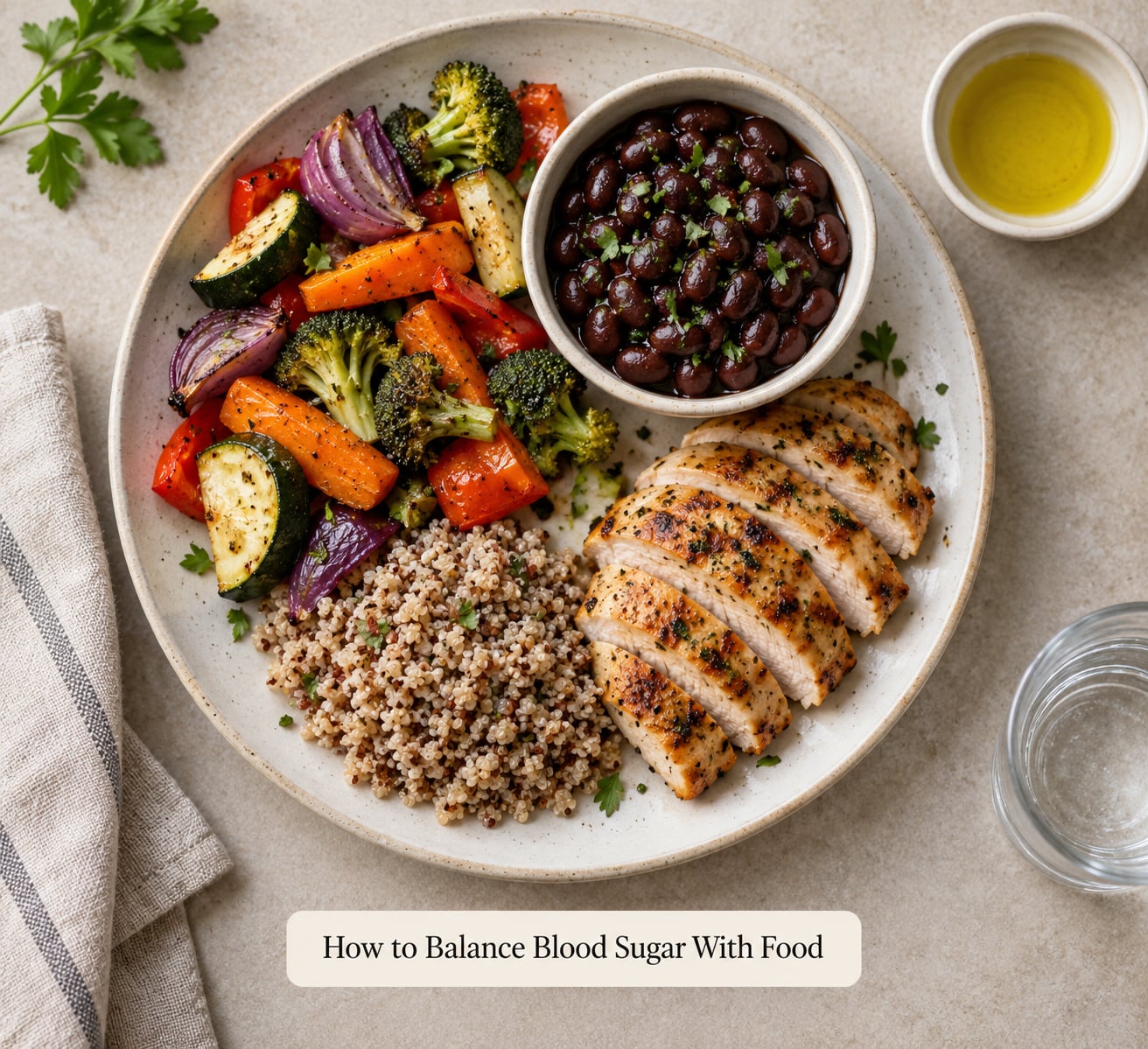
Balanced blood sugar simply means glucose rises, plateaus and comes back down in a range that leaves you feeling functional, without a sharp peak followed by a sharp drop. Food is the main lever most people control, and it works through digestion speed: fiber, protein and fat all slow the rate at which carbohydrate becomes glucose in the bloodstream.
The practical version comes down to three habits. Choose foods that still have their fiber and structure intact. Build meals so that a carbohydrate never appears on its own. And eat regularly enough that you are not arriving at each meal after a nine-hour gap.
That is the whole method. It scales to whatever you already eat, it does not require a banned-food list, and it does not depend on a supplement.
What Causes Blood Sugar to Rise and Fall?
Blood sugar is the glucose in your blood, and it moves because you eat. Every meal raises it. Insulin, the hormone your pancreas releases in response, helps that glucose move into cells for energy, and blood sugar settles back down as the meal is digested.
Here is the part that confuses most people: starch is sugar. White bread, rice, pasta, potatoes and crackers contain almost no added sugar, yet their starch is broken down into glucose during digestion. A bagel is not a candy bar, but it does break down into the same basic molecule at a faster rate. That is why a no-added-sugar label can still come with a spike.
Two terms describe how fast that happens. The glycemic index ranks a food by how quickly it raises glucose compared with pure glucose. The glycemic load accounts for both speed and the amount you actually eat, which is why a small portion of a high-index food is usually fine while a large one is not.
When you eat carbohydrate by itself, glucose enters the blood quickly, insulin responds quickly, and blood sugar can dip below where it started a couple of hours later. That dip is the woozy, shaky, hungry feeling that gets called a sugar crash. Add fiber, protein and fat to the same carbohydrate and digestion slows down, the peak is lower, and the recovery is gentler.
Which Foods Help Balance Blood Sugar?
Look for foods with three traits: fiber, protein, or fat that is mostly unsaturated. You rarely need all three in one bite, but you want them across the meal.
- Non-starchy vegetables: broccoli, leafy greens, cauliflower, green beans, zucchini, peppers, asparagus, cabbage. Very low in carbohydrate and high in fiber and water, so they add bulk with little glycemic load.
- Beans and lentils: black beans, chickpeas, lentils, split peas. Fiber plus protein plus slow-release carbohydrate in one bowl, which makes them an easy swap for a larger portion of rice.
- Whole grains in realistic portions: oats, quinoa, barley, farro, brown rice, whole-grain bread. The intact bran layer slows digestion compared with the refined version.
- Fruit, eaten whole: berries, apples, pears, oranges, kiwi. Whole fruit keeps the fiber that juice discards, so it releases carbohydrate slowly. Portion matters more than the fruit itself.
- Plain dairy or fortified alternatives: plain Greek yogurt, cottage cheese, milk. Protein with little added sugar; check flavored varieties because the sugar load can be high.
- Nuts, seeds and their butters: almonds, walnuts, peanuts, chia, flax, pumpkin seeds. Fat and fiber that slow the meal that follows.
- Protein foods: fish, chicken, eggs, tofu, tempeh, plain Greek yogurt, cottage cheese. These carry little carbohydrate on their own and make a carbohydrate portion land better.
Starchy vegetables such as potatoes, corn and peas are still real food. They just belong in the carbohydrate quarter of the plate rather than counted as a vegetable.
How to Build a Balanced Meal for Steadier Energy
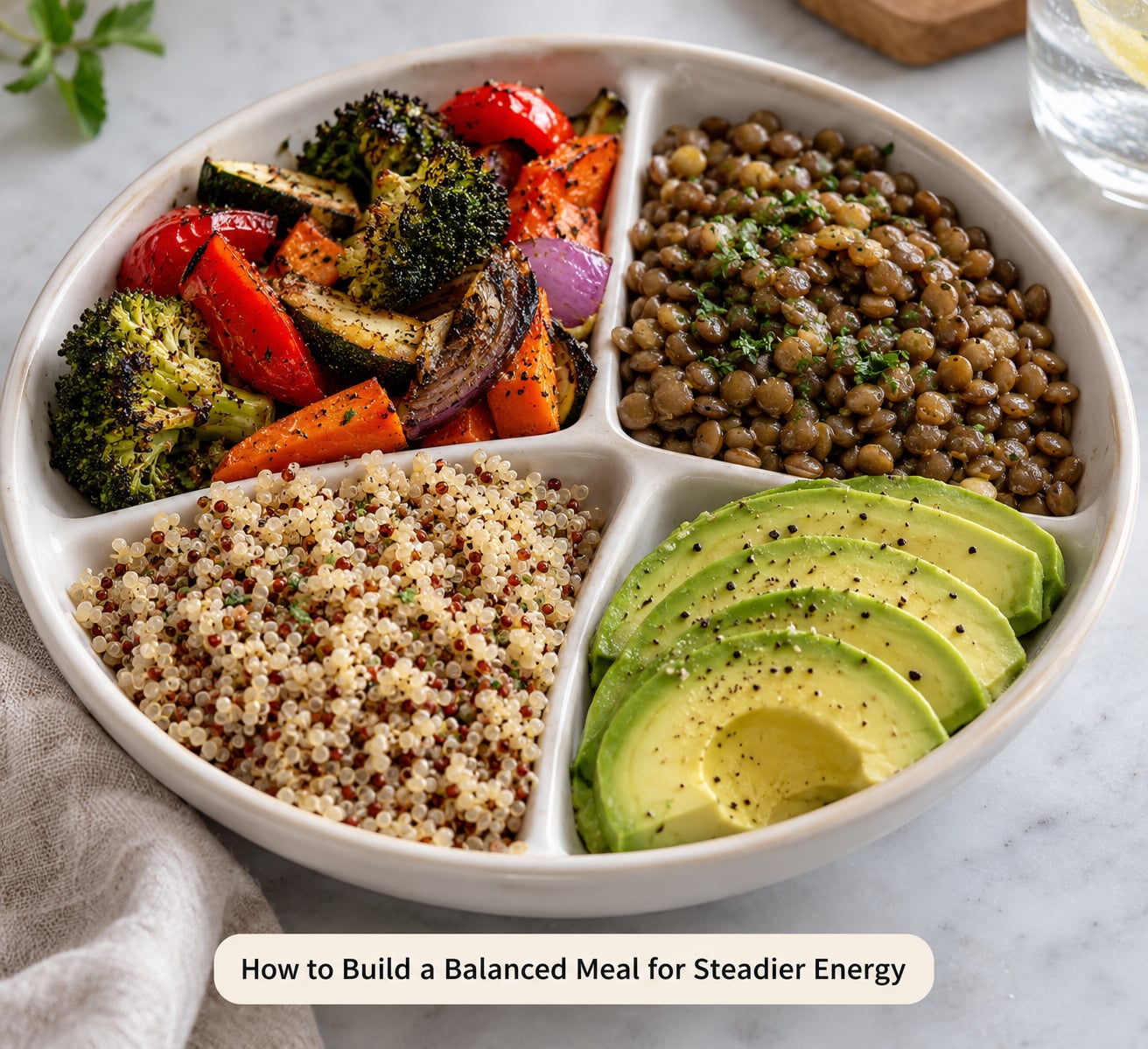
The plate method is the fastest way to build a balanced meal: divide your plate, fill each section, eat them in a sensible order. No weighing, no macros, no app.
| Food group | Portion guide | Examples | Role in blood sugar balance |
|---|---|---|---|
| Non-starchy vegetables | Half the plate, about two fists | Broccoli, greens, cauliflower, zucchini, peppers | Fiber that slows everything eaten after it |
| Protein | About one palm | Chicken, fish, eggs, tofu, beans, plain yogurt | Slows glucose absorption from the carbohydrate portion |
| High-fiber carbohydrate | About one cupped hand | Beans, quinoa, oats, brown rice, whole-grain bread, sweet potato | The energy source; portion controls the rise |
| Unsaturated fat | One to two thumbs | Olive oil, avocado, nuts, nut butters, seeds, oily fish | Extends the time before glucose appears in the blood |
| Water or unsweetened drink | As needed | Water, sparkling water, unsweetened tea | Keeps calories and sugar out of the drink |
A practical example: salmon, half a plate of roasted broccoli and carrots, a cup of quinoa, and a tablespoon of olive oil with lemon. Nothing exotic, and the carbohydrate portion is a quarter of the plate rather than two thirds of it.
One caution on cooking oils: Cleveland Clinic guidance notes that many healthy oils, including extra virgin olive oil, start to degrade above 375F. Use a high-heat-appropriate oil for searing and save the delicate oils for lower temperatures.
How Can Portion Size and Meal Timing Help?
Portion size does most of the work, because the glycemic load of a food rises with the amount you eat. Most people who get shaky two to four hours after lunch are not eating a bad carbohydrate; they are eating a large one with nothing else attached.
Try a cupped hand of rice, quinoa or pasta rather than a heaped bowl, and keep potatoes, corn and peas to the size of your fist. Cleveland Clinic also suggests eating something every two to four hours to avoid the sharp dips that follow long gaps, and warns against drinking alcohol on an empty stomach because it can produce exactly that kind of reactive low.
Those numbers are one person’s budget, not a prescription. Timing should be individualized too: shift workers and people who train in the morning will want a different rhythm. The test is simple: if you feel level for the three hours after a meal, the pattern is working.
Simple Swaps That Support Blood Sugar Balance
You do not need a new shopping list. You need about eight substitutions, and each one is a like-for-like swap.
- White bread or a plain bagel, swapped for whole-grain bread or a whole-grain English muffin.
- White pasta, swapped for whole-wheat pasta or chickpea pasta, keeping the same sauce and the same portion.
- White rice, swapped for brown rice, quinoa, or half rice and half beans.
- Soda or sweet tea, swapped for sparkling water, unsweetened iced tea or coffee with no sugar.
- Fruit juice, swapped for whole fruit; a small glass of orange juice and the orange itself are not the same meal.
- Candy or a sweet snack, swapped for Greek yogurt with berries, or apple slices with peanut butter.
- Sweetened cereal, swapped for plain oatmeal with cinnamon, nuts and berries added on top.
- A large portion of starchy sides, swapped for a smaller portion with a second vegetable added.
None of these are rules you break. They are the swaps you make most often, and most people find two or three carry most of the benefit.
How to Read Nutrition Labels for Better Choices
Two lines on a nutrition panel do most of the work for this purpose: total carbohydrate and fiber. Subtract fiber from total carbohydrate and you get roughly the amount of carbohydrate available to absorb, often called net carbs. Hospital dietitians point to the same two lines on the label.
Here is the order I read a panel in.
- Serving size first. A package may list half the bag as a serving. Check the number before doing any arithmetic.
- Total carbohydrate. This includes fiber and added sugars together.
- Dietary fiber. Five grams or more per serving is a good sign, and anything under one gram is minimal.
- Added sugars. Look at the sugars line, then the added sugars line underneath it. Short ingredient lists do not always mean low sugar.
- Protein. More protein usually means a slower rise from the same carbohydrate amount.
- Total fat and saturated fat. Not a blood sugar number, but it matters for how long the meal holds.
Two honest caveats. A label tells you what is in a food, not how your body responds to it, and two people can eat the same meal and get different readings. And low sugar is not automatically healthy: a fat-free cookie can be low in sugar and still a poor choice, because it is refined starch with nothing to slow it.
Common Mistakes When Trying to Balance Blood Sugar
Skipping meals, then eating a huge one. A nine-hour gap followed by a large plate is a bigger swing than three balanced meals. Regularity usually matters more than any single food choice.
Juice on an empty stomach. Orange juice delivers roughly the carbohydrate of several oranges with the fiber left behind. It is one of the fastest routes to a spike, and it is an easy one to fix.
Stacking carbohydrates in one meal. Bread, rice, pasta, a sweetened dessert and a sugary drink is five sources at once. A carbohydrate with protein, fat and vegetables on the same plate is a completely different event.
Treating one reading as the verdict. Patterns matter more than single spikes. One number after one meal tells you very little, which is why a meter or CGM that tracks trends over weeks is far more useful than a single reading.
Expecting one food or one supplement to do the work. Nothing you eat lowers blood glucose on its own; insulin does that job. Foods change how fast glucose arrives, not whether it arrives.
Going fully carb-free and burning out. People who cut hard often feel fine for months and then stall, and the rebound that follows solves nothing.
A One-Day Example of Blood-Sugar-Friendly Foods
This is an ordinary weekday, not a diet. Carbohydrate figures are rough estimates, and your needs will differ.
Breakfast, about 30 to 40 grams of carbohydrate. Plain oatmeal cooked in milk, topped with a tablespoon of chia seeds, a handful of blueberries and a tablespoon of almond butter. Cooked, cooled oats count differently from instant oats, which is why the first one holds better for most people.
Lunch, about 40 to 50 grams. A bowl of black beans and quinoa with roasted vegetables, topped with grilled chicken and salsa, plus a small side of plain yogurt. Vegetables first, chicken second, quinoa last.
Snack, about 10 grams. An apple with peanut butter, or a small handful of almonds if you are not hungry yet. This exists mostly to stop the 4 p.m. vending machine decision.
Dinner, about 40 grams. Baked salmon, half a plate of roasted broccoli and green beans, a small sweet potato, and olive oil and vinegar on top.
After dinner. A ten-minute walk around the block, ideally within half an hour of finishing. It is the most repeated tip in the patient communities on this topic and the least mentioned in written guides.
When to Ask a Healthcare Professional
This article is general information, not medical advice, and it does not replace care from a doctor, pharmacist or registered dietitian. Individual glucose targets depend on your diagnosis, your medications and your lab results.
Get individualized guidance before making significant changes if you have been diagnosed with prediabetes or type 2 diabetes, take insulin or a medication such as metformin or a GLP-1 drug, are pregnant or planning pregnancy, or have a history of disordered eating. If a restrictive plan is going to trigger you, a dietitian can build one that does not.
Seek medical advice for symptoms rather than trying to food your way out of them: ongoing thirst, frequent urination, unexplained thirst waking you at night, blurred vision, unintentional weight loss, or fatigue that does not improve with rest and food. Recurrent shakiness, sweating or dizziness in the two to four hours after eating is worth mentioning too, since a post-meal dip is a real pattern clinicians can look at.
Reactive hypoglycemia is the reason that dip gets discussed. Cleveland Clinic describes it as blood sugar falling after a meal and notes that the underlying cause in many cases is not fully understood, which is another reason to raise it with a clinician rather than guess at it yourself.
Frequently Asked Questions
What foods stabilize blood sugar quickly?
Fiber, protein and unsaturated fat are the three properties to look for, because each one slows how fast carbohydrate becomes glucose. In practice that means beans and lentils, non-starchy vegetables like broccoli and greens, plain Greek yogurt, eggs, tofu and fish, nuts and seeds, and whole grains in modest portions. Fruit eaten whole, such as berries or an apple with peanut butter, works well too. No single food lowers blood sugar on its own; insulin handles that job. What food does is change how fast glucose arrives.
What is the 15 minute rule for blood sugar?
It is a habit, not a medical rule: walk for 10 to 15 minutes shortly after eating. Muscle contractions pull glucose out of the bloodstream for fuel, which flattens the post-meal peak. Start within about 30 minutes of finishing the meal, keep it easy enough to hold a conversation, and do it after your largest meal first if you only do it once a day. It costs nothing to try, and it is the one habit most often left out of written guides.
Is 200 blood sugar high after eating?
It is above the usual target range, yes. Typical adult reference ranges are 70 to 99 mg/dL before eating, under 140 mg/dL one to two hours after a meal, and an A1C below 5.7 percent. A reading of 200 after food is above that post-meal range and worth mentioning to your doctor, particularly if it happens repeatedly. One high reading is not a diagnosis, home meters are not exact, and targets differ for people who have been diagnosed, so use your own clinician’s numbers as the real reference.
What flushes sugar out of the body?
Nothing flushes it, and chasing a number is usually a mistake. Physical activity is the most reliable option, because working muscles take up glucose without needing insulin. A short walk after the meal helps, as does a general increase in daily movement. Drinking water helps with hydration but does not lower glucose. Supplements marketed as sugar flushes are not supported by good evidence. High readings settle through your own insulin and through the muscle activity above, and if they stay high, that is a conversation for your doctor.
Do you have to cut carbs to balance blood sugar?
No. Most practical advice focuses on what comes with the carbohydrate and how much of it you eat, not on removing it. Whole grains, beans, fruit and potatoes all fit into meals that keep blood sugar steadier when they are paired with protein, fat and vegetables and eaten in a sensible order. Very low carbohydrate diets can lower A1C in the short term, though people often find them draining over time. If you have been diagnosed, your carbohydrate target is a conversation for your doctor or dietitian.
Is fruit bad for blood sugar?
Not by itself. Whole fruit carries fiber along with its carbohydrate, and that fiber slows absorption, so an apple behaves differently from apple juice made from the same fruit. Portion and context matter: a piece of fruit with nuts or plain yogurt lands very differently from fruit eaten on an empty stomach after skipping meals. People with diabetes are often advised to spread fruit across the day rather than avoid it, but that is a conversation to have with your clinician.
Start With One Balanced Meal Today
Pick one ordinary meal you already eat. Add a vegetable to fill half the plate, add a palm-sized protein, and cut the starch portion back to about a cupped hand. Eat the vegetables first, the starch last, and take a ten-minute walk when you are done.
Then watch how you feel over the next three hours. That is the fastest feedback you will get, and it costs one meal. Repeat it for a week before changing anything else, and take any changes you make to a doctor or registered dietitian if you have a diagnosed condition.