Stress eating is eating in response to feelings rather than physical hunger, usually stress, boredom, loneliness or anger. Stress raises cortisol, which lifts appetite and pulls you toward quick energy like sugar and fat, and the brief relief that follows teaches your brain that food fixes the feeling.
Knowing how to manage stress without eating comes down to one skill: creating a gap between the signal and the decision. The six-step routine below takes about ten minutes the first few times and about one minute once it is familiar. It works through repetition, not willpower. Updated for 2026.
Table of Contents
- What You Need
- Step-by-Step: How to Manage Stress Without Eating
- Name the Stress Signal
- Pause Before You Make a Food Decision
- How to Manage Stress Without Eating in the Moment
- Settle the Stress With a Planned Routine
- Make the Next Healthy Choice Easier
- Review What Helped and Adjust
- Common Mistakes
- Frequently Asked Questions
- Why do I want to eat when I am stressed?
- What is the best thing to do when a stress-eating urge hits?
- Can I use snacks while learning to manage stress without eating?
- How long does it take to stop stress eating?
- When should I ask a doctor or registered dietitian for help?
- Start With One Small Stress Routine
What You Need
The list is short on purpose. Most people trying to outsmart stress eating arrive with gear they do not need and no plan for 4pm on a Wednesday.
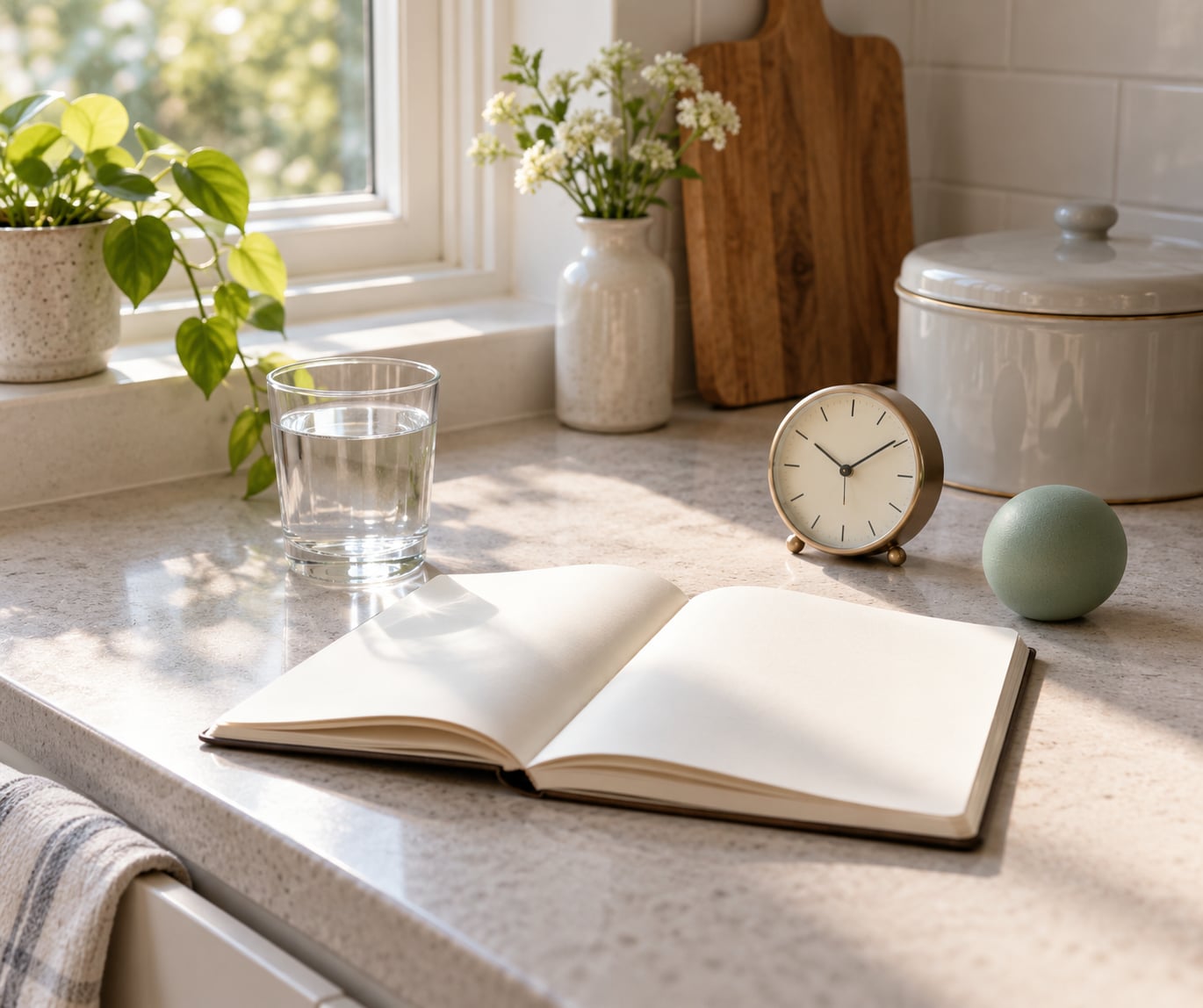
- A few quiet minutes. Ten uninterrupted minutes beats five distracted ones.
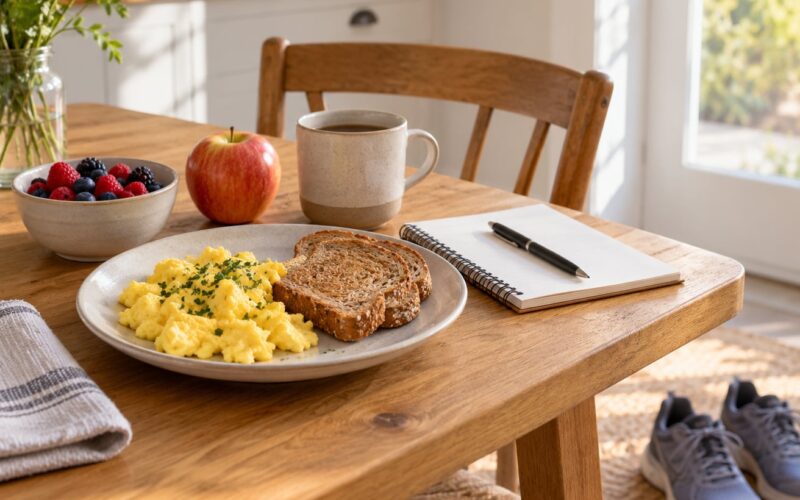
- A glass of water, and a second one. Thirst often wears the same clothes as hunger.
- A phone or a visible clock. You need to know when the pause started, otherwise ten minutes quietly becomes two.
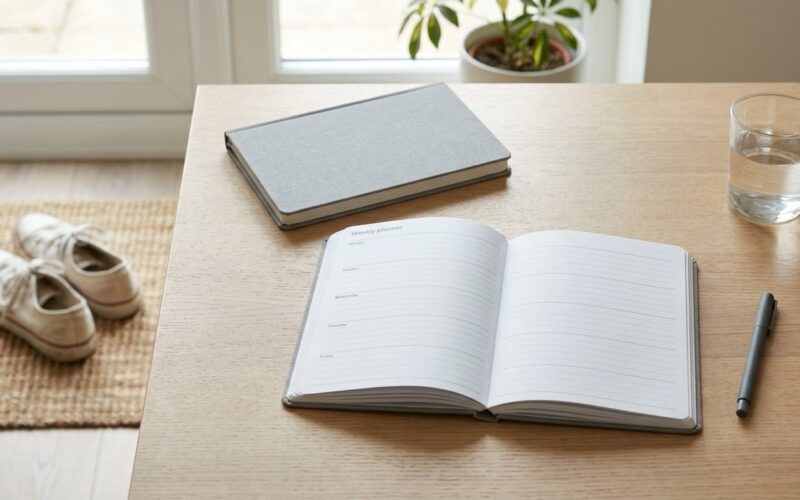
- A notebook or a notes app. Three lines a day is enough to spot your pattern.
- Optional comfort objects: a stress ball, a pen for doodling, headphones, a small blanket, a hand warmer in winter.
Consistency matters more than any single tool. Expect the first week to feel clumsy, because you are interrupting an automatic habit rather than learning a new skill from nothing.
This is general information, not medical care. If eating has become compulsive, distressing or out of your control, or it comes with weight change you did not want, speak with a doctor, a therapist or a registered dietitian. They can rule out medical causes and offer treatment that a self-guided routine cannot.
Step-by-Step: How to Manage Stress Without Eating
Each step does one job. Together they take you from a stress response to a chosen response in under a quarter of an hour, and they work at a desk, in a kitchen, or straight after an argument.
Name the Stress Signal
You cannot pause something you did not notice. Stress eating starts as a physical and emotional tell that is usually easy to read in hindsight and easy to miss in the moment.
Physical signals: jaw clenched, shoulders up near your ears, chest tight, shallow breathing, hands already opening a cupboard door. Emotional signals: a wave of irritation, a drop into boredom, loneliness that arrives the moment you sit down, or the specific flavor of dread about a conversation. Situational signals: your calendar, your inbox, a particular time of day, or a screen full of other people’s lives.
Write down the trigger, the feeling and the time of day, in neutral language. Not I blew it again. Something like: I am reaching for food because I feel overwhelmed and it is 4:15pm and I have not answered that email. Neutral wording matters because self-judgement is itself a stress response, and it sets up the next episode.
Pause Before You Make a Food Decision
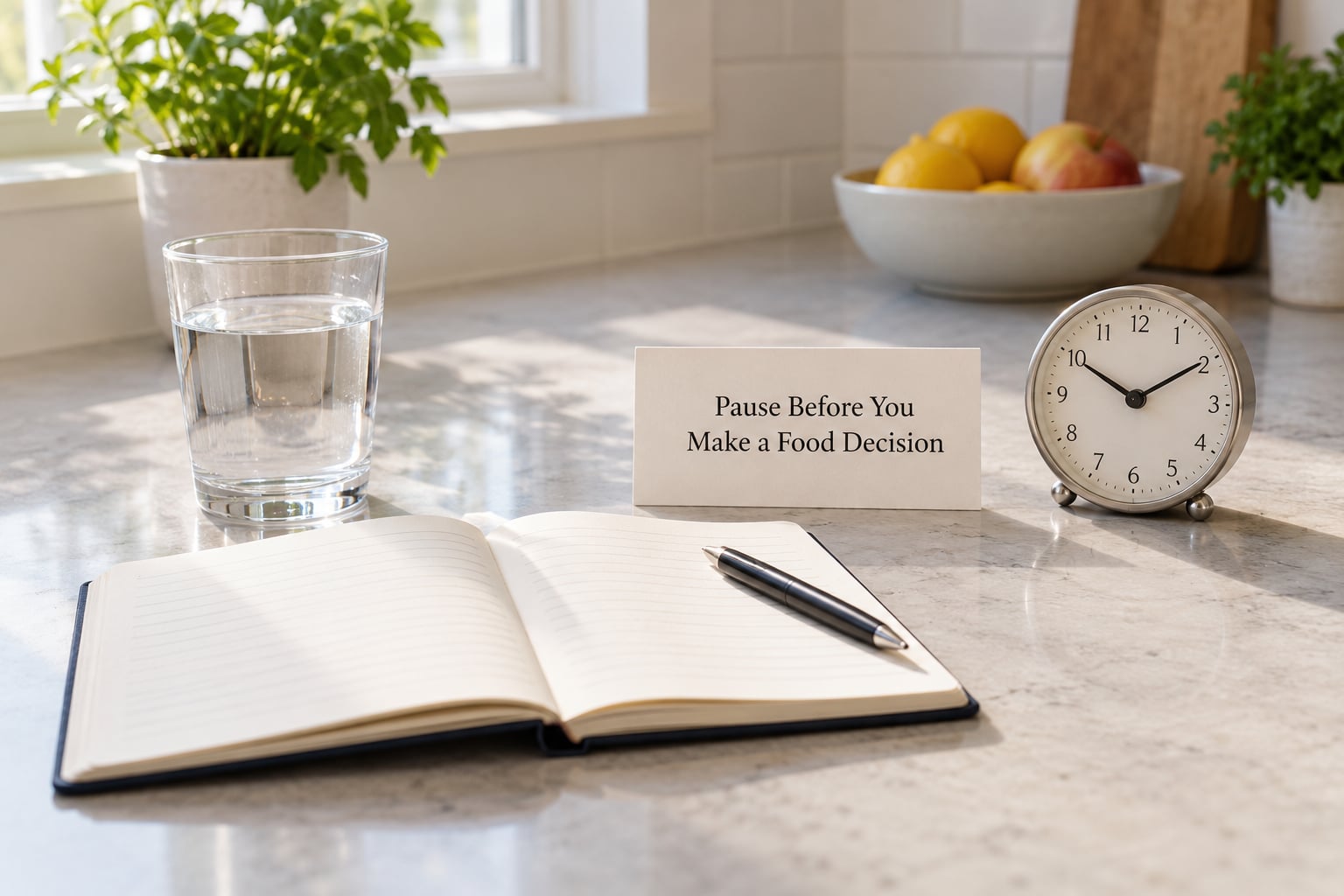
A ten-minute pause is the single tactic that people in weight-loss communities repeat most often as the thing that actually works in the moment. Not because ten minutes is magic, but because a craving that peaks usually fades before it ends, and you only have to outlast the peak.
The sequence is simple:
- Stop where you are. Do not open the cupboard yet.
- Unclench your jaw and drop your shoulders.
- Breathe slowly, longer out than in, for about ten breaths.
- Ask one question: is this physical hunger, or am I trying to soothe something?
- Drink the water you brought with you.
If genuine hunger is still there after the pause, eat. Regular meals are not the enemy here, and forcing yourself to skip food when you are actually hungry tends to set up the skip-then-binge loop.
How to Manage Stress Without Eating in the Moment
Once you have paused, you need something to do with the next five to fifteen minutes. The best substitute is an active one that matches the type of stress rather than a passive one that lets your mind keep chewing on the problem.
- Bored or restless: stand up, walk a loop of the room, do a set of push-ups or stretch for two minutes.
- Anxious or wound up: get outside for five minutes, even onto a step. Daylight and a change of scene settle a tight nervous system faster than staring at the wall.
- Angry or frustrated: move hard and fast for a couple of minutes, then do something slow.
- Overwhelmed and foggy: write the next single physical action in the notes app, then close it.
- Lonely: message or call one person, send a voice note, or put on the voice memo app and talk for ninety seconds.
- Too tired to decide: put on one playlist you have already chosen and do a small chore.
Commit to a set time before you start. Ten minutes of walking is a task; walking until you feel like eating again is not. The timer is what closes the gap.
Settle the Stress With a Planned Routine
The urge usually fades within ten to fifteen minutes. What happens next decides whether the pattern holds or rebuilds itself, so this part is about settling rather than gritting your teeth.
Good settling routines are short and repeatable: paced breathing for two minutes, a walk around the block, clearing one surface, tidying a drawer, a playlist that reliably lowers the temperature in a room. Sleep and hydration count here too. A rough night and an empty water glass both raise the chance that tonight’s stress shows up at the cupboard.
The aim is not to feel nothing. It is to give the feeling a full response so food stops being the only fast option available.
Make the Next Healthy Choice Easier
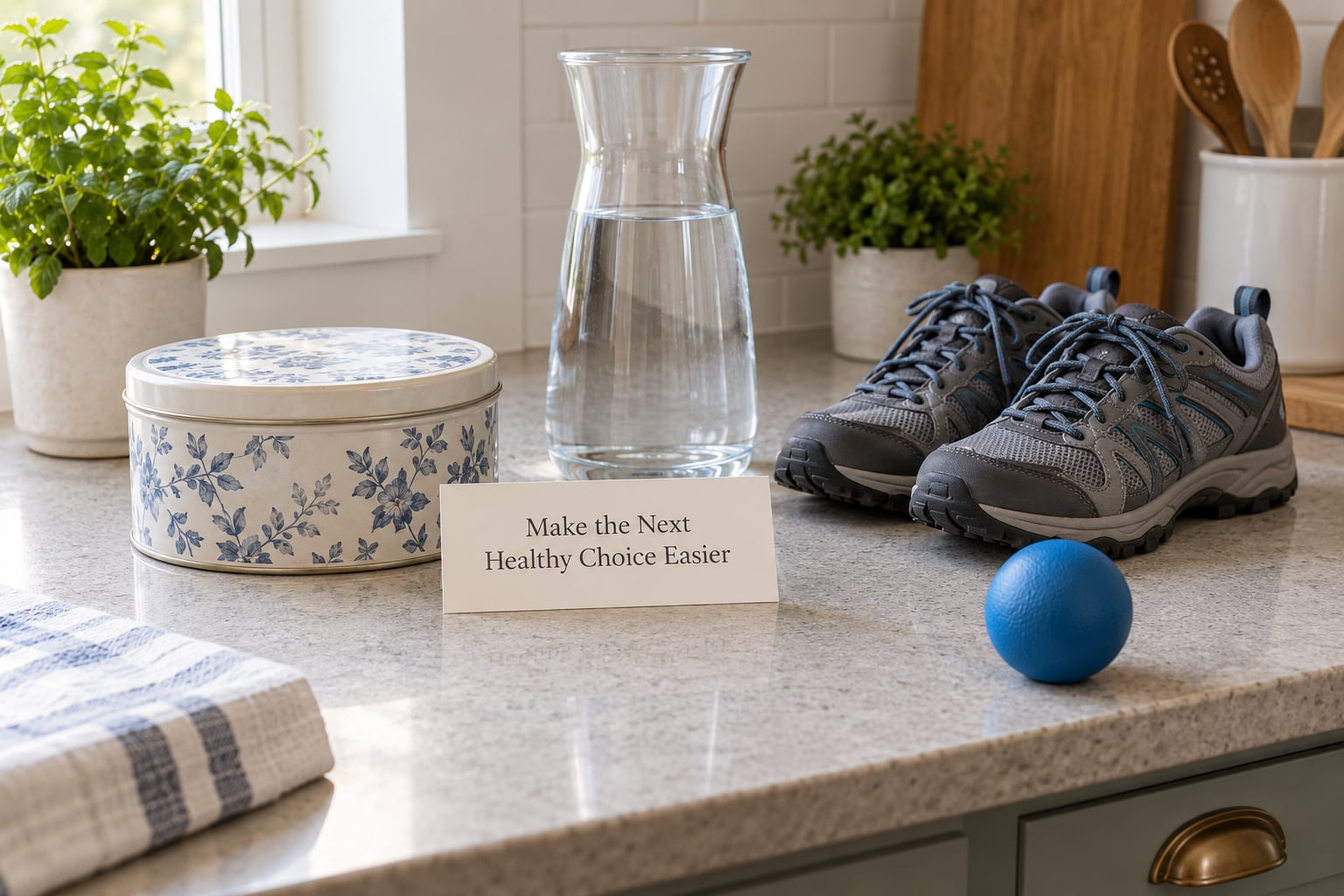
Decisions made at 9pm while tired are the weakest decisions you will make all week. Set the environment up during a calm hour instead.
- Keep a go-to drink ready. Water, tea or sparkling water becomes a ritual that fills the gap between urge and eating.
- Keep your comfort object where the food usually is, such as a stress ball beside the kettle or a notebook beside the sofa.
- Put your least helpful trigger foods out of immediate reach, or do not bring them home. Resistance rarely beats an empty cupboard.
- Book two or three short movement breaks into the day. Five minutes counts.
- Protect your evening. The commute home, the post-dinner couch hour and late-night scrolling are the most common high-risk windows, so plan one thing you enjoy in that stretch rather than reacting to it.
One note on food rules: tighter rules tend to backfire here. When meals become stressful, stress eating usually increases. Eating regularly and without punishment gives you a steadier baseline to work from.
Not everyone overeats under stress. Some people lose their appetite entirely, skip meals, then feel shaky and hungry later in the day. If that is your pattern, the goal is a steady rhythm of meals and movement rather than avoidance.
Review What Helped and Adjust
Once a week, look at the notes and answer four questions for each episode: what triggered it, what did you do instead, how long it took, and how you felt afterwards. You are collecting data, not grading yourself.
Most people find one routine that works and quietly drop the rest. That one routine is the thing to make automatic, and it is worth writing it on a card somewhere you will see it during your worst hour of the day.
Common Mistakes
Almost every failed attempt at this shares one of six problems, and none of them is a character flaw.
- White-knuckling the craving. Sitting rigid and refusing to think about food makes the thought louder. Fix: pause and occupy the gap with an active task instead of a stare-down.
- One strategy for every kind of stress. Deep breathing does nothing for boredom, and a walk does little for grief. Fix: match the response to the feeling, as the list in step three does.
- Compensating with a big meal afterwards. Restricting later to make up for eating earlier creates the exact rebound the routine is meant to prevent. Fix: return to your normal pattern at your next meal and say nothing about it.
- Judging yourself. Shame raises stress, and raised stress is what drove the eating in the first place. Fix: write the neutral sentence from step one even when the day went badly.
- Breathing in a way that feels uncomfortable. Long, deep breaths can make some people lightheaded or more activated. Fix: try a longer exhale than inhale instead, or hum for thirty seconds, and stop if it feels worse.
- Treating it as a discipline problem. Stress eating is a trained coping response, not a moral failing. Fix: expect a rough week rather than a perfect one, and aim to return to the routine rather than never leave it.
And one last thing. If eating is becoming the only way you cope, if you cannot stop once you start, or if the pattern is causing distress, that is worth a professional conversation. A doctor can check for medical causes, a therapist can work on the coping itself, and a registered dietitian can help without turning your food into a punishment.
Frequently Asked Questions
Why do I want to eat when I am stressed?
Stress raises cortisol, which lifts appetite and pulls you toward fast energy such as sugar and fat. Eating then delivers a brief hit of relief, so your brain starts pairing the stressful moment with food. The feeling repeats, and the loop gets tighter each time. It is a learned coping response, not a failure of willpower.
What is the best thing to do when a stress-eating urge hits?
Pause for ten minutes before you open anything. Stop, unclench your jaw, breathe with a longer exhale than inhale, ask whether you are physically hungry or soothing a feeling, and drink a glass of water. If you are genuinely hungry, eat. Otherwise pick one active substitute and set a timer for it.
Can I use snacks while learning to manage stress without eating?
Yes, and structured snacks are not a failure of the routine. Regular meals and planned snacks tend to reduce the intense evening cravings that come from an empty day. The target is not no snacking, it is eating in response to hunger and timing rather than to a feeling, without turning any of it into rigid food rules.
How long does it take to stop stress eating?
Most people notice the urge arriving earlier and losing force within two to four weeks of consistent practice, which is long enough to break the automatic part but not long enough to end the habit entirely. Some triggers will still get the better of you on bad weeks. That is expected, and returning to the routine counts as progress.
When should I ask a doctor or registered dietitian for help?
Ask when eating has become compulsive, when you cannot stop once you start, when it causes real distress, or when you also notice unwanted weight change, skipped meals or shaky, low energy. A doctor can check for medical causes, a therapist can work on the coping, and a dietitian can help with regular eating. No referral is too early.
Start With One Small Stress Routine
Pick the single trigger that catches you most often, choose one non-food response for it, and do that today. Then write down what happened: the time, the feeling, the response, how long it took.
That is the whole start. Progress here is not a life without stress or cravings, it is knowing how to manage stress without eating and getting back to the routine every time you drift.