To figure out how to avoid overeating at parties, decide most of your choices before you arrive, then eat slowly enough that your fullness signals catch up with you. Eat a real meal beforehand, plan two or three things you actually want, and take a break between servings instead of grazing. Nothing here is a diet, and nothing asks you to skip the party.
Overeating at social events is rarely about willpower. It is usually about arriving hungry, standing near the food for two hours, eating fast while someone tells a story, and saying yes out of politeness. Each of those is fixable with a small plan.
Table of Contents
- What You Need
- How to Avoid Overeating at Parties Step by Step
- 1. Eat a balanced meal before the party
- 2. Decide what you will eat before you arrive
- 3. Start with water and a nonalcoholic beverage
- 4. Build a balanced party plate
- 5. Pause between servings
- 6. Separate food from social pressure
- 7. Plan dessert as a choice, not a test
- Common Mistakes When Trying to Avoid Overeating at Parties
- Arriving very hungry
- Skipping meals the whole day
- Standing near the food
- Drinking heavily on an empty stomach
- Trying to eat perfectly clean
- Relying on shame to change behavior
- Quick Tips for Parties, Buffets, and Celebrations
- Frequently Asked Questions
- How can I avoid overeating at a party when I arrive hungry?
- What should I eat before attending a party to help control my appetite?
- How can I manage portions at a buffet without feeling deprived?
- Does alcohol make it harder to avoid overeating at parties?
- Can I eat dessert at a party while still following healthy habits?
- What should I do if I overeat at a party?
- Conclusion
What You Need
You do not need equipment, a special app, or a pre-packed container. What you need is three minutes of thinking beforehand.
- Your trigger foods. Notice which foods you lose control around. For most people it is the tray someone carries around the room, or the potato salad that keeps appearing in the kitchen.
- A decision made in advance. Pick two or three dishes you want. Not a list of everything you will not eat, which is exhausting, but a short list of what you will.
- One thing you genuinely enjoy. If the party has a dessert table you care about, plan for it instead of fighting it for three hours.
- A check-in habit. Some way of asking whether you are still hungry, since you cannot answer that question while your mouth is full.
If you follow a specific eating plan or manage a medical condition, a registered dietitian can help you adapt this to your own needs rather than a generic version of it.
How to Avoid Overeating at Parties Step by Step
1. Eat a balanced meal before the party
Skipping lunch to save room for a party backfires more often than it works. You arrive genuinely hungry, your appetite signals are muted, and you eat fast because your body is pushing for calories all at once.
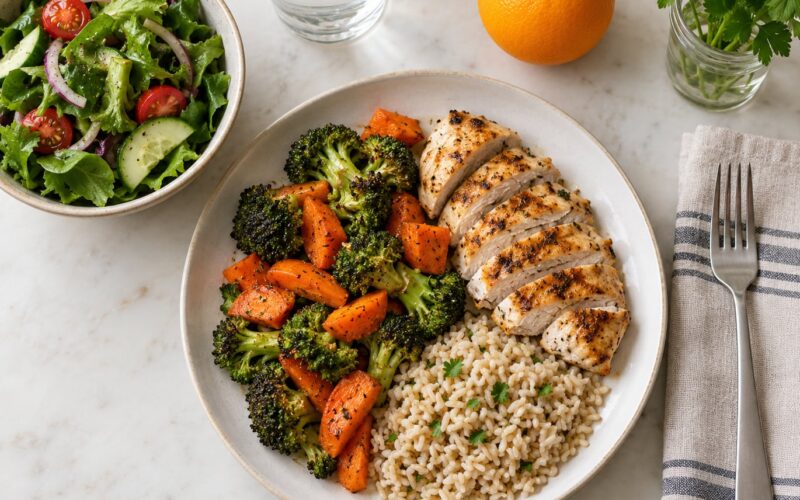
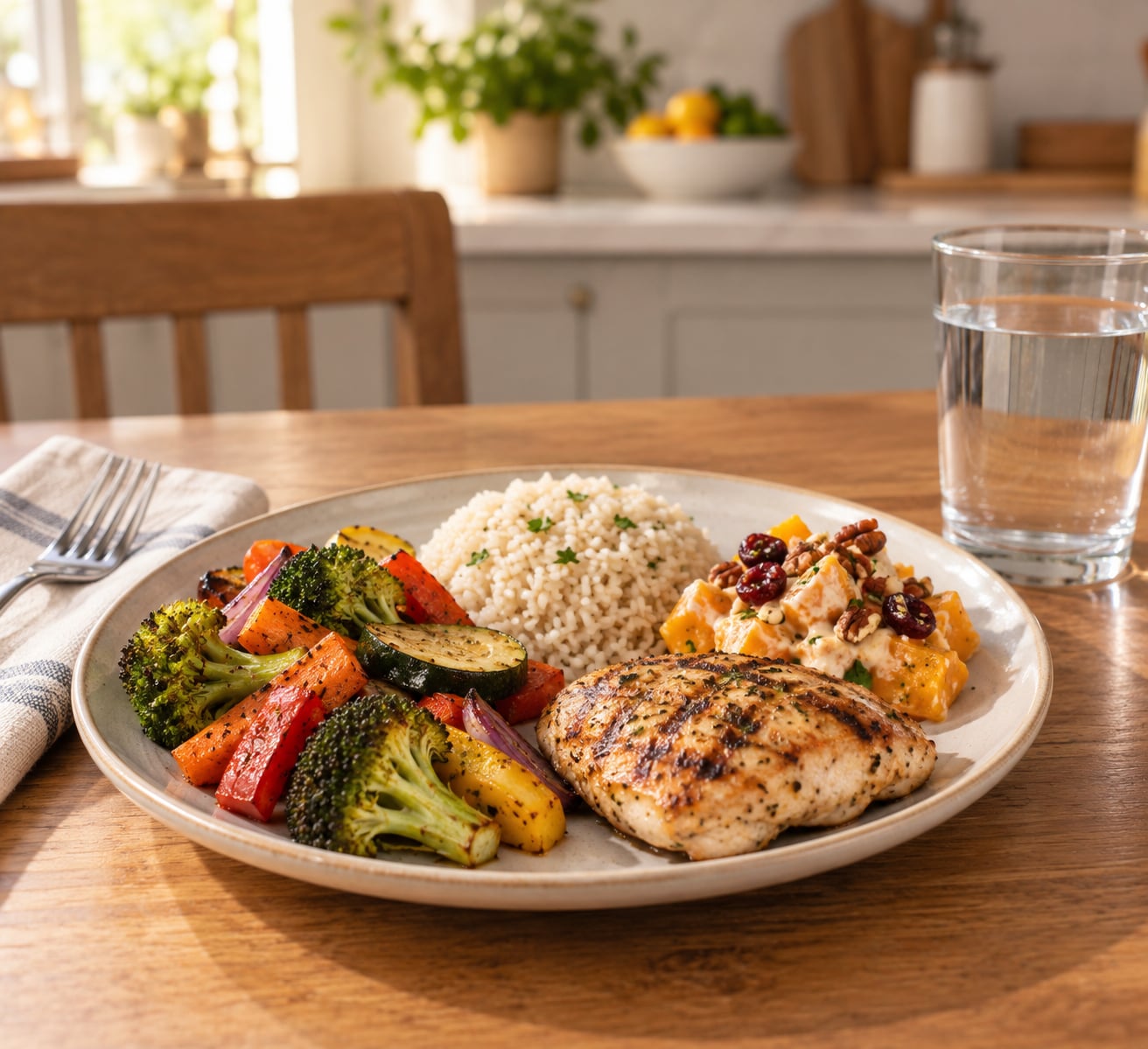
Eat a moderate meal a couple of hours before you leave: some protein, some fiber, some carbohydrate. A bowl of lentil soup with bread, or chicken and vegetables with a small portion of rice, does the job. You want to feel comfortable, not stuffed. Eating to the point of full right before a party removes the room you wanted for the good food.
2. Decide what you will eat before you arrive
Making decisions at a buffet is hard because there are a dozen options and nobody wants to look indecisive. Choose in advance and you skip that entirely.
Pick one main dish, one vegetable or salad, and one thing you are genuinely excited about. That gives you a plate worth eating instead of a plate built from whatever was closest.
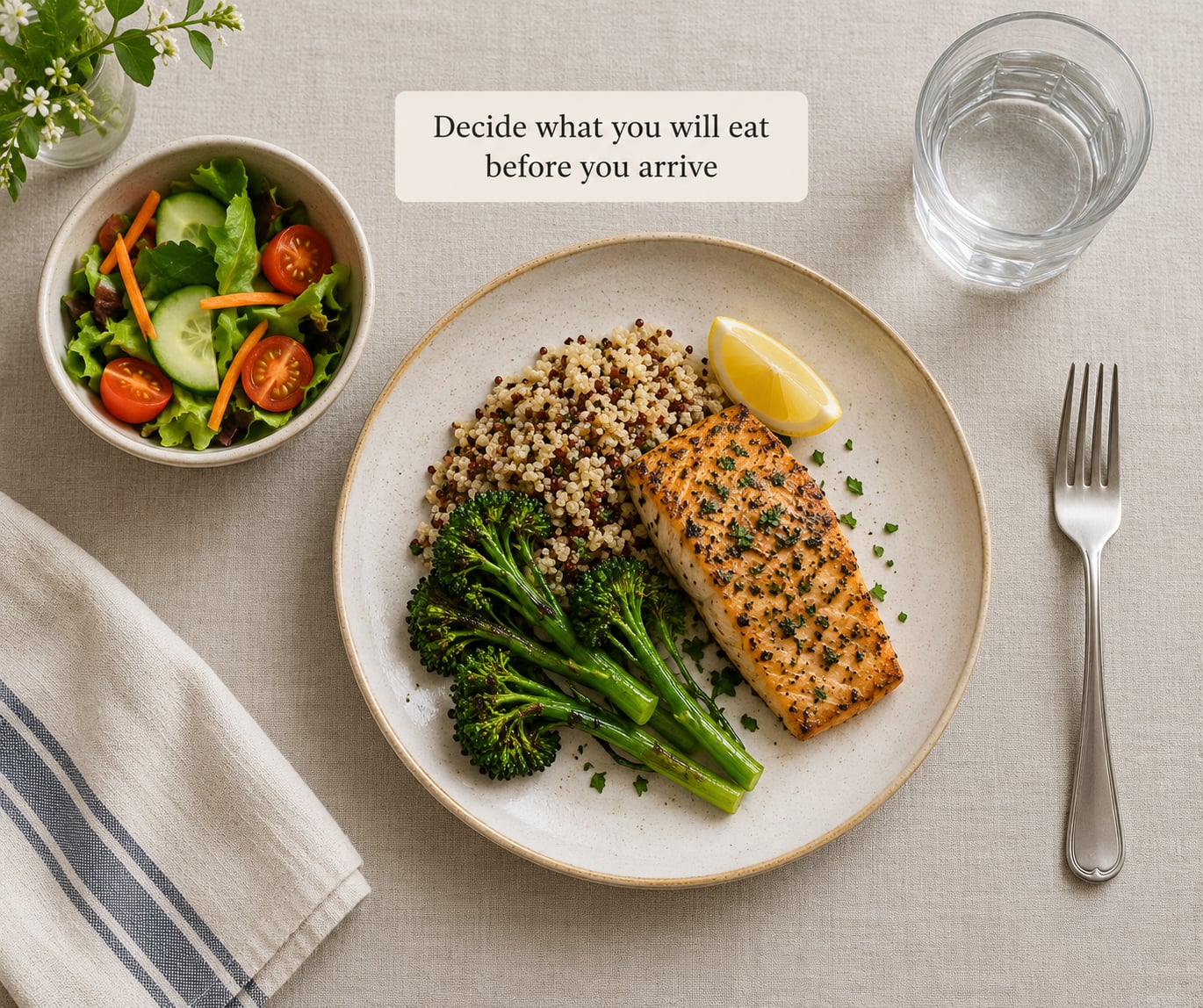
This works especially well with a table full of food you did not choose. Walking in, surveying the whole spread, and only then deciding is how people end up with a plate of five things they do not especially like.
3. Start with water and a nonalcoholic beverage
Begin with a large glass of water or a sparkling drink. Thirst often disguises itself as hunger, and alcohol makes it worse.
Alcohol is the biggest single factor in party overeating, because it lowers the inhibition that normally stops you taking a third helping. Alternating one drink with one glass of water slows the whole evening down and keeps your judgment intact. It also means you are not drinking on an empty stomach, which is the fastest route to eating without noticing.
Aim for one alcoholic drink for every glass of water, and eat real food before or alongside your first one.
4. Build a balanced party plate
A plate that has vegetables or fruit, a protein, and one favorite carbohydrate feels like a meal. A plate of three rich party foods feels like a mistake you will think about later.
Start with the vegetables or salad, then add protein, then add the one party dish you actually came for. It is a simple order, and it works because vegetables and protein take time to digest, so the signal of fullness arrives before you finish the plate.
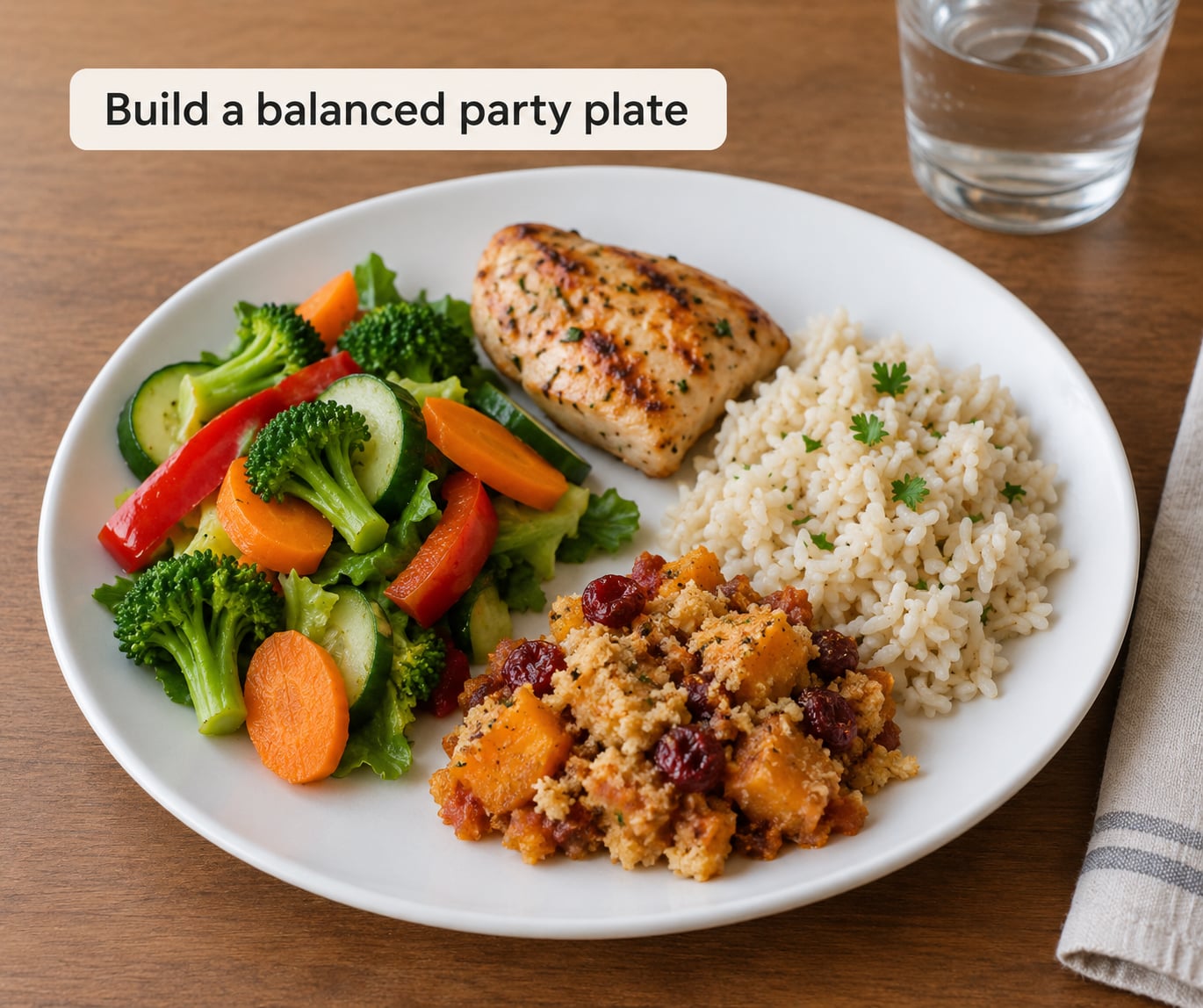
Take a smaller plate than feels generous. Everything looks fine on a small plate, and a big plate quietly asks you to fill it.
5. Pause between servings
The most useful habit in the whole article is the ten-minute pause. Finish one portion, put your fork down, and move somewhere that is not the food table.
Fullness signals do not arrive instantly. Most people eat a large portion before realizing they were not that hungry, and by then it is done. A pause gives your body time to report back, and it takes the decision away from the moment of social pressure.
People on weight loss forums describe the same pattern in different words: standing near the tray means eating without noticing. Moving away from it, sitting down, or going to the drinks table breaks the habit automatically.
6. Separate food from social pressure
Someone will offer you more. Often it comes with a comment, like you are too thin, or one bite will not hurt you, or the host spent all afternoon cooking.
A few replies that end the exchange without an argument:
- That looks wonderful, I am going to save it for later.
- I am full from the first plate, honestly.
- Help me out here, I have been eating all day already.
Keeping your plate in view, or taking your food to a table away from the serving dishes, makes declining easier. Refusing food at a party is polite. Being hostile about it is not, and you do not need to be.
7. Plan dessert as a choice, not a test
Decide before the party whether you want dessert. If you do, take one serving and sit somewhere comfortable while you eat it. If you do not, skip it without a speech.
The common mistake is treating dessert as a test of discipline. You have already decided to say yes or no, and the test only makes the yes feel more rewarding.
Eating dessert slowly, without talking over it, changes the experience more than anything else. It takes about twenty minutes for your body to register a sweet, rich portion, and most people would not have noticed the difference if they had waited.
Common Mistakes When Trying to Avoid Overeating at Parties
Arriving very hungry
Saving up calories for a party is one of the most common mistakes, and forum discussions about it are full of people reporting the same result. You eat faster and more of everything.
The correction is a real meal two hours before, sized so you feel satisfied but not full.
Skipping meals the whole day
The next-day version of the same mistake. Your body arrives at the party with low blood sugar and no reserve of patience for small decisions.
Eat normally through the day and treat the party as one meal among several.
Standing near the food
Position matters more than willpower. Sitting next to the serving dishes, or holding a plate while you talk, means eating without tasting.
Choose a seat away from the food, put your fork down between bites, and refill your drink instead of your plate.
Drinking heavily on an empty stomach
Alcohol lowers inhibition and adds calories, and it pairs badly with a party full of snacks. People routinely describe losing track of how much they ate after a few drinks.
Eat first, alternate drinks with water, and keep a glass of water in your hand.
Trying to eat perfectly clean
A rigid plan makes any deviation feel like failure, and the failure mood leads to more eating. On a holiday week, an all-or-nothing approach usually ends on a sofa with a leftovers box.
Pick your two or three favorite dishes in advance, eat them slowly, and let the rest of the table be decoration.
Relying on shame to change behavior
Feeling bad after eating keeps the problem in place. People who restrict hard during the week and then eat freely on Saturday are not managing anything, they are managing a cycle.
Use a neutral tone. One party is one party, and the plan for tomorrow is a normal breakfast, not a punishing workout or a day of skipping meals.
Quick Tips for Parties, Buffets, and Celebrations
- Eat a balanced meal two hours before you leave.
- Decide your two or three dishes before you arrive.
- Start with water, then one drink for every glass of water.
- Take a smaller plate than feels generous.
- Eat vegetables or salad first, then protein, then your favorite dish.
- Sit down, put your fork down, and wait ten minutes before a second serving.
- Keep your drink instead of the plate in your hand.
- Bring a dish when you can, so you know one option on the table is yours.
- Ask for sauce and dressing on the side, which is the easiest way to cut calories without cutting enjoyment.
- Plan dessert or skip it, and either way make the decision before the tray reaches you.
Party type changes the tactics more than people expect:
- Buffet. Pass the whole table once, then sit down away from it. Do not make a second circuit for seconds. Choose a small plate and keep it in your hand less than you think you should.
- Sit-down dinner. The meal is served, so there is no grazing risk. Pass on the bread basket, eat the vegetables and protein first, and take dessert as your planned treat.
- Cocktail reception. This is the hardest one, because the food arrives in small portions every twenty minutes. Eat a proper meal before, choose two items from the tray, and stay near the people you came to talk to rather than near the tray.
- Potluck. Bring something you want to eat yourself. It solves the safe-option problem and it puts you in the kitchen, which is far from the food.
- Work events. Ask a colleague to be your buddy for the first half hour. People who report using an accountability partner say it is the single easiest trick at office events.
Frequently Asked Questions
How can I avoid overeating at a party when I arrive hungry?
Eat something substantial about two hours before you leave, such as soup with bread or chicken and vegetables. Arriving genuinely hungry is the strongest predictor of fast, distracted eating. If you have no time, carry a protein-rich snack you can eat on the way. Then drink a glass of water before you look at the food.
What should I eat before attending a party to help control my appetite?
A moderate meal with protein, fiber and some carbohydrate works best. Protein and fiber slow digestion, so fullness arrives sooner and stays longer. Aim to feel comfortable rather than full, since eating right up to the party removes the appetite you want for the good food. Skip the idea of saving calories all day, which usually backfires.
How can I manage portions at a buffet without feeling deprived?
Walk the whole line once before you pick up a plate, so you know what is available. Take a smaller plate than feels generous, start with vegetables or salad, add a protein, and include one dish you are genuinely excited about. Then sit away from the table and wait ten minutes before considering a second trip.
Does alcohol make it harder to avoid overeating at parties?
It often does, mainly because alcohol lowers the inhibition that normally stops you taking a third serving, and because drinking on an empty stomach speeds everything up. Alternate one drink with a glass of water, eat real food before your first drink, and keep water in your hand so refilling replaces picking up more food.
Can I eat dessert at a party while still following healthy habits?
Yes, and planning it makes it easier rather than harder. Decide before the party whether you want dessert, take one serving, sit down, and eat it slowly without talking over it. Treating dessert as a pass or fail test usually turns a planned portion into an unplanned one, so simply eating one portion you enjoy is the more practical approach.
What should I do if I overeat at a party?
Do not skip meals the next day and do not try to compensate through guilt. Have a normal breakfast, drink water, move around a bit, and get back to your usual routine at the next meal. One heavy meal rarely changes a week of eating, while a punishing day after usually starts the next overeating cycle.
Conclusion
Start with one action this week: eat a balanced meal two hours before your next party, decide on two or three dishes before you leave the house, and check in with your hunger before taking a second serving. That single routine solves most of what people are trying to fix with willpower. For 2026 gatherings and beyond, the same three steps still apply.