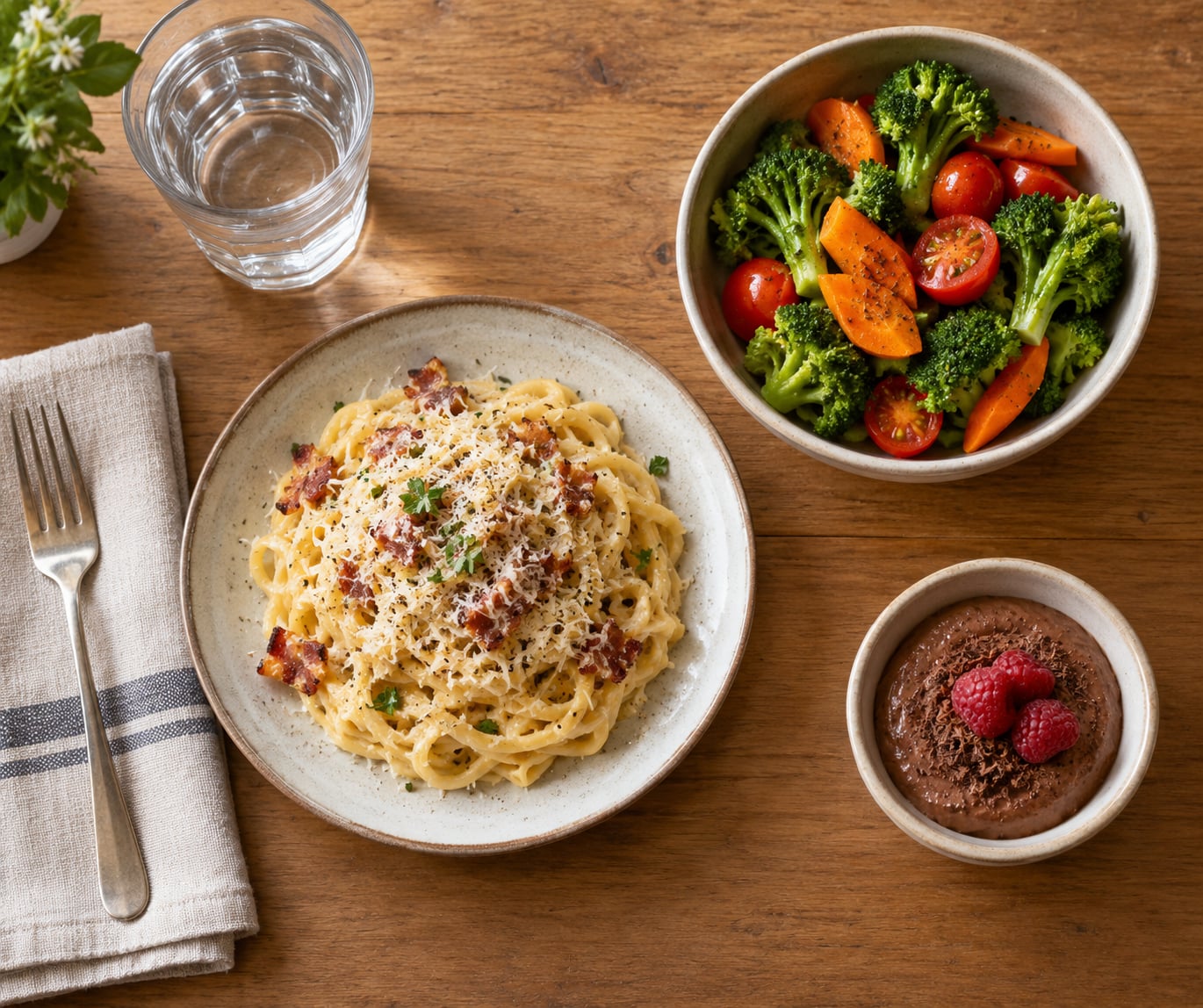
Yes, a cheat day is fine for most people, as long as it is occasional, planned and moderate. The physical cost of one higher-calorie day is small and short-lived. The real risk is what happens around it: guilt, overcorrection and the all-or-nothing thinking that turns one flexible meal into a spiral.
That answer surprises people who assume any slip ruins the work. The arithmetic rarely supports that fear. What tends to derail a weight loss plan is not the meal itself but the punishment that follows it.
Here is what a cheat day actually is, what it does to your progress, how to keep one from turning into a cycle, and when it is simply not the right tool.
Table of Contents
- What Does a Cheat Day Mean?
- Better Words Than Cheat Day
- Is It Okay to Have a Cheat Day?
- When Is It Okay to Have a Cheat Day?
- How a Cheat Day Affects Your Weight-Loss Progress
- Cheat Day vs. Cheat Meal: What Changes
- How to Plan a Cheat Meal or Cheat Day
- How to Keep Flexibility From Becoming an All-or-Nothing Cycle
- Who Should Be Cautious About Cheat Days?
- Frequently Asked Questions
- How often can I have a cheat day while losing weight?
- Will one day of higher-calorie eating cancel my weight loss?
- What should I eat the day after a cheat day?
- Is a cheat meal healthier than a whole cheat day?
- Can cheat days cause weight gain or disordered eating?
- What is a better alternative to a cheat day?
- A Cheat Day Does Not Have to Define Your Diet
What Does a Cheat Day Mean?
A cheat day is a planned day where you eat without your usual calorie targets or food rules, usually scheduled after a stretch of consistent dieting. The idea is that planned flexibility makes a diet easier to stick to long term.
It is worth separating that from three similar things, because they behave differently.
A cheat meal is one meal eaten without tracking. A planned indulgence is a specific food you looked forward to, like cake at a birthday. A food event, in the sense researchers use the term, is an occasion where the eating itself is the activity and there is no natural stopping point.
An unplanned eating episode sits outside all three. It is not on a calendar, it usually runs past comfortable fullness, and it is commonly followed by regret.
Better Words Than Cheat Day
The word cheat does a lot of quiet damage. It frames an ordinary food choice as a moral failure, and it implies you need permission. Plenty of dietitians prefer flexible eating, a planned treat, or simply eating at maintenance for a day. Same behavior, much less self-inflicted punishment.
Is It Okay to Have a Cheat Day?
For most people following a sensible eating pattern, yes. A planned cheat day is compatible with weight loss, and the current evidence base is thinner and more forgiving than most fitness blogs suggest. A 2025 scoping review in Nutrition Reviews, co-authored by Eric Trexler, PhD at Duke University School of Medicine, looked at the research on cheat meals and found the evidence surprisingly limited rather than damning.
Three conditions decide whether yours works.
- It is planned. A day you decided on behaves very differently from one you fell into after overeating.
- It is moderate. Eating near maintenance for a day is a flexible day. Eating several times your normal intake is a different event with a different recovery.
- You go back to normal the next meal. This is the one most people miss, and it matters more than anything on the plate.
Duke’s framing is useful here: people tend to overestimate the physical impact of one indulgence and dramatically underestimate the psychological impact. A day of extra food is arithmetic. The guilt that follows it is a mood, and moods drive the next decision.
So is it okay to have a cheat day? Yes, and for many people a planned flexible meal works better than an entire day, because a meal has a natural end and a normal breakfast waiting behind it.
When Is It Okay to Have a Cheat Day?
Flexibility tends to fit when the rest of your eating pattern is sustainable rather than aggressive, when you can return to your usual meals without compensatory restriction, and when the day is a choice instead of a craving takeover. It also helps if your deficit is modest and you are not already sleep-deprived or stressed, since both make appetite harder to manage.
If the plan requires you to blow up on a scheduled day in order to cope with the plan, the plan is the problem.
How a Cheat Day Affects Your Weight-Loss Progress
Weight changes when your average energy intake over time sits below what you burn. One day does not set that average unless it is repeated or extreme. Here is the math most people get wrong.
A typical deficit of 500 calories a day adds up to about 3,500 calories a week, which is the widely used estimate for one pound of body fat. A 3,000-calorie feast therefore erases roughly six days of a 500-calorie deficit, not six weeks. A week of consistent eating is very hard to undo with a single sitting.
The 3,500-calorie rule is an estimate rather than a law, and real fat gain depends on how quickly the surplus arrives. A large intake spread across a whole day is more likely to build actual fat than the same number eaten at one meal, because the body handles a big meal with digestion and temporary increases in energy use. A very large surplus sustained over several days is a genuinely different situation.
Much of the weight people see on the scale the next morning is not fat. Extra carbohydrates pull water into muscle and liver tissue to refill glycogen, and salty food adds fluid on top of that. Two to three pounds of morning scale gain is common after a large, salty, carb-heavy meal and usually fades over two to three days as you eat your normal pattern.
| Approach | Typical effect on your deficit | Main risk |
|---|---|---|
| Planned treat or flexible meal | A few hundred extra calories, absorbed within days | Low |
| Cheat day at maintenance calories | Little to none over a week | Guilt if treated as a failure |
| Unplanned all-day eating episode | One to several days of deficit erased, depending on size | Loss of control and overcorrection |
| Several high-intake days a week | Deficit shrinks or disappears | Slow progress without obvious cause |
None of those numbers assigns you a universal calorie allowance. Your own maintenance level, your deficit size and your activity all change the arithmetic, and only a registered dietitian can work those out properly for you.
On the metabolic side, expectations should stay modest. Eating a big meal briefly raises energy use through the thermic effect of food, and research cited in dietitian discussions points to a metabolic bump of roughly 3 to 10 percent lasting about a day. That is real, and it is also far too small to count on for fat loss.
Cheat Day vs. Cheat Meal: What Changes
The difference is scope, and scope changes control.
A cheat meal keeps normal breakfast, lunch and dinner around it, so your day still has structure and your protein intake stays roughly intact. Portions stay sensible because the meal sits inside a day of ordinary eating.
A cheat day removes the structure. There is no meal boundary, so there is no built-in stop signal, and the calorie spread is easier to overshoot by accident. It is also easier to keep eating socially, because eating itself is the activity.
Psychologically, the meal is lighter to carry. A bad dinner produces a bad evening; a bad day can take a week to talk yourself out of. Most people who say they hate cheat days are usually reacting to the guilt cycle rather than to the food.
How to Plan a Cheat Meal or Cheat Day

Plan it the way you would plan any other event: decide in advance what you are eating and roughly how much, so the day does not turn into negotiation.
- Set the size first. Maintenance calories, or somewhere near them, is a workable target. Many people find that is plenty satisfying and it costs almost nothing against a weekly deficit.
- Keep your normal meals. Eat your regular breakfast and lunch, and treat the flexible part as one planned indulgence rather than an open field.
- Eat protein early. A protein-heavy first meal slows hunger later and makes the rest of the day easier to moderate.
- Eat slowly. Most overeating on these days happens in the last twenty minutes, when the food is already chosen and discomfort has not registered yet.
- Stop at comfortable fullness, not at regret. The goal is to enjoy the meal, not to prove you can finish it.
- Return to normal at the next meal. No fasting, no punishing workout, no skipping to offset. Just the next ordinary meal.
On frequency, a rough guide helps. One flexible meal a week is common and generally harmless. A full flexible day a week is at the edge, because the calorie spread starts competing with a real deficit. Two or more is where people routinely report losing progress without understanding why.
Frequency is not the whole test though. A monthly flexible day during a holiday is nothing like two flexible days every weekend. Occasion, size and predictability matter as much as the number.
If your day is meant to include alcohol or a restaurant meal, plan the rest of the food around it and keep the rest of your intake light and protein-forward. Several people find that one big planned meal satisfies the craving better than a whole day of grazing ever did.
How to Keep Flexibility From Becoming an All-or-Nothing Cycle
The pattern is common and worth naming, because it usually starts small. A planned meal turns into an entire day, guilt arrives, and the guilt turns into restriction, which brings back hunger, which brings back the rebound eating. Repeat with bigger swings each time.
Warning signs include eating until uncomfortably full, dreading the next meal, thinking about the food for days beforehand, weighing yourself obsessively the morning after, and planning exercise as punishment. Two more matter as much: skipping meals to make up for the last one, and treating the whole day as ruined the moment it deviates from plan.
When you spot those, the fix is usually smaller than people expect. A cheat meal instead of a cheat day. A planned portion of the dessert rather than the whole one. One flexible meal a week instead of a flexible day. Regular meals on schedule after a big day rather than fasting.
On Reddit, the most repeated piece of advice in weight-loss communities is closer to moderation than permission: people report that eating at maintenance for a day, or having the craving food in a reasonable portion, works better than a full blowout. The other camp argues you only need cheat days when you are restricting too hard in the first place. Both can be true at once, and both point toward the same fix.
Who Should Be Cautious About Cheat Days?
Skip them, or get individual guidance first, if any of the following apply to you.
A history of binge-eating disorder or disordered eating makes an unrestricted day a real risk, because it can reinforce the restrict-binge cycle. Food anxiety, guilt-driven eating and compulsive exercise are the same warning in different clothing.
If you take insulin or a diabetes medication, plan high-carbohydrate days with your clinician first, because the timing of those meals changes your glucose handling. The same goes for anyone managing gastrointestinal symptoms, food allergies or an existing medical condition affected by diet.
If you are pregnant, under 18, or managing a history of disordered eating, individualized guidance from a doctor or registered dietitian is the right starting point rather than a general article.
The pattern to watch for is not a single bad day. It is the day after: shame, restriction, and a promise to be stricter next time. When that is the reaction, the strategy is the problem, and a professional conversation is worth more than any rule in this guide.
Frequently Asked Questions
How often can I have a cheat day while losing weight?
For most people in a moderate calorie deficit, one flexible meal a week is comfortable and costs very little. A full flexible day a week sits at the edge, since the extra calories start competing with the deficit. Two or more a week tends to slow progress. Occasion matters too: a monthly holiday meal is nothing like two free days every weekend.
Will one day of higher-calorie eating cancel my weight loss?
Usually not. A 500-calorie daily deficit adds up to about 3,500 calories a week, so a single 3,000-calorie meal erases roughly six days of that deficit rather than six weeks. Much of the weight you see the next morning is water and sodium from extra carbs and salt, and it usually fades within two to three days.
What should I eat the day after a cheat day?
Your normal meals. Regular portions, regular timing, and protein at each meal is plenty. Do not fast, skip breakfast, or add punishing exercise to offset the day before. That compensation is what starts the restrict-binge cycle, and it is more damaging to your progress than the flexible day ever was.
Is a cheat meal healthier than a whole cheat day?
For most people, yes, and the reason is structural rather than nutritional. A single meal keeps your other meals intact, keeps protein higher, and gives you a natural stopping point. A whole day removes the boundaries that normally end eating, which makes overshooting more likely and guilt easier to feel.
Can cheat days cause weight gain or disordered eating?
A single day rarely adds meaningful fat. Repeated high-intake days can quietly erase a deficit and cause slow gain. The bigger concern is psychological: a shame-and-restriction cycle that turns one flexible day into a binge and then into rebound eating. If that pattern sounds familiar, skip cheat days and speak with a registered dietitian.
What is a better alternative to a cheat day?
Eat at maintenance calories for one meal or one day, which keeps the flexibility while staying close to your baseline. You can also have the craving food in a planned smaller portion, take a short diet break of a week or two, or build one flexible meal into your weekly plan so nothing feels forbidden or compensatory.
A Cheat Day Does Not Have to Define Your Diet
Start with one thing: put a single flexible meal in your calendar this week, at maintenance calories or close to it, and decide in advance what it is. Eat your regular meals around it, then go straight back to normal the next morning. No punishment, no promises to be stricter, no calorie math after the fact.
That is the whole answer to whether it is okay to have a cheat day. For most people it is fine, and for anyone with a history of disordered eating, diabetes or medical concerns, it is worth a conversation with a doctor or registered dietitian before you plan one.