Family dinners that fit a weight loss plan come down to one idea: cook a single balanced batch and plate it in measured portions, instead of cooking a second meal just for you. Most adults working toward gradual loss land around 1,500 to 1,800 calories a day, which leaves room for a dinner in the 400 to 600 calorie range with 25 to 35 grams of protein. It takes about 20 minutes of Sunday planning and one normal cooking session.
In short: build the plate, not the diet. You assemble one meal the household will actually want to eat, then you adjust the proportions on your own plate. That is the whole method, and it survives contact with picky eaters, packed schedules and leftover nights better than any plan that treats dinner as a separate project.
Table of Contents
- What You Need Before You Cook
- A 9-inch plate and one measuring tool
- A plate method you can recite in five seconds
- A fifteen-minute weekly planning habit
- Pantry staples that make a batch go further
- One flexible component per meal
- Step-by-Step: How Family Dinners That Fit a Weight Loss Plan Come Together
- Step 1: Plan Around a Balanced Plate
- Step 2: Choose Family-Friendly Foods
- Step 3: Set Portions Without Cooking Separate Meals
- Step 4: Add Flavor Without Extra Calories
- Step 5: Plan Ahead for Real Life
- Step 6: Review the Week, Not One Meal
- Common Mistakes to Avoid
- Cooking two separate meals
- Serving oversized portions because you barely touched the plate
- Going too restrictive to sustain
- Skipping vegetables because they feel like a side dish
- Treating a weight loss plan as a short-term restriction
- Ignoring what the household will actually eat
- A few habits that help more than anything else
- Frequently Asked Questions
- What is the best dinner meal for weight loss?
- What are some healthy family meals for weight loss?
- How much protein do I need per meal for weight loss?
- Can I eat the same dinner as my family while dieting?
- What should I do when my family wants takeout or pizza night?
- When should I talk to a doctor or registered dietitian about my weight loss plan?
- Conclusion
What You Need Before You Cook
You need less than most meal-planning guides imply. Here is the short list of what genuinely changes the outcome, in the order it matters.
A 9-inch plate and one measuring tool
A smaller dinner plate does more work than most people expect. A 9-inch plate fills up at noticeably less food than a 12-inch one, and you will not miss the difference if the food is hot and seasoned well. For starches, a measuring cup or a kitchen scale is the only tool worth owning. Cups of rice and pasta are where portion creep hides.
A plate method you can recite in five seconds
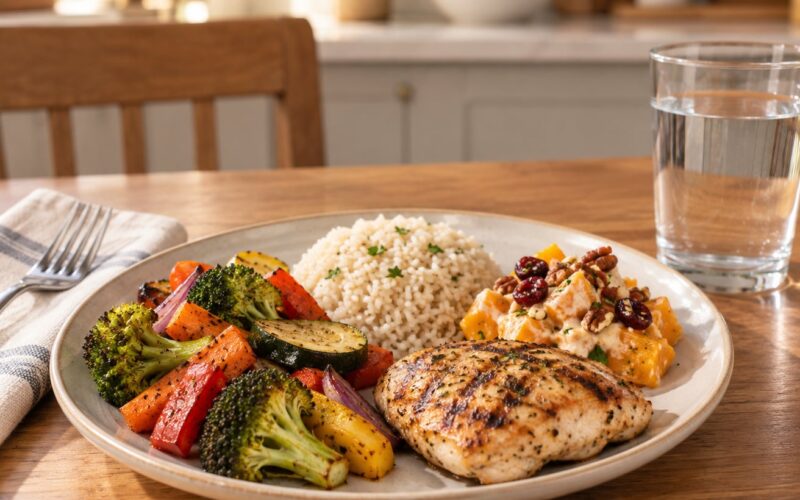
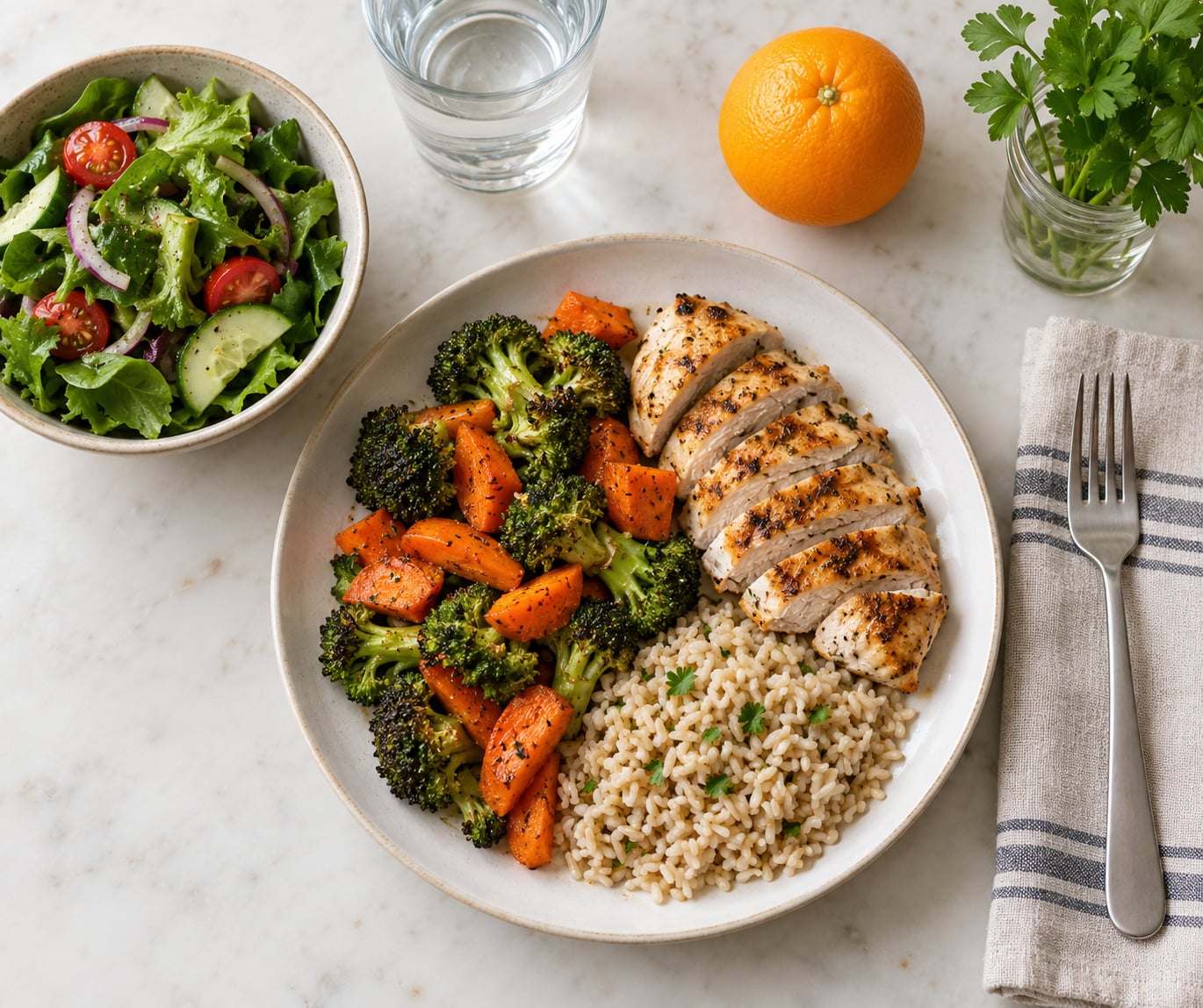
Half the plate is non-starchy vegetables, one quarter is lean protein, one quarter is a high-fiber starch. Add a thumb-sized amount of fat such as olive oil, avocado or a scatter of cheese, and you have a complete dinner. Fat is not the enemy people think it is; it is what makes vegetables taste like something worth eating.
A fifteen-minute weekly planning habit
Sunday afternoon is the natural slot, but any consistent moment works. You are not building a calendar for the month. You are choosing three or four proteins, one or two starches, and a big pile of whatever vegetables are cheap that week. Everything else on the menu is a repeat of something you already cooked.
Pantry staples that make a batch go further
Brown rice, whole-wheat pasta, canned beans, lentils, eggs, plain yogurt, frozen vegetables, low-sodium broth, canned tomatoes, olive oil, and a small collection of spices. Frozen vegetables are worth an apology here: they are picked and frozen at peak ripeness, they cost less than fresh, and they need almost no prep time.
One flexible component per meal
Every dinner needs a moving part so the same base dish can serve a picky eater, a teenager and an adult with different goals. A side salad, extra sauce on the side, plain rice kept separate from the seasoned pot, or deconstructed taco bowls all work. Build the flexibility in from the start instead of cooking a second meal at 6pm.
Step-by-Step: How Family Dinners That Fit a Weight Loss Plan Come Together
Step 1: Plan Around a Balanced Plate
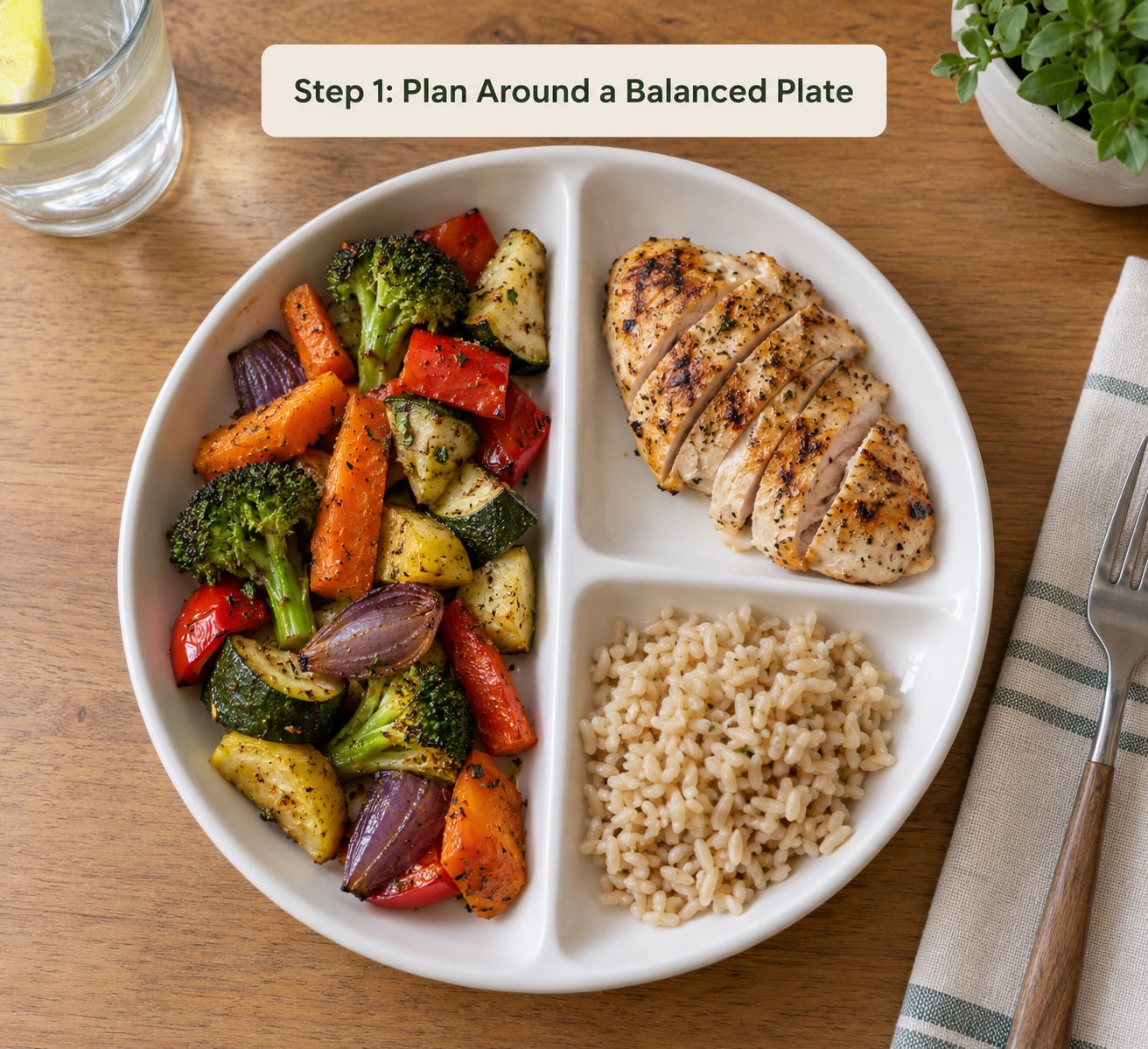
Start from the proportions, not from a recipe. Pick a protein you already know how to cook, pick a starch, and pile on more vegetables than feels natural. Most home cooks undershoot the vegetable share badly, and that undershoot is the single biggest reason a plate leaves someone hungry twenty minutes later.
Substitutions matter more than the base template. For a child who refuses the vegetables, serve them raw alongside the cooked version, or let sauce and cheese do the work. For an adult eating the same meal, extra vegetables cost almost nothing and add volume. For a household with mixed tolerance for heat, put peppers and chili on the table as a condiment rather than building the whole dish around them.
Step 2: Choose Family-Friendly Foods
Familiar food wins over aspirational food. Chicken, ground turkey, eggs, canned beans, lentils, tofu, fish, pork tenderloin and shrimp are the workhorses because they cook fast, reheat well and are broadly liked. Whole grains such as brown rice, barley, quinoa and whole-wheat pasta provide the carbohydrate half of the plate with more fiber than their white versions.
Sauces and cheese belong on the plan, not off it. A serving of sauce or a small amount of grated cheese is what makes the meal one people eat with enthusiasm rather than tolerate. Budget roughly 100 to 150 calories for that finishing touch and take it out of the starch or fat budget, not out of the protein.
Vegetable-forward dinners can still be substantial: a bean and vegetable soup with a side of whole-grain bread, or a sheet pan of salmon, broccoli and potatoes, is a complete plate without any special diet food at all. Keep family dinners that fit a weight loss plan boring and repeatable. Boredom is the enemy, not the vegetable tray.
Cook to safe temperatures and treat that as non-negotiable. Poultry reaches 165°F, ground meat 160°F, and whole cuts of meat or fish 145°F measured at the thickest part. Use a thermometer rather than guessing, especially with leftover chicken.
Step 3: Set Portions Without Cooking Separate Meals
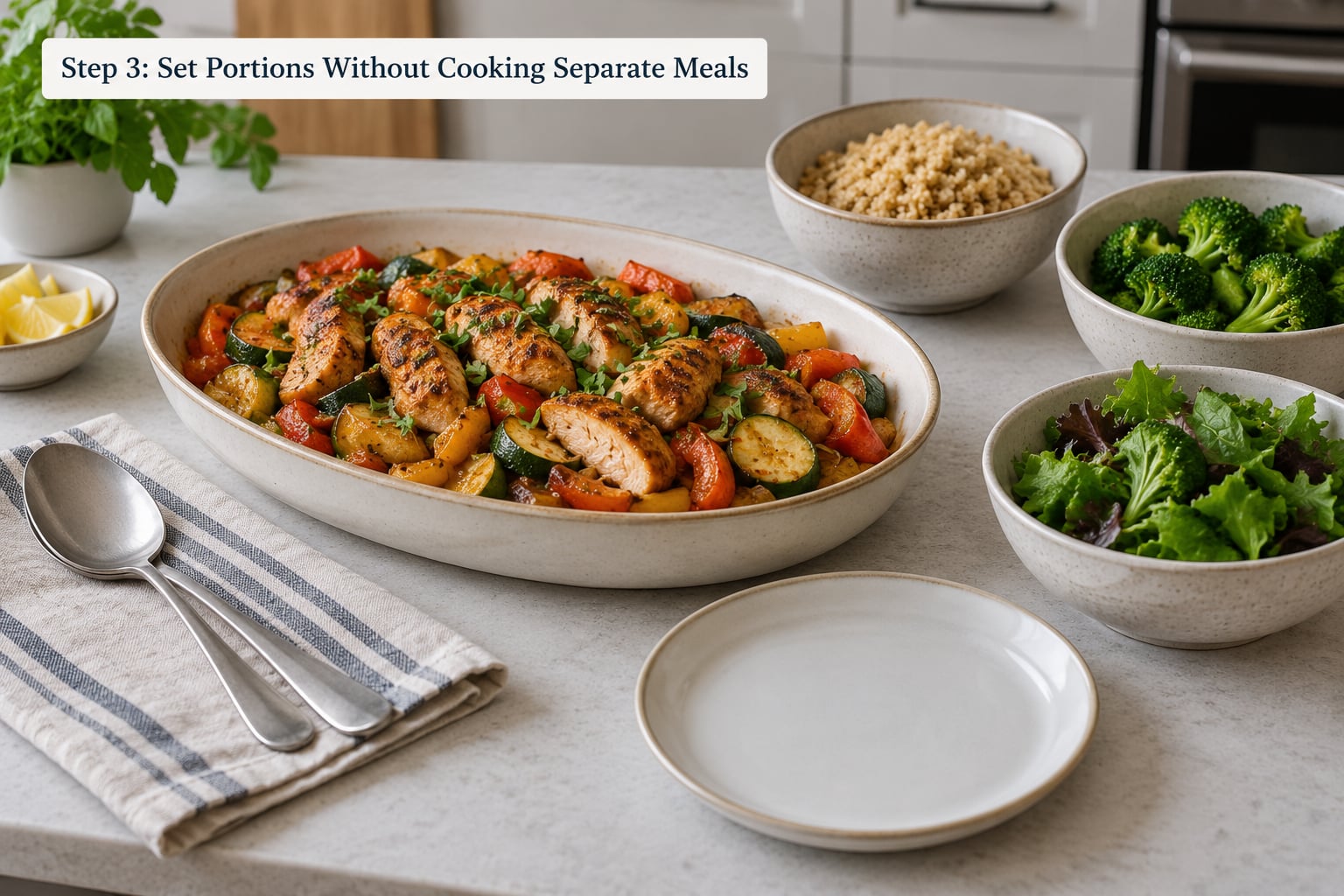
One pot, one meal, different plates. Serve yourself first while the food is hot and let the family portion themselves from the same dishes. Use a 9-inch plate, fill half with vegetables, add a measured quarter cup of starch and one palm-sized piece of protein, then stop. Second helpings are available to everyone including you, they just require walking to the kitchen rather than sitting there.
For teenagers, the difference is usually the starch portion rather than the protein. Most adults need less rice than they serve themselves, and most teenagers need more of it. Keeping the rice in a separate bowl solves this instantly without a separate meal.
Then shrink gradually instead of cutting hard at the start. If you currently serve a heaped cup of rice, serve three quarters of it for two weeks, then two thirds. Most people do not notice the change and stop being hungry within about ten minutes. Cutting hard is how you get three good weeks followed by a rebound.
Keep the plan off the dinner table conversation. The single most useful habit is not announcing your plate, not explaining macros to a nine-year-old, and not commenting on what you are eating. If your household knows, it should be because they know you generally eat lighter, not because you keep narrating dinner.
Step 4: Add Flavor Without Extra Calories
Most “diet” dinners fail because they taste flat, and bland food is what sends people back to takeout. Fix it with intensity rather than volume: a lot of black pepper and garlic, smoked paprika, cumin, chili flakes, a squeeze of lemon or lime, fresh herbs added at the end, and a hot pan that browns vegetables instead of steaming them.
Broth-based sauces built from low-sodium stock, canned tomatoes, mustard and vinegar give you a sauce with real flavor for a small number of calories. A tablespoon of olive oil to finish roasted vegetables costs about 120 calories and changes them completely. Use it deliberately rather than by the drizzle.
For creamy dishes, blend in a portion of white beans or pureed cauliflower rather than a full cup of cream. The result keeps the texture, cuts the calorie load substantially, and adds fiber that slows the meal down. Nobody reliably identifies it as a swap.
Step 5: Plan Ahead for Real Life
Batch cooking is what keeps this going during a bad week. On the weekend, cook one large pot of chili, curry, soup or a sheet pan of protein and vegetables, then portion it into containers for the week. Most of these dishes improve overnight, which means Tuesday night’s dinner usually tastes better than Monday night’s.
Freezer portions cover the weeks when you simply cannot face cooking. Portion the batch while it is warm, cool it fast, and freeze in flat containers so it stacks. Reheat from frozen with a splash of broth or water, and stir while it warms up. Plan two backup dinners a week that come from the freezer or a can of soup rather than from takeout.
Leftovers need a rotation, not repetition. One batch of taco filling becomes nachos, then burrito bowls, then stuffed peppers if you have the energy. Change the shape, not the ingredients. Leftover night is also the cheapest night of the week, which matters more than most people expect.
Takeout nights are part of the plan rather than a break from it. Order one or two vegetables, choose grilled or baked rather than fried, split a large entrée across two plates, and add a salad. Two such nights a month will not undo a week of balanced dinners, and treating them as forbidden is a good way to lose the whole approach by week three.
Step 6: Review the Week, Not One Meal
At the end of the week, ask three quiet questions. Was dinner satisfying enough that you were not raiding the cupboard at ninepm? Did you eat vegetables at two of the seven dinners? Did you cook once for the household instead of twice?
Change one thing. If you were hungry at night, add protein or volume rather than removing food. If a meal got skipped, make it faster or easier. If two people refused a dish, change the seasoning or the format. One adjustment per week is enough, and it is what separates gradual progress from a series of restarts.
Judge progress on weeks, not dinners. A single heavy meal means almost nothing in a calorie budget spread across months. What matters is whether the average week is trending in the direction you want, and most people need several weeks of consistent dinners before they see any change at all.
Common Mistakes to Avoid
Cooking two separate meals
It doubles the time, the cost and the dishes, and the restrictive version is almost never as satisfying, so it stops working quickly. Fix: cook one batch and keep one flexible component, such as sauce or rice, separate so the same meal can be assembled three different ways.
Serving oversized portions because you barely touched the plate
A large plate encourages serving and finishing more than you would from a smaller one. Fix: move to a 9-inch plate for a few weeks and measure starch with a cup rather than by spoon. This one change removes a surprising amount of untracked food.
Going too restrictive to sustain
Rules that leave you hungry fail by design, and hunger at ninepm is what ends most plans. Fix: build every dinner around protein, a vegetable and a starch. Nothing is banned; the portion does the work. If you find yourself thinking about food all evening, the plan is too tight.
Skipping vegetables because they feel like a side dish
Vegetables carry the volume and fiber that let a 500-calorie plate fill you up. Fix: treat them as the main event, use two-thirds of a plate instead of half, and roast or saute them so they taste like a dish rather than an obligation.
Treating a weight loss plan as a short-term restriction
Aggressive short cuts produce fast drops followed by a return to your previous intake, and the pattern is well documented. Fix: aim for a modest daily calorie deficit and expect the scale to move slowly. A plan you are still following in six months beats a fast one you abandoned in three weeks.
Ignoring what the household will actually eat
A nutritionally perfect dinner nobody finishes is not a plan, it is a pile of leftovers. Fix: pick familiar foods, let people add condiments themselves, and keep one reliable favorite in the rotation every week. You can be working on your own plate without being the reason the family stops eating dinner.
A few habits that help more than anything else
Serve yourself first, before the meal is cold. Keep vegetables visible and within reach on the counter. Put sauces and dressings in the middle so everyone controls their own. And write down the next dinner before you sit down, because a plan you decided on at six o’clock in a tired state is a plan that usually becomes takeout.
Frequently Asked Questions
What is the best dinner meal for weight loss?
There is no single best dinner, but the pattern that works most reliably is a lean protein, a large volume of non-starchy vegetables, a measured high-fiber starch and a small amount of fat. That combination lands around 400 to 600 calories and 25 to 35 grams of protein per adult serving. Meals built this way stay satisfying long after eating, which matters far more than any specific food being labeled good or bad.
What are some healthy family meals for weight loss?
Reliable options include sheet pan chicken with vegetables and potatoes, lentil or bean soup with whole-grain bread, black bean tacos with plain rice and salsa on the side, baked salmon with broccoli, ground turkey and vegetable stir-fry, chickpea curry over brown rice, and turkey chili. Each one is a normal meal the whole household can share, and each plates out to a reasonable portion for an adult without needing a separate diet version.
How much protein do I need per meal for weight loss?
Roughly 25 to 35 grams per meal is the range most nutrition guidance points to, which usually works out to about three solid servings across a day for a 1,500 to 1,800 calorie intake. Protein at meals helps with fullness and preserves muscle during weight loss. Easy ways to hit it include a palm-sized piece of meat, four eggs, or a cup of beans, lentils or plain Greek yogurt.
Can I eat the same dinner as my family while dieting?
Yes, and it is usually the version that sticks. Cook one batch and adjust only your plate: fill half with vegetables, add a measured starch portion, and keep the sauce or seasoning separate so you control the fat. Nothing needs to be hidden or explained to the household. Eating the same meals with deliberate portions removes the stress of cooking twice and usually survives much longer.
What should I do when my family wants takeout or pizza night?
Plan it rather than fighting it. Two unplanned takeout nights a month will not undo a week of balanced dinners, while treating them as forbidden is a common reason people give up. When you do order, add a vegetable side, choose grilled or baked instead of fried, split a large entrée across two plates, and keep a glass of water and a side salad alongside it.
When should I talk to a doctor or registered dietitian about my weight loss plan?
Talk to a doctor first if you are pregnant or breastfeeding, managing diabetes, heart or kidney conditions, taking regular medication, or if you have a history of disordered eating. A registered dietitian is worth a visit if you keep feeling hungry, if your energy drops noticeably, or if you want help building portions for a household with specific medical needs. General plate-method guidance online is not a substitute for individualized advice.
Conclusion
Pick one meal your household already likes, cook it this week in a single batch, and build your plate from it: half vegetables, one quarter protein, one quarter measured starch. Serve yourself first on a smaller plate, and shrink that portion gradually rather than cutting it sharply on day one.
That is the whole first step. Keep it ordinary enough that you are still doing it in three months, because consistency across family dinners that fit a weight loss plan does more than any single hard week ever will. Reviewed for 2026, and this is general guidance rather than personal nutrition advice.