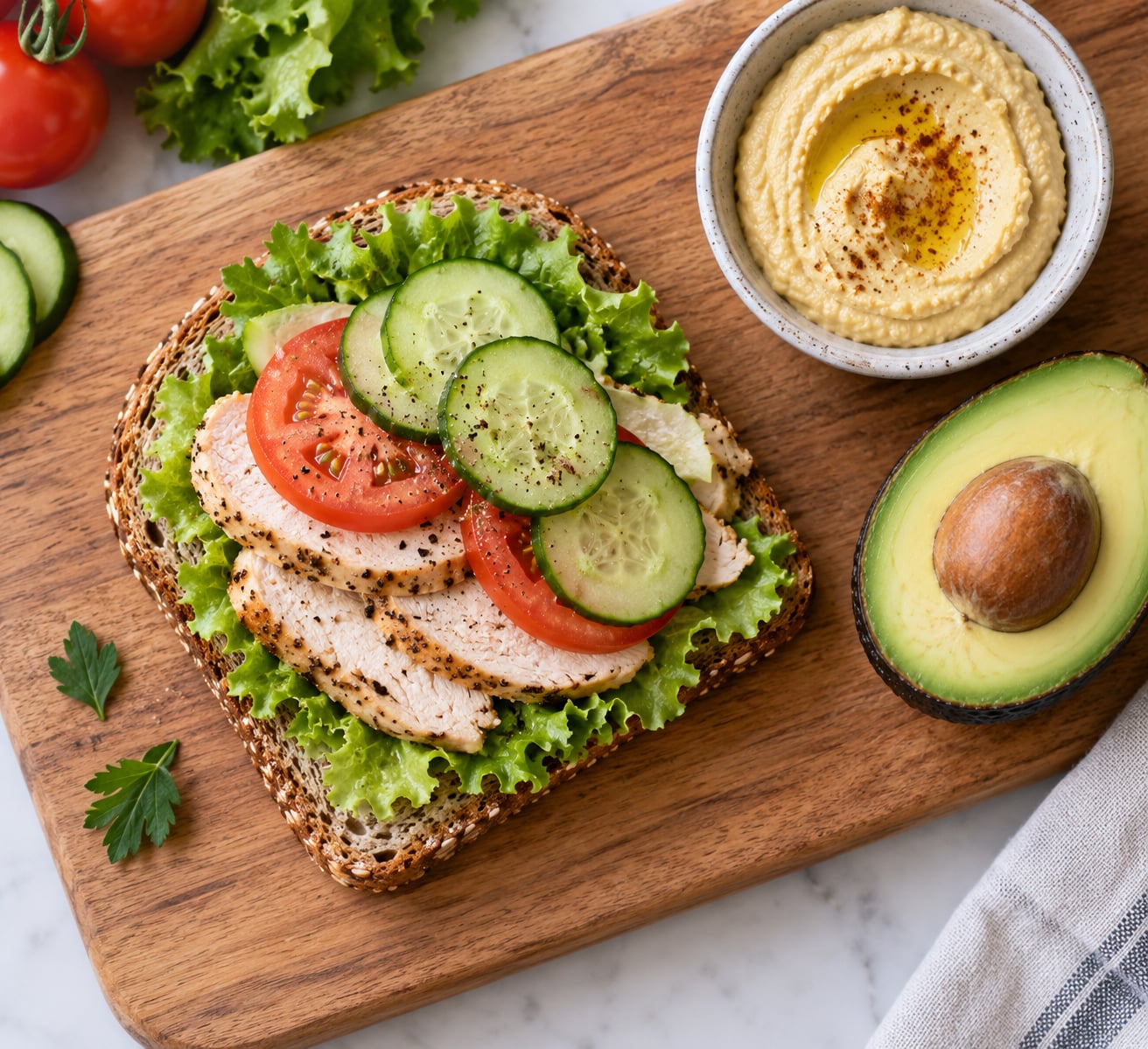
A healthy sandwich comes down to four parts: whole-grain bread for complex carbs and fiber, a lean protein, a generous pile of vegetables, and a modest amount of healthy fat such as avocado, hummus or olive oil. Most of these steps take under ten minutes, and no cooking is required beyond optional toasting.
Sandwiches get a bad reputation mainly because of what gets stacked on white bread. A turkey and provolone on a soft white roll and a chicken salad on whole grain with plenty of greens are not the same meal, and the second one keeps you full well past lunch.
Table of Contents
- What You Need
- The Bread: Your Carbohydrate Base
- The Protein: The Part That Keeps You Full
- The Vegetables: Where the Volume Lives
- The Fat and Spread: Keep It Measured
- Step-by-Step: How to Make a Healthy Sandwich
- Choose Fillings to Make a Healthy Sandwich Balanced
- Toast or Warm the Bread Without Burning It
- Check the Portion and Condiment Balance
- Assemble for an Even Bite
- Store or Serve It Safely
- Check the Finished Sandwich
- Common Mistakes
- Common Mistakes and Quick Fixes
- Frequently Asked Questions
- What is the healthiest bread to use for a sandwich?
- What can I put on a sandwich instead of mayonnaise?
- How many calories are in a healthy sandwich?
- What are easy filling combinations for a healthy sandwich?
- How do I keep a sandwich from getting soggy?
- Can I make a healthy sandwich ahead for lunch?
- Conclusion
What You Need
The formula is simple: one item from each of the four categories below, plus something crunchy. Everything can come from a normal grocery store, and nothing here needs a special diet product.
The Bread: Your Carbohydrate Base
Pick a slice where the first ingredient on the label is a whole grain. Whole wheat, rye, sourdough, multigrain and sprouted grain breads all qualify. Two slices is the usual portion, and a single slice or a thin wrap works if you want to keep the carbohydrate load lower.
If a loaf says multigrain but lists enriched flour first, it is mostly refined. Seeded sandwich thins are a decent lower-calorie swap when you want a sandwich that still feels substantial.
The Protein: The Part That Keeps You Full
Aim for roughly 3 to 4 ounces of protein, which lands most sandwich proteins in the 20 to 35 gram range. Grilled chicken breast, sliced turkey breast, canned tuna in water, canned salmon, hard-boiled eggs, scrambled eggs, tofu, tempeh and seitan all work. Thick slices of cheese count as protein but are calorie-dense, so one slice is plenty.
Hummus, smashed beans and white bean mash work too, and they add fiber alongside the protein.
The Vegetables: Where the Volume Lives
This is the layer most people skip. Two cups of vegetables adds bulk, crunch and fiber for very few calories. Lettuce, spinach, arugula, cucumber, tomato, bell pepper, red onion, shredded carrot, sprouts, roasted red pepper and pickled vegetables are all solid picks.
The Fat and Spread: Keep It Measured
Fat is not the problem, portion size is. A thin layer of avocado, hummus, Greek yogurt, almond butter or a drizzle of olive oil adds richness and helps you absorb fat-soluble vitamins from the vegetables. Full-fat mayonnaise and creamy dressings are fine in a small amount, but they add up fast, so measure them with a spoon instead of the bottle.
Step-by-Step: How to Make a Healthy Sandwich
Choose Fillings to Make a Healthy Sandwich Balanced

Lay out one item from each category before you start. Two slices of whole-grain bread, three to four ounces of protein, two cups of vegetables and a tablespoon-level spread gets you a sandwich that eats like a proper meal.
Combinations that work well are open-ended but not endless. Chicken with hummus, cucumber and arugula is reliable. Tuna with lemon, dill and white bean mash on rye is another. Tempeh with caramelized onion and sprouts does the job too, and the fermented soybean in tempeh is easier to digest than plain tofu for some people.
Toast or Warm the Bread Without Burning It
Toasting is optional, but a dry slice keeps its texture longer in a lunchbox. Brush the cut side lightly with olive oil, set the slices in a skillet or a 375°F oven, and toast for three to five minutes until the outside is golden and the inside still has give.
If the outside darkens before the center warms through, the heat was too high. Move it lower and give it another minute.
Check the Portion and Condiment Balance
Two slices of bread, three to four ounces of protein, a heaped cup of vegetables and about a tablespoon of avocado, nut butter or spread is a well-proportioned sandwich. Cheese and nuts are the two items that slip past people, so keep both to about a tablespoon or a single slice.
Salad dressings, honey mustard and sweet sauces carry more sugar than most people expect. Mustard, salsa, vinegar, pickle brine and a squeeze of lemon cost nothing in sugar and add a lot of flavor.
Assemble for an Even Bite
Order matters more than most cooks expect. Put the spread on first so it forms a moisture barrier against the bread, then the protein, then the wetter vegetables like tomato and cucumber, then the dry greens on top, and finish with a drizzle of oil or vinegar.
Cut the sandwich diagonally or into halves so every bite holds a piece of each layer. Wrap it in parchment or a sandwich bag rather than foil if it will sit for more than an hour, since foil traps steam and softens the crust.
Store or Serve It Safely
Anything with meat, poultry, seafood, egg or cheese goes into the fridge within two hours, or one hour if the room is above 90°F. A packed sandwich keeps about three to four days refrigerated; a bread-free version with cooked ingredients usually holds a day or so less.
Cook poultry to 165°F internally, ground meat to 160°F, and fish and whole cuts of beef, pork and lamb to 145°F, measured at the thickest part. Deli meat you have not cooked must come from a source that keeps it at 40°F or colder during handling.
Check the Finished Sandwich
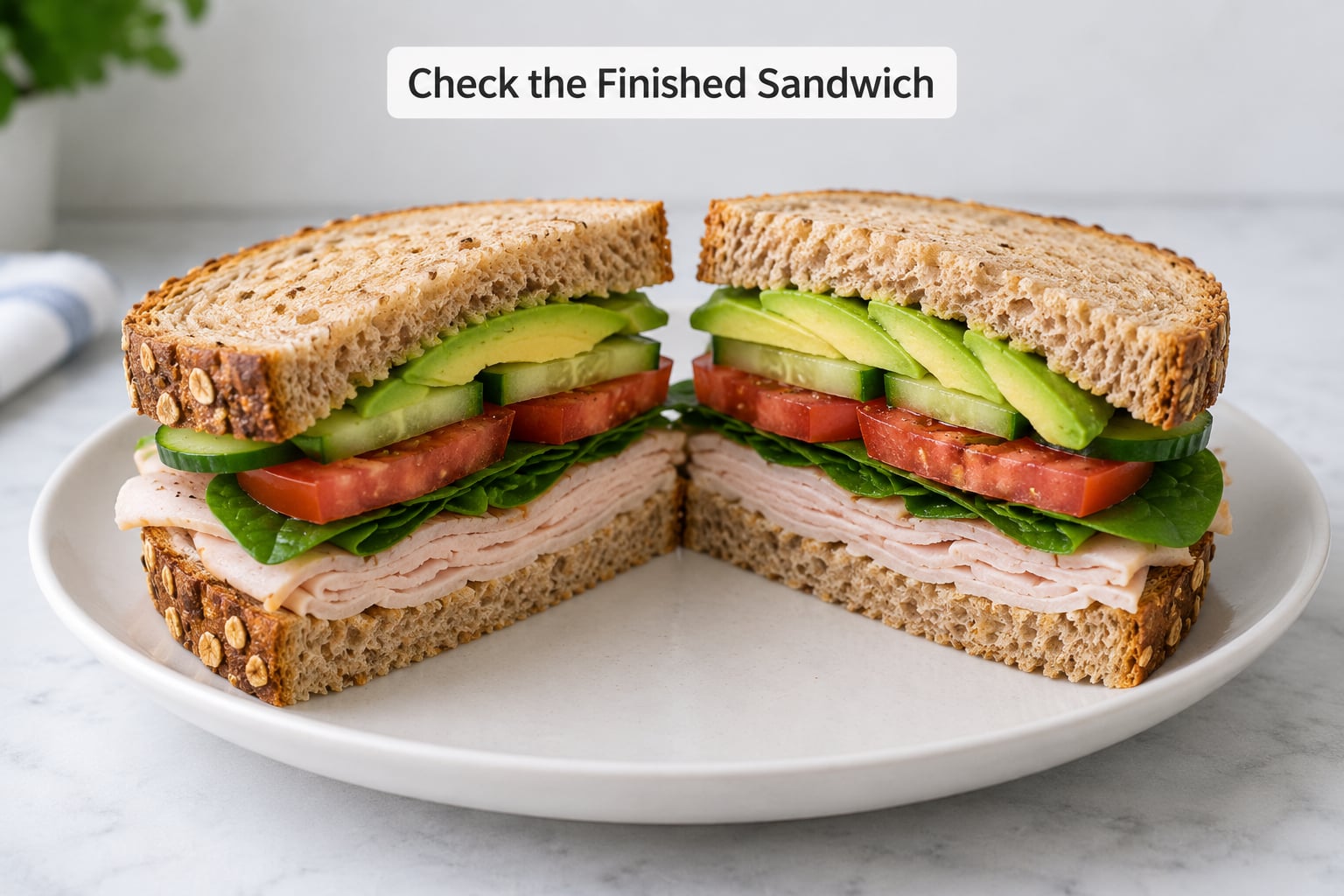
Cut it in half and look at the cross-section. You should see grain-colored bread, a visible layer of protein, color from the vegetables, and a thin sheen of fat rather than a pool of dressing. If the vegetables are invisible, add more. If it collapses when you lift it, the spread or tomato is too wet.
An unbalanced version is easy to fix without rebuilding it. Sparse vegetables get a handful of arugula, a missing protein gets a second slice of chicken, and a heavy sauce layer gets scraped down with the side of a spoon.
Common Mistakes
Oversized sandwiches are the most common failure, usually from thick deli slices plus a large cheese portion plus several spreads at once. Refined white bread is the second, and it lacks the fiber that keeps the filling and the bread working together as a meal. Too little protein turns lunch into a snack that you eat again at three o’clock.
Heavy condiments sneak in next. Creamy coleslaw, potato salad and pasta salad are mixed dishes dressed in mayonnaise, and a scoop of each can double the calories of the sandwich before you take a bite.
Poor storage finishes the list. A sandwich packed wet-on-wet and left unrefrigerated is both unpleasant and unsafe, and stacking something heavy on top flattens it.
Common Mistakes and Quick Fixes
Here is the short version, matched problem to correction.
- White bread as the base. Swap in whole wheat, rye, sourdough or sprouted grain, or use one slice plus a wrap to cut the refined carbs.
- Processed deli meat as the default protein. Cooked chicken breast, canned tuna in water, hard-boiled eggs, tofu or tempeh bring comparable protein with less sodium and no curing agents.
- Mayonnaise swimming on every layer. Measure it with a teaspoon, or thin it with Greek yogurt, mustard and a splash of vinegar for a dressing that tastes lighter.
- Almost no vegetables. Treat two cups as a starting point and put them in the sandwich rather than alongside it.
- Everything piled too high. Cut the sandwich in half before eating and set half aside if it will not fit comfortably in one go.
- Soggy by lunchtime. Separate the wet ingredients into a small container and add them at lunch, or use a wider bread with less moisture to begin with.
Boredom is the reason most weekday sandwich rotations collapse by Wednesday. Vary one slot at a time: switch the protein, keep the bread, change the vegetables, or keep the protein and rotate the spread between avocado, hummus, Greek yogurt and nut butter.
For plant-based builds, tofu, tempeh, seitan and mashed white beans all carry enough protein to hold a sandwich together. For a low-sodium version, start from raw ingredients, check the sodium on every label including the bread, and rinse canned beans and tuna. High-protein builds push the protein portion up to five or six ounces and add egg whites or extra tuna. Low-carb builds use a large lettuce leaf, a portobello cap, or a thin slice of cheese instead of bread, then pile on the vegetables and protein.
For meal prep, cook the protein once, wash and dry the vegetables thoroughly, and store components separately in the fridge. Assemble each morning in about three minutes. Drying the vegetables properly is the single step that most improves a prepped sandwich.
Frequently Asked Questions
What is the healthiest bread to use for a sandwich?
Whole-grain bread where the first ingredient is a whole grain, such as whole wheat, rye, sourdough or sprouted grain bread, gives you the most fiber per slice. Sprouted and seeded sandwich thins are useful when you want fewer calories. Check the ingredient list rather than the front of the loaf, since multigrain labels often lead with enriched flour.
What can I put on a sandwich instead of mayonnaise?
Greek yogurt thinned with mustard and a splash of vinegar works well and adds protein. Hummus, mashed white beans, guacamole, almond butter, tahini thinned with lemon, or simply olive oil with black pepper are all good swaps. Mustard, salsa and pickle brine add flavor with almost no fat or sugar.
How many calories are in a healthy sandwich?
A well-built sandwich with two slices of whole-grain bread, three to four ounces of lean protein, plenty of vegetables and a small spread usually lands between 350 and 550 calories. Adding cheese, avocado in quantity, or a creamy dressing moves it up quickly. Labels vary by brand, so check the package if you are tracking closely.
What are easy filling combinations for a healthy sandwich?
Chicken with hummus, cucumber and arugula is the reliable default. Tuna with lemon and dill on rye, turkey with roasted red pepper and spinach, and hummus with pickled vegetables all work. Hummus with kimchi or pickled olives holds up well too, as long as it goes into the fridge like any sandwich with cut vegetables.
How do I keep a sandwich from getting soggy?
Spread a barrier such as hummus or butter on the bread first, keep wet ingredients like tomato and cucumber in a separate container, and wrap the sandwich in parchment rather than foil. Dry the vegetables well before layering them. Storing the sandwich cut-side up also helps.
Can I make a healthy sandwich ahead for lunch?
Yes. Most cooked-ingredient sandwiches hold three to four days in the fridge, though bread-free versions with vegetables usually stay good a day or two less. Refrigerate anything with meat, poultry, seafood, egg or cheese within two hours, and keep the fridge at 40°F or below. Pack wet ingredients separately and add them just before eating.
Conclusion
A balanced sandwich is four parts in the right proportions: whole-grain bread, a lean protein, two cups of vegetables and about a tablespoon of healthy fat. Nothing about that formula requires a specialty product or a long prep time.
Start with the change that is easiest in your kitchen this week: buy a whole-grain loaf and leave the deli counter alone. Once that is habit, add the vegetables, then measure the spread.