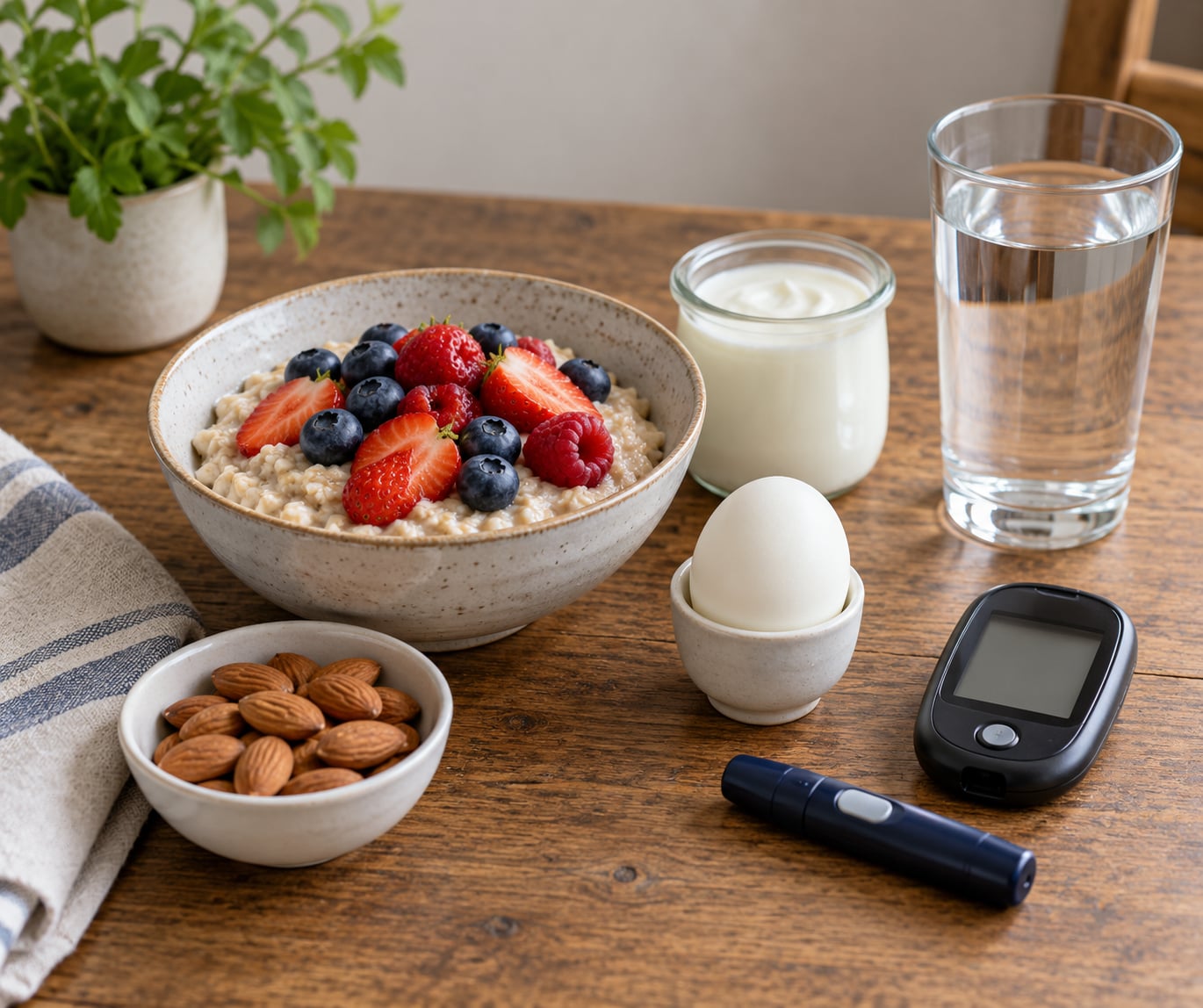
How blood sugar affects hunger and cravings is more direct than most people expect. Eating raises blood glucose, your pancreas releases insulin to bring it back down, and both the rise and the fall get read by the brain as appetite signals. That is why a carb-heavy lunch can leave you genuinely hungry by mid-afternoon, and why it feels like a character flaw when it is not one.
The pattern people describe on nutrition forums is remarkably consistent. A meal heavy in refined carbs and sugar, an energy crash within a couple of hours, hunger and a sweet craving, then repeat. Understanding the mechanism matters because it gives you levers other than willpower.
This guide covers what blood sugar does to hunger, why levels rise or fall, what to eat and when, and how to tell the difference between real hunger and a craving. It is general information, not medical advice. If you have diabetes, are pregnant, or take medication that affects blood sugar, follow the plan your clinician gave you rather than anything written here.
Table of Contents
- What Does Blood Sugar Do to Hunger?
- How Blood Sugar Affects Hunger and Cravings
- Why Blood Sugar Can Rise or Fall
- Can High Blood Sugar Make You Feel Hungry?
- Can Low Blood Sugar Increase Hunger and Food Cravings?
- Which Foods Help Blood Sugar and Hunger Stay More Steady?
- How Meal Order and Portion Size Can Help
- Does Walking After Meals Help Control Blood Sugar?
- How to Tell Whether You Are Hungry or Reacting to a Craving
- When Should You Ask a Doctor About Blood Sugar Changes?
- Frequently Asked Questions
- Do blood sugar crashes make you hungry?
- Can you have a blood sugar spike and not be diabetic?
- Do you get sugar cravings with insulin resistance?
- Does eating fat and protein stop cravings?
- Why does the same food affect me differently each day?
- Conclusion
What Does Blood Sugar Do to Hunger?
Blood sugar is simply the amount of glucose circulating in your blood. Glucose comes mainly from carbohydrates, and most cells need it for fuel. When you eat, glucose enters the blood fairly quickly, your pancreas releases insulin, and insulin helps that glucose move into cells for energy.
Two things matter for hunger. The first is how high glucose goes and how fast it falls. The second is that insulin is itself a hormone with signals attached to it, including appetite signals. So the pattern of rise and fall is not background noise around your hunger. It is part of the hunger.
Here is a rough map of what different states tend to look like. The numbers are general US reference ranges used by the CDC and the American Diabetes Association, not targets for you.
| State | Typical reading | How hunger often feels |
|---|---|---|
| Steady | About 70 to 100 mg/dL before a meal, generally under 140 mg/dL two hours after eating | Hunger builds gradually and a normal meal settles it |
| Climbing fast | Rises quickly after a large refined carbohydrate portion | Energy rushes in, then hunger returns sooner than expected |
| Falling fast | Drops back down quickly, sometimes below the starting level | Strong hunger, shakiness, difficulty concentrating |
| Low | Below about 70 mg/dL, which is the usual low blood sugar threshold | Intense hunger with sweating, trembling, dizziness or irritability |
How Blood Sugar Affects Hunger and Cravings
When glucose rises after a meal, that rise can accompany a sense of energy availability, and appetite often quiets down. Then insulin does its job, glucose moves into cells, and both glucose and insulin start to fall. As they fall, fullness hormones fade and the hunger hormone ghrelin becomes relatively more dominant, so hunger comes back sooner than you expected.
Insulin is the part most people miss. Higher insulin levels in the period after eating have been linked with a stronger appetite signal in the same window, which is a plausible answer to the question I hear most: why am I hungry again an hour after eating? It is not only what you ate. It is the shape of your response to it.
Cravings come from somewhere slightly different. The sweet taste, the sight of the cookie, the smell of coffee, the boredom of a Tuesday afternoon all feed a reward pathway built on dopamine, and a repeated cue-reward loop gets stronger with repetition. So a craving can fire when glucose is perfectly normal, and reading it as pure hunger is one of the more common mistakes people make.
None of this runs alone. Short sleep, stress, hormones, some medications, gut health, alcohol, how much you moved today, and plain habit all shift how hungry you feel and what you want to eat. Glucose is one input among many, which is why tracking it can be informative without being the whole answer.
Why Blood Sugar Can Rise or Fall
Rising and falling is normal, and the shape of your curve depends mostly on how much carbohydrate you ate, how refined it was, what came with it, and what you did in the following hours.
- Quantity. A larger carbohydrate portion raises glucose more and usually takes longer to come back down.
- Refinement. Highly refined grains and added sugars are digested quickly and tend to produce a sharper peak.
- Fiber. Fiber slows how fast carbohydrate is absorbed, which usually softens the peak and the drop.
- Protein and fat. Both slow gastric emptying, so the same carbohydrate arrives at the bloodstream more gradually.
- Meal timing. Long gaps between meals often produce the biggest swings, especially a heavy meal after a light day.
- Activity. Walking or moving after a meal uses circulating glucose, while a sedentary afternoon lets it sit higher for longer.
- Sleep and stress. Poor sleep and high cortisol tend to increase hunger and push choices toward quick energy.
- Hydration. Mild dehydration gets read as hunger or tiredness, which people often answer with food rather than water.
Here is how everyday meals commonly tend to play out. Treat it as a pattern, not a rule.
| Meal choice | What tends to happen | What you may notice |
|---|---|---|
| White toast with jam and orange juice | Fast rise, then a quick fall | Hunger back within an hour or two |
| Oatmeal with nuts, berries and an egg | Slower rise, gentler fall | Comfortable for several hours |
| Grilled chicken, salad and a small portion of rice | Moderate rise | Steady energy through the afternoon |
| A piece of fruit on its own | Quick rise and fall | Less staying power than the same fruit with nuts or yogurt |
| Coffee with two sugars and nothing else | Modest rise with no protein or fat | Later hunger that feels sharper than expected |
One food does not have a fixed effect on every person. Portion, what you ate before, your activity, your sleep and your current sensitivity all change the response, which is why two people can eat the same breakfast and feel completely different by noon.
Can High Blood Sugar Make You Feel Hungry?
Yes, indirectly. When glucose stays elevated for long stretches, the pancreas keeps working to bring it down, and the insulin level stays higher than it should. In that state, hunger, fatigue after eating, cravings and thirst can all become more noticeable, and the energy pattern often feels like eating without getting what you wanted.
This is the general mechanism behind what people with insulin resistance describe, and it overlaps with prediabetes and type 2 diabetes. But a mechanism is not a diagnosis. One high reading after a big meal, or a week of afternoon cravings, is not a diagnosis either, and eating carbohydrates does not automatically cause diabetes.
It is worth being direct about the honest caveat that circulates in nutrition forums: sugar intake on its own does not cause insulin resistance when insulin response is healthy. Total pattern, weight, movement, sleep, family history and existing conditions matter much more than one food, and blaming yourself for an afternoon cookie helps nobody.
If readings are repeatedly higher than you expect, a doctor or registered dietitian can order standard blood tests such as a fasting glucose or an A1C and interpret them properly. General US reference points are an A1C of 5.7 to 6.4 percent or a fasting glucose of 100 to 125 mg/dL as the prediabetes range, but only your clinician can tell you what your numbers mean.
Can Low Blood Sugar Increase Hunger and Food Cravings?
Yes, and this is the version people most often mistake for bad character. When glucose drops below normal, the body raises the alarm fast, and the result is intense hunger plus shakiness, sweating, dizziness, weakness, a pounding heart or irritability. A strong pull toward something sweet is common too, because it is fast energy.
Two different things get called a crash. A normal between-meals dip is a mild drop that returns to normal with no symptoms and no lingering hunger. A reactive dip is a sharper fall after eating, often within a few hours of a refined carbohydrate meal, that leaves you hungry and shaky.
Feeling shaky when you are hungry does not mean you have diabetes. Skipping meals, eating very little during the day, drinking alcohol without food, taking certain medications and simply going a long time without eating can all produce the same sensations.
If it happens repeatedly, or if you get symptoms while driving, exercising or working, treat it as something to raise with a doctor or pharmacist rather than something to push through. Check your glucose if you have a meter, and ask about the safest next step for you. I am not going to guess at a treatment or a dose for a reader I have never met, and neither should anyone online.
Which Foods Help Blood Sugar and Hunger Stay More Steady?
The pattern that tends to help most is boring and reliable: fiber, minimally processed carbohydrates, adequate protein and unsaturated fat, eaten together in meals you actually enjoy and can afford.
- Fiber. Vegetables, beans, lentils, oats, whole grains, berries, apples and pears all slow carbohydrate absorption.
- Minimally processed carbohydrates. Whole grains, potatoes with skin, beans and intact fruit generally behave more gently than their refined versions.
- Protein. Eggs, fish, poultry, tofu, Greek yogurt, cottage cheese and legumes help hold fullness longer.
- Unsaturated fat. Olive oil, avocado, nuts and seeds slow the pace at which food leaves the stomach.
- Regular enough eating. Many people find that skipping meals sets up a bigger crash later, and that a smaller meal every few hours beats one enormous meal at night.
Breakfast options: oatmeal with berries, nuts and a boiled egg, or Greek yogurt with berries, walnuts and a spoon of chia seeds, or eggs with whole-grain toast and fruit.
Lunch options: a bean and vegetable bowl with a small portion of brown rice, a chicken and salad sandwich on whole-grain bread, or lentil soup with a slice of whole-grain bread and a side salad.
Snack options: apple slices with peanut butter, a small handful of nuts with fruit, plain yogurt with cinnamon, or hummus with carrot sticks.
What matters more than any label is whether the meal is satisfying, fits your preferences, your budget, your culture and your schedule. Food that meets all of those is worth more than any theoretically ideal plate. There is no good or bad food here, only meals that tend to hold you and meals that do not.
How Meal Order and Portion Size Can Help
Eating in an order is the cheapest lever in this whole article. Eating vegetables or another low-carbohydrate food first, then protein or beans, then whole grains, fruit or another higher-carbohydrate item can slow how quickly the meal’s glucose rises, because the fiber and fat arrive ahead of the carbohydrate.
It is a small change with no shopping list attached. In a lunch that would normally be a bowl of rice followed by chicken and salad, eat the salad and chicken first, then the rice.
On portions, the useful question is not what is a correct portion. It is how hungry you actually are, how much you moved today, and what your nutrition needs are right now. A 5000-step day and a desk job do not have the same requirements, and portions from a worksheet written for someone else rarely fit.
Does Walking After Meals Help Control Blood Sugar?
Generally yes. Regular physical activity improves how your body handles glucose, and brief movement after eating, even ten to fifteen minutes, tends to reduce the size of the rise compared with sitting still for the same meal.
A realistic starting point is to walk after one meal a day for as long as you comfortably can and build from there. Ten minutes after dinner is a better habit than a heroic plan you abandon in four days.
Two cautions. Movement helps, but it is not a substitute for medication or a treatment plan, and it does not remove a diagnosis. And if you are starting from very little activity, or you have a condition affected by exertion, check with your doctor before increasing it, particularly if you have ever had a low blood sugar episode.
How to Tell Whether You Are Hungry or Reacting to a Craving
This is the question forum threads keep circling, and the honest answer is that four different things can feel almost identical from the inside.
| Signal | What it tends to feel like | What usually helps |
|---|---|---|
| True hunger | Gradual, in the stomach, fine with almost any food | A balanced meal, eaten sitting down |
| Glucose dip | Sudden, shaky, dizzy, craving sugar quickly, a few hours after a big carb portion | A snack with protein or complex carbs, then follow up with a doctor if it keeps happening |
| Stress or poor sleep | Irritable, no stomach signal, wanting comfort or fast energy | Water, a short walk, sleep, a non-food way to reset |
| Habit and cue | Shows up at the same time, in front of the same trigger, for one specific food | Delay, change the cue, do something else for ten minutes |
A quick check-in takes about ten seconds. Where do you feel the urge, in the stomach or somewhere else? How intense is it, on a scale of one to ten? When did you last eat? And does the want relate to food, or to rest, company, distraction or comfort?
Then make yourself pause. Drink a glass of water and wait ten minutes. Most cravings pass their peak in roughly that window even if they do not vanish, and you are not fighting anything by waiting.
If you eat, choose something with protein, fiber or fat rather than refined carbohydrate, since a refined snack tends to set up the next dip.
One honest limit: a glucose monitor tells you the number, not the cause. A reading in a normal range during a strong craving is useful information, and it tells you glucose was not the driver this time.
When Should You Ask a Doctor About Blood Sugar Changes?
Talk to a doctor, registered dietitian or pharmacist when any of these show up, especially if they repeat.
- Glucose readings higher than you expect on most days, or below 70 mg/dL more than once
- Feeling shaky, sweaty or dizzy when hungry, especially while driving or working
- Thirst that does not go away, frequent urination, blurred vision or slow-healing cuts
- Persistent fatigue, headaches or tingling in hands and feet
- Cravings or hunger that have changed noticeably over a few months
- Snoring loudly, neck measurement or daytime sleepiness, which can point to sleep apnea and disrupted hunger regulation
Ask for standard blood tests, usually fasting glucose and an A1C, rather than trying to judge from symptoms alone.
Targets are individual. A clinician sets them based on your age, other conditions and medications, and readings outside a range your clinician gave you deserve a conversation. If you already have diabetes, keep following your existing care plan and ask your team before changing anything, including your activity level.
Frequently Asked Questions
Do blood sugar crashes make you hungry?
Yes. When glucose falls faster than your body expects, fullness hormones fade and ghrelin becomes relatively more dominant, so hunger arrives hard and fast, often with shakiness or brain fog and a strong pull toward something sweet. A normal between-meals dip feels much milder and resolves without symptoms. If shaky episodes keep happening, raise them with a doctor.
Can you have a blood sugar spike and not be diabetic?
Yes. Plenty of people without diabetes get a big rise and fall after a refined carbohydrate meal, especially on a full stomach of other carbs or after little activity. That single response says nothing about a diagnosis on its own. Repeated patterns across weeks, plus symptoms like thirst or fatigue, are the reason a clinician would run an A1C and fasting glucose test.
Do you get sugar cravings with insulin resistance?
Often, yes, and insulin resistance is one of the more common explanations people notice first. Insulin stays higher for longer after eating, appetite signals get blunted in that window, and the resulting dip tends to be sharper, which many people experience as a strong craving for fast energy. Cravings can also come from habit, stress or short sleep, so one symptom on its own does not confirm anything.
Does eating fat and protein stop cravings?
They blunt them rather than stop them. Protein, fiber and unsaturated fat slow how quickly food leaves the stomach and how fast carbohydrate reaches the blood, so the same meal usually produces a smaller rise and a smaller drop. That means less of the crash-driven hunger afterwards. They also simply make many meals more satisfying, which matters more than any single nutrient.
Why does the same food affect me differently each day?
Because your response is not fixed. Portion size, what you ate earlier, how much you moved, sleep, stress, alcohol, medications and your current insulin sensitivity all shift the curve, sometimes a lot. Two people can eat the same breakfast and feel very different by noon. That variability is also why one bad day means almost nothing and a repeating pattern over weeks is worth tracking.
Conclusion
How blood sugar affects hunger and cravings comes down to the shape of your curve and the fact that insulin is itself an appetite signal. A big rise followed by a fast fall leaves you hungry again sooner, and cravings add a separate dopamine layer on top of that.
Glucose is one driver among several, and it responds to meals, order, movement, sleep and stress. Pick one first step this week: build one balanced meal the way you actually eat, eat it earlier in the meal than you normally would, or book the conversation with a doctor if your readings or symptoms keep surprising you.