Are smoothies good for weight loss? Yes, but only when one replaces a meal instead of joining it. A blended drink that carries real protein, fiber and a measured portion of calories can hold you for hours, while a fruit-and-juice blend can leave you hungry and eating again an hour later.
Table of Contents
- Are Smoothies Good for Weight Loss?
- Are Smoothies Good for Weight Loss When They Are Added to Meals?
- How Weight Loss Actually Works
- Which Smoothie Ingredients Help With Weight Loss?
- Build fullness first with protein and fiber
- Add a small amount of fat to slow digestion
- Which Smoothie Ingredients Can Make Weight Loss Harder?
- What Makes a Smoothie Filling Enough for Weight Loss?
- How to Make a Weight-Loss-Friendly Smoothie
- Are Smoothies Better Than Eating Whole Food?
- Frequently Asked Questions
- Can drinking smoothies help me lose weight?
- Are fruit smoothies good for weight loss?
- Do smoothies fill you up as much as solid food?
- Are meal-replacement smoothies effective for losing weight?
- How often should I drink a smoothie while trying to lose weight?
- Conclusion
Are Smoothies Good for Weight Loss?
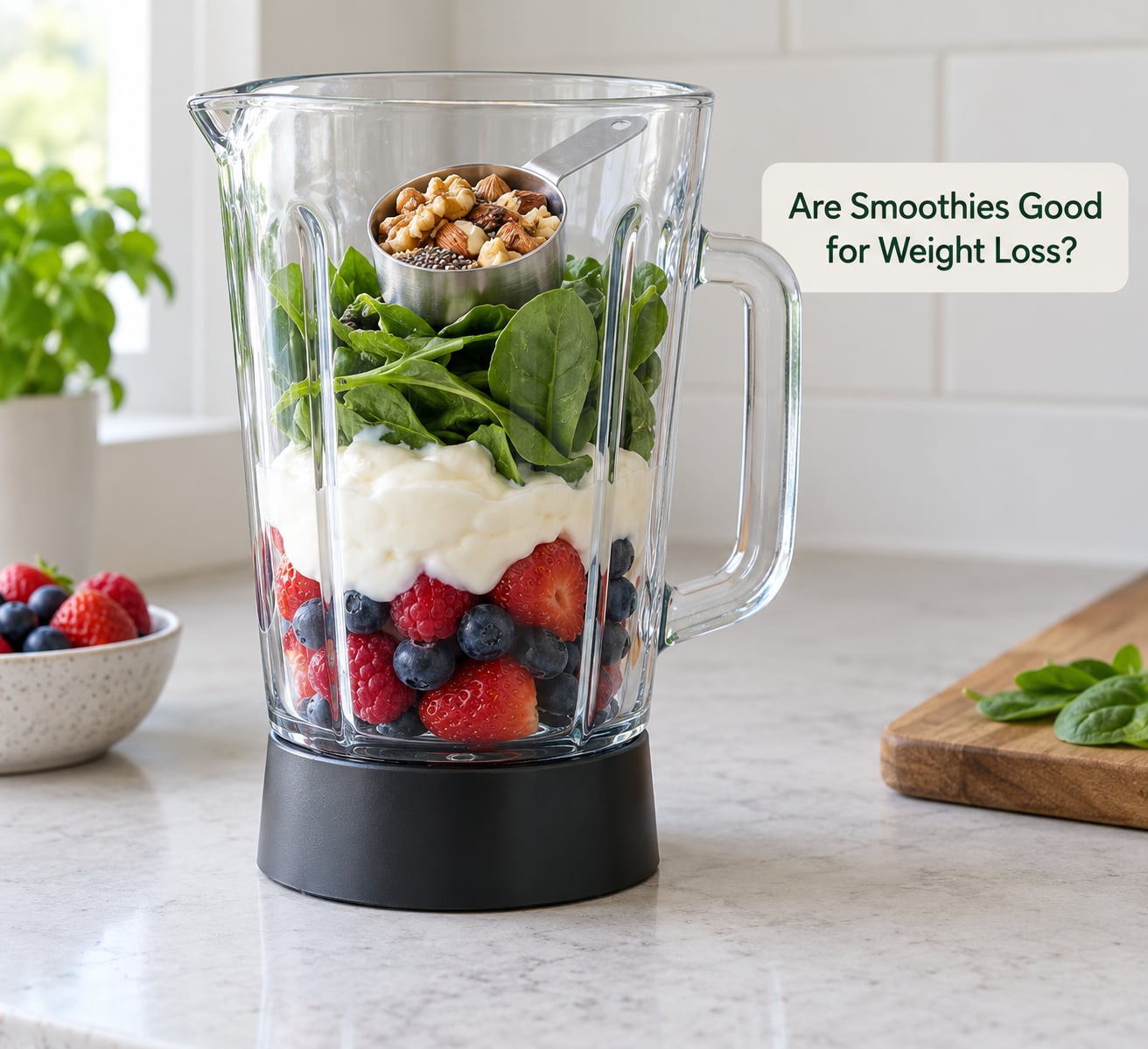
Yes, smoothies can support weight loss when they are portion-controlled, built from the right nutrients, and used in place of a meal rather than added on top of one. A 350 to 400 calorie smoothie with 15 to 30 grams of protein and 5 to 15 grams of fiber behaves like a meal. The same drink next to your usual breakfast is just extra calories.
The smoothie label matters far less than the numbers inside the jar. Two smoothies a day that each land around 400 calories can fit neatly into a 1,200 to 1,500 calorie day, so long as the rest of that day still includes protein, iron, calcium and vitamin B12 somewhere solid.
Are Smoothies Good for Weight Loss When They Are Added to Meals?
Usually not. Adding a 400 calorie smoothie to a normal day of eating adds 400 calories, and weight loss depends on a sustained deficit rather than any single drink.
There is one exception worth knowing. A low-calorie smoothie in the late afternoon can stop a 9 pm fridge raid, which is a net reduction for some people. That works because it replaces something, not because drinking by itself causes loss.
How Weight Loss Actually Works
Weight change is arithmetic over time: calories in versus calories out, sustained long enough to matter. No drink breaks that rule, and no ingredient has a special fat-burning effect that works outside a deficit.
What a smoothie can change is how easy it is to hit your numbers. Blended food is measured, repeatable and hard to overeat once it is made. The trouble is the other direction too. Liquid calories require no chewing, leave the stomach faster and often deliver less satisfaction than the same calories in solid form, so the same 400 calories can leave you reaching for food an hour earlier.
That is why the useful question is not whether smoothies are healthy. It is whether this specific smoothie is doing the job a meal would do: covering protein, fiber and fat, and holding long enough to get you to the next meal without snacking.
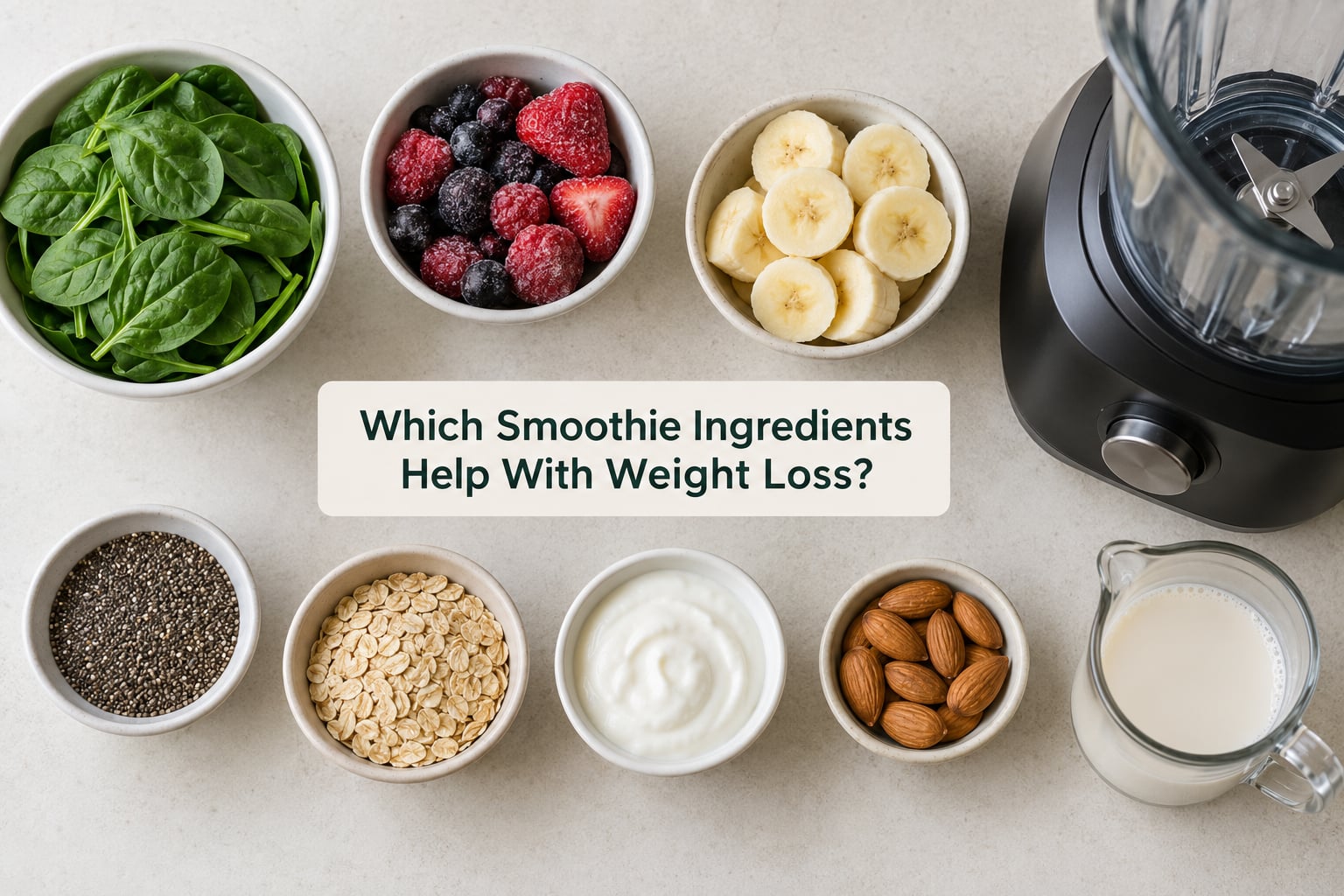
Which Smoothie Ingredients Help With Weight Loss?
Build fullness first with protein and fiber
Greek yogurt, skyr, cottage cheese, protein powder, silken tofu, hemp hearts, chia and ground flax are the ingredients that do the heavy lifting. Protein and fiber are what slow digestion and stretch the gap between meals.
Fruit and vegetables carry volume and micronutrients for very few calories. Spinach, kale, cucumber, celery, berries and frozen vegetables blend well and dilute the sweetness of the fruit without adding sugar.
Add a small amount of fat to slow digestion
A tablespoon of nut butter, a small scoop of avocado, or a handful of seeds adds unsaturated fat that further blunts the blood sugar response. Measured, not poured in.
Serve it on an unsweetened base. Water, coconut water, or unsweetened almond or oat milk keep the calorie count honest where juice or sweetened varieties quietly add 80 to 120 calories in a single pour.
Which Smoothie Ingredients Can Make Weight Loss Harder?
The usual failure is not a bad ingredient, it is a big one. Here is what tends to go wrong.
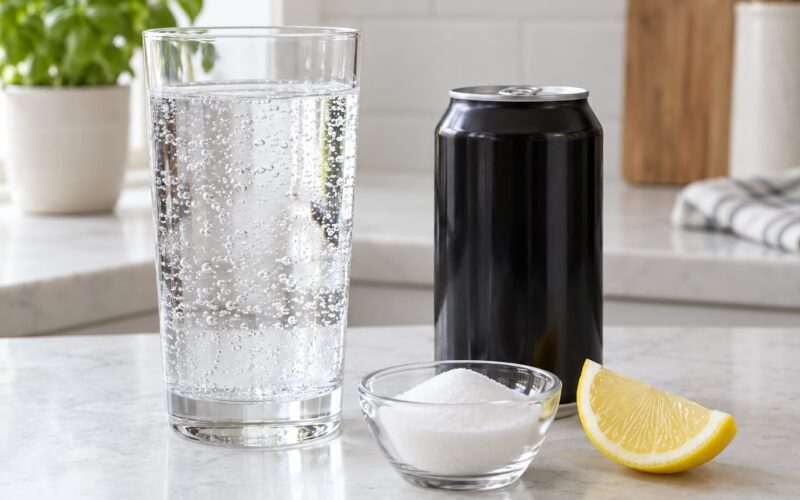
- Fruit juice as the base. Concentrated, low in fiber, and it ferments quickly enough to leave you hungry.
- Sweetened yogurt and flavored varieties. Added sugar arrives with the protein.
- Honey, agave and syrups. Pure calories with nothing to slow them down.
- Unmeasured nut butter or avocado. A generous spoonful can turn a 250 calorie drink into a 600 calorie one.
- Coconut milk in excess. Calorie-dense and easy to pour rather than scoop.
- Fruit-only smoothies. Low in protein and fat, so hunger returns quickly.
- Meal replacements used as snacks. A full meal-replacement smoothie eaten at 3 pm usually means extra food at dinner.
Roughly 20 to 30 grams of added fat or nut butter in a recipe is common enough to be worth tracking for a week. A thick pour is not automatically a healthy one.
What Makes a Smoothie Filling Enough for Weight Loss?
Fillingness comes from four things in combination: protein, fiber, fat and enough carbohydrate to make it worth eating. Drop any one and the drink stops standing in for a meal.
The table below is a rough guide built from standard nutrition data, not a prescription. Your own needs depend on your size, activity and the rest of your day.
| Smoothie type | Approximate calories | Protein | Fiber | How it behaves |
|---|---|---|---|---|
| Fruit and juice snack blend | 150 to 250 | 3 to 8 g | 2 to 4 g | Light and pleasant, rarely a meal |
| Balanced meal-replacement smoothie | 350 to 450 | 25 to 40 g | 8 to 12 g | Holds three to five hours for most adults |
| Heavy superfood smoothie with nut butter and avocado | 600 to 900 | 15 to 25 g | 6 to 10 g | Easy calorie creep, low protein per calorie |
| The same 400 calories eaten as solid food | 400 | about 25 g | about 10 g | Usually fills longer because of chewing effort |
At the low end, a 190 calorie combination of two cups of spinach, one banana, a cup of strawberries and four ounces of water is a common starting point. Plenty of people find that holds until lunch, though it sits below the 350 to 400 range most weight loss plans aim for.
At the other end, a 500 calorie green smoothie that fills a large jar tends to carry steadier energy across the morning. Same principle, different calorie level, and neither one needs sugar to get there.
How to Make a Weight-Loss-Friendly Smoothie
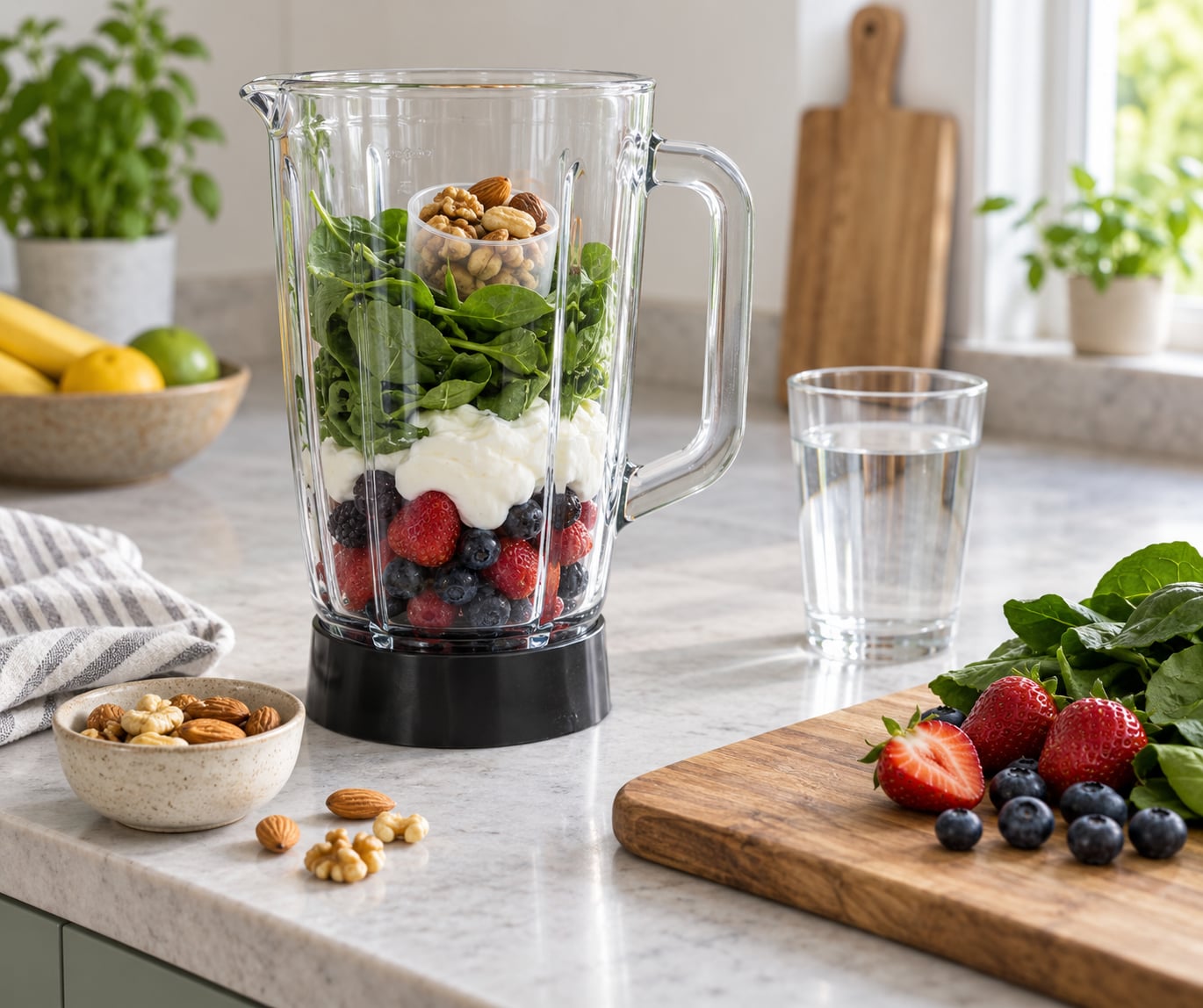
Build it in this order and the flavor comes out better, because the greens go in before anything sweet.
- Start with a measured liquid. One to two cups of water, coconut water or unsweetened plant milk.
- Add greens first. Two packed cups of spinach or kale. Blending them at the start masks the flavor and lets more fit in.
- Add your protein. Three quarters cup of Greek yogurt, skyr or cottage cheese, or a scoop of protein powder, aiming for 20 to 30 grams total.
- Add fiber. One tablespoon of chia, hemp hearts or ground flax, or one cup of frozen berries or a whole banana.
- Measure the calorie-dense extras. One tablespoon of nut butter or a small scoop of avocado, weighed rather than eyeballed.
- Blend, then check the portion. Pour into a glass you normally use for a drink. If it fills two of them, split it or drink half now and half within the hour.
Freeze it in an ice cube tray or a silicone mold if you want to save time. Frozen cubes made with spinach and fruit blend smooth and cut down on prep the next morning.
Are Smoothies Better Than Eating Whole Food?
For weight loss, solid food is usually the easier default. Whole foods deliver fiber in its intact structure, take longer to eat, and are harder to accidentally overdo. Chewing alone changes how satisfied you feel from a given calorie count.
A smoothie earns its place when convenience is the real constraint. Some mornings nobody is cooking, some lunches happen at a desk, and a blended drink is the only way vegetables get eaten at all that day.
The most workable approach I see is treating the smoothie as an addition to a diet that is already built on solid food, not as a diet in itself. Use it to cover a busy breakfast, a travel day or a vegetable gap, and keep the rest of the plate built from protein and whole grains.
Anyone managing diabetes, pregnant or breastfeeding, or with a history of disordered eating should talk to a doctor or registered dietitian before leaning on meal-replacement smoothies. The same goes for anyone who feels lightheaded or low on energy while following one.
Frequently Asked Questions
Can drinking smoothies help me lose weight?
They can, because they make calorie control and vegetable intake easy, but the loss still comes from a total calorie deficit. A 350 to 400 calorie smoothie with 20 to 30 grams of protein and 8 to 12 grams of fiber, eaten in place of a meal, usually fits a weight loss plan well. The same drink alongside your normal meals simply adds calories, and the fiber and chewing that solid food provides are harder to replace.
Are fruit smoothies good for weight loss?
They can be, depending entirely on what else is in the jar. Fruit alone gives you vitamins and some fiber but very little protein or fat, so hunger usually returns within an hour or two. Berries, a banana, Greek yogurt, a tablespoon of chia and a small amount of nut butter turns the same fruit into something closer to a meal. Watch portions, since a large amount of any fruit adds up quickly.
Do smoothies fill you up as much as solid food?
Generally less, and that is the single biggest reason smoothie-only plans fail. Liquids need no chewing and move through the stomach faster, so the same calories deliver less satisfaction and you get hungry sooner. You can close most of the gap by adding 20 to 30 grams of protein, 8 to 12 grams of fiber and a measured source of fat, then treating the drink as a meal instead of a snack.
Are meal-replacement smoothies effective for losing weight?
They work for some people over short periods because they are portion-controlled and require no planning, but they are rarely the best long-term approach. Eating only smoothies tends to leave protein, iron, calcium and vitamin B12 short, and the hunger that builds tends to show up as overeating later in the day. Most dietitians suggest using them for one meal while keeping the rest of the day solid and balanced.
How often should I drink a smoothie while trying to lose weight?
There is no single number, but one balanced smoothie a day is the most common workable pattern, used as a breakfast or lunch replacement rather than an extra. Two per day is possible if each one replaces a meal and the remaining meals stay balanced. Keep an eye on whether you are hungry within ninety minutes, since that is a better signal than any schedule for whether the amount is right.
Conclusion
So are smoothies good for weight loss? They are a tool, not a treatment, and the difference between the two outcomes is whether the drink replaces a meal and carries protein, fiber and a measured amount of fat.
Start with one smoothie this week instead of breakfast. Keep it around 350 to 400 calories, put the greens in first, add your protein, skip the juice and the honey, then check how hungry you are ninety minutes later. That single check will tell you more than any formula.