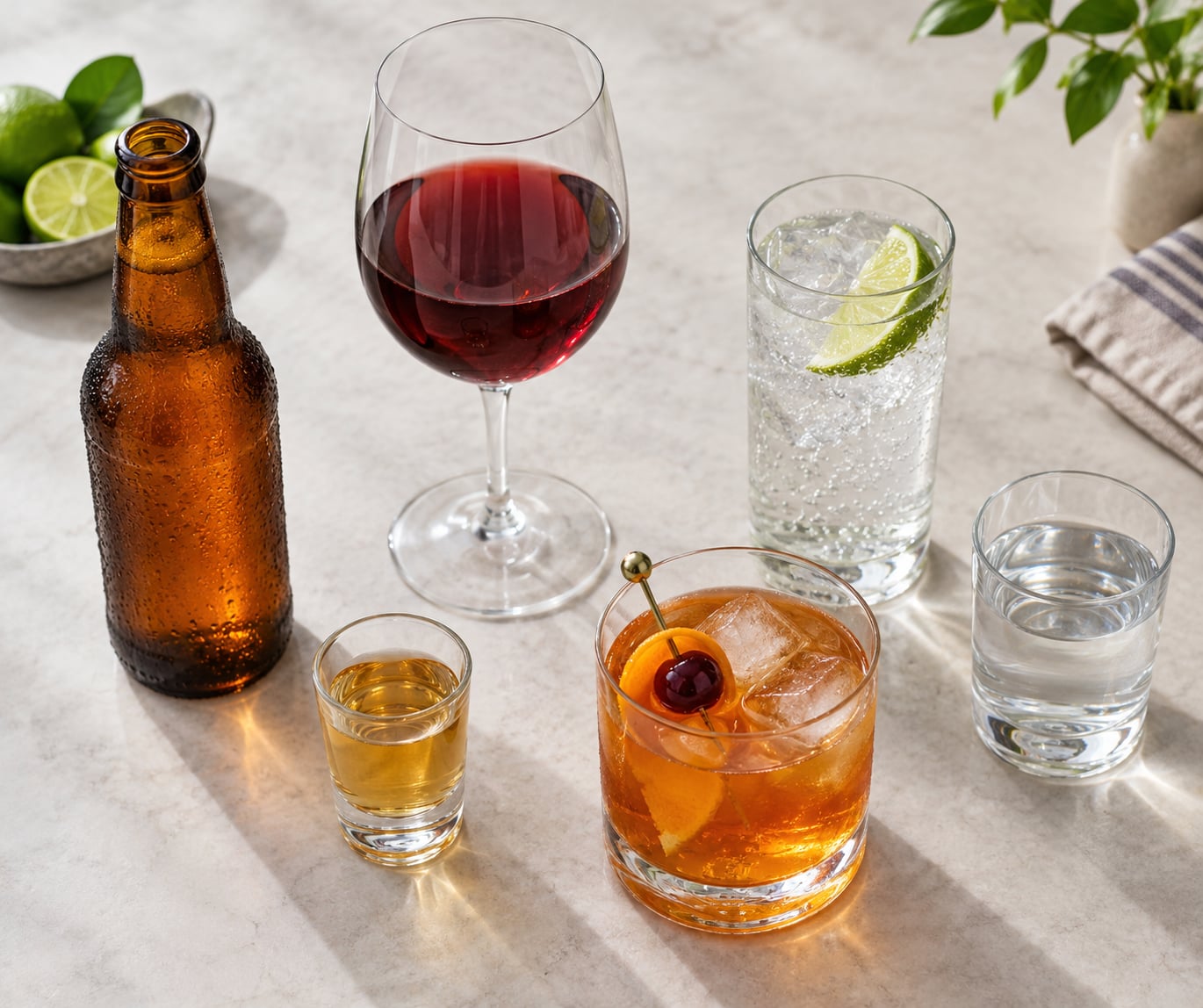
A standard alcoholic drink runs from roughly 95 calories for a plain shot of vodka to more than 400 for a blended cocktail. The reason is simple: pure ethanol carries about 7 calories per gram, and almost everything else in the glass is either more ethanol or sugar.
Because those calories carry no protein, fibre or micronutrients, they add up fast and do very little for you. Here is how the numbers break down by drink type, where the label figure goes wrong, and how to plan a night out without wrecking the week.
Table of Contents
- How Many Calories Are in Alcohol Drinks?
- The quick reference table
- Calories in Beer
- Calories in Wine and Fortified Wine
- Calories in Spirits
- Calories in Cocktails and Mixed Drinks
- How Many Calories Are in a Standard Drink?
- Why the Calorie Number on the Bottle May Not Match Your Drink
- Low-Calorie Alcoholic Drink Options
- How to Fit Alcohol Into a Weight Loss Plan
- Health and Safety Considerations
- Frequently Asked Questions
- How many calories are in a typical alcoholic drink?
- Do light beers and low-calorie cocktails really help with weight loss?
- Does mixing alcohol with diet soda or zero-calorie drinks reduce calories?
- How do I count calories in a restaurant cocktail?
- Can I drink alcohol every day and still lose weight?
- Do nonalcoholic beers and wines contain calories?
- Bottom Line
How Many Calories Are in Alcohol Drinks?
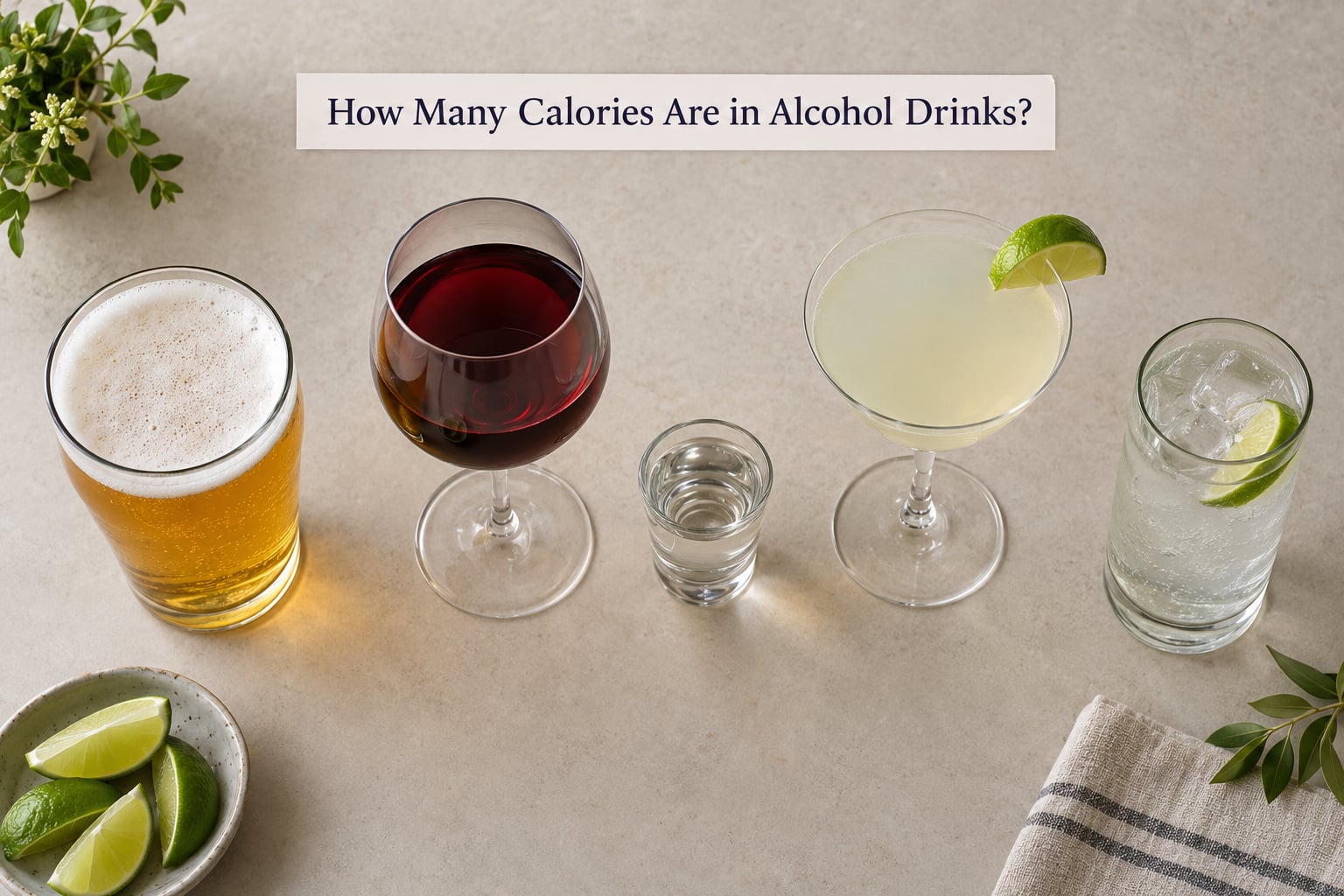
Short answer: about 95 calories for a straight 1.5-ounce shot, roughly 100 to 155 for a 12-ounce beer, around 120 to 200 for a 5-ounce glass of wine, and anywhere from 90 to 700-plus once you add mixers, syrups or cream.
Two separate calorie sources are at work. The alcohol itself contributes about 7 calories per gram, which is higher than protein or carbohydrate at 4 calories per gram each. Everything else, meaning residual sugar in wine, carbs in beer, and sweetened soda, juice or syrup in a cocktail, stacks on top of that.
That is also why there is no single answer to this question. Brand, alcohol by volume, serving size, mixer and recipe can move the same drink from 100 calories to 400 without anything changing except the pour.
The quick reference table
| Drink | Standard serving | Calories |
|---|---|---|
| Vodka, gin, rum, tequila, neat | 1.5 fl oz / 45 mL | 95 to 110 |
| Whiskey or bourbon | 1.5 fl oz / 45 mL | 110 to 150 |
| Brandy or cognac | 1.5 fl oz / 45 mL | 115 to 150 |
| Light lager | 12 fl oz / 360 mL | 100 to 110 |
| Regular lager or ale | 12 fl oz / 360 mL | 140 to 170 |
| Hard seltzer | 12 fl oz / 360 mL | 90 to 110 |
| Craft IPA or pale ale | 12 fl oz / 360 mL | 200 to 280 |
| Dry white or red wine | 5 fl oz / 150 mL | 120 to 130 |
| Sweet or dessert wine | 5 fl oz / 150 mL | 170 to 210 |
| Fortified wine such as port | 3 fl oz / 90 mL | 90 to 120 |
| Vodka and diet soda | 1.5 fl oz spirit + mixer | 90 to 110 |
| Margarita, ready to drink | 5 fl oz / 150 mL | 250 to 350 |
| Piña colada | 8 to 12 fl oz | 400 to 700 |
Treat those figures as ranges rather than promises. A 1.5-ounce pour of 40 percent vodka is about 97 calories, while the same measure of a higher-proof or flavoured spirit lands higher, and a double pour doubles the alcohol and the total.
Calories in Beer
Beer sits in the middle of the range because it carries carbs from grain as well as alcohol from fermentation. Alcohol contributes about 7 calories per gram, and the remaining grain sugar adds to that.
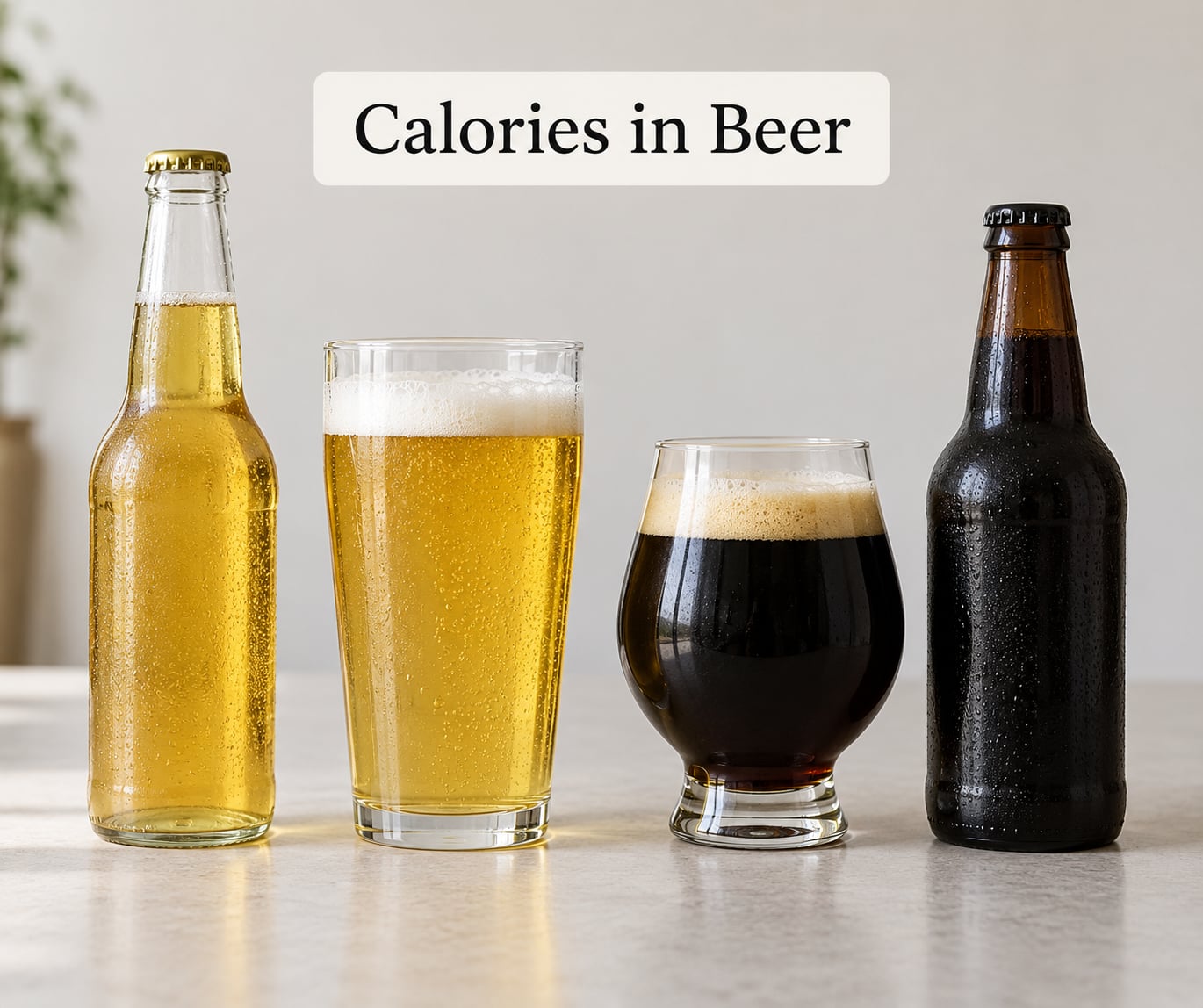
| Style | Serving | Calories | Why |
|---|---|---|---|
| Light lager | 12 fl oz / 360 mL | 100 to 110 | Lower alcohol, fewer fermentable carbs |
| Standard lager | 12 fl oz / 360 mL | 140 to 160 | About 5 percent alcohol by volume |
| Amber or pale ale | 12 fl oz / 360 mL | 160 to 200 | Slightly higher alcohol, more residual sweetness |
| IPA | 12 fl oz / 360 mL | 200 to 280 | 6 to 7.5 percent alcohol by volume |
| Double IPA or imperial stout | 12 fl oz / 360 mL | 300 to 400+ | 8 percent and above, dense body |
| Hard seltzer | 12 fl oz / 360 mL | 90 to 110 | Flavoured sparkling water with a small spirit base |
Serving format matters more than people expect. A 16-ounce pint of a 6 percent IPA runs roughly 280 to 330 calories, and a 22-ounce brewery bomber at 8 percent can pass 500 before you finish it.
Wines and spirits are usually measured more carefully at a bar, but restaurant pours of every kind run large. A wine glass that holds 8 ounces rather than 5 turns a 125-calorie serving into about 200, and a double-shot spirit drink takes a 100-calorie count straight past 200.
Calories in Wine and Fortified Wine
A 5-ounce glass of dry wine usually lands near 120 to 130 calories, and roughly 95 of those come from the alcohol itself. The rest depends on how much unfermented grape sugar is still in the bottle.
| Wine | 5 fl oz / 150 mL | Notes |
|---|---|---|
| Dry red | 120 to 130 | Standard pour, minimal residual sugar |
| Dry white | 120 to 125 | Usually a touch lower than red |
| Rosé | 120 to 130 | Close to dry red and white |
| Off-dry or slightly sweet | 135 to 165 | Extra sugar beyond the alcohol calories |
| Dessert or ice wine | 170 to 210 | Very high residual sugar |
| Sparkling, brut | 120 to 130 | Dry styles match dry still wine |
| Fortified such as port or sherry | 90 to 120 per 3 fl oz / 90 mL | Served in a smaller measure |
The bottle is where the shock usually lives. A 750 mL bottle holds five 5-ounce servings, so a dry bottle is roughly 600 to 650 calories and a sweeter one can pass 800. That is a full day of eating for many people, drunk before dessert.
Calories in Spirits
Distilled spirits are the cleanest calorie case because distillation removes the grain and fruit sugars. What is left is water and ethanol, so a standard 1.5-ounce shot is close to a pure calculation: 14 grams of alcohol times 7 calories per gram, or about 98.
| Spirit (1.5 fl oz / 45 mL) | Calories | Notes |
|---|---|---|
| Vodka | 95 to 105 | About the benchmark for any clear spirit |
| Gin | 95 to 110 | Botanicals add a trace amount |
| White rum | 100 to 110 | Slightly sweeter than vodka |
| Tequila, blanco | 100 to 110 | Reposado adds a little oak character |
| Whiskey or bourbon | 110 to 150 | Often 45 percent or higher |
| Brandy or cognac | 115 to 150 | Made from fruit, still distilled |
| Liqueurs such as amaretto or triple sec | 120 to 250 | Added sugar pushes totals well above spirit base |
Liqueurs are the trap in this category. A 1.5-ounce measure of a cream-based liqueur can carry 200 calories, and a 750 mL bottle of any spirit works out to roughly 1,700 calories in total.
Estimating a restaurant drink is simple once you know the pour. Ask for a single measure, assume the neat pour is closer to 2 ounces, and add whatever the mixer contributes. A double of anything doubles the number.
Calories in Cocktails and Mixed Drinks
Cocktails combine all the calorie sources at once, which is why they top the chart. The spirit supplies the alcohol calories, and the mixer decides how much more gets added.
| Cocktail | Typical serving | Calories | Main calorie source |
|---|---|---|---|
| Vodka and soda | 8 fl oz | 90 to 110 | Alcohol only if the soda is plain |
| Gin and diet tonic | 8 fl oz | 90 to 110 | Alcohol only, sugar-free tonic |
| Rum and diet cola | 8 fl oz | 110 to 130 | Alcohol only |
| Dry martini | 3 fl oz | 150 to 200 | Alcohol plus vermouth |
| Tom Collins | 8 to 10 fl oz | 180 to 230 | Sugar in the regular soda syrup |
| Cosmopolitan | 4 to 5 fl oz | 150 to 200 | Triple sec and juice |
| Margarita | 8 to 12 fl oz | 250 to 350 | Triple sec, then sweet and sour mix |
| Mojito | 8 to 12 fl oz | 200 to 300 | Added sugar syrup |
| White Russian | 6 to 8 fl oz | 300 to 400 | Coffee liqueur plus cream |
| Piña colada | 8 to 12 fl oz | 400 to 700 | Coconut cream, juice and rum |
Two ingredients do most of the damage. Sweetened soda and syrups bring 30 to 40 calories per ounce, while cream-based drinks and coconut cream can multiply a cocktail by four before the recipe even changes.
How Many Calories Are in a Standard Drink?
A US standard drink is defined by alcohol content rather than calories: 14 grams of pure ethanol, which works out to about 95 to 100 calories from the alcohol alone. The same 14 grams arrives as a 1.5-ounce shot of 40 percent spirit, a 5-ounce glass of 12 percent wine or a 12-ounce can of 5 percent beer.
That means you do not add a shot and a mixer on top of each other twice. A vodka soda contains one standard drink of spirits plus mixer calories, not two drinks, and a light beer is one standard drink even though it has the lowest calorie count of the three.
For a quick estimate of anything in front of you, work out the millilitres of pure ethanol first: the alcohol by volume multiplied by the pour size in ounces, with 1 ounce at roughly 30 mL. A 1.5-ounce pour of a 15 percent spirit works out to about 14 grams of ethanol, and 14 grams at 7 calories each lands near 98 calories before any mixer.
Why the Calorie Number on the Bottle May Not Match Your Drink
Labels describe one serving of one product. Most drinking happens outside that description, and the gap is where surprises come from.
Serving size is the first issue. A 12-ounce can is not a 12-ounce pint, and a 5-ounce wine pour is uncommon at a restaurant, where 8 ounces is normal. Double shots are standard at many bars rather than unusual, and they quietly double every number.
Recipes vary too. A margarita can arrive as a 2-ounce pour with fresh juice and a splash of syrup at 200 calories, or as a 5-ounce pre-mixed version at 350. The same drink from two neighbouring bars is not the same drink.
Blendables are the worst offenders. Anything with fruit purée, cream, coconut or a full ounce of syrup packs 150 to 300 calories into a single glass, and an energy drink mixer can add another 90 to 200 on top of the alcohol.
A workable method is to identify the base spirit, count it as one standard drink of about 100 calories per measure, then estimate the mixer at roughly 40 calories per ounce if it is sugary and near zero if it is plain soda. Shared drinks and unattended glasses are where this estimate breaks down most, so tracking by drink rather than by hour gets you closer.
Low-Calorie Alcoholic Drink Options
The lowest-calorie drinks share one trait: a clear spirit, a smaller pour or a sugar-free mixer. Everything else follows from there.
- Vodka and plain soda water at about 90 to 110 calories per drink, the most commonly recommended low-cal option on weight-loss forums for exactly this reason.
- Gin with diet tonic at about 90 to 110 calories, with the same trade-off: a sugar-free mixer, a full-strength pour.
- Dry wine at 120 to 130 calories for 5 ounces, where skipping the mixer removes the variable entirely.
- Light lager at 100 to 110 calories for 12 ounces, useful when you want volume rather than a measured shot.
- Hard seltzer at 90 to 110 calories, which reads as a light beer but tastes like a mixed drink.
- Spirit and diet soda at roughly 100 to 130 calories, keeping the ritual of a mixed drink while dropping the sugar.
Low calories do not mean low alcohol. A vodka and diet soda can hold a full 14 grams of ethanol, so it affects you exactly like a straight shot, and a double pour in a goblet-sized glass cancels out the saving entirely.
Several people on weight-loss forums describe low-calorie drink framing as a trap, because calling something skinny invites a second drink that rarely gets the same scrutiny. That pattern is worth watching in your own log.
How to Fit Alcohol Into a Weight Loss Plan
You can lose weight while drinking, and plenty of people do. It works as part of a weekly calorie budget rather than as a separate category of cheat, and the structure matters more than any single drink.
Set a weekly number first. Five drinks spread across a week is a very different proposition from five on a Saturday, and the second version lands almost entirely on Friday and Saturday totals. People who track weekly intake rather than daily totals tend to keep the damage contained.
Decide before you order, not after the first one. Once a sweet cocktail is in front of you, the next choice has already been made for you, so choosing the drink earlier is where most of the saving happens.
Alternate with water or a zero-cal drink, and slow the pace down. Spacing drinks over three hours instead of two reduces both the calorie total and the impairment, which in turn reduces late-night eating.
Count the night and the next morning honestly in your tracker. People on tracking forums describe logging only the drinks and then wondering why the scale moved, when the late-night food that followed is often the larger number.
Treat exercise as something you do for fitness rather than as a way to pay back calories. A hard session cannot reliably cancel out seven drinks, and planning it that way tends to produce a worse night than simply drinking less.
Keep the rest of the day steady. Diet soda, flavoured waters and high-protein meals help you stay within the number, and none of them require pretending the alcohol was not there.
A registered dietitian or your doctor can help you build a plan that fits your own health needs, particularly if you are managing diabetes, blood pressure, pregnancy, or a history of disordered eating.
Health and Safety Considerations
A calorie count is not a safety rating. Alcohol affects sleep quality, next-day training, appetite and judgement, and those effects matter whether a drink is 90 calories or 400.
Alcohol disrupts sleep and tends to raise appetite the following day, which is one reason a moderate number of calories can show up as more weight gain than the maths predicts. It also slows reaction time and decision-making, which is when food choices tend to go off plan.
Follow mainstream guidance on limits rather than your own calculation. The widely cited US guidance is up to one drink a day for women and up to two for men, and public health bodies in the UK and elsewhere publish similar recommendations.
Do not drink at all if you are pregnant, might be pregnant, driving, taking medication that interacts with alcohol, or managing a condition your clinician has told you to protect. If drinking has become hard to control or hard to stop, that is a medical question, not a discipline question.
Talk to a healthcare professional about warning signs, including drinking more than you intended to, needing alcohol to sleep, or shaking when you cut back. Support is available and effective.
The calorie figures here follow the standard public health references used for this topic: MedlinePlus for alcohol content per standard drink, NIAAA Rethinking Drinking for drink sizes and guidance, the NHS for alcohol advice, MSU Extension for beer and carbohydrate data, and the Center for Science in the Public Interest for added sugar in drinks. Values vary by brand, so treat every number as an estimate and check the label when it matters.
Frequently Asked Questions
How many calories are in a typical alcoholic drink?
A standard drink containing 14 grams of alcohol provides about 95 to 100 calories from ethanol alone. A 12-ounce beer runs 100 to 170 calories, a 5-ounce glass of wine 120 to 200, and cocktails range from around 90 for a vodka soda to 400 or more for blended drinks with syrup, juice or cream.
Do light beers and low-calorie cocktails really help with weight loss?
They lower the number but they do not change the alcohol. A light lager at 100 calories and a vodka soda at 95 are genuinely lighter options, yet both still deliver a standard measure of ethanol, so they can impair judgement and appetite the same way a heavier drink does. Frequency and total intake matter more than the label.
Does mixing alcohol with diet soda or zero-calorie drinks reduce calories?
Yes, the mixer part drops close to zero, which usually saves 60 to 150 calories in a mixed drink. The alcohol calories stay at roughly 100 per standard measure. You also lose the sugar load that slows you down, so the drink stops feeling like a meal, though the drink itself still counts.
How do I count calories in a restaurant cocktail?
Count one standard drink of spirits at about 100 calories, then estimate the mixer at roughly 40 calories per ounce if it is sugary and near zero if it is plain or diet soda. Check whether the pour is a double, which is common, and add around 100 to 200 calories for cream, liqueur or syrup in the recipe.
Can I drink alcohol every day and still lose weight?
It is possible if the alcohol fits inside a weekly calorie budget, but daily drinking makes that harder to manage because sleep quality and appetite suffer with frequency, not just quantity. Many people do better with a set number of days. A dietitian can help you build a plan that fits your health needs and goals.
Do nonalcoholic beers and wines contain calories?
They often do, and many people assume otherwise. Alcohol-free beer commonly runs 20 to 70 calories per serving, while dealcoholized wine and alcohol-free spirits can carry 60 to 150 because grape sugar and botanical base ingredients stay in. Check the label, because some are nearly as heavy as the alcoholic version.
Bottom Line
Start from the standard serving: about 95 to 100 calories for a straight spirit, and work outward from there for beer, wine and anything mixed. Then check what you actually got, because the pour and the mixer move the number more than the brand does.
Pick the lowest-calorie option that still fits the rest of your week, and treat alcohol as calories that come with no nutritional return rather than as a free choice.