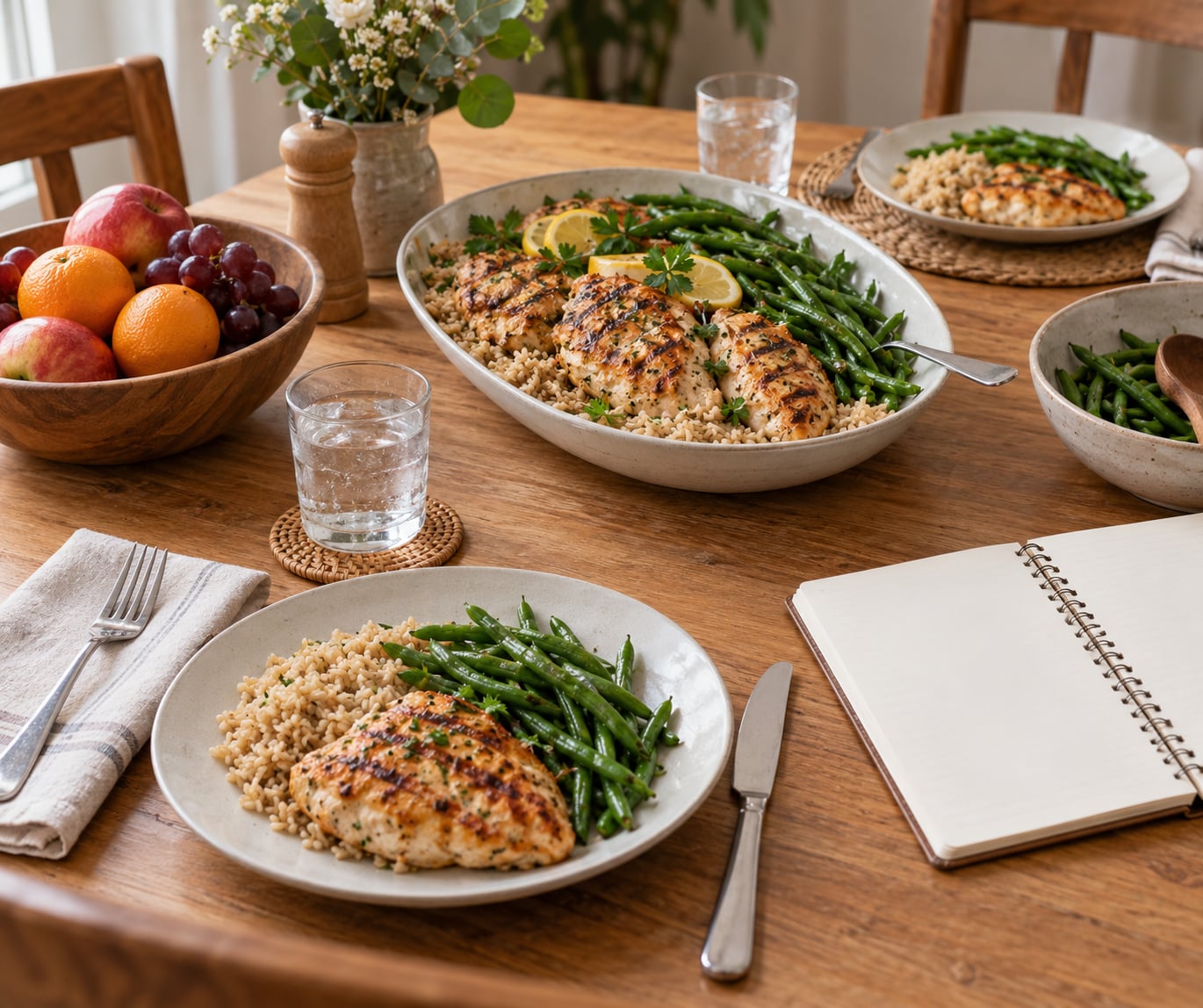
You can lose weight without your family changing a single thing about how they eat. The whole job is your own portion and what you choose from the shared plate, not whether the dinner in front of you matches theirs — and how to lose weight when your family eats differently comes down to cooking one meal and plating it two ways.
Most people start by trying to cook separate dinners or by banning the food already in the cupboard. Both fall apart fast. Two dinners means double the cooking, double the cleaning and a family that wonders why you’re never eating with them; a ban list turns a treat into a craving you think about all day.
Forum threads on this topic read the same way. An r/loseit poster living with their parents wrote that cutting calories sometimes held for a week or two before ending in a multi-day binge. On r/EatCheapAndHealthy, someone whose household eats mostly deep-fried or microwaved food asked specifically for freezer meals so they would not default to whatever the family was eating. Both problems are environmental, and both get easier once you stop negotiating over dinner and start adjusting your own plate.
Table of Contents
- What You Need
- Step-by-Step: A Flexible Plan for Different Family Meals
- 1. Set Your Own Eating Goal Without Changing Everyone Else’s Diet
- 2. Build a Personal Plate Before Family Dinner
- 3. Adapt Shared Family Foods Instead of Declining Them
- 4. Cook One Dinner, Portion It Two Ways
- 5. Plan Ahead for Busy Days, Takeout, and Restaurants
- 6. Use Portions, Tracking, and Support Without Obsessing
- When Your Family Genuinely Needs Different Food
- If You Are Not Hungry at Family Mealtimes
- What It Costs to Eat Differently
- Common Mistakes
- Frequently Asked Questions
- Do I need to cook separate meals to lose weight when my family eats differently?
- Can I eat the same family dinner and still lose weight?
- How can I control portions when someone else serves dinner?
- What should I do when my family prefers takeout or restaurant food?
- Can supplements or skipping meals help me lose weight with my family?
- When should I talk with a doctor or registered dietitian about my weight goals?
- How to Lose Weight When Your Family Eats Differently: Start With One Flexible Meal
What You Need
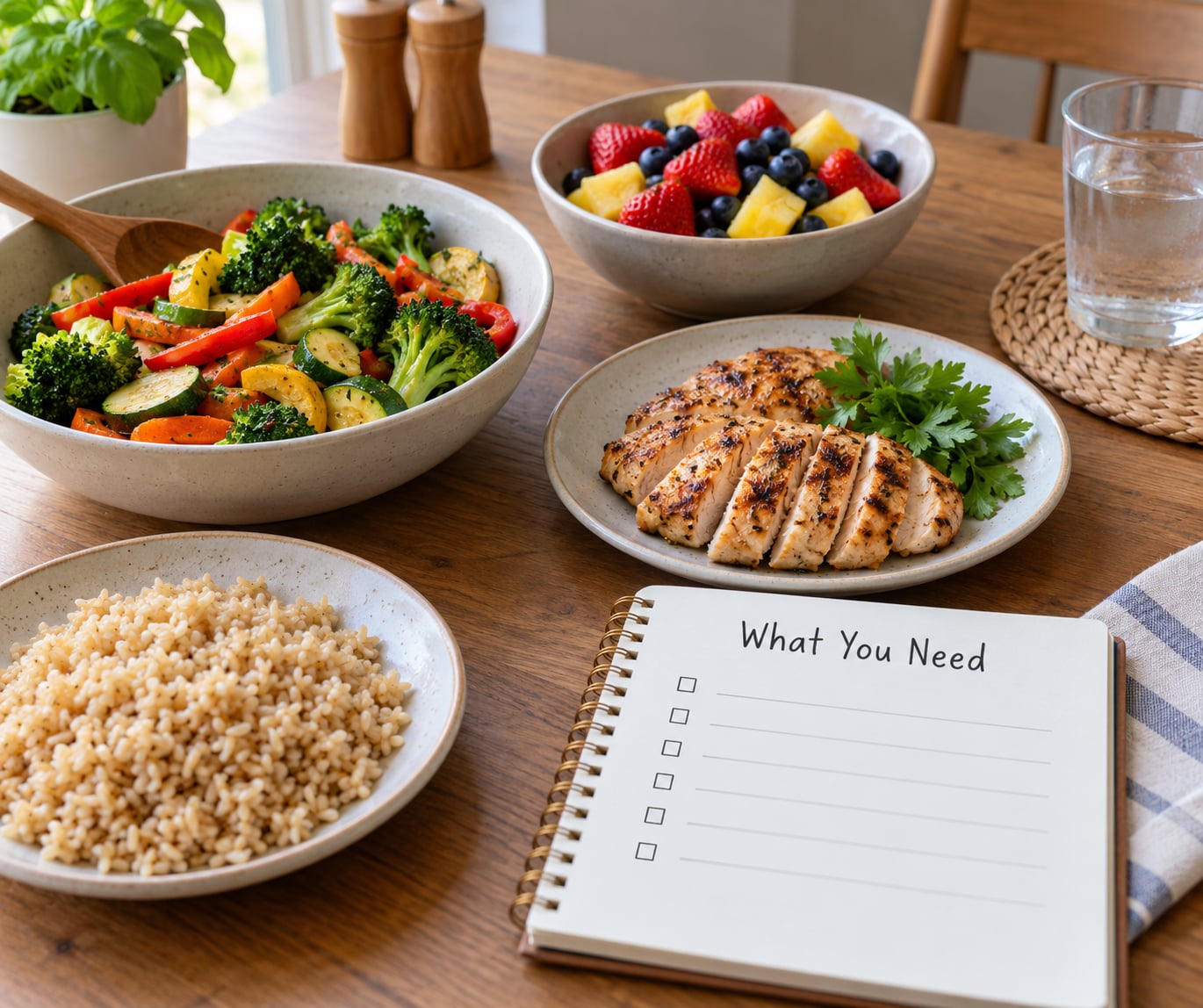
Nothing here requires a special diet, a membership, or a supplement. You need a way to see how the meals you already eat actually break down, a short list of foods you personally want more of, and a plan for the four nights a week you do not feel like cooking.
The realistic version also assumes a few things are already true in your house. Somebody else cooks most dinners, some of those dinners are not what you would choose, and you are not going to change anybody’s mind about that. Treating that as a fixed fact is what makes the plan workable instead of frustrating.
One more piece of equipment matters more than any kitchen gadget: a set of your own staples you can cook without waiting for anyone. Frozen vegetables, eggs, plain yogurt, canned beans, oats, frozen fish fillets. These are cheap, quick and never require a conversation. When your own options exist, eating differently stops being a daily negotiation.
Step-by-Step: A Flexible Plan for Different Family Meals
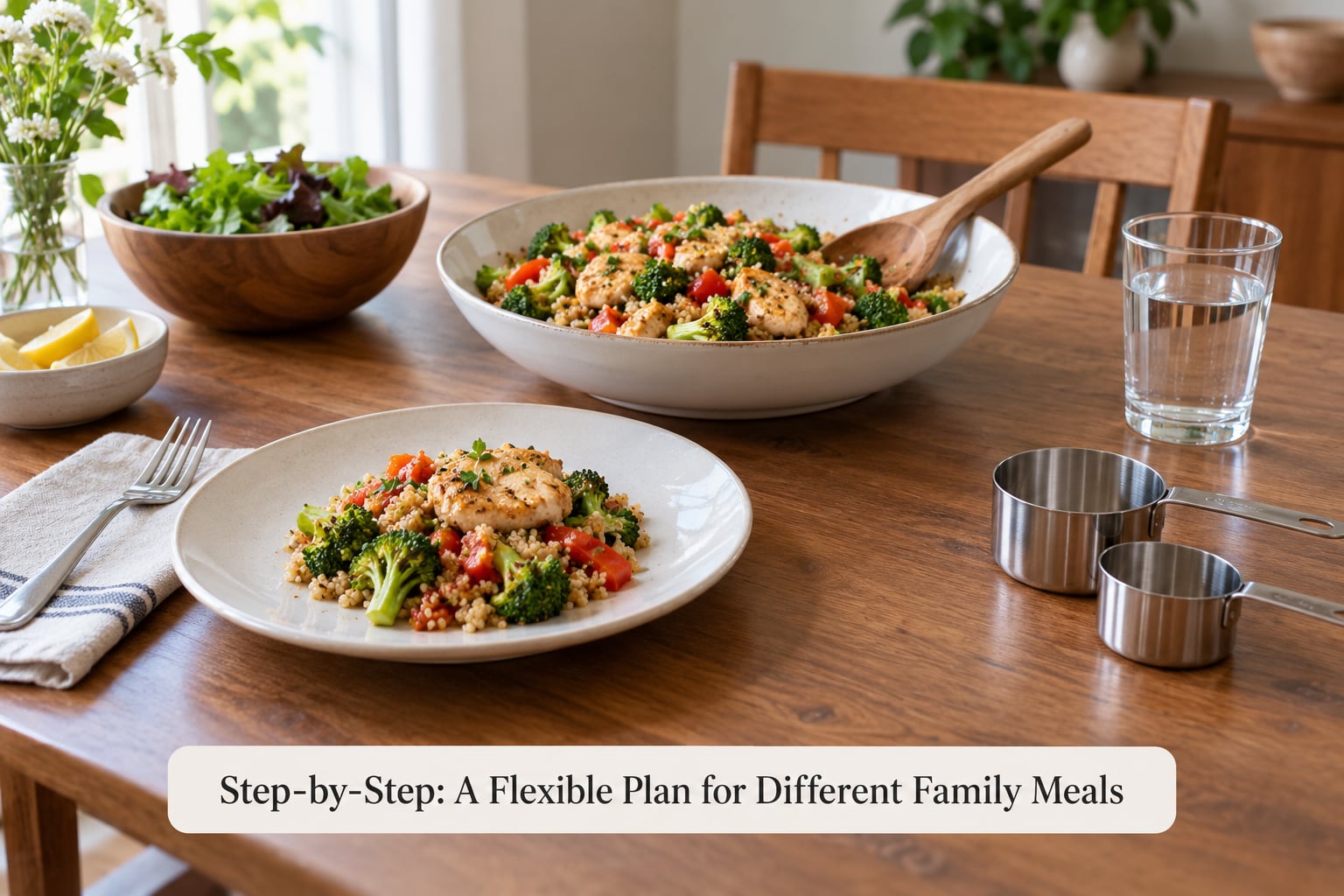
The plan below takes about five minutes to set up and then runs on autopilot. Work through it in order, because each step makes the next one easier.
1. Set Your Own Eating Goal Without Changing Everyone Else’s Diet
Decide what you are actually doing before you touch the food. Mainstream guidance treats weight loss as a modest energy deficit you can hold for months, not a sprint — commonly something like 500 to 750 calories a day below what you currently eat, which works out to roughly a pound a week. Faster targets almost always come from a deficit you cannot maintain.
Write the goal in a way that does not involve anyone else. Not “we are cutting carbs,” but “I am building a bigger vegetable portion at dinner and eating dessert twice a week.” A goal that requires relatives to change their food becomes a negotiation, and negotiations in households rarely end well.
Ask for support in one specific, small way instead of general permission to change the menu. A quieter fridge shelf for your prepped food works. Knowing what time the kids go to bed works. Help you are not making for everyone works.
2. Build a Personal Plate Before Family Dinner
The plate rule is simple enough to do without thinking: half vegetables or fruit, a quarter protein, a quarter high-fibre carbohydrate, and fats used rather than poured. If the shared meal has no vegetables, add them before you sit down — raw salad, frozen broccoli, a handful of spinach in the pan.
Protein and fibre are the two things that decide how much of the shared dish you want. A palm-sized portion of protein at each meal and a decent hit of fibre usually takes the edge off by the time dinner reaches the table, which is far easier than negotiating with yourself halfway through seconds.
You can still eat everything your family eats. What changes is the ratio on your plate and the size of the portion. Start with the family portion, eat slowly, and check in halfway. Most people discover the first serving was plenty.
3. Adapt Shared Family Foods Instead of Declining Them
Add, do not subtract. Every food on the table can stay on the table; what changes is what you build on top of it and how much you take. This is the part of how to lose weight when your family eats differently that people find hardest, because it asks for restraint rather than refusal.
- Pasta night: keep the pasta, double the tomato sauce, add a salad and a protein instead of a second bowl.
- Rice or potato dishes: a moderate portion alongside extra vegetables and chicken, fish or beans rather than a meat-heavy double serving.
- Fried or saucy dishes: treat the sauce as an extra rather than the whole meal, and fill the rest of the plate with vegetables first.
- Dessert: one small portion, eaten slowly, sitting down, without a second helping standing at the counter.
- Casserole nights: serve yourself slightly less than everyone else, then add a side salad so the portion looks normal and the meal still fills you.
That last trick matters more than it sounds. Serving yourself a visibly smaller portion triggers comments at the table, and you would rather not have that conversation every night. A full plate that happens to have more vegetables on it avoids the whole thing.
If your family genuinely needs more carbohydrates than you — kids, teenagers, an active partner — switch the type rather than the amount. Swap white bread, chips and pastries for whole oats, brown rice and quinoa. Everyone benefits and nobody is deprived.
4. Cook One Dinner, Portion It Two Ways
This is the tactic most people who make it work land on first, and it is worth knowing by name. Put everything in bowls on the counter: the same protein, the same carbohydrate, the same vegetables. Everyone builds their own bowl, and what you take from each dish is the only variable. Nobody is cooking twice and nobody is being served a diet plate.
Seven formats work particularly well for this:
- Taco bar: seasoned mince, tortillas, beans, shredded lettuce, salsa, cheese and sour cream on the table. You take two tacos and load the vegetables; the family loads whatever they like.
- Pasta bar: cooked pasta in one bowl, sauce in another, salad and grated cheese alongside. Your portion is pasta and sauce with a big handful of salad mixed through.
- Grain bowl: rice, quinoa or couscous, roasted vegetables, grilled chicken or chickpeas, a yoghurt dressing. Fast to assemble and it reheats well for tomorrow’s lunch.
- Sheet-pan build: one tray of vegetables and one of protein. You take a double helping of the vegetables and a single helping of the protein.
- Stir-fry bar: cooked noodles, sliced vegetables, cubed protein, sauces. Everything goes on in whatever quantity you choose.
- Breakfast bar: oats, yogurt, fruit, nuts and nut butter laid out on Sunday night. Useful when the family eats toast and cereal and you need something that fills you for longer.
- Snack board: cheese, crackers, fruit, olives, boiled eggs arranged in one dish rather than four separate packages everyone tears into. The whole tray is visible, which cuts down on mindless grazing for you too.
Once the family gets used to one of these formats, it stops feeling like a diet and starts feeling like dinner. That is the point — the version that works is the one nobody argues about.
5. Plan Ahead for Busy Days, Takeout, and Restaurants
Most diet plans fail at 6pm on a Thursday, not over a salad. Plan two things: what you cook on your own, and what you order when the family orders.
A short weekly template is enough. Pick your own breakfast and lunch on work or school days, decide two dinners you will cook from your own staples, and leave the rest of the week to whatever the family eats.
| Day | Shared dish | What you build instead |
|---|---|---|
| Mon | Chicken stir-fry with rice | Double the vegetables, chicken only, small rice portion |
| Tue | Fish tacos, sides on the table | Two tacos, extra slaw and salsa, skip the tortilla sides |
| Wed | Pasta with meat sauce | Your own lentil or chickpea pasta with salad, portioned from the shared pot |
| Thu | Takeout night | Grilled protein from wherever they ordered, vegetables, sauce on the side |
| Fri | Pizza or burgers | One portion with a salad, water first, dessert only if you want it |
For takeout, the levers are fewer items, sauce on the side, and a vegetable added rather than removed. One burger, no fries is a fine decision in a week where you ate well five other nights. Restaurants follow the same rule: order what the family ordered, choose the grilled option, and let go of the idea that you failed.
Keep one sweet and one salty option of your own on hand at all times. A frozen yoghurt, a piece of dark chocolate, pre-cut vegetables with hummus. A craving that ends in the biscuit tin at 9pm is a planning failure, not a character failure.
Family gatherings follow the same logic with a different rhythm. Have something substantial before you leave the house, so you arrive full rather than starving, and take a plate of vegetables first. Sit away from the serving table if sitting next to it means seconds appear on your plate before you have decided you want them.
At a celebration, have the thing you actually want — a slice of cake, a glass of wine — and stop there. One planned indulgence at an event is not a failed week, and treating it as one is the fastest way back to all-or-nothing thinking.
6. Use Portions, Tracking, and Support Without Obsessing
Small, boring adjustments carry more weight than dramatic ones. Serving yourself a little less, choosing water at the table, walking after dinner — these are unremarkable and they compound.
Tracking helps some people and drives others to distraction. If you are the second kind, check in with how you feel and how your clothes fit once a week rather than logging every mouthful. If tracking steadies you, most apps let you log the shared dinner and then note the portion you actually took, which is more honest than logging the whole pot.
Know how to tell a plateau from a normal fluctuation. Weight moves around day to day for reasons that have nothing to do with fat, so look at two or three weeks of trend, not one morning on the scale. If the trend has genuinely flat for three to four weeks, tighten one thing — usually the evening snack or the takeout portions — rather than everything.
A registered dietitian or your doctor is worth the appointment if you are unsure what a healthy deficit looks like for you, if you have a medical condition, if you are pregnant or breastfeeding, or if a medication is involved. They can also tell you whether what you are doing is sensible before you do it for a year.
When Your Family Genuinely Needs Different Food
Some households are not dealing with preference, they are dealing with medical need. A child with sensory aversions, an autistic child who eats only a narrow set of foods, an adult with a serious allergy: that is not a family eating differently, that is a household that has to run parallel tracks, and pretending otherwise is unhelpful.
What works there is a shared base with separate additions rather than two full kitchens. Cook the component the whole household can eat, then add a separate small item for the person who needs something else — a plain piece of chicken alongside the curry, rice cooked separately, a familiar side dish on the side. One extra pot for one person is manageable. A second complete dinner every night is not.
The same thinking applies when the person eating differently is you, for medical reasons. If a doctor has told you to follow a specific plan, follow theirs rather than a general one, and keep the family meals you can join rather than retreating to your own plate entirely.
If You Are Not Hungry at Family Mealtimes
Some people lose their appetite at mealtimes — through medication, recovery from illness, or simply a change in how their body signals fullness. A BabyCenter commenter on a GLP-1 described eating a small breakfast at her desk and dinner after the kids were in bed, because sitting at the table with no appetite is miserable and she had stopped fighting it.
That is a workable pattern, and nobody is required to join it. Eat something small with the family when you can, then have your proper meal later. It also changes the shopping picture: someone who is not hungry at 6pm does not need a full dinner cooked for them, and household food costs usually fall rather than rise when someone eats less.
Appetite-suppressing medication is a medical decision, not a weight-loss shortcut, and it needs a clinician’s oversight. Keep the appointment and tell them what is happening at mealtimes, including if eating has become difficult rather than easy.
What It Costs to Eat Differently
The honest part: eating differently from your household is usually cheaper, not more expensive. Your staples — frozen vegetables, eggs, canned beans, oats, plain yogurt — cost less per serving than takeaway meals bought for two or three people every night.
The real expense is time and washing up, and that is why the one-dinner-two-plates method matters more than the shopping list. Batch cook two or three of your own portions on a Sunday and freeze them; you then have a meal ready in minutes that nobody else in the house has to agree to. Several readers mentioned exactly this — one person’s partner started taking a portion to work and gave up a daily takeaway habit in the process.
Common Mistakes
Cooking two separate dinners every night. It doubles the time, the washing up and the grocery bill, and it dies quickly. Cook one meal and build your own plate from it. A comment on Threads made the point well: cooking two dinners is why the plan fails in the first place.
Banning food the family still eats. Restriction creates rebound cravings and makes you the odd one out. A BabyCenter commenter tried the opposite — her teenager could have treats but kept them out of sight, and after a few months the cravings faded on their own with nothing hidden.
Eating the biggest portion to avoid waste. Finishing what the children rejected because it would otherwise be thrown away is one of the quietest ways people undo their progress. Waste is a household problem, not yours to solve with your waistline.
Following someone else’s diet by accident. When a partner or parent restricts carbohydrates or skips meals, it is easy to slip into the same pattern while pretending you are not. Build your own plan with your own numbers.
Announcing a diet at the dinner table. Telling the family you are cutting something out invites negotiation, teasing and resentment every evening. Model it instead: eat what you want, serve it differently, and let the household forget about it.
Negotiating at every meal. Explaining your portion to the people you live with, every time, wears everyone down and turns dinner into a debate. The fewer people you have to convince, the more likely you are to keep going.
Skipping meals to lose weight faster. Not eating at family mealtimes because you skipped lunch is the fast route to the binge described at the top of this guide. Missing food rarely works, and it makes every shared meal harder rather than easier.
Reading a plateau as failure. Progress on weight scales is noisy. Judge the trend over weeks, and judge your energy, sleep and clothes in between.
Frequently Asked Questions
Do I need to cook separate meals to lose weight when my family eats differently?
No. Separate cooking doubles your prep time, cleaning and grocery costs, and it rarely lasts past a few weeks. Cook the same dish the family eats, then build your own plate from it with more vegetables and protein, a moderate portion of rice, pasta or bread, and sauces used sparingly. You eat together, you just portion differently.
Can I eat the same family dinner and still lose weight?
Yes, as long as your portion and what you add to it differ. The shared meal supplies protein, carbohydrate and vegetables; you control the ratio and the quantity. Eat a vegetable or protein portion before the shared dish, serve yourself slightly less than the family portion, and skip the seconds rather than the meal itself. Consistency across the week matters far more than any single dinner.
How can I control portions when someone else serves dinner?
Eat a small protein and fibre portion first, such as vegetables or a handful of nuts, so you arrive at the table less hungry. Ask the person cooking to put the serving dish on the table rather than spooning onto your plate, since you can control what you take far better than what you are given. If the portions look off, serve yourself a little and leave the rest on the dish.
What should I do when my family prefers takeout or restaurant food?
Keep takeout to one planned night rather than banning it, because rules that strict rarely hold. Order from the same place as the family and change a few details: grilled instead of fried, sauce on the side, one portion instead of two, and a salad or vegetable dish added. Restaurants work the same way. A lighter choice once a week does very little when the other six nights are solid.
Can supplements or skipping meals help me lose weight with my family?
Supplements are not a reliable route to weight loss, and skipping meals usually backfires, especially when a shared meal is your main social contact of the day. Not eating at lunch and then sitting down to a family dinner tends to end with more than you planned. If you are considering any supplement or an appetite-suppressing medication, speak with your doctor or a registered dietitian first.
When should I talk with a doctor or registered dietitian about my weight goals?
Talk to a professional before starting if you are pregnant or breastfeeding, live with a condition such as diabetes, kidney disease, a thyroid problem or a history of disordered eating, or if you take medication that affects appetite. It is also worth a visit if you have been following a plan for several months with no trend, because they can check whether the deficit you have chosen is appropriate for you.
How to Lose Weight When Your Family Eats Differently: Start With One Flexible Meal
Start with one meal, not a new life. This week, cook one dinner your household already likes, add a vegetable to it, serve yourself a slightly smaller portion, and leave the seconds on the dish. Do that twice and see how it felt before changing anything else.
One workable plate a day, repeated, is what moves weight. And if a medical condition, a medication or a history with food makes you unsure what is safe, book an appointment before you start — that conversation takes an hour and saves months of guesswork.