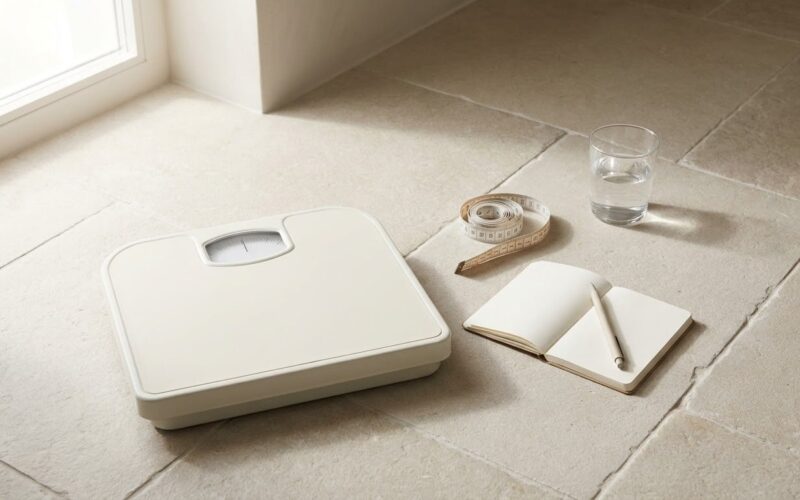
Getting back on track after a bad week is simple: decide your next meal, eat it at your usual time, move in a way that feels easy, and go back to a wake time you can actually keep. You are not trying to repay the missed days, and you do not need a clean Monday to begin. Most people feel steady again within about a week of returning to a normal routine, and the first step can happen today.
The bad week is not the part that costs you. What costs you is the response — the guilt, the punishing workout, the skipped breakfast that turns into skipping everything. Get the response right and the week itself looks like what it is: a week.
A note before we start. This is general information, not medical advice. If you are dealing with an eating disorder, compulsive exercise, or low mood that has lasted more than a couple of weeks, please talk to a doctor, a registered dietitian, or a qualified therapist. They can help in ways a blog post cannot.
Table of Contents
- What You Need
- How to Get Back on Track After a Bad Week: Step-by-Step
- How to get back on track after a bad week without crash dieting
- Return to regular meals instead of skipping food
- Rebuild portions without making food the enemy
- Move in ways that support recovery
- Protect sleep, routines, and support
- Use a two-week check-in, not daily perfection
- Common Mistakes
- Tips
- Frequently Asked Questions
- How fast can I get back on track after a bad week?
- Should I weigh myself after a bad week?
- How much exercise should I do in the first week back?
- What should I eat after several days of overeating?
- My weight went up a few pounds after a bad week. What now?
- When should I talk to a doctor or registered dietitian?
- Conclusion
What You Need
You need five things, and none of them cost money. Have these in place before you restart, because deciding in advance beats improvising on a Wednesday evening when you are tired.
A short, honest look at the week. Three or four sentences on what happened — travel, a work deadline, sick kids, poor sleep, social events. You are looking for the trigger, not building a case against yourself.
One decided meal. Know what your next meal is and roughly when. This is the single most useful item on the list.
Ordinary food in the house. Protein, a couple of vegetables or fruit, something with fibre like beans, oats or brown rice, and a fat source such as olive oil, nuts or avocado. Nothing exotic.
Comfortable clothes for movement. Shoes and layers that fit. If getting dressed is the barrier, leave them out the night before.
A low-key way to track progress. A notebook, a notes app, or a checkbox on paper. This is for noticing patterns over two weeks, not for weighing yourself daily.
How to Get Back on Track After a Bad Week: Step-by-Step
Here is the reset, in order. It takes roughly two weeks and moves at a deliberate pace, because the fastest route back is usually the one that does not create a second setback. Progress means returning to a routine you can sustain — not undoing the week in a hurry.
How to get back on track after a bad week without crash dieting
Drop the word “failure” first. A week of off-plan eating is a week of off-plan eating, not a verdict on you, and the label is what pushes people into restriction that rebounds.
Then name the practical cause. Rushed meals, skipped training, an emotional stretch, travel, illness, or a schedule that was never realistic are the usual ones. Pick one or two things to change and leave the rest alone.
Choosing two changes matters. Ten changes is a plan that fails again next week, and another failure is the thing you are trying to avoid.
Return to regular meals instead of skipping food
Skipping food after overeating is the most common response and the one that backfires most reliably. Hunger gets louder, the next meal gets bigger, and the cycle repeats.
Use a simple formula for your next meal: a palm-sized protein, a fist of a fibre-rich carbohydrate, a handful or two of vegetables or fruit, and a thumb of fat. Concretely, that might be scrambled eggs with toast and a side of fruit at breakfast, or a bowl of lentil soup with a green salad at lunch.
Eat at the times you normally eat. Three regular meals a day gives you a rhythm to hang everything else on, and rhythm matters more than any single meal.
Rebuild portions without making food the enemy
Build portions from hunger and fullness rather than from a strict number. Serve a smaller portion, eat slowly, and stop when you are comfortable — not when the plate is bare.
A plate method helps here: half vegetables, a quarter protein, a quarter carbohydrate. It removes the guesswork without turning a meal into a calculation.
Watch for the repeat pattern instead of the single episode. Eating straight from the bag at the end of a long day is a different problem from one large dinner, and it needs a different fix — usually a planned evening meal rather than more restraint.
Move in ways that support recovery
Start small and build back up. A 20-minute walk or one gentle strength session is plenty for the first return. Add time before you add intensity.
If you are sore, low on energy, or returning after illness, walk only until it feels easy. People who cut their volume after a break tend to stick with it, while jumping back to full intensity often leads to soreness and a second quit.
Anyone with a medical condition, an injury, or a long gap from exercise for health reasons should check with a doctor or physiotherapist before returning to anything strenuous.
Protect sleep, routines, and support
A consistent wake time does more for recovery than a perfect bedtime, because it anchors everything else. Keep the same time at the weekend.
Plan meals the way you would plan a meeting. Ten minutes on Sunday removes most of the reason a Tuesday evening goes sideways.
Tell one person what you are doing. Support matters here more than willpower — a partner, a friend, or an online community that does not treat a slip as a character flaw.
If stress, poor sleep, or emotional eating is the recurring trigger rather than a one-off, that is worth raising with a professional rather than solving with more discipline.
Use a two-week check-in, not daily perfection
For two weeks, track five things instead of weight alone: energy level, hunger between meals, how often you hit your routine, how training felt, and any weekly weight trend you note casually.
At the end of two weeks, change one thing. If hunger is constant, add a protein source or a meal. If you keep skipping training, the session is too long — shorten it. One change, then two more weeks.
Common Mistakes
Five habits trip people up most often after a bad week, and each has a straightforward fix.
Crash dieting to undo the week. Severe restriction drives hunger up and rarely lasts past a few days. Fix: return to normal portions at normal times.
Overcompensating with exercise. Punishing sessions to balance food tend to end in soreness, exhaustion, or an injury that stops training for weeks. Fix: a short easy session, repeated.
All-or-nothing thinking. The belief that a spoiled day ruins the week keeps people stuck for months. Fix: judge the week, not the day, and get back at the next meal.
Eating straight from the packaging. Portion control disappears when there is no plate involved. Fix: put the amount you plan to eat into a bowl first.
Obsessing over one weigh-in. A single number after a bad week says almost nothing useful. Fix: stop weighing for seven days, then look at a weekly trend.
Tips
Keep one backup meal ready — a frozen portion, a tin of soup, or something you can assemble in five minutes. This is the difference between a bad day and a bad week.
Put movement on the calendar as an appointment, not an aspiration. A 20-minute block at a fixed time beats “get back to it soon.”
Write down the trigger when you notice it. Patterns show up on paper in a way they never do in your head, and several people find the real cause is schedule or stress rather than willpower.
Track how often you show up, not how hard you train. Consistency is the skill you are rebuilding.
Use measures that are not weight — sleep hours, steps, how many meals matched your plate. They keep moving when the scale does not.
One bad week does not erase weeks of good work. Progress is built from the overall pattern, and a single bad week is a line, not the shape of the chart.
Frequently Asked Questions
How fast can I get back on track after a bad week?
Most people feel noticeably steadier within a week of returning to regular meals, regular wake times and light movement. The first 24 hours are about one normal meal and one small action, not a full reset. Give yourself two weeks before judging whether the routine is working, because that is long enough to see a real trend and short enough that nothing feels permanent.
Should I weigh myself after a bad week?
Not daily, and not tomorrow morning. Weight moves with water, sodium, fibre and meal timing, so a number taken right after a rough week mostly measures those factors. Step off the scale for seven days, then weigh once a week at the same time of day and look at the trend across a month rather than a single reading.
How much exercise should I do in the first week back?
Less than you think. Start with one or two easy sessions — a 20-minute walk or light full-body work — and add a few minutes each week before adding intensity. Cutting the volume on purpose makes it far more likely you still exercise in two weeks. Returning straight to your previous workload is the most common reason people quit a second time.
What should I eat after several days of overeating?
Return to your normal meals at your normal times rather than skipping or restricting. Build each one from a protein, a fibre-rich carbohydrate, vegetables or fruit, and a small amount of fat. Three regular meals a day settle hunger faster than one large corrective meal, and they give you the rhythm the rest of the day is built on.
My weight went up a few pounds after a bad week. What now?
That rise is usually temporary changes in water, muscle glycogen, gut contents and sodium rather than new tissue, and it fades as you return to your usual eating and activity. Do not change your plan because of it. Keep your routine steady for two weeks and judge the trend then, not on the morning after the last difficult day.
When should I talk to a doctor or registered dietitian?
Reach out if the cycle repeats every few weeks, if you skip meals to compensate, if you exercise far past what is healthy, or if guilt and low mood are affecting your daily life. A doctor can rule out underlying causes of fatigue or weight change, and a registered dietitian can help you build a realistic eating pattern without restriction.
Conclusion
Getting back on track after a bad week comes down to three things today. Plan your next balanced meal and eat it at your usual time, schedule a short walk, and go back to one repeatable routine rather than trying to compensate for the whole week.
One week is a line on the chart, not the shape of it. Start small, check in after two weeks, and adjust once.