You can measure food without a scale using standard measuring cups and spoons, hand portions, and household objects like a deck of cards or a baseball. Pick one system and reuse it every meal, because consistency beats precision when you are tracking calories or macros. This guide covers each method, plus the foods you should never estimate by eye.
Last updated October 2026. This is general nutrition information, not medical advice.
If you have diabetes, kidney disease, a food allergy, or a portion limit set by your doctor, ask a registered dietitian for your own numbers before you start estimating.
Table of Contents
- What You Need
- How to Measure Food Without a Scale, Step by Step
- 1. Learn the basic measuring-tool references
- 2. Use your hand to measure food without a scale
- 3. Divide food onto a familiar plate
- 4. Compare portions with familiar objects
- 5. Learn the usual serving sizes of packaged foods
- 6. Practice and check your estimates
- Common Mistakes
- Mistake 1: Treating every visual guide as exact
- Mistake 2: Packing dry ingredients
- Mistake 3: Guessing restaurant and takeout portions
- Quick Portion-Control Tips
- Frequently Asked Questions
- Can I accurately measure food with my hands?
- What can I use to measure food if I have no measuring tools?
- How can I estimate a portion at a restaurant?
- Is a kitchen scale useful if I do not want to weigh everything?
- When should I ask a registered dietitian for help with portions?
- Conclusion
What You Need
The honest answer is that a food scale is optional. Everything below works with what most kitchens already have.
- Standard measuring cups in 1, 1/2 and 1/4 cup sizes
- A tablespoon and teaspoon, preferably a standard metal or plastic measuring spoon set
- One dinner plate and one bowl you use every day, so they become your ruler
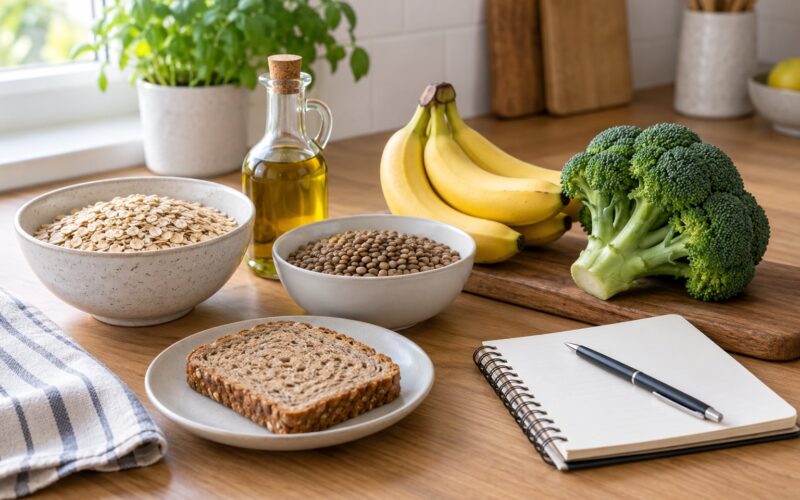
- A notebook or phone note for writing down what a portion looked like
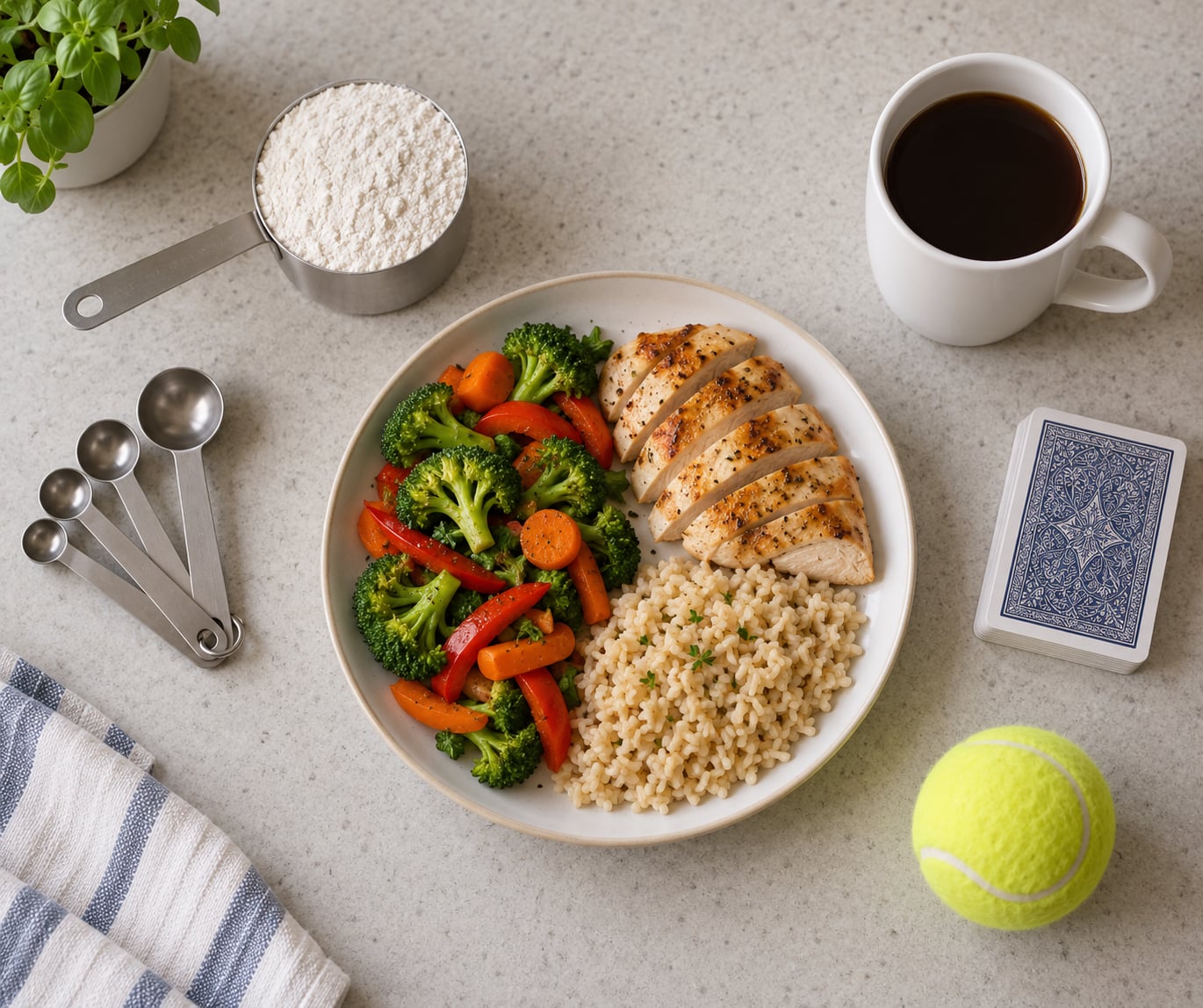
A 12-ounce coffee mug, a standard tennis ball and a deck of cards round out the reference list. None of it takes counter space.
How to Measure Food Without a Scale, Step by Step
Learning how to measure food without a scale takes about ten minutes of setup. After that it is mostly repetition, and repetition is what makes an estimate useful week after week.
1. Learn the basic measuring-tool references
Start with the difference between volume and weight. A cup measures how much space food takes up, not how much it weighs, which is why a cup of flour and a cup of chopped spinach are nowhere near the same.
- One teaspoon is about 5 mL. A tip of your thumb roughly matches it.
- One tablespoon is about 15 mL, three level teaspoons, and roughly the size of your whole thumb from knuckle to tip.
- One standard cup is 240 mL, close to a closed fist.
- One dry staple such as sugar or flour in a tablespoon usually lands somewhere between 10 and 15 g.
Fill the cup level and level off across the top with the back of a spoon or a straight edge. For flour, spoon the ingredient into the cup and level it rather than scooping, because scooping packs it tight and pushes the weight up. Dense or moist foods behave differently again, which is why a spoonful of peanut butter and a spoonful of oats are not the same portion.
You will know it worked when two servings of the same food look identical in the bowl.
2. Use your hand to measure food without a scale
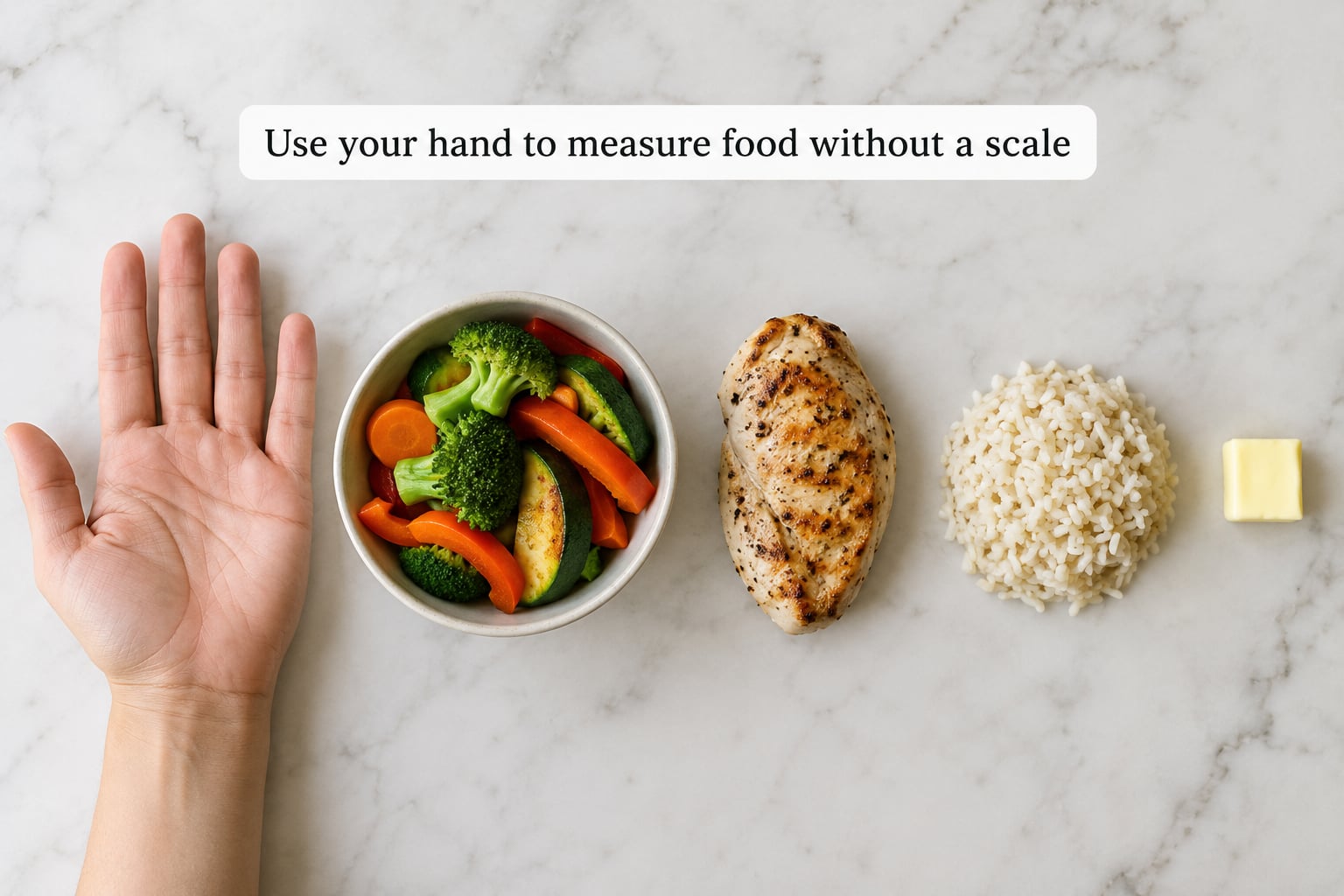
Your hand travels with you everywhere, which makes it the most practical measuring tool available.
- Palm (without fingers): roughly 3 to 4 ounces of cooked protein, such as chicken, fish or lean beef
- Closed fist: about one cup of cooked rice, quinoa, pasta or cereal
- Cupped hand: about one cup of vegetables, or a serving of most fruits
- Thumb: roughly one tablespoon of added fat, so butter, oil, nut butter or creamy cheese
- Small handful: a serving of nuts, roughly 1 ounce
- Dice: three standard dice sit next to about 1 ounce of cheese
People with smaller hands get smaller portions from these references, and larger hands get larger ones. That is not a flaw in the method, it is just the reality of using a body-based ruler. Treat these as repeatable estimates rather than exact equivalents, and check them against a label or a scale whenever the number genuinely matters to you.
3. Divide food onto a familiar plate
The plate method is the easiest system to keep, because you never have to remember a gram figure. Use the same plate every time and your eye learns the ratios quickly.
- Fill half the plate with non-starchy vegetables, salad or fruit
- Fill one quarter with protein, about a palm’s worth
- Fill the remaining one quarter with a carbohydrate such as rice, potatoes or bread, about a cupped hand
A 9-inch plate works well for most adults. A smaller plate makes the same food look larger, and readers on weight-loss forums say switching down to a smaller bowl or plate is often the single change that made portion sizes feel normal to them. One-third plate protein and two-thirds vegetables is the usual adjustment when you are cutting calories or lifting heavier.
4. Compare portions with familiar objects
Objects work anywhere the plate method does not, including a restaurant table or a hotel breakfast.
- Deck of cards: about 3 ounces of cooked steak, chicken or fish
- Three dice: about 1 ounce of cheese
- Baseball or tennis ball: about one half cup of a soft food such as rice, mashed potato or berries
- Fist: about one cup of grain or one cup of chopped vegetables
- Thumb: about one tablespoon of oil, butter or nut butter
- Standard mug: roughly 200 to 250 mL, or 8 to 10 ounces
Use these as loose visual guides rather than exact nutrition equivalents. Package and serving sizes differ from company to company, so a fistful of one cereal is not the same as a fistful of another.
5. Learn the usual serving sizes of packaged foods
The nutrition label answers most measuring questions faster than any kitchen tool. Look at the serving size first, then at servings per container.
- One listed serving may be 2 tablespoons of salad dressing or a whole cup of cereal
- If the container says 2.5 servings, a third of the bag is a serving
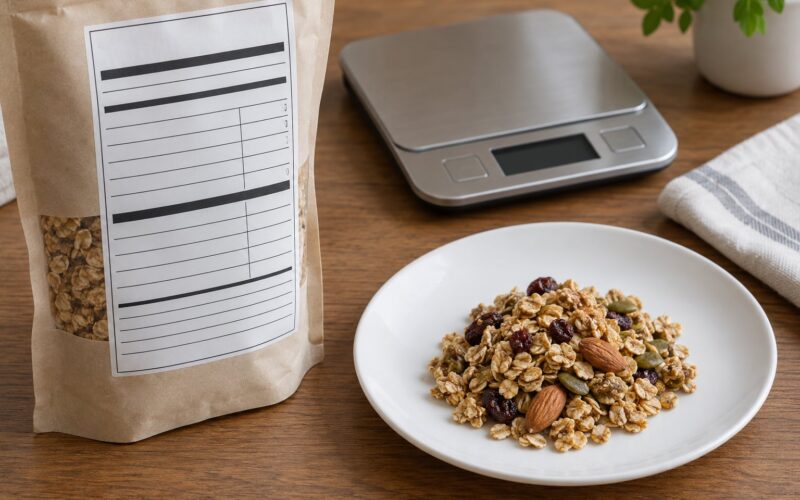
- Check the label first for nuts, oils, chips, crackers, nut butters and sweets, since small amounts carry most of the calories
- For anything you eat daily, write the serving size on the container in marker
Once you have done this for the five foods you eat most, you stop guessing entirely for those items.
6. Practice and check your estimates
Borrow a kitchen scale from a friend for one session, or buy a basic one if you can spare the counter space. Weigh three or four foods you eat regularly and compare the results with what you would have served yourself.
Most people find their hand portions ran noticeably large for calorie-dense items like nut butter, cheese and oils, and reasonably close for vegetables and meat.
Write those corrections in your notebook: a real example is one cupped hand of rice weighs about 200 g, not the 300 g I assumed. Re-check after a few weeks, because portion estimates drift as your habits change. Keep whichever reference you found easiest and most accurate, and drop the rest.
Common Mistakes
Almost every failure with scale-free measuring comes down to treating a rough estimate as an exact figure. These three show up constantly.
Mistake 1: Treating every visual guide as exact
Visual guides shift with your body size, the density of the food and how it was prepared. A palm of shredded cheese and a palm of grilled chicken fill the same space but weigh very differently.
The fix: use visual guides as repeatable estimates rather than measurements, and verify the foods you eat most often against a label or a scale whenever accuracy matters to your goal. One check per food is enough.
Mistake 2: Packing dry ingredients
A cup scooped straight from the flour bag can hold noticeably more than a cup spooned in and leveled, and the same applies to oats, rice and finely chopped ingredients.
The fix: spoon the ingredient into the cup, level off the top, and avoid dipping your fingers in the measuring utensil, which packs extra food into every serving.
Mistake 3: Guessing restaurant and takeout portions
Oversized plates and deep bowls distort your sense of scale before you take a single bite, and restaurant servings vary far more than homemade ones.
The fix: ask for a half portion, divide the meal onto your own plate right away, or order a side instead of a second starch. If you box half, you also get tomorrow’s lunch for free.
Quick Portion-Control Tips
- Serve food directly onto the plate and keep the pan in the kitchen
- Use the same plate and bowl every time so your visual memory stays calibrated
- Measure calorie-dense ingredients first, before you relax
- Pour nuts and chips into a small bowl instead of eating from the bag
- Keep your hand and object references in sight near the prep area while you learn them
Frequently Asked Questions
Can I accurately measure food with my hands?
Hands work well for consistency, not precision. A palm of protein, a fist of grains and a thumb of fat stay repeatable because you use the same hands every time. Expect an error of a few ounces on meat and a wider margin on foods like nut butter, cheese and oils. If you track calories for medical reasons, verify portions with a label or a scale rather than relying on hands alone.
What can I use to measure food if I have no measuring tools?
Your hand, a standard dinner plate, a mug, a deck of cards and a baseball all work as reference points. A palm covers protein, a closed fist covers a cup of grains or vegetables, a thumb covers a tablespoon of fat and a fistful covers most nuts. Pick one reference per food group and stick with it, because a consistent estimate is more useful than an accurate one you abandon.
How can I estimate a portion at a restaurant?
Ask for a half portion before the food arrives, or order the entree and divide it onto your own plate immediately. Skip the bread basket if you want to control the starch, and treat fries or a side salad as the only second item. If you box half, check the label at home and log it, which turns a guess into a number you can trust.
Is a kitchen scale useful if I do not want to weigh everything?
Yes, and most people use one for calibration rather than every meal. Weigh three or four foods you eat daily, compare the numbers with your hand and plate estimates, and note the difference. After that you only need the scale for baking, nut butters, oils and anything a doctor has asked you to track precisely. Flat counter space is the main reason people skip it.
When should I ask a registered dietitian for help with portions?
Ask when portion limits are part of a medical plan rather than a personal goal. That includes diabetes, kidney disease, heart conditions, eating disorder recovery, food allergies and any prescribed intake. A dietitian can give you specific targets and adjust them over time. Bring a week of your food log so the conversation starts with real numbers instead of estimates.
Conclusion
Start tonight with one breakfast food. Scoop it into a familiar cup or compare it to your palm, write down what that looked like, and check it against the label the next time you are in the kitchen.
Learning how to measure food without a scale is about building one reference and trusting it. Once the cup, plate and hand portions feel automatic, you can track portions on travel days, in restaurant meals and in a small kitchen where a food scale never fit, and your logging will hold up instead of collapsing.