If you have ever finished a 30-minute walk and watched your watch report 300 calories, then checked with the treadmill and seen a completely different number, you are not doing anything wrong. Fitness tracker calorie burns are estimates, not measurements, and lab comparisons put the error anywhere from about 15% to more than 90% depending on the device and the activity. That single fact changes how the number should be used, which is what this guide is about.
The useful news is that trackers are genuinely good at other things. Heart rate readings in the same studies landed within a few percent of laboratory monitors, and step counts are close enough to be motivating. Calories are the weak spot in an otherwise useful device.
Table of Contents
- How Accurate Are Fitness Tracker Calorie Burns?
- How accurate are fitness tracker calorie burns across brands?
- Why Do Fitness Trackers Estimate Calories Instead of Measuring Them?
- Active calories are not the same as calories burned
- How Accurate Are Different Types of Fitness Trackers?
- Why Can Your Calorie Estimate Be Off by Hundreds?
- Which Activities Produce the Most Reliable Estimates?
- How Can You Improve a Fitness Tracker’s Calorie Estimate?
- A three-step test you can run this week
- Should You Eat Back the Calories a Tracker Says You Burned?
- Frequently Asked Questions
- How many calories off can a fitness tracker be?
- Why does a tracker show more exercise calories than I lose in weight?
- Are calorie estimates based mainly on my weight?
- Are modern smartwatches more accurate than basic fitness trackers?
- Should I eat the calories my fitness tracker says I burned?
- What Should You Do With Your Tracker’s Number?
How Accurate Are Fitness Tracker Calorie Burns?
Not very. Studies comparing wrist devices against laboratory measurement have found calorie error rates from roughly 15% up to about 93%, with a 2025 meta-analysis of 45 studies putting average calorie accuracy at 56.63%. In plain terms, treat the number as a direction, not a quantity.
Each metric on a wearable has its own accuracy story, and calories come last every time.
| What the device measures | Typical accuracy | Verdict |
|---|---|---|
| Heart rate | About 94% to 98% accurate in lab walks, runs and cycles | Reliable enough to trust |
| Step count | Roughly 80% to 85% on average across brands | Good, with some overcounting |
| Calories burned | About 45% to 75% accurate, with outliers above 90% error | Least reliable of the three |
| Exercise calories only | Sometimes within 10% to 23% when a real calorie figure exists | Better, still an estimate |
A 2017 Stanford study tested seven devices against a laboratory reference on a treadmill, a stationary bike and while sitting. Heart rate error ran from 2% on an Apple Watch to 6.8% on a Samsung device. Energy expenditure error ran from 27.4% on the Fitbit Surge all the way to 92.6% on a PulseOn.
The 2025 meta-analysis widened the picture. Apple Watch came in at 71.02% calorie accuracy, while Garmin sat at 48.05%. Apple Watch heart rate accuracy was 86.31% and Garmin step accuracy was 82.58%. None of those calorie figures should ever be used to set a food target.
How accurate are fitness tracker calorie burns across brands?
No brand is reliably the best, and the rankings flip depending on the study, the lab setup and the activity. One review of the research reported Garmin underestimating calorie burn 69% of the time, Apple overestimating 58% of the time, and Polar overestimating 69% of the time. A September 2026 study covered in the news found Apple the most accurate while Garmin and Samsung overestimated the most.
That contradiction is the point. One watch is not the accurate one and the others are not wrong. They are guessing differently, and the guess changes with the activity, the day and the person wearing it.
Why Do Fitness Trackers Estimate Calories Instead of Measuring Them?
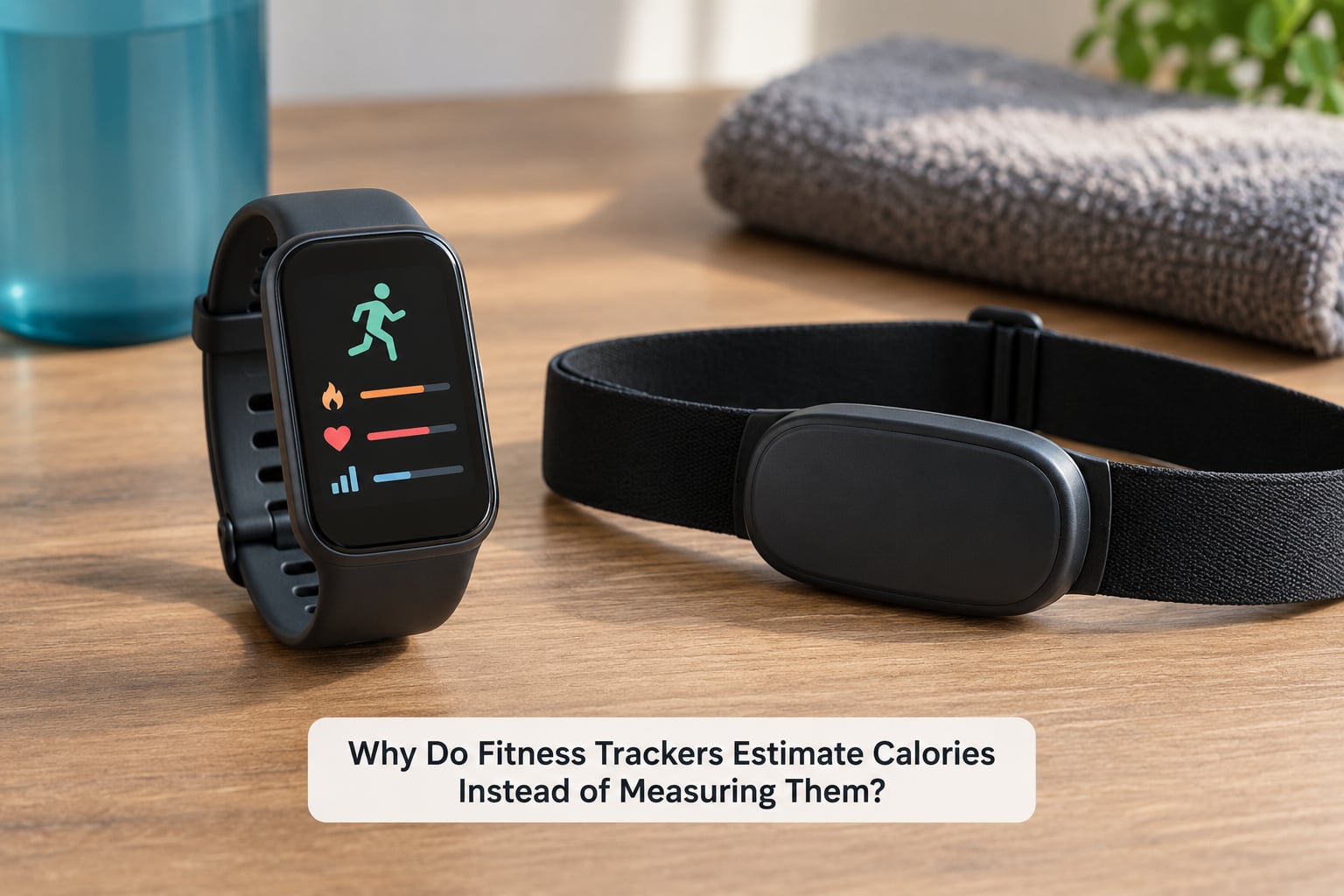
Because no wrist device can measure calories directly. Calories are a unit of energy, and the only practical way to measure how much energy someone uses is indirect calorimetry: measuring the oxygen you inhale and the carbon dioxide you exhale, then converting that gas exchange into an energy figure. That requires a lab, a mask and about 40 minutes of lying on your back.
A tracker instead runs a three-step guess. First, an accelerometer notices repetitive motion and tries to name the activity. Second, an optical sensor shines light at your skin and reads your pulse. Third, a proprietary formula combines those readings with your age, weight and sex to produce a number.
That formula is the weak link. Manufacturers do not publish it, and researchers have no way to check it. On reddit’s r/whoop, users are blunt about this: there is no tracker that measures calories, because the technology to do that on a wrist does not exist yet.
Active calories are not the same as calories burned
Most apps show two numbers and the confusion starts there. Total calories estimate your whole day, including the calories your body burns just existing. Active calories estimate the extra above that resting baseline.
The resting baseline is a problem because trackers estimate it from height, weight, age and sex using population averages. A muscular 70 kg person and a sedentary 70 kg person share those inputs but burn very different amounts at rest. Body fat percentage changes the number substantially, and most devices never measure it.
This matters because the biggest errors usually come from the baseline, not the workout. If a device assumes your resting burn is 200 calories too low, every number it shows that day is wrong in the same direction.
How Accurate Are Different Types of Fitness Trackers?
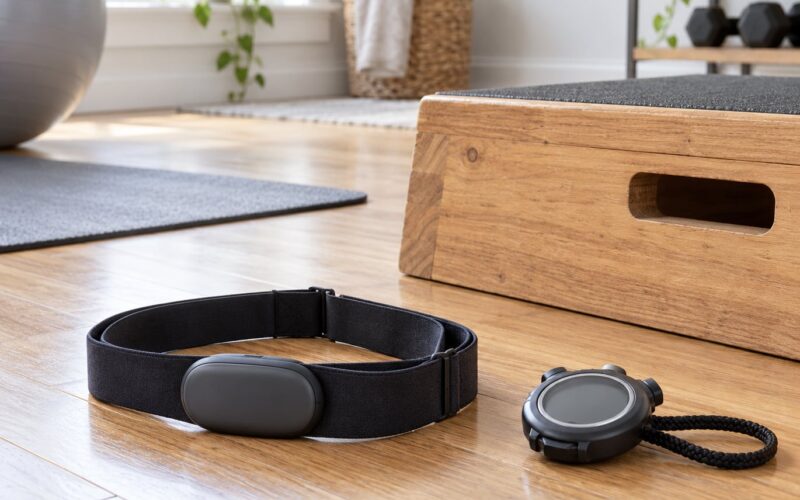
Four categories, four different levels of guesswork. A phone app relies on your pocket or hand and knows little about your body beyond what you typed into your profile. A wrist band adds a wrist accelerometer and an optical pulse sensor, which is a clear improvement but still an inference. A smartwatch does the same thing with better sensors and more frequent sampling. A chest strap reads electrical signals from your heart directly rather than measuring blood flow through skin, so it tracks heart rate accurately but still leaves the final calorie number to an algorithm.
Only laboratory indirect calorimetry actually measures energy expenditure. That is why every accuracy figure in every study is a comparison against it.
| Device type | What it measures directly | Typical calorie error |
|---|---|---|
| Phone app | Movement at hip or hand, no pulse data | Wide, often above 50% |
| Basic wrist band | Wrist motion and optical pulse | Roughly 20% to 60% |
| Smartwatch | Wrist motion, optical pulse, GPS | Roughly 15% to 45% |
| Chest strap | Heart rhythm, no motion estimate | Better pulse data, still an estimated burn |
| Lab indirect calorimetry | Oxygen and carbon dioxide at the mouth | The reference standard |
Newer hardware is not automatically better here. Studies routinely test hardware that is already a year or two old by the time results appear, so the device on your wrist this year has probably never been independently tested at all.
One more limit worth knowing: several standards bodies have pushed wearable makers toward a 10% accuracy target for calorie measurement, and consumer devices generally do not meet it.
Why Can Your Calorie Estimate Be Off by Hundreds?
There are about eight common causes, and most people hit at least three of them.
Heart rate lag. Your pulse climbs before your body actually starts burning extra energy, and it stays high after you stop. A device that keys off heart rate and time often reads the workout before and after it happened.
Generic equations. The formula was built on an average study population. If you are far from that average in fitness level, body composition or training age, the error grows.
Assumed body fat. Devices infer body composition from weight alone unless you own a smart scale. Two people at the same weight can differ by hundreds of calories a day at rest.
Arm movement mistaken for steps. Typing, washing dishes and shuffling around a kitchen get logged as activity. Reddit users on r/FitnessTrackers report watch totals that keep climbing during a desk-bound afternoon, and other threads on r/NoStupidQuestions show 11,000 steps logged on days spent mostly sitting.
Workout intensity the sensor cannot see. Lifting 100 pounds and moving it slowly looks a lot like lifting it quickly to an accelerometer. Static holds register almost as nothing.
Wear location. A watch worn loosely bounces, and the readings drift. A watch on a non-dominant arm with a tight fit reads better than one sliding on the other wrist.
Age and fitness level. A 60-year-old and a 25-year-old at the same heart rate are burning different amounts. Most algorithms average over that gap.
Non-exercise activity. The energy you spend standing, fidgeting and walking around your kitchen is called non-exercise activity thermogenesis, and it can vary several-fold between people. Trackers apply one average value to everybody.
Skin tone has also come up in recent research as a factor in optical pulse readings, since the sensor infers heart rate from light bouncing off blood under the skin. A September 2026 study looked at how body composition and skin tone affect these readings, and the effect is small at rest but grows during movement.
Which Activities Produce the Most Reliable Estimates?
Steady walking, running and cycling get the closest estimates, and the reason is simple: they are rhythmic and repetitive. An accelerometer can count the pattern cleanly, and heart rate stays in a predictable range relative to effort.
Strength training sits at the other end. Rest periods, sudden spikes, isometric holds and short bursts of movement all confuse the sensor, so estimates during lifting are effectively invented. HIIT has the same problem, with heart rate jumping around while movement patterns change every few seconds.
Swimming is hard for wrist devices because the arm moves through water rather than through air, and pool sessions often log fewer calories than a comparable walk on land. Chores and errands fall somewhere in the middle: real movement, but irregular and hard to categorise.
Here is the useful summary. If you mostly walk, run or cycle, your device is giving you a ballpark you can work with. If you lift, do intervals or swim, treat the number as decorative.
How Can You Improve a Fitness Tracker’s Calorie Estimate?
Five changes move the number closer to reality. None of them turn an estimate into a measurement.
1. Fill in your profile honestly. Age, height, weight and sex drive the resting burn calculation. If you have a smart scale, enter a body fat figure too, since that is the input devices most often skip.
2. Wear it correctly. Snug, about a finger’s width above your wrist bone, on the non-dominant arm, and always in the same spot. A loose watch reads worse than a tight one in every study.
3. Enter workouts by hand. Logging a session manually lets you record the real activity, its real duration and its real intensity. Automatic detection is convenient and wrong often enough that manual entry is worth the extra 15 seconds.
4. Add the sessions the watch missed. Any hard interval session that started and ended with sitting gets lost. Logging those by hand recovers the biggest missing chunk of your week.
5. Stop double counting. If your watch counts a walk and then a separate active-calorie figure for the same walk, subtract one before using the total. Plenty of people quietly eat back calories twice from a single workout.
You can also run a simple self-check. Take a 90-minute steady outdoor ride and note the calories your watch reports for the whole trip. Resting burn estimates for adults usually sit somewhere in the 1,200 to 1,800 calorie range per day, so the net extra calories burned by a 90-minute ride should land in the same neighborhood as the watch’s total minus your resting baseline. If the watch says you burned 900 calories, your net exercise burn was probably closer to 500.
A three-step test you can run this week
Step one, check the heart rate first. Run for six minutes, then stop the clock and take your pulse manually at your neck for 15 seconds. Multiply by four and compare with what your watch showed at the end of the run. A few beats per minute of difference is normal. A gap of 15 or more means your pulse sensor is the weak link, and every calorie estimate on that device inherits the error.
Step two, compare the same effort twice. Do one 30-minute steady walk, one outdoors and one on a treadmill, keeping the pace and incline similar. Write down both readings. If they differ by 30% or more, one of them is inventing a number, and the treadmill setting in particular is worth knowing about before you trust it. If they land close together, at least the two devices agree with each other, which is more than most people check.
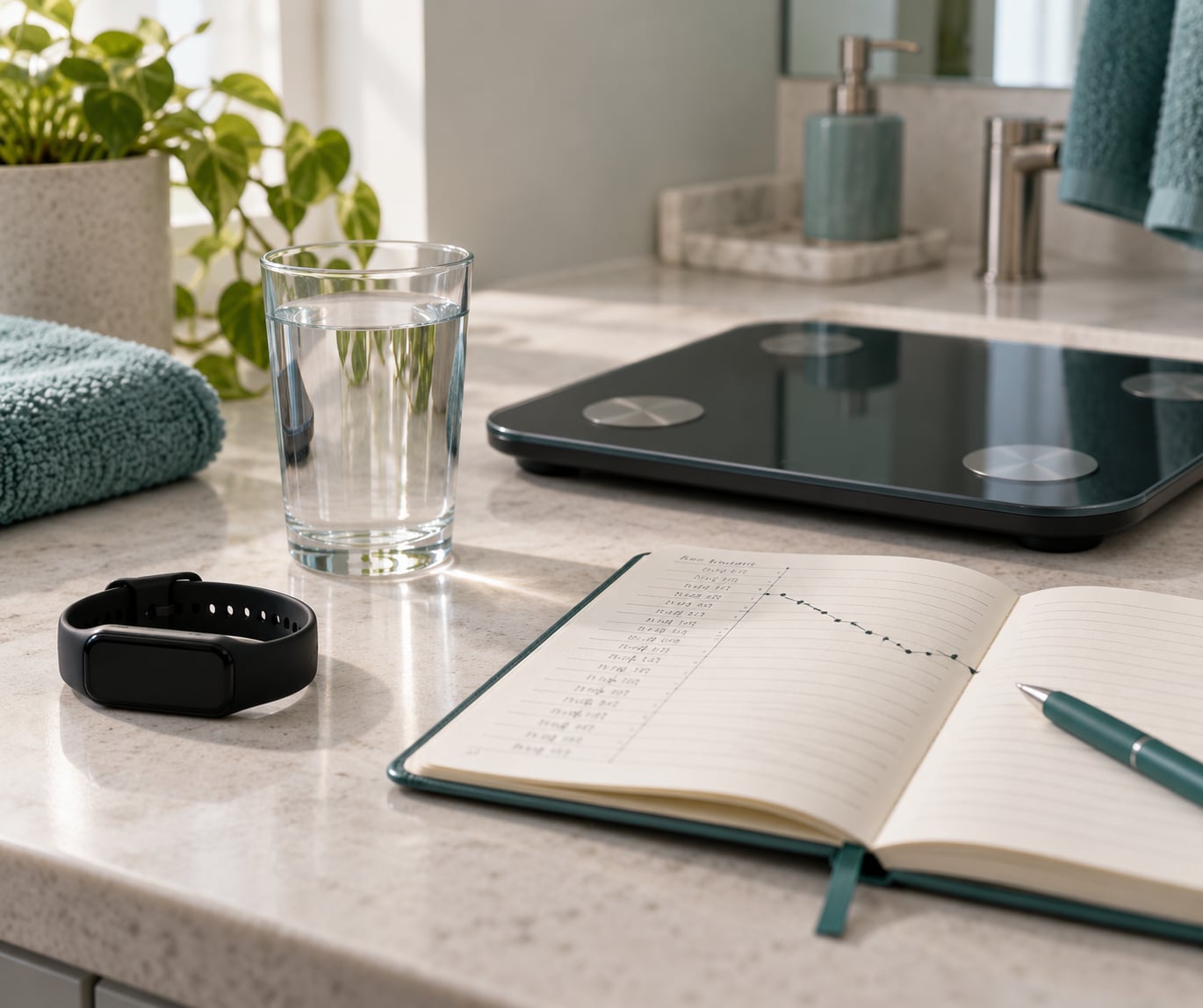
Step three, compare total burn against the scale. Pick one consistent session, such as a 45-minute brisk walk done at the same time of day for a week. Note the watch’s active calories each day, and weigh yourself the next morning under the same conditions. The number will bounce around with water, sleep and salt, so this is not a precise measurement. But if your active calories rise steadily across the week while your weight never moves at all, your device is inflating your burn and you have just saved yourself a bad eating decision.
Should You Eat Back the Calories a Tracker Says You Burned?
Usually not, and this is where bad advice does the most damage. Eating back a number you cannot trust quietly cancels your deficit.
Here is the arithmetic. Your watch logs a 500 calorie ride. Independent analysis of fitness trackers suggests the real burn on that ride might be around 425 calories, and of that, somewhere near 325 calories is genuinely extra energy above what you would have burned sitting still. Now add in the error margin: a food label can legally be off by up to 20% in either direction, and tracker estimates run another 10% to 23% either way. The two errors can land in the same direction and stack.
If you eat back 500 calories after a ride that cost you 325, you have given back roughly two-thirds of a workout you just did. On a treadmill, watch and console all reading 500 does not make 500 true, because two of the three are making the same kind of guess.
What to do instead:
Log your food honestly and let the scale decide whether you are losing weight. Weigh yourself the same time each morning, look at the weekly average rather than a single day, and judge progress over four to eight weeks. Keep using the watch for heart rate during training, for steps as a nudge toward daily movement, and for sleep and recovery signals.
Treat the calorie figure as a reason to be consistent, never as permission to eat.
One caution. Obsessive logging can turn into rigid or disordered eating patterns, especially when the number is treated as a grade on your character. If tracking food and calories starts causing anxiety, obsessive guilt or compensatory behaviour, step back from it and talk to a doctor or a registered dietitian. Same goes if you have a history of disordered eating.
Frequently Asked Questions
How many calories off can a fitness tracker be?
Lab studies comparing wearables against indirect calorimetry have found calorie errors from roughly 15% to about 93%. A 2017 Stanford test showed 27.4% median error on a Fitbit Surge and 92.6% on a PulseOn, while a 2025 meta-analysis of 45 studies put average calorie accuracy at 56.63%. In practice that means a 300 calorie figure could really be anywhere from about 210 to about 420.
Why does a tracker show more exercise calories than I lose in weight?
Because calorie burn and weight change are not the same measurement, and burn carries an error in both directions. A pound of fat holds roughly 3,500 calories, but a single workout of 300 to 500 calories only moves weight by a fraction of a pound, which is easily hidden inside normal daily water shifts. Over weeks, real fat loss follows real intake, not logged burn.
Are calorie estimates based mainly on my weight?
Weight is one input among several, alongside height, age and sex, and it feeds the resting burn calculation rather than the workout figure. Devices also use motion data and pulse readings from an accelerometer and optical sensor. None of that includes body fat percentage unless you enter it, which is a large source of error between two people of the same weight.
Are modern smartwatches more accurate than basic fitness trackers?
They tend to be a bit better because the sensors sample more often and the activity detection is smarter, but no manufacturer publishes a verified margin of error for calories. Studies show every category failing against the same lab standard. Recent research also has a lag problem: the hardware tested is often a year or two old by publication, so your current device may never have been independently tested.
Should I eat the calories my fitness tracker says I burned?
Most people should not. Independent analysis suggests a logged 500 calorie workout may represent closer to 325 net calories above resting burn, and errors stack with the 20% margin allowed on food labels. Eating back the full displayed figure can erase most of the deficit you created. Use the number as a prompt to keep moving and judge progress by your weight trend over several weeks.
What Should You Do With Your Tracker’s Number?
Start by moving it out of the calorie column. The figure is an estimate with a wide error band, and the fastest way to get a wrong answer out of your head is to stop treating it as data.
Here is the practical version. Weigh yourself the same time every morning and follow the weekly average, because that is the only number that reliably shows whether you are losing weight. Keep logging food, since intake drives fat loss far more than any estimate of burn. Use the watch for heart rate during training, for a step goal that gets you moving, and for sleep and recovery signals, which are where it genuinely helps.
If two devices disagree by 300 or 400 calories, which happens often enough that Apple to Garmin switchers on r/Garmin describe it as a shock, that is not a reason to pick a winner. It is proof that the number is not a measurement. Pick one device, keep it for the length of your plan, and let the scale and the mirror decide whether it worked.
That is how accurate are fitness tracker calorie burns in practice: good enough to keep you consistent, not good enough to decide what you eat. Get more detail on building a sustainable deficit in our weight loss guides.