Yes. Walking after a meal lowers post-meal blood sugar by making working muscles pull glucose out of your bloodstream, and the effect shows up in the hour that follows eating. Short walks of 10 to 15 minutes started within about 30 minutes of finishing a meal are the version most studies back.
It is general information about movement and glucose, not a treatment plan. If you have diabetes, are pregnant, or take medication that lowers blood sugar, talk to your doctor before you build this into your routine.
Table of Contents
- Does Walking After Meals Help With Blood Sugar?
- What Does the Research Say About Walking After Meals?
- How Does Walking Affect Blood Sugar?
- How Long Should You Walk After Eating?
- What Is the Best Time to Walk After a Meal?
- Can a 10-Minute Walk Make a Difference?
- How to Build a Post-Meal Walking Routine
- Does Walking After Every Meal Work for Everyone?
- Walking After Meals and Weight Loss
- Safety and When to Seek Medical Advice
- Frequently Asked Questions
- Is a short walk after eating better than a long workout?
- Should I walk immediately after eating or wait?
- How much walking is generally recommended each day?
- Can walking after meals replace medication or diabetes treatment?
- How can I tell whether post-meal walking is helping me?
- Is walking after dinner suitable for weight loss?
- Conclusion
Does Walking After Meals Help With Blood Sugar?
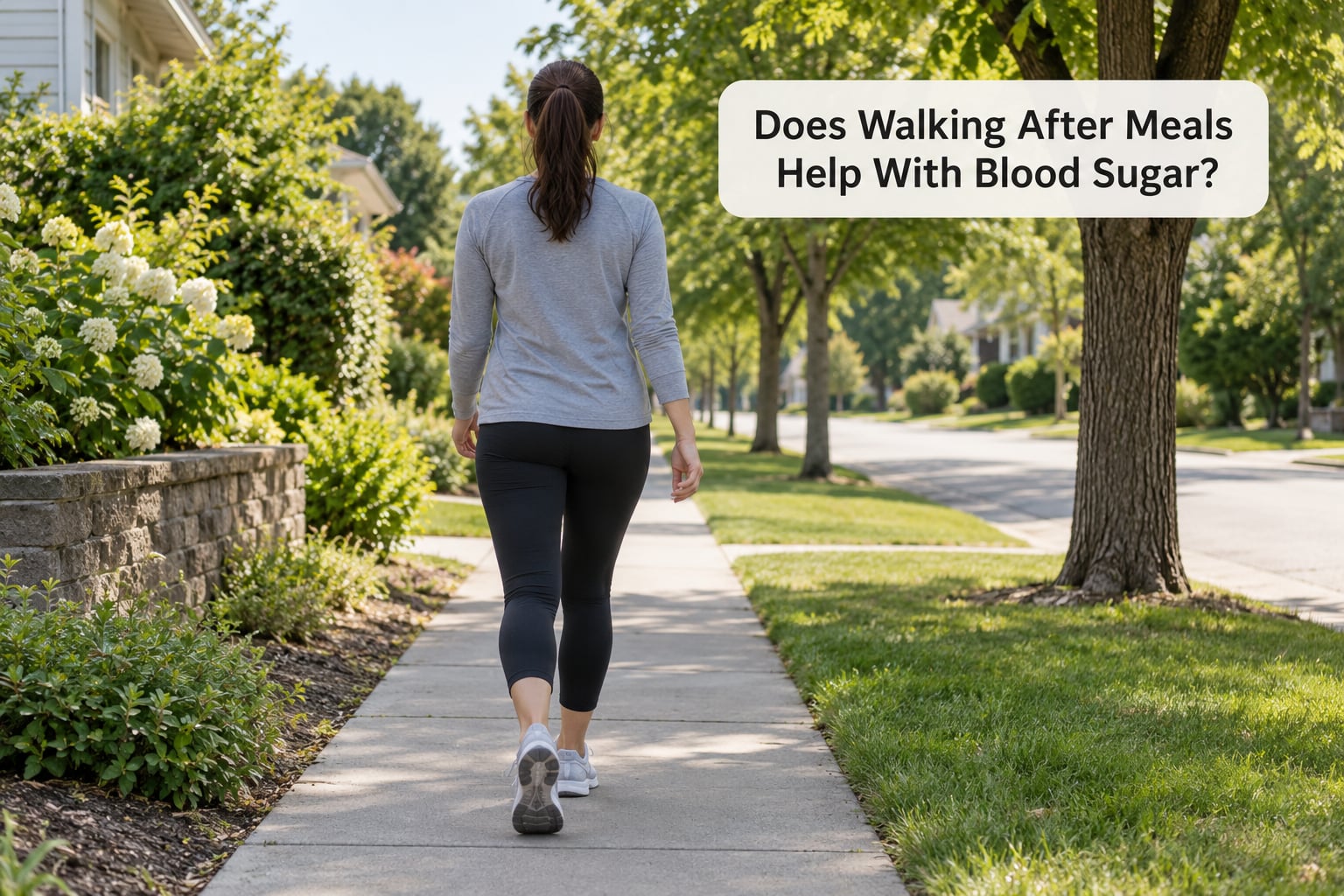
The honest answer is yes, with a caveat that trips people up. Walking blunts the rise in blood sugar after a meal. It does not erase it. A person who eats a bowl of white rice will still see a rise, and the walk makes that rise smaller and shorter-lived rather than removing it.
The rise in blood sugar that follows eating has a name: postprandial glucose. For most people it builds from the end of the meal, peaks somewhere between 30 and 90 minutes, then falls back toward baseline over the next two hours or so. A post-meal walk is simply a walk started in that window.
Why the distinction between reducing and avoiding matters: anyone who expects a walk to cancel out a large meal will get discouraged the first time they check a meter. Anyone who understands it as smoothing the curve will keep doing it for years, because it compounds.
What Does the Research Say About Walking After Meals?
Two papers do most of the work behind the modern version of this advice. Both used the same basic design, comparing people who walked after eating with people who sat still, so it is worth saying plainly that the comparison is against rest, not against fasted exercise.
Reynolds and colleagues, writing in Diabetologia in 2021, put people through standardized meals and then either 15 minutes of walking or 30 minutes of walking after each of three meals across a day. The surprise finding, and the one that surprised the researchers too, was that the 15-minute walks did a better job than the 30-minute ones on post-meal glucose.
A few months earlier, Frampton and colleagues at Imperial College London published a meta-analysis in Sports Medicine pooling 51 studies of exercise and post-meal glucose. Their conclusion was that the timing of activity matters more than its length, and that light activity done soon after eating is where the return is.
So does walking after meals help with blood sugar? The evidence says yes for the hours following a meal. The same work also found post-meal walking lowered the insulin response to the meal in people without diabetes, which may matter more over years than the single dip in glucose does.
Two limits on the evidence. The largest meta-analysis drew mainly from healthy adults without diabetes, so the effect sizes are modest and may look different in someone with insulin resistance. And the studies measured glucose, not long-term outcomes, so nobody should read this as a substitute for clinical care.
How Does Walking Affect Blood Sugar?
Three things happen, and only the first is obvious.
1. Working muscles pull glucose in without needing insulin. Skeletal muscle holds glucose transporters inside the cell, tucked into small pockets in the membrane. When the muscle contracts, those transporters migrate to the surface and glucose flows in. The pathway is partly insulin-independent, which is why a brisk walk still blunts a spike at times when insulin response is already sluggish.
2. The insulin response to the meal drops. With less glucose left in the blood, the pancreas releases less insulin for the same meal. Lower insulin after a given meal is a good sign for anyone worried about insulin resistance, because high insulin after repeated meals is part of what drives resistance in the first place.
3. Glucagon and glucose homeostasis shift slightly. Glucagon is the hormone that tells the liver to release stored sugar. Work done in healthy volunteers found post-meal walking nudges this balance toward steadier levels rather than the sharp up-and-down pattern that comes from sitting.
Here is the part people find counter-intuitive: the walk is not removing calories. The glucose goes somewhere, and mostly it goes into the muscle you just used, where it is burned as fuel or stored as glycogen for tomorrow. That is why the effect is short-lived and why you have to repeat it.
How Long Should You Walk After Eating?
Any amount beats none. That said, the research clusters around a few practical ranges, and the table below is the clearest way to read them.
| What you do | What the research shows |
|---|---|
| Stand instead of sitting | Clearly better than sitting. Standing alone gives a small improvement; any real step count beats it. |
| 2 to 5 minute walk | The floor, not the target. Enough to interrupt sitting and start glucose uptake, and a fine starting point for beginners. |
| 10 to 15 minute walk | The range most studies point to, and the sweet spot for most people who can manage it. |
| 30 minute walk | Useful, but the 2021 Diabetologia work found 15 minutes per meal outperformed 30 minutes per meal on post-meal glucose. |
| 3 x 15 minutes across the day | Comparable to one 45 minute moderate session, and easier to fit into a normal day. |
Pace matters more than distance. The useful target is a moderate intensity, which feels like being able to talk but not sing. If you are gasping, you have gone past the point where the routine is easy to keep.
There is no single magic number. Someone with a desk job and a short lunch break will get more from three 10-minute walks than from one aspirational 45-minute walk they keep skipping.
What Is the Best Time to Walk After a Meal?
Start within 30 minutes of finishing. Before, during, or right at the start of the rise all beat an hour later, because the muscles are warm and the glucose is already in the bloodstream and waiting.
People with type 1 diabetes report a faster curve. In a long-running thread on r/diabetes_t1, one commenter described jumping straight onto the treadmill after eating because their levels climb in 15 to 20 minutes rather than the 30 to 90 minutes general guidance assumes. If your own readings spike fast, trust that pattern and start sooner.
After dinner has a separate benefit. A walk in the evening blunts the largest meal of the day and helps digestion, but keep it moderate rather than hard if you are trying to sleep well, since vigorous evening exercise can raise your heart rate close to bedtime.
Can a 10-Minute Walk Make a Difference?
Yes, and this is the question people argue about most on forums. The 10-minute mark is not a compromise or a placebo; it sits inside the range the studies back. A single 10-minute walk after the biggest meal of the day is a reasonable place to start even if you do nothing else.
The part that is genuinely true: walking reduces a spike, it does not prevent it. One commenter in r/type2diabetes put it well, saying a short walk lets them eat a little more carbohydrate without spiking. Another, in r/diabetes_t2, described a 15-minute walk within 30 minutes of eating as doing real work to mute the blood sugar impact, while being clear it did not erase the spike.
If weather, mobility, or a packed calendar gets in the way, work down the ladder rather than skipping. Pace around the kitchen. Stand and do the dishes. March in place during a commercial break. One person in r/prediabetes keeps a walking pad out and gets movement in whenever it fits, which is the low-friction version that actually survives a bad week.
How to Build a Post-Meal Walking Routine
The habit fails when it is attached to willpower. It works when it is attached to something you already do. The four-week progression below is built for that.
| Week | What to do |
|---|---|
| Week 1 | One 5 to 10 minute walk after your largest meal. Same time, same shoes, no negotiation. |
| Week 2 | Add a second walk after lunch or breakfast. Keep both gentle. |
| Week 3 | Extend the walks to 15 minutes and pick up a slightly brisker pace. |
| Week 4 | Keep the three 15-minute walks and add one longer 30 to 45 minute walk somewhere in the week. |
Stack it onto something fixed. Lunch, then a walk around the block before you sit back down. Dinner finished, shoes already by the door. The trigger is the meal, not the clock, because meals move around more than alarms do.
If you have already trained that day, walk anyway. A short post-meal walk is not a second workout and does not compete with it, which is an objection that comes up often enough to be worth answering directly.
Walk after the meal you most want to smooth, first. For most people that is dinner, because it is the biggest and the closest to bedtime. Add the other meals when the habit is boring rather than when it is exciting.
One thing to be careful about: post-meal walking is not a way to earn back food. Framing it as punishment tends to collapse within a month, and it also misses the point. You are doing it for how you feel afterwards, not to offset dinner.
Does Walking After Every Meal Work for Everyone?
No, and the differences are worth knowing about before you build a plan around it.
Type 2 diabetes and prediabetes. These groups tend to get the most visible benefit, because the underlying problem is exactly the one walking addresses. Keep the conversation with your doctor open, since you may be able to discuss medication timing alongside your walks.
Type 1 diabetes. Activity changes how insulin and carbohydrate are handled, which is why dose decisions around a post-meal walk deserve a conversation with your diabetes team rather than a guess from an article.
Gestational diabetes. Here is the honest counterpoint. In r/GestationalDiabetes, one commenter described safe meals still sending her readings up sharply and said walking was never enough for her. If that is your experience, it is not a failure of effort. Gestational glucose management is a clinical situation, and the numbers you get are information for your care team, not a verdict on your routine.
Joint pain or limited mobility. A 5-minute walk at a slow pace still moves glucose. So does a chair-based routine that works the legs. Do not let an ideal of 15 minutes stop you starting at 5.
Meal composition shifts the result too. A walk after a high-carbohydrate meal has more glucose to move, so the visible effect is larger. Someone in r/prediabetes asked whether walking could avoid a spike entirely, and the useful answer is that it lowers the peak and shortens the time it spends high.
Walking After Meals and Weight Loss
Walking after meals supports weight loss indirectly, and calling it a direct method oversells it. A 15-minute stroll is not a large calorie burn, and treating it as one is how people end up frustrated.
What it does do is make an active routine easier to keep, add up across three meals a day, and sit alongside the eating pattern that actually determines results. Walking after dinner is fine for weight loss, provided the walk is not the only thing you are changing.
There is no good reason to feel guilty about a post-meal walk. It is a small movement, and small movements add up.
Safety and When to Seek Medical Advice
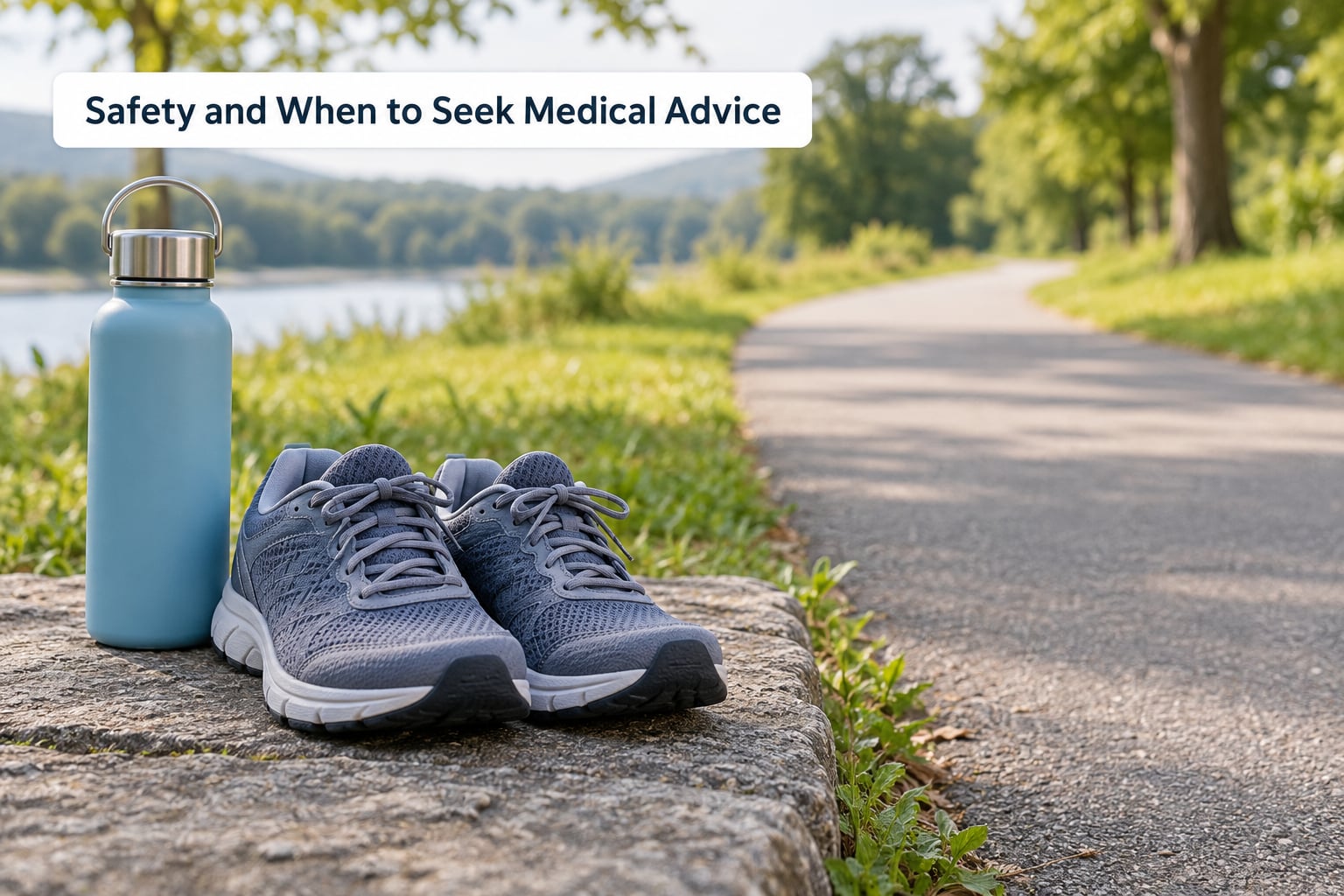
Start where you are. A person who does not walk regularly should begin with short, comfortable walks on flat ground and build up, rather than forcing a 15-minute brisk pace on the first day. Shoes matter more than people expect, and so does the surface.
Stop if you feel dizzy, light-headed, shaky, or unwell. These can be signs of low blood sugar during activity, and the people most likely to hit them are those on insulin or sulfonylureas, because those medicines can keep lowering blood sugar while you are out walking. If you use either, ask your doctor how you should adjust, and carry something fast-acting with you until you know how your body responds.
Very high readings change the advice. If your blood sugar is very high, especially with ketones present, do not exercise. Drink fluids, recheck in a couple of hours, and contact your doctor if it stays high. If you have type 1 diabetes and you are vomiting, breathing deeply, or smelling fruity, that is an emergency rather than a walking opportunity.
Persistent high readings, frequent lows, or readings that do not respond to changes in food and movement deserve a doctor’s review. So does any new plan during pregnancy or alongside a change in medication. Bring a log, not a guess.
Frequently Asked Questions
Is a short walk after eating better than a long workout?
For post-meal blood sugar, a short walk after eating beats a long workout for the hours right after the meal. A 2021 Diabetologia study found three 15-minute post-meal walks outperformed 30-minute walks on post-meal glucose. They also do something a long workout does not: they catch the rise while it is happening. Keep your training separate, and add the walks on top.
Should I walk immediately after eating or wait?
Start within 30 minutes of finishing your meal. Beginning before or during the post-meal rise works better than waiting an hour, because working muscles are already pulling glucose from the blood. Most people peak between 30 and 90 minutes after eating. Some people with type 1 diabetes report spiking in 15 to 20 minutes and should start even sooner.
How much walking is generally recommended each day?
General activity guidelines point toward roughly 150 minutes of moderate movement a week, which works out to about 21 minutes a day. Three 15-minute post-meal walks get you most of the way there in a form that is easy to keep. Spread the movement across the day where you can, and remember that total daily movement matters more than any single session.
Can walking after meals replace medication or diabetes treatment?
No. Post-meal walking is a habit that supports blood sugar, insulin sensitivity, and metabolic health. It is not a treatment and it does not replace prescribed medication, monitoring, or clinical advice. In some cases a care team may adjust medication alongside a new activity routine, but that conversation belongs with your doctor, pharmacist, or registered dietitian, not with an article.
How can I tell whether post-meal walking is helping me?
Look for a flatter, shorter rise rather than a lower number only. If you use a meter or a continuous glucose monitor, check the peak and how long you spend above your usual range after the same meal. Keep the meal and the timing similar so you are comparing like with like. Changes of a few points are normal day to day, so look for a pattern over a couple of weeks.
Is walking after dinner suitable for weight loss?
Walking after dinner is a reasonable part of an active routine, especially because it targets the largest meal of the day. A 15-minute walk is not a big calorie burn, so it works best as one habit among several rather than as the whole approach. Keep it moderate if sleep is the goal, since hard evening exercise can keep you awake later.
Conclusion
Does walking after meals help with blood sugar? Yes. A 10 to 15 minute walk started within about 30 minutes of eating blunts the post-meal rise and lowers the insulin your body needs for that meal.
Here is the first step: pick the meal you most want to smooth, usually dinner, and walk for 10 minutes straight after it for the next seven days. Notice how you feel, keep the parts that felt easy, and talk to your doctor before going further if you take medication or live with diabetes.