Snacking is not automatically bad for weight loss. It becomes a problem when it is unplanned, calorie-dense and untracked, and it works in your favour when it is portioned, protein- and fiber-rich, and eaten because you are actually hungry.
Most people who stall on a weight loss plan are not losing because of one snack. They are losing because a bag of chips at 4pm turned into 400 extra calories that never made it into the log. The fix is rarely banning snacking. It is making the snack small enough, satisfying enough, and planned enough that it stops being a problem.
Below is what the research actually shows, what a good snack looks like, and how to tell the difference between hunger, boredom and stress.
Table of Contents
- Is Snacking Bad for Weight Loss? It Depends on the Snack
- How Does Snacking Affect Weight Loss?
- What Snacks Are Best for Weight Loss?
- Which Snacks Make It Easier to Overeat?
- How Many Calories Should a Weight-Loss Snack Have?
- What Is the Difference Between a Snack and a Mini-Meal?
- Can Snacking Help You Eat Less at Meals?
- How to Stop Emotional or Mindless Snacking
- Is snacking bad for weight loss when you are not hungry?
- Simple ways to make snacking more mindful
- Frequently Asked Questions
- Is snacking bad for weight loss?
- Are fruits healthy snacks for weight loss?
- What is the best snack to eat before dinner?
- Can I eat snacks after dinner while losing weight?
- Are protein bars good for weight loss?
- How do I stop eating snacks when I am not hungry?
- Bottom Line
Is Snacking Bad for Weight Loss? It Depends on the Snack
No, snacks themselves are not the enemy. Weight change comes from your total energy balance across the day, and a snack that fits inside that budget changes nothing at all.
Four things decide whether a snack helps or hurts: what it is, how much of it there is, whether you chose it on purpose, and whether it leaves you satisfied or sets up the next craving.
A planned snack is one you decided on earlier, put on a plate, and finished. A mindless snack is one that happened while you were working, driving or scrolling, and you realised halfway through that you had already eaten most of it. The food can be identical. The outcome usually is not.
Harvard’s Nutrition Source notes that snacks have been linked with both higher and lower diet quality depending on how people use them. That is the honest summary of the evidence: snacking is a tool, and tools cut both ways.
How Does Snacking Affect Weight Loss?
Snacking affects your results through four channels, and none of them is “snacking” on its own.
Total energy. Add up every day and week. A 200-calorie snack is fine until it happens four times a day without you noticing.
Hunger control. A moderate snack in the afternoon can stop you arriving at dinner so hungry that the first thing in the cupboard looks like a plan.
Blood sugar. Protein and fiber snacks flatten the mid-afternoon crash that sends people to a vending machine. Sugary snacks spike and drop, and the drop feels like hunger.
Meal balance. Snacks can add nutrients your meals miss, or they can quietly replace meals you should be eating.
Your activity level, age and metabolism all change how much the same snack affects you, which is why two people can eat identical food and get different results.
| Snack type | Typical energy density | Effect on hunger | Effect on weight loss |
|---|---|---|---|
| Planned snack (protein, fiber, portioned) | Low to moderate | Steady, lasting | Helps if it fits the daily budget |
| Mindless snack (eaten from the package while distracted) | Moderate, hard to notice | Brief, then back | Easy way to create a surplus |
| Ultra-processed snack (chips, candy, pastries) | High | Weak | Hard to portion, easy to overdo |
What Snacks Are Best for Weight Loss?
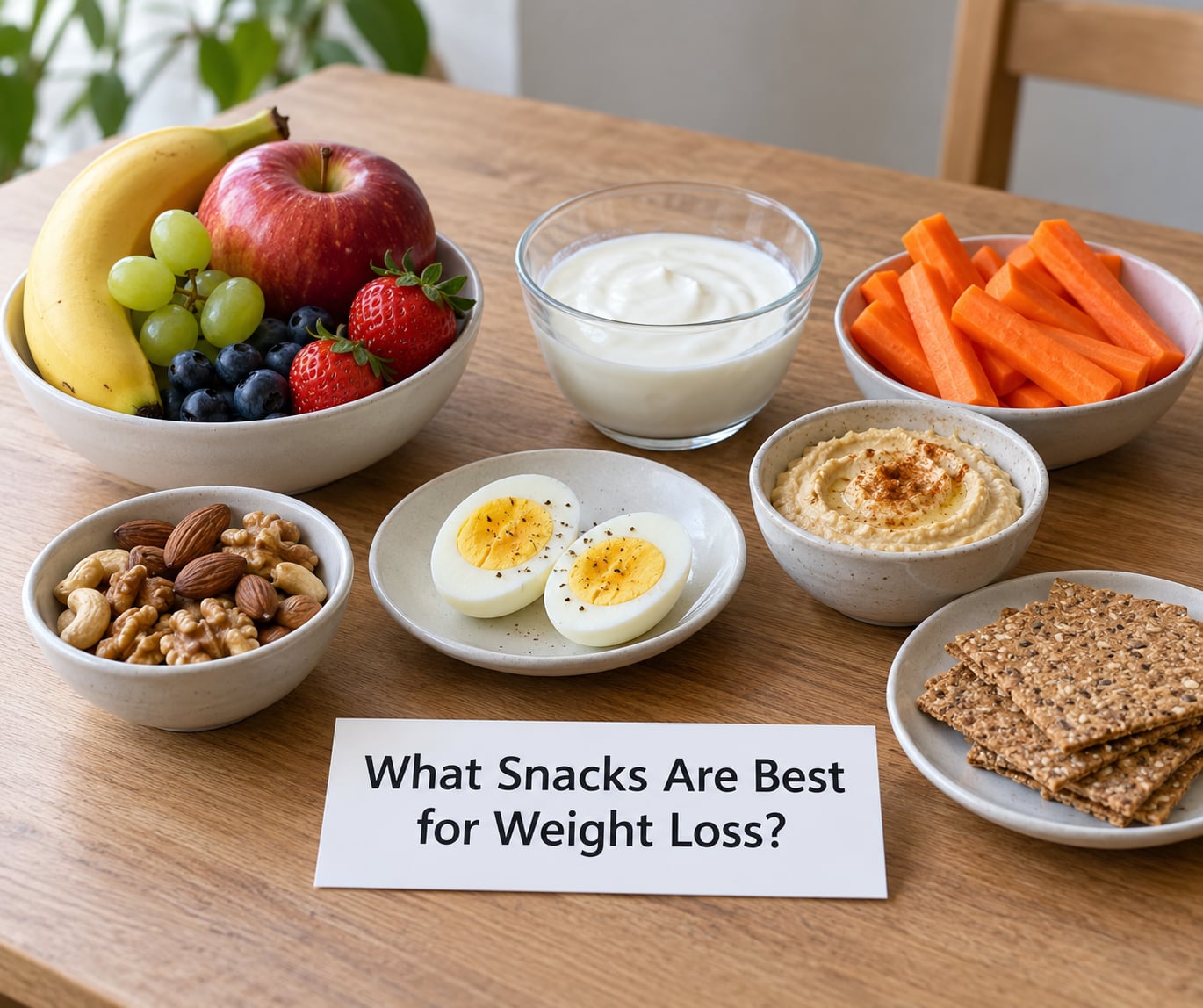
A weight loss snack needs protein, fiber, some fat or texture, and a portion you can see. If a snack fails one of those, it usually leaves you hungry again twenty minutes later.
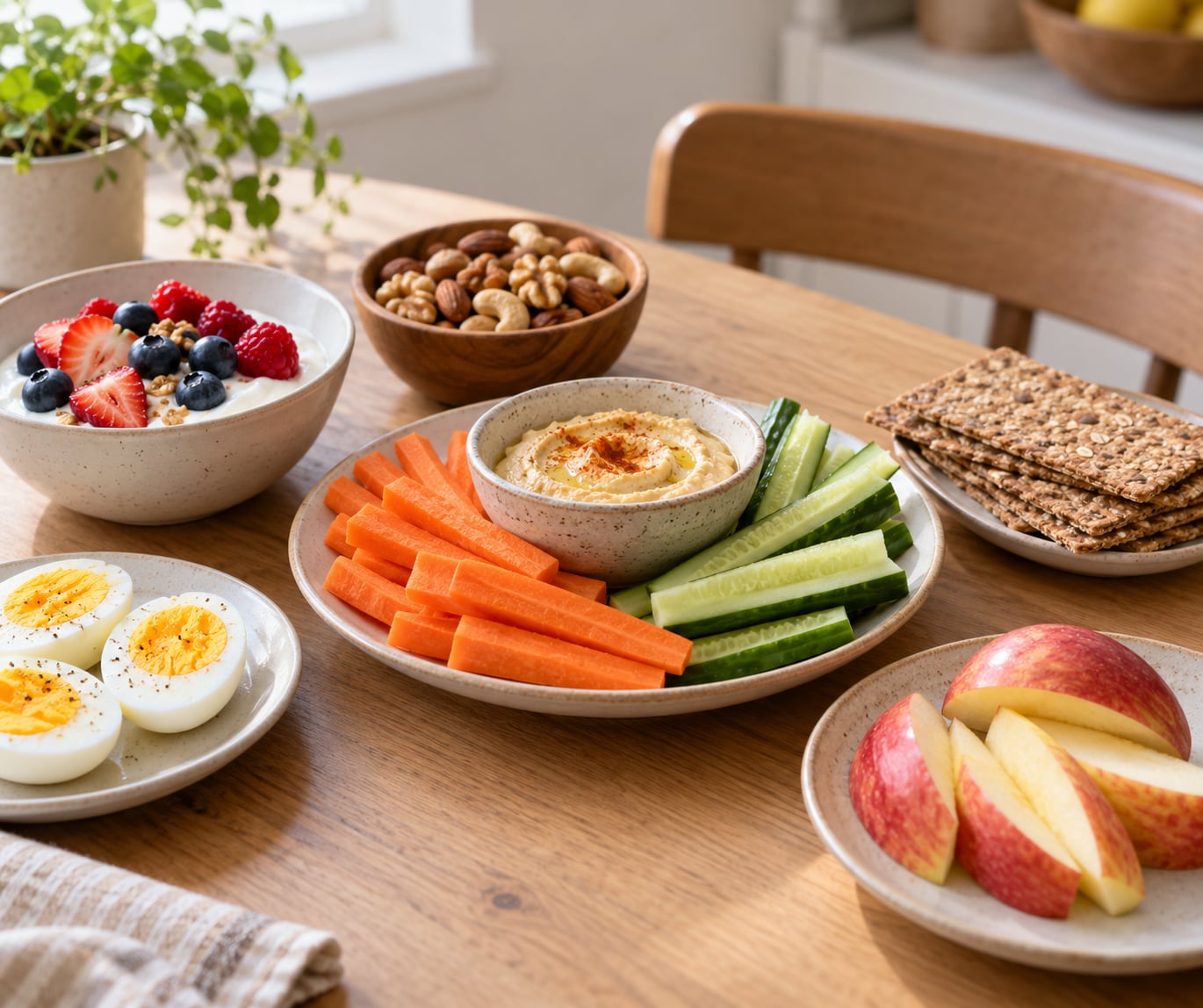
Fruit with plain yogurt. Berries or an apple for fiber, yogurt for protein. The fruit alone rarely fills you; the yogurt is what makes the pairing last.
Vegetables with hummus. Carrot and cucumber sticks with a couple of tablespoons of hummus. Crunch gives you something to do with your hands.
Nuts. A small handful, about 30 grams, eaten from a bowl. Nuts are one of the easiest places to lose control precisely because they are good for you.
Boiled eggs. Cheap, portable, and high enough in protein to count as a mini-meal if you add a piece of fruit.
Whole-grain crackers with tuna. More protein and less refined carbohydrate than crackers alone.
Cottage cheese or edamame with roasted chickpeas. Worth the extra step if you are hungry enough that a “snack” would not hold.
Which Snacks Make It Easier to Overeat?
The snacks most likely to derail you are the ones engineered to be hard to stop. Ultra-processed snacks combine refined carbohydrate, fat and salt in a combination that is moreish than any single ingredient alone, so a small portion rarely registers as finished.
Energy density does a lot of the damage here. A cup of air-popped popcorn and a cup of mixed nuts are similar in volume, and wildly different in calories.
Screens make it worse because attention is the main brake on eating. What people report most often is not hunger at all, it is unconscious grazing while working or watching something.
Stress and boredom are the other two triggers, and both feel like hunger in the moment because both involve a drop in something: distraction, mood, stimulation.
Portioning fixes most of this. Put the snack in a bowl, take the bag to the bin, and turn off the screen. It sounds trivial, and it is the difference between a planned snack and a mindless one.
How Many Calories Should a Weight-Loss Snack Have?
A general range of 150 to 250 calories per snack works for most adults trying to lose weight, but treat that as a starting point rather than a rule.
Your actual need depends on the size of your meals, how long the gap between them is, how active you have been, and what your total daily intake looks like. A person eating a 700-calorie breakfast does not need an afternoon snack.
Build the snack from three parts: a carbohydrate for energy, a protein for satiety, and fiber for fullness. Apple slices with peanut butter is the clearest example of that formula, and it works at about 190 calories.
The same formula works as veg and hummus, or crackers and tuna. If you can name the protein in a snack, it is usually doing its job.
What Is the Difference Between a Snack and a Mini-Meal?
A snack is smaller, is usually eaten between meals, and does not have to be balanced. A mini-meal is closer to a light meal, usually has protein and fiber in real quantities, and is more likely to replace a meal than to sit between two of them.
The distinction matters mostly for planning. If you are skipping meals and calling the leftovers a snack, you are not snacking, you are eating erratically.
| Snack | Mini-meal | Full meal | |
|---|---|---|---|
| Protein | Small amount | Moderate, deliberate | Substantial |
| Fiber | Often present | Usually present | Usually present |
| Portion | One bowl or handful | A few small items plus a protein | Plate-sized |
| Ingredients | One or two | Three or four | Several |
| How filling | About an hour | Two to three hours | Three to four hours |
For most people aiming at steady weight loss, two or three planned snacks a day works better than six grazing episodes, because each one has a clear end.
Can Snacking Help You Eat Less at Meals?
Yes, when the gap between meals is long enough that you arrive at the next one starving. Skipping breakfast and then a 6pm dinner is a reliable route to overeating at dinner, and a mid-morning snack breaks that pattern.
It also works for people who manage blood sugar, train in the evening, or work shifts. A planned snack before dinner takes the edge off, and you eat a normal portion instead of a very large one.
The line is important though. A snack should not become compensation for eating too little all day. If you are restricting hard and then eating the planned snack out of guilt, that is not smart snacking, it is a cycle worth talking to a registered dietitian about.
How to Stop Emotional or Mindless Snacking
Pause before you eat. Ten minutes is usually long enough for a craving to lose its intensity, even though it feels long at the time.
Name what is happening. Boredom, stress, tiredness and loneliness all feel like hunger in the body. Saying which one it is out loud changes what you do next.
Portion it out. Bowl, not bag. You can always go back for more; you rarely go back for less.
Do not eat from the package. This is the single highest-impact habit change people report, ahead of cutting out sweets entirely.
Move the triggers. If the trigger is the kitchen at 9pm, keep a bowl of fruit there instead of the crisps. If it is watching television, eat somewhere that is not the sofa.
Build the planned alternative first. Deciding what you will eat at 3pm on a Wednesday is easier than making a decision while hungry.
Is snacking bad for weight loss when you are not hungry?
It is, more often than not. A snack eaten for boredom or stress still delivers its calories, and unlike hunger it rarely stops at a sensible portion. The signal to fix is not the snack, it is whatever you were trying to relieve.
Try a ten-minute delay and a glass of water first. If you are still hungry ten minutes later, eat. Most of the time you will not be.
Simple ways to make snacking more mindful
- Eat at a table, not in front of a screen or a keyboard.
- Take two or three bites before deciding whether you like it.
- Notice the texture and the salt. That is usually the real reason it tastes good.
- Keep your planned snacks visible at eye level in the fridge, not hidden behind a drawer.
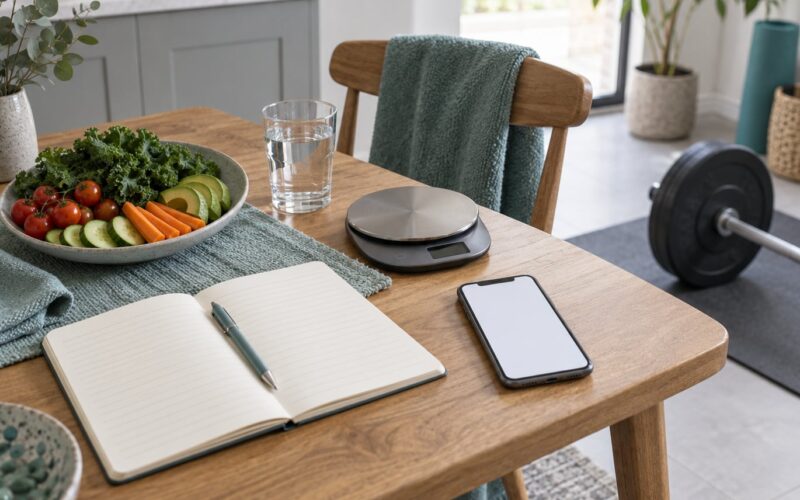
- Log it. Writing it down is the fastest way to catch a 300-calorie habit you did not know you had.
Frequently Asked Questions
Is snacking bad for weight loss?
Not by itself. Snacking is neutral for weight loss when it is planned, portioned and fits inside your daily energy budget. It becomes a problem when it is eaten from the package, while distracted, or without any attention to quantity. If you are wondering whether is snacking bad for weight loss, the deciding factor is rarely the snack itself but whether you could describe the portion afterwards without guessing.
Are fruits healthy snacks for weight loss?
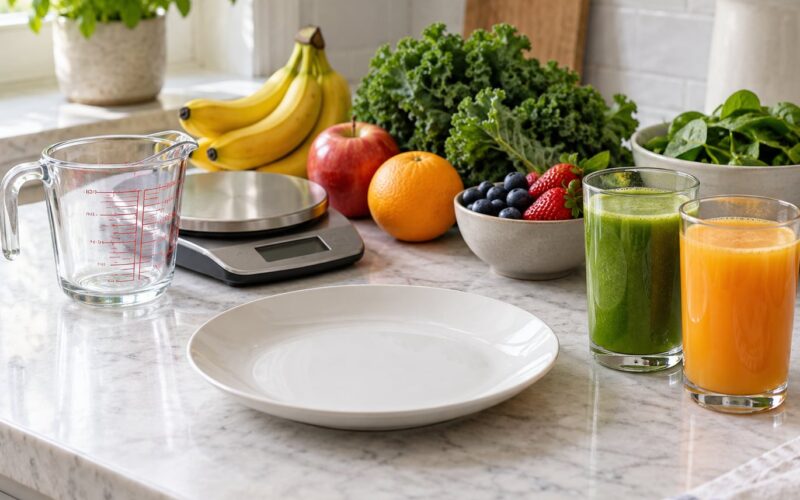
Fruit is a good snack because of its fiber and water content, but it is easy to eat more of it than you intended, especially if it is blended into juice. Most whole fruits are sensible portions on their own. Pair fruit with a protein, such as plain yogurt or a spoonful of nut butter, and it holds far longer than the fruit by itself.
What is the best snack to eat before dinner?
Something with protein and fiber, eaten about 30 minutes before you sit down. A small bowl of plain yogurt, a boiled egg with cucumber, or carrot sticks with hummus all work. The goal is to take the edge off hunger so dinner stays a normal portion rather than a very large one. Avoid fatty or heavily salted snacks here, because they tend to make you want more.
Can I eat snacks after dinner while losing weight?
Yes, if it is planned and small. Eating in the evening is not what makes you gain weight; unplanned, large and repeated portions are. Fruit, yogurt or a small bowl of popcorn work fine after dinner. What tends to cause problems is grazing on packaging while watching television, because nobody decides how much of that they ate.
Are protein bars good for weight loss?
They can be, and they are useful when you have no fridge nearby. The ones that help most are built from whole ingredients and high in both protein and fiber, with a short label. Bars that are mostly sugar and fat tend to taste good and then leave you hungry again twenty minutes later, which is how a snack turns into a second one.
How do I stop eating snacks when I am not hungry?
Most people who ask this are not actually hungry, they are bored, stressed or distracted. Try waiting ten minutes, drinking a glass of water, and doing something that occupies your hands. If you are still genuinely hungry, eat, and choose something with protein and fiber. Repeatedly suppressing true hunger tends to make the next episode larger, not smaller.
Bottom Line
Snacking is bad for weight loss only when it is unplanned, unportioned or driven by something other than hunger. Done properly it is one of the easier ways to keep a deficit comfortable for months instead of weeks.
Start with one planned snack. Build it from a carbohydrate, a protein and fiber, put it in a bowl, and write down what you ate. Then watch how the rest of the day changes around it.
If you are managing diabetes, a blood sugar condition, or a medication that affects appetite, talk to your doctor or a registered dietitian before changing your eating pattern. Individual advice will beat any general guide, including this one.