You cannot burn belly fat by doing crunches, and no ab belt or gadget will change that. Fat comes off your whole body at once, mostly because of a modest calorie deficit, regular movement, and habits you can actually repeat, so the plan below skips floor work entirely and focuses on eating, walking, two strength sessions a week, and sleep.
Most people see a smaller waist and looser clothing in roughly 8 to 12 weeks, not in a fortnight. If someone promises you a flat stomach in three days, they are selling something. Most of the work is boring and repeatable, which is exactly why it works.
This is general information about fitness and nutrition, not medical advice. If you have a health condition, take medication, are pregnant or postpartum, or have a history of disordered eating, talk with your doctor or a registered dietitian before changing how you eat or exercise.
Table of Contents
- What You Need
- Step-by-Step
- 1. Set a waist and weight baseline
- 2. Build meals around protein, fiber, and minimally processed foods to lose belly fat without crunches
- 3. Add regular walking or cardio, not crunches
- 4. Strength train two or three times weekly
- 5. Prioritize sleep and stress management
- 6. Review progress and adjust gradually
- Common Mistakes
- Frequently Asked Questions
- How quickly can I lose belly fat without crunches?
- Are crunches bad for losing belly fat?
- What exercises help lose belly fat the fastest?
- Do I need a special belly-fat diet or supplement?
- How often should I check my waist measurement?
- When should I talk with a doctor about weight loss?
- Start This Week
What You Need
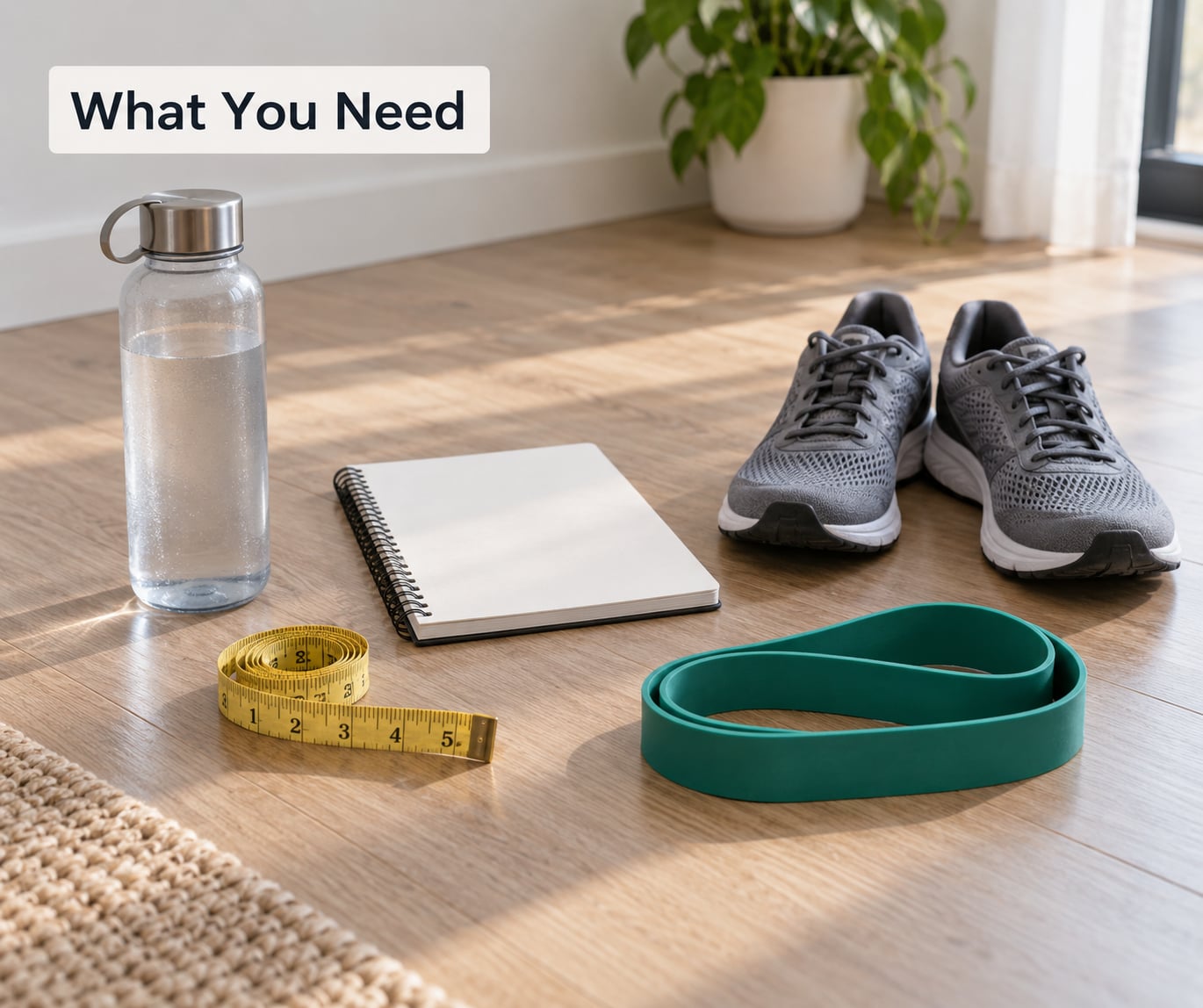
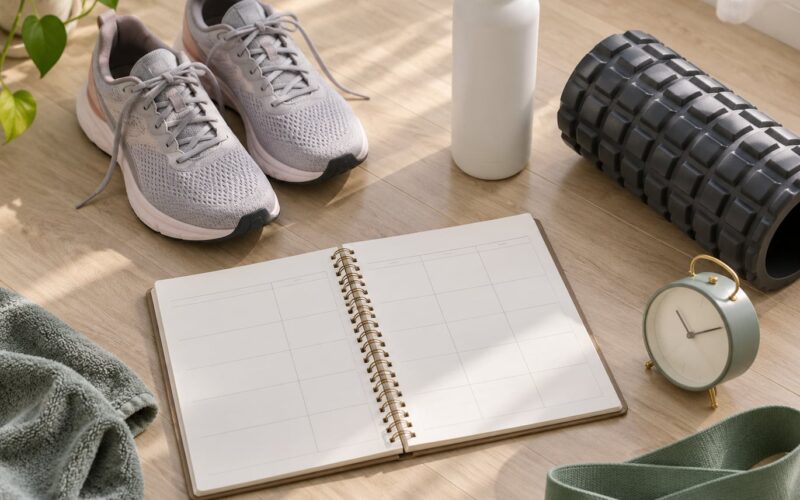
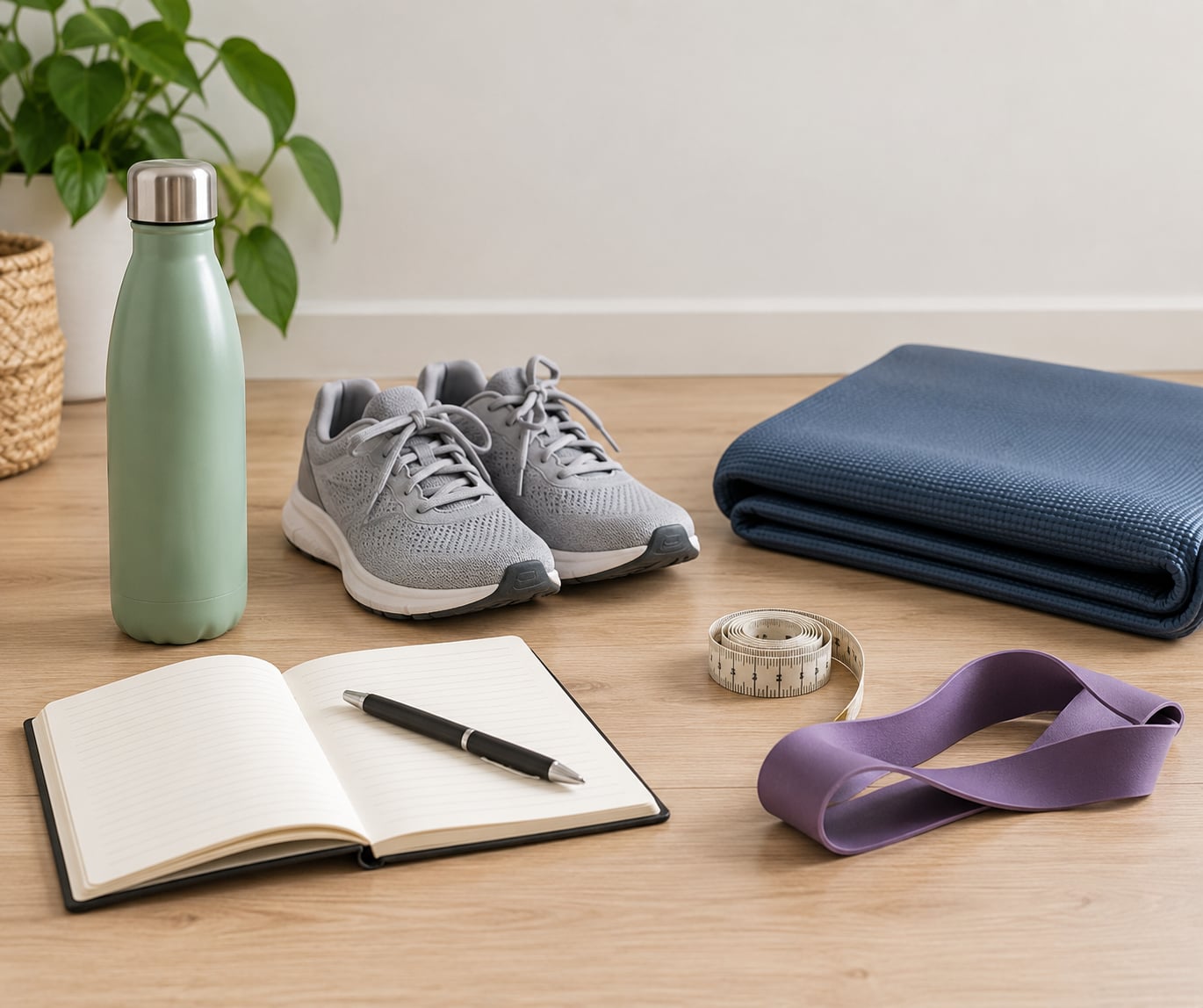
Good news: the equipment list is almost empty. Nothing here requires a membership, a machine, or a specific brand, and ab belts, rollers and belly wraps add nothing a bodyweight routine does not already cover.
- Something to track with. A bathroom scale is optional and a tape measure matters more. A phone note with the date works fine if you would rather not weigh yourself at all.
- A tracking method. A notebook or a free app, whichever you will actually open. Paper suits some people better than an app, and both work.
- Comfortable clothes and shoes. Shoes you can walk in for 30 minutes without thinking about your feet.
- Water. Most thirst gets mistaken for hunger, especially on walking days.
- A safe place to move. A sidewalk, a park, your living room, or a corner of a gym. Nothing exotic.
That is the whole list. If you have a mat and a pair of dumbbells, you can add them later, not before.
Step-by-Step
Six steps, in the order that makes them easiest to stick with. Do them in sequence, give each one a few weeks, and add the next.
1. Set a waist and weight baseline
Measure before you change anything, because the number on day one is the only number you can honestly compare against later. Wrap a tape measure around your belly at the level of your navel, exhale normally, and write the reading down with the date.
Step on the scale at the same time of day, ideally in the morning, and write that down too. Take a photo from the front and the side if you want a visual record, and keep your phone in the same spot each time.
How to tell it’s working: spot reduction is not possible, no exercise pulls fat from one area, so several measurements over time beat a single reading. The waist number is the one that usually moves first, sometimes even when the scale sits still.
2. Build meals around protein, fiber, and minimally processed foods to lose belly fat without crunches
Fat loss comes from eating a little less energy than your body uses, and food quality decides how easily you can hold that deficit. Most people who fail are not eating too much; they are eating too little and then rebounding.
A practical plate: half vegetables or fruit, a quarter protein such as chicken, eggs, fish, beans or tofu, and a quarter starch such as rice, potatoes or whole grains. Include fat, mostly olive oil, nuts, seeds or avocado, since cutting all fat leaves you hungry two hours later.
Aim for a modest shortfall, roughly 300 to 500 calories a day for most adults, which works out to about a pound a week. Many people who lose belly fat without losing muscle do it with 200 to 300 calories instead, and keep the muscle because they train and eat enough protein.
Fiber deserves special mention. Vegetables, beans, oats and whole grains keep you full for longer, feed gut bacteria, and take the edge off cravings that would otherwise become a binge.
How to tell it’s working: you are not ravenous in the evening, meals last until your next hunger, and the waist reading starts to drift down within four to six weeks. If you feel light-headed and irritable, the deficit is too steep and you should eat more.
3. Add regular walking or cardio, not crunches
Walking is the most underrated fat-loss tool most people have, because it adds up quietly through the day. Start with 10 to 15 minutes after one or two meals and build from there, rather than committing to an hour on a treadmill you dread.
Work toward roughly 150 minutes of moderate activity a week, which is the general guideline for adults. Splitting it up works better than one long session for most people, and a 20-minute walk after dinner is easy to keep doing for years.
Short high-intensity intervals are an efficient add-on if you have a base to stand on. A minute or two of hard effort followed by two or three minutes of easy movement, repeated six to eight times, is enough. If your joints or your schedule object, steady cardio at the same weekly total is a fine substitute.
Never try to “burn off” abdominal fat with a specific cardio session. Total weekly activity is what moves the needle.
How to tell it’s working: your resting heart rate creeps down over a few weeks, stairs feel easier, and your clothes fit differently at the waist before the scale reacts.
4. Strength train two or three times weekly
Resistance work is what lets you lose belly fat without losing muscle, because muscle is what keeps your metabolism and your shape while calories are restricted. It also happens to burn more energy per minute than most steady-state cardio.
A short full-body routine you can do at home with no equipment:
- Squats 3 sets of 8 to 12
- Romanian deadlifts or hip hinges 3 sets of 10
- Push-ups 3 sets, as many as you can with clean form
- Rows 3 sets of 10 to 12, using dumbbells, a band, or a sturdy table
- Glute bridges 3 sets of 12
- Carries 3 walks of 30 to 45 seconds per side with something heavy
Add one core movement that is not a crunch if you want a brace: a plank, a dead bug, a bird dog, or a side plank. These build the structure under the fat. If you are just starting, walking every day and training twice a week beats an ambitious six-day split you abandon in March.
Technique first, volume second. Add a rep or a little weight once the last set feels easy across two sessions, and stop when form breaks down.
How to tell it’s working: the weight on your bar or in your backpack goes up over time, clothes fit better through the shoulders and hips, and your waist measurement drops even on weeks the scale stalls.
5. Prioritize sleep and stress management
Poor sleep and constant stress make the plan harder in ways that have nothing to do with willpower. Short sleep tends to raise hunger and lower fullness, and it is associated with more abdominal fat over time.
Most adults do best with seven to nine hours. Keep a consistent bedtime, cut screens in the last 30 minutes, and get daylight early in the day, since light is the strongest anchor for a body clock that works.
Stress deserves attention too, because chronic stress keeps cortisol elevated, and higher cortisol is linked with visceral fat storage. It does not mean meditation cures fat gain, but five minutes of slow breathing, a walk, or simply earlier evenings do tend to make everything else easier.
How to tell it’s working: you stop lying awake hungry, cravings around the evening calm down, and the habits in steps 2 through 4 start sticking without constant effort.
6. Review progress and adjust gradually
Check in every two to four weeks, not daily. Daily weight swings come from water, salt, bowel habits and hormones, and reacting to them is how people quit plans that were working.
Change one variable at a time. If the waist has not moved in a month, the usual culprits are a deficit that shrank without you noticing, too little walking, or eating more on weekends than during the week. Pick one, adjust it, and give it another four weeks.
Track more than the scale: waist circumference, strength in your main lifts, energy through the afternoon, how clothes fit, and whether the routine is still something you want to do. Those signals tell you far more than a single number ever will.
How to tell it’s working: you are seeing small changes in three or four of those five signals at once, which is the pattern behind real, lasting progress.
Common Mistakes
1. Believing in spot reduction. Hundreds of crunches a day will not pull fat from your abdomen, because fat is released systemically and used by the whole body. The fix is to accept that fat comes off everywhere, which is also why your face and arms slim down before some people’s waists do.
2. Adding ab machines, belts and rollers. These strengthen the muscles under the fat and add nothing to fat loss. Save the money, or spend it on shoes and food you enjoy.
3. Cutting calories too hard. Very low intakes tank energy, muscle and consistency, and they trigger rebound eating for most people. A small, steady deficit that you can hold for months beats an extreme three weeks every time.
4. Overtraining. Adding cardio on top of hard lifting every day leaves you sore, tired and hungry. Two or three strength sessions plus daily walking is plenty, and rest days are part of the program, not a reward for skipping it.
5. Judging everything by the scale. Weight moves for reasons that have nothing to do with fat. A waist measurement taken the same way every two weeks tells you far more.
6. Running a plan for ten days. Almost nothing works for ten days. Pick a version of this plan you could still be doing in six months, even if it looks modest on paper.
A few things worth remembering when motivation dips: the plan should be boring enough to repeat, tell one person your goal so someone asks about it, and start the next meal rather than the next week. Lower belly fat often lags the upper belly by several weeks, which is normal and is the single most common reason people quit early.
Frequently Asked Questions
How quickly can I lose belly fat without crunches?
Most people who lose belly fat without crunches see the first real change in four to six weeks and a noticeably smaller waist by 8 to 12 weeks. That assumes a modest calorie deficit, regular walking, and two or three strength sessions a week. Two-week transformations are not fat loss, and they almost never hold once the routine stops.
Are crunches bad for losing belly fat?
Crunches are not bad. They are simply not a fat-loss tool, because no exercise removes fat from a single spot. They build and use the abdominal muscles under the fat, which has real value for posture, back health and training once the fat comes off. If your neck or back complains when you do them, swaps like dead bugs and planks train the same region without the spinal loading.
What exercises help lose belly fat the fastest?
Nothing burns belly fat selectively, so speed comes from total activity plus a calorie deficit. The most efficient combination is 150 minutes or so of moderate cardio a week, mostly walking, with one or two short high-intensity sessions if you have a base, plus two or three full-body strength sessions. Walking after meals and lifting weights two or three times weekly is the version most people actually keep.
Do I need a special belly-fat diet or supplement?
No. There is no belly-fat diet or fat burner that works on its own. Build meals around protein, fiber and minimally processed foods, keep a modest calorie deficit, and drink water. If you want to pay for convenience, spend it on food quality or a gym you will use. Talk with a registered dietitian rather than a supplement seller if you want personalized advice.
How often should I check my waist measurement?
Every two to four weeks, measured the same way each time: tape at the level of your navel, standing relaxed, exhaling normally, ideally in the morning. Checking daily adds noise rather than information, because water retention moves that number by an inch without any change in fat. Weight is fine to watch loosely, but the waist reading is the better signal here.
When should I talk with a doctor about weight loss?
Talk with your doctor before starting if you are pregnant or postpartum, have diabetes, heart disease, high blood pressure, a thyroid condition, a joint problem, or a history of disordered eating. Also worth raising at a routine visit if you have rapid unexplained weight changes, persistent bloating or fatigue, or if you want help with medication. A registered dietitian can build you a realistic eating plan.
Start This Week
Measure your waist and write down the date. That is the only job for today.
Then pick two strength sessions in the coming week and a 15-minute walk after dinner. Add one honest look at how much you are eating, because that single change usually does more than anything else on this list.
Skip the crunches entirely. Eight weeks from now, you will have a smaller waist, stronger back and a routine you already know how to keep.