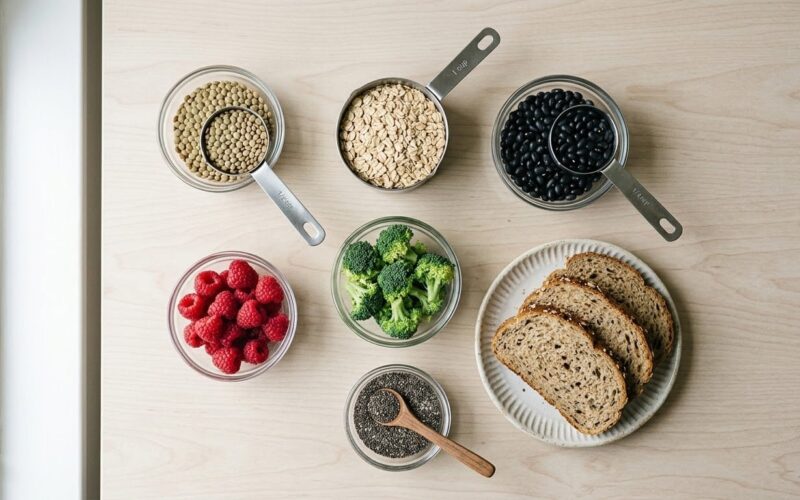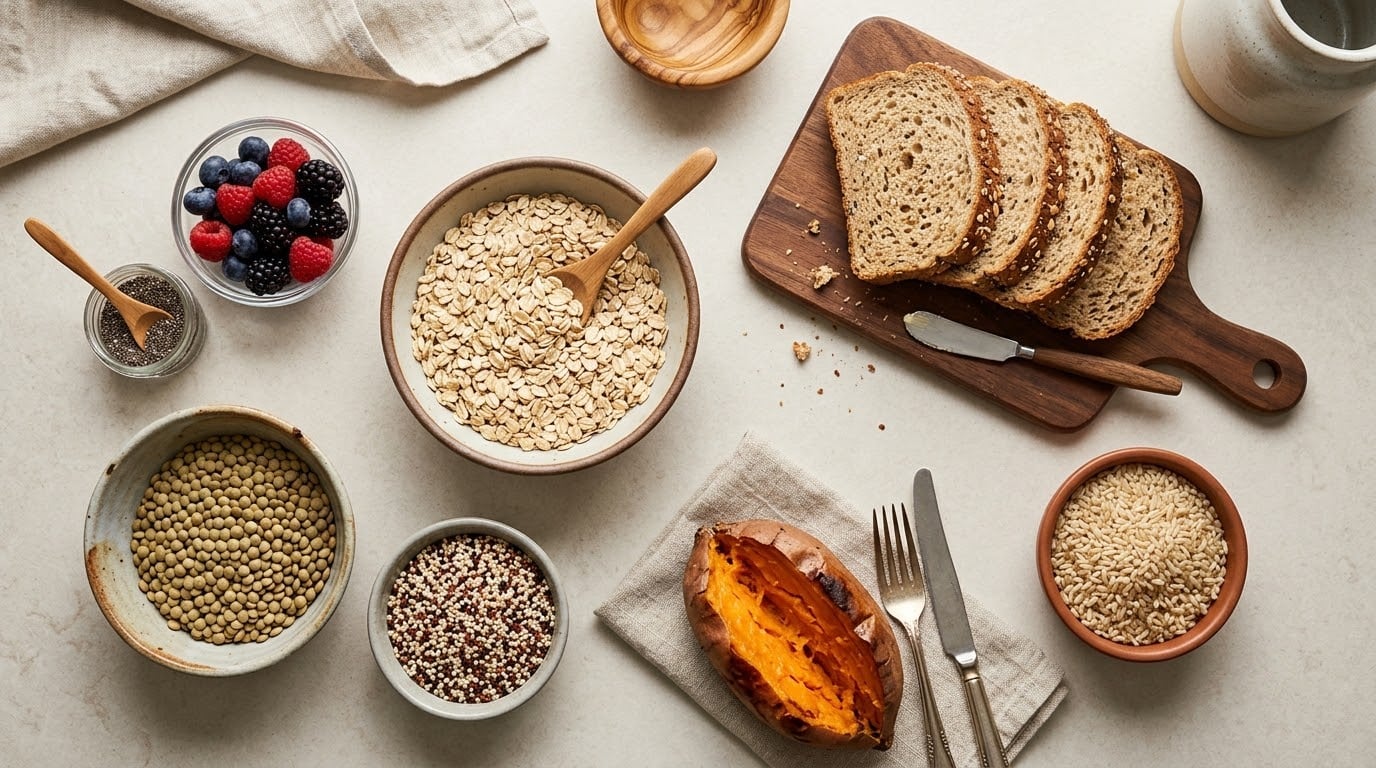
Complex carbs are carbohydrates built from three or more linked sugar molecules, mainly starch and fiber, and they matter because they digest slowly, feed you steadier energy and keep you full for hours instead of minutes. They show up in oats, beans, brown rice, sweet potatoes and whole-grain bread, and they are the backbone of the eating pattern that nutrition guidelines actually recommend.
This guide covers what they are, how they work in your body, which foods have the most, how to add them without upsetting your digestion, and how much to eat. It is written for people who want plain information rather than a food moral system. If weight loss is part of why you are reading, that gets its own section, because carbs are not the villain the internet keeps insisting they are.
One note before we start: this is general nutrition information, not medical advice. If you have diabetes, prediabetes, celiac disease or a digestive condition, or you are pregnant, talk to your doctor or a registered dietitian about how carbohydrates fit into your plan.
Table of Contents
- What Are Complex Carbs?
- Complex Carbs vs. Simple Carbs
- How Your Body Uses Complex Carbohydrates
- Why Do Complex Carbs Matter for Weight Loss?
- Which Foods Have the Most Complex Carbs?
- Whole grains
- Legumes
- Starchy vegetables
- Fruit
- Nuts and seeds
- Simple swaps worth making
- How to Add Complex Carbs to Your Meals
- How to spot complex carbs on a label
- Raising fiber without the bloating
- How Much Complex Carbohydrate Should You Eat?
- Common Myths About Complex Carbs
- Frequently Asked Questions
- Are complex carbs always healthier than simple carbs?
- Do complex carbs cause weight loss?
- Is bread a complex carbohydrate?
- Are potatoes and sweet potatoes complex carbs?
- What happens if you eat too many complex carbs?
- How can I tell if a food contains complex carbs?
- The Short Version
What Are Complex Carbs?
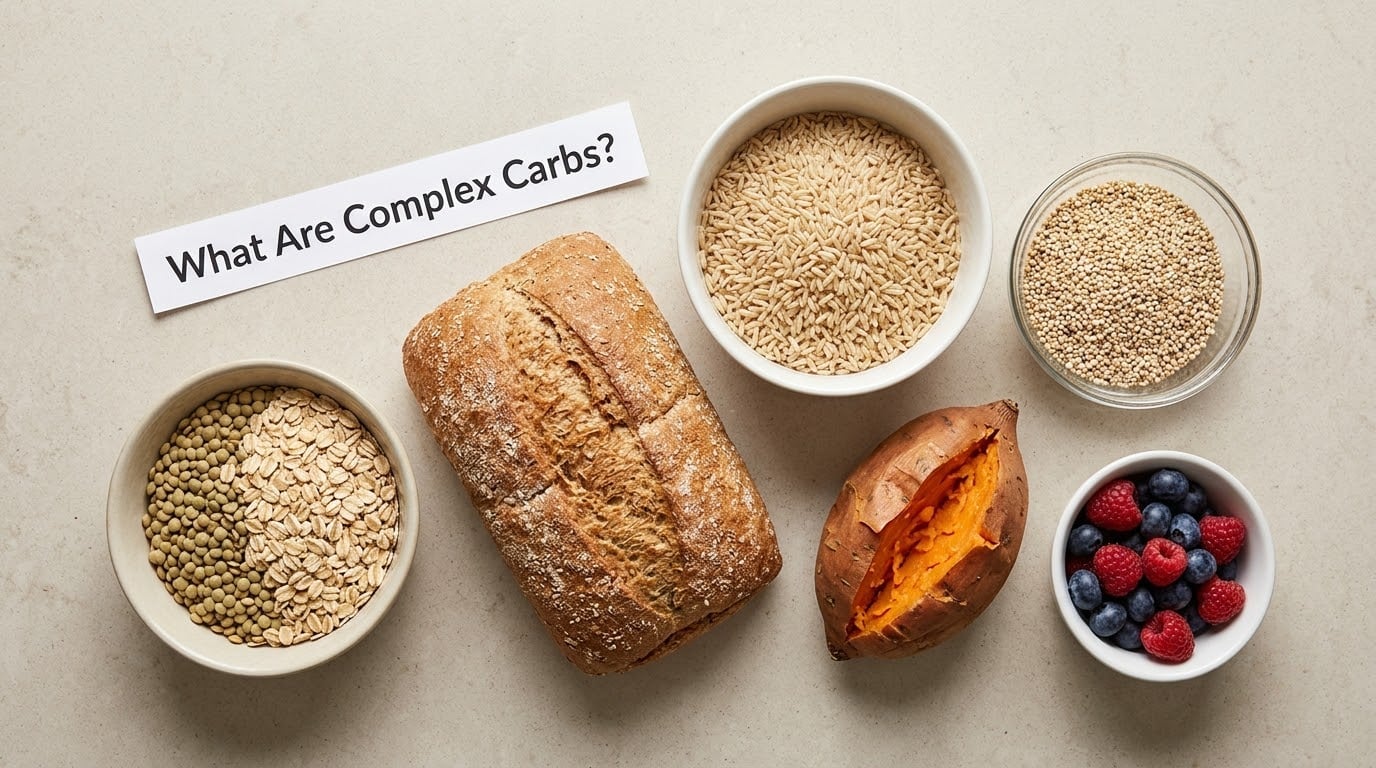
Complex carbs are carbohydrates made of three or more sugar molecules joined together in a chain. Chemically they are polysaccharides, and they split into two groups: starch, which your digestive enzymes break apart into glucose for energy, and fiber, which human enzymes cannot break apart at all. That one structural difference explains almost everything that follows.
Compare that with a simple carbohydrate. A single sugar molecule, or two joined together, is a simple carb. Table sugar is two molecules joined. Fruit juice, soda, candy, honey and milk sugar are all built the same short way. Small chains absorb quickly, so glucose lands in the bloodstream fast and insulin has to respond fast.
So what actually makes a carb simple or complex? Chain length and what is attached to it. Longer glucose chains take more enzymes, more time and more chewing. Fiber, bran and germ left in the grain add bulk and physical structure that slows the whole process down.
Real-world examples of complex carbs you can buy today:
- Rolled or steel-cut oats, quinoa, barley, buckwheat, whole wheat
- Brown rice, wild rice, whole-grain pasta and whole-grain bread
- Black beans, chickpeas, lentils, split peas, edamame
- Sweet potatoes, white potatoes, corn, winter squash
- Apples, berries, pears, bananas, oranges
- Chia seeds, flaxseed, almonds, walnuts
Here is the part most guides get wrong. Complex and refined are different questions. A food can contain complex starch and still be a poor choice, which is exactly what happens when a grain is milled down to white flour, the fiber and germ are stripped out, and the starch is left on its own.
Complex Carbs vs. Simple Carbs
The difference is not moral. It is structural, and it shows up in how fast the food moves through your system. This table lays the two side by side.
| What changes | Complex carbs | Simple carbs |
|---|---|---|
| Molecular structure | Three or more linked sugar molecules | One or two linked sugar molecules |
| Forms | Starch and fiber | Sugars such as sucrose, glucose and fructose |
| Digestion speed | Slow and gradual | Fast, often within 20 minutes |
| Blood sugar effect | Smaller rise over a longer window | Sharp rise followed by a drop |
| Fiber content | High, when minimally processed | Essentially none |
| How full you feel | Full for several hours | Hungry again within the hour |
| Nutrient density | Vitamins, minerals, phytochemicals | Mostly calories |
| Typical sources | Oats, beans, brown rice, sweet potato, berries | Soda, candy, juice, white bread, pastries |
Cooking method matters too, and most coverage leaves it out. A whole grain that has been overcooked and eaten in a large portion behaves much closer to a fast carb than the same grain eaten al dente and portioned normally. Rushed rice has a higher glycemic response than rice cooled overnight, because cooling converts some starch into a form that resists digestion.
Here is a simple swap list that works better than any food moral system:
- White bread for whole-grain or sourdough bread
- White rice for brown rice, quinoa or barley
- Boxed cereal for a high-fiber oat or bran cereal
- Potato chips for a baked potato skin or air-popped popcorn
- Soda for water, sparkling water or unsweetened tea
- Pastries and donuts for a banana with peanut butter
- Crackers and refined snacks for raw vegetables with hummus
How Your Body Uses Complex Carbohydrates
Digestion of a complex carb starts in your mouth. Saliva contains amylase, an enzyme that begins snipping glucose units off starch chains. Chewing physically breaks the food into smaller pieces, which gives the enzyme more surface to work on. That is why eating slowly is not a figure of speech; it changes the pace of the whole process.
The chain keeps breaking down in the small intestine, and glucose is absorbed into the bloodstream. Pancreas responds with insulin so cells can take that glucose up for fuel. Because the release is spread across 60 to 120 minutes rather than 20, the insulin response is smaller and the drop afterward is gentler. You get energy, you avoid the mid-afternoon crash, and you do not arrive at 3 p.m. already hungry.
Fiber takes a different route. Human enzymes cannot break it, so it passes through the small intestine intact, and soluble fiber soaks up water and forms a gel that slows everything moving beside it.
In the colon, gut bacteria ferment some fiber and produce short-chain fatty acids including butyrate. Those compounds feed the lining of the colon and support the wider microbial community. This is one of the more actively researched reasons fiber-rich foods are recommended, and it is also why a sudden jump in fiber can leave you bloated and windy for a week.
Energy balance still decides what happens to your weight. Insulin is a storage and traffic signal, not a fattening hormone. Whether you lose or gain comes down to calories in versus calories out over weeks, not on any single meal.
Why Do Complex Carbs Matter for Weight Loss?
Complex carbs support weight loss indirectly, not magically. Their fiber bulks up food without adding many calories, and the slower digestion keeps you satisfied longer, which usually means you eat less at the next meal without trying very hard. That is the whole mechanism, and it is a real one, but it works inside an overall calorie balance rather than replacing it.
Three practical effects do most of the work:
- Satiety. Fiber and starch keep food in the stomach longer and slow gastric emptying. Meals built around a complex carb source plus protein and fat generally hold you for three to five hours rather than ninety minutes.
- Fewer sharp swings. Steadier blood sugar means fewer of the crashes that turn into a vending machine run at 4 p.m. For people managing prediabetes or type 2 diabetes, this is the part that matters most, and it is why the American Diabetes Association emphasizes high-fiber carbohydrates in meal planning.
- Easier portions. A cup of cooked beans at 240 calories fills you in a way that 240 calories of white bread does not. Calorie counting gets easier when the food is bulky.
What does not happen: eating complex carbs does not melt fat on its own. A large portion of anything is a large portion. The difference is that complex sources tend to self-limit, because the food itself pushes back by filling you up.
Two things worth knowing. First, there is no rule that says you must eat carbs at every meal. Many people were taught that carbs are mandatory with breakfast, lunch and dinner, and it leaves them feeling obliged to add bread or rice for no reason. You do not. What matters is that the overall day is balanced, not that each plate follows a rule.
Second, brown rice versus white rice is a much smaller decision than white bread versus whole-grain bread. Within a category, quality varies less than the good-versus-bad framing suggests.
Which Foods Have the Most Complex Carbs?
Rather than a flat list, it helps to group sources by how much starch, fiber and protein they deliver together. Approximate fiber figures are per typical serving, and they vary by brand and preparation.
Whole grains
Oats, quinoa, barley, farro, buckwheat, whole wheat. A cup of cooked oatmeal runs about 4 grams of fiber, and a slice of true whole-grain bread gives you 2 to 4. Check the first ingredient: it should say whole or whole wheat, not enriched flour.
Legumes
These are the fiber and protein value leaders. Half a cup of cooked lentils gives roughly 8 grams of fiber, black beans about 7.5 grams, and chickpeas around 6 grams, plus more protein per calorie than almost any other carbohydrate source.
Starchy vegetables
Sweet potatoes, white potatoes, corn, winter squash, plantains. A medium baked sweet potato lands near 4 grams of fiber and a medium potato near 3. Potatoes are absolutely complex carbs, whatever you have read elsewhere.
Fruit
Berries, apples, pears, oranges, bananas, peaches. Whole fruit always beats juice because the fiber and pulp are still attached. A cup of raspberries is roughly 8 grams of fiber, and an apple with the skin is about 4.5.
Nuts and seeds
Chia and flax carry about 10 grams of fiber per tablespoon, ground flax more than whole because the seed passes through undigested. Almonds and walnuts add 3 to 4 grams per small handful, plus fat and protein.
Simple swaps worth making
- White rice for brown rice, barley or quinoa
- White bread for whole-grain sourdough
- Instant ramen for a soba or brown rice noodle bowl
- Fruit juice for whole fruit or unsweetened blended drinks with pulp
- Granola bars with 1 gram of fiber for nuts or fruit
- Couscous for quinoa or bulgur wheat
How to Add Complex Carbs to Your Meals
You do not need to overhaul everything at once. Pick one meal, one swap, repeat for two weeks, then move to the next. That is the method that actually sticks, because it does not require you to like every change on day one.
Breakfast. Oats cooked with milk, a spoon of nut butter and berries is the template. It has slow starch, fiber, fat and protein in one bowl. Scrambled eggs with whole-grain toast is the lower-carb version that still works.
Lunch. Build around a half cup to a cup of a whole grain or a legume. A lentil soup with a whole-grain roll, or a quinoa bowl with beans, roasted vegetables and olive oil, keeps you full into the evening.
Dinner. A starchy vegetable plus a protein plus a non-starchy vegetable is the plate most dietitians describe. One medium potato or a cup of brown rice fits, and the plate still looks balanced.
Snacks. Fruit with nuts, hummus with carrots, plain yogurt with berries and a spoon of oats. The pattern is always some starch plus some fat or protein, which slows the digestion further.
Pairing changes the response too. A carb eaten with protein, fat and fiber digests more slowly than the same carb alone, which researchers call the food matrix effect. That is why a slice of white bread with peanut butter is a steadier choice than the same slice plain.
How to spot complex carbs on a label
Nutrition panels list total carbohydrates but never split simple from complex, so use three checks instead. Read the ingredients list first, then the fiber number.
- First ingredient. If it reads whole wheat flour, rolled oats or 100% whole grain, you are looking at a complex carb. If it reads enriched flour, wheat flour or sugar, the grain has been stripped.
- Fiber grams. Three grams or more per serving is a reasonable threshold for a grain product, and five or more is better. Check the serving size, because companies pick tiny ones.
- Added sugars. If a product claims to be whole grain but lists sugar in the first three ingredients, treat it as a treat. Watch for aliases: corn syrup, sucrose, dextrose, maltodextrin, agave, cane sugar, fruit juice concentrate, rice syrup and honey.
One more caveat. There is no legal definition of complex carb on a package, so marketing language is unreliable. Ingredient order and fiber grams are the only two signals worth trusting.
Raising fiber without the bloating
Most people who quit on fiber did too much, too fast. A gut that handled 10 grams a day is not ready for 35. Increase by roughly 5 grams per week, and give it a few days to adjust before adding more.
Drink water alongside. Fiber pulls water into the gut, and not enough of it makes constipation worse rather than better. Some gas and cramping in week one or two is normal and usually passes. Bloating that persists past a month, severe pain, or any blood in the stool deserves a conversation with your doctor rather than another dietary experiment.
How Much Complex Carbohydrate Should You Eat?
There is no single number that fits everyone, and any article that gives you one without your calorie target, activity level and health status is guessing. The national guideline is a range: the Dietary Guidelines for Americans recommend that 45 to 65 percent of daily calories come from carbohydrate, with 14 grams of fiber for every 1,000 calories, which works out to roughly 25 to 38 grams of fiber a day for most adults.
The American Heart Association recommends a similar pattern centered on whole grains and vegetables rather than refined grains and added sugars. Neither body says a given individual has to hit the top of that range.
A more useful way to think about it: aim for a complex carb source at most meals, then let hunger guide the portion. Start with half a cup of cooked grain or beans and increase only if you are genuinely hungry afterward. Athletes training hard have different needs again, since carbohydrate is the main fuel for higher-intensity work and glycogen stores have to be topped up.
If you want a number that fits you, a registered dietitian can work from your calorie target and medical history. For most people, the practical target is simpler than that: a serving of whole grain or legumes at most meals, and fiber somewhere near 25 to 38 grams a day.
Common Myths About Complex Carbs
Carb advice online swings between two extremes, and both are wrong. One says all calories are equal so eat whatever you want. The other says carbs are fattening. Neither survives contact with a normal week of eating.
Myth: complex carbs are automatically a weight-loss food. A complex carb has more fiber and more staying power, which usually makes portion control easier. But a large portion of brown rice is still a large portion, and weight change still comes from the overall pattern.
Myth: you need to cut carbs to lose weight. You can lose weight with lower-carb patterns, and you can lose weight while eating plenty of complex carbs. Both work if calories and protein land where you need them. What you do not need to do is eliminate a whole macronutrient to lose weight, unless a clinician has told you to for a medical reason.
Myth: fiber is the only thing that matters. Fiber is a strong signal, but a fortified white bread can carry more fiber than a poorly made whole-grain loaf, and a granola bar can carry fiber, sugar and palm oil at once. Fiber grams matter alongside ingredient quality, portion and what the rest of your plate holds.
Myth: complex and refined are the only two categories. Sugar alcohols and non-nutritive sweeteners complicate things. Fiber added as inulin or chicory root fiber counts toward the fiber number but behaves differently from the fiber in a whole food. Whole food wins on overall nutrients even when a fortified product looks better on paper.
Myth: starchy vegetables are bad because they raise blood sugar. A potato is a complex carb. Portion size and what you eat it with determine the response far more than the vegetable’s reputation.
Frequently Asked Questions
Are complex carbs always healthier than simple carbs?
Not always. A complex carb built on whole grains, legumes or intact fiber generally gives you slower digestion, steadier energy and more micronutrients. But a refined complex carb such as white flour or low-fiber white bread behaves much more like a simple one. Judge the food by fiber grams, first ingredient and portion, not by the length of its sugar chain alone.
Do complex carbs cause weight loss?
No food causes weight loss on its own, and complex carbs are no exception. They help indirectly: fiber adds bulk, slows digestion and extends fullness, so most people eat less at the next meal without effort. Whether weight drops still depends on your overall calorie balance over weeks. People lose weight both with lower-carb patterns and with generous amounts of whole grains and beans.
Is bread a complex carbohydrate?
It depends entirely on how the flour was milled. Whole-grain bread made from whole wheat flour is a complex carb, because the starch chain travels with the bran, germ and fiber. Bread made from refined or enriched white flour has had most of the fiber and micronutrients removed, so it behaves more like a fast carb. Check the first ingredient before anything else.
Are potatoes and sweet potatoes complex carbs?
Yes, both are complex carbohydrates. They are starchy vegetables with a long starch chain plus fiber, which is why they are not the same as white bread or a sugary snack. Sweet potato carries more fiber and vitamin A than white potato. A large baked potato is still a large portion, so size and what you eat it alongside matter as much as the food itself.
What happens if you eat too many complex carbs?
Nothing dangerous happens to healthy kidneys or livers from eating whole grains, beans or potatoes in quantity, but there are normal consequences. You may exceed your calorie target and gain weight, and a sudden jump in fiber can cause gas, bloating and cramping while your gut adjusts. Adding fiber gradually and drinking enough water usually resolves the digestive side.
How can I tell if a food contains complex carbs?
Nutrition panels do not separate simple from complex carbs, so use two checks. Read the ingredients list first: whole wheat flour, rolled oats, brown rice or 100% whole grain should appear at the top. Then look at fiber per serving: three grams or more is a decent threshold for a grain product, and five or more is better. Watch the serving size, since companies choose unusually small ones.
The Short Version
Start with breakfast, because it is the meal most people are least likely to change twice. Swap your cereal for oats, your white toast for whole-grain, or your juice for a piece of fruit with nuts. Do that one change for two weeks before touching anything else.
Then think in terms of protein, fiber and volume rather than good and bad. Complex carbs matter because they feed you steadily and keep you full, not because they trigger a special reaction in your body. Plenty of people lose weight while eating plenty of them, and plenty of people do not, and the difference sits in portions and consistency.
This article was reviewed and updated in 2026 October and reflects the current Dietary Guidelines for Americans along with American Heart Association and American Diabetes Association guidance on carbohydrate and fiber intake.