A comfort meal is food eaten for emotional comfort and satisfaction rather than for its nutrition, and most of them lean on the same handful of heavy hitters: cream, butter, refined flour, deep frying, heavy cheese and added sugar. A healthy swap replaces one of those at the point where it enters the dish, so the flavor and the ritual survive the change. You are not eating a different meal. You are eating your meal with one or two ingredients swapped out.
If you eat comfort food most weekends, this list is built for you. Every swap below keeps the part people actually miss, which is usually texture or the smell of something browning in the oven, and cuts the part that quietly stacks up calories: saturated fat, refined carbohydrates, sodium and added sugar. Some of these work beautifully. A few do not, and I flag those too, because a list where every single swap tastes amazing is a list nobody trusts.
The core principle behind healthy swaps for common comfort foods is simple. Swap the ingredient or the cooking method, not the whole dish. Keep the seasoning generous, because most failed swaps fail on blandness rather than on nutrition.
Table of Contents
- Healthy Swaps for Common Comfort Foods at a Glance
- 1. Potato Chips for Crunchy Roasted Chickpeas
- 2. French Fries for Sheet-Pan Sweet Potato Fries
- 3. Ice Cream for Banana Soft Serve
- 4. Macaroni and Cheese for Butternut Squash Mac
- 5. Pepperoni Pizza for Vegetable-Topped Whole-Grain Pizza
- 6. Ground Beef Burgers for Turkey and Black Bean Burgers
- 7. Fried Chicken for Oven-Baked Crispy Chicken
- 8. Sugary Cereals for Whole-Grain Cereal with Fruit
- 9. Donuts for Baked Cinnamon Apple Rings
- 10. Mashed Potatoes for Cauliflower Mash
- 11. Chocolate Mousse for Avocado Chocolate Pudding
- 12. Soda for Unsweetened Sparkling Water
- 13. Frozen Waffles for Whole-Grain Waffles with Fruit
- 14. Spaghetti for Whole-Wheat Spaghetti with Vegetables
- 15. Store-Bought Cookies for Oatmeal Energy Cookies
- Frequently Asked Questions
- What is the healthiest swap for potato chips?
- Can healthy comfort food swaps still feel indulgent?
- Are artificial sweeteners a healthy alternative to sugar?
- How can I reduce calories without giving up my favorite foods?
- What if I do not like the suggested replacement for a comfort food?
- How do food allergies affect healthy swaps for comfort foods?
- A Simple Way to Start
Healthy Swaps for Common Comfort Foods at a Glance
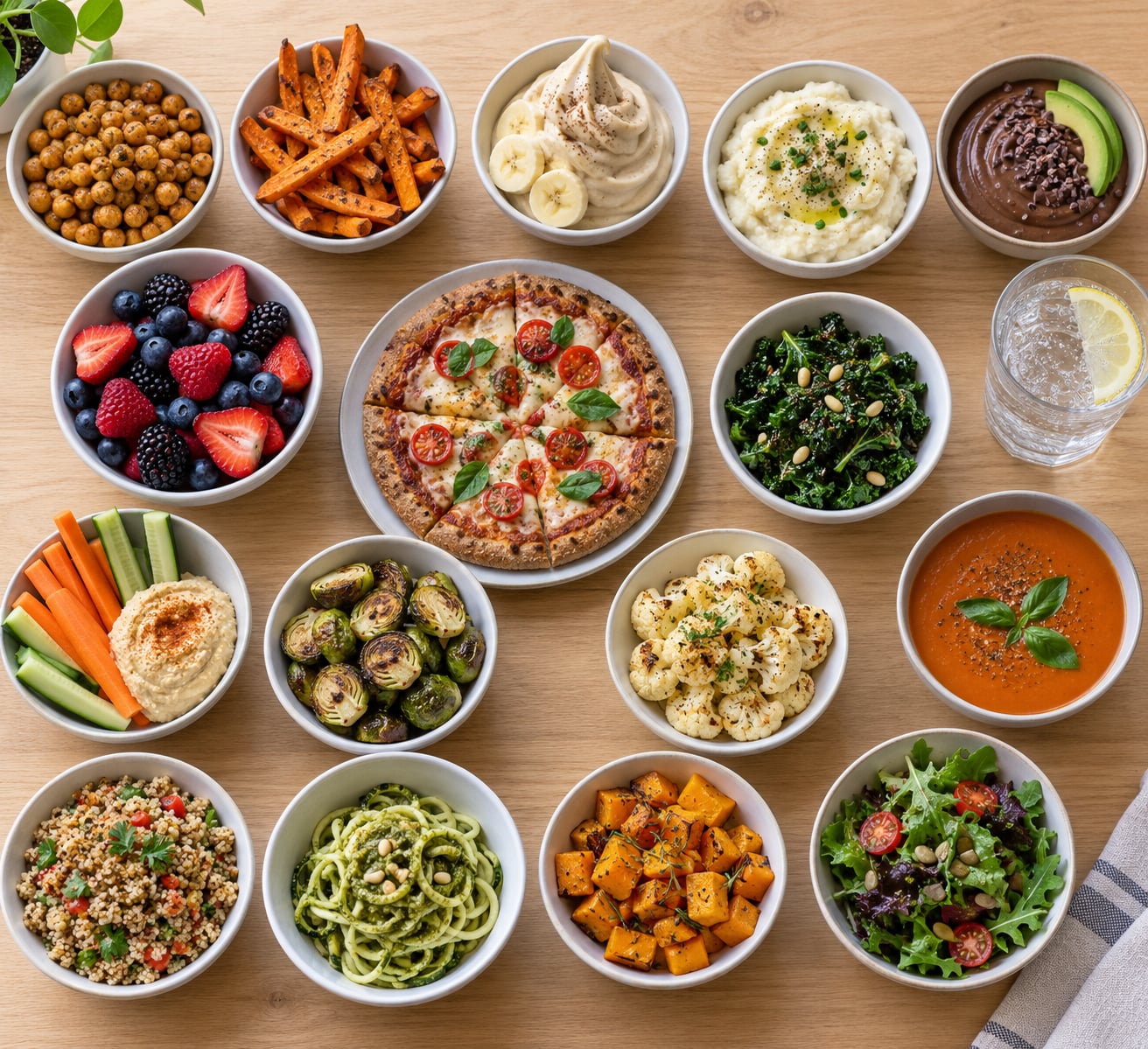
Here are all 15 replacements in one place, with the main nutritional benefit and the situation where each one earns its keep.
| Comfort food | Healthier swap | Main nutritional benefit | Best time to use it |
|---|---|---|---|
| Potato chips | Roasted chickpeas | Adds fiber and plant protein | Snacking, chips and dip nights |
| French fries | Sheet-pan sweet potato fries | Fewer calories, no deep frying | Burger night or a side dish |
| Ice cream | Frozen banana soft serve | No added sugar, real fruit | Warm weather or a dessert craving |
| Macaroni and cheese | Butternut squash mac with pasta | Vegetable fiber and volume | Weeknight pasta dinners |
| Pepperoni pizza | Vegetable-topped whole-grain pizza | More fiber, less saturated fat | Pizza night, at home or ordered out |
| Ground beef burger | Turkey and black bean patty | Leaner protein, less saturated fat | Grill nights and cookouts |
| Fried chicken | Oven-baked crispy chicken | No deep frying, less saturated fat | Family dinners and holidays |
| Sugary cereal | Whole-grain cereal with fruit | More fiber, far less added sugar | Breakfast on busy mornings |
| Donuts | Baked cinnamon apple rings | Fruit instead of refined flour | Morning coffee or an afternoon pick-me-up |
| Mashed potatoes | Cauliflower mash | Far fewer calories per serving | Thanksgiving and Sunday dinners |
| Chocolate mousse | Avocado chocolate pudding | Healthy fats, no cream | Make-ahead desserts |
| Soda | Unsweetened sparkling water | Removes added sugar and calories | Meals, parties, long afternoons |
| Frozen waffles | Whole-grain waffles with fruit | More fiber, less added sugar | Weekend breakfast |
| Spaghetti | Whole-wheat spaghetti with vegetables | More fiber per serving | Weeknight pasta dinners |
| Store-bought cookies | Oatmeal energy cookies | Fiber, protein, less sugar | Afternoon cravings and dessert nights |
1. Potato Chips for Crunchy Roasted Chickpeas
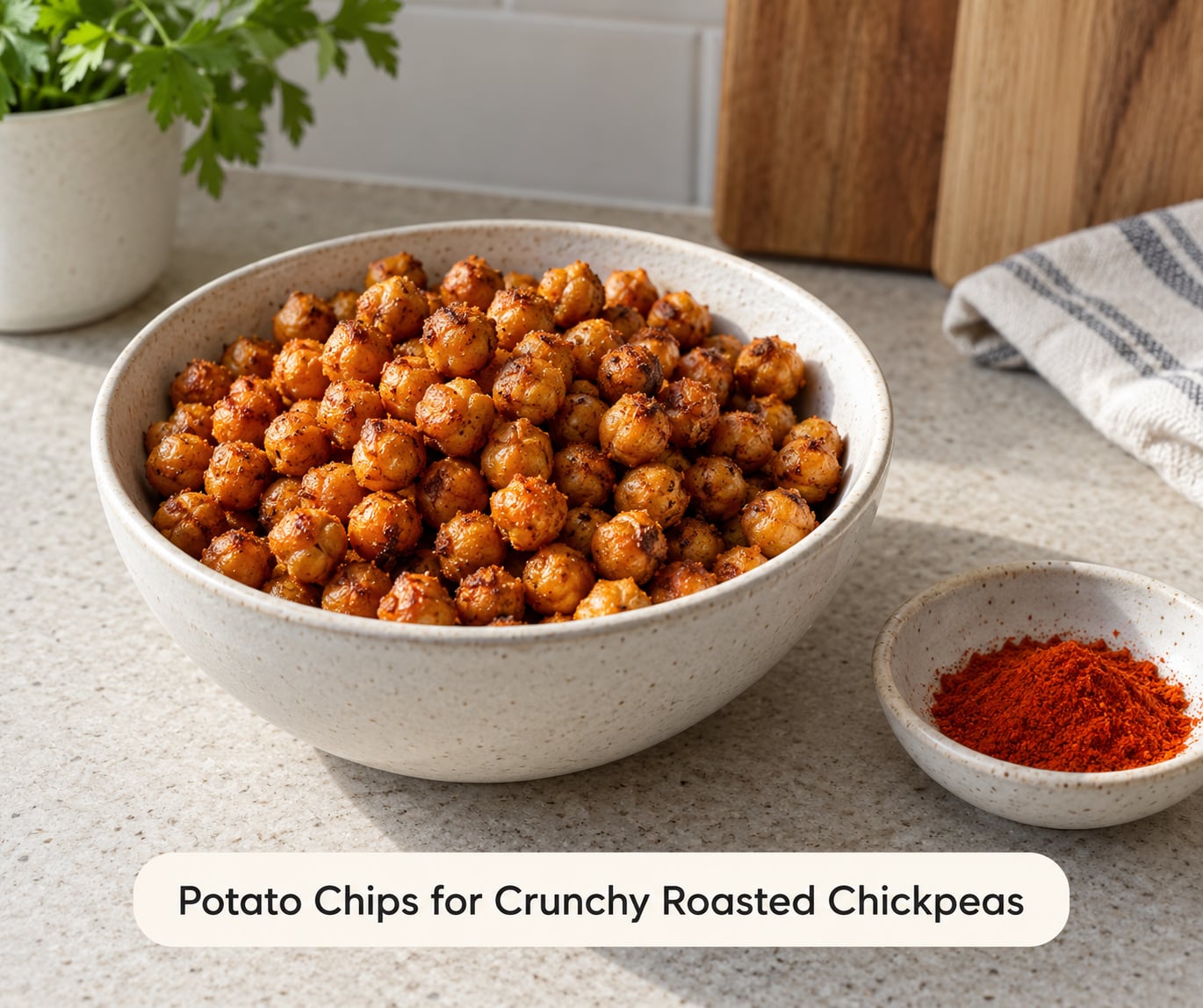
Roasted chickpeas are the closest thing I have found to a chip that behaves like a chip. They crunch, they take seasoning well, and they come with fiber and plant protein instead of nothing much at all.
Use canned chickpeas, rinse and dry them well, toss with a little olive oil and salt, then roast at 425°F (220°C) for 25 to 30 minutes, shaking the pan once. Dry chickpeas crisp; wet ones steam and turn mealy, and that is the single most common reason this swap fails.
Seasoning does a lot of work here. Smoked paprika and cumin, garlic powder and rosemary, or a simple sea salt with flaky pepper all hold up through the oven. Keep a serving in the small bowl rather than the whole bowl on the coffee table, because a bowl of roasted chickpeas disappears at the same rate as chips would.
2. French Fries for Sheet-Pan Sweet Potato Fries
Sweet potato fries are not a lower-calorie food by nature. Cut them thin and roast them hot, and they beat deep-fried fries on calories while giving you the same browned, salted satisfaction.
Cut into thin sticks, toss with a small amount of oil, and roast at 450°F (230°C) for about 25 minutes, turning once. Thick cuts turn soft in the middle and burn on the outside, which is why the fryer or the air fryer exists. Both do the same job with less oil and no deep-fryer smell in the kitchen.
Serve them with a protein and something green rather than as the whole meal. A serving of thin fries alongside grilled chicken and a salad is a very different evening than a serving next to another serving.
3. Ice Cream for Banana Soft Serve
A frozen banana blended until smooth turns into something genuinely creamy, and it takes about two minutes. There is no added sugar because the sweetness is the banana.
Freeze ripe bananas in chunks, blend with a splash of milk or a spoonful of nut butter, and scrape down the sides as it thickens. Very ripe bananas work best; the brown speckled ones are sweeter and blend smoother than pale ones.
Two things worth knowing. The portion is naturally small, usually about half a banana’s worth of volume, which some people like and other people find insulting. And on flavor, add cocoa powder plus a pinch of salt for a chocolate version, or a spoonful of peanut butter plus cinnamon for something closer to a peanut butter cup. To make it actually filling, blend in a handful of Greek yogurt or a scoop of protein powder, which softens the texture slightly and takes the edge off a late-night craving.
4. Macaroni and Cheese for Butternut Squash Mac
Roasted butternut squash blended into the cheese sauce does the job thick and creamy without the whole bowl of cream. Roast cubes at 400°F (200°C) for about 30 minutes until caramelized, then blend with a splash of pasta water and pour over cooked pasta.
Do not try to replace all the pasta. Half squash, half pasta still reads and eats like mac and cheese. Going fully vegetable turns the same dinner into a side dish, and that is where most people give up on it.
For the sauce itself, a modest amount of part-skim cheese, a spoon of Greek yogurt stirred in off the heat, and a heavy hand of nutritional yeast and black pepper will get you close to the original. Anyone sensitive to dairy can use a plant milk and a cheese alternative that melts properly, since some do not melt at all.
5. Pepperoni Pizza for Vegetable-Topped Whole-Grain Pizza
Pizza night is hard to improve on, so this swap is about the components rather than a different meal. A whole-grain or thin wheat crust adds fiber, a lighter layer of part-skim mozzarella cuts saturated fat, and vegetables add volume and color.
Mushrooms, peppers, onions, spinach and broccoli all hold up under heat. Load the sheet and skip the extra pepperoni, which is where most of the sodium and saturated fat lives. A thin crust also helps, since a thick stuffed crust can carry more refined carbohydrate than the toppings do.
Two slices with a salad, or one slice with a large glass of water and some fruit, lands much better than three slices straight off the tray.
6. Ground Beef Burgers for Turkey and Black Bean Burgers
A homemade patty made from lean ground turkey and a can of black beans gives you the burger experience, the char, the bun, the toppings, and roughly half the saturated fat of a fatty beef patty.
Black beans are there for texture and staying power, not flavor. Mash them lightly, mix them with the turkey, and add chopped onion, garlic, a teaspoon of Worcestershire or a splash of soy sauce, salt and pepper. A thin patty of turkey plus beans holds together better than two loose ones.
Ground meat needs to reach 160°F (71°C) in the center, measured with a thermometer in the thickest part, and that is not a rule to eyeball. Serve it on a whole-grain bun with lettuce, tomato and onion. Vegetarians can do the same patty with a plant-based meat, or with the beans alone plus a spoonful of oats to bind.
7. Fried Chicken for Oven-Baked Crispy Chicken
Oven-baked chicken gets the crunch from a dry coating, not from a deep fryer. That coating is where the texture lives, so this swap is about technique rather than substitution.
Pat the chicken dry, season it generously with salt and pepper, then coat it in flour, egg wash and panko or coarse breadcrumbs. Bake at 425°F (220°C) for 35 to 40 minutes on a rack set over a sheet pan so the underside crisps too. A light spray of oil on the coating before it goes in helps the color without turning it greasy.
Poultry needs a minimum internal temperature of 165°F (74°C), so check the thickest part with a thermometer before anyone digs in. Serve it with something in the vegetable family and a starch that has not been fried, and it holds up as comfort food in a way a plain baked breast does not.
8. Sugary Cereals for Whole-Grain Cereal with Fruit
The reason sugary cereal feels like a treat is speed: sugar hits first, then you are hungry again by mid-morning. A whole-grain cereal with cut fruit keeps the sweet, filling feel and takes the edge off the crash.
Pick a cereal where whole grain is the first ingredient and added sugar sits under about 8 grams per cup. Then add more fruit than you think you need, a splash of milk or plain Greek yogurt instead of sweet milk, and a protein source on the side, since cereal alone rarely carries you past mid-morning.
If the cereal you like is heavily sweetened, it is not off limits. Halve what goes in the bowl and double the berries.
9. Donuts for Baked Cinnamon Apple Rings
Thinly sliced apples, dusted with cinnamon and a little brown sugar, bake into something warm and cinnamon-forward that feels like a treat rather than a side dish.
Slice apples about a quarter inch thick, toss with cinnamon, nutmeg and a small amount of brown sugar, and bake at 400°F (200°C) for 20 to 25 minutes until the edges caramelize. Watch them toward the end, because once the moisture goes they go from soft to dry quickly.
For a glaze, warm a little apple juice with honey or maple syrup and spoon it over while the rings are hot. Serve two or three as a dessert, not the whole tray.
10. Mashed Potatoes for Cauliflower Mash
Cauliflower mash is the swap with the biggest calorie difference on this list, and it works because cauliflower has none of starch to turn gluey. Steam it until completely tender, then blend with a small amount of milk and butter, or the fat of your preference, and a heavy hand of seasoning.
The fat is not optional for taste. Without it the mash reads as plain boiled vegetable. Salt, black pepper, garlic and a little Dijon do more for the flavor than any amount of cream would have.
If you are not fully converted, use half cauliflower and half potato. That version keeps the fluffy texture most people miss while cutting the serving noticeably. Creamy soups and casseroles can also be thickened with blended cauliflower instead of flour, which nobody at the table will notice.
11. Chocolate Mousse for Avocado Chocolate Pudding
Avocado gives a pudding the same dense, glossy texture as chocolate mousse, because the fat is what carries the chocolate flavor. Half a ripe avocado and a couple of tablespoons of cocoa powder make a convincing single serving.
Blend the avocado with cocoa powder, a little milk or plant milk, a pinch of salt, and a sweetener to taste. Chill for at least an hour, and longer if you want it to set firmly like a mousse.
Control the sweetness rather than following a fixed recipe, because the sweetness of an avocado varies and sweetened cocoa powder is already sweet. Start light, taste, and add more. This one also gets better overnight, which makes it a useful make-ahead dessert.
12. Soda for Unsweetened Sparkling Water
Carbonation is most of what you are enjoying in a soda, and it survives without the sugar. Infused sparkling water with fruit takes it further, and it makes a glass feel like an occasion rather than a habit.
Let me be straight about the limits: sparkling water is not a nutrient source. It does not give you what a soft drink’s sugar and fortified ingredients give you, and it is not a health food. It is a lower-calorie way to drink something cold and fizzy at the end of a long meal.
For flavor combinations, cucumber and lime, lemon and mint, or orange slices in cold water all work well. Let the fruit sit in the fridge for a few hours and then remove the pieces before serving, or they get bitter over time.
13. Frozen Waffles for Whole-Grain Waffles with Fruit
A whole-grain waffle mix gives you the same batter, the same syrup, the same weekend morning, with more fiber and less added sugar than the boxed version. Add fruit to the batter or pile it on top.
Banana and cinnamon, blueberries, or chopped apple with a little nutmeg all work. A spoonful of yogurt in the batter keeps them tender instead of dry, which is the most common complaint about whole-grain waffles.
Toppings decide the sugar load, so keep syrup for a weekend and let fruit carry it the rest of the time. Two waffles with fruit and yogurt is a filling breakfast.
14. Spaghetti for Whole-Wheat Spaghetti with Vegetables
Change the noodle rather than the whole dish. Whole-wheat spaghetti keeps the shape, the chew and the sauce clinging to it, and adds fiber per serving.
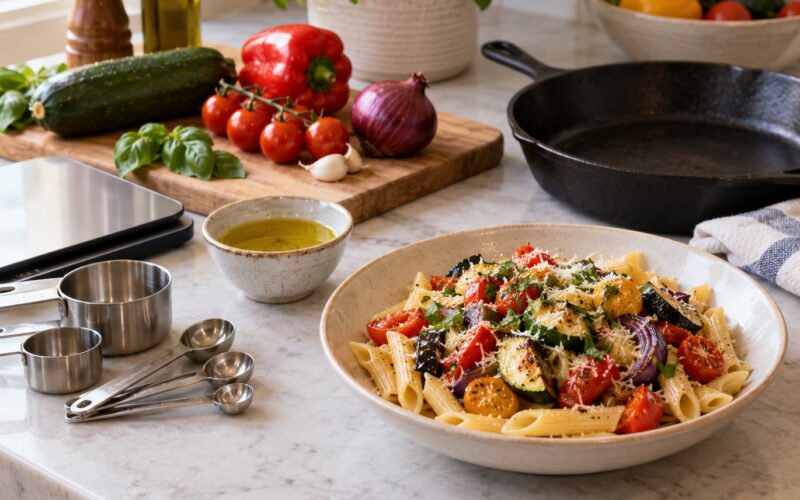
Simmer the sauce with chopped onions, garlic, tomatoes, and whatever vegetables you have, adding a splash of pasta water at the end to pull it together. Mushrooms, zucchini, bell pepper and cherry tomatoes all hold their shape in a long simmer.
Balance the plate rather than shrinking the portion to nothing. A moderate serving of whole-wheat spaghetti with a vegetable-heavy sauce, plus protein on the side, works far better than a tiny serving of pasta that leaves you hungry an hour later.
15. Store-Bought Cookies for Oatmeal Energy Cookies
Oatmeal cookies made at home solve the afternoon-cookie problem better than anything from a package, mostly because the portion is yours to set. A dozen homemade ones lasts a week; a package is gone before you sit down.
Old-fashioned oats, a nut or seed butter, an egg and dried fruit do the structural work. Keep the sweeteners modest, since dried fruit and honey bring plenty along, and add chocolate chips if that is the point.
For texture, pull them while the centers still look slightly underdone and let them cool on the pan. They set as they cool, and the ones that come out of the oven chewy rather than crisp are usually the ones people eat first. A pinch of cinnamon and a little sea salt makes a plain batch taste like a planned snack.
Frequently Asked Questions
What is the healthiest swap for potato chips?
Roasted chickpeas are the strongest swap for potato chips, because they stay crunchy, absorb seasoning well and add fiber and protein that plain chips do not offer. Air-popped popcorn and baked veggie chips are the lighter options, and apple slices with peanut butter are the option that adds real staying power. Rotate between them rather than committing to one, since snacks that get boring get abandoned.
Can healthy comfort food swaps still feel indulgent?
Yes, when you change one thing at a time instead of rebuilding the dish. Browning still happens in the oven, fat still carries flavor, and seasoning still does most of the work. Swaps that fail are usually the ones that removed three ingredients at once and left nothing behind but restraint. Pick the single heaviest contributor in the recipe and change only that, then taste it before deciding anything else.
Are artificial sweeteners a healthy alternative to sugar?
They cut added sugar and calories, but they are not automatically the healthier choice. Many people find intensely sweet products drive further cravings, and a baked item sweetened only with a substitute still carries the refined flour and fat. Start by cutting the sugar in foods that are naturally sweet anyway, like yogurt or cereal, and use fruit for desserts before reaching for a substitute. Anyone managing blood sugar should talk through specific products with a doctor or registered dietitian.
How can I reduce calories without giving up my favorite foods?
Change the cooking method first, then the fat, then the grain. Baking or air frying instead of deep frying, olive oil instead of butter in a hot pan, and part-skim cheese instead of full-fat do most of the work without changing what the dish is. Reducing the portion while adding protein and fiber alongside it keeps you satisfied, which matters far more than the number on the label. The meals you still enjoy are the ones that last.
What if I do not like the suggested replacement for a comfort food?
Then keep the original, sometimes. People give up on this entirely when a swap tastes like punishment, and the honest answer is that not every substitution is worth it. Try a different version of the same idea, like half cauliflower and half potato, or use the swap only when cooking for other people and order in when it is just you. Consistency matters more than winning every swap.
How do food allergies affect healthy swaps for comfort foods?
Most swaps can be adapted for allergies, but read labels on things like nut butters, nutritional yeast and dairy alternatives, since some carry cross-contact warnings. For gluten, oats are only a safe swap if they are labeled gluten free. Dairy free versions often need different fats in the sauce because plant milks separate differently than dairy does. If you have a diagnosed allergy, ask your doctor or a registered dietitian before relying on a swap you found online.
A Simple Way to Start
Pick the one comfort food you eat most often and test a single swap on it this week. Change one thing, change it well, and see whether you still look forward to it.
Once that one is routine, add a second. Two swaps that hold are worth more than fifteen you abandon in a month, and the foods you keep eating are the ones that actually stay in your routine. These healthy swaps for common comfort foods work best as a quiet habit, not a project.