If you want to know how to make your favorite meals lower in calories without losing the flavor, the answer is short: cut the added fat, the sugar and the portion size, and keep the protein and the volume. Everything else in the recipe stays. Swap cream for broth, sour cream for Greek yogurt, butter for a smaller measured amount or olive oil, and use the same amount of pasta, vegetables and spices you always use.
That is genuinely all it takes for most home recipes. A tablespoon of oil carries roughly 120 calories, a tablespoon of sugar about 48, an ounce of cheddar around 115. Remove two tablespoons of oil from a single dinner and you have removed about 240 calories from that meal, without anyone at the table noticing a thing.
The meals people eat most are the ones they will not give up, so cutting calories from food you actually enjoy works better long-term than replacing it with something you tolerate. What follows is a step-by-step method you can run on almost any recipe in under fifteen minutes. It is general nutrition information, not medical advice; if you have a health condition, are pregnant, or are managing diabetes, kidney disease or a history of disordered eating, talk to a doctor or registered dietitian before changing your meals.
Table of Contents
- What You Need
- Step-by-Step
- 1. Identify the Highest-Calorie Parts
- 2. Swap Some Ingredients
- 3. Change the Cooking Method
- 4. Control Portions Without Wasting Food
- 5. Flavor With More Than Added Fat
- 6. Recheck the Meal as a Whole
- Common Mistakes
- Frequently Asked Questions
- What is the easiest way to make a favorite meal lower in calories?
- How can I reduce calories in a meal without giving up the main food?
- Are lower-calorie substitutions always healthier than the original?
- How much oil or dressing should I use when cooking?
- Can I lower calories in a meal served at a restaurant?
- Will eating vegetables first really help me control calories?
- Conclusion
What You Need
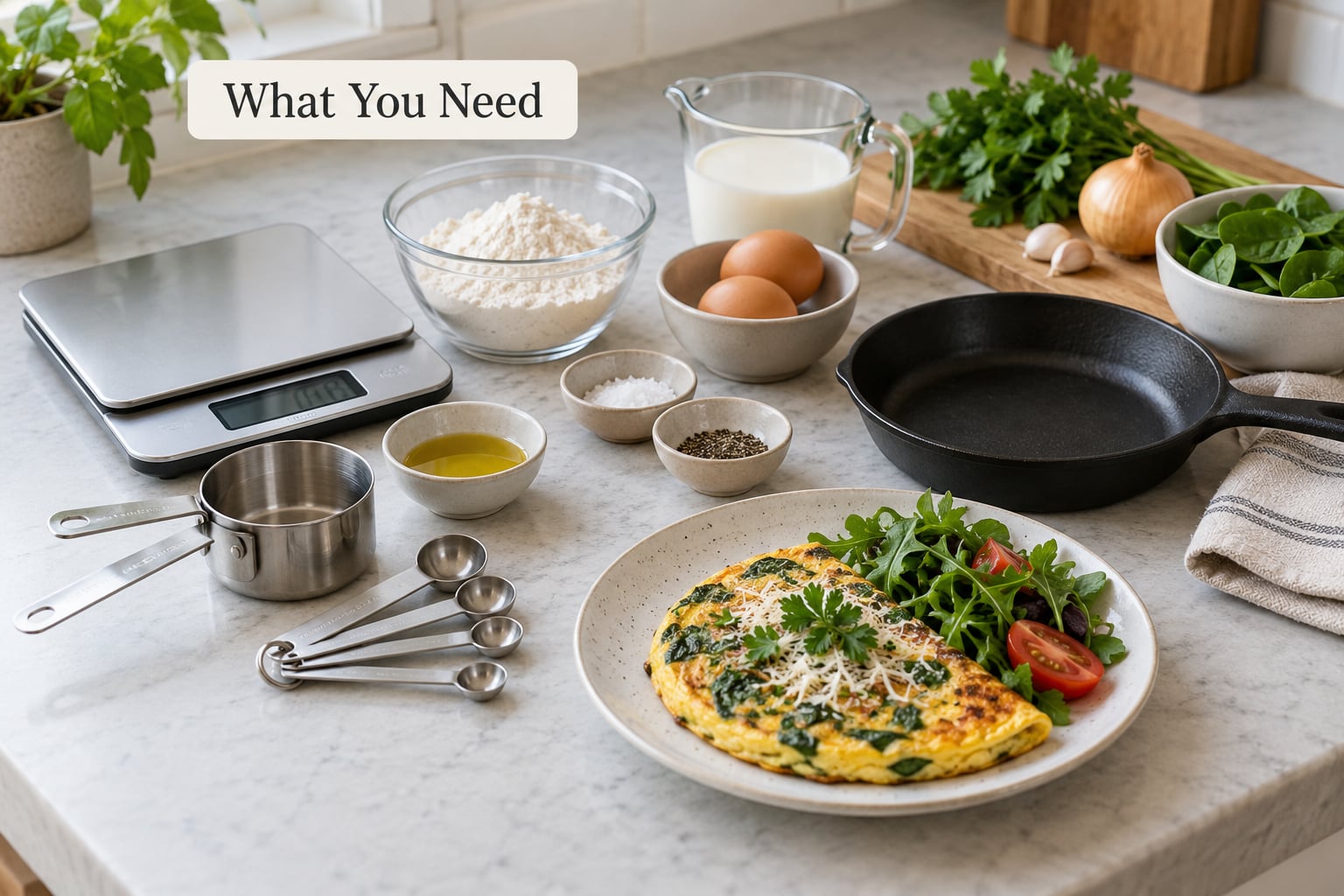
You need very little: a way to measure, a way to compare, and a short list of swaps you can repeat. Most people fail at this because they change ten things at once and never learn which change actually mattered.
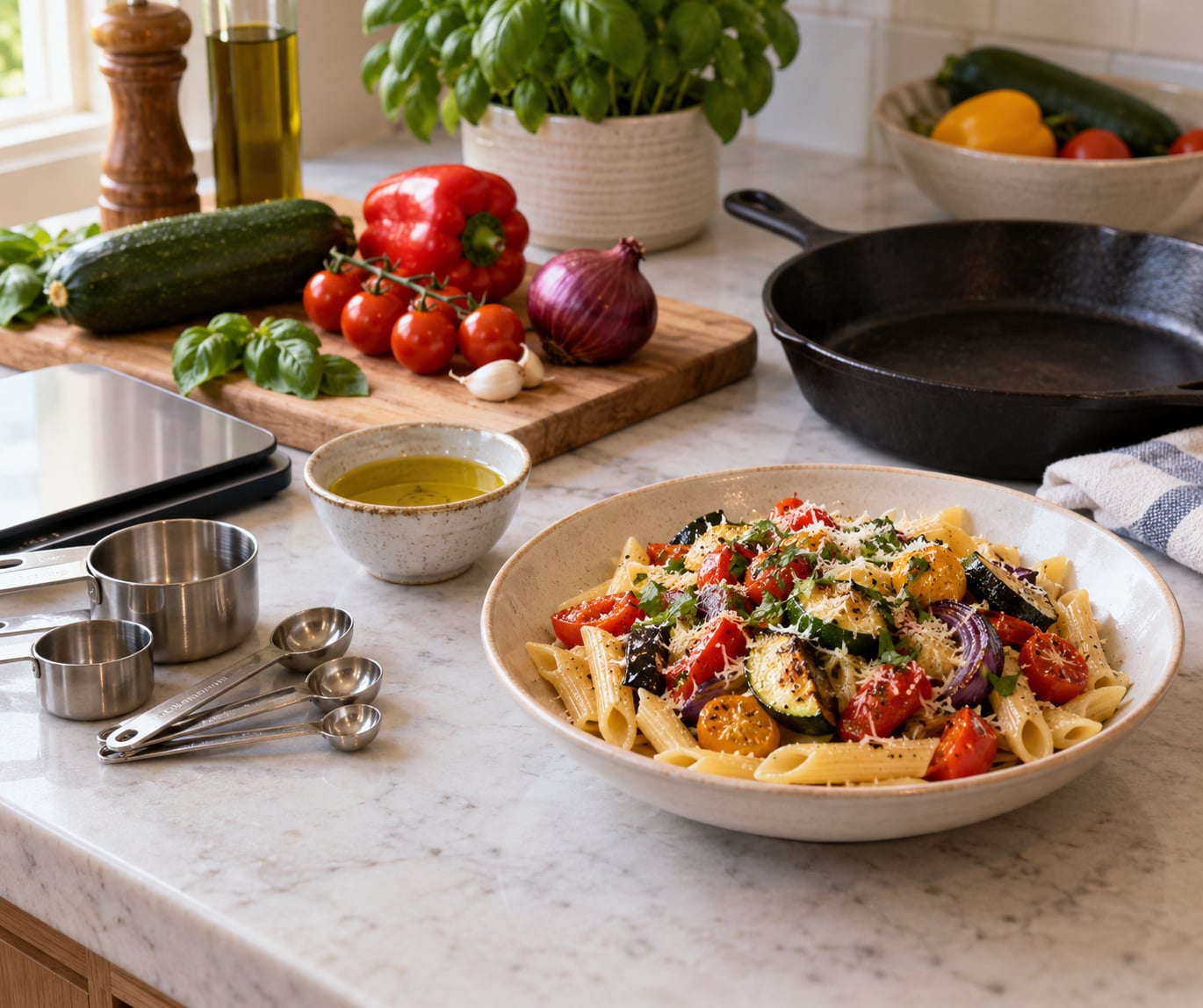
- A small digital scale. Weighing the oil or butter before it goes in the pan takes five seconds and turns a vague cut into a real number.
- Measuring cups and spoons. Most home cooks eyeball oil by the pour, which is where a surprising share of calories sneaks in.
- A plain plate and a smaller one. Portion changes work because of how full it looks, not because of how little you decided to serve.
- The nutrition labels for your staples. Not every recipe has a calorie count, and the label on your yogurt tub or oil bottle is where you find one.
- One comparison habit. Cook the original version once, write the total in a note, then cook the lighter version and compare. Two minutes of work, permanent knowledge about your own food.
A notebook, a notes app or a photo of the label on your phone all work. The point is that after a few meals you stop guessing and start knowing, which is the difference between a change that lasts and one that fades in a month.
Step-by-Step
1. Identify the Highest-Calorie Parts
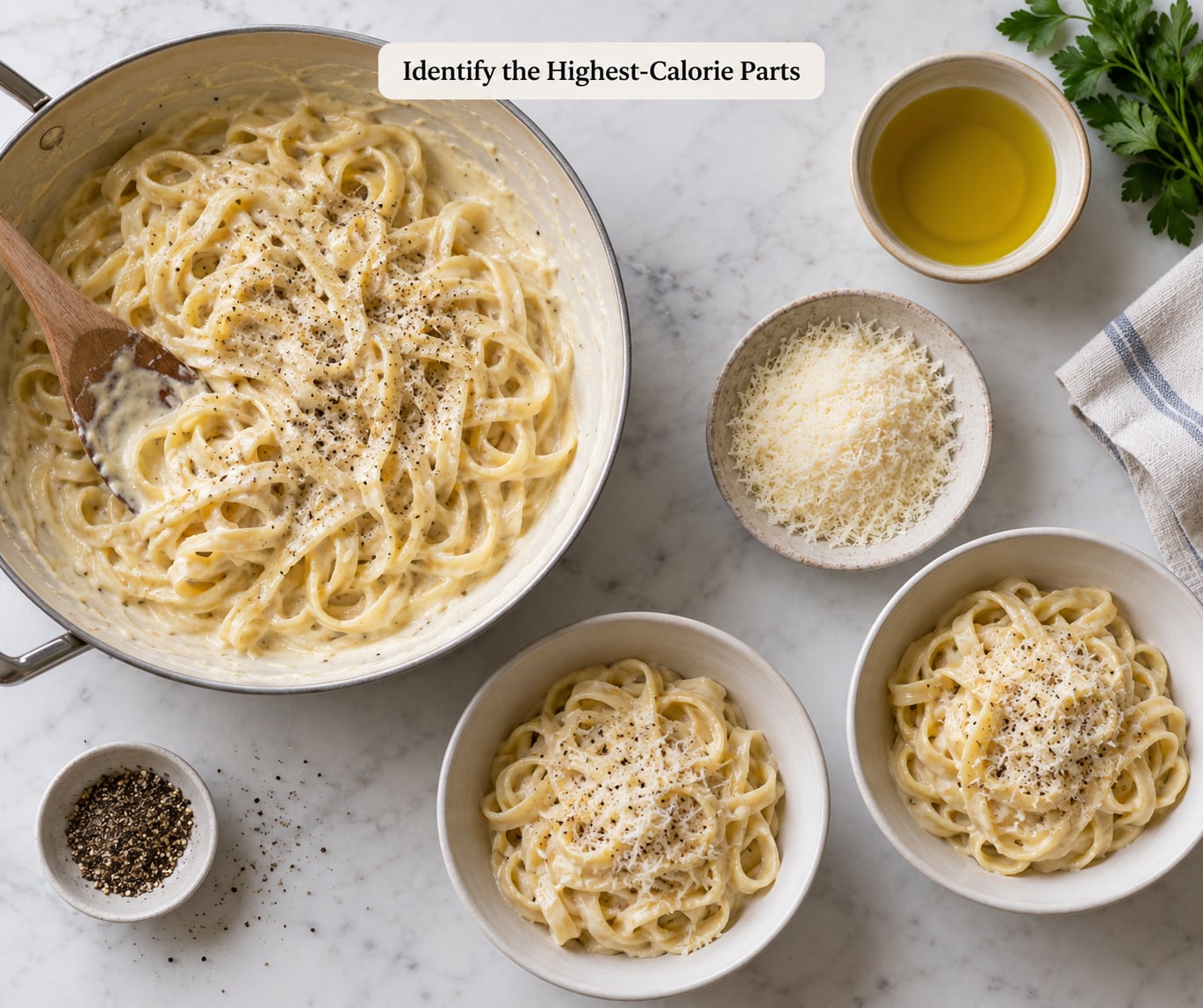
Most calories in a home-cooked meal hide in four places: added fats such as butter, oil, cream and cheese; added sugar; large starch portions; and anything fried. Find those first, because a swap in one of those spots saves far more than five swaps spread across the vegetable side.
Look at the recipe the way an accountant would. Butter, oil, mayonnaise, sour cream, cream, cheese and coconut oil are concentrated fat sources, and a small spoonful goes a long way. Sugar, syrups, honey and sweetened sauces add up quietly across a whole recipe. Breading and frying add a layer of fat that no sauce can offset. Portion size is the last piece: the serving you ladle out is often double what you planned to eat.
Here is where the calories actually sit in a typical home kitchen. Figures are approximate per single listed amount.
| Original ingredient or move | Lighter swap | Approximate calories saved |
|---|---|---|
| 1 tablespoon cooking oil | 1 teaspoon, or cooking spray on a surface | 90 to 100 |
| 1 tablespoon butter in a sauce | 1 teaspoon olive oil, or broth for basting | 80 to 90 |
| 1 ounce cheddar, grated | 3 to 4 ounces part-skim mozzarella | 60 to 70 |
| 2 tablespoons sour cream | 2 tablespoons plain Greek yogurt | 35 to 40 |
| 1 tablespoon mayonnaise | 1 tablespoon light mayo or Greek yogurt | 45 to 50 |
| 1 tablespoon sugar | 1 teaspoon, or half the amount plus fruit | 40 to 45 |
| 1/4 cup heavy cream in a sauce | 1/4 cup low-fat milk plus a spoon of cornstarch | 300 or more |
| Breaded and deep-fried portion | Baked or air-fried on a rack with a light mist | 150 to 250 |
| Second helping of the same portion | The same portion with double the vegetables | 200 to 400 |
| 2 sweetened glasses of soda or juice | 2 glasses of water, sparkling water or unsweetened tea | 150 to 250 |
Read that table as a menu of possibilities, not a shopping list. One well-chosen swap in a creamy dish beats five token changes.
2. Swap Some Ingredients
Swap ingredients that do the same job in the recipe, and keep everything else exactly as written. The difference between a swap that works and one that ruins dinner is whether it matches the role the original was playing.
Here is how to make your favorite meals lower in calories through swaps that hold up in real kitchens. Cream-based soups and pasta sauces work with low-fat milk plus a teaspoon of cornstarch to keep the body. Sour cream, chip dips and creamy toppings work with plain Greek yogurt. Shredded cheese on pizza, pasta and casseroles works with part-skim mozzarella, which melts nearly the same way and tastes milder. Thickening for gravy and pan sauces works with broth and a whisk instead of a roux of butter and flour. Sweetness works by cutting sugar in half and adding sliced berries, peeled apples, ripe banana or a spoon of applesauce, which brings fiber along with it.
Meat is straightforward. Ground beef becomes 93 percent lean ground beef or ground turkey. Short ribs and pot roasts move to the round, a chuck roast or a boneless leg. Thick pork chops become the loin. Breading gets thinner and crunchier from panko rather than heavy flour. Shrimp and other shellfish cook fast, take on flavor aggressively and are inexpensive when frozen, which makes them the easiest protein swap on this list for soups, tacos and pasta.
If you want one habit that covers most of this, add vegetables before you add anything else. On r/1200isplenty the most repeated strategy is exactly that: a small amount of the food you love, plus a large amount of something roasted with a little oil and salt. The volume does the work that fat used to do.
3. Change the Cooking Method
Cooking method is the biggest lever most people never pull, because the recipe does not tell you to. Ranked roughly by how much fat a portion ends up holding, the order runs from baking and poaching at the bottom to deep-frying at the top.
- Baking or roasting. Little or no added fat, and the flavor concentrates as moisture escapes.
- Poaching or simmering. For fish, chicken and eggs. Season the liquid heavily, since there is no browning to build flavor.
- Steaming. Vegetables keep their color and their shape, and need only a spoon of oil afterwards.
- Broiling. A fast finish under the heat that mimics frying with a fraction of the oil.
- Sautéing with measured oil. Use the scale and the spoon. A tablespoon goes in, not whatever the bottle allows.
- Air frying. A small amount of oil still beats deep-frying by a wide margin, and the result is close enough that most people stop commenting on it.
- Deep-frying. The most fat of any method, and the one worth saving for the dish you genuinely cannot eat any other way.
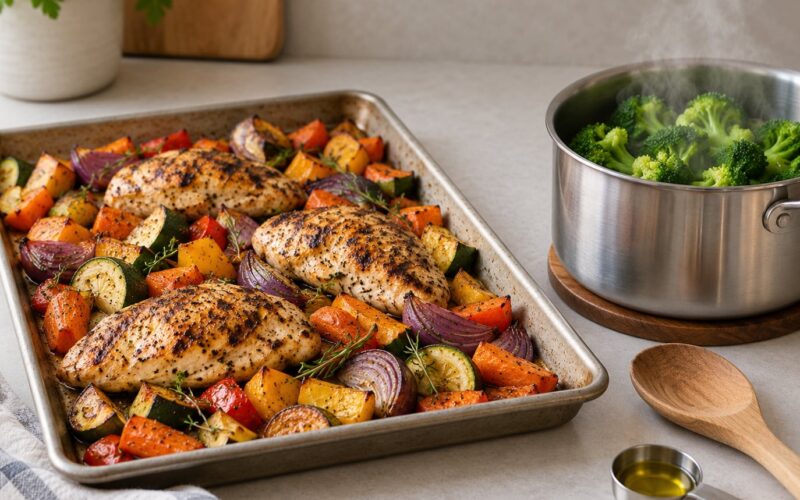
Two adjustments help in the oven and the air fryer. Use a wire rack so hot air circulates under the food instead of steaming it, and mist the surface lightly with oil rather than pouring oil into the pan. On a sheet-pan dinner, cut the oil in the recipe by a third and roast at a temperature 25 degrees higher than the recipe states, with the tray in a single layer rather than crowded.
4. Control Portions Without Wasting Food
Portion changes save calories without touching a single ingredient, which makes them the easiest win on the whole page. The problem is that halving your plate leaves you hungry in an hour, so the move is to shrink the dense parts and grow the rest.
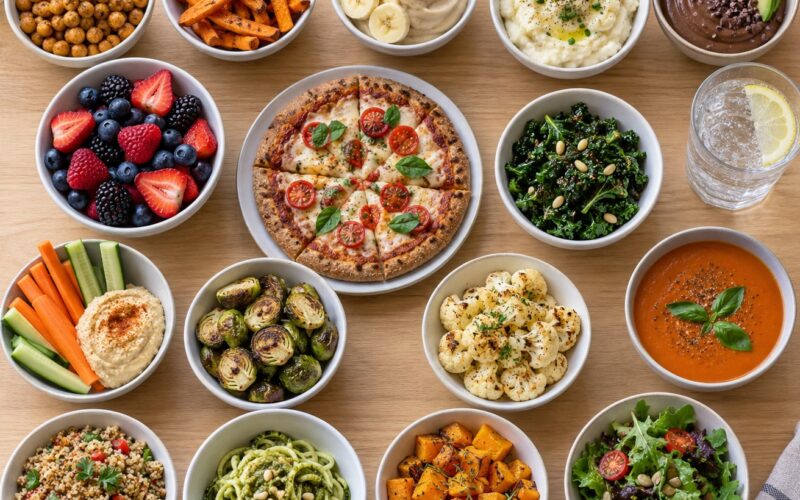
- Serve the same protein, the same pasta and the same sauce, with double the vegetables or salad.
- Use a smaller dinner plate. A nine-inch plate reads as full when a twelve-inch plate looks empty.
- Take a normal portion, then stop. Skipping the extra serving beats eating half, because the first portion actually satisfies you.
- Divide the extra portions into containers right after serving, so they are a future meal rather than an immediate one.
- Drink a glass of water first, wait ten minutes, and start with the vegetable portion.
Storage rules matter here. Cool food quickly in shallow containers and refrigerate it within two hours. Reheat to 165°F for poultry and leftovers with rice or pasta, 160°F for ground meat, and 145°F for whole cuts of meat and fish.
5. Flavor With More Than Added Fat
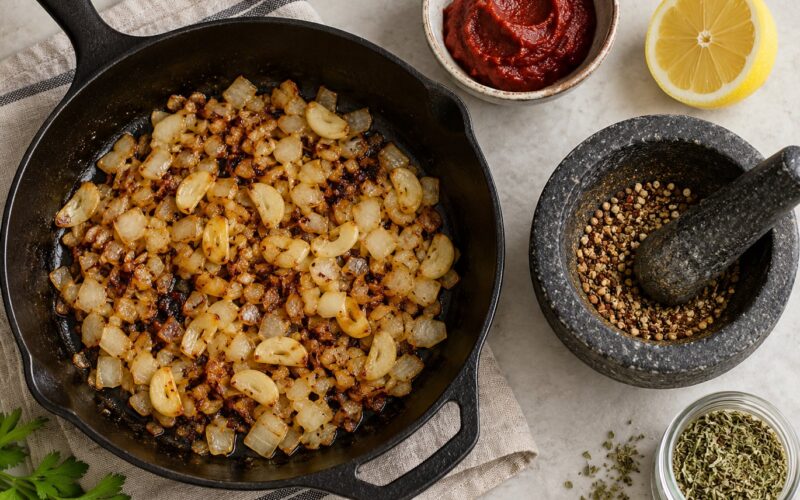
Fat is an easy flavor carrier, which is why removing it makes food taste flat. Replace the carrier rather than removing the flavor. Toasting spices in a dry pan for thirty seconds before they go into the dish wakes up a sauce that now tastes thin. Broiling adds browning and a faint char in the last two minutes under the heat. A spoonful of tomato paste, a splash of vinegar, a strip of lemon zest or a spoon of capers brings brightness to a broth or a beige sauce.
Garlic, onion, ginger, smoked paprika, cumin, chili flakes and fresh herbs cost very little and carry a lot. Miso, a spoon of Worcestershire or a splash of white wine deepen savory dishes, and none of them add meaningful calories. Cheese is the exception: it is expensive in flavor and expensive in calories, so keep it on the top of a dish where you taste every bite instead of stirring it through the pot.
6. Recheck the Meal as a Whole
After two or three dinners, compare the numbers and keep only the changes that worked on two counts: they saved calories and you still wanted the leftovers the next day.
Write it down in one line per change. Oil measured instead of poured, about 200 calories saved. Yogurt instead of sour cream in the dip, about 40. One cup of vegetables added, about 50. Six months later you can rebuild any favorite meal from that list without thinking about it, which is the entire point.
A worked example makes the method obvious. Take a nine-inch pan of lasagna built with whole-milk ricotta, three layers of pasta, a jar of jarred sauce with meat and a full cup of mozzarella on top, which runs to roughly 900 calories per square. Cut the ricotta by half with part-skim, use two cups of sauce with pureed vegetables folded in, trim the mozzarella to three-quarter cup and skip the top layer of pasta. That lands near 500 calories per square, and it still looks and pulls like lasagna, which matters more than the label.
Common Mistakes
Five failures account for most disappointing results. Each one has a fix that takes under a minute.
Cutting calories and doubling the portion. A lightened meal plus a second helping of bread and pasta lands exactly where you started. Fix the ratio instead: same protein, same starch, double vegetables.
Buying diet products instead of changing the recipe. Low-calorie sweetener packets and zero-sugar sauces are expensive, and they do nothing for the 500 calories of oil in the pan. Change the cooking and skip the specialty aisle.
Removing the fiber along with the food. Dropping fruit, beans, whole grains or vegetables shrinks the meal, and fiber is a large part of why it filled you. Replace calories with volume, not with emptiness.
Going so light that the meal is not worth eating. This is the complaint that shows up again and again in swap discussions, and it is the reason people rebound later in the day. A meal that is genuinely satisfying keeps protein high, keeps some fat in it and still tastes like the dish you cooked.
Swapping things that carry the texture. Yogurt in a baked dessert splits and goes gummy. Part-skim cheese will not melt into a stretchy pizza layer. Skim milk in a caramel sauce tastes flat. For baked goods, cut sugar and butter by a quarter rather than replacing them, and bake a few minutes less.
Two more things people underuse. Restaurants will do most of the work for you if you ask for a sauce or dressing on the side and skip the croutons, the butter and the bread basket, and a lightened takeout order costs exactly what the heavy one did. And when you cook for a family, lighten the shared dish instead of making a second dinner: use part-skim cheese, broth in the sauce, a measured tablespoon of oil in the pan and extra roasted vegetables on the side. Nobody detects it, and you are not cooking twice.
Frequently Asked Questions
What is the easiest way to make a favorite meal lower in calories?
Measure the oil and butter first. Added fat is the single biggest source of calories in most home recipes, and a tablespoon of oil is roughly 120 calories. Cutting one tablespoon from a stir-fry or casserole saves more than most people achieve with five other changes, and it costs nothing in flavor. Start there, then move on to cream, cheese and sugar.
How can I reduce calories in a meal without giving up the main food?
Keep the main food and change what comes with it. Serve the same pasta, chicken or beans, then lighten the sauce, trim the cheese, add double the vegetables and cut the added oil. The dish stays recognizable and satisfying because the protein and the starch are untouched.
Are lower-calorie substitutions always healthier than the original?
No. A lower-calorie swap is not automatically a better choice for you. Greek yogurt works well in a dip but splits in a baked dessert. Part-skim cheese melts acceptably but does not stretch like whole milk mozzarella. Consider saturated fat, sodium and sugar in the food you eat regularly, not calories alone, and check with a registered dietitian for your own situation.
How much oil or dressing should I use when cooking?
For a family-sized pan of vegetables or protein, one to two tablespoons across the whole dish is a reasonable starting point. For a single-serving skillet, one teaspoon is usually enough if you preheat the pan and mist it. Measure rather than pour. A bottle of oil going in a hot pan is the most common way a light recipe stops being light.
Can I lower calories in a meal served at a restaurant?
Yes, and it costs nothing extra. Ask for sauce, dressing or gravy on the side so you control the amount, skip the bread basket and croutons, choose grilled or roasted over fried, ask for a side salad or vegetables instead of fries, and take half of the entree home if the portion is large. The most expensive cut is often the sauce and the butter that comes with it.
Will eating vegetables first really help me control calories?
For most people, yes, and the mechanism is volume rather than magic. A first portion of vegetables and a glass of water fills some of the space that a larger starch portion would have filled. It works best alongside slower eating and real protein, not as a substitute for them. If you find vegetables-first makes you unsatisfied, eat them alongside the main dish instead.
Conclusion
Five moves cover almost every meal. Measure your oil and butter, and cut a tablespoon. Swap cream and sour cream for milk, broth and Greek yogurt. Trade whole-milk cheese for part-skim, and use a quarter less. Bake, broil, steam or air-fry instead of deep-frying. Serve the same portion with double the vegetables.
Start with one dinner this week rather than a full reset. Weigh the oil before it goes in the pan, note the change, and by 2026 you will know which swap matters most in your own kitchen, which is the version of this habit that actually sticks.