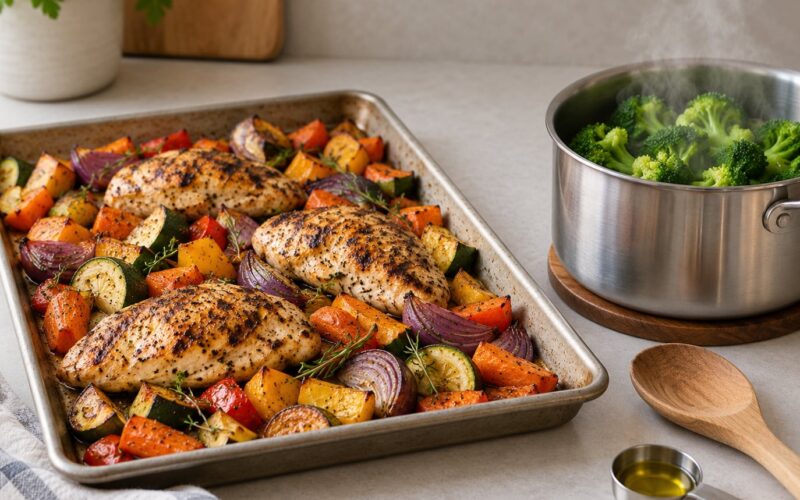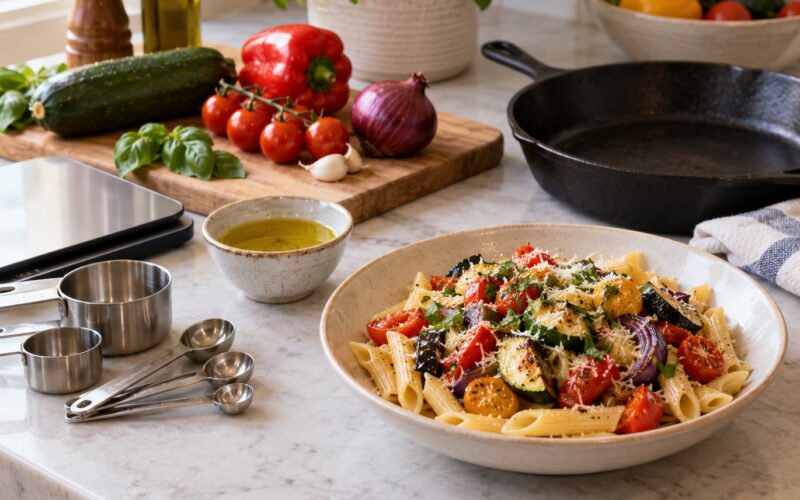
To season food without salt, build flavor from four levers: acid, aromatic herbs and spices, umami, and browning. Squeeze lemon over the pan, bloom cumin in hot oil, stir in tomato paste or miso, then taste before you serve. The whole method takes the ten minutes you were already spending, and it works in soups, sauces, vegetables, grains, and meat.
One honest caveat first: nothing tastes like salt. Cooks who promise a single jar that replaces it are selling something. What works is stacking several mild flavors until the dish reads as finished instead of flat.
Salt does more than make food salty. It suppresses bitterness, makes sweetness and aroma taste more intense, and balances acidity. Remove it without replacing those three jobs and you get the classic low-sodium failure: food that tastes tired no matter how much lemon you squeeze on it.
Lowering sodium is worthwhile for blood pressure, heart health and fluid retention, and this is a practical way to cook that way without losing your appetite for dinner by the end of the week. If you have kidney disease, heart failure, or swelling in pregnancy, ask your clinician for a personal target before changing how you cook.
Table of Contents
- What You Need
- Step-by-Step: How to Season Food Without Salt
- Build the Savory Base
- Add Acid, Herbs, and Spices
- Finish With Texture and Richness
- Taste and Adjust
- Common Mistakes
- Frequently Asked Questions
- What is the best substitute for salt when cooking?
- How can I add flavor without using salt or sodium?
- Are lemon juice and vinegar healthy salt substitutes?
- What herbs and spices make food taste savory without salt?
- How do I know if a packaged seasoning is low in sodium?
- Can I use this method for soups, sauces, vegetables, and meat?
- Conclusion
What You Need
Six kinds of pantry ingredients, and you only need two or three per dish. Everything below is optional; the point is to have options within reach so a bland pan becomes a finished one.
- Acid: lemon or lime (juice and zest), rice vinegar, white wine vinegar, cider vinegar, red wine vinegar, balsamic, pickling brine, or the liquid from a jar of kimchi.
- Aromatics: garlic, onion, shallot, leek, ginger, scallion, celery, fennel, fresh chilies.
- Herbs: parsley, cilantro, dill, mint, basil, chives, tarragon for the delicate ones; rosemary, thyme, oregano, sage for the hardy ones.
- Spices: black pepper, cumin, coriander seed, smoked paprika, chili powder, turmeric, cinnamon, mustard powder, sumac, za’atar.
- Umami: white or red miso paste, tomato paste, dried porcini or shiitake, nutritional yeast, seaweed, a saved parmesan rind.
- Richness and crunch: olive oil, tahini or nut butter, toasted nuts and seeds, panko or coarse breadcrumbs.
A heavy skillet or sheet pan matters more than any gadget, because browning is where a lot of free flavor comes from. A small dry pan for toasting spices, a microplane for zest, one clean tasting spoon, and a jar with a tight lid for homemade blends cover the rest.
When you shop, read the first three ingredients. Seasoning blends, spice rubs and “healthy” sauces often list salt as ingredient one, which quietly undoes the whole project.
Step-by-Step: How to Season Food Without Salt
Run the same loop for every dish: build a savory base, add acid plus herbs and spices, finish with texture and richness, then taste and adjust. The order matters more than the ingredients.
Build the Savory Base
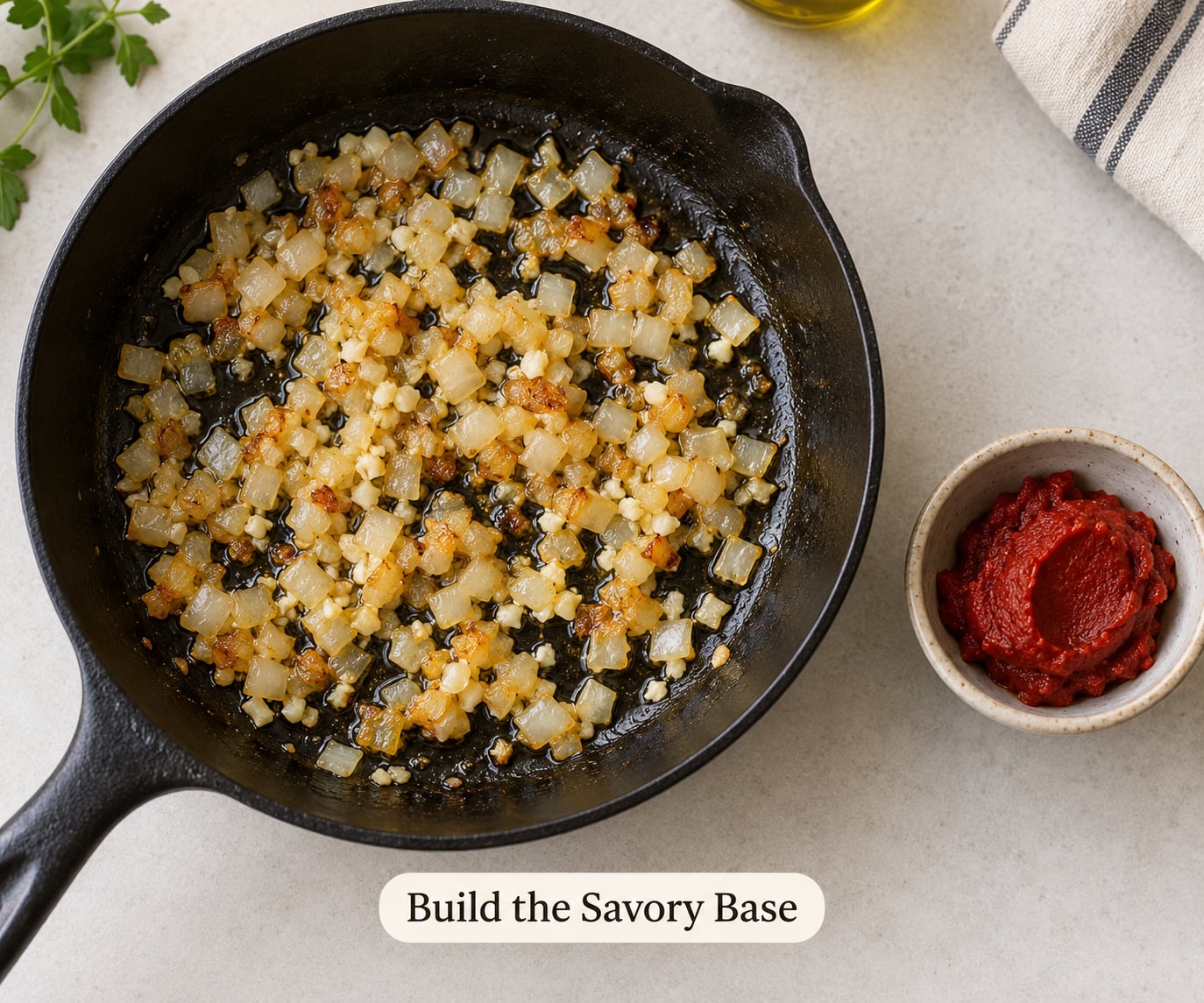
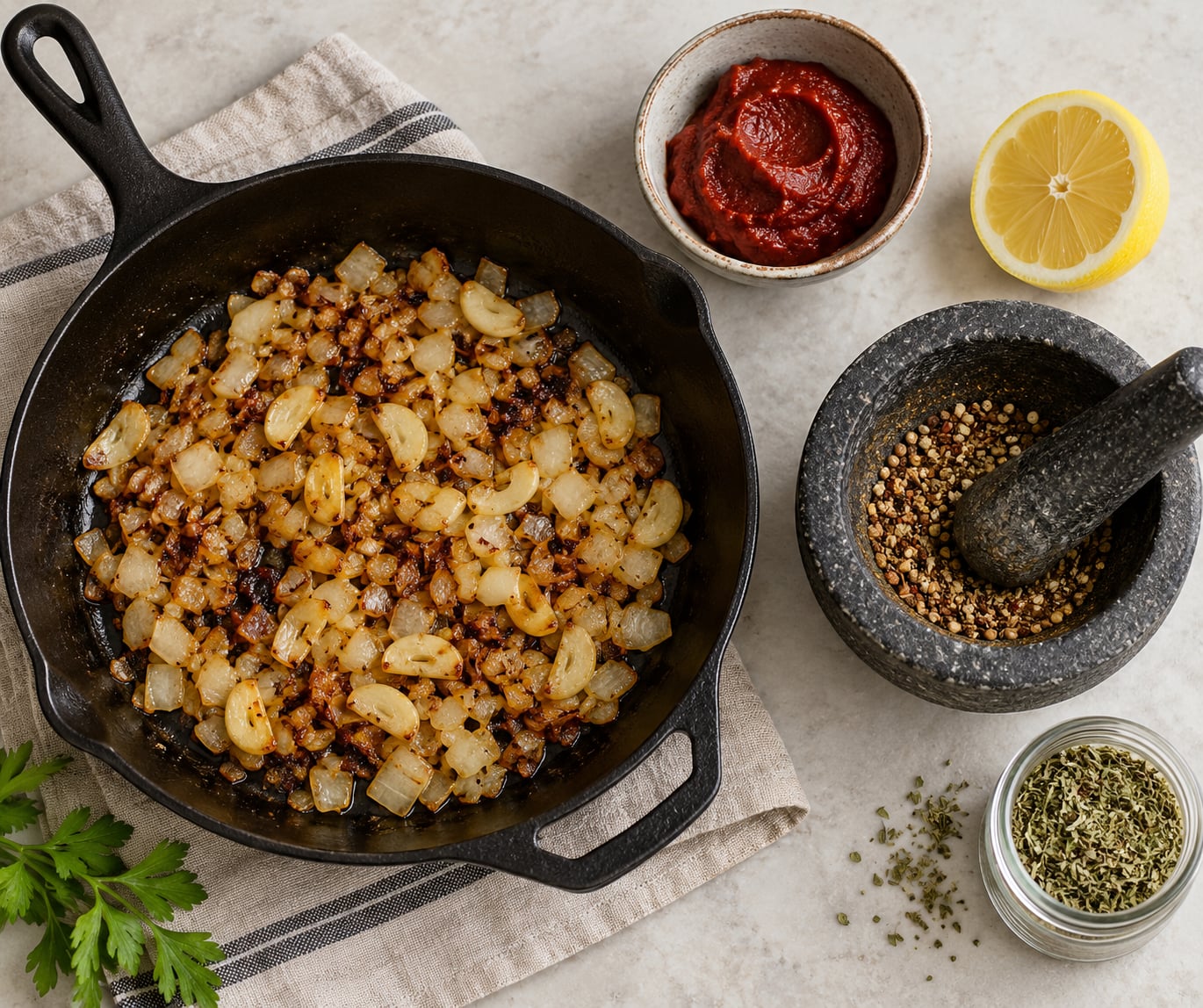
Start with a soffritto. Cook diced onion, shallot or garlic in a spoon of olive oil over medium heat until soft and translucent, then push the heat up a notch and let the edges catch, roughly 8 to 10 minutes for onion. That browning is hundreds of flavor compounds forming without a grain of salt, and it is the step most people skip when food tastes flat.
Add your umami to that base. A tablespoon of tomato paste needs about a minute of cooking to lose its raw, flat edge and turn jammy; miso goes in after the pan comes off the heat, because high heat flattens it; a rinsed tablespoon of a dried porcini or shiitake, or a strip of kombu dropped into the pot during the last fifteen minutes of a simmer, dissolves into the broth and leaves behind a deep savoriness. Unsweetened chicken, vegetable or mushroom broth carries the same idea in liquid form, and a parmesan rind dropped into a simmering sauce does its quiet work in the background.
Regional kitchens have leaned on this for centuries. Chinese home cooking leans on ginger-scallion oil, doubanjiang, Shaoxing wine and a heavy dose of browning. Indian cooking uses asafoetida, toasted cumin and black mustard seeds bloomed in oil. Japanese cooking builds on dashi, kombu and mushrooms. None of these are salt-free, and none of them need to be, but they all show the pattern: aroma and slow browning do the seasoning work.
If you are cooking poultry or seafood with this method, safety does not change. Pull chicken to 165°F (74°C) in the thickest part, and whole cuts of beef, pork, lamb or fish to 145°F (63°C). Then season it.
Add Acid, Herbs, and Spices
Acid is the lever people underestimate. It brightens, it makes sweetness taste sweeter, and it stands in for the balance work salt usually does. Which vinegar you pick changes what you get:
| Acid | What it adds | Use it in |
|---|---|---|
| Lemon or lime juice | Fast brightness, floral top note | Roasted vegetables, fish, salad dressings, beans |
| Rice vinegar | Clean sharpness, very light | Stir-fries, dressings, quick pickles, cucumber |
| White wine vinegar | Bright and rounded, gentle | Sauces for chicken and pork, soups, marinades |
| Cider vinegar | Fruity, malty depth | Bean and lentil dishes, slaw, glazes |
| Red wine vinegar | Tannic, jammy richness | Stews, reductions, mushroom dishes |
| Balsamic | Dark sweetness and body | Finish only: glaze, drizzle over tomatoes or potatoes |
| Pickling brine or kimchi liquid | Fermented savoriness, already seasoned | Marinades, fried rice, sandwiches, dips |
Timing is the part people miss. Strong vinegars like cider, red wine and balsamic go in early and cook down for at least ten minutes, or they taste raw and sharp. Lemon juice, lime and rice vinegar go in at the end, off the heat, so the aroma survives.
Herbs split into two groups. Woody herbs (rosemary, thyme, oregano, sage) go in with the onions and at the start of a roast, because their aroma compounds need heat and time. Soft herbs (parsley, cilantro, dill, mint, basil, chives, tarragon) go in in the last minute of cooking or on the plate, because heat cooks away what makes them worth adding.
Toast your ground spices in a dry pan for 30 to 45 seconds before they hit the dish, and grind whole seeds as late as you can. Stale jarred powder has almost no aroma left, which is why some people think seasoning techniques do not work.
Two blends worth making in batches and keeping in a jar:
Everyday savory blend (about half a cup). 2 tablespoons smoked paprika, 2 tablespoons garlic powder, 2 tablespoons onion powder, 1 tablespoon dried oregano, 1 tablespoon black pepper, 1 tablespoon mustard powder. Good on roasted potatoes, eggs, chicken, cauliflower, and any vegetable heading for the oven.
Warm bright blend (about half a cup). 2 tablespoons ground cumin, 2 tablespoons coriander seed, 1 tablespoon dried mint, 1 tablespoon cinnamon, 2 teaspoons Aleppo pepper or red pepper flakes. Good on chickpeas, carrots, lentil soup, roast chicken, and grain bowls.
Finish With Texture and Richness
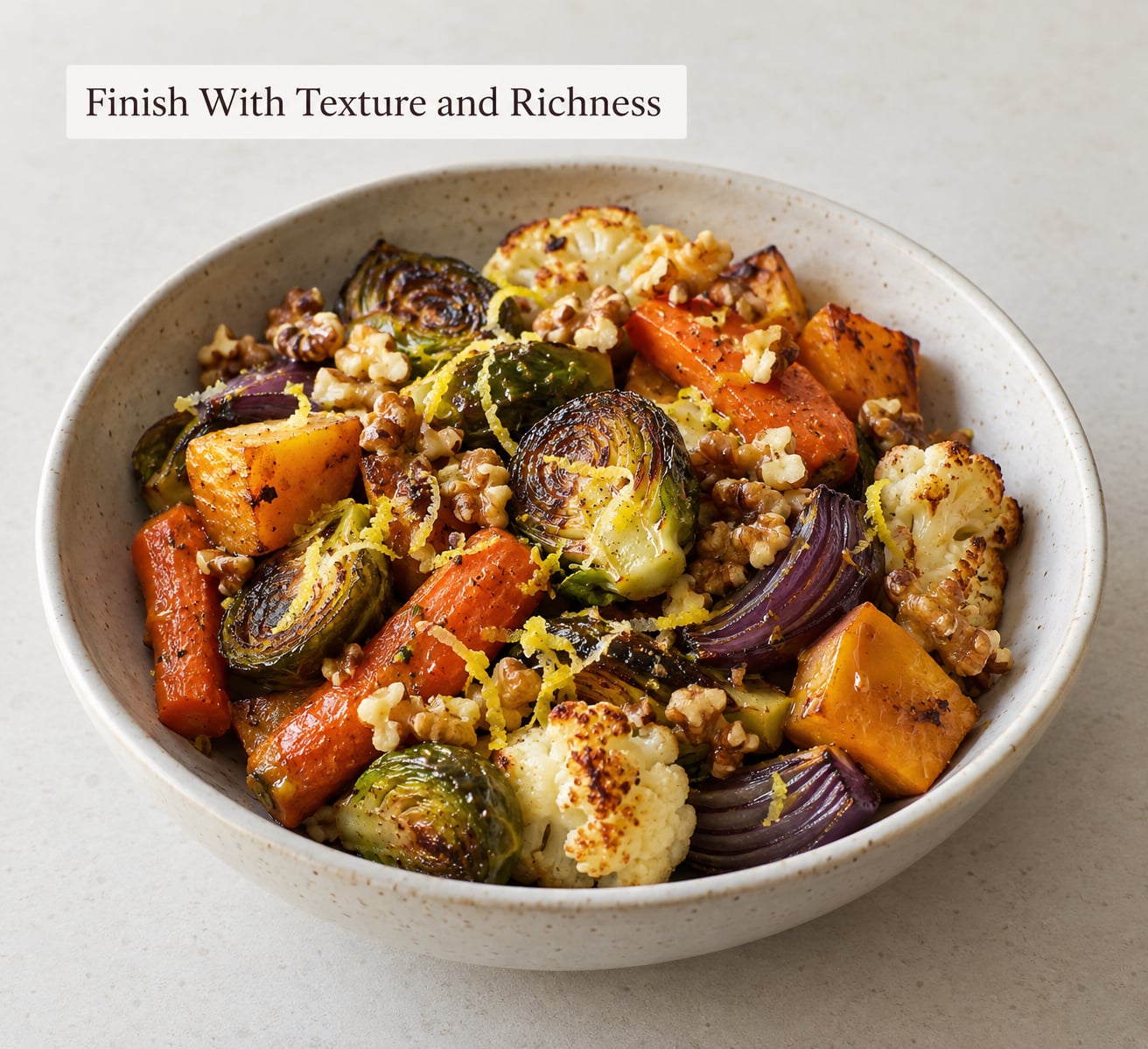
A dish seasoned without salt needs more contrast, not less. Fat carries aroma compounds that water cannot, so a thread of olive oil over roasted vegetables or a spoonful of nut butter stirred into a sauce does more than add calories; it delivers the flavor you were trying to build.
Then add crunch. Toasted walnuts or hazelnuts on a roasted dish, sesame seeds on a stir-fry, panko crushed over a casserole, or toasted sunflower seeds in a salad all give the mouth something to notice.
Tahini thinned with water and lemon, or a spoonful of any nut butter, adds body to sauces that thin out without salt. Freshly grated cheese or nutritional yeast works the same way at the table.
Taste and Adjust
Taste the food hot, from the center of the pan, with a clean spoon each time. Cold food tastes blander, and a dish that needs salt at the table almost always needed acid and aroma in the pan.
Correct in a fixed order, adding a little each time and tasting again:
- Acid. A squeeze of lemon or a teaspoon of vinegar. This fixes more flat dishes than anything else.
- Umami. A spoonful of miso, tomato paste, mushroom powder, or nutritional yeast.
- Aromatic spice. Smoked paprika, cumin, chili powder, or black pepper for warmth and heat.
- Sweetness. A pinch of sugar, honey, or a splash of mirin-style cooking wine, which makes everything else taste more like itself.
- Richness and texture. Olive oil, nut butter, toasted nuts, fresh herbs.
If a dish reaches the table and still tastes underseasoned, work fast: a squeeze of lemon over the top, thirty seconds of tossing, then a taste. Add a second squeeze only if it needs it. Then a pinch of your blend and a final drizzle of oil.
Common Mistakes
Reaching for pepper as the whole solution. Black pepper adds heat and aroma, not body. It works as the last five percent of a dish, not the first.
Adding every spice in the cupboard at once. Six spices in one pan taste like six spices and nothing else. Pick two or three that share a profile and let them lead.
Overcorrecting with vinegar. Pouring in more acid than a dish needs is the fastest way to make it inedible. Add a teaspoon, stir, taste, then decide.
Assuming a seasoning blend is salt-free. Plenty of garlic seasoning, ranch seasoning and spice mixes start with salt. Check the label; if salt is ingredient one, put it back on the shelf and build your own blend instead.
Overlooking sodium hiding in the pantry. Soy sauce, tamari, fish sauce, Worcestershire sauce, bouillon, brined olives, capers, kimchi, chili sauce, coconut aminos and most bread carry noticeable sodium. So do some but not all vinegars, which is another reason to read the label.
Using spices that have gone quiet. Ground spices lose aroma within months and stale powder delivers nothing. Store them away from heat and light, replace them roughly every year, and test by warming a pinch in your palm; if it smells like nothing, it is nothing.
Tasting after serving. A dish served without a final taste is a dish nobody seasoned. Put the last acid and the last herbs on at the table, right before it lands.
Frequently Asked Questions
What is the best substitute for salt when cooking?
There is no single substitute, because salt does three jobs at once: it suppresses bitterness, boosts sweetness and aroma, and balances acidity. The closest stand-ins are lemon or lime juice for brightness, miso or tomato paste for savory depth, and herbs and spices for aroma. Use two or three together rather than hunting for one jar.
How can I add flavor without using salt or sodium?
Brown your ingredients first, then add aromatics, a vinegar or citrus, and an umami ingredient such as miso, tomato paste or dried mushroom. Finish with fresh herbs and a fat like olive oil, and taste at every stage. When a dish tastes flat, correct in this order: acid, umami, spice, sweetness, then richness.
Are lemon juice and vinegar healthy salt substitutes?
Used in normal cooking amounts, yes. Both add flavor with essentially no sodium and no calories, and citrus also brings vitamin C. The only caution is quantity: too much acid tastes sharp and can bother people with reflux or sensitive stomachs. Start with a teaspoon, taste, then add more.
What herbs and spices make food taste savory without salt?
The savory ones come mostly from warm spices and mushrooms: cumin, coriander, smoked paprika, chili powder, mustard powder, turmeric, dried oregano and black pepper. Dried thyme, rosemary and bay add depth to long-cooked dishes. For a savory hit without any spice, use miso, nutritional yeast or dried mushroom powder in small amounts.
How do I know if a packaged seasoning is low in sodium?
Read the nutrition panel, not the front of the jar. Look at milligrams of sodium per serving and multiply by the servings you would realistically eat, then convert milligrams to grams by dividing by 1000. A blend with under 100 mg sodium per teaspoon is genuinely low; anything under 140 mg per serving counts as low sodium on the label.
Can I use this method for soups, sauces, vegetables, and meat?
Yes, and it is most reliable in those four. Add miso, tomato paste and dried mushroom early in soups, keep lemon and rice vinegar for the end of sauces, roast vegetables hard with olive oil and finish with zest, and lean on garlic, ginger, paprika and char for meat. Poultry still needs to reach 165°F (74°C) internally.
Conclusion
Seasoning food without salt is less about finding a replacement than about stacking four flavors in a fixed order: one savory, one acidic, one aromatic, one textural. Pick a dish you already make every week, brown something in it properly, and taste it three times before it leaves the kitchen.
Give it a week before you judge it. Most people find their taste buds recalibrate within a few days, and after that the salt shaker stops being the only way to make dinner taste like dinner.