Healthy cooking methods that cut calories all work the same way: they cook food with air, steam or water instead of a bath of hot oil, so you eat the same food with far less added fat. A tablespoon of oil is roughly 120 calories, and deep frying can leave a piece of food holding onto several tablespoons of it. Swap the method and the same chicken breast or potato can land 100 to 300 calories lighter without changing the portion.
I cook most of my meals at home, and the change that made the biggest difference was not eating less. It was measuring the oil instead of pouring it, and moving more dinners to the oven, the grill or a steamer basket. This guide ranks the methods that actually cut calories, explains how each one works, and gives you the settings, timings and safety notes so you can use them on a weeknight.
Calorie figures below are typical ranges from nutrition databases and USDA guidance, not promises about your food. The same food varies with size, cut and brand.
Table of Contents
- Healthy Cooking Methods That Cut Calories at a Glance
- The calorie math that decides most of this
- 1. Steaming Vegetables and Proteins
- How to steam on the stovetop and in the microwave
- Why steaming ranks high among healthy cooking methods that cut calories
- 2. Baking Instead of Deep-Frying
- 3. Air-Roasting with Minimal Oil
- Settings that work
- What not to put in an air fryer
- 4. Grilling Without Heavy Oil
- 5. Poaching for Delicate, Low-Fat Meals
- 6. Boiling Foods Without Adding Oil
- 7. Sauteing with a Measured Amount of Oil
- 8. Microwaving for Portion-Controlled Cooking
- 9. Roasting with Vegetables Instead of Excess Oil
- 10. Using Nonstick Cookware to Reduce Added Oil
- 11. Cooking in a Small Amount of Broth or Wine
- 12. Batch-Cooking Lean Components
- Frequently Asked Questions
- What is the healthiest cooking method for cutting calories?
- Do I need oil to cook vegetables in a way that reduces calories?
- Is baking healthier than frying?
- Which foods work best with these cooking methods?
- Does air frying really cut calories?
- How do these methods fit into a weight-loss eating pattern?
- Conclusion
Healthy Cooking Methods That Cut Calories at a Glance
Below is the ranking by how much added fat the method typically leaves in the food. Lowest added fat comes first.
| Method | Added fat | Calorie effect vs deep frying | Best for | Watch out for |
|---|---|---|---|---|
| Steaming | None | Lowest of any method | Broccoli, carrots, fish, eggs, dumplings | Flavor drifts without herbs or citrus |
| Boiling | None | Lowest of any method | Green beans, potatoes, pasta, legumes | Overcooking leaches flavor and water-soluble nutrients |
| Poaching | None | Lowest of any method | Eggs, white fish, chicken, fruit | Low heat only, easy to overcook |
| Microwaving | None to 1 tsp | Very low | Vegetable sides, fish, reheated grains | Uneven heating, needs a turn or a stir |
| Grilling | 0 to 2 tsp | 100 to 250 calories lighter | Chicken, steak, shrimp, vegetables | Flare-ups, charring, outdoor weather |
| Baking or roasting | 0 to 2 tsp | 100 to 250 calories lighter | Chicken, fish, tofu, sweet potatoes, chips | Drying out lean cuts of meat |
| Air-roasting | 0 to 2 tsp | 100 to 250 calories lighter | Wings, fries, wedges, reheated leftovers | Crowding the basket, dry food |
| Pressure cooking | None | Very low, and fast | Chicken, beans, grains, tougher cuts | Overcooks delicate vegetables |
| Pan-sauteing with measured oil | 1 to 2 tsp | 80 to 200 calories lighter than frying | Veggies, tofu, lean strips of meat | Free-pouring defeats the whole method |
| Broth or wine sauteing | 1 tsp or none | Low, and it seasons too | Mushrooms, onions, greens, deglazing pans | Reduce the liquid or it turns salty |
| Nonstick cooking | 0 to 1 tsp | Low, mostly by preventing sticking oil | Eggs, fish, tofu, thin vegetables | Scratching and needing more heat than expected |
| Batch cooking | Whatever you measure | Varies, but portions get consistent | Grilled chicken, roasted veg, beans, grains | Seasoning bland food at the reheating stage |
The calorie math that decides most of this
One teaspoon of oil is about 40 calories, one tablespoon is about 120, and a cup of cooking oil is more than 900. That is why the pour-from-the-bottle habit costs more than most people think. In r/loseit threads, people repeatedly name oil, butter, cheese, nuts and coconut oil as the sneaky sources in an otherwise careful week of eating.
The other half of the math is absorption. Deep-fried foods typically pick up a meaningful share of the fat they are cooked in, while steamed, baked, grilled and air-roasted foods absorb very little. One r/loseit user described air-frying half a skinless chicken breast and weighing salad dressing instead of pouring it, which is exactly the two-habit fix most people need.
1. Steaming Vegetables and Proteins
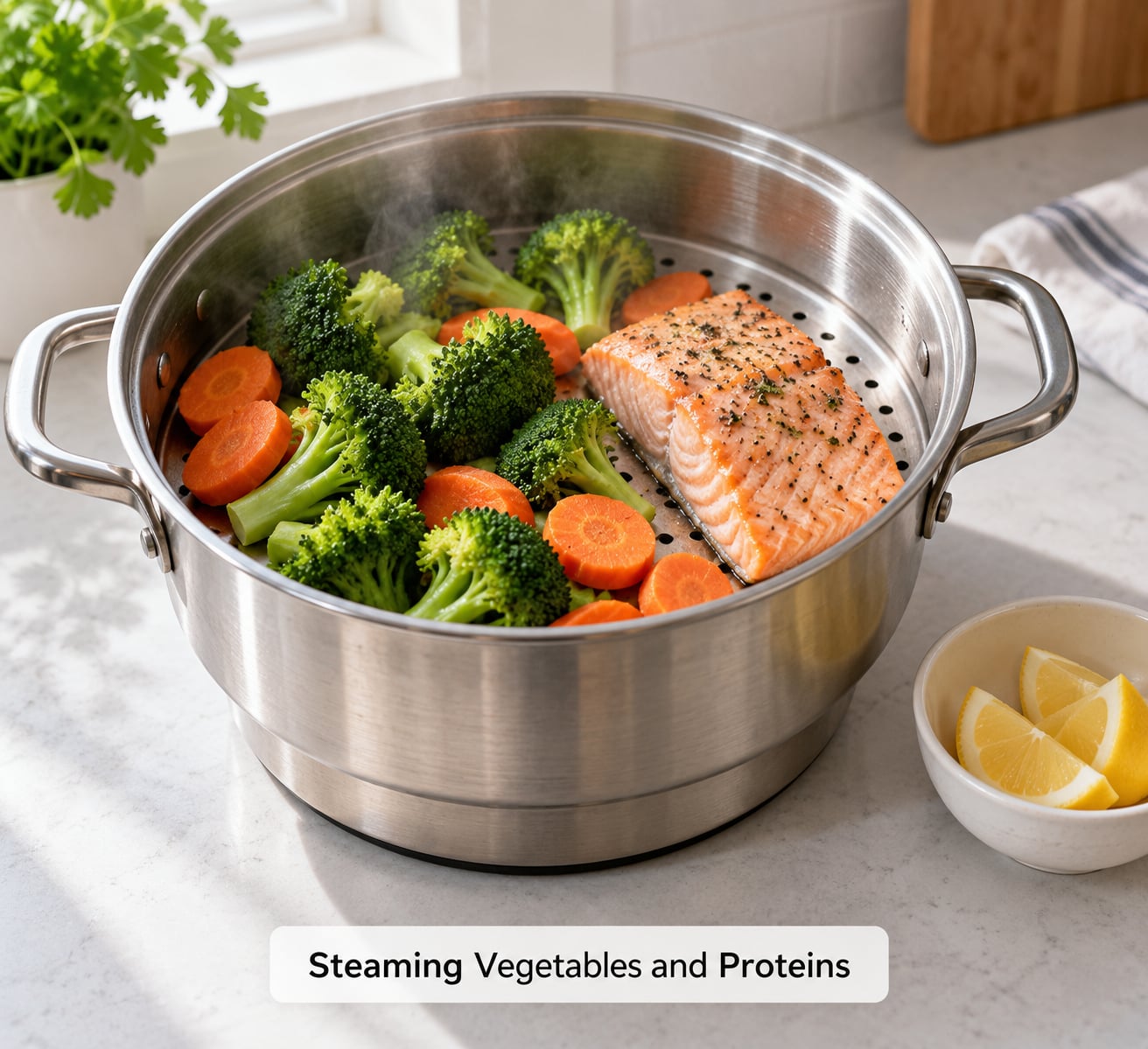
Steaming is the lowest-calorie method on this list because no fat touches the food. Water vapor cooks at about 212 F, which is hot enough for vegetables and fish but gentle enough that you do not need oil to prevent sticking. Nutrients stay in the food rather than leaching into a pot of water.
How to steam on the stovetop and in the microwave
Fill a pot with about an inch of water, bring it to a simmer, and set a steamer basket over the top with the lid on. Broccoli florets, sliced carrots, green beans and small potatoes take 5 to 8 minutes. Thicker cuts like a whole sweet potato need closer to 20 to 25.
Fish fillets steam in about 5 to 7 minutes depending on thickness. Keep them in a single layer and check early, because overcooked fish goes dry and dry food is the first thing people complain about when they try to eat lighter.
For the microwave, put a couple of tablespoons of water under a plate and cover it loosely. Two to three minutes works for a cup of broccoli or a small fillet. The trapped steam does the same job, and the microwave stays clean.
Why steaming ranks high among healthy cooking methods that cut calories
Among healthy cooking methods that cut calories, steaming wins on a single metric: nothing is added at all. A plain steamed vegetable keeps roughly the calories of the raw vegetable. The trade-off is flavor, which is why the forum advice is to finish with lemon, herbs or a measured splash of dressing rather than to serve plain steamed broccoli and wonder why nobody wants a second helping.
Timing matters more than people expect. A head of broccoli steamed 12 minutes tastes like the kitchen and a head steamed 5 minutes still snaps. Test the thickest piece first, not the thinnest.
2. Baking Instead of Deep-Frying
Baking is lower in calories than deep frying because it needs far less fat. A food dropped into a fryer sits in hot oil and soaks; the same food on a lined tray is cooked by dry heat and only gains what you brush on.
Line the tray with parchment or a silicone mat. That one step stops you from adding oil to stop sticking, which is the quiet reason so many baked “healthy” versions are still heavy.
Bake chicken breast, salmon, tofu and sweet potato wedges at 425 F. Vegetable chips made from kale, sweet potato or zucchini do well at a lower 375 F with a thin coating of oil, roughly half a teaspoon for a full tray. Watch them closely in the last three minutes, because thin slices go from done to bitter fast.
One honest caveat: baking is not automatically lighter. A frosting, a crumb topping or a creamy sauce added afterward will undo the savings. The method does the work only if what you add on top is not fat-heavy.
3. Air-Roasting with Minimal Oil
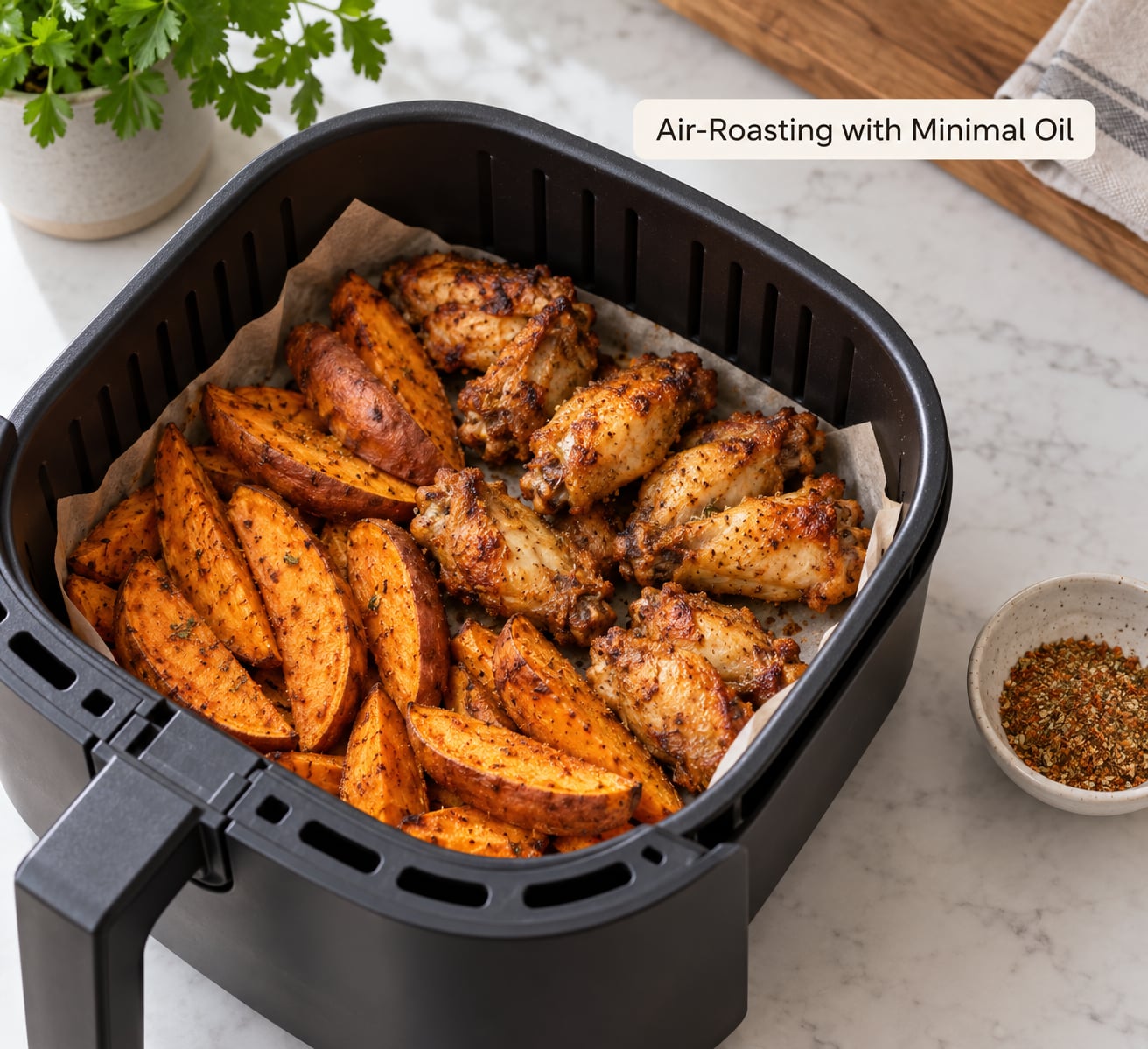
Air-roasting cooks with rapidly circulating hot air, so food browns and crisps without sitting in oil. It is not identical to deep frying, and readers are right to be skeptical when they hear otherwise. The honest version is that air-roasting cuts added fat a lot compared with a fryer, and it does not magically remove calories from a breaded, pre-fried food.
Settings that work
Wings and drumettes at 400 F for 25 to 30 minutes, turning once at the halfway mark. Potato wedges at 400 F for 20 to 25 minutes. Frozen fries follow the package timing, which is usually closer to 12 to 15 minutes at 400 F.
Give a light spray or about a teaspoon of oil if you want browning. Skipping it entirely works for vegetables with their own moisture, and for reheated leftovers, where the goal is crisp edges rather than a browned crust.
Do not crowd the basket. Food stacked on food steams instead of crisps, and a crowded basket is the single most common reason someone decides air-roasting does not work. Cook in two batches if you have to.
What not to put in an air fryer
Wet, battered or heavily breaded foods. A wet batter sloughs off and leaves crumbs stuck to the element, and the coating picks up oil rather than staying crisp. Whole eggs and anything that drips, like a whole seasoned tomato, can also leak grease into the base. Cheese, wet batter, whole eggs, packed fresh greens and saucy ribs are the five to skip.
Anything with loose leafy greens should go in a basket rather than loose in the machine, since the fan can pull light pieces into the element.
4. Grilling Without Heavy Oil
Grilling lets fat drip off instead of soaking in, which is why people rank it above frying for steak and chicken thigh. What you skip is the repeated basting. A brush of oil every four minutes is a tablespoon nobody counts.
Oil the food, not the grate. A measured teaspoon on the outside of a chicken breast is plenty; the pieces that fall off are where the flavor comes from anyway.
Cook lean proteins to a safe internal temperature and check with an instant-read thermometer. Poultry reaches 165 F, ground meat 160 F, and whole cuts of beef, pork and fish reach 145 F with a three-minute rest.
Watch flare-ups. Direct fat hitting coals is what turns a good dinner into a black, bitter one, so keep fatty cuts away from the flame and move them to indirect heat. Charring is not a flavor profile most people want when they are trying to eat lighter.
Grilling is also the most weather-dependent method here. If it is raining, the oven at 425 F with a tray on the middle rack does the same job for chicken, vegetables and lean pork.
5. Poaching for Delicate, Low-Fat Meals
Poaching is a gentle, oil-free method where food barely moves in a hot liquid. It is the best approach for eggs, white fish, chicken breast and poached fruit, all of which turn rubbery under dry heat.
Keep the liquid just below a simmer, around 180 to 190 F. A rolling boil makes the protein tighten and squeeze out moisture, which is the opposite of what you want.
Season the liquid rather than the food: a strip of kombu, halved shallots, peppercorns, a bay leaf or a splash of white wine. Those add flavor with no calories.
If you poach in the same liquid more than once, skim the fat off the surface before you reduce or reuse it. Otherwise a “light” dish quietly finishes with a slick of grease on top.
6. Boiling Foods Without Adding Oil
Boiling is useful when you want the texture of the food to stay firm and you do not need browning. Green beans, eggs, potatoes, pasta and dried beans all cook well with zero added fat.
Salt the water, and treat the cooking liquid as seasoning. Pasta water seasoned before you drain it transfers directly to the noodles, and it is the cheapest flavor in the kitchen.
Start testing for doneness two minutes earlier than the recipe says. Boiling is where most vegetables quietly fall apart and go watery, and the fix is simply a shorter time.
Long boiling times also cost you water-soluble nutrients, especially vitamin C and some B vitamins, because they move into the water you pour off. Shorter times and using the liquid in a soup or sauce both help.
Salt content is the other watch-out for anyone managing sodium. Boil and drain, then season the finished dish with herbs, pepper, lemon or a measured amount of broth so you control the total.
7. Sauteing with a Measured Amount of Oil
Sauting, also called pan-frying with measured oil, is the method most people actually use, and it sits in the middle of the list for a reason. It is not deep frying, but it goes wrong in one predictable way: a free pour from the bottle.
Measure first. A teaspoon for a skillet of vegetables and two teaspoons for a pound of chicken strips covers most home cooking. Then put the empty pan on the burner, add the oil, and wait for it to shimmer before food goes in.
Pick the oil for the temperature. Olive and avocado oils handle high heat better than an extra-virgin olive oil or butter, which brown and turn bitter fast. Use the higher-smoke-point oil for searing and the flavored oil for finishing.
Use a wide pan. More surface area means more browning with less oil, and browning is where flavor comes from.
The most useful trick in this whole guide: a teaspoon of oil plus a tablespoon of broth or stock does the job of two tablespoons of oil. Broth has almost no fat, so you get the same gloss on the vegetables without the calories.
8. Microwaving for Portion-Controlled Cooking
Microwaving needs no oil at all for vegetables, which makes it one of the easiest ways to cook a side dish in under four minutes. Fish and poultry cook well too, as long as you account for uneven heating.
Turn the food halfway. Microwaves hit the edges first, so a plate rotated once cooks far more evenly than one left alone.
Cover loosely. Trapped steam keeps a piece of salmon from drying out in two minutes flat.
Safety notes are worth stating plainly. Use a microwave-safe dish, never metal, and check for steam before you uncover it. Cook poultry to 165 F and let it rest a minute before checking, since the temperature keeps climbing after you pull it out.
The real win here is speed. A microwave side dish is often faster than heating a pan of oil, and speed is what keeps someone from reaching for takeout when they are tired.
9. Roasting with Vegetables Instead of Excess Oil
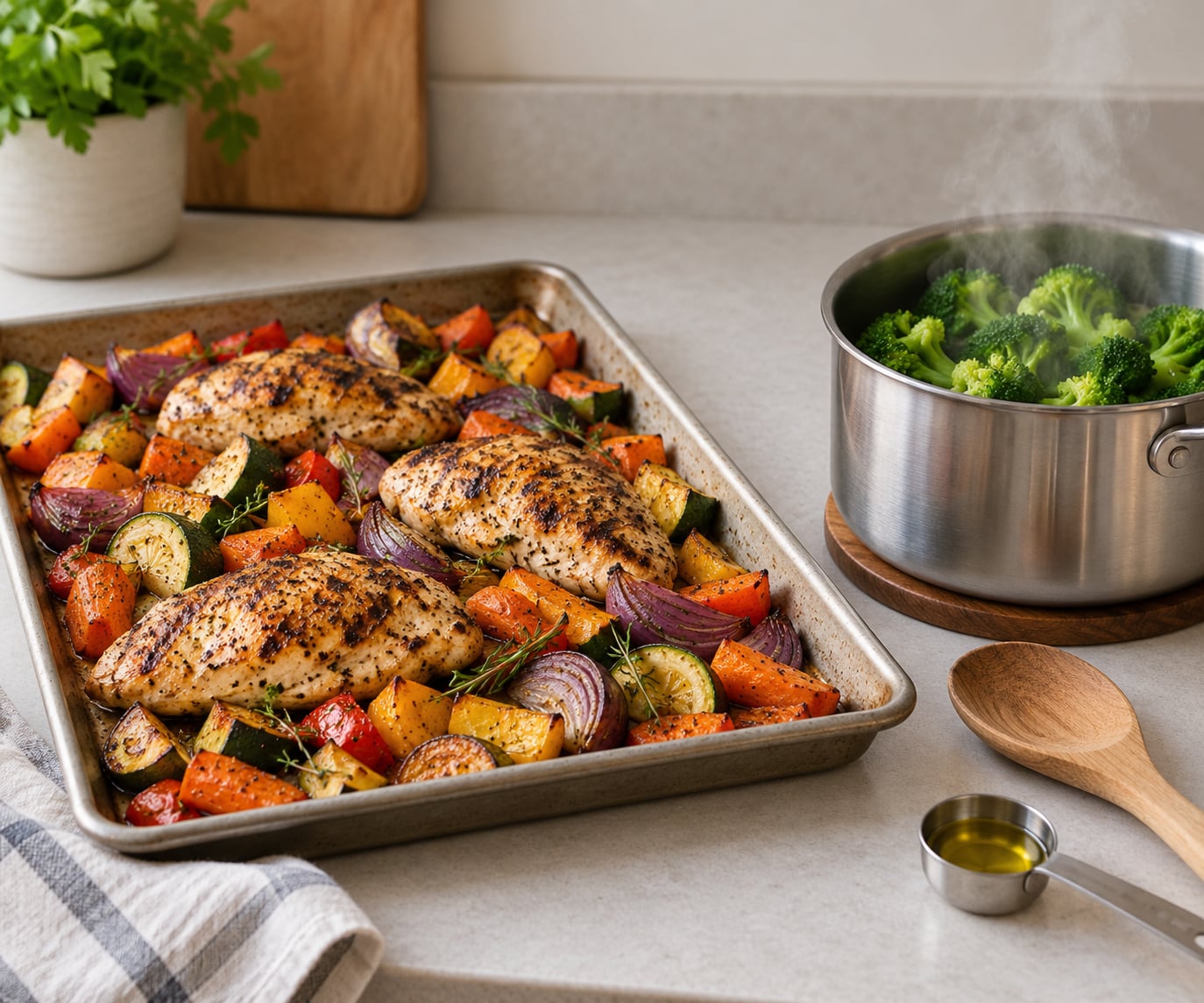
Roasting vegetables alongside lean protein is the most efficient weeknight strategy in this guide. One tray, one oven, and the vegetables pick up the fat and juices the protein gives off, so you need less oil on everything.
Heat the tray first. Food that hits a hot sheet starts browning immediately instead of sitting in moisture and steaming. This is the single biggest difference between good roasted vegetables and limp ones.
Leave space between pieces. Crowding drops the tray temperature and puts the food in steam.
Layer by moisture. Add dense items like potatoes and carrots first, then quick vegetables and protein, so everything finishes together.
Use vegetables that already hold water: onions, zucchini, peppers, tomatoes, squash, green beans. Roast drier things like cauliflower or sweet potato with a measured teaspoon of oil rather than drizzling.
Season twice. Salt and pepper go on before roasting, and a fresh grind of pepper plus a squeeze of lemon goes on after. Second seasoning costs nothing.
10. Using Nonstick Cookware to Reduce Added Oil
A good nonstick pan is one of the cheapest calorie tools you can own, because the main reason people add oil is to stop food sticking. A nonstick surface lets you cook eggs and fish with a teaspoon or none at all.
Do not use nonstick on screaming-high heat. Most of these pans are rated for medium to medium-high. Cranking the burner shortens the pan’s life and makes the coating release.
Use wooden or silicone utensils, and let the pan cool slightly before washing. Sudden temperature change is what warps and flakes a coating.
Replace a pan once the coating is deeply scratched or flaking, not just once food starts sticking. A scratched surface holds oil and works against you.
That applies to tofu and thin vegetables too. Extra-firm tofu sears in a nonstick pan with a teaspoon of oil where it would tear and soak oil in a bare cast iron skillet.
11. Cooking in a Small Amount of Broth or Wine
Broth and wine replace some of the oil in a saute, and they bring seasoning that plain water cannot. A tablespoon of broth has roughly 5 calories against 120 for a tablespoon of oil.
Use it in three ways. Deglaze a pan after searing with a splash of broth and scrape the browned bits up. Simmer vegetables in broth instead of fat. Or replace oil entirely in a saute with broth and a teaspoon of oil for sheen.
Choose low-sodium broth and check the label. A full cup of regular broth can carry more sodium than you want in a meal that already has salt in it.
Reduce or strain the liquid at the end. A sauce made from broth that you never reduced stays thin, and a thin sauce reads as watery rather than light. Two minutes over medium heat concentrates it.
A splash of dry white wine works the same way in fish and mushrooms, and it adds acidity that flattens a dish needing lift.
12. Batch-Cooking Lean Components
Batch cooking is not a cooking method, but it is how the other eleven pay off. People on r/loseit consistently credit cooking a week’s worth of food at once as the change that made a calorie deficit workable, because it removes the tired-night decision between cooking something and ordering something.
The reliable batch list is short: grilled or roasted chicken, roasted vegetables, cooked beans or lentils, and a pot of brown rice or quinoa. Cook components separately and combine them through the week.
Store the dressing and sauce separately. This is the portion-control trick people repeat most often on the forums: serving from a container rather than pouring from a bottle is what actually changes how much goes on the salad.
Reheat with a splash of water or broth rather than oil. It loosens the food back up without adding calories.
Food safety is straightforward: cool cooked food promptly and refrigerate it within two hours. Use refrigerated leftovers within three to four days, and reheat to 165 F.
Frequently Asked Questions
What is the healthiest cooking method for cutting calories?
Steaming is the lowest-calorie method because no fat touches the food at all, so nothing is added and nothing is absorbed. Poaching, boiling and microwaving are close behind for the same reason. The best choice also depends on the food: delicate vegetables do well steamed, while chicken, potatoes and salmon turn out better and more flavorful in the oven or on a grill, where dry heat browns the surface.
Do I need oil to cook vegetables in a way that reduces calories?
Not always. Steaming, microwaving and simmering in a small amount of broth all work without oil, and a tablespoon of broth has about 5 calories compared with 120 for a tablespoon of oil. If oil improves the flavor or stops sticking, measure a small serving with a teaspoon and pour it into the hot pan rather than dressing the food from the bottle.
Is baking healthier than frying?
Baking is usually lower in calories than deep frying because it requires much less added oil, and deep frying lets food soak up fat while baking mostly does not. The difference depends on the recipe, the portion and how much oil you actually use. Baking does not automatically make a dish lighter if you add a creamy sauce or a heavy topping afterward.
Which foods work best with these cooking methods?
Vegetable-based foods, lean poultry, fish, tofu, beans, eggs and potatoes are all versatile choices. Match the method to the texture you want: steam firm vegetables such as broccoli and carrots, bake potatoes or fish, grill lean protein, and air-roast anything you want crisp. Foods that are already battered or heavily breaded benefit least from any swap.
Does air frying really cut calories?
Air frying cuts calories compared with deep frying because food is cooked by circulating hot air instead of sitting in oil, so it absorbs far less fat. It is not a magic change, though. Breaded or frozen pre-fried items still bring their own fat with them, and the savings shrink if you spray the basket generously or add a sugary sauce afterward.
How do these methods fit into a weight-loss eating pattern?
They help because cooking method changes calories without changing portions or cutting out the foods you enjoy. Most calorie-cutting happens in the fat added during cooking, so measuring oil and moving dinners to the oven, grill or steamer is a lever you control daily. For individual guidance on calorie targets and any health conditions, talk to a doctor or registered dietitian.
Conclusion
If you only change one thing, measure your cooking oil. A teaspoon is about 40 calories and a tablespoon is about 120, and the difference between a pour and a measurement adds up across every meal in a week without touching your portions.
Then pick one dinner and move it. Steamed broccoli and salmon, baked chicken with a tray of vegetables, or grilled shrimp take the same effort and land 100 to 300 calories lighter than the fried version. Season with herbs, spices, lemon and a splash of broth, because food that tastes good gets eaten and food that does not does not.
Healthy cooking methods that cut calories are mostly about fat you never add in the first place. The food itself rarely needs to change.