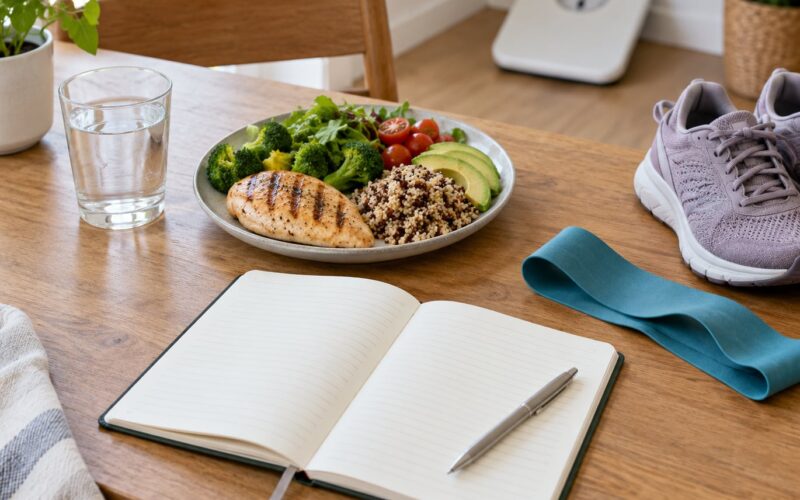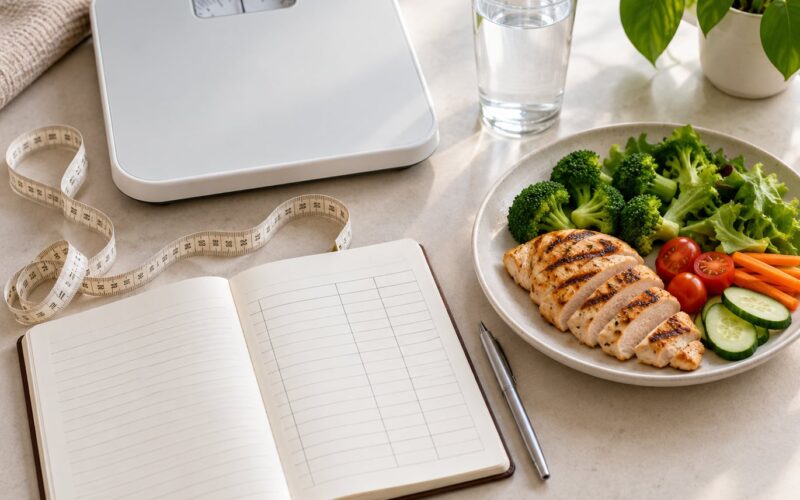
The honest answer: the way to lose weight after 50 is a small, steady calorie deficit plus strength training that protects the muscle you already have. Adults over 50 lose roughly a third to a half of their muscle mass by age 70 if they never lift anything, so the goal shifts from just a lower number on the scale to keeping your strength, mobility and energy while the fat comes off. Most people need 25-30g of protein per meal, two or three resistance sessions a week, daily walking, and 7-9 hours of sleep.
That plan takes weeks, not days. Two strength sessions and one food habit change this week will do more than a month of extreme dieting, and it will not cost you the muscle that keeps you independent.
This article is general information, not medical advice. If you have a health condition, take prescription medication, are pregnant or breastfeeding, or have had surgery, talk to your doctor or a registered dietitian before changing how you eat or exercise.
Table of Contents
- What You Need
- Step-by-Step: How to Lose Weight After 50 Safely
- 1. Establish a Realistic Baseline
- How do you know step one is working?
- 2. Build a Balanced, Satisfying Plate
- How do you know step two is working?
- 3. Add Strength Training Two or Three Times Weekly — the Part of How to Lose Weight After 50 Most People Skip
- How do you know step three is working?
- 4. Use Walking as Accessible Daily Movement
- How do you know step four is working?
- 5. Support Recovery With Sleep and Consistency
- How do you know step five is working?
- 6. Review Progress and Adjust the Plan
- How do you know step six is working?
- Common Mistakes
- Frequently Asked Questions
- Does menopause make weight loss harder?
- How much weight can I realistically lose after 50?
- What is the fastest way to lose weight over 50?
- How do I lose weight after 50 if I have bad knees?
- Are diet supplements safe for weight loss after 50?
- When should I see a doctor about my weight?
- Conclusion
What You Need
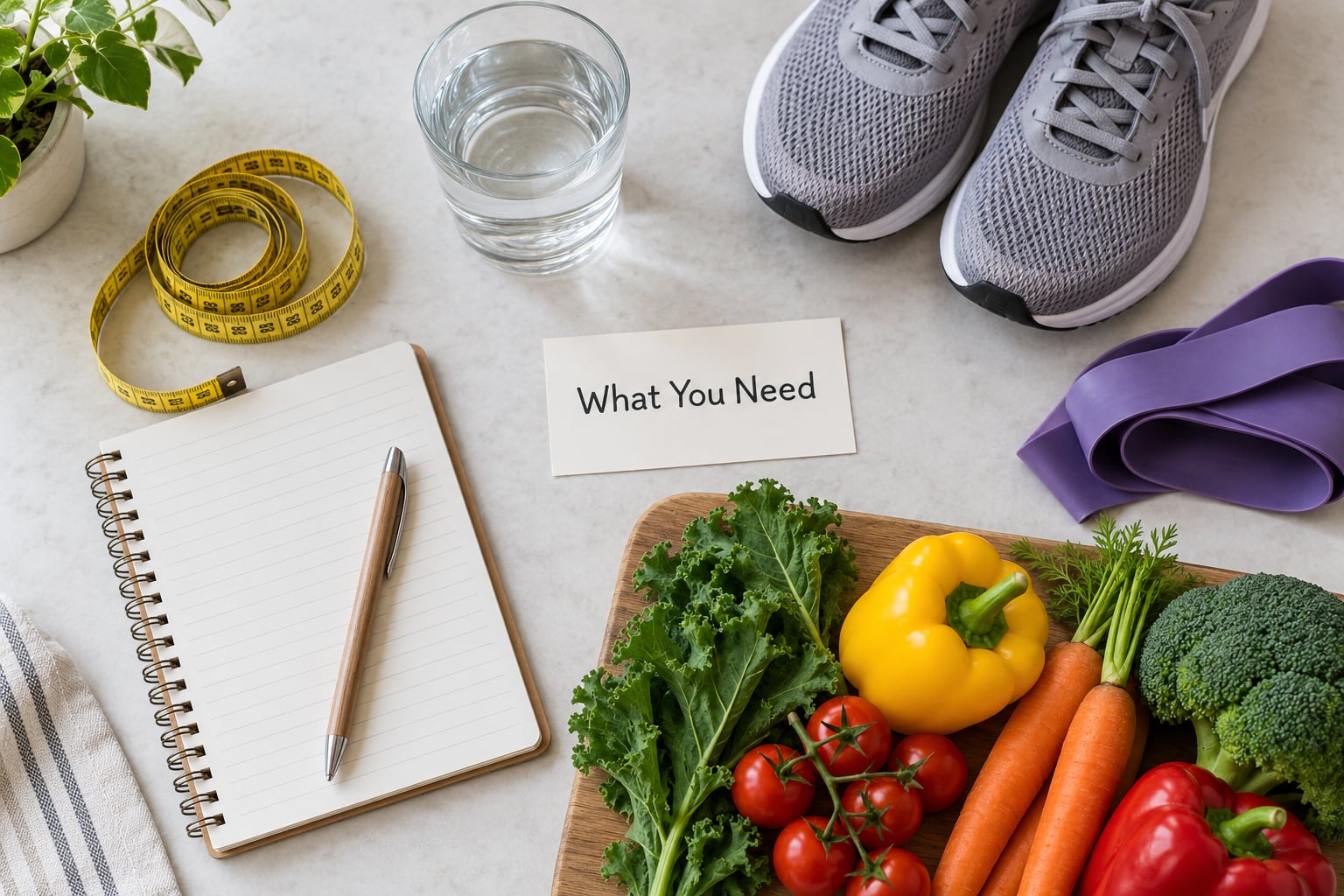
You need five things before you change anything, and none of them require a gym membership or a special program.
- A balanced eating pattern. Not a diet. A repeatable way of building three meals a day out of protein, vegetables or fruit, a starchy or whole-grain carbohydrate, and some fat. If you can describe your normal meals on paper, you can adjust them. If you cannot, that is the first thing to fix.
- Comfortable walking shoes. Supportive, broken in, and not the pair you wear to the garden in. Poor footwear is the most common reason a walking plan dies in week three, especially with knee or hip pain.
- One simple strength-training option. That can be resistance bands, dumbbells, a machine at a gym, or a short bodyweight routine at home. What matters is that you can move through six basic patterns without pain.
- A weekly tracking method. A notebook, a calendar on the fridge, or an app. Most people over 50 who lose weight and keep it off are the ones who wrote something down most days, even roughly.
- A clear plan for when you call a professional. Some weight change after 50 comes from medication, thyroid problems, sleep apnea, or menopause-related hormone therapy. Review your prescriptions with your doctor or pharmacist. Never stop or change a prescribed medication on your own to lose weight.
If your doctor has told you to limit exercise because of a heart condition, dizziness, chest pain, or joint replacement, that advice outranks everything in this article.
Step-by-Step: How to Lose Weight After 50 Safely
Six steps, in this order. Each one builds on the last, and each one tells you what to do, why it matters, and how to know it has become a habit rather than a phase.
1. Establish a Realistic Baseline
Start by watching yourself for seven days without changing anything. Note your meals, how much you move, how you sleep, your energy through the afternoon, and when hunger actually hits.
That week usually turns up more than a bathroom scale does. Most people find a nightly glass or a mid-afternoon vending machine run, not hunger. Others find that they sit for nine hours a day and call it “not much activity.” You cannot fix what you have not measured.
Set the pace here too. A reasonable rate of loss for adults over 50 is around 1 to 2 pounds a month, or about 0.5 to 1% of your body weight per week. Faster than that on a diet usually means losing muscle and water, and it almost always rebounds. Slower progress on a muscle-preserving plan is the point, not a failure.
How do you know step one is working?
You have a week of honest notes and one behavior you chose to change first. If you cannot name that one behavior, keep logging until you can. One change is buildable. Six changes is a plan you will abandon by week three.
2. Build a Balanced, Satisfying Plate
The simplest version: every main meal has a protein source, a vegetable or fruit, a whole-grain or starchy food, and a small amount of fat. That is it. It works because it is repeatable and because protein is what keeps you full at 54 and at 64.
Most nutrition guidance for adults over 50 points to 25-30g of protein per meal across three meals. That is roughly a palm-sized serving of fish, chicken, eggs, tofu, beans or Greek yogurt, and it matters more after 50 because the body handles protein less efficiently as we age, a pattern researchers call anabolic resistance. Spreading protein across meals beats cramming most of it into dinner.
Concrete breakfasts that hit the mark: Greek yogurt with berries and walnuts, eggs with vegetables and wholegrain toast, or overnight oats made with milk and a scoop of protein powder. Lunch is a salad with a substantial protein anchor, a grain, and olive oil dressing. Dinner repeats the pattern with different foods, not the same four ingredients every night.
On the cut side, the research is consistent. Controlled feeding studies have found adults eating ultra-processed foods consumed around 500 more calories a day than the same people eating whole-food versions of those meals, without reporting feeling hungrier. In practice that means fewer packaged snacks, sugary drinks, refined bread and pastries, and highly processed deli meat.
You do not have to remove a single food to make progress. Cutting back on alcohol matters more than most readers expect, since a nightly glass adds up quickly and shows up as mid-body fat. On the r/loseit and menopause forums, alcohol is repeatedly named as the thing that stalled people who were otherwise “doing everything right.” Reducing it is often the change that unsticks a plateau.
Intermittent fasting comes up often in perimenopause communities, and a shortened eating window can help some people eat less without counting. It is not required, it is not better than regular meals for everyone, and anyone with a history of disordered eating, diabetes, or low blood pressure should discuss it with a clinician first.
How do you know step two is working?
Most meals need no thought to build, and you hit your protein range without weighing anything. Hunger is present but manageable, and the evening is no longer a fight.
3. Add Strength Training Two or Three Times Weekly — the Part of How to Lose Weight After 50 Most People Skip
Two or three resistance sessions a week is the single highest-return habit in this guide, and it is the one most readers skip. Muscle is the tissue that keeps your resting metabolic rate from sliding further down and keeps stairs, groceries and getting out of a chair easy. You cannot diet around losing it.
Six foundational movements cover almost everything:
- Squat to a chair or a sit-to-stand
- Push against a wall, a counter, or the floor
- Row with a resistance band or a dumbbell
- Hip hinge with light dumbbells or a band pull-back
- Overhead press with light weights, or a band press if shoulders object
- Carry or core hold such as a suitcase carry or a dead bug
Two sets of 8 to 12 reps per movement, twice a week, is enough to start. Leave two or three reps in reserve at the start. Progress by adding a rep, then a set, then more weight, one change at a time over weeks.
Joint problems are the real barrier, not motivation. If squats aggravate your knees, do a box squat to a higher chair, split squats holding a counter, or sit-to-stands with a lighter load. If overhead presses pinch your shoulders, press the band in front of your chest instead. If bending forward bothers your back, hinge from the hips with a light dumbbell between your legs rather than rounding to the floor.
Walking and swimming are named as the most sustainable activities in over-50 weight-loss communities, and they are worth keeping. But they protect nothing on their own. Add the lifting.
How do you know step three is working?
You go twice a week without needing a motivational pep talk, and one movement gets noticeably easier over four to six weeks. That is muscle, and it is the thing that makes weight loss after 50 hold.
4. Use Walking as Accessible Daily Movement
Start with ten minutes and add time, not intensity. Most public health guidelines put adults at 150 minutes of moderate activity a week, and walking counts fully. That is roughly 30 minutes five days a week, or shorter and more often.
Daily steps are a useful guide because they are effortless to track. Between 7,000 and 10,000 a day suits most adults over 50 who can walk comfortably, and any number well above your current baseline is a win. Walking is also the one form of activity that keeps working when your knees, back or hips object to everything else.
To make it harder over time, add minutes first, then hills, then a faster pace where you could still talk but not sing. Brisk walking on a flat path is genuinely moderate effort. Safety basics: supportive shoes, flat or soft terrain, daylight if balance is a concern, and a route you know. Stop and get help if you feel chest pain, dizzy, or short of breath in a way that is new to you.
How do you know step four is working?
Walking feels like something you do, not something you force yourself to do, and your weekly total creeps upward without you dreading it.
5. Support Recovery With Sleep and Consistency
Seven to nine hours of sleep is a weight-management tool, not a nice-to-have. Poor sleep raises ghrelin, the hormone that signals hunger, and lowers leptin, the hormone that signals fullness, so short sleep genuinely makes you hungrier the next day. Sustained stress keeps cortisol elevated, and cortisol stores fat around the middle.
Three practical strategies: a fixed wake-up time, a wind-down hour where the last hour is screens-down and low effort, and keeping the training sessions on the calendar at the same two or three times. Consistency beats intensity in the first three months, and readers who maintain the loss usually describe an unremarkable routine rather than a dramatic transformation.
Watch for the sleep apnea signs: loud snoring, waking gasping or with a headache, daytime sleepiness, and feeling unrefreshed after seven hours. Snoring plus daytime sleepiness plus weight gain deserves a conversation with your doctor, because treating sleep apnea makes everything else on this list easier. Persistent insomnia, exhaustion that does not lift, or mood changes that disrupt your eating deserve the same attention.
How do you know step five is working?
Your energy is steadier through the afternoon, hunger arrives at mealtimes rather than at 9pm, and your routine survives a busy week.
6. Review Progress and Adjust the Plan
Review every four to six weeks, not every morning. Daily weight swings come from water, salt, bowel habits and hormones, and reacting to them is how people end up quitting a plan that was working.
Track the things that actually move:
- Energy through the day
- Strength at the six movements
- Clothing fit, especially the waistband
- Mobility such as stairs, shoes, and reaching
- Sleep and mood
- Blood pressure or lab markers if you already track them with your doctor
A stall of four to six weeks is a plateau, not a failure, and it is the most common complaint in over-50 weight-loss forums. Work through these five checks in order:
- Check your actual intake. Portions creep, oils and sauces hide calories, and drinks add up. Re-read your notes rather than your memory.
- Check your protein and strength sessions. Under-eating protein plus skipping lifting is exactly how people lose weight and become “skinny fat.”
- Check for hidden weight gain sources such as a new prescription, a steroid injection, more alcohol, or sleep getting worse.
- Check your movement. Walking less at work or in the car often happens without noticing. Add five minutes before adding intensity.
- Then adjust one variable. Trim 100 to 200 calories a day or add one session a week, give it three to four weeks, and reassess. Changing five things at once makes it impossible to know what worked.
See a doctor before changing much more than that, especially if weight is climbing despite consistent effort, if you have unexplained swelling, if you get short of breath climbing stairs, or if a new prescription may be involved. Appetite and weight changes can signal thyroid problems, anemia, medication effects, or other conditions that this article cannot assess.
How do you know step six is working?
Your plan has survived three months because you adjusted it instead of abandoning it. That is the whole skill.
Common Mistakes
The same six mistakes come up again and again, and they tend to appear together rather than one at a time.
Cutting calories too hard. Very low intakes feel efficient and are not. You lose muscle, your energy drops, your resting metabolic rate follows the muscle down, and the rebound is worse than the original weight. Fix: eat a real deficit, build full meals with protein, and let it take months.
Treating cardio as the whole plan. Hours of walking on a bad diet produce a smaller result than most people expect, because you cannot outwalk a large intake. Fix: keep the walking, add two lifting sessions, and stop treating the stairclimber as a substitute for muscle.
Skipping strength training entirely. This is the mistake that makes weight loss after 50 look and feel bad. Fix: six movements, two sets, twice a week, and add them to the calendar like a dentist appointment.
Changing twelve things in week one. A total overhaul produces a great three weeks and a disappointing month. Fix: one food habit, two lifting sessions, and more daily steps. Add the next thing in month two.
Ignoring sleep and stress. Short sleep and constant stress raise hunger and push fat toward the middle, which makes an otherwise correct plan feel broken. Fix: a fixed wake time and a real wind-down. If you snore heavily and sleep badly, ask your doctor about screening.
Assuming medications and supplements are neutral. Some blood pressure medicines, insulin, sulfonylureas, steroids, and certain antidepressants are associated with weight gain, and weight-loss supplements are poorly regulated. Fix: review everything you take with your prescriber, and never alter a prescription to chase the scale.
Four motivation notes that hold up better than willpower. Tell one person your plan, so you are not quietly sabotaging it. Track something daily, even a checkbox. Separate the day you missed from the plan, since one skipped session is noise and two weeks off is a new pattern. And aim at energy and strength rather than a number, because those are the things that keep you moving at 60, 70 and 80.
Frequently Asked Questions
Does menopause make weight loss harder?
Yes, for many women, and the shift is biological rather than motivational. Estrogen declines through perimenopause, and changing hormone signals tend to move fat toward the abdomen. Muscle also declines faster once estrogen drops. The plan stays the same: modest deficit, protein at 25-30g per meal, strength training two or three times a week, and sleep. Discuss hormone therapy options with your doctor.
How much weight can I realistically lose after 50?
Around 1 to 2 pounds a month is a realistic, sustainable rate, or roughly 0.5 to 1% of your body weight per week. Faster loss usually means muscle and water rather than fat, and it tends to return. Judge progress over three to six months using strength, energy, clothing fit and mobility, not a daily scale reading.
What is the fastest way to lose weight over 50?
The fastest safe route is a small daily calorie deficit paired with strength training, because the lifting protects muscle while the deficit handles fat. Build meals around 25-30g of protein, walk most days, and sleep seven to nine hours. Prescription weight-loss medicines and surgery are options to discuss with a doctor, not a shortcut to self-prescribe.
How do I lose weight after 50 if I have bad knees?
Walking is usually the safest high-volume option, but start with short flat routes and supportive shoes, and increase minutes before pace or hills. Swap squats for sit-to-stands or shallow range work, skip jumping and running, and keep strength training with bands and controlled range. If knee pain persists or worsens, see a doctor or physiotherapist before progressing.
Are diet supplements safe for weight loss after 50?
Supplements are not regulated the way medicines are, and many have no credible evidence for weight loss. Interactions with blood pressure or diabetes medicines are a real concern at this age, and some prescription drugs already cause weight gain. Bring the bottle to your doctor or pharmacist and ask directly. Correcting sleep, protein intake and strength training delivers more for most people.
When should I see a doctor about my weight?
See a doctor if weight rises steadily despite consistent effort, if you lose weight without trying, if you have swelling, breathlessness climbing stairs, or snoring with daytime sleepiness, or if you started a new medication. Bringing a list of everything you take, plus a few weeks of food and activity notes, makes the appointment far more useful.
Conclusion
If you only remember three things from this guide, make them concrete. Pick one balanced-meal change this week, such as adding a protein source to breakfast. Book two strength sessions, for example Tuesday and Saturday. Add ten minutes of walking after one of them.
That is the whole entry point to how to lose weight after 50, and it is enough to start. Weeks three and four are where people quit, so review progress every month, adjust one variable at a time, and expect to lose weight slowly while gaining strength and energy faster. Bring any prescription list, any pain, and any sleep problem to your doctor along the way.
Reviewed and updated in October 2026. General information only. Please consult your doctor or a registered dietitian for advice specific to your health.