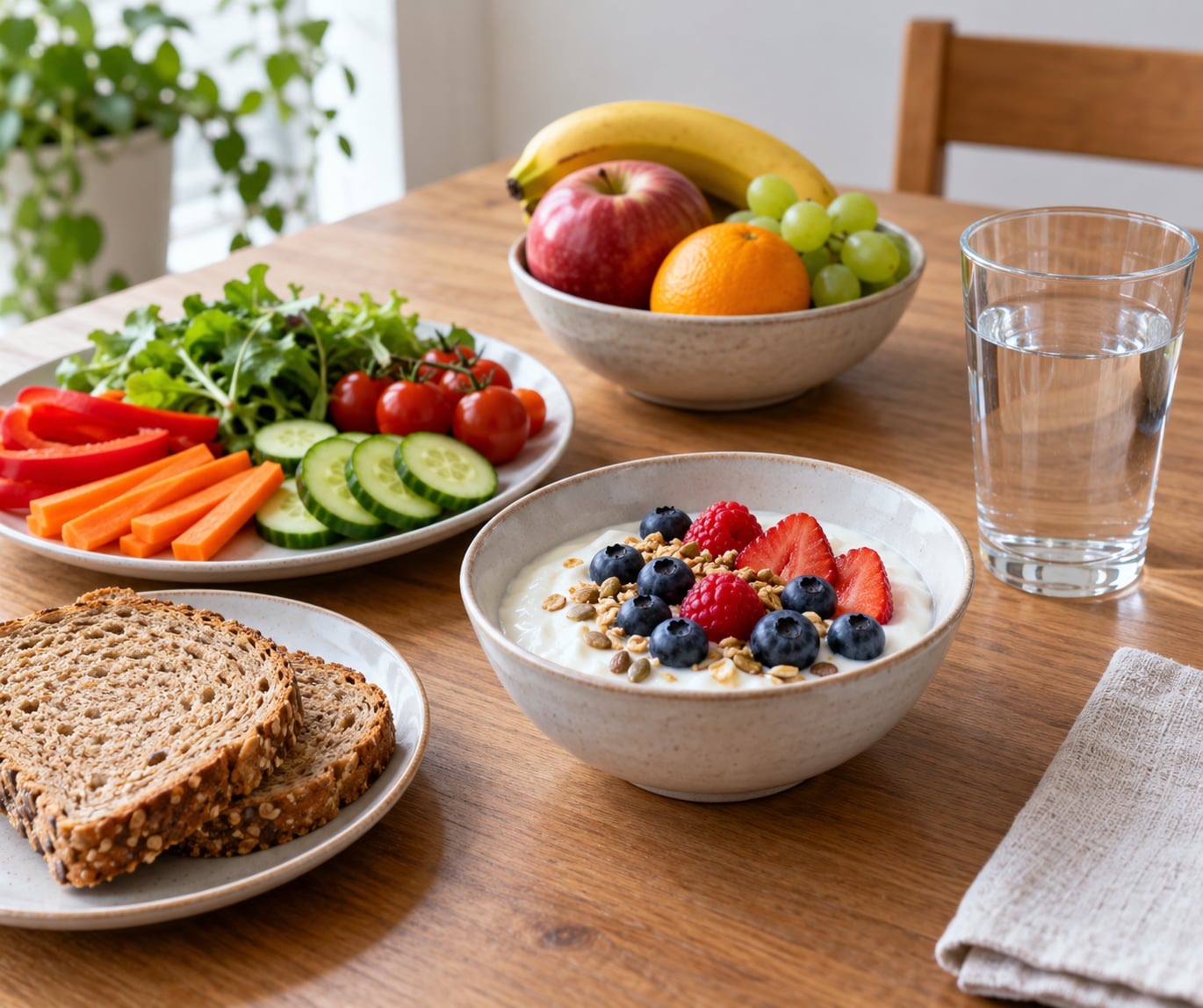
Teenagers can lose weight safely, but the goal is steady change in habits and body composition while you are still growing, not a fast drop on the scale. Learning how to lose weight as a teenager safely means eating regular balanced meals, moving in ways you enjoy, protecting sleep, and involving a parent or guardian and a doctor or registered dietitian early.
This guide is general information, not medical advice, and it deliberately avoids calorie targets. Nobody can safely advise a teenager on intake numbers without knowing their age, height, activity level and health history, so bring your questions to a pediatrician or registered dietitian nutritionist instead of a search bar.
If you are 13 to 19 and worried about your weight, the plan below is built around food you already have access to, movement that does not feel like punishment, and routines that survive a bad week.
Table of Contents
- What You Need
- Step-by-Step
- How to Lose Weight as a Teenager Safely Without Crash Dieting
- Build Balanced Meals Without Making Dieting Complicated
- Move Every Day in Ways That Feel Good
- Support Sleep, Stress, and Healthy Routines
- Track Progress Without Obsessing Over the Scale
- Common Mistakes
- Frequently Asked Questions
- Can teenagers lose weight safely without starving themselves?
- How old should a teenager be before they try to lose weight?
- How much exercise should teenagers get while trying to lose weight?
- Are weight-loss supplements or meal-replacement products safe for teenagers?
- Should a teenager skip meals or follow a low-calorie diet?
- When should a teenager talk to a doctor or registered dietitian about weight?
- Conclusion
What You Need
You do not need special weight loss products, supplements, a gym membership or a daily weigh-in to start. Everything in this plan uses ordinary supports that a teenager already has.
- Regular meals at roughly the same times, so you are not running on empty between school and dinner.
- Water and an unsweetened drink option, plus everyday protein, fruit, vegetables and a high fibre carbohydrate.
- A schedule that leaves room for sleep and movement, which is where most habit change happens.
- Comfortable clothes and shoes that let you move without worrying about fit.
- A trusted adult — a parent, guardian, school nurse, school counsellor, pediatrician or registered dietitian who can give you individual guidance.
That last one matters more than anything else on this list. A growing body changes every few months, and a professional can tell you what your weight actually means for you rather than guessing from a number online.
Step-by-Step
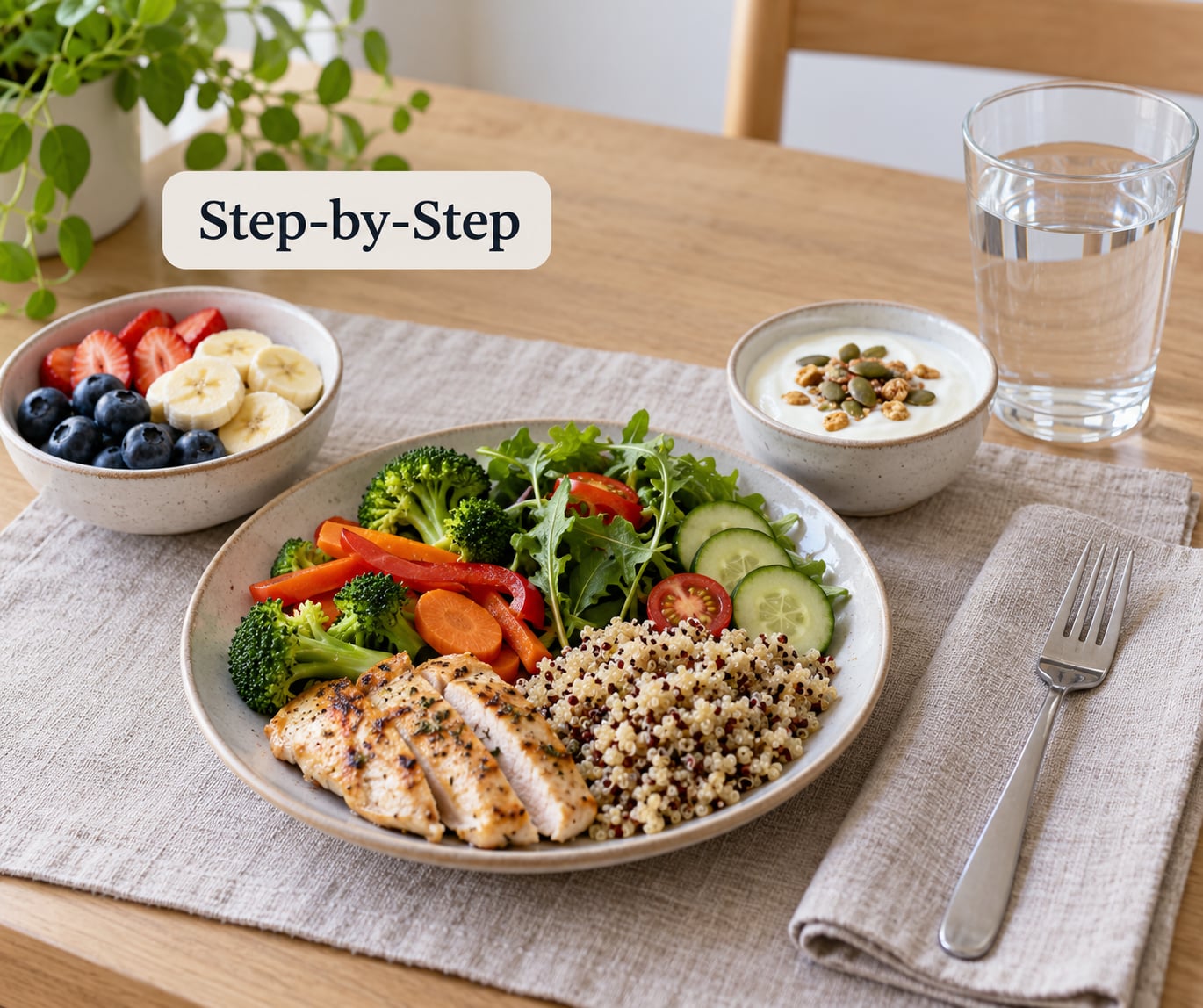
How to Lose Weight as a Teenager Safely Without Crash Dieting
The safest route for a teenager is habit change, not restriction. Your body is still building bone, brain and muscle during puberty, and a hard deficit can short-circuit growth, recovery and concentration.
Skip crash diets, fasting, skipped meals, laxatives, fat burners and unregulated supplements. They produce fast changes that mostly come back, and the restriction often triggers binge cycles later. On the forums, teens describe being told 1,200 calories a day was enough at fifteen, losing weight quickly, and regaining it with an exhausting relationship to food. One recurring line there is worth keeping: you are not supposed to be starving by the end of the day.
A workable starting point is plate based. Fill half the plate with fruit and vegetables, a quarter with a protein such as beans, eggs, chicken, fish or yogurt, and a quarter with a high fibre carbohydrate such as oats, brown rice or whole-grain bread. Drink water with it.
How do you know it is working? Track energy, strength and mood rather than the scale. If you can concentrate through a school afternoon, play a sport without feeling wiped out and sleep through the night, the plan is doing its job even if the scale has not moved this week.
Build Balanced Meals Without Making Dieting Complicated
Balanced meals are not complicated meals. Most of them are a protein, something from a fruit or vegetable group, a fibre rich carbohydrate and water, and most take less time than a drive-thru.
- Breakfast: eggs with fruit and toast, or plain yogurt with berries and a handful of nuts.
- Lunch: beans with vegetables and rice, or a sandwich with fruit on the side.
- Snack: apple slices with peanut butter, hummus with carrots, or yogurt and granola.
- Dinner: grilled fish with roasted vegetables and a baked potato, or a bean and vegetable stew with bread.
School lunches are the hard part. Pick the option with the most components rather than the smallest portion, and pair it with water or milk instead of a vending machine drink. If your cafeteria is genuinely limited, packing two shelf stable extras on Sunday — fruit, nuts, roasted chickpeas — takes five minutes and solves the whole week.
Budget is not a reason to skip this. Eggs, beans, frozen vegetables, oats, canned tuna, bananas and peanut butter are inexpensive and cover every group above. Frozen and canned produce is picked ripe and frozen, so it is a shortcut, not a compromise.
Move Every Day in Ways That Feel Good
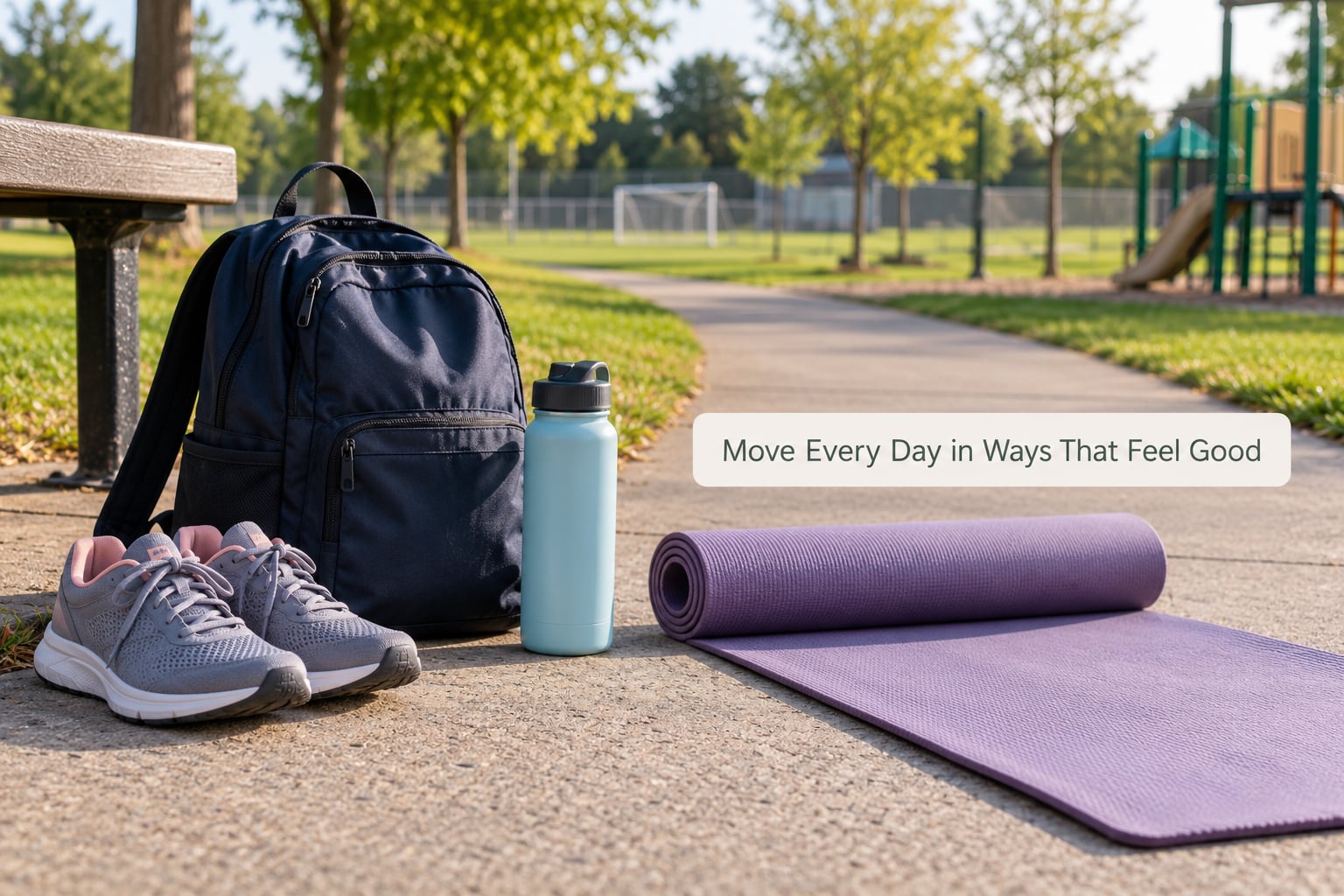
Daily movement protects your fitness, mood, sleep and metabolism without exhausting workouts. The widely used guidance for this age group is around 60 minutes of activity a day, and it can be spread across the whole day in pieces as short as ten minutes.
Start where you are rather than with a plan you will abandon. A ten minute walk after dinner, a bike ride to school, dancing in a bedroom, skateboarding, swimming, a sport or twenty minutes of body-weight work all count.
A simple progression: week one, walk ten minutes after two meals. Week two, add a third walk or swap one for a bike ride. Week three, add two sessions of body-weight strength work — squats against a wall, push-ups, rows with a resistance band or a backpack — and keep a 60 minute recreational activity on the weekend.
You will notice the effect on things the scale does not capture. Sleep improves, mood steadies, and lifts get heavier at the same weight.
Support Sleep, Stress, and Healthy Routines
Consistent sleep, regular meals, hydration and manageable stress support everything else. Teenage brains need eight to ten hours of sleep, and short sleep makes hunger harder to control and recovery slower.
Keep a consistent bedtime, put screens away an hour before bed, and take short movement breaks during the day — a five minute walk between classes beats sitting through an entire afternoon.
Prepare snacks the night before so hunger does not make the decision for you. And when stress, bullying or body image worries are affecting your days, tell an adult. A school counsellor, a therapist or your doctor can help in ways that a stricter food rule cannot.
Track Progress Without Obsessing Over the Scale
For most teenagers, daily weigh-ins do more harm than good. Weight shifts hour to hour with water, salt, a growth spurt or a workout, so a morning number says very little about what you are doing.
Better markers include energy through the afternoon, how a lift or a sprint feels, sleep quality, mood, how your clothes fit and whether your routine is holding for three weeks or one.
If you and your parent agree with a doctor or dietitian that tracking helps, a weekly check-in on the same day and time is plenty. And speak up if your weight changes unexpectedly during growth, because hormones, thyroid function, polycystic ovary syndrome, some medications and stress all shift weight for reasons that have nothing to do with effort.
Common Mistakes
Most stalled progress comes from a handful of repeated mistakes, and each one has a straightforward fix.
- Skipping meals to compensate. Missing lunch leads to heavier snacking later and no better results. Fix: three meals and one or two planned snacks.
- Fad diets from influencers and social feeds. They promise transformations in weeks. Fix: if a plan bans a whole food group, has a shake protocol or tells you to eat under a number, put it down.
- Relying on supplements or diet pills. Many are unregulated, and some are sold with undisclosed ingredients. Fix: talk to a doctor or pharmacist before anything you swallow for weight reasons.
- Exercising to the point of injury. Overtraining brings fatigue, poor sleep and missed training. Fix: add movement gradually and keep one easy day each week.
- Weighing daily. Fix: weekly at most, and only with adult and professional agreement.
- Blaming yourself for changes you did not cause. Puberty, hormones, medication and stress drive a lot of it. Fix: treat the number as information, not a verdict.
Speak to a doctor promptly for fainting, ongoing fatigue, feeling cold all the time, loss of hair, constant throat-clearing after meals, secretive eating, compulsive exercise, chest pain, or any sign that food has started to control your day. Those can point to anaemia, thyroid problems or an eating disorder, and all of them are treatable.
Quick habits that prevent most problems: eat breakfast, keep water in your bag, schedule movement like an appointment, protect your bedtime, and bring a parent or guardian into any weight conversation rather than doing it alone.
Frequently Asked Questions
Can teenagers lose weight safely without starving themselves?
Yes. Safe weight loss for teens happens when eating habits change quality and portions without dropping below what a growing body needs. Starving yourself slows growth, weakens bones, hurts concentration and often backfires with binge eating later. Regular meals with protein, fibre and produce, plus daily movement and good sleep, is the approach that lasts.
How old should a teenager be before they try to lose weight?
There is no magic age, but any teenager who is worried about weight should talk to a parent or guardian and a pediatrician or registered dietitian before changing how they eat. Growth is fastest in the early teen years, and a professional can check whether weight is actually outside a healthy range for your age, height and stage of development.
How much exercise should teenagers get while trying to lose weight?
Around 60 minutes of moderate to vigorous activity a day is the widely used guideline for this age group, and it does not have to happen in one session. Walking to school, sport practice, cycling, dancing or ten-minute body-weight sessions all add up. Building up gradually matters more than intensity, especially if you are not currently active.
Are weight-loss supplements or meal-replacement products safe for teenagers?
Generally no. Supplements and meal replacements are largely unregulated, and some products sold online contain undisclosed ingredients. Shakes also tend to replace food rather than add to it. Weight-loss medications such as GLP-1 drugs are not something a teenager should start without a specialist prescribing and monitoring them for medical reasons.
Should a teenager skip meals or follow a low-calorie diet?
Neither. Skipping meals usually leads to heavier snacking later, and low-calorie dieting during the teenage years can slow growth, weaken bones, hurt focus and strain the relationship with food. A better approach is regular meals built around a protein, fruit or vegetables, a fibre rich carbohydrate and water, with portion awareness instead of strict counting.
When should a teenager talk to a doctor or registered dietitian about weight?
Before you change anything, and urgently if there are warning signs. Book an appointment if weight changes quickly without explanation, if you are exhausted, dizzy or always cold, if you avoid meals or feel guilty after eating, if exercise has become compulsive, or if you are considering a restrictive diet, supplements or medication. A pediatrician or registered dietitian can check for medical causes first.
Conclusion
Start with one regular meal you would happily eat twice, one movement you actually look forward to, and one consistent bedtime. That is the whole first week.
Then bring a parent, guardian or trusted adult into it and ask a pediatrician or registered dietitian whether your weight is genuinely something to work on. How to lose weight as a teenager safely is not about eating less than you need. It is about supporting growth, strength and energy while the habits you build now follow you into adulthood.