What to look for in walking shoes comes down to five things: a fit that gives your toes room, cushioning that absorbs shock without feeling unstable, a sole that bends where your foot bends, an upper that lets heat escape, and a heel that stays put. Get those right and a pair of shoes will hold up to thousands of steps a week for years. Get one of them wrong and you’ll feel it in your heels, knees or back long before the shoe looks worn out.
The trouble is that shoe shopping rewards confident-sounding jargon. Stack height, heel-to-toe drop, rockered geometry, pronation — all real terms, and all much less useful than the simple questions of whether the shoe fits your foot and whether you can walk in it. This guide strips the jargon back and works through the criteria in the order they actually matter.
One note up front: this is general information about shoe features, not medical advice. If walking regularly causes pain that lasts more than a few steps, or if you have diabetes, poor circulation or a history of foot problems, get a podiatrist or physical therapist involved before buying.
Table of Contents
- How to Choose Walking Shoes for Comfortable Everyday Walking
- What to look for in walking shoes: feature, why it matters, red flag
- Get the Right Fit
- How much toe room should walking shoes have
- Width matters more than size for wide feet
- Heel fit, socks and why trial size is unreliable
- Choose the Right Cushioning
- Look for Stability and Support
- Check Breathability, Flexibility, and Durability
- Mesh, leather and synthetic uppers compared
- When to replace walking shoes
- What to Look for in Walking Shoes for Different Routines
- Walking shoes vs running shoes vs casual sneakers
- How to Test Walking Shoes Before Buying
- How to Test Walking Shoes at Home
- Frequently Asked Questions
- How much space should there be between my toes and walking shoes?
- Are walking shoes supposed to have arch support?
- How often should I replace walking shoes?
- Can I use running shoes for regular walking?
- What should I do if walking shoes cause pain or rubbing?
- Do I need different shoes for long walks than for short walks?
- Conclusion: Start With Comfort and Fit
How to Choose Walking Shoes for Comfortable Everyday Walking
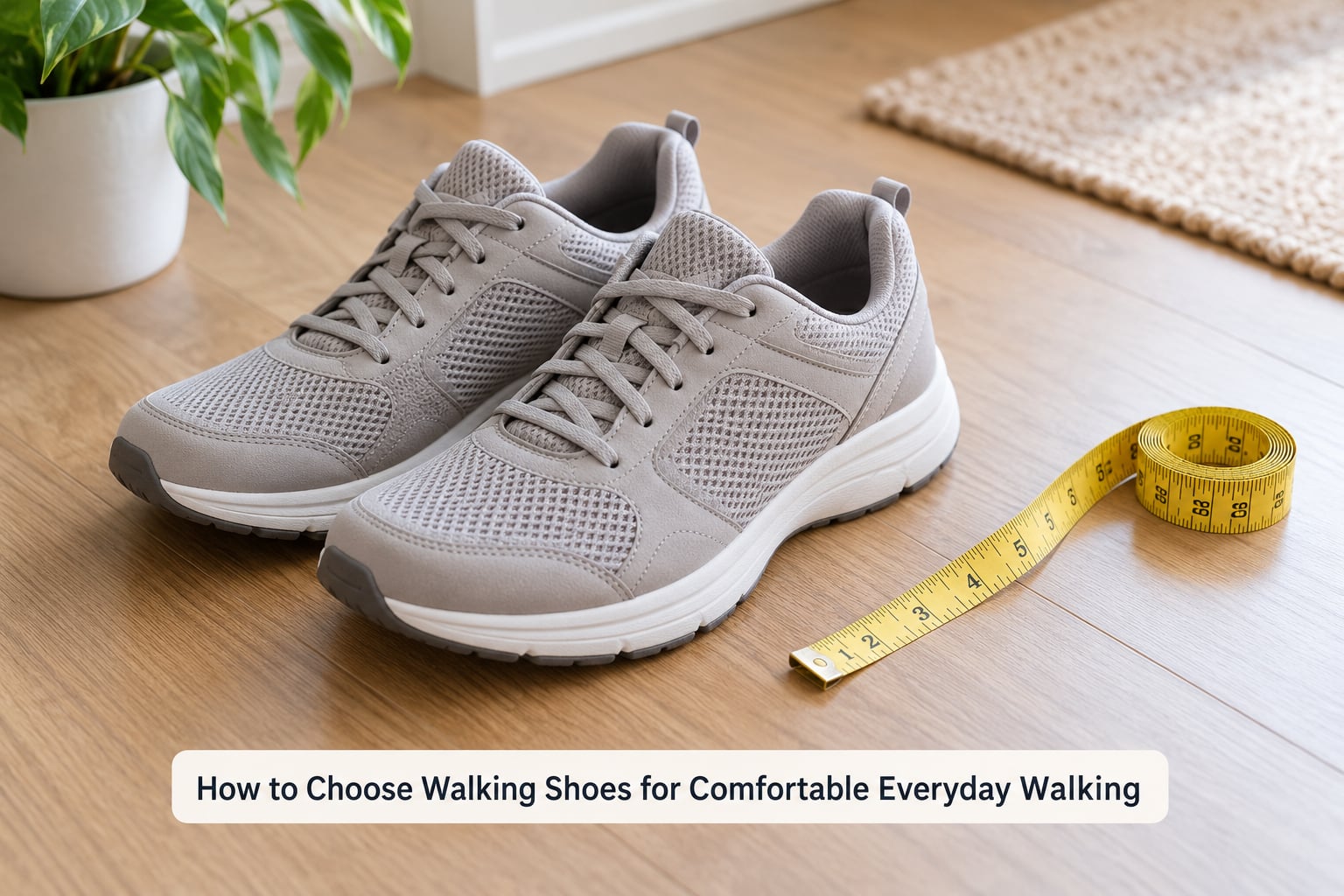
Start with the short list. If a shoe fails any of these five, move on rather than trying to talk yourself into it.
- Room in the toe box. A finger’s width of space between your longest toe and the front of the shoe, with the foot fully loaded.
- Cushioning that matches your weight and surface. Softer foam for hard concrete, firmer foam for long days on your feet.
- A sole that flexes at the ball of the foot, not one that bends at the middle of the arch like a boat.
- A breathable upper so feet stay dry on warm walks.
- A secure heel. Your heel should lift with the shoe, not slide around inside it.
That is genuinely enough to sort a wall of shoes in a store. Everything else — materials, stack height, tread pattern, outsole brand — is a refinement on those five.
What to look for in walking shoes: feature, why it matters, red flag
| Feature | Why it matters | Red flag |
|---|---|---|
| Toe room | Room for toes to spread on each step | Toes touching the front or sides |
| Heel security | Stops rubbing and heel slip | Heel lifts out when you take the shoe off |
| Midsole cushioning | Absorbs impact on hard ground | So soft the foot wobbles, or so thin it feels like the ground |
| Forefoot flex point | Lets the foot roll forward naturally | Shoe resists bending until the toe bends it |
| Breathable upper | Moves heat and moisture out | Warm-up shoes lined for cold weather |
| Outsole grip | Traction on pavement, gravel, wet ground | Smooth slick patches in the tread pattern |
| Removable insole | Lets you swap footbeds | Insole glued in place |
| Flexible forefoot | Comfort over miles | Stiff, unbending sole |
Several of these need a definition before they mean anything. A walking shoe has five parts worth knowing by name, because shop staff and reviews both use them constantly.
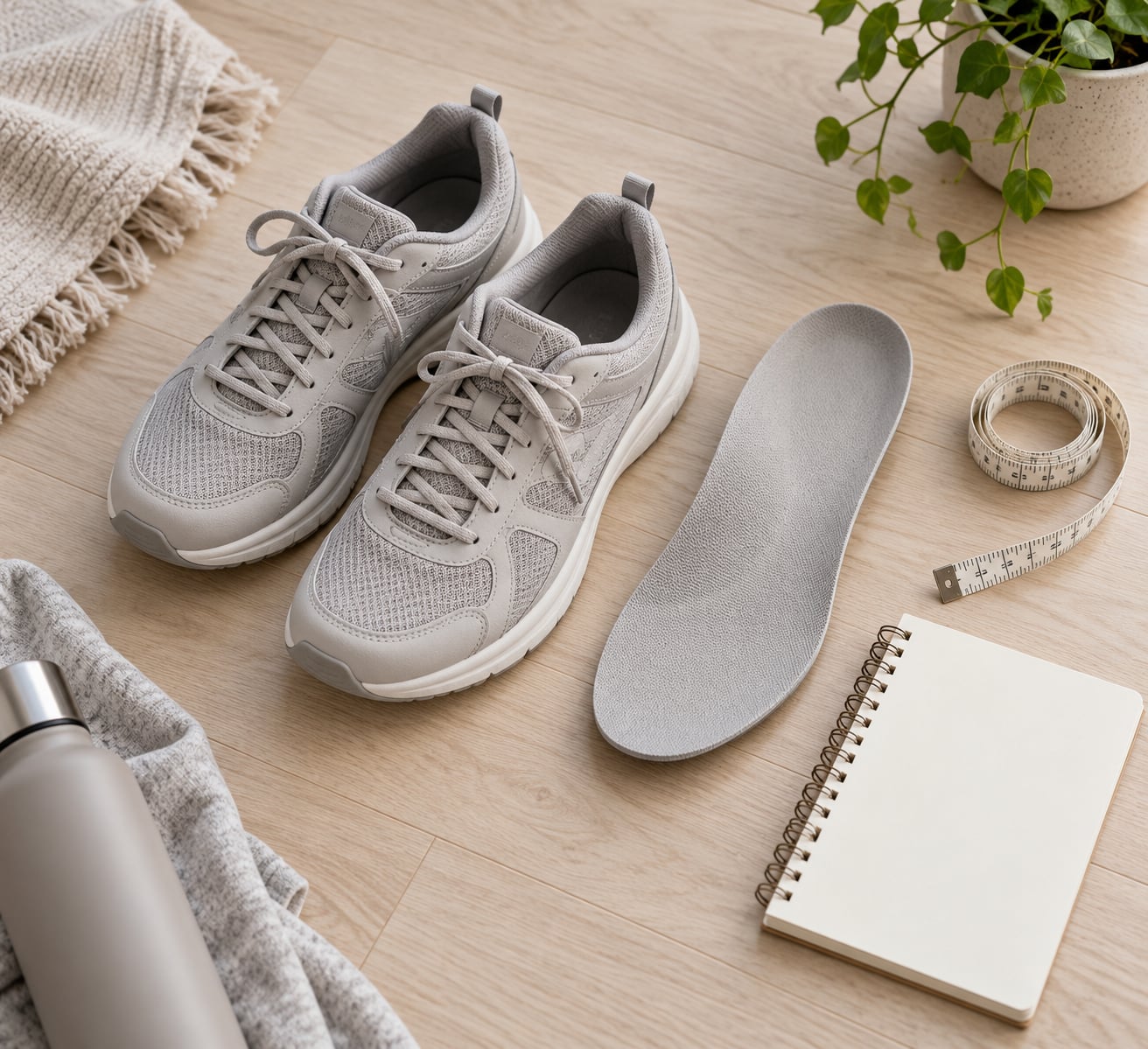
- Upper — everything above the sole: the mesh, leather or knit, plus the laces and tongue.
- Insole or footbed — the removable inner layer your foot sits on.
- Midsole — the foam layer between insole and outsole that does the cushioning.
- Outsole — the rubber that touches the ground.
- Heel counter and heel collar — the firm cup and padded rim that hold your heel and ankle.
Two shoe terms you’ll see a lot. Stack height is simply how thick the midsole is. Heel-to-toe drop is the height difference between the heel and the forefoot. A 10 mm drop means the heel sits 10 mm higher than the toe, which is what most traditional shoes use. Thick midsoles and low drops feel noticeably different, and neither is automatically better.
Get the Right Fit
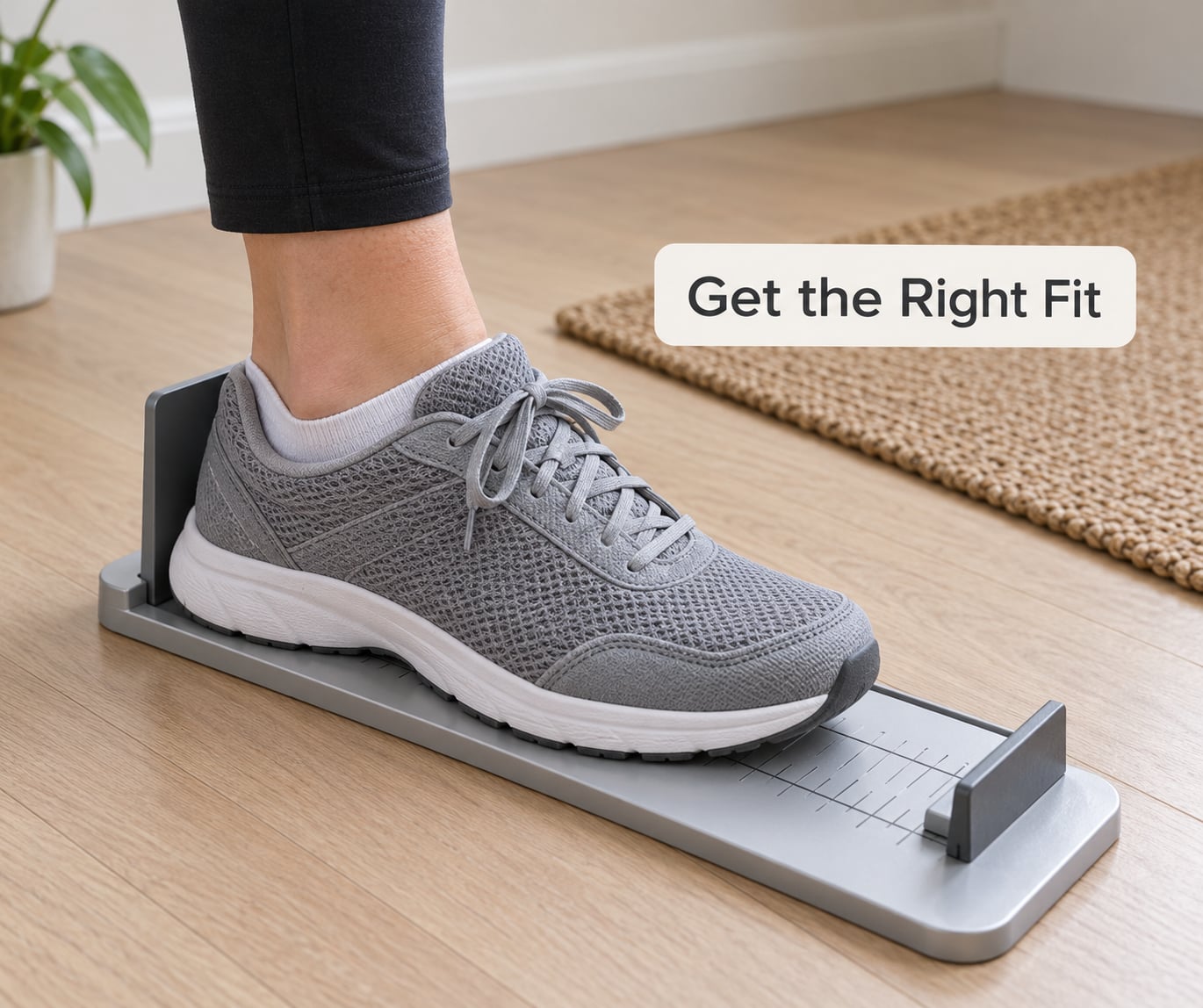
Fit beats every other feature, and it beats brand name, colourway and price. Feet swell slightly through the day, so the pair that feels snug at 10 a.m. can feel tight by 3 p.m. Shop in the late afternoon or evening, wearing the socks you’d actually walk in, and measure both feet — the left and right are rarely identical.
How much toe room should walking shoes have
About a finger’s width, roughly 10 to 15 mm, between the end of your longest toe and the front of the shoe. You should be able to wiggle all five toes freely. Toes squeezed together, or the big toe touching the front, means the shoe is too small regardless of what the size label says.
Test it standing, because a shoe that fits while you sit can compress and shrink under your weight. Push your thumb down into the insole first so your foot is sitting as it will be on a real walk, then check the toe gap.
Width matters more than size for wide feet
Most shoes are built on a medium last — a template for the shape of the shoe — and many run narrow through the forefoot. Wide feet often get pushed into a larger size to get enough toe length, which then makes the shoe too loose everywhere else and causes heel slip. Many brands make a wide version of the same shoe in the same size, and it’s worth checking for.
Watch for rubbing at the little-toe joint on either side, and for the front of the shoe curving upward away from your toes when you stand. Both point to a toe box that’s too narrow.
Heel fit, socks and why trial size is unreliable
Press your thumb under the heel. If it compresses too easily, the shoe will let your heel move and rub. The padded collar around the ankle should meet your heel without pressing on your Achilles tendon.
Socks change fit more than most people expect. Thin nylon or wool socks add almost nothing; cotton socks add thickness and hold moisture. If you walk in thick hiking socks, try shoes on with them.
Finally, sizes are not identical across brands. A size 9 from one maker can be a quarter inch longer than a size 9 from another. Use the size as a starting point and let fit decide.
Choose the Right Cushioning
Cushioning is the foam midsole’s job: soaking up the impact of each step before it reaches your joints. Walking puts roughly one and a half times body weight through the heel with every stride, so on concrete that shock adds up fast.
There are three broad categories, and the right one depends on your weight, your foot and the ground.
- Soft, thick foam. Feels plush and springy. Good on hard pavement for lighter walkers. Too soft under heavier bodies makes the foot roll inward and wobble.
- Moderate cushioning. A middle ground that’s the safest starting point for most people and most sidewalks.
- Firm, thin foam. Less shock absorption but better ground feel and a steadier base. Often preferred by experienced walkers and by anyone who needs stability.
Stand in a candidate shoe on a slight incline and press down with your thumbs. If it compresses a lot, expect a softer ride. If it barely gives at all, it is a firm shoe. The reliable test is not on the shelf though — it is walking the store floor, which is the subject of its own section below.
Cushioning also has a shelf life. Foam compresses with use, and once it’s compressed, a soft shoe goes flat and unstable. That is one reason the same pair that felt great at 100 miles feels sloppy at 600.
Look for Stability and Support
Stability means the shoe resists your foot rolling inward excessively when you land. Some people pronate, meaning their arches roll in a bit more than neutral. A firmer midsole or a slightly wider base in the heel helps hold the foot in line.
The mistake people make with support is overcorrecting. A rigid or heavily structured shoe keeps the foot from moving naturally and can make an otherwise comfortable walk feel worse. You should be able to bend the forefoot of the shoe easily in your hands while the back third stays fairly firm. If the whole shoe is a plank, that’s a boot, not a walking shoe.
Arch shape matters too, though it’s oversimplified in most fitting advice. Roughly speaking:
- Flat feet — a contoured footbed with real arch height, plus a firm heel base, tends to feel better than a flat one.
- Neutral arches — most shoes suit you, so fit is the deciding factor.
- High arches — usually prefer a cushioned footbed that fills the arch instead of leaving a gap under the middle of the foot.
A quick check: look at your current worn shoes from behind while standing. Worn outer edges point to inward rolling; worn inner edges point outward rolling; even wear on both sides suggests a neutral gait.
Any of these can be helped by an off-the-shelf footbed, and a removable insole makes that possible. If you have a diagnosed foot condition or a history of ankle sprains, an orthotics prescription from a podiatrist is more reliable than guessing at a shoe feature.
Check Breathability, Flexibility, and Durability
Breathability is what keeps your feet dry, and dry feet blister far less. Mesh is the most ventilated and the lightest; knit uppers manage temperature well and have almost no break-in; leather resists weather and wears in over time; waterproof membranes keep rain out and let sweat sit in. If you walk in summer heat, ventilation beats weather protection.
Mesh, leather and synthetic uppers compared
| Upper | Weight | Breathability | Break-in | Best for |
|---|---|---|---|---|
| Mesh | Lightest | Highest | None | Warm weather, fitness walking |
| Knit | Light | High | None | All-around walking |
| Synthetic | Moderate | Moderate | Short | Everyday use |
| Leather | Heavier | Low | Days to weeks | Cool weather, durability |
| Waterproof membrane | Moderate | Low | Short | Rain, cold, wet trails |
Flexibility is checked at the ball of the foot, where a healthy foot bends during push-off. Squeeze the shoe there; it should fold with only light pressure. Squeeze the waist and arch area, which should resist much more. A shoe that folds evenly along its whole length, or that won’t fold at all at the forefoot, is the wrong shape for walking.
Durability shows up in three places. The outsole should have continuous rubber through the heel and outer forefoot, since that’s where ground contact and scuffing concentrate. Heel and toe bumpers are extra rubber patches that protect the two highest-wear edges. Stitching should be tight and even, especially where the upper meets the sole — a wavy glue line usually means the two parts will separate first.
When to replace walking shoes
Most guidance points to 300 to 500 miles, or roughly six to twelve months of regular use, though heavier walkers and rough surfaces shorten that. The catch is that foam fails before it looks like it has. Tread can look deep while the midsole underneath has already compressed.
Signs it’s time to move on: the outsole tread is worn smooth in one or two spots, the shoe creases deeply at the midsole when you look at it from the side, your feet start sliding forward inside the shoe, or new aches show up in a routine that used to feel easy. Worn tread you can see, plus any of the others, means replace.
What to Look for in Walking Shoes for Different Routines
Most walking shoes are built for a mix of short-to-medium walks on pavement. Once your routine gets specific, a few features matter more than the rest.
- Casual strolls and errands, a few thousand steps a day: lightweight mesh or knit with moderate cushioning. Comfort and easy slip-on win here.
- Brisk fitness walking, 20 to 40 minutes most days: firmer midsole, more structured heel base, and a breathable upper. Enough cushioning matters less than stability once you’re moving continuously.
- Long walks of an hour or more, on pavement and concrete: generous cushioning, roomy toe box, and a rocker or upturned toe that reduces the work at push-off.
- Standing all day at work, barely moving: this is a different problem from walking. Look for a stable, wide base, a shock-absorbing midsole and a rockered sole, and consider a compression-style insole for all-day standing.
- Uneven ground or light trails: a deeper-lugged outsole gives grip, at the cost of some flexibility and weight.
If your goal is weight loss or fitness walking, consistency beats intensity, and consistency depends on comfort. Expect to walk more days in a year than most beginners plan for, so durability and a fit that still works at month four matter more than any performance feature.
Walking shoes vs running shoes vs casual sneakers
| Walking shoes | Running shoes | Casual sneakers | |
|---|---|---|---|
| Cushioning | Moderate, even | Thick, often with energy-return foam | Thin to moderate |
| Heel-to-toe drop | Often 8 to 12 mm | Usually 6 to 10 mm | Varies widely |
| Weight | Moderate | Light | Light to heavy |
| Flex at forefoot | Easy | Stiff when loaded | Varies |
| Designed for | Upright, steady walking | Forward-leaning running stride | Short, infrequent walking |
Running shoes are not wrong for walking. Many walkers wear them happily, especially for long sessions. Two caveats: a thick running midsole can feel unstable when you stand upright, and a very stiff, high-drop running shoe needs a real break-in before long walks.
How to Test Walking Shoes Before Buying
Try on three or four pairs, not one. Shoes you like in the hand are a poor predictor of shoes you like on foot.
- Shop late in the day with the socks you’ll walk in.
- Stand and check toe room — finger’s width, toes free to wiggle, no pressure at the sides.
- Check the heel — secure, no rubbing on the Achilles, minimal slip.
- Test-walk the store floor at your normal pace, heel to toe, for at least a minute.
- Try a hill or a stair if the store has one; that reveals flex and stability quickly.
- Stand still for two minutes. Discomfort that’s obvious while standing is worse than anything you feel walking.
- Buy at the end of the day and wear them around the store before paying.
Two habits separate a good purchase from an expensive mistake. Buy shoes at the end of the day rather than the start. And buy the shoe that fits when your hand is on the shoe, not the brand you hoped would work.
On price tiers, put the money where it shows. Fit and midsole quality change how a shoe feels every single step, while uppers, colour and lacing barely register. Cheap shoes with a decent foam and a well-shaped last are a perfectly good starting point, and expensive shoes with a narrow toe box will still hurt.
How to Test Walking Shoes at Home
Two weeks at home beats ten minutes on a shop floor. Walk your normal routes for the first few days before ruling anything out, because a shoe that feels stiff on minute one often settles by day three.
Watch for heel slip on stairs, hot spots at the toe box, and any pressure that sharpens rather than fades. If a spot needs a plaster every walk, that’s the shoe, not your feet. Most retailers allow returns after indoor wear as long as the tread is barely marked, so check the return window before you buy.
About break-in: modern mesh and knit walking shoes usually need none. Leather and stiff-soled shoes do, and the honest advice is to wear them for short periods at first rather than planning a two-hour walk on day one. If a pair needs serious breaking in and shows pressure damage early, that’s a fit problem.
Frequently Asked Questions
How much space should there be between my toes and walking shoes?
About a finger’s width, roughly 10 to 15 mm, between the end of your longest toe and the front of the shoe. Check it while standing with your weight fully on the foot, not while sitting. You should be able to wiggle all five toes freely, and no pressure should sit against either side of the forefoot.
Are walking shoes supposed to have arch support?
Most good walking shoes have a footbed that is contoured rather than flat, which is fine for most feet. Flat feet often feel better with genuine arch height and a firm heel base, while high arches tend to prefer a cushioned footbed that fills the arch. Arch shape alone rarely decides it, and overall fit and comfort over a long walk matter more.
How often should I replace walking shoes?
Most guidance points to 300 to 500 miles, or about six to twelve months of regular use. Heavier walkers, wet conditions and rough surfaces shorten that. Replace sooner if the tread is worn smooth in spots, the midsole looks compressed, your heel starts sliding inside the shoe, or aches appear in a routine that used to feel easy.
Can I use running shoes for regular walking?
Yes. Many people walk long distances in running shoes without trouble. The trade-offs are weight and a stiffer sole built for a forward-leaning stride, which can feel odd when you stand upright for long periods. Running shoes also tend to run narrow, so a very roomy walking shoe is often the safer pick for daily use.
What should I do if walking shoes cause pain or rubbing?
Stop using them for long walks and check the fit first, since most problems are pressure rather than cushioning. A hot spot at the toe box means the shoe is too narrow; rubbing at the heel or Achilles means the collar is wrong or the shoe is too big. Switch socks, add a proper footbed, or return the pair. Persistent foot, ankle or knee pain needs a podiatrist.
Do I need different shoes for long walks than for short walks?
Not necessarily, but long walks reward more cushioning, a roomier toe box and a rockered sole that reduces work at push-off. Short errands are fine in a lighter, less structured shoe. If one pair has to do both jobs, choose a moderate-cushioning shoe with a wide toe box rather than the softest or the most rigid option available.
Conclusion: Start With Comfort and Fit
Three things to do before you buy anything. Measure both feet in the late afternoon and note the length in millimetres, not just the size number. Try on a soft, a moderate and a firm midsole so you can feel the difference instead of guessing which one you’d prefer. Then walk the store floor in each pair and buy the one that felt best on foot.
Everything else on this list — breathability, tread, weight, brand name — matters far less than those three steps. If pain shows up anyway and doesn’t settle within a few days, get a podiatry or physical therapy assessment rather than buying a third pair and hoping for the best.