To eat healthy on a road trip, pack your own shelf-stable foods and eat a real meal every three to four hours instead of grazing on whatever the next rest stop sells. Bring protein, fiber and produce in single servings, keep cold items in a cooler at or below 40 degrees F, and stop at grocery stores rather than fast-food chains.
It takes about 20 minutes of prep the night before, and it saves you from the two things that derail most long drives: the 3 p.m. vending-machine stop and the 500-calorie dinner at a truck stop.
Table of Contents
- What You Need
- Step-by-Step: A Healthy Road-Trip Eating Plan
- 1. Plan your meals and stops before you leave
- 2. Pack balanced, travel-friendly foods
- 3. Keep water and snacks within reach so you eat healthy on a road trip
- 4. Make smarter choices at convenience stores and rest areas
- 5. Choose balanced restaurant meals without overthinking it
- 6. Handle leftovers and perishable food safely between stops
- How to Eat Healthy on a Road Trip at a Glance
- Common Road-Trip Eating Mistakes
- Tips for Different Kinds of Road Trips
- Frequently Asked Questions
- What is the best food to take on a road trip?
- How long can food sit in a car?
- What can I eat at a gas station that is healthy?
- How often should you eat while driving?
- How do you eat healthy on a road trip with kids?
- Conclusion
What You Need
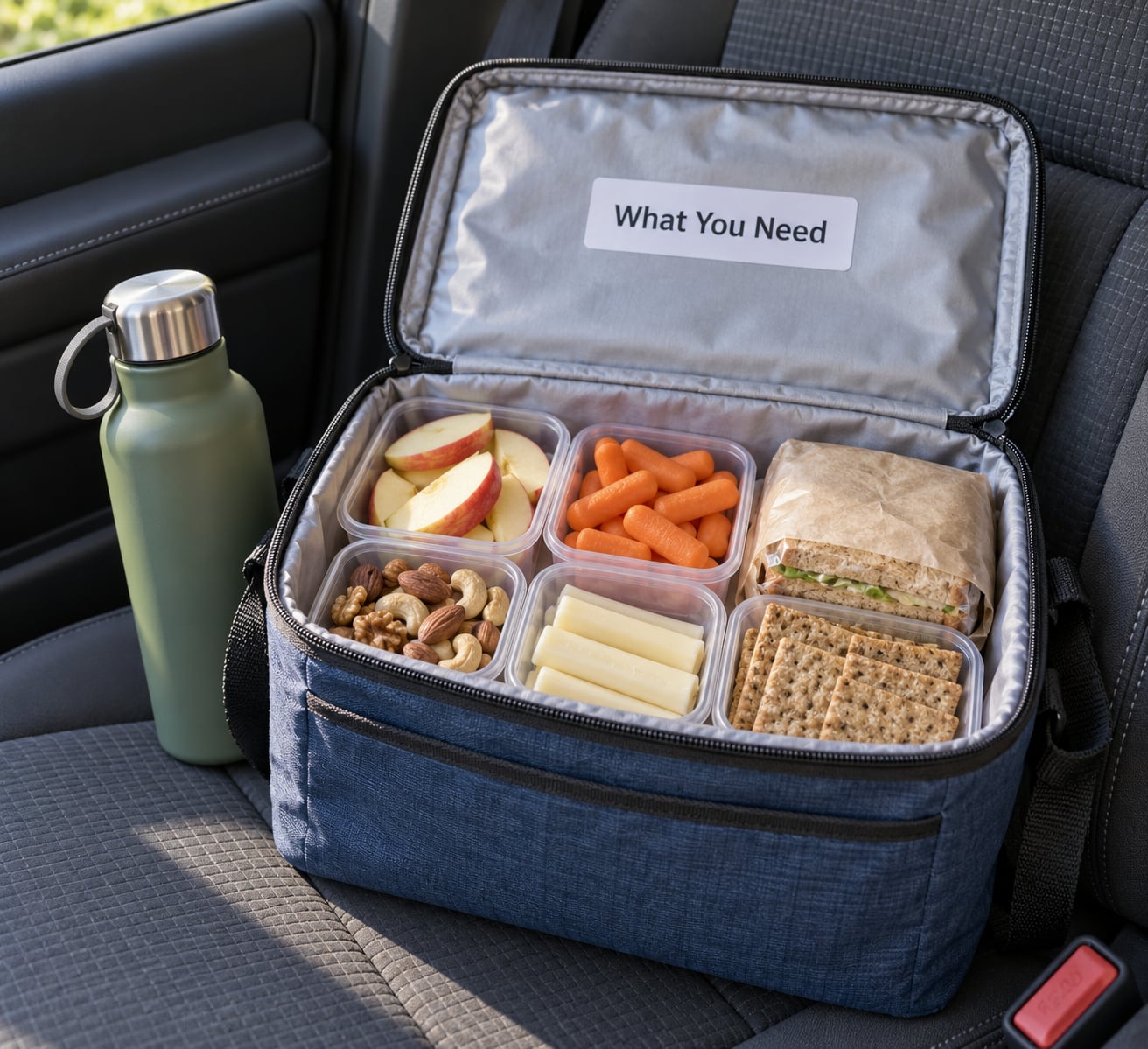
The gear is cheap and mostly reusable. None of it is specific to a nutrition plan, it just makes healthy choices the easy ones.
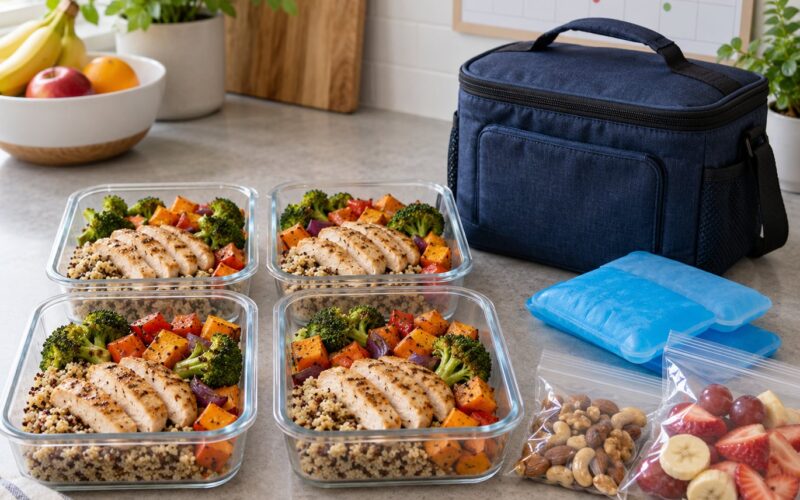
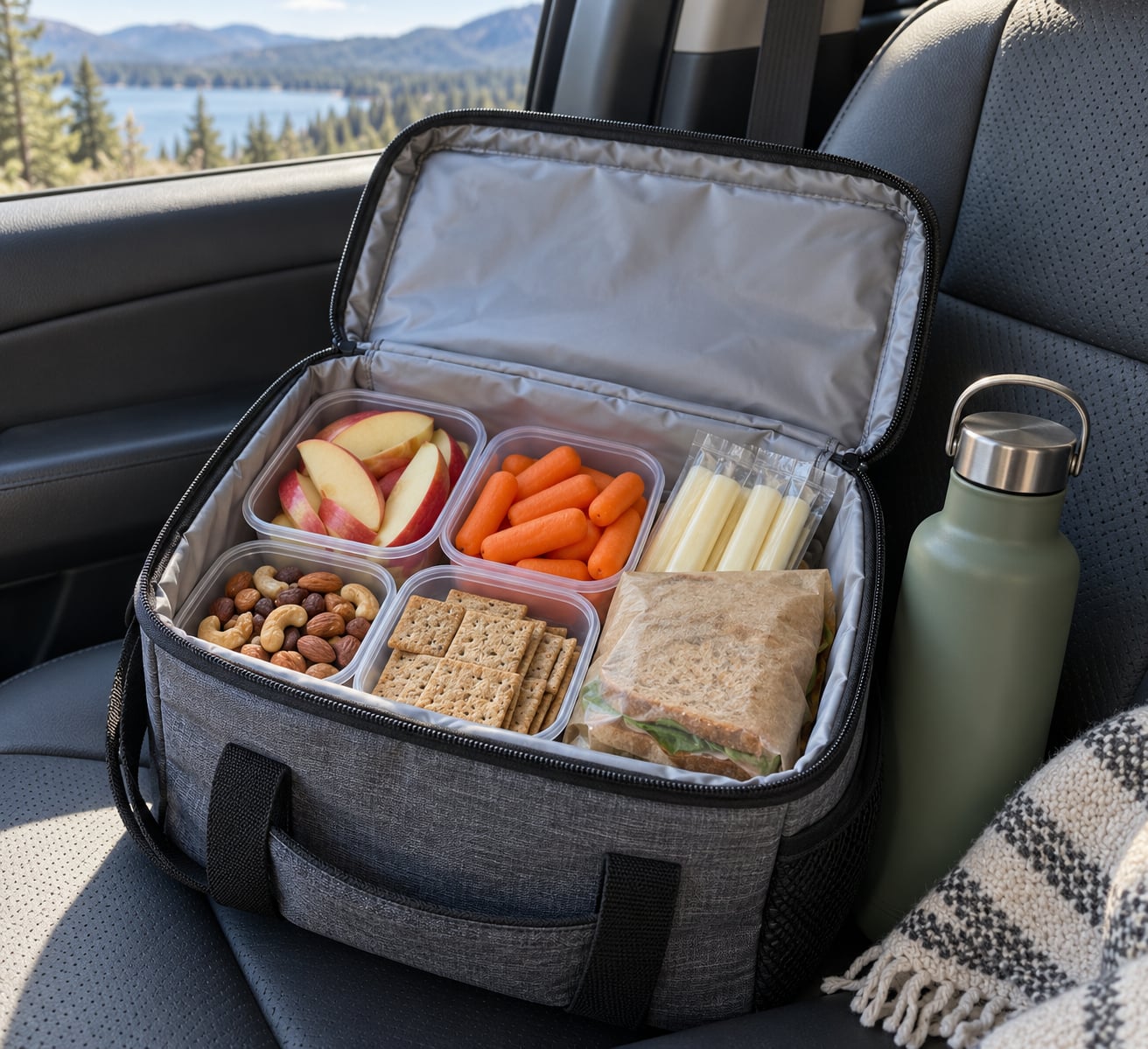
- A cooler or insulated bag and a few frozen ice packs. A soft cooler is lighter and fits on the back seat where everyone can reach it.
- A reusable water bottle for the driver plus a refillable gallon jug for everyone else. Hydration and hunger feel identical when you are tired, and a lot of that “I need food” feeling is thirst.
- Single-serve portions in bags or containers you can hand out without negotiating. Portioning at home is what stops the endless mindless eating from a shared bag.
- Shelf-stable protein: jerky, tuna pouches, nut butter packets, string cheese, roasted chickpeas, protein bars such as Quest or LÄRABAR.
- Produce that travels: bananas, apples, clementines, carrots, mini cucumbers, bell pepper strips in a rigid container.
- Whole-grain carbs: whole-grain crackers, pita, wraps, granola, dried fruit, nuts and seeds.
- Napkins, wet wipes, hand sanitizer and a small trash bag. Eating one-handed over a keyboard of crumbs is how a lot of road trips end up grimy and tired.
- A meal plan written down before you turn the key. Even three lines on your phone works.
Step-by-Step: A Healthy Road-Trip Eating Plan
1. Plan your meals and stops before you leave
Decide meal times, not just meal opportunities. Most people drive well for three hours, get irritable, and then eat whatever is fastest.
Set a rhythm: a substantial breakfast before departure, a proper meal stop roughly every three to four hours, and one planned rest break in the middle of the longest driving block. Look up rest areas and grocery stores along the route before you leave, not with hungry passengers in the car.
You will know it worked when nobody says “where do we eat?” more than once.
2. Pack balanced, travel-friendly foods
Build meals and snacks around three parts: protein, fiber-rich carbohydrate, and something fresh. A sandwich on whole-grain bread with turkey or hummus does all three in a form that survives a car seat.
For a day trip I pack one cooler bag with sandwiches or wraps, hard-boiled eggs, yogurt if you have a cold source, and cut vegetables in a rigid container, plus a dry bag with nuts, trail mix, protein bars, crackers and fruit. Fill power matters more than calories on a long haul, and protein plus fiber is what keeps that fill.
Check dietary restrictions before you pack rather than mid-drive. Nut allergies, gluten-free needs and low-sodium preferences all get harder at mile 400. Sunflower seed butter packets, seed crackers, dried fruit and canned tuna give you portable options when nuts and wheat are out.
3. Keep water and snacks within reach so you eat healthy on a road trip
Put the water in the cup holder and the snack bag where the passenger can see it. Reachability beats willpower on a six-hour stretch.
Aim for water regularly rather than when thirsty, and pair it with a snack every three to four hours. Extreme hunger is what drives the impulse stop for chips and a 20-ounce soda, so a planned snack is cheaper insurance than a bad decision.
Keep one emergency item separate in the door pocket, a nut bar or extra crackers you will forget about until it matters. That is the honest version of a “just in case” snack.
4. Make smarter choices at convenience stores and rest areas
Walk past the candy and chip aisles. Gas station food is not forbidden, it is just the worst version of the option, and you rarely want the thing you grabbed at mile 120.
Build the stop in order instead. First a drink, water or a low-sugar option rather than a fountain soda. Then protein: a boiled egg, string cheese, a yogurt cup from the refrigerated case, or nuts from the nut dispenser. Then produce: a banana, an apple, a small bag of carrot sticks or a cup of grapes. Then one dry good: whole-grain crackers, pretzels, mixed nuts or a protein bar.
Checking the label takes 20 seconds and tells you more than the front of the package. Look at sodium and added sugar, since most of the impulse items at these stops load up on both.
5. Choose balanced restaurant meals without overthinking it
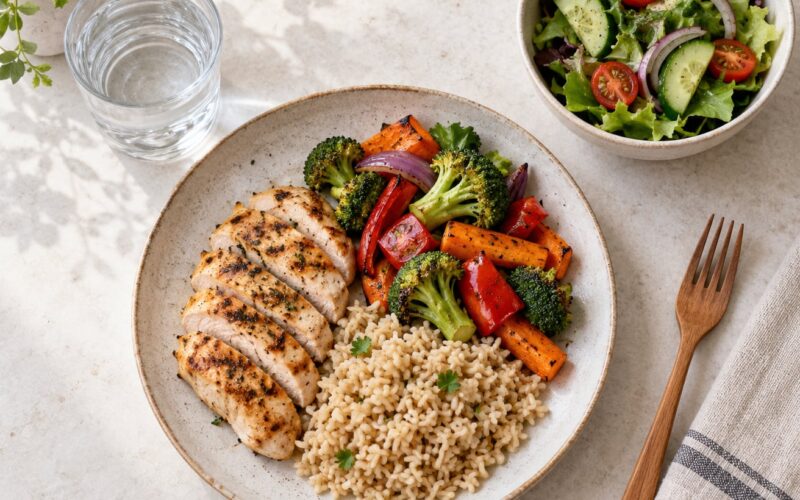
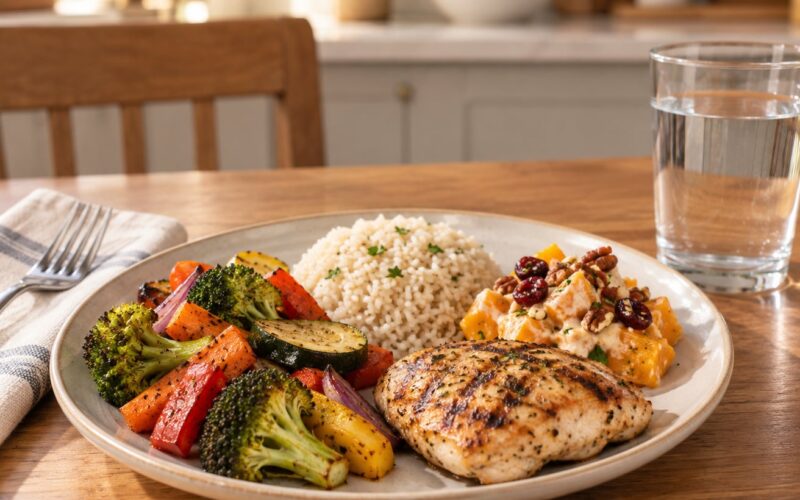
Use one formula: lean protein, vegetables or fruit, a whole-grain or starchy carbohydrate, and sauce or dressing on the side. That works at a diner, a fast-casual counter and a family-style place, so you do not need a separate strategy for each.
At a diner, order eggs or a plain omelet with vegetables, skip the hash browns, and ask for toast or a fruit cup. At a fast-casual counter, grilled chicken or a bean-based bowl with a side salad instead of fries works, and you can ask for dressing on the side and half the dressing served.
At a family-style stop, order a vegetable and a lean protein for the table, let everyone share, and skip the shared bread basket. Portion size is the easiest lever in the car: half a portion you actually want beats a full one you regret at the next rest stop.
Indulging is fine on a trip. One celebratory meal is a decision, and the eight-hour grazing pattern nobody remembers is not.
6. Handle leftovers and perishable food safely between stops
Cold food has one hard rule: keep it at or below 40 degrees F. If perishable food sits above 40 degrees F for more than two hours, toss it. In a parked car on a hot day that window shrinks to about an hour above 90 degrees F.
Put perishables in the cooler rather than the passenger compartment, use ice packs or frozen water bottles, and refill the ice at the first fuel or grocery stop. Refill water bottles overnight and use them as cold packs in the morning, which is the cheapest trick in this whole guide.
For cooked food you warmed at home, reheat it to a safe internal temperature: 165 degrees F (74 C) for poultry, 160 degrees F (71 C) for ground meat, and 145 degrees F (63 C) for whole cuts of meat and fish.
When in doubt, throw it out. A ruined sandwich costs nothing compared to a day you cannot enjoy the trip.
How to Eat Healthy on a Road Trip at a Glance
The whole plan, stage by stage. Choose from the middle column, and watch the last one.
- Before leaving: A real breakfast with protein, water, a packed cooler and meal times chosen. Why it helps: you start the day with fuel instead of convenience-store food. Limit: skipping breakfast and planning to “grab something” at 9 a.m.
- In the car: Water on hand, one portioned snack every 3 to 4 hours. Why it helps: steady energy with no crash into a bad food decision. Limit: sugary drinks and mindless eating from an open bag.
- Convenience stop: Drink, protein, produce, one dry good, in that order. Why it helps: you end with a real mini-meal instead of candy and chips. Limit: anything from the candy aisle at eye level.
- Restaurant stop: Protein, vegetables, starch, sauce on the side, half portion. Why it helps: a balanced meal without a nutrition lecture at the counter. Limit: large fries, soda, and bread baskets nobody needs.
- Over a full day: One planned meal stop plus snacks, plus movement at the rest area. Why it helps: you avoid the sleep-crash pattern of long sedentary days. Limit: three full meals plus nonstop snacking.
Common Road-Trip Eating Mistakes
Skipping meals because the drive is long. Long drives feel like they cancel meals, and they do not. Missing lunch sets up the evening crash into whatever is open late. Correction: eat every three to four hours and treat the meal stop as part of the drive, not an interruption to it.
Making sugary drinks the default. A fountain soda or a large sweet coffee often carries more sugar than the meal it came with, and the crash arrives an hour later with nothing in the car to fix it. Correction: water as the default, a small coffee or unsweetened drink if you want one.
Ordering the biggest thing on the menu. Restaurant portions in America are frequently double what one person needs. Correction: ask for half to go, or order a child’s portion, or box half before you start eating.
Eating straight from the bag. A bag of trail mix has no stopping point. Correction: portion into small bags or cups the night before and hand them out one at a time.
Treating a car as a pantry. Coolers fail, hotel rooms rarely have a mini-fridge, and a sunny passenger seat turns anything perishable within about two hours. Correction: keep cold items in the cooler and follow the 40 degrees F rule without exceptions.
Tips for Different Kinds of Road Trips
Short errands and day trips. Planning is minimal and refrigeration is usually fine. A lunch, two snacks and a water bottle in a tote bag handles anything under three hours.
Family trips with kids. Kids do not eat on schedule and they will not eat anything that melts or crumbles, so pack no-melt options: crackers, apple slices, string cheese, grapes, trail mix without chocolate, and freezer pouches of smoothie material for the worst of the moment. Serve snacks in a divided container on the seat rather than the floor, and give them a job, like choosing the next snack at the stop.
Camping. Refrigeration is the whole game. Freeze meals ahead of time, load them into a cooler with a block of ice rather than loose ice, and keep the cooler shaded and in the passenger compartment rather than the truck bed. If a cooler goes warm, eat the shelf-stable items first and get perishable food back cold fast.
Long-distance and solo driving. Portion more carefully, because there is no passenger handing you food and no one to tell you that you skipped lunch. Freeze cooked meals ahead of time for the drive home, which is the strategy long-haul drivers use, and stop every two hours to move around even when you are not hungry. Your back and your attention both do better.
Frequently Asked Questions
What is the best food to take on a road trip?
The best road trip food is shelf-stable, sits well in a car, and holds you until the next stop. Good picks are nut butter on whole-grain crackers, hard-boiled eggs, string cheese, jerky, tuna pouches, roasted chickpeas, protein bars such as Quest or LÄRABAR, mixed nuts, dried fruit, apple slices, baby carrots and grapes. Add a drink that is not soda, and you have a meal. For anything that needs cold, a soft cooler with ice packs holds it at or below 40 degrees F.
How long can food sit in a car?
Non-perishable items such as nuts, crackers, dried fruit, sealed shelf-stable milk, jerky and unopened canned tuna can sit in a car for the whole trip if the car is cool and the food is sealed. Perishable food is different: keep it at or below 40 degrees F, and discard anything that sat above that temperature for more than two hours. In a parked car above 90 degrees F, that limit drops to one hour.
What can I eat at a gas station that is healthy?
Go in a fixed order. Choose water or a low-sugar drink first, then a protein such as a boiled egg, string cheese, a yogurt cup from the refrigerated case, or nuts. Then produce, meaning a banana, an apple or a pack of carrot sticks. Finish with one dry good like whole-grain crackers or pretzels. That sequence usually costs less and keeps you full longer than a fountain soda and a bag of chips.
How often should you eat while driving?
Aim for something every three to four hours, with a full meal rather than continuous snacking. That rhythm keeps your energy steadier and stops extreme hunger from making the decision for you at mile 250. If a rule of thumb helps, the popular 3-3-3 idea of eating three balanced meals at roughly three-hour intervals is a reasonable version of the same principle. Drink water on the same schedule.
How do you eat healthy on a road trip with kids?
Pack snacks that do not melt or crumble and can be eaten one-handed: crackers, string cheese, apple slices, grapes, carrot sticks, trail mix without chocolate, and pretzels. Use a divided container so nothing gets dusty, and let kids pick the snack at each stop so they feel involved. Keep one no-mess item in reserve, because the last twenty minutes before arrival is when everything always falls apart.
Conclusion
Before you leave, plan two portable meals, pack water and portioned snacks, and decide now where the next balanced stop will happen. That is the whole job, and it takes one evening.