Staying on track while on vacation means holding your current habits for the length of the trip, not continuing to lose and not starting over. Eat regular meals instead of skipping them, keep protein and water high, move in ways that don’t require a gym, and pick your indulgence deliberately. It takes about 20 minutes of planning before you leave.
Here’s the part most advice skips. Almost nobody resumes their exact routine on Monday morning at 6am. Vacation days run late, meals land at odd hours, and the group you’re traveling with decides what dinner looks like. A realistic plan survives that. A perfect plan lasts about two days.
The goal for a week away is maintenance. Hold roughly steady, keep your strength, and come home able to pick up where you left off without a punishing reset.
Table of Contents
- What You Need
- Step-by-Step: How to Stay on Track While on Vacation
- How to set vacation goals that are realistic
- How to plan meals without overthinking every choice
- How to stay active during a vacation day
- How to handle snacks, drinks, and restaurant meals
- How to get back on track after overindulging
- What to do on different types of trips
- Common Mistakes
- Frequently Asked Questions
- How can I stay on track while on vacation without following a strict diet?
- Will eating differently for one week undo my weight-loss progress?
- How much should I exercise on vacation?
- What should I do if I overeat at a buffet or restaurant?
- Can I drink alcohol while trying to lose weight?
- How do I restart my routine after coming home from vacation?
- The Short Version
What You Need
Maintenance calories, not a deficit. Maintenance is the number of calories you eat on a normal week at your current weight. Going into a deficit while traveling means you are running on less while walking more, and that combination is how people end up starving by dinnertime on day three.
To estimate yours without a calculator app, watch what you eat on a normal week. Note two typical weekdays and one weekend day, and the average of the three is close to your maintenance. People often underestimate this by a few hundred calories, which is part of why maintenance feels like a struggle before a trip even starts.
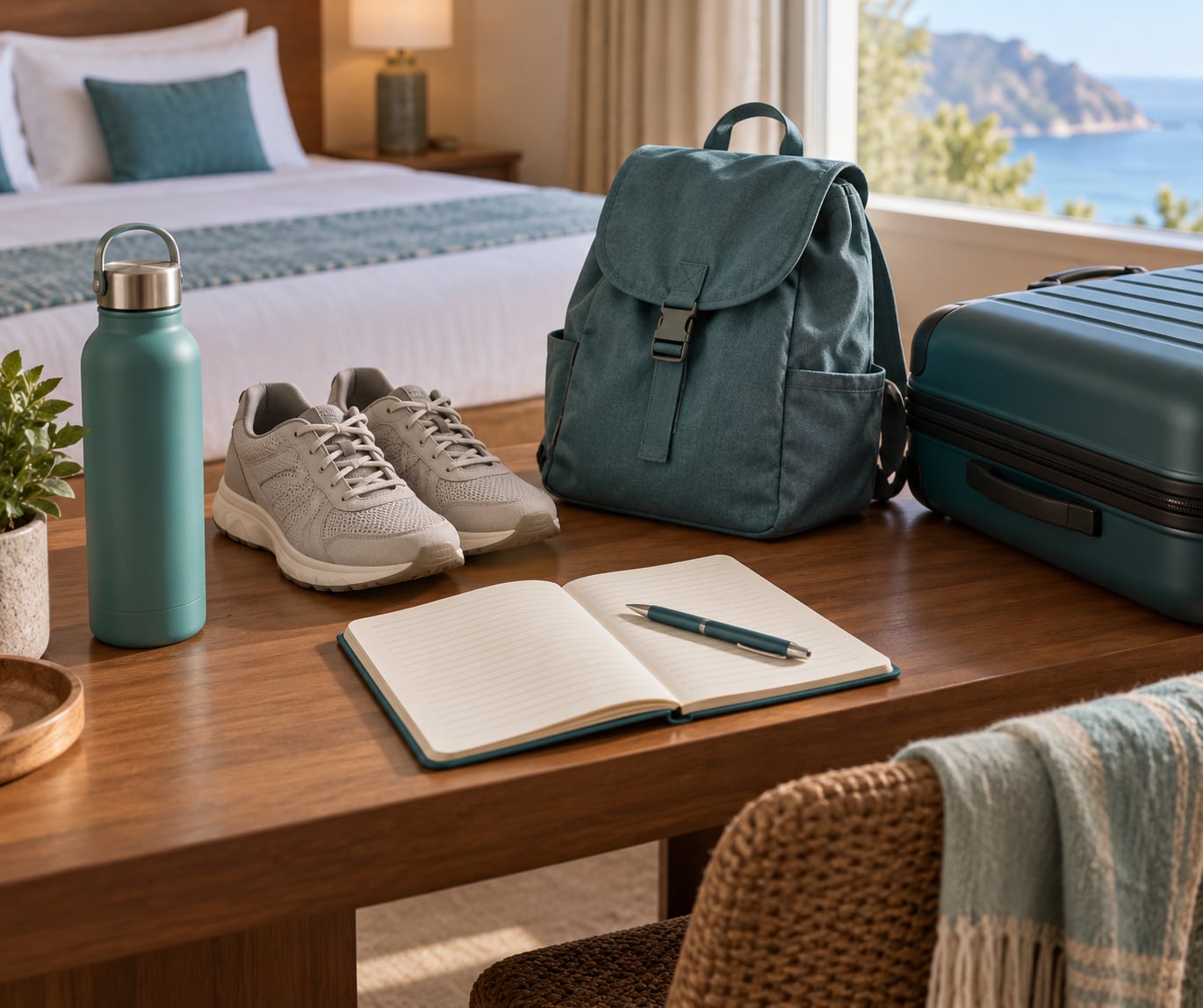
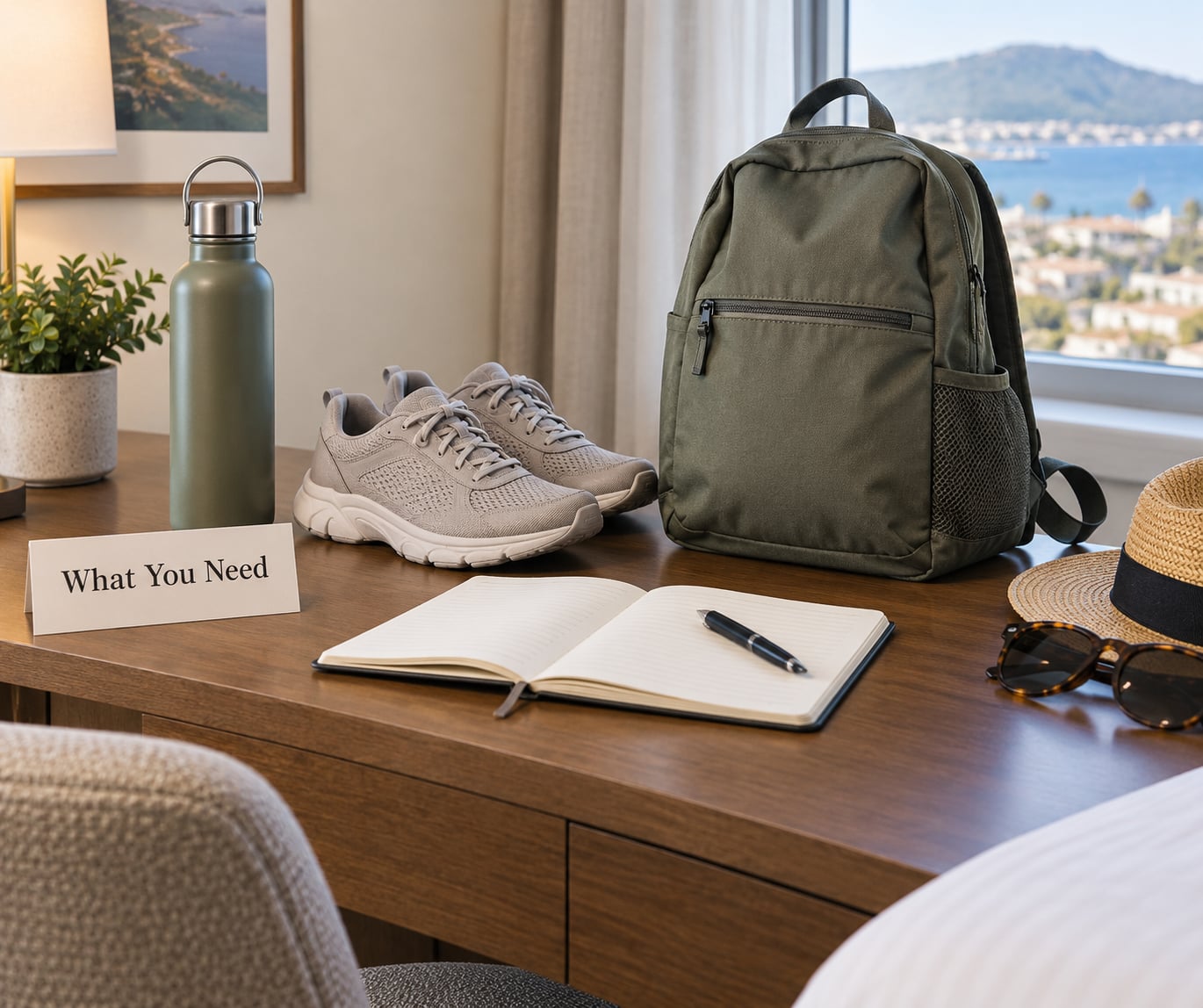
The rest of the kit is small. Comfortable walking shoes you’ll actually wear, a refillable water bottle, and a notebook or quick-add log you’ll keep when full tracking falls apart. Add two or three travel snacks you like, and a plan for one flexible meal a day.
One more thing worth setting up before departure: what the first 72 hours at home look like. For most people the trip doesn’t cause the problem. The two weeks of guilt eating after it does.
Step-by-Step: How to Stay on Track While on Vacation
How to set vacation goals that are realistic
Pick one or two priorities, not five. Eating a meal with vegetables at most dinners. Walking 20 minutes on five days. Limiting alcohol to one drink at dinner. Two goals you can actually keep beat a list of ten rules you abandon by Wednesday.
Then run a short pre-trip checklist.
- Two weeks out: check in with your normal meals and normal activity for a week so you start from a real baseline rather than a good memory.
- Two days out: order the first travel meal or two if you can. Check the airport lounge and the airline meal, and look up the breakfast spot near your hotel.
- The night before: pack the snacks, the water bottle, the shoes, and the log. Request a mini fridge when you book if you’re going somewhere with only a minibar.
People on weight-loss forums describe the same thing repeatedly. The traveler who keeps a loose log and grabs convenient protein stays consistent. The traveler who stops tracking entirely tends to come home having lost ground, and describes the trip as frustrating rather than relaxing.
How to plan meals without overthinking every choice
Use the same framework for breakfast, lunch and dinner. Protein first, produce second, a satisfying carbohydrate third. That’s it. You don’t need a different plan for every meal, and you don’t need to weigh anything.
Protein is the piece most travelers drop, and it’s the piece that keeps you from being hungry two hours later. Aim for something you can get anywhere: eggs at breakfast, a sandwich or wrap at lunch, grilled fish or chicken at dinner. If you take GLP-1 medication or manage a health condition, ask your doctor or a registered dietitian for specifics rather than copying a generic target.
Allow one flexible meal a day. Not a cheat day, a planned one, chosen on purpose. Choosing dessert at a birthday dinner feels completely different from the same dessert showing up at 9pm because you skipped lunch.
Scoping the menu before you sit down helps more than willpower. On the cruise, look at the buffet line and see what’s there before you fill a plate. At a resort, decide at lunch what you’re having at dinner. A view of the choices kills most of the grazing.
How to stay active during a vacation day
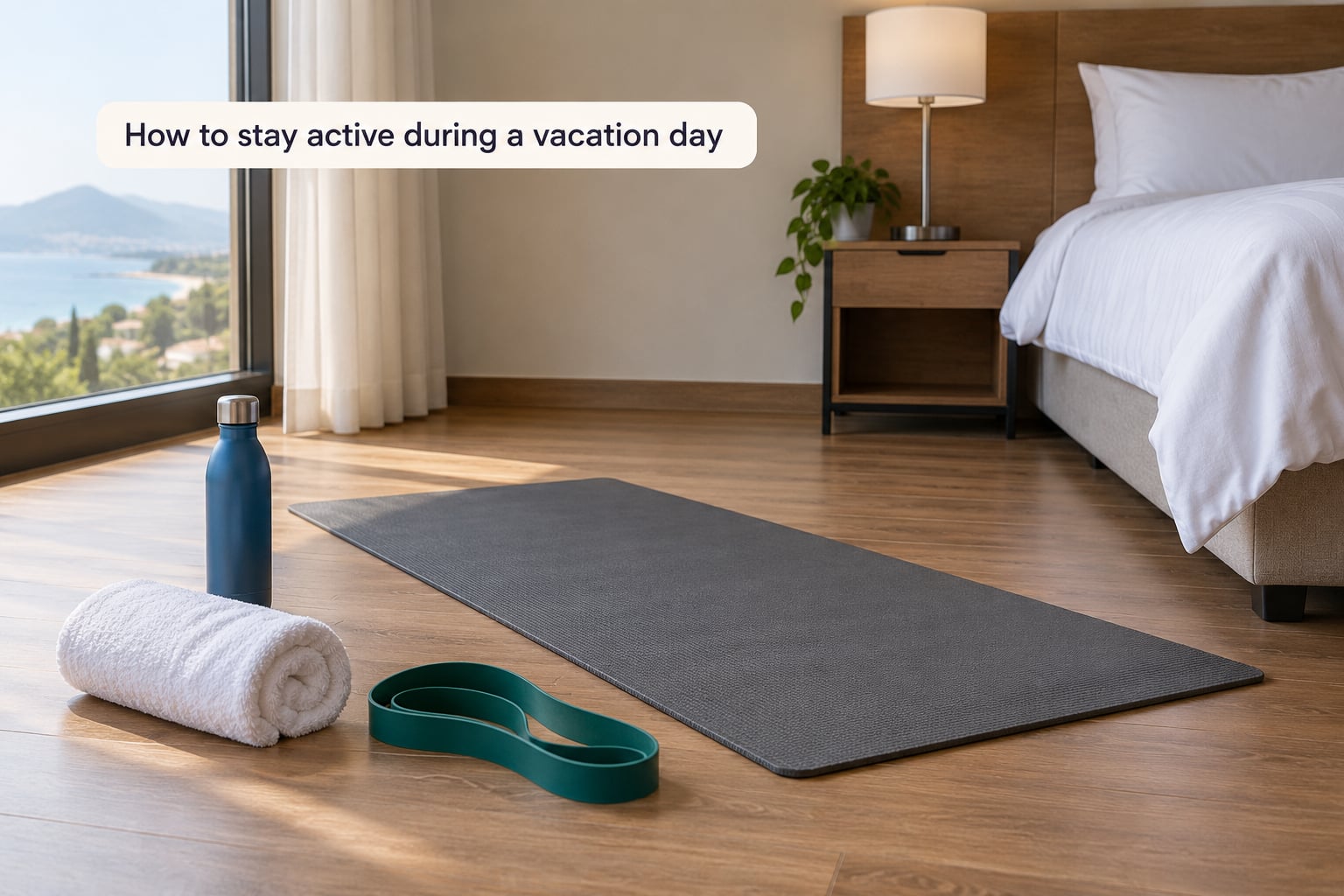
Walking solves most of this. Sightseeing, beach trips, and cruise ports are all just walking with better scenery. Aim for 20 to 30 minutes and split it up. A loop around the block after dinner counts the same as one long session.
Small daily wins add up without feeling like exercise. Take the stairs instead of the elevator. Walk the long way to the pool. Park at the far end of the lot. Stand and walk during a layover instead of sitting for four hours.
For the hotel gym, go early. It empties out after 9am, and a 20-minute session is plenty for maintenance. Two resistance sessions a week is enough to hold muscle for a week or two.
If there’s no gym, here’s a five-move circuit. Do three rounds, resting 30 to 60 seconds between moves.
- Bodyweight squats, 15 reps
- Reverse lunges, 10 per leg
- Incline push-ups on a desk or counter, 8 to 12 reps
- Glute bridges, 15 reps
- Plank, 30 to 45 seconds
A resistance band and a rolled towel weigh almost nothing and cover most of it. For the stiff legs after a long flight, roll the calves, hamstrings and hips for a couple of minutes each.
How to handle snacks, drinks, and restaurant meals
Hunger between meals is the thing that derails most trips, because it arrives when there’s no kitchen. A snack isn’t a failure of planning, it’s the bridge between meals. Pack something with protein and fiber: nuts, protein bars, whole-grain crackers, cheese and apple slices.
At a restaurant, order protein and a side of vegetables or salad first, then decide about the rest. You don’t have to finish the bread basket or clear the plate. Drink water alongside, and you’ll find the meal stretches further than you expected.
Alcohol needs a plan because of two costs, not one. A standard drink runs roughly 100 to 150 calories, and a margarita or a piña colada can land near 300 or more. The second cost is sleep, which is harder to measure and matters just as much. Alcohol fragments your sleep, so two drinks at dinner can leave you tired and hungry the next morning.
Pace it. Have water between drinks, alternate with a mocktail, and stop at the point you decided on before dinner rather than at the point the group decides. That one habit does more than anything else on this list.
How to get back on track after overindulging
Don’t try to erase vacation eating. Compensating with fasting or punishing workouts after a big meal usually triggers the same rebound that caused it.
Run a 72-hour reset instead.
- Day one: resume your normal meals at your normal times. Grocery shop before you get home if you can, so the first meal isn’t a decision.
- Day two: return to your normal activity, including one resistance session.
- Day three: weigh in only if you already weigh in regularly, and look at a weekly average rather than a single number.
People who meal-plan and order groceries before traveling describe that single step as the most important part of coming back. The reasoning is simple: the thing that follows the trip decides whether it mattered.
What to do on different types of trips
A cruise and a road trip fail in completely different ways, so the tactic changes.
- Road trip: the risk is gas station and drive-through grazing. Eat a real meal or a packed snack every 3 to 4 hours, before hunger makes the decision for you.
- Air travel: the risk is hours of sitting followed by a heavy airport meal. Walk the terminal during long layovers and take the stairs when you can.
- Cruise: the risk is endless food, all day. Skip the buffet the moment you feel full and do something else instead.
- All-inclusive resort: the risk is drinks, dessert and snacks within walking distance. Set an alcohol limit in advance and book one activity per day.
Common Mistakes
Skipping meals to save calories. This is the most common pattern and the most expensive one. It shows up in every forum thread about travel. Restrict all day, arrive at dinner ravenous, eat far more than planned, feel bad, and repeat tomorrow. Fix: eat three meals, or two solid ones, and plan your flexible meal in advance.
Treating the scale number as fat gain. A jump of a few pounds after a trip is mostly water, sodium, carbohydrates, and gut contents. Fix: don’t weigh for the first three days, then look at a weekly average.
Living on hotel breakfast. Pastries, fruit, yogurt, and coffee can pass 600 calories before noon, which leaves you starving by two. Fix: keep the fruit and yogurt, swap the pastry for eggs or a protein option, and eat a real lunch.
Overestimating what you burned. Walking around a city all day and then logging it as a hard workout is common and usually wrong. Fix: count ordinary walking as ordinary walking and put your workout minutes where they belong.
Abandoning everything after one indulgence. One meal or one trip cannot undo weeks of progress. This is the single most useful sentence to take on vacation, and it’s true. Fix: decide in advance what your response to a big meal is, and make it “the next meal is a normal meal.”
Letting the group choose for you. Travel companions eat what they eat, and that’s genuinely fine for them. You get to make your own choices without an explanation, and you don’t owe anyone a reason for having water instead of a cocktail.
Punishing yourself at home. The worst recovery is a week of punishing workouts and near-fasting meals. Fix: go back to normal at the next meal, and protect sleep for the first few nights.
Frequently Asked Questions
How can I stay on track while on vacation without following a strict diet?
Aim for maintenance rather than a deficit, and use one simple plate rule for most meals: protein, produce, and a carbohydrate you enjoy. Eat three meals instead of skipping to save calories, allow one flexible meal a day on purpose, and keep a loose note of what you eat. Most people do better with two priorities, like vegetables at most dinners and 20 minutes of walking five days, than with a long list of rules.
Will eating differently for one week undo my weight-loss progress?
No. A week of different eating does not erase months of work. Any change you see on the scale within a few days of coming home is mostly water, sodium, and gut contents rather than fat, and it settles within a week or so. The thing that actually undoes progress is the guilt cycle afterward, so return to your normal meals at the next meal instead of trying to compensate.
How much should I exercise on vacation?
Enough to hold where you are, which is far less than most people assume. Twenty to 30 minutes of walking a day, split into smaller chunks, covers most of the need. Add two short resistance sessions a week if you want to protect muscle, using a hotel gym or a five-move bodyweight circuit. You are maintaining, not progressing, so consistency matters more than intensity.
What should I do if I overeat at a buffet or restaurant?
Nothing dramatic. Go back to your usual meals at your usual times, drink water, and move normally. Skipping meals the next day to make up for it usually leads to a rebound, and punishing workouts rarely burn off what you ate. If overeating keeps happening at buffets, eat a protein snack before you go in and take one trip around the line before choosing.
Can I drink alcohol while trying to lose weight?
Yes, in moderation and with a plan. A standard drink is roughly 100 to 150 calories, and cocktails with juice or cream can reach 300 or more. The bigger issue is sleep, since alcohol fragments it and leaves you hungrier and lower-energy the next morning. Set a limit before dinner, alternate with water or a mocktail, and stop at the number you chose rather than the number the group reaches.
How do I restart my routine after coming home from vacation?
Use a 72-hour reset. On day one, shop for groceries and eat your normal meals at your normal times. On day two, return to your usual activity and get one resistance session in. On day three, weigh in only if you already do, and read a weekly average instead of a single number. Starting at the next meal is what keeps a trip from turning into a month off.
The Short Version
Start tonight, not at the airport. Pick two priorities, run the pre-trip checklist, and put your snacks and shoes in the bag before you close it.
Then remember the number that matters most: one trip cannot undo weeks of progress. Hold steady, eat your meals, walk a bit, and start your normal routine at the very next meal when you get home.