Staying active while traveling comes down to three things: keep walking as transport instead of calling a ride, do two or three short bodyweight sessions a week, and stretch for five to ten minutes after any long flight or car drive. You do not need a gym, expensive gear, or a rigid schedule.
Most trips go sideways for a boring reason. A two-hour flight becomes eight hours of sitting, the hotel gym has two broken machines, and the plan you built at home assumes you slept eight hours. So you skip everything, come home, and restart on Monday. That restart cycle is what actually costs you progress, not the missed sessions.
This guide covers how to stay active while traveling on a long-haul flight, a road trip, a week of sightseeing, or a business trip where the only free window is twenty minutes between meetings. Pick the parts that fit your trip and ignore the rest.
Table of Contents
- What You Need to Stay Active While Traveling
- Step-by-Step
- How to stay active while traveling during transit
- How to build a simple walking routine at your destination
- How to fit short workouts into a busy travel day
- How to stay active during long flights and car rides
- How to keep healthy eating and movement connected
- How to adjust your plan when energy or time is low
- Common Mistakes That Undo the Plan
- Doing too much on day one
- Skipping the warm-up
- Choosing unsafe places
- Forgetting to drink water
- Abandoning everything after one disrupted day
- Waiting for motivation to return
- Frequently Asked Questions
- How can I stay active during a long flight?
- Is it better to exercise before or after traveling?
- What can I do if I only have 10 minutes at a hotel?
- How do I stay active when I am mostly in a car?
- Can walking around help with jet lag?
- What should I do if I feel unwell while traveling?
- Conclusion
What You Need to Stay Active While Traveling
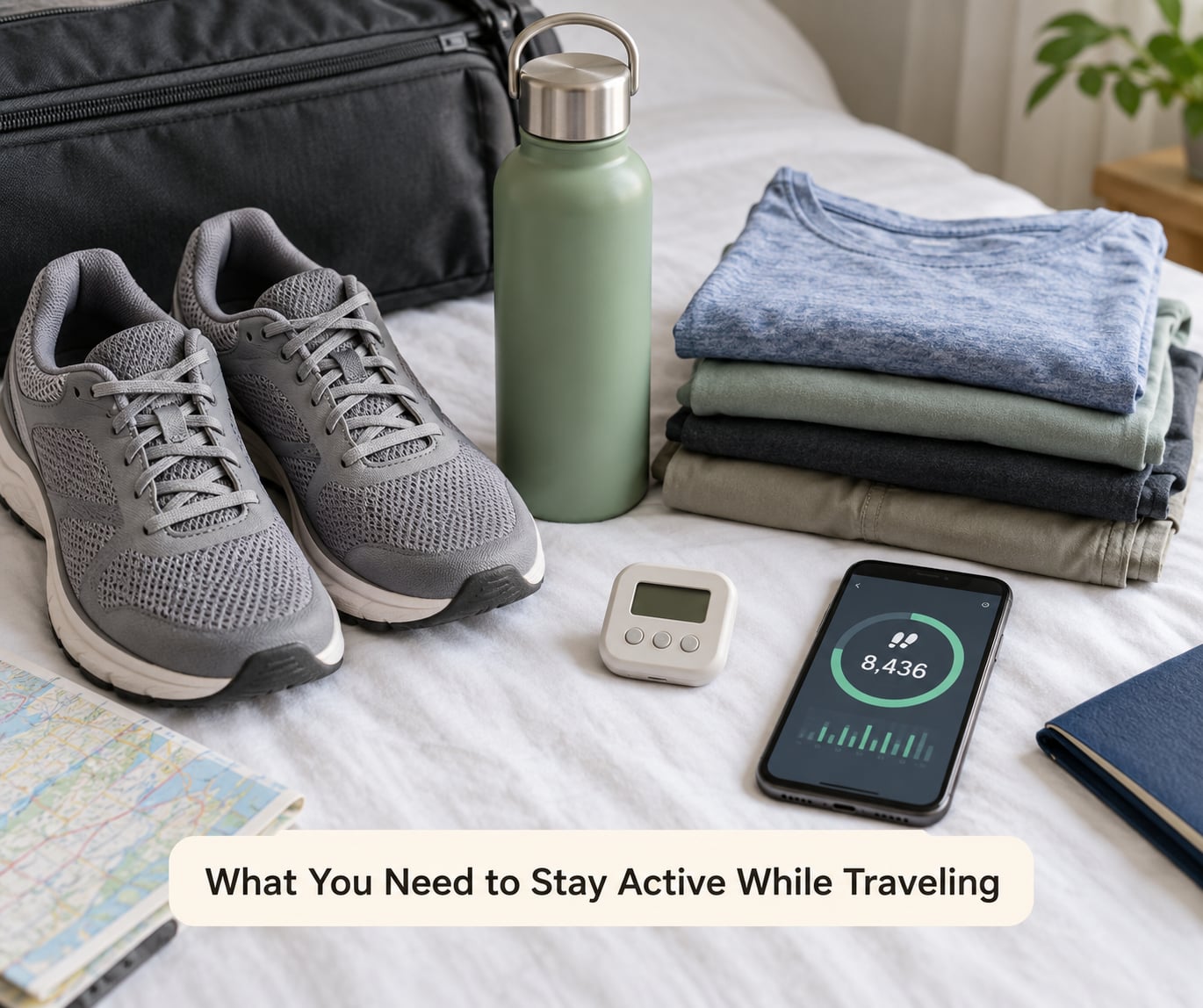
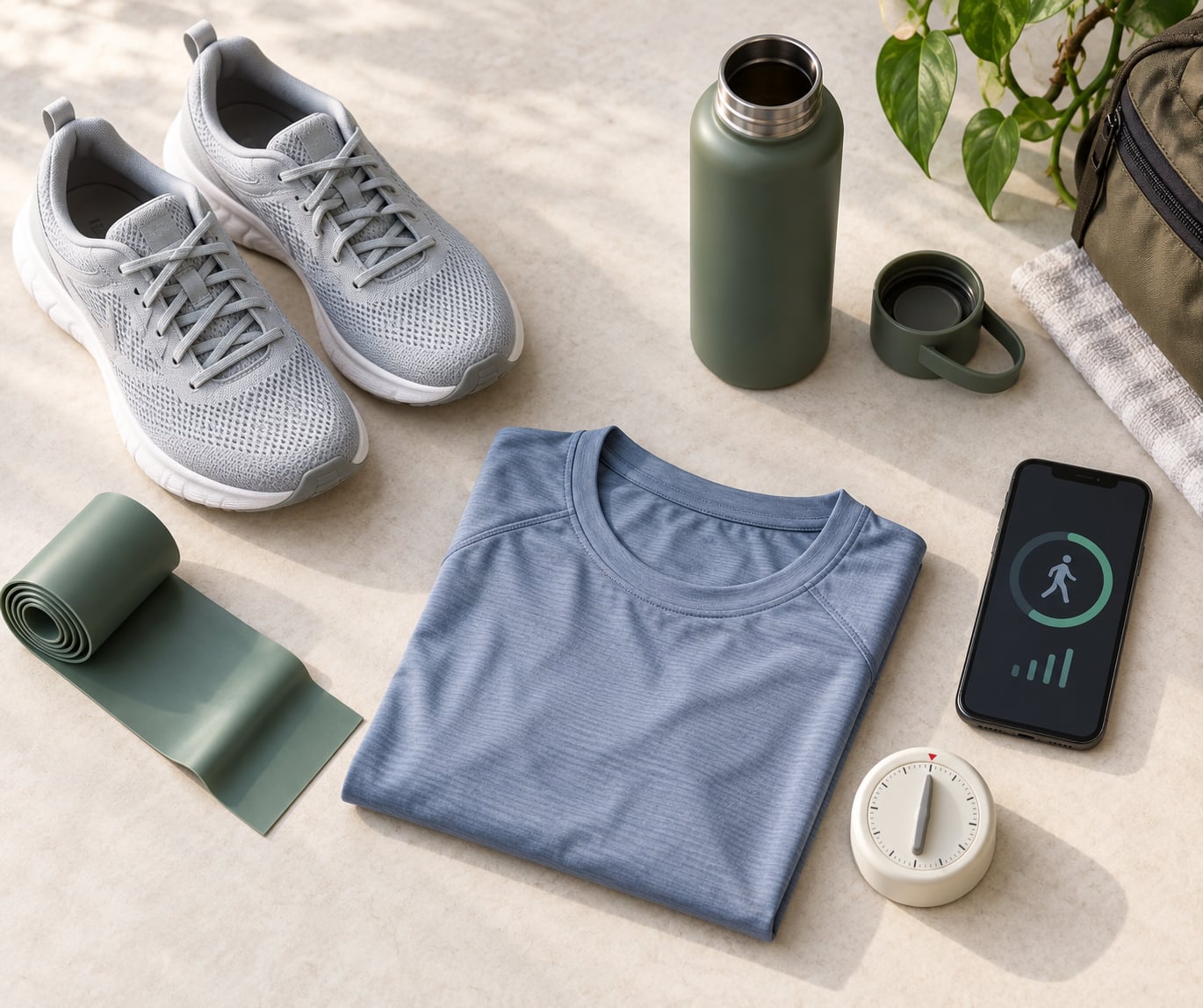
You need far less than you think: shoes you can walk eight miles in, water, and a ten-minute window that repeats.
- Supportive walking shoes. The single highest-value item, and the one most people pack badly. Wear them in the airport rather than carrying them.
- A refillable water bottle. Long sitting plus dry cabin air dehydrates you faster than you notice, and dehydration reads as fatigue.
- Flexible clothing and one training layer. You want to move, not look like you just left a gym.
- A small timer. Phone alarms named “20 minutes” beat a vague plan. Set it, stand up, start.
- A step goal in your phone. A visible number turns a walk into something you notice. Most people carry 3,000 steps on a heavy travel day without trying.
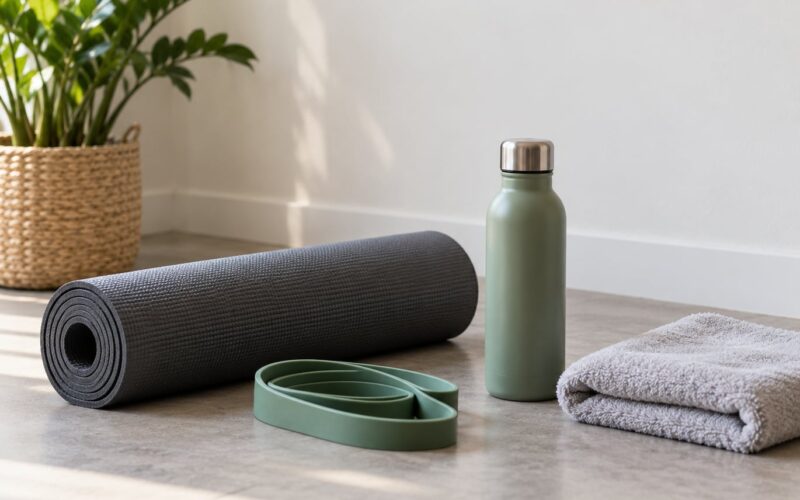
- One optional item: a resistance band. It weighs almost nothing and adds rows, presses, and pulls that a suitcase cannot.
Decide the walk before you leave. Research treats the destination’s neighborhoods and walkable sights, and check whether the hotel has a gym, pool, or nearby trail. Digital nomads who pick accommodation with a pool, gym, or walking trail at the door report better consistency than people who chase the perfect setup and lose the habit instead.
Step-by-Step
How to stay active while traveling during transit
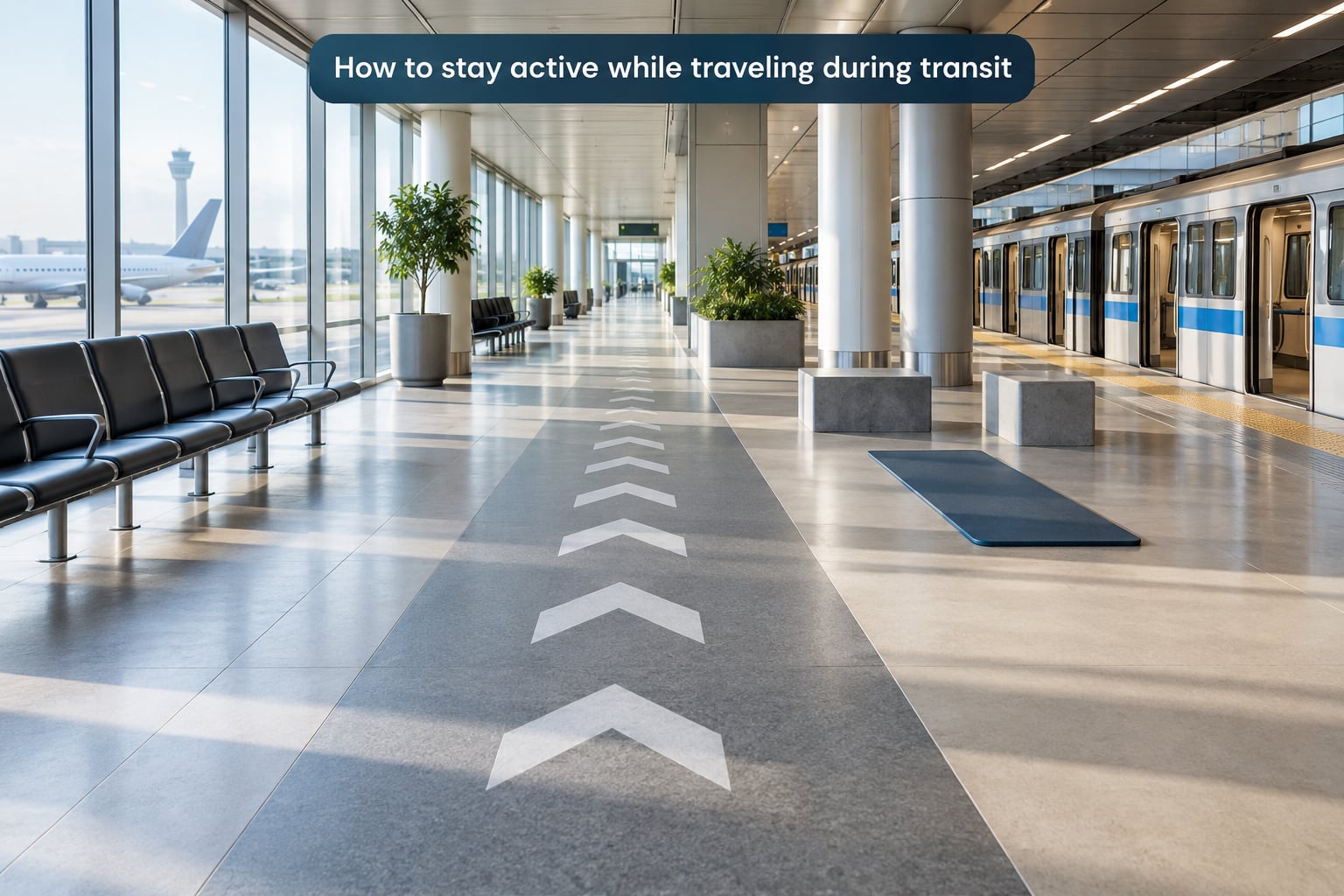
Movement during transit is free, so use it: two or three laps of the terminal or concourse, and it counts as a walking session.
Airports and stations are built for long distances, which makes them the easiest walking on the whole trip. When you have ninety minutes between flights, walk the long route to a distant gate and take the escalator or stairs up instead of hunting for a shorter one. On a train, stand at the end of the carriage when you can, walk through at a stop, and stop for ten minutes of leg stretches.
For car travel, plan stops roughly every two hours rather than every time you need fuel. A five-minute loop around the parking area, some calf raises against the trunk, and a walk down the road beats nothing.
You know it worked when your step count is higher at the gate than it was when you landed, and your hips feel like they have more room in them.
How to build a simple walking routine at your destination
Turn the trip’s errands into training: walk to meals, to the tram, to the museum, and count it as your daily movement.
Pick one anchor walk per day and make it yours. Fifteen to thirty minutes around a neighborhood at a comfortable pace is enough to matter, and it costs nothing.
- Walk to breakfast instead of taking a taxi, even if it adds ten minutes.
- Choose the walking food tour over the bus tour. You cover the same sights and add steps.
- Take the hotel stairs on the way up, every floor, unless you are unwell.
- Get off the train one stop early and walk the rest.
- Ask the front desk where the good walk starts. Locals know the flat riverside route or the cliff path that loops back, and the answer takes ten seconds.
Most sightseeing days land somewhere around 8,000 to 10,000 steps. On a resort or beach day the number drops, so add one deliberate walk rather than pretending the day counted.
How to fit short workouts into a busy travel day
Three short sessions beat one long one, so build around what you actually have: ten, fifteen, or twenty minutes.
Ten minutes. Squats, incline push-ups on a desk edge, glute bridges on the bed, and a plank. Two rounds with 30 seconds of rest.
Fifteen minutes. Add walking lunges and single-arm rows with a heavy bag or band. Three rounds, 45 seconds of work, 45 seconds rest.
Twenty minutes. A full bodyweight circuit: 12 squats, 10 incline push-ups, 20 seconds of mountain climbers, 30 seconds of rest. Four or five rounds. Adjust reps to finish each round with good form rather than to a number.
Room furniture counts as equipment. The bed edge gives you an incline push-up, a sturdy chair works for dips or split squats, and a filled suitcase is a respectable weight for rows, deadlifts, and presses.
You did enough when you broke a sweat and your breathing changed, not when you were destroyed. Two of these a week hold muscle for a trip of a week or two; that is the target, not a personal best.
How to stay active during long flights and car rides
Change position every hour or two, and move your legs, ankles, and hips in place whenever you sit down again.
On a flight or in a car seat, the movement that matters most is small and frequent. Seated marches, ankle circles, heel raises, knee extensions, gentle neck rolls, and shoulder circles each take under a minute. Do a full set after landing, and you will feel noticeably less stiff walking off the plane.
Stand and walk the aisle when the seatbelt sign is off. In a car, move your legs during any stop longer than five minutes and stretch your calves against the door frame.
Never force a deep stretch in a cold, cramped seat or while the vehicle is moving. Gentle range only.
How to keep healthy eating and movement connected
Movement works best when meals are boringly normal: some protein, plenty of water, and food you actually enjoy.
Protein is the one nutrient worth planning around, because it protects the muscle you are trying to keep. Aim for a palm-sized portion at two meals a day, and pack a shelf-stable backup such as protein bars, nuts, or jerky for the days when the only option is a gas station.
Hydration does more for how you feel on a long travel day than any supplement. Carry the bottle, refill at every stop, and remember that alcohol works against everything else you are doing.
Do not attempt a strict diet on the road. A rigid plan fails on day two and comes home as a guilt cycle. Eat normal meals, keep walking, and let the scale do whatever it does for a week.
How to adjust your plan when energy or time is low
On a bad day, the minimum still counts: ten minutes of walking plus a five-minute stretch.
Have three fallbacks ready so a disrupted day does not become a broken streak.
- Missed workout? Walk instead. A twenty-minute walk is a valid session on a day when training is impossible.
- No energy? Five minutes of mobility. Ankle circles, hip flexor stretches, and a short walk beat doing nothing and calling yourself lazy.
- No time? Split it. Two ten-minute blocks with a full day between them works better than nothing.
Missing a day is data, not a verdict. Write down why, fix the cause, and continue on the next schedule.
If you feel unwell while traveling, stop exercising and seek medical care, particularly with fever, chest pain, or dizziness. Travel-related illness needs a clinician, not a workout plan, and staying in can be contagious for the people around you.
Common Mistakes That Undo the Plan
Almost every failed travel fitness plan repeats one of six mistakes, and each has a simple correction.
Doing too much on day one
You sleep badly, train hard, and feel wrecked for three days. Start with the ten-minute session on day one and build from there.
Skipping the warm-up
Cold muscles plus unfamiliar hotel furniture is how people tweak something. Two minutes of ankle circles, cat-camel, and arm circles first, every time.
Choosing unsafe places
Dark isolated parks and unfamiliar trail markings are not worth the risk. Solo travelers should pick well-lit public routes, tell someone where they are going, and use a hotel gym or a group class when weather or safety is uncertain.
Forgetting to drink water
Tiredness on day two is usually hydration before it is motivation. Refill at every stop.
Abandoning everything after one disrupted day
This is the big one. A missed session is a gap, not a reason to quit for the trip. Resume at the next opportunity, even if it is a ten-minute walk.
Waiting for motivation to return
Motivation is unreliable on a jet-lagged Wednesday. Attach movement to something you already do: after breakfast, before checking email, or on the walk to dinner.
Frequently Asked Questions
How can I stay active during a long flight?
Walk the aisle every hour or two when the seatbelt sign is off, and do a seated set after landing: ankle circles, heel raises, seated marches, knee extensions, and gentle neck and shoulder rolls. The whole seated set takes about three minutes. Skip deep stretches in a cold, cramped seat, and keep the movement gentle rather than trying to stretch or train hard in a narrow space.
Is it better to exercise before or after traveling?
Both work, and the timing matters less than the habit. A short session before you leave helps you travel with looser hips and better sleep, and a light one after arrival helps your body settle into the new time zone. If you only have energy for one, take the one you can actually do on the day. Long flights deserve movement during and after, not a hard workout straight off the plane.
What can I do if I only have 10 minutes at a hotel?
Run one bodyweight circuit in the room. Do 12 squats, 10 incline push-ups on a desk or bed edge, 12 glute bridges, and a 30-second plank, then rest 30 seconds and repeat twice. That is under ten minutes, needs no equipment, and is enough to keep the habit intact on a packed day. Two sessions like this a week will hold muscle over a typical trip.
How do I stay active when I am mostly in a car?
Plan a five-minute movement stop every two hours: walk around the parking area, do calf raises against the vehicle, and stretch your hip flexors and hamstrings. While seated, move your legs and ankles whenever you stop, and do gentle knee extensions and shoulder rolls rather than trying to hold a real workout position. Set a phone alert so the stop happens even when you forget.
Can walking around help with jet lag?
Outdoor light and gentle walking both help, especially within a few hours of waking at your destination time. Walking outdoors exposes you to daylight and gives your body a timing cue, and a 15 to 30 minute walk is enough. Skip intense training on arrival when you are exhausted, and keep the walk easy. If jet lag persists or you travel across many zones often, speak with a clinician.
What should I do if I feel unwell while traveling?
Stop training and rest. Do not exercise with fever, vomiting, diarrhea, chest pain, dizziness, or unusual shortness of breath, and get medical care rather than pushing through a travel workout plan. Staying in helps everyone around you too. Hydrate, and speak with a doctor or urgent care service about symptoms that are severe, worsening, or do not settle in a day or two.
Conclusion
Start with one habit you will actually keep: a twenty-minute walk somewhere you were going anyway.
That is the whole first step. Keep the anchor walk, add two short bodyweight sessions a week once the trip settles, and use the five-minute stretch after any long flight or drive. Scale up or down based on your energy, your schedule, and where you land. Missing a day is fine; quitting for the whole trip is the only real failure.