
If your goal is fat loss, you usually do not need to replace the calories a normal workout burns. Extra food is more useful after long, hard or frequent sessions, during weight gain, or when hunger is starting to drag your performance down. The deciding factor is your total energy needs for the day, not the number on the screen.
That single sentence settles most of the confusion, because the question is rarely really about exercise. It is about whether your calorie target already accounts for the movement you did, and whether the machine reading those calories was accurate to begin with.
This guide walks through what a workout burn figure really means, when eating back makes sense, and how to make the call without doing arithmetic on an unreliable estimate. Updated for 2026.
Table of Contents
- Should You Eat Back Exercise Calories?
- How Many Calories Does Exercise Actually Burn?
- When Eating Back Exercise Calories May Help
- Eating back for recovery is not the same as adding calories without a plan
- When You Probably Do Not Need to Eat Them Back
- Should you eat back exercise calories on a low-calorie plan?
- How to Decide Whether You Need Extra Food
- How to Estimate What to Eat After Exercise
- Tips for Keeping Energy Balance Under Control
- Frequently Asked Questions
- How many calories should I eat back after exercising?
- Do I need to eat more on days when I work out?
- Are calorie burn numbers from fitness trackers accurate?
- Should I eat something after a 30-minute workout?
- Can eating back exercise calories stop weight loss?
- What should I eat after exercise when I am trying to lose weight?
- Conclusion
Should You Eat Back Exercise Calories?
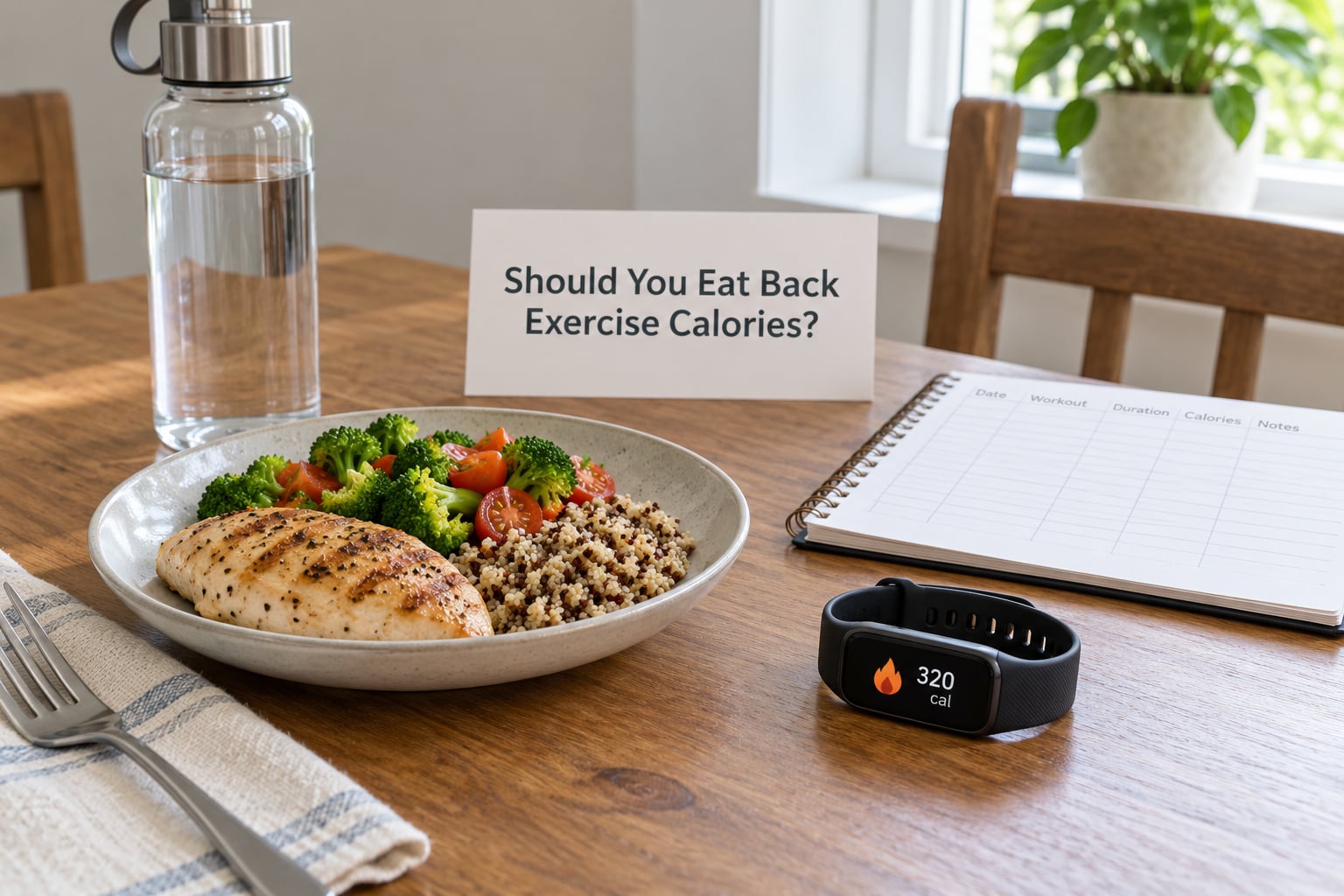
No for most people trying to lose fat. Yes when the session was long or genuinely hard, when you are training for muscle or maintaining weight, or when you are hungry and recovering badly.
Two things decide it: your goal, and what the session actually was. A 25-minute walk and a two-hour trail run are not the same event, even when a watch reports both as “active calories.”
The goal matters because eating back a burn you did not have shrinks the deficit you thought you had. In a cut, the workout is a bonus, not an allowance. In a lean bulk or a maintenance phase, replacing what you spent is simply how the math closes.
The session matters because recovery has a floor. Fuel is what you use to rebuild muscle, refill glycogen and top up fluids. Push past that floor during heavy training and you get tired reps, worse sessions next week and a hungrier you than you started with.
How Many Calories Does Exercise Actually Burn?
Every number you see is an estimate built from a heart rate, a height, a weight and a lookup table. It is a reasonable guess, not a measurement, and the error runs in both directions.
Duration and intensity are the two big levers. More time at a moderate effort tends to burn more than a shorter burst, and a genuinely hard interval session burns far more than a stroll at the same duration. Weather, terrain, shoes, sleep and how rested you are all shift the result.
Body weight does the heavy lifting too. A heavier person moving the same load spends more energy doing it. Fitness level cuts the other way: someone who does the same session every week usually gets more efficient at it and burns a little less for the same work.
| Session type | What it feels like | How to treat the burn figure |
|---|---|---|
| Light | Easy walking, stretching, a slow stroll where you could hold a conversation | Treat as part of normal daily life, not a workout to replace |
| Moderate | Brisk walking, cycling, swimming laps, a normal strength session | Useful for training quality, not for eating back during a cut |
| Vigorous | Hard intervals, long steady runs, a full hour of climbing, long trail days | Worth replacing partly, especially if your sessions run past an hour |
One more wrinkle matters for step counts. Ten thousand steps is a habit target, not a fixed calorie figure. A tall person walking uphill spends more than a shorter person walking flat, so two people can take identical step counts and burn meaningfully different amounts.
When Eating Back Exercise Calories May Help
It helps when the session took more out of you than an ordinary day of movement would have, or when your goal is not fat loss.
- Long sessions. Past about an hour of continuous work, glycogen stores start to run down and recovery time climbs. Fuel during or right after those sessions helps you feel normal again and keeps the next session quality high.
- Frequent hard training. Three to six demanding sessions a week is a lot to cover out of a base diet sized for a desk job. Under-fueling shows up as flat performance and constant hunger long before it shows up as an injury.
- Endurance work. Long runs, rides and hikes on back-to-back days depend on carbohydrate availability more than anything else you control that week.
- Heavy lifting when you want to grow. Muscle gain needs energy. Cutting hard on the same day you try to add tissue is asking two opposing things of the same week.
- Maintenance. If you are not cutting, eating roughly what you spent keeps weight steady without pushing you into a slow surplus.
- Hunger that will not settle. Constant hunger after training is a real signal, not a character flaw. When it starts affecting sleep, mood or how you train, adding food is the practical move.
Eating back for recovery is not the same as adding calories without a plan
Recovery eating has a purpose: replace what the session used and support what comes next. Unstructured extra calories have no purpose at all, and they are how a person ends up back where they started after a clean cut.
On r/CICO, a thread that still ranks for this question captures the trade-off well. The theory is that exercise calories widen your deficit, but a deficit that wide can cost you muscle rather than fat. That is the tension worth respecting: bigger is not automatically better.
When You Probably Do Not Need to Eat Them Back
You probably do not need to eat them back when the session was short or easy, or when your daily intake already covers a normal training week.
A 20-minute walk after dinner is not an event your body needs to recover from. Neither is a 45-minute gym class at a pace you could chat through. Adding a few hundred calories back for those quietly erases a meaningful slice of a daily deficit, and it happens often enough to stall progress.
The same is true on a cut with a low starting target. If your plan is already tight, adding exercise calories back is not maintenance, it is a slow drift upward. This is the version of the habit that quietly undoes months of patient work.
Should you eat back exercise calories on a low-calorie plan?
Generally no. On a very low-calorie plan, treat the workout as part of the plan’s activity assumption and leave your intake where it is.
The exception is a session that was genuinely long or hard and left you depleted. Then add a small portion of what you actually used rather than the full displayed number, and check your weight trend over the following two to three weeks.
Popular communities disagree sharply here, and that conflict is worth naming. The MyFitnessPal community leans toward eating back intentional exercise calories, while the recurring line on r/loseit is that you have no idea what you burned, so exercise calories are a bonus rather than an allowance. Both are answering the same question with different assumptions about how good the number is.
How to Decide Whether You Need Extra Food
Decide with three checks in order: hunger, recovery, and the weight trend. Two out of three pointing the same way is usually enough to act.
- Hunger. Are you ravenous within a couple of hours of eating, fixating on food, or low on energy between meals? Real hunger gets worse over a few days if you keep ignoring it.
- Recovery. Is performance slipping week to week, is resting heart rate up, is sleep worse than your baseline, or are you getting sick more often? Those are signs of under-fuelling, not signs that you need more discipline.
- Weight trend. Weigh yourself under the same conditions daily and look at two to three weeks of data, not single readings. Water, salt, timing and bowel habits all move the scale in ways that have nothing to do with fat.
Worked examples make it clearer. A 20-minute walk needs nothing; have dinner when you are hungry. A one-hour strength session with heavy compound lifts usually needs a normal meal plus a protein-forward snack if you trained late. A four-hour weekend hike deserves real recovery food, and eating back part of that session is not optional if you want to enjoy the next one.
How to Estimate What to Eat After Exercise
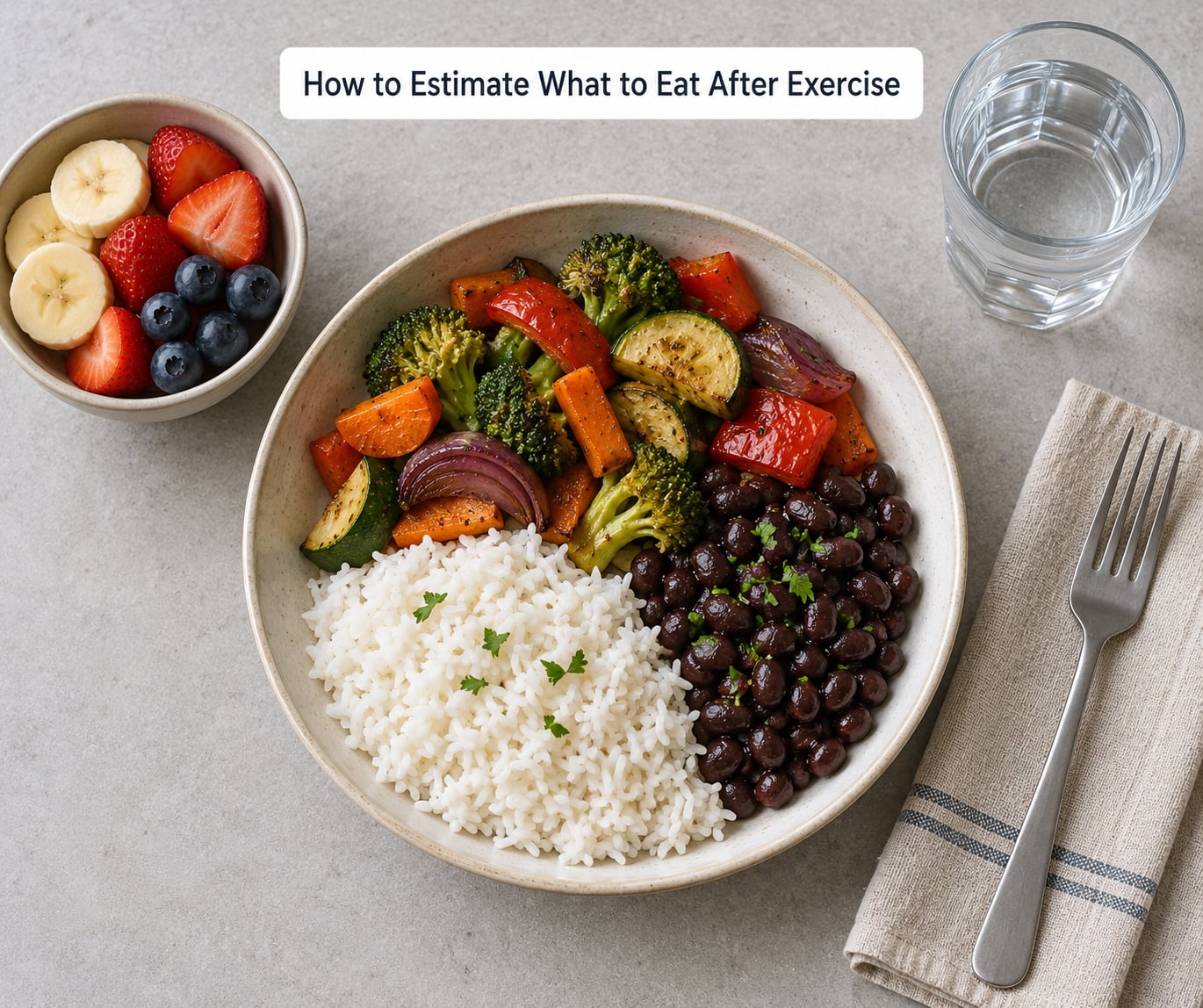
Estimate conservatively. Take the lower end of what the app or machine shows, then cut it further if the session was not that demanding.
A displayed range is more useful than a single number precisely because you get to choose where inside it you land. If your tracker says 480, believing you burned 300 is a safer assumption than believing you burned 480, because the error is usually on the high side.
Then adjust by appetite and by how long you were out. Hungry after a long session? Eat a proper meal. Not hungry? A smaller portion is fine and nothing bad happens. The portion can move without the plan being wrong.
What you eat matters as much as how much. Carbohydrate carries the glycogen work for anything over an hour and is what you want before the next session. Protein supports repair and keeps you full. Fluids and electrolytes matter most for long, sweaty sessions in heat. A normal mixed meal with all three does the job without special products.
- Carbohydrate: rice, oats, potatoes, bread, fruit, yogurt
- Protein: eggs, fish, chicken, beans, tofu, Greek yogurt, cottage cheese
- Fluids: water, and for long hot sessions something with sodium and potassium
Skip the “recovery” packaging and the expensive shakes unless you enjoy them. Ordinary food carries the same nutrients for a fraction of the cost, and a plate of rice and eggs after a hard session works about as well as anything sold for it.
Tips for Keeping Energy Balance Under Control
Watch the trend, not the session. One workout reading says nothing useful. Two to three weeks of average weight and average intake tells you whether the plan is working.
Measure portions for a couple of weeks if you are not already. Calorie maths goes wrong most often in the kitchen, not the gym, and weighing food for a fortnight is usually enough to see what your eyeball was missing.
Plan meals around training. Knowing what you will eat after a session removes the decision, and decisions made while tired and hungry tend to be larger and less nutritious than planned ones.
Use hunger and energy as real data. Cravings have causes, and one that repeats after every hard session is worth answering with food rather than willpower.
Treat tracker figures as one input among several. They are useful for noticing that a week got busier than the last one. They are not a measuring instrument for your metabolism, however confidently the number appears.
If you have been eating back full numbers for months and want to stop, do it gradually. Reduce the amount you add by a quarter every two weeks, watch the trend, and hold steady if nothing changes. Sudden changes tend to show up as a fast drop followed by a rebound.
This article is general information, not individual medical advice. If you have a medical condition, a history of disordered eating, or symptoms that persist, talk to a doctor or a registered dietitian before changing what you eat.
Frequently Asked Questions
How many calories should I eat back after exercising?
For fat loss, most people need none. If you want to replace some of the burn, sessions past about an hour of continuous work are the ones worth topping up, and the lower half of whatever your app displays is a reasonable starting point. Weigh yourself daily under the same conditions and adjust based on the two-week trend rather than the app number. If your goal is maintenance or muscle gain, replacing more of it is normal and expected.
Do I need to eat more on days when I work out?
Only when the workout changes your total needs. A short or moderate session does not usually require extra food on top of an already balanced plan. A long, hard session, a fifth and sixth training day in a week, or a session that leaves you unusually hungry are different cases. Judge by hunger, how your training is going and your weight trend, not by the active calorie total on the watch.
Are calorie burn numbers from fitness trackers accurate?
They are estimates, and for many wrist devices and cardio machines they run high, sometimes well above the real figure. The estimate comes from heart rate and personal data mapped to reference tables, so it inherits every error in those inputs. Motion sensors, sweat and skin contact all add noise. Treat the number as a rough indicator that you moved, not as a measurement of your metabolism, and never build a food plan around its exact digits.
Should I eat something after a 30-minute workout?
Eat if you are hungry, not because a number appeared. A 30-minute session at a moderate pace is an ordinary part of your day, and your normal meals already cover it. Training in the evening is the usual exception: if dinner was hours earlier, a snack with protein and carbohydrate is reasonable. Very late sessions after a small meal deserve something, because you need fuel for sleep and for the next day.
Can eating back exercise calories stop weight loss?
Yes, it can stall progress, usually without you noticing. If you add back a number the tracker overestimated, you erase part of the deficit you were relying on. Add that gap up over several weeks and the scale stops moving even though your habits look unchanged. Cut phases are where this bites hardest, since the margin for error is smallest. Add only what a hard session genuinely used, and re-check the trend every couple of weeks.
What should I eat after exercise when I am trying to lose weight?
A normal balanced meal, scaled to your appetite. Aim to include protein for recovery and satisfaction, and carbohydrate if the session ran long or you train again the next day. Plain options like rice and beans, eggs with bread, yogurt with fruit, or fish with potatoes do the job well. No special recovery product is necessary. If you are not hungry straight after, wait and eat at your usual meal instead of forcing a shake.
Conclusion
Most people do not need to replace every calorie burned during ordinary exercise. Some people genuinely need more food, and hunger, recovery, training volume and your weight goal are what tell them so.
Start small. If you have been eating back full numbers, cut the amount you add by a quarter, hold for two weeks, then check your average weight. That single adjustment is usually where the useful answer is hiding.