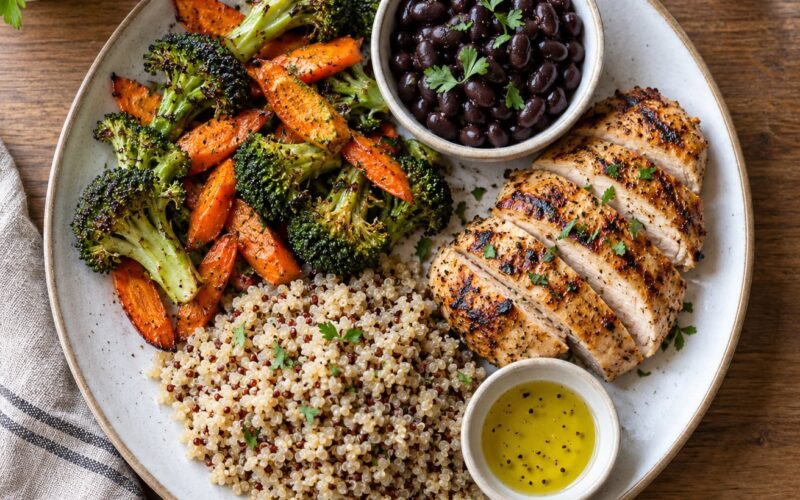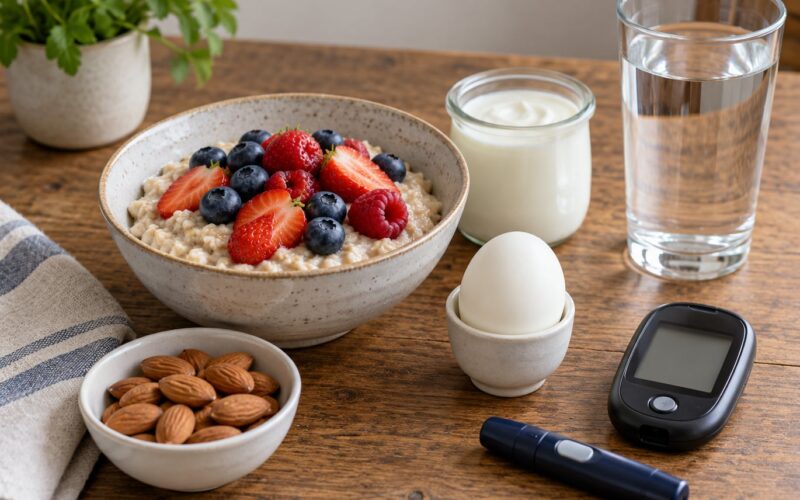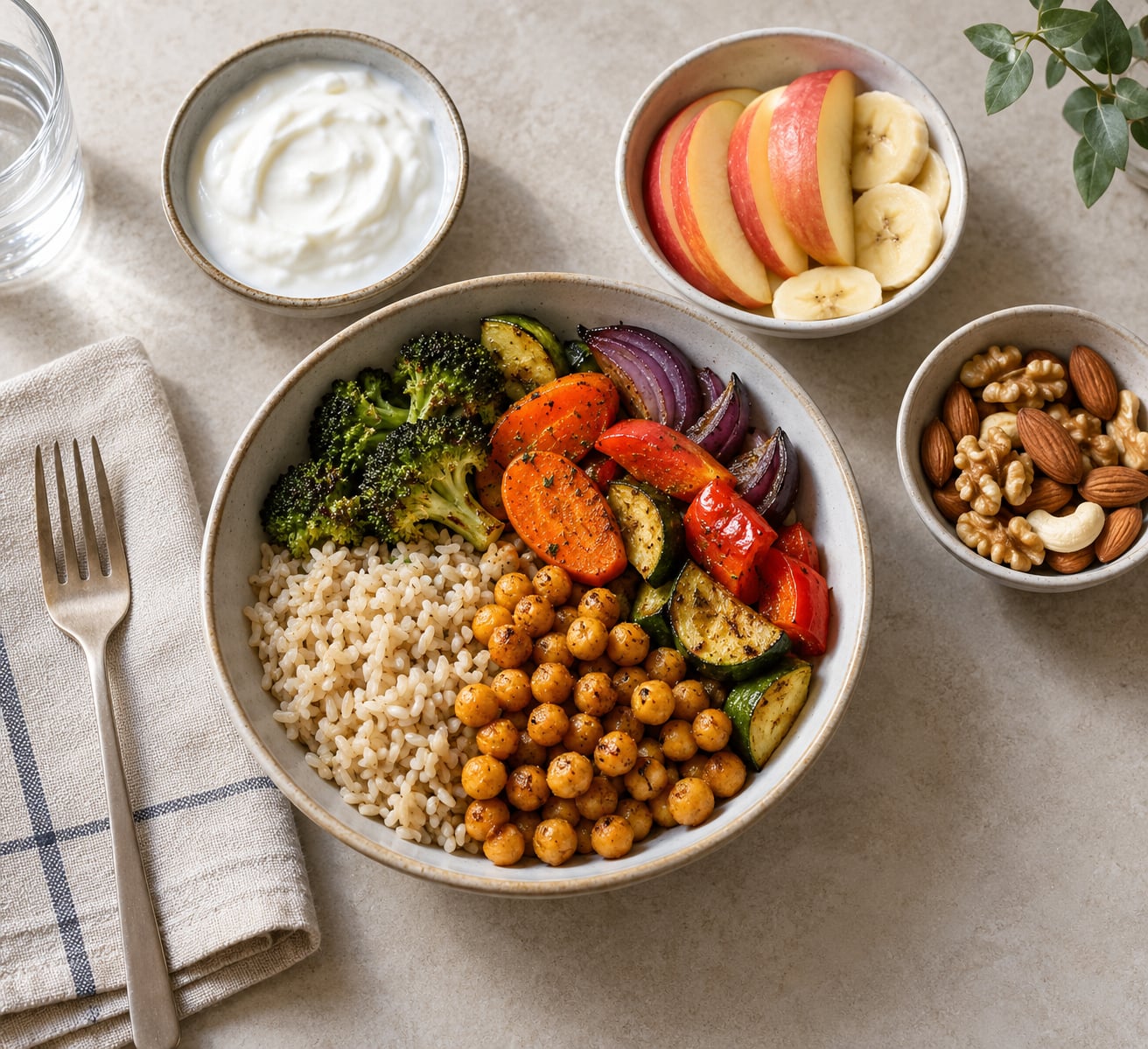
Most people asking what to eat for sustained energy all day already know the obvious answer and still crash at 3pm. The fix is not a superfood, it is structure: complex carbohydrates for fuel, protein for fullness, healthy fats for staying power, and fibre to flatten the whole curve. No single food does the job on its own.
The boring version is the one that works: eat like this for weeks at a time and pay attention to the afternoon. What actually mattered was pairing, not ingredient quality. A lunch of rice and vegetables with a palm of protein held up much better than the same rice without the protein.
Here is the practical version, built for people eating in a calorie deficit as well as people who simply want to stop feeling wiped by 4pm. Nothing below requires supplements, a special diet, or food you cannot find at a normal shop.
Table of Contents
- What to Eat for Sustained Energy All Day
- Why Some Meals Cause an Energy Crash
- The Best Foods for Longer-Lasting Energy
- Slow-release carbohydrates that feed you for hours
- Protein you can actually repeat
- Healthy fats that slow the whole meal down
- Fibre-rich produce for volume and micronutrients
- How to Build a Balanced Energy Meal
- Easy Snacks That Help Avoid an Afternoon Crash
- What to eat for sustained energy when you cannot cook
- How Much Water Do You Need During the Day?
- How to Keep Energy Steady While Traveling or Working Out
- What to Eat for Sustained Energy: A One-Day Example
- Frequently Asked Questions
- What are the best foods for sustained energy?
- Should I eat smaller meals more often to maintain energy?
- Does coffee give me sustained energy all day?
- Are energy drinks or supplements a better way to stay alert?
- Can lack of water make me feel tired?
- What should I eat before a long workout or a busy afternoon?
- Start With One Balanced Meal Today
What to Eat for Sustained Energy All Day
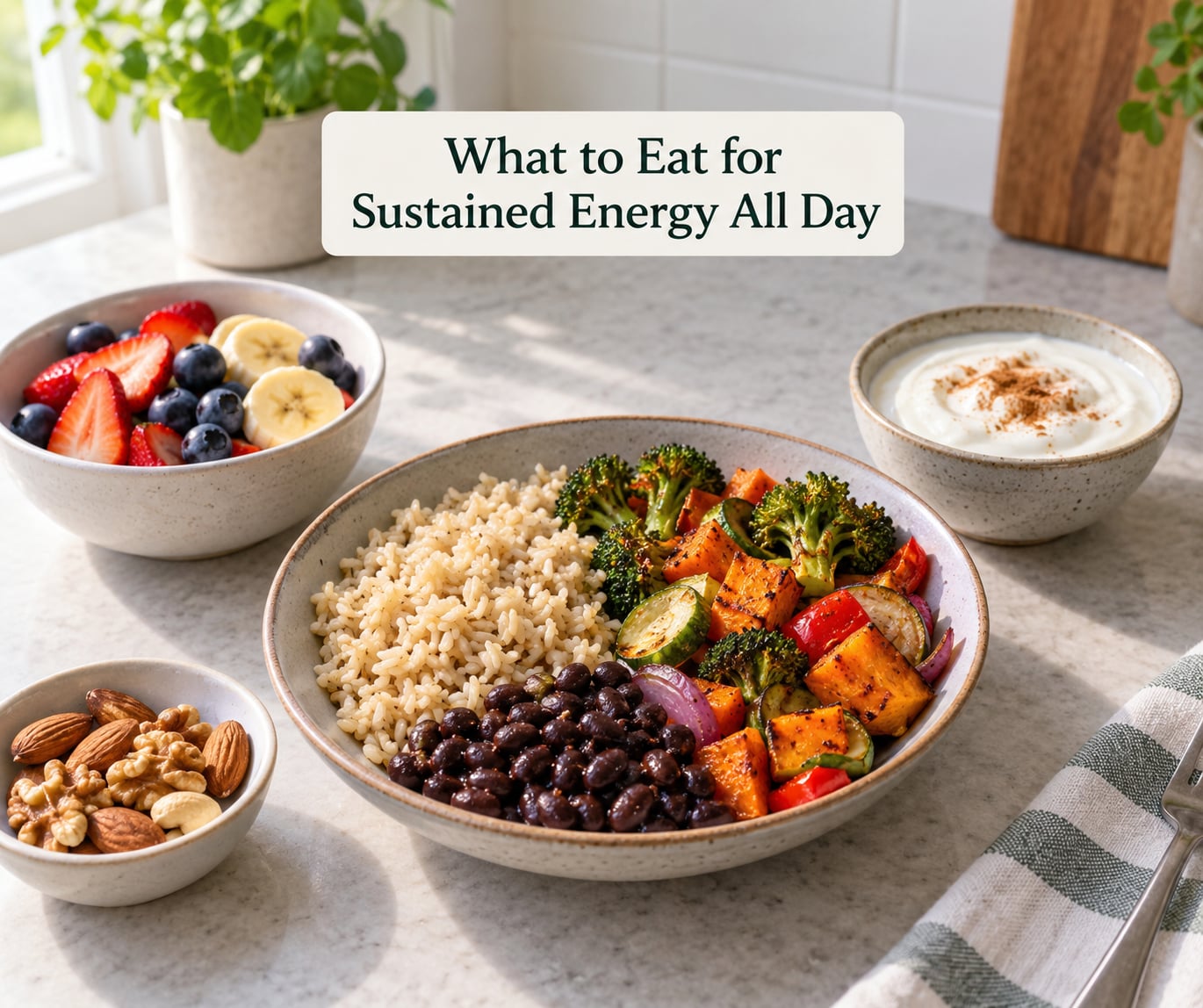
The short answer is a plate where every sitting combines all four of these: carbohydrates, protein, fat, and fibre-rich produce. If a meal is missing one of them, energy tends to arrive in a rush and then leave just as fast.
- Slow-release carbohydrates such as oats, brown rice, quinoa, sweet potato and whole-grain bread digest slowly and feed you gradually over several hours.
- Protein at every sitting such as eggs, Greek yogurt, chicken, salmon, tofu, lentils and chickpeas slows digestion and keeps hunger off you through the afternoon.
- Nuts, seeds and olive oil including almonds, walnuts, chia, ground flaxseed and nut butter add fat that further blunts the blood glucose spike.
- Legumes such as lentils, chickpeas and black beans bring protein and fibre together in one compact, cheap and very filling bowl of food.
- Fruit and vegetables such as berries, bananas, leafy greens and broccoli add volume, micronutrients and fibre without a large calorie load.
- Dairy-style foods such as plain Greek yogurt and cottage cheese provide protein plus calcium and keep you full without added sugar.
How the common options compare:
- Oats sit at the low end for glycemic impact, moderate protein and high fibre, which makes them a good breakfast before a long workday.
- Lentils and chickpeas are low impact with high protein and high fibre, which is why they work so well as a lunch on a calorie deficit.
- Sweet potato lands in the middle: medium impact, low protein, moderate fibre. Useful as pre-workout fuel because it arrives reliably rather than instantly.
- White bread and pastries are the opposite profile, high impact with little protein or fibre, so you get a quick spike and a fast fall.
Nothing on that list needs to be precise. If you mess up the ratio at lunch, fixing it at dinner usually flattens the next day’s curve.
Why Some Meals Cause an Energy Crash
Carbohydrates raise blood glucose and insulin clears the spike back out. When a meal is mostly refined carbohydrate with little protein or fat, glucose drops back below its starting level quickly and you feel the yawn. It is not a failure of willpower, it is chemistry.
Several things push people into that dip:
- A carb-heavy lunch such as a sandwich on white bread with sweet potato on the side, which gives you a fast rise and a fast fall.
- Skipping breakfast, then overeating at lunch to compensate, which produces the same spike and drop at a worse time of day.
- Oversized meals, particularly heavy in fat and refined starch, which slow digestion so much that you feel groggy rather than energised.
- Not drinking enough, since mild dehydration shows up as tiredness and headache long before thirst does.
- Habitual processed snacks, which are engineered to be easy to overeat and rarely carry protein.
One honest caveat: some fatigue is not a food problem at all. Persistent tiredness that no dietary change touches is worth a conversation with a doctor, and this article is general information rather than medical advice.
The Best Foods for Longer-Lasting Energy
Grouping matters more than ranking, because the groups work together. Most people fail by picking a food from one group and stopping.
Slow-release carbohydrates that feed you for hours
Rolled oats, steel-cut oats, barley, brown rice, quinoa, sweet potato, whole-grain sourdough and buckwheat all have fibre and intact structure that slows digestion. A serving is roughly a fist of cooked grain or two slices of dense bread. Sweet potato is useful before training, when you want fuel that arrives reliably rather than instantly.
Protein you can actually repeat
Eggs, Greek yogurt, cottage cheese, chicken, salmon, tofu, lentils, chickpeas and black beans all count. Aiming for protein in every meal rather than only at dinner tends to matter more than the exact grams. Rotating sources also keeps iron, B12 and omega-3 fats in the mix, which is where the long-term benefits live.
Healthy fats that slow the whole meal down
Fat is the part most people skip and it is the part that buys you time. A tablespoon of olive oil on vegetables, an ounce of almonds, two tablespoons of nut butter, a spoon of chia or ground flaxseed, or a slice of avocado changes how fast the rest of the plate digests. Whole nuts are better than salted ones if you are watching sodium, and nut butter is better with no added sugar.
Fibre-rich produce for volume and micronutrients
Berries, apples, pears, leafy greens, broccoli, carrots and beans carry water and bulk, so you get a satisfying portion without many calories. Frozen vegetables count fully for nutrition and cost less than fresh, which matters if you are eating in a deficit.
How to Build a Balanced Energy Meal
A simple plate formula works: half vegetables, a quarter protein, a quarter slow carbohydrate, plus fat somewhere on the plate. You do not need to weigh anything. Look at the plate and check that all four zones have something on them.
Breakfast options. Oats with milk, a spoon of nut butter and berries. Two eggs plus a slice of whole-grain toast and fruit. Greek yogurt with oats, chia and a little honey. Each one has protein, slow carbohydrate, fat and fibre in a single bowl.
Lunch options. A large salad with chickpeas, avocado and seeds. Leftover chicken over quinoa with roasted vegetables. Lentil soup with a small roll on the side. Lentil soup wins on price and reheats well, which is half of what makes lunch work on a work day.
Dinner options. Salmon, brown rice and green beans. Tofu and vegetable stir-fry over rice. Chicken traybake with potatoes and broccoli. Keep dinner slightly lighter on refined starch than breakfast and lunch, since you are not going to need it overnight.
This is general guidance for adults, not a treatment plan. If you have a medical condition, are pregnant, or are managing diabetes, ask a registered dietitian for individual advice.
Easy Snacks That Help Avoid an Afternoon Crash
A snack earns its place when it carries protein plus carbohydrate plus fat, and when you are genuinely hungry three or four hours after eating. Most 3pm snacking is not hunger, it is a small dip plus boredom.
Pairings that hold well:
- Apple slices with peanut butter, which travels better than most fresh combinations.
- Greek yogurt with oats and a spoon of chia, mixed the night before so it is ready.
- Carrot or pepper strips with hummus, the one snack that survives a commute.
- A small portion pot of almonds, walnuts or pumpkin seeds, portioned so you are not eating from the bag.
- Rye crackers with cheese and tomato, closer to a small meal than a biscuit.
- Boiled eggs kept in the fridge, the cheapest no-cook protein on the list.
What to eat for sustained energy when you cannot cook
This is the question that comes up most often, and the honest answer is that most people are not looking for recipes. They are looking for food available at 8am with no energy to cook. Canned soup, nuts, fruit, cheese, boiled eggs, yogurt and oatcakes cover most of it. Eating grapes and a handful of nuts because nothing else was possible is not a failure of planning, it is a realistic plan.
How Much Water Do You Need During the Day?
Hydration affects how you feel more than most people expect. Mild fluid loss shows up as tiredness, headache and difficulty concentrating before you feel thirsty, which is why the 3pm dip is sometimes partly a thirst dip.
Most adults do well with fluids spread across the day rather than in one large amount. A useful marker is urine that stays pale yellow through the day. Drink more in hot weather, during long workouts, and whenever you take medication that increases fluid loss. Needs vary with activity, climate, medication and health conditions, so treat any specific number as a starting point rather than a target.
How to Keep Energy Steady While Traveling or Working Out
Portability is the whole game. Shelf-stable options that survive a bag or a gym bag include nuts, nut butter packets, dried fruit, canned chickpeas, whole-grain crackers, protein bars with more protein than sugar, roasted chickpeas and sealed portions of dried oats. Fresh options such as apples, oranges, grapes and carrot sticks survive a day in a cooler bag.
Before training longer than about an hour, a carbohydrate portion plus some protein an hour or two beforehand is the practical approach. Nothing about this guarantees a result, so test it in training before you need it on a busy day.
For travel days, eat at your normal times even when the food is different. Skipping lunch at an airport followed by a large late dinner is a reliable way to feel tired at the wrong moment.
What to Eat for Sustained Energy: A One-Day Example
One day, not a plan to obey. Breakfast: oats with milk, a spoon of peanut butter and a handful of berries. Mid-morning: an apple and a small portion of almonds. Lunch: lentil soup, a small whole-grain roll and a side salad. Afternoon: Greek yogurt with chia if hungry, otherwise water and a walk.
Dinner: salmon, brown rice and green beans. If you train in the evening, move a third of the rice to the pre-workout window rather than adding more food.
Easy variations: swap salmon for tofu or beans, brown rice for quinoa or sweet potato, yogurt for cottage cheese, berries for any seasonal fruit. Vegetarian and vegan days work with lentils, chickpeas, tofu and tempeh without losing the structure, as long as each meal keeps protein and fibre in the mix.
Frequently Asked Questions
What are the best foods for sustained energy?
No single food qualifies on its own. The best foods for sustained energy are the ones that appear in a pair or a plate: oats, brown rice, sweet potato or quinoa for slow carbohydrate, plus protein such as eggs, Greek yogurt, chicken, salmon, tofu or lentils, plus a source of fat such as nuts, olive oil, avocado or nut butter. The fat and protein slow digestion and blunt the blood glucose rise that causes the afternoon crash.
Should I eat smaller meals more often to maintain energy?
For many desk-based adults, yes, and the usual pattern is roughly every three hours. The reason is that three to four hours is about how long a balanced meal takes to digest. Eating roughly every three hours keeps hunger and the blood glucose dip from arriving together in the afternoon. Portions can be smaller because they are spread out. People managing blood sugar conditions or medication should ask a doctor or registered dietitian rather than adjusting meal frequency on their own.
Does coffee give me sustained energy all day?
Coffee gives a fast lift, not sustained energy. Caffeine works by blocking adenosine receptors, so alertness rises sharply and then returns to normal once the caffeine clears. On its own, caffeine does little to slow digestion, so food arrives while the drink is fading. Most people get a steadier day when caffeine follows a meal with protein and carbohydrate, with most of the fluid intake coming from water rather than coffee.
Are energy drinks or supplements a better way to stay alert?
Usually not. Energy drinks deliver caffeine, sugar and often a large dose of stimulants without the fibre, protein and fat that slow digestion, so the effect is a spike and a fall. Supplements marketed for energy often lack good evidence for general tiredness. If fatigue lasts for weeks despite steady meals, hydration and sleep, that is worth discussing with a doctor rather than treating with a product.
Can lack of water make me feel tired?
Yes. Mild dehydration can cause tiredness, headache and poorer concentration before thirst becomes noticeable, which is why some people mistake it for an afternoon slump. A practical marker is urine that stays pale yellow across the day. Fluid needs rise in hot weather, during long exercise sessions, and with some medications. Anyone with a heart, kidney or liver condition should follow their clinician’s advice on fluid intake.
What should I eat before a long workout or a busy afternoon?
For a long workout, a carbohydrate portion with some protein an hour or two beforehand is the practical approach, such as oats, a banana with nut butter, or toast with eggs. For a busy afternoon with no physical work, the same logic applies at a smaller scale: pair a slow carbohydrate with protein so energy arrives gradually. Test any new timing in advance rather than trying it on the day that matters most.
Last updated: October 2026. General information only, not medical advice.
Start With One Balanced Meal Today
Pick one meal, usually the one that reliably ruins your afternoon, and build it with a carbohydrate, a protein, a fat and some produce. Portion it to your hunger and your activity level, not to a rule.
Do that for a week before changing anything else. When you want to know what to eat for sustained energy all day, the honest answer is not a list of superfoods but a structure you are willing to repeat, plus a conversation with a doctor if the tiredness stays.