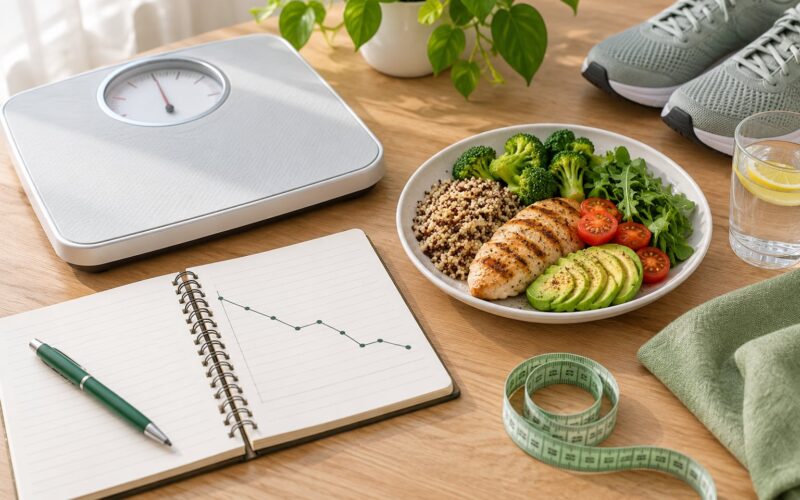
Breastfeeding burns roughly 300 to 500 extra calories a day, and the standard guidance is to wait 6 to 8 weeks postpartum, eat at least 1,800 calories a day, and aim for no more than about 1 pound per week. That is how to lose weight while breastfeeding safely, and it happens over months, not weeks.
The slower numbers are not a consolation prize. They are the pace that protects your milk supply, your iron and calcium stores, and the healing your body is still doing.
This is general information, not medical advice. If you had a difficult birth, surgery, gestational diabetes, or any concern about supply, a doctor or registered dietitian should shape your plan before you change anything.
Table of Contents
- What You Need
- Step-by-Step: How to Lose Weight While Breastfeeding Safely
- Get Medical Guidance Before Restricting Calories
- Eat Enough to Support Recovery and Milk Production
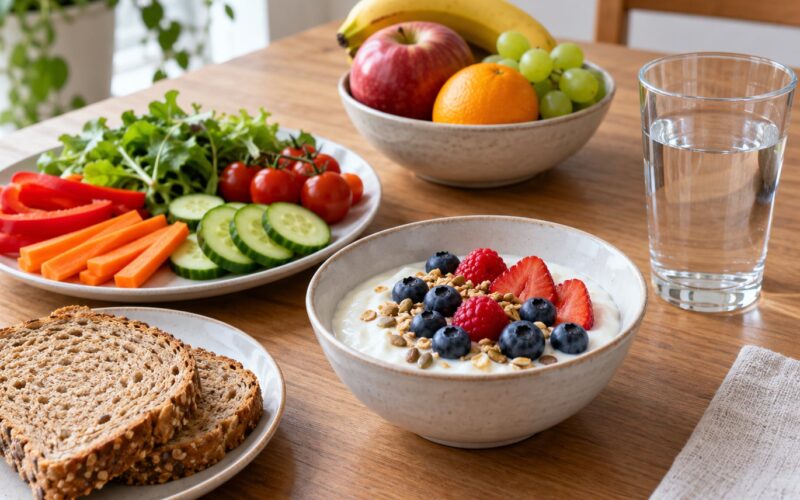
- A sample day at roughly 1,800 calories
- Choose a Gradual Approach: How to Lose Weight While Breastfeeding Safely
- Add Gentle Movement Without Pushing Through Pain
- Monitor Your Energy, Milk Supply, and Recovery
- Common Mistakes
- Frequently Asked Questions
- Can I lose weight without losing my milk supply?
- How much weight can a breastfeeding mom lose in a month?
- When can I start a weight-loss plan after giving birth?
- Is intermittent fasting or keto safe while breastfeeding?
- Does pumping burn the same calories as nursing?
- Will it be easier to lose weight when I stop breastfeeding?
What You Need

You do not need a program, a supplement, or an app. You need a handful of boring things set up in advance.
- A baseline from your clinician. Most breastfeeding parents are told 1,800 calories a day is the floor. Your own number may sit higher, especially if you are exclusively nursing multiples or still recovering.
- A food plan you can repeat. Protein, produce, fiber-rich carbohydrates, and healthy fats at every meal and snack. Repetition beats novelty.
- Comfortable clothes and an easy walking route. Shoes that fit now, a stroller-friendly path, ten minutes you can actually get.
- One tracking method. A weekly weigh-in at most, ideally the same time of day. Daily numbers hide the trend that matters.
- Support. A partner who takes a feeding so you can sleep, and a registered dietitian or IBCLC if anything feels off.
Hydration belongs on that list too. Thirst is easy to mistake for hunger, and a glass of water before a snack often settles the urge to eat something you do not need.
Step-by-Step: How to Lose Weight While Breastfeeding Safely
Get Medical Guidance Before Restricting Calories
Talk to your doctor or a registered dietitian before you cut anything. It takes one appointment and it turns a guess into a plan.
Ask specifically how many calories your body needs, whether your thyroid and iron were checked after delivery, and how your weight changed against your pre-pregnancy baseline. Postpartum thyroiditis and iron-deficiency anemia both show up as stubborn fatigue and stalled weight, and neither is fixed by eating less.
Bring a list if you have one: anemia, PCOS, thyroid conditions, a history of disordered eating, a previous difficult birth, or a C-section still healing. Any of those changes the answer.
Eat Enough to Support Recovery and Milk Production
Eat at least 1,800 calories a day. For many breastfeeding parents the honest number is closer to 2,000 to 2,300, and some who are hyperlactating report eating near 3,000 while still losing weight. A floor is a floor, not a target.
Build each meal from the same short list:
- Protein at every meal and snack. Around 135 grams a day comes up often in breastfeeding communities and works for a lot of adults, but your needs depend on your body size and how often you nurse.
- Vegetables and fruit, mostly whole and unprocessed.
- Fiber-rich carbohydrates: oats, brown rice, beans, whole-grain bread, potatoes.
- Healthy fats: olive oil, avocado, nuts, seeds, fatty fish.
- Dairy or another calcium source, plus iron-rich foods such as lentils, meat, and fortified grains.
Breast milk is made from what you eat, and the demand is high. Milk supply responds to how often milk is removed, but chronic under-fueling is one of the few things that reliably pushes it down.
A sample day at roughly 1,800 calories
Breakfast: oatmeal cooked in milk with a spoonful of peanut butter, a handful of berries, and two boiled eggs. Coffee with the first feed, staying inside a caffeine limit of about three eight-ounce cups a day.
Morning snack: an apple with a handful of almonds, eaten while the baby naps rather than standing at the counter.
Lunch: a large salad with grilled chicken, chickpeas, olive oil and vinegar, plus whole-grain crackers and a glass of water.
Afternoon snack: yogurt with berries and a spoon of ground flax, which covers calcium, protein, and some of the omega-3 your baby needs from your diet.
Dinner: baked salmon with roasted vegetables and a baked sweet potato. Low-mercury fish a couple of times a week is a good way to get DHA into your milk.
Evening snack: wholegrain toast with cottage cheese or hummus, eaten sitting down.
Nothing here is a diet. It is a normal day of food with the protein turned up and the vending-machine aisle skipped.
Choose a Gradual Approach: How to Lose Weight While Breastfeeding Safely
One pound a week is the widely used ceiling, and many breastfeeding parents move more slowly than that. Half a pound a week is a perfectly good outcome.
A moderate deficit of roughly 300 to 500 calories a day is the usual range, and some clinicians describe a 500-calorie reduction as acceptable for breastfeeding parents with a BMI over 25 and no supply concerns. That is a conversation to have with your provider, not a number to grab from a forum.
Watch the trend, not the day. Postpartum fluid shifts, salt, cycle changes and sleep-deprived water retention can move a scale by several pounds without any change in fat.
| Stage | What is realistic | What to focus on |
|---|---|---|
| 0 to 6 weeks | Recovery, not weight loss. Expect fluid shifts and swelling to change the scale daily. | Eating enough, sleeping where possible, gentle walking only |
| 6 to 12 weeks | Most people get clearance at a postpartum check. Losses of half a pound to a pound a week are the realistic range. | Steady meals, 1,800 calories minimum, walking |
| 3 to 6 months | Progress becomes steadier as sleep improves and feeding settles. | Light strength training, consistent protein, weekly weigh-ins |
| 6 months and beyond | Many parents lose steadily here, especially once feeding frequency drops. | Normal maintenance habits, no restriction |
If you gained a lot during pregnancy, expect to keep a while before much changes. A deficit only shows once your body is finished with the stores it built.
Add Gentle Movement Without Pushing Through Pain
Start with ten to fifteen minutes of walking, most days. Increase by a few minutes every week if you feel fine afterward. That is usually enough to start, and it is the movement most clinical sources endorse first.
Moderate activity like brisk walking does not reduce milk volume. That has been reassuring for a lot of people who were afraid to move.
Add gentle strength work two or three days a week once you are cleared, starting with bodyweight movements. It protects muscle, and muscle is what keeps your metabolism from being part of the problem.
Stop and contact your provider if you notice pelvic pressure or leaking, abdominal separation symptoms, heavy bleeding, dizziness, chest pain, or a change in how your baby feeds. Those are not things to train through.
After a C-section or with multiples, the timeline moves. Your surgeon or midwife sets it, and their clearance overrides anything written in a blog, including this one.
Monitor Your Energy, Milk Supply, and Recovery
Your baby is the most honest gauge you have. In the early weeks, steady wet diapers and steady weight gain say more about your milk than anything you can pump and measure.
Run this checklist weekly rather than daily.
| What you notice | What it often means | What to do |
|---|---|---|
| Dizzy when you stand up | Under-eating, or iron-deficiency anemia | Add food and ask about an iron test |
| Cold all the time, exhaustion that sleep does not fix | Low energy availability, thyroid or anemia | Eat more and ask for thyroid and iron checks |
| Hair shedding in clumps | Nutrient and caloric deficit | See a registered dietitian before cutting anything |
| Incisions or tears healing slowly | Not enough energy for repair | Tell your provider at the next visit |
| Irritability, tearfulness, racing thoughts | Deficit affecting mood, or postpartum depression | Talk to your doctor; ask about support and screening |
| Lower pumping output | Fewer feeds, less removal, or less food | Feed or pump more often and eat more |
| Fewer wet diapers or a fussy baby | Possible supply dip | Contact your pediatrician and a lactation consultant |
One of these appearing at once is a signal to eat and rest, not to push harder. Two or more, or any of them lasting more than a week, is a reason to book an appointment.
Common Mistakes
Treating water retention as fat. Postpartum swelling can hide a plateau for weeks. Fix: compare four-week trends, not yesterday afternoon.
Skipping meals to create a bigger gap. It works for two days and then you are tired, hungry and behind on iron and calcium. Fix: eat six small meals a day, no skipped meals.
Trying a restrictive diet from an online challenge. Most cut carbs hard, drop dairy and assume an adult is an adult. Fix: keep all five food groups on the plate and change portion sizes instead.
Trying keto or intermittent fasting without guidance. Early days of low carbohydrate with high milk demand are where moms report feeling drained, and some describe supply dipping. Fix: skip time-restricted eating while establishing supply, and ask your provider before trying it later.
Starting high-impact exercise too soon. Running and jumping before pelvic floor and abdominal recovery is done can cause leaking, pressure or pain. Fix: walk first, get cleared, then build.
Adding weight-loss supplements or fat burners. Many contain stimulants and appetite suppressants that pass into milk. Fix: bring the label to your doctor or pharmacist. Weight-loss medications, including GLP-1 drugs, need the same conversation before you start them while nursing.
Ignoring fatigue and pain. Fix: rest counts as part of the plan. Sleep improves appetite regulation and stress hormones, and it is free.
Frequently Asked Questions
Can I lose weight without losing my milk supply?
Yes, for most people. Milk supply is driven by how often milk is removed, not by food alone, so moderate weight loss is usually compatible with nursing. Keep your intake at or above 1,800 calories a day, lose no more than about 1 pound a week, and watch your baby’s wet diapers and weight gain as your real gauge.
How much weight can a breastfeeding mom lose in a month?
Most guidance caps safe loss at about 1 pound per week, which works out to roughly 4 pounds a month. Many breastfeeding parents lose less than that, especially in the first few months, and that is still a good result. Faster drops usually mean eating too little rather than moving more.
When can I start a weight-loss plan after giving birth?
Most clinicians suggest waiting until your 6 to 8 week postpartum check and getting clearance, particularly after a C-section, a difficult birth or gestational diabetes. Until then, focus on eating enough, resting and walking gently. Cutting calories in the first weeks competes with recovery and can leave you exhausted.
Is intermittent fasting or keto safe while breastfeeding?
There is no strong research supporting restrictive eating patterns during breastfeeding, and many moms report feeling drained on very low carbohydrate plans. If you want to try a time-restricted eating window, talk to your doctor or registered dietitian first and keep every meal and snack nutrient-dense.
Does pumping burn the same calories as nursing?
Milk production costs your body energy whether the milk is removed by nursing or by pump, and the calorie burn tracks how much milk you make. Pumping often makes the effort more measurable, so people pumping tend to track their intake more closely. The safety rules on calorie floors and pace are the same either way.
Will it be easier to lose weight when I stop breastfeeding?
Often, yes, and it is worth knowing in advance. Many people see their weight shift in the weeks after weaning as hormones, fluid and appetite return to their pre-pregnancy pattern, and as feeding stops adding its daily calorie demand. Some women see little change, so plan on your own pattern rather than an expectation.
Start with the postpartum check rather than the scale. Get your clearance and your calorie number, build three repeatable meals with solid protein, start walking, and let the trend move at the pace your body can hold.
For a general reference on nutrition during breastfeeding, the Academy of Nutrition and Dietetics and La Leche League International both publish plain-language guidance on calorie floors and food choices.