You can lose weight without counting calories by eating more protein and fiber, choosing foods that are filling rather than dense, portioning meals with your plate and hands, and moving a little every day. The arithmetic still applies; you just stop doing it yourself.
That distinction matters more than it sounds. Weight change comes down to energy balance, and nothing overrides that physics. What changes is how the gap opens. Instead of shaving 200 calories off a target, you build meals and habits that quietly lower intake and raise spending, week after week, without a food log or a number to chase.
Harvard Health makes a similar case: calorie counting is precise but exhausting, and the old 3,500-calories-per-pound shortcut is dated. Sustained habits beat perfect spreadsheets, mostly because you can keep doing them. On the r/loseit and r/CICO forums, the pattern that shows up again and again is unglamorous: more protein, fewer packaged snacks, plenty of walking, and eating off a plate instead of out of a bag.
This guide is general information, not medical advice. If you have a health condition, take medication that affects weight, are pregnant or breastfeeding, or have a history of disordered eating, talk with your doctor or a registered dietitian before changing how you eat.
Table of Contents
- What You Need
- Step-by-Step: A Calorie-Free Counting Approach
- Start with regular meals and plate proportions
- Build satisfying meals with protein, fiber, and volume
- Choose foods that are filling and enjoyable
- Reduce easy-to-overeat portions without going restrictive
- Add movement you can do consistently
- Monitor trends instead of daily numbers
- Adjust one habit at a time
- Common Mistakes
- Tips for Making the Approach Easier
- Frequently Asked Questions
- Do I need to know how many calories are in food to lose weight without counting them?
- Will I lose weight if I stop counting calories completely?
- What should I eat when I do not want to count calories?
- Are portion sizes more important than food choices for weight loss?
- When should I talk with a doctor or registered dietitian about weight loss?
- Conclusion
What You Need
You do not need a food scale, a tracking app, or a fitness watch to work through this. That is the whole point of how to lose weight without counting calories: the tools people usually reach for first are the tools people abandon first.
What helps is preparation, and it is much smaller than people expect:
- Two or three meals you already know how to cook. Repetition removes decisions, and decisions are where most plans quietly fail.
- A plate you actually like using. A 9-inch dinner plate changes how a serving looks more reliably than any rule you try to remember.
- Movement that fits an ordinary week. Walking counts. It is the easiest activity to keep doing for years.
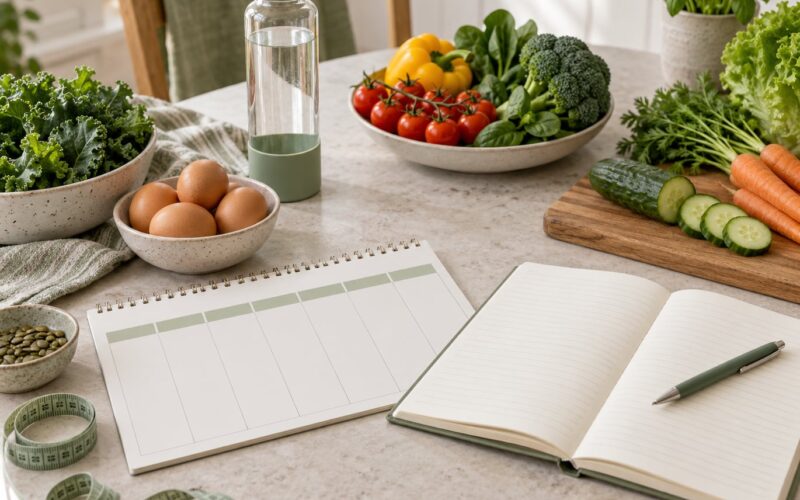
- One way to check progress that is not a daily weigh-in. A tape measure and a monthly photo work well enough for most people.
That is the full equipment list. If you own a kitchen and twenty minutes a day, you have everything required.
Step-by-Step: A Calorie-Free Counting Approach
The framework below has seven parts. They work together, and they work in any order, but doing the meal ones first tends to make everything after easier.
Start with regular meals and plate proportions
Three meals a day, at roughly the same times, does more for appetite control than any single food rule. The reason is straightforward: an unpredictable eating pattern produces the between-meal snacking and the 9pm decisions that most people describe as a discipline problem.
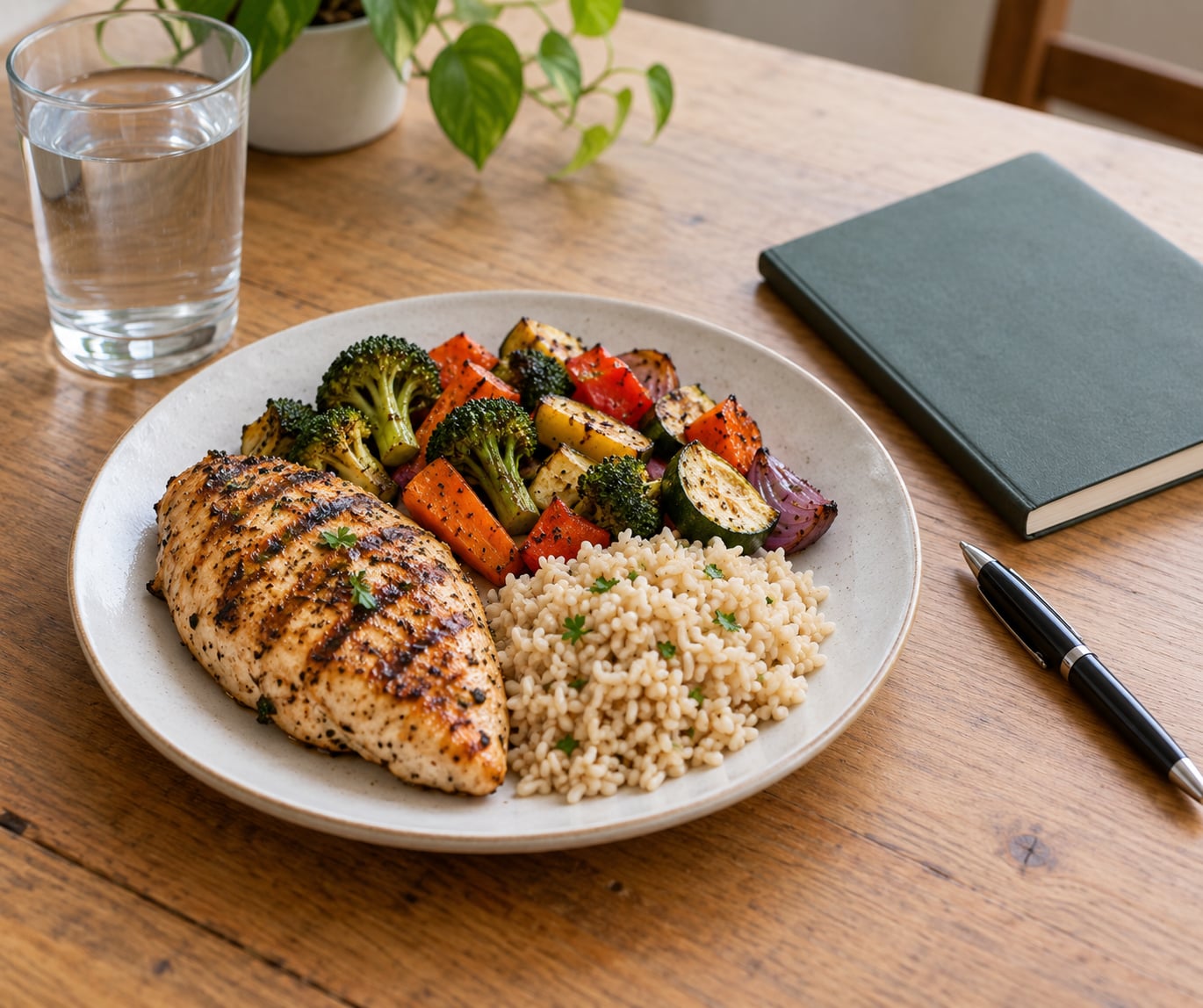
Then divide the plate. Fill about a quarter with a protein source, another quarter with a high-fiber carbohydrate, and the remaining half with vegetables or fruit. A small amount of fat finishes it. This is commonly called the plate method, and it works because it sets the portion by looking at it rather than measuring it.
For a portion when you have no plate, use your hand. A palm is a portion of protein, a cupped hand is a portion of grains or starch, a fist is a portion of vegetables, and a thumb is a portion of fat. Most adults have a similar body frame, which makes hand portions a surprisingly good stand-in for a scale.
Give a meal at least 20 minutes, ideally without a phone or television. The pause between putting food in your mouth and noticing you are full is real, and rushing past it is a common reason people eat past comfortable.
Build satisfying meals with protein, fiber, and volume
Satiety is the whole game. Protein and fiber both slow digestion, and both tend to make the next meal easier to say yes to. You do not need to hit a protein target by number; you need a protein source at every meal, which is the same idea with less fuss.
A simple template: a palm of protein, a fist or two of vegetables, a cupped handful of a high-fiber carbohydrate such as beans, lentils, oats, brown rice, or a whole-grain bread, and a thumb-sized drizzle of olive oil or a small portion of cheese or nuts.
Protein at every meal is also what keeps this approach from turning into a hunger problem. People who cut portions without raising protein usually feel tired and irritable within a couple of weeks, then stop.
Choose foods that are filling and enjoyable
Food quality is the backbone of how to lose weight without counting calories. Foods that are filling and enjoyable let you eat until satisfied and stop there, which is the behavior that actually reduces intake.
Two properties do most of the work. Water and air add bulk without adding energy, so vegetables, soups, fruit, and whole grains fill you up for the same energy. Energy density does the rest: a large bowl of soup and a large bowl of creamy pasta are very different meals, even though the bowls match.
Put that into practice across a day:
- Breakfast: eggs or plain Greek yogurt with berries and a spoon of nuts, or oats cooked with milk and topped with fruit and peanuts.
- Lunch: a large salad built on chickpeas, grilled chicken, or tuna, with beans and seeds mixed in rather than a few leaves on top.
- Dinner: a protein and roasted or steamed vegetables, with rice, potatoes, or whole-grain bread on the side.
- Snack: fruit with nut butter, a handful of edamame, plain yogurt, or vegetables with hummus.
Stop at roughly 80% full. Members of r/loseit describe that number often enough that it has its own shorthand, and it is more useful than eating until uncomfortable.
Water helps too, and thirst is easy to mistake for hunger. A glass before a meal, and water instead of most drinks other than plain water, tea, or sparkling water, is a small change that pays off quietly.
Reduce easy-to-overeat portions without going restrictive
Some foods are easy to overeat because they are engineered to be. Serving them from the package is the problem more than the food itself. Pour chips into a bowl, and you will usually eat less than if the bag is on the table.
Other tactics that work without adding rules:
- Keep trigger foods out of sight, ideally out of the house. Out of sight is the only reliable portion control there is.
- Use smaller bowls and plates for the foods you tend to overeat.
- Pause ten minutes before taking seconds. Most second helpings are hunger plus proximity, not hunger alone.
- Watch the quiet additions: cooking oil, salad dressing, sauce, nuts, and alcohol add up faster than people expect. A tablespoon of dressing is worth more attention than an entire portion of rice.
- Never serve snacks straight from a large container. Put a small amount in a bowl and close the cupboard.
None of this is a restriction plan. It is portion arrangement, and it costs you nothing in enjoyment.
Add movement you can do consistently
Move more on an ordinary week, not harder on a good one. Mainstream guidance for adults points to about 150 minutes of moderate activity a week, plus two days of strength training, spread across the week rather than crammed into one.
Most of your daily burn comes from non-exercise activity thermogenesis, the movement that happens while you live: walking, standing, carrying groceries, taking the stairs. That is why step counts are useful as a rough guide. Many people find 7,000 to 10,000 steps a day is a meaningful change from a sedentary baseline, without a single gym visit.
Start smaller than the target if you have to. Ten minutes of walking after lunch, twice a day, is a reasonable first week. Add one thing every week or two, and buy a pair of shoes you will actually put on.
Strength work matters here even if weight never changes, because muscle keeps you looking and feeling like yourself while the scale moves slowly. Two sessions a week with bands, body weight, or dumbbells is enough to begin.
Monitor trends instead of daily numbers
Without calorie data, you monitor by trend, and the trend takes weeks to show up. Here is what works:
- Weigh at most weekly, ideally at the same time of day, and look at the line rather than the number. Daily weigh-ins swing with water, salt, and bowel habits. If weighing makes you anxious, stop weighing and use the other measures.
- Measure your waist monthly. It moves when clothes and mirrors do not catch up yet.
- Take a progress photo monthly, in the same clothes and light. This is the measure people trust most after a few months.
- Notice how clothes fit. Waistbands and sleeves tell the truth before the scale catches up.
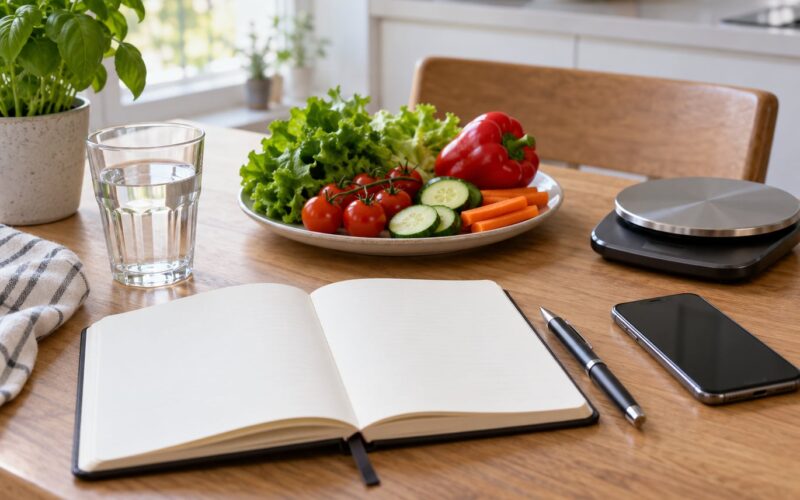
- Record strength or step improvements. Progress that is not weight is progress, and it protects motivation during a stall.
- Track energy. Sleeping better, having steadier afternoon energy, and getting hungry only at mealtimes are all real signals.
A stall of two or three weeks is normal, especially early on, when water weight can move in either direction. If you have not been training, your first few strength sessions can hold water for a week or more.
Adjust one habit at a time
If weight does not move for three to four weeks, change exactly one thing rather than everything. Small, readable shifts let you see which change worked, and most stalls are caused by a single input: larger portions, a drink habit, less walking, or a snack that crept back in.
The 30/60/90-day version works well. In weeks one and two, set meal times and fix two repeatable meals. In weeks three to six, change your environment: plate, trigger foods, walking routine. In weeks seven to twelve, fine-tune portions and add the second strength session.
If you have tried several honest adjustments and nothing moves, stop experimenting on your own and get individual help. A doctor or registered dietitian can look at medications, sleep, hormones, and medical history that no self-guided plan can see. That is a normal step, not a failure.
Common Mistakes
Skipping meals to lose faster. It backfires within days. The fix is three structured meals with protein in each, so you are never managing hunger until 9pm.
Going extreme with low-fat or low-carb. Strict versions work for a while, then people quit, and many regain more than they lost. The fix is a moderate version you would still be willing to do in five years.
Keeping sugary drinks and alcohol. Liquid energy does not fill you, which makes it the easiest thing to cut. The fix is water, sparkling water, or unsweetened drinks for most of the day.
Adding punishing exercise too early. It burns out fast and often triggers overeating later. The fix is a little more walking and two short strength sessions, sustained for a year.
Weighing every morning. Daily numbers mostly measure water. The fix is weekly at most, and only if it does not make you anxious.
Believing viral rules. The 30-30-30 rule (30 minutes of walking, 30 minutes of strength, 30 minutes of cycling each day) and the 3-3-3 rule (three sets of three fat-burning exercises, three times a week) are viral formats, not researched protocols. They are fine as movement goals, but they do not guarantee fat loss and they can strain you if you push hard.
Trying to start over after a lapse. The next meal is the recovery. One off meal is not a failed week, and treating it that way is how people quit the year.
Tips for Making the Approach Easier
- Plan two repeatable meals. If breakfast and lunch are already handled, the decision fatigue is gone by dinner.
- Prep on one day. Cooking a batch of grains, roasting a tray of vegetables, and boiling a batch of eggs removes the hardest part of the week.
- Keep vegetables visible. If they sit in front of you, you eat them. If they are in the crisper drawer, you do not.
- Eat slowly, without screens. It reduces intake without requiring any decision at all.
- Handle restaurants simply. Choose a protein, a vegetable side, and starch, ask for sauces on the side, and eat slowly. You do not need to track anything.
- Travel with two anchors. A protein you can find anywhere and one fresh option per meal keeps you on track without a plan.
- Adjust to hunger, not to a spreadsheet. If you are starving by 4pm, add a protein snack. If you are always full, cut the starch portion slightly. The feedback loop does the tracking for you.
Frequently Asked Questions
Do I need to know how many calories are in food to lose weight without counting them?
No. You need to know your food well enough to build a satisfying meal, not well enough to calculate it. Portion anchors such as your plate, your hand, and a cup measure remove the need for per-food numbers, and protein and fiber handle the fullness that numbers would otherwise be used to chase. If you want the confidence of knowing roughly where you stand, a few weeks of light tracking as a baseline is useful. It is not required to make progress.
Will I lose weight if I stop counting calories completely?
Most people who are already tracking can stop and keep progressing, provided their portions stay similar and their meals stay satisfying. The transition is easier if you lean on plate portions, protein at every meal, and daily movement before you delete the app. Weight can tick up briefly because packaged and restaurant foods stop being estimated as carefully. If your tracking was very precise, keep a food log without numbers for two or three weeks to stay honest, then drop it.
What should I eat when I do not want to count calories?
Eat meals that combine a protein, a high-fiber carbohydrate, vegetables or fruit, and a little fat. That combination is filling, keeps energy steady, and needs no measurement beyond a glance at your plate. Practical examples include eggs with fruit and whole-grain toast, lentil soup with a side salad, or grilled fish with roasted vegetables and brown rice. Plain water, tea, and sparkling water are free to drink without thinking about them.
Are portion sizes more important than food choices for weight loss?
Both matter, and they are hard to separate. Food choice sets the ceiling, because very dense foods are easy to overeat in a small portion. Portion size sets the floor, because even good food adds up when it is piled onto a large plate. In practice, sorting the plate first, then improving what is on it, is the order that works for most people. A well-portioned meal of the wrong food beats an unlimited plate of the right food.
When should I talk with a doctor or registered dietitian about weight loss?
Talk with a professional before changing your eating if you are pregnant or breastfeeding, managing diabetes or another condition, taking medication that affects weight or appetite, or have a history of disordered eating. Also reach out if you have tried steady changes for three months with no movement, if you feel faint, dizzy, or unusually tired, or if weight changes suddenly without you changing anything. Registered dietitians can also help with a health condition that needs a tailored plan.
Conclusion
How to lose weight without counting calories comes down to one change you can make tonight: make a single meal more satisfying by adding protein, a vegetable, and a high-fiber carbohydrate, and put a walk into the same day. Repeat that next week with one more small adjustment, and let a few months of easy consistency do the rest.
Keep checking energy, waist, clothes fit, and strength rather than the scale, and take it to a doctor or registered dietitian if a health condition makes generic advice a poor fit for you.