
All-or-nothing thinking is what turns one cookie into a ruined week. The fix is not more willpower: you catch the rigid thought, name it out loud, and make one flexible choice at the very next meal. Most people can work through this with nothing more than a notebook, a regular meal rhythm, and softer rules.
I spent years treating food like a graded exam, and the grade was always “failed”. What finally moved the needle was writing down the thought before reacting to it, because the thought is the whole problem. The food is usually just the last straw.
This guide is general information, not medical or psychological advice. If the cycles you are describing include purging, severe restriction, fainting, or compulsive exercise, talk to a doctor or a registered dietitian rather than working through it alone.
Table of Contents
- What You Need
- Step-by-Step: How to Beat All or Nothing Thinking With Food
- Step 1: How to Beat All or Nothing Thinking With Food in the Moment
- Step 2: Replace Rigid Food Rules With Flexible Ones
- Step 3: Build a Normal Eating Routine
- Step 4: Plan for Setbacks Without Starting Over
- Step 5: Practice Flexible Portions and Mindful Choices
- Common Mistakes
- Frequently Asked Questions
- What is all-or-nothing thinking about food, and how do I stop it?
- Why do I want to binge after eating just one bad food?
- What should I do after I miss meals or break my food rules?
- Why does my weight loss stall when I become flexible with food?
- When is all-or-nothing eating serious enough to need professional help?
- Conclusion
What You Need
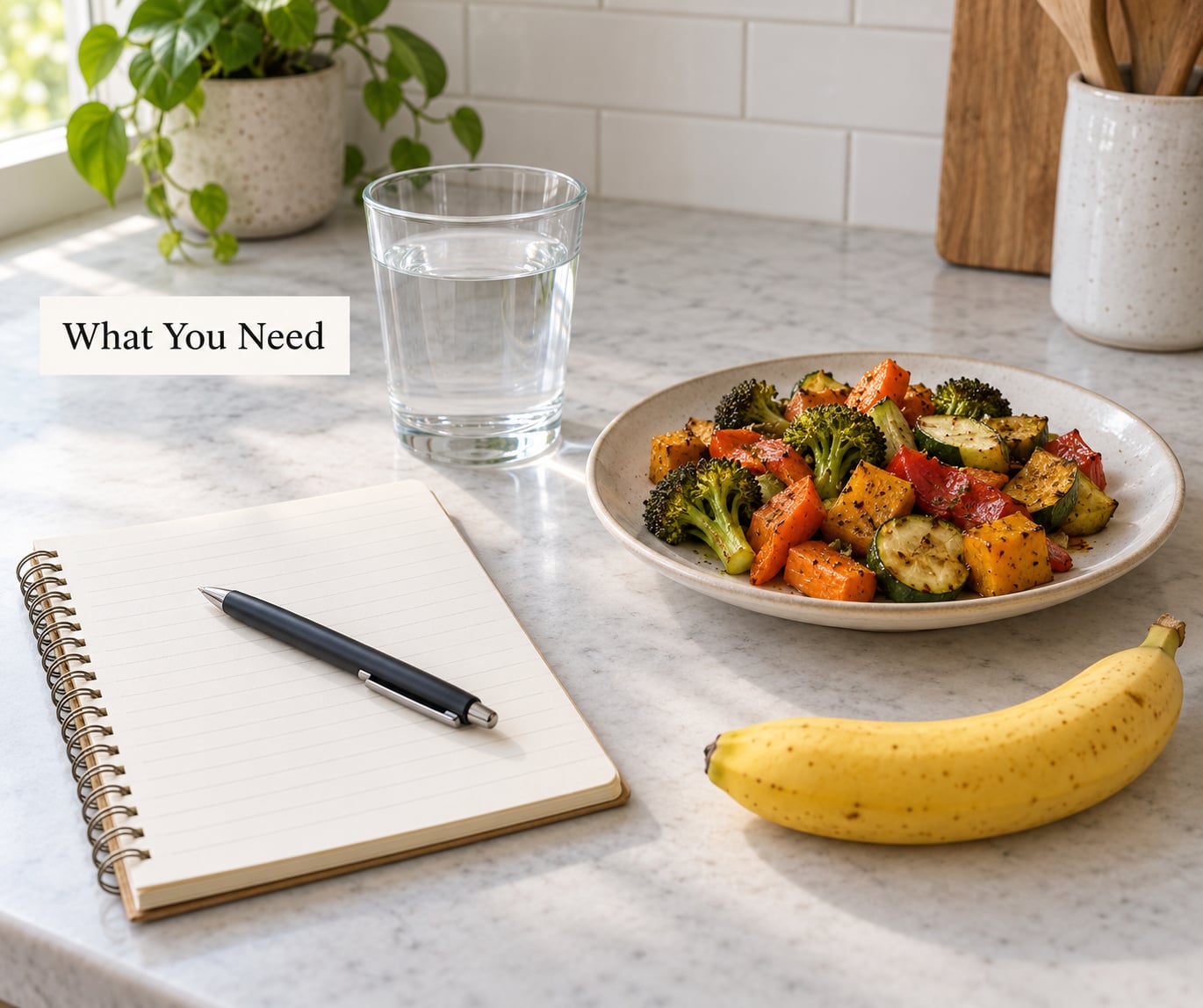
You need four things before you start, and none of them cost money. First, a food journal, which can be a cheap notebook or a notes app on your phone. Second, a meal and snack pattern, decided loosely in advance so you are not negotiating with hunger at 4pm. Third, a short set of flexible rules that describe how you want to eat rather than what you refuse to eat. Fourth, a calm reset plan you have already written down for the moments when you slip, because you will not be able to think clearly in the middle of one.
What you do not need is a specific diet, a supplement, a detox, an app that counts macros, or a membership. Those tools can be useful for some people, but they tend to make the all-or-nothing trap worse by adding more rules to break.
Give it two to four weeks before you judge it. Flexible thinking is a skill you practise, not a switch you flip, and the first fortnight usually feels slower than expected because you are unlearning something you have done since childhood.
Step-by-Step: How to Beat All or Nothing Thinking With Food
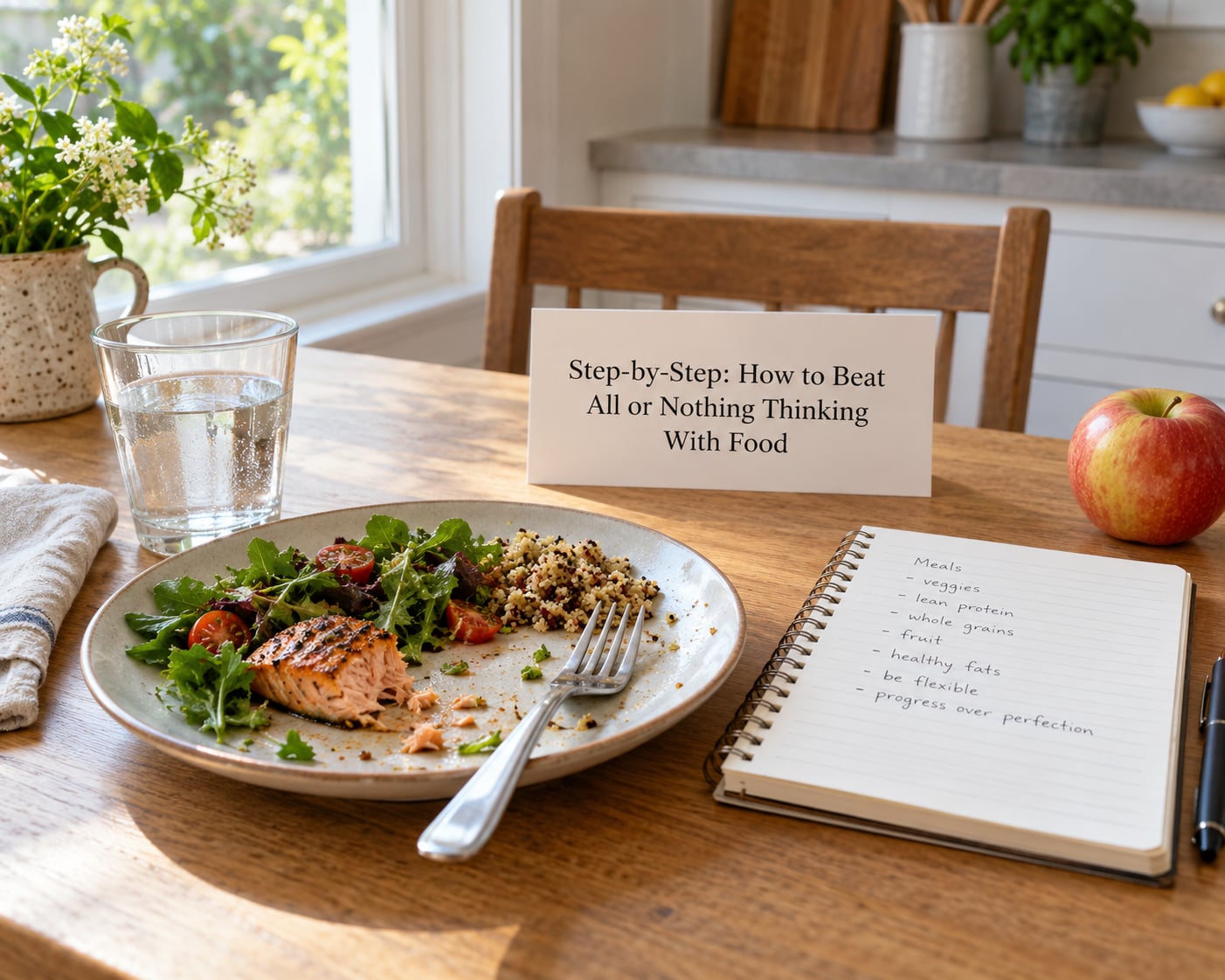
The method below is five steps you run in order, and the order matters more than the effort you put into each one. Steps one and two do most of the work early on. Steps three to five are what keep the change from fading after a good month.
Step 1: How to Beat All or Nothing Thinking With Food in the Moment
The fastest way to break the spiral is to interrupt it before you argue with it. When the rigid thought shows up, put a name to it: “That is an all-or-nothing thought, not a fact.” Then run three quick checks: how physically hungry am I right now, what is actually going on around me, and what is the smallest next step I can manage?
The smallest next step is the key. If you have already started the packet of cookies, the goal is not to stop eating them, it is to eat a few more and put the packet down while it is still half full. That single move breaks the “finish it, it is already ruined” chain, and it is the same partial-action logic that works when someone skips a two-hour workout and does fifteen push-ups instead.
Say the reframe out loud if you can. “I blew my diet, I might as well give up” becomes “one meal is not a week”. Most of us learn this idea young, when the adults around us said finish your plate and take as much as you can eat, which is why willpower alone has never fixed it for anyone.
Step 2: Replace Rigid Food Rules With Flexible Ones
Rigid rules fail because reality is messier than the rule. Flexible ones survive contact with a real week, including the parts you did not plan. Take each absolute you are living under and rewrite it so it accounts for hunger, schedule, preference and how much energy you actually have left today.
“Never eat after dinner” usually becomes “nothing needs to happen after dinner, and if I am genuinely hungry at 9pm I eat something small”. “Every meal has to be healthy and balanced” becomes “most meals are balanced, and the ones that are not do not need to be balanced by punishment at the next one”.
The test of a good flexible rule is whether you could follow it on your worst day and still consider it a success. If not, it is not flexible, it is just softer phrasing on the same demand.
Step 3: Build a Normal Eating Routine
Regular meals and snacks do more for the rigid mindset than any mindset technique. Skipping meals or cutting off eating in the evening puts you into the physical conditions that make cravings spike and rebound eating feel irresistible, so the “weakness” is often just hunger arriving on schedule.
Pick three anchors in your day, for example breakfast, lunch and an afternoon snack, and let the rest fill in around them. You are not counting anything. You are building a rhythm so that hunger stops arriving as an emergency every evening at 8pm.
Regular eating also clears up one of the most common complaints people bring up: thinking about food all day long. When meals are scheduled and adequate, food thoughts usually thin out because the brain stops scanning for the next input. If food takes up more mental space than you want even with a steady pattern, that is worth raising with a professional rather than trying to suppress it with willpower.
Step 4: Plan for Setbacks Without Starting Over
Decide in advance what happens after a slip, because the plan you make while calm is the only plan that will exist at 9pm. The rule I use is simple: a lapse is one bad meal, a relapse is a week of deciding the week is ruined. Only the first one is real information.
Write down what triggered it. Usually it is one of four things: too little food earlier, too little sleep, a hard moment at work, or someone else’s comment about your plate. Then make one small correction at the next meal, usually a normal breakfast within a few hours, and continue. No fasting, no punishing run, no starting over on Monday.
For a lot of people the turning point is the first week where a mistake did not turn into a deliberate collapse. That change usually shows up within a couple of weeks of tracking, not months.
Step 5: Practice Flexible Portions and Mindful Choices
Flexible does not mean unmeasured. It means you choose a portion that satisfies you, eat it slowly enough to notice, and stop when you are done, without needing to finish the bowl to prove anything. Eating the whole package was never about hunger in the first place; it was about not wanting the first cookie to count.
A practical habit is to pause for ten seconds before each plate and ask what the meal is for. Hunger, enjoyment, energy, or fuel before a long session. That takes the decision out of the shame circuit and puts it back on something you can actually reason about.
Stop weighing and measuring daily too, if that is the thing driving the scores. Numbers make any single meal look like evidence, and evidence is what the all-or-nothing mind wants most.
Common Mistakes
Labelling foods as good or bad is the first mistake, and it is the one that feeds everything else. Fix it by calling a food neutral: it is food, it does something for you, done. Many people who remove the moral label also find the craving eases within a couple of weeks, because cravings run on the rule, not on the recipe.
Relying on motivation is the second mistake. Motivation is a weather condition, not a strategy. The fix is to make the good choice the easy one by default, which means planning three anchors a week rather than relying on a fresh start every Monday.
Skipping meals to compensate after eating out is the third. It creates the exact hunger rebound that made the original slip feel out of control. Fix it by eating your normal breakfast the morning after, not a punishing smaller version of it.
Using shame as motivation is the fourth. “I hate myself, therefore I will be better” produces short bursts followed by more shame, which is a loop rather than progress. Fix it with self-compassion phrasing that is specific rather than empty: this was one meal, I am not a failure, next meal is breakfast.
Trying to fix all of this alone is the fifth. Cognitive behavioural therapy has a long record of working with exactly this kind of rigid thinking, and an intuitive eating trained registered dietitian can take the food part at the pace your history actually needs. Ask a GP, an insurer or a national eating disorder helpline for a referral if you are not sure where to start.
Frequently Asked Questions
What is all-or-nothing thinking about food, and how do I stop it?
All-or-nothing thinking is a cognitive distortion where foods and meals are judged as good or bad, on-plan or ruined, with nothing in between. To stop it, catch the rigid thought, name it as a thought rather than a fact, and choose one flexible next step instead of trying to behave perfectly. Writing the thought down in a journal makes the pattern visible within a few weeks, which is usually the part that finally gives you leverage.
Why do I want to binge after eating just one bad food?
This is called the abstinence violation effect. When a food is forbidden and you eat some, the rule feels broken, and a broken rule removes the motivation to stop. One cookie becomes a whole packet because finishing feels like repairing a failure rather than eating food. The practical fix is to decide what counts as enough before you start, and to treat the slip as a single meal rather than a lost week.
What should I do after I miss meals or break my food rules?
Eat your normal next meal as soon as reasonably possible and keep going. Do not fast, do not add punishing exercise, and do not wait for Monday. Then write down what actually triggered it, usually too little food earlier, poor sleep, stress, or someone else’s comment. Making one small correction and continuing is what separates a lapse from a relapse, and it is the single most useful habit in this whole guide.
Why does my weight loss stall when I become flexible with food?
Weight changes week to week reflect water, muscle, gut contents and hormone cycles, not just what you ate yesterday, so a run of daily numbers will always look like a plateau. The scale is also the reason all-or-nothing rules feel rational in the first place. Work with a consistent pattern over eight to twelve weeks and with non-scale measures such as energy, sleep and strength. If weight loss matters to you, a registered dietitian can help you weigh the options without reintroducing rigid rules.
When is all-or-nothing eating serious enough to need professional help?
Seek support if the cycles are happening most days rather than occasionally, or if they involve purging, laxative use, fasting for long stretches, fainting, compulsive exercise, or a growing fear of food and weight that affects daily life. Recurrent binge eating, loss of control episodes and obsessive tracking of nutrition are all reasons to contact a doctor, therapist or registered dietitian. Support is also worth trying if you have tried these steps for several weeks and nothing has shifted. You do not have to wait for a crisis to ask.
Conclusion
Start with one thing. Notice a single rigid food thought this week, write it down in the plainest language you can, pause, and make a flexible choice at the very next meal instead of reacting to the last one. That is the whole method, and it is enough for a first fortnight.
Keep going after that. Flexible thinking gets quieter with use, but it does not arrive on a schedule, and it is not something you should try to build alone if the cycles are frequent, distressing, or touching areas beyond food. A therapist who works with eating behaviour or a registered dietitian will get you further, faster, and without the guesswork.