Strength training matters for women because it builds bone, holds on to muscle after your thirties, and keeps your metabolism, joints, mood and independence working for the rest of your life. It is not about looking a certain way or getting bulky. It is the one form of exercise that protects the parts of your body that quietly decline when nothing challenges them.
That is the part I wish someone had explained earlier. Most women I talk to spent years on a treadmill or a cardio class, and they were not lazy. They were following advice that was simply aimed at a different goal. Why strength training matters for women is easier to see once you know what a muscle contraction actually does inside the bone, the metabolic system and the brain.
This is general information, not a personal plan. If you are dealing with an injury, pregnancy, an osteoporosis diagnosis or a medical condition, a doctor, physiotherapist or registered dietitian is the right person to shape your program.
Table of Contents
- What Is Strength Training, and Why Do Women Need It?
- How Strength Training Supports Muscle, Metabolism, and Weight Management
- Why muscle loss matters more after your thirties
- How muscle supports energy use and metabolic health
- What this does and does not mean for weight loss
- What Else Does Strength Training Improve?
- Bone density and the osteoblast mechanism
- Joints, posture and balance
- Mood, stress and sleep
- Separating the claims from the evidence
- Why Strength Training Matters for Women at Different Life Stages
- Your twenties and thirties
- Pregnancy and postpartum
- Perimenopause and menopause
- Sixties and beyond
- How Often Should Women Strength Train?
- What Can Beginners Do Without a Gym?
- What Is the Best Beginner Strength Training Approach?
- How Do You Keep Strength Training Progressing?
- What Common Strength Training Myths Should Women Ignore?
- Frequently Asked Questions
- Do women need weights to get the benefits of strength training?
- How long does it take for women to build muscle with strength training?
- Will strength training help me lose weight?
- How many times a week should women lift weights?
- Is strength training safe for women over 50?
- Should I see a doctor before starting strength training?
- Conclusion: Start Small and Strengthen Consistently
What Is Strength Training, and Why Do Women Need It?
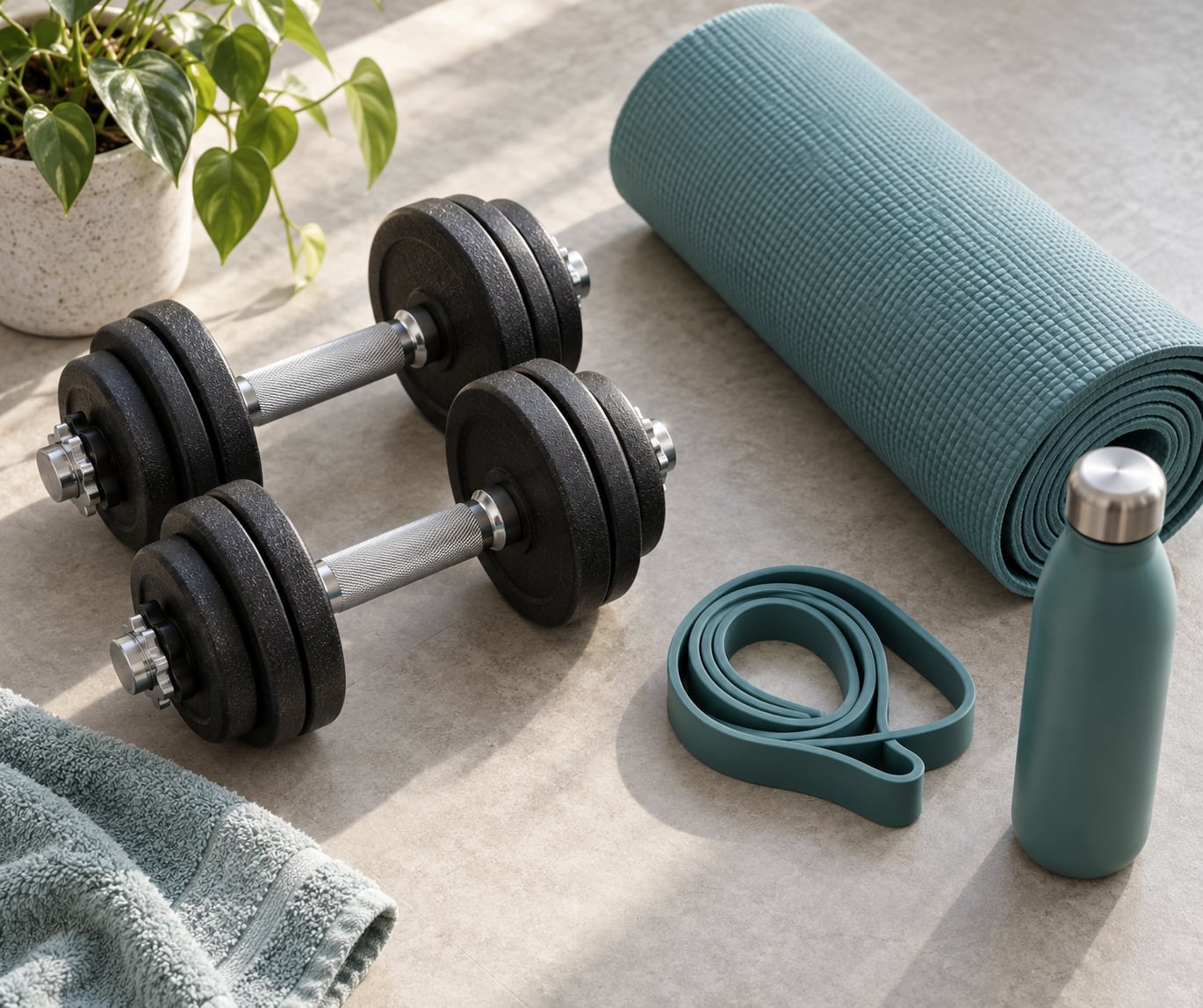
Strength training is any exercise where your muscles work against a resistance you cannot easily ignore. That resistance can be a barbell, a dumbbell, a resistance band, a machine, or your own body weight against gravity.
It is not a separate species of exercise from “resistance training” or “weight training.” People use the three terms interchangeably, and they describe the same broad family of movement: squat, hinge, push, pull, carry.
What makes it different from cardio is what happens while you are working. Walking and cycling are genuinely valuable, and most guidelines ask for both. But cardio puts far less mechanical demand on your bones and far less direct demand on your muscles. Strength training is the only common activity that signals your body to build both.
And it does not require a gym, a membership, or a physique goal. A chair sit-to-stand, a wall push-up and a band row count. Most women who begin report the same things first: clothes fit differently, stairs feel easier, and the gym stops being intimidating because you have a handful of movements you actually know.
How Strength Training Supports Muscle, Metabolism, and Weight Management
Muscle is not decoration. It is the tissue that sits under your skin, wraps your joints, moves your food, burns energy at rest and keeps you upright. Losing it changes all of those jobs at once.
Why muscle loss matters more after your thirties
Muscle mass typically starts declining gradually in your thirties and the decline picks up pace in your fifties and sixties. The formal term for age-related muscle loss is sarcopenia, and it is one of the conditions most strongly linked to falls, fractures, insulin resistance and loss of independence.
Here is the nuance most articles leave out. Menopause gets blamed for a lot of muscle loss, but when researchers account for how much women move, a large share of the drop is explained by inactivity, not hormones alone. That is good news, because inactivity is the part you can change this week.
Resistance training is the only activity with a direct, well-documented ability to build or preserve lean tissue at any age. Women in their sixties and seventies regularly show measurable strength gains in a matter of weeks, and they describe it as the most rewarding phase of their fitness life.
How muscle supports energy use and metabolic health
Lean tissue is metabolically active, meaning it uses energy even when you are sitting still. More of it generally means a higher resting metabolic rate, which is part of why strength training shows up in conversations about weight maintenance rather than only in strength conversations.
The effect on the body is not just calorie burn. Working muscle improves insulin sensitivity, which is how your cells handle blood glucose. Over time that tends to make appetite and energy easier to manage. The “afterburn” effect people mention, sometimes called EPOC, is real but modest, so treat it as a bonus rather than the main reason to lift.
What this does and does not mean for weight loss
Strength training is not a shortcut to weight loss and I would rather be straight about that. You will not out-lift a bad diet, and a single session will not undo a week of poor eating.
What it does do is improve body composition, which is the ratio of fat to lean tissue. Someone can weigh exactly the same as a year ago and be noticeably stronger, with a smaller waist and more definition, because the tissue underneath changed. On a scale alone, that progress is invisible. That is one of the most frustrating things about measuring progress with bodyweight only.
| Benefit | What the research shows | What it looks like day to day |
|---|---|---|
| Lean muscle | Resistance training builds or preserves muscle mass at any age; the main defense against sarcopenia | Carrying groceries in one trip, getting up off the floor without using your hands |
| Bone density | Loaded muscle pulls on bone and stimulates new bone formation, supporting bone mineral density | Climbing stairs, carrying a full laundry basket, a steadier walk on uneven ground |
| Metabolic health | More lean tissue and better insulin sensitivity support resting metabolic rate and blood sugar control | Fewer afternoon crashes, steadier energy through a long day |
| Balance and coordination | Training improves stability systems that decline with age and inactivity | Feeling secure on stairs, on a bike, or in a slippery car park |
| Mood and sleep | Regular resistance exercise is associated with lower symptoms of depression and better sleep quality | Waking up less tired, handling a stressful day without the same reactivity |
| Body composition | Fat loss paired with preserved or added lean tissue, rather than weight lost from all over | Same weight on the scale, smaller waist, clothes fit the way they used to |
| Independence | Functional strength is linked to living independently longer, with less help from others | Opening jars, lifting a grandchild, shopping alone comfortably |
What Else Does Strength Training Improve?
Bone density and the osteoblast mechanism
Yes, bones get stronger with strength training, and the mechanism is worth understanding because it is the version of this claim that tends to convince people. When a muscle contracts, it pulls on the bone it is attached to. That mechanical tension tells the body to reinforce the bone at the attachment point by increasing bone-forming osteoblast activity.
Bone responds to demand the way muscle does. Underused bone loses mineral density; loaded bone gains it. Worldwide physical activity guidance reflects this by recommending muscle-strengthening activity alongside aerobic movement, and the Bone Health & Osteoporosis Foundation treats resistance training as a cornerstone of bone health for adults as they age.
What resistance training will not do is fix a diagnosed osteoporosis case on its own, and some loading movements are not appropriate for everyone. If you have been told you have osteoporosis or a fracture history, get individual guidance before choosing your movements.
Joints, posture and balance
Strong muscles around a joint act like built-in braces. That is why many people report less stiffness after a few consistent weeks of resistance work, particularly in the hips, shoulders and lower back. It is also why the “muscles make joints worse” idea is backwards for most people.
Balance work matters enormously later. A fall is rarely caused by a dramatic event; it is a wobble, a stiff hip, a weak ankle, and a body that reacted slowly. Training both sides of the body, and training single-leg balance work, is how you improve the response speed that protects you.
Mood, stress and sleep
This one surprises people more than any physical change. Fatigue from resistance exercise releases endorphins and other muscle-derived signalling molecules, sometimes called myokines, and regular sessions are associated with better mood and lower stress. Sleep quality tends to improve as well.
In online lifting communities, sleep and mood changes come up constantly as the benefits women did not expect. They are also the changes that tend to stick, because they show up in your weekdays rather than in a mirror.
Separating the claims from the evidence
Some things strength training genuinely does not do. It will not melt fat off a specific area; spot reduction is not a thing. It does not reliably fix a structural back problem on its own, and it does not make you invincible during pregnancy or a flare-up of a medical condition. If someone promises you those outcomes, the promise is doing more work than the exercise.
Why Strength Training Matters for Women at Different Life Stages
The exercise does not change, but the reason to do it does. Priorities shift with age, work, family and hormone status, and the most useful program is the one that fits the life you are actually living.
Your twenties and thirties
This is the easiest window to build strength, and the easiest to waste. Many women in their thirties have never trained with intent, and entering motherhood without a strength base is one of the most common reasons the decade gets missed. Building a small base now is a form of insurance you will not have to buy later.
Pregnancy and postpartum
Resistance training can be part of a healthy pregnancy, and the good news is that it is not automatically dangerous for everyone. The word to understand is “can.” Pelvic floor, core and lower body work, plus mobility, tends to be the starting point most clinicians favour. Postpartum recovery is different for everyone, and a pelvic health physiotherapist is the right person to talk to if you are unsure.
There is no substitute for individualized clearance during or after pregnancy, and I would not take heavy or high-impact training up on your own while pregnant or in early postpartum recovery.
Perimenopause and menopause
Estrogen falls during perimenopause, typically somewhere from the late thirties into the mid forties, and that shift affects bone, sleep, mood and body composition. Strength training is one of the few things under your control that works on several of those at once: it loads bone, preserves lean tissue, and reliably improves sleep and mood.
Anyone worried about weight gain during this stage hears a lot of advice about eating. Training is the missing half of that conversation, because without enough muscle, whatever you do metabolically has less to work with.
Sixties and beyond
This is where strength training stops being a preference and starts being maintenance. Fewer than one in five women over 50 meet the muscle-strengthening guidelines, and the gap widens after 65, where the figure drops closer to one in ten. The reason is not that women over 50 cannot build muscle. They can. The reason is that nobody told them it was safe, useful or for them.
One survey note worth keeping in mind: around two-thirds of women surveyed said no doctor or trainer had ever advised them to strength train. Many had simply never been asked.
How Often Should Women Strength Train?
The short answer is twice a week, minimum, covering the major muscle groups of your body. That is the floor most public health bodies set alongside aerobic activity, and for most women it is enough to build real strength and better bone.
Two to four sessions a week is the usual working range. What matters is that you train the big patterns: squat or sit-to-stand, hinge, push, pull, and a carry. Eight to twelve repetitions for two or three sets of each is a solid default range for most adults. Leave a couple of repetitions in reserve on most sets; training to the point of failure is optional, not required.
Recovery is part of the prescription, not a leftover. Muscle grows while you are resting, not while you are lifting. Muscle soreness for a day or two after a new movement is normal, sharp pain is not, and persistent pain is a signal to stop and get checked.
| Level | Sessions per week | What a session looks like |
|---|---|---|
| Complete beginner | 2 to 3 | Full-body sessions, 5 to 6 compound movements, 2 sets of 8 to 12 reps, light or bodyweight |
| Returning after a long break | 2 to 3 | Full-body twice, plus some easy daily walking on other days | General adult | 2 to 4 | Full-body or an upper and lower split, 2 to 3 sets of 8 to 12 reps per movement |
| Training for bone density | 2 to 4 | Heavier loads kept to 6 to 8 reps, plus moderate impact movement where your joints allow |
Progressive overload, meaning doing a little more than last time, is what makes any of this work over months. Warm up, then train movements you can control, then add a little load or one repetition when the last session felt comfortable.
What Can Beginners Do Without a Gym?
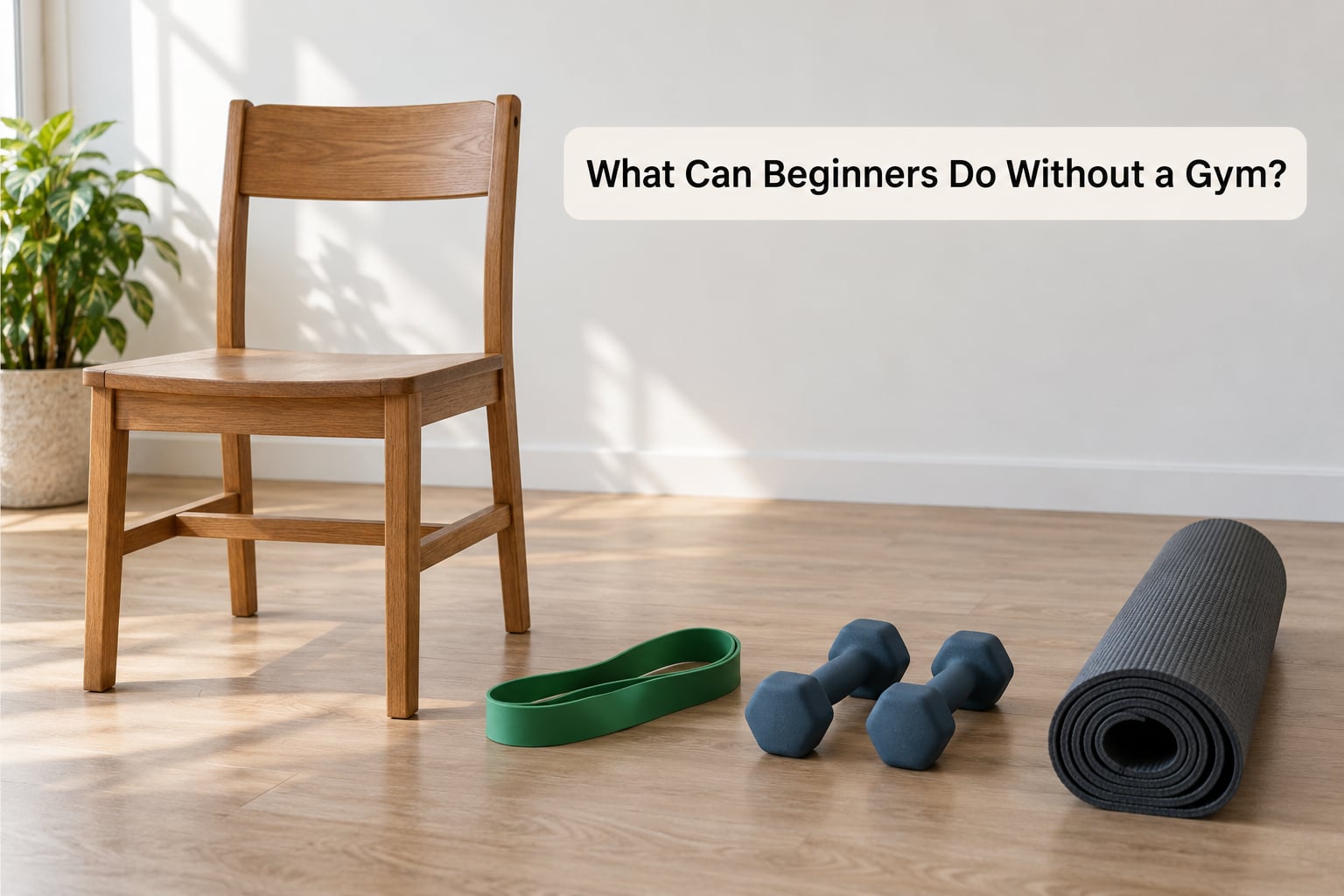
Almost everything worth doing can be done at home with a chair and a band. That matters, because the number one thing keeping women from starting is not a fear of weights, it is the logistics of getting to a gym four times a week.
- Sit-to-stands from a chair. Sit at the edge, stand without hands if you can, lower back down slowly.
- Wall push-ups, feet stepping back as you get stronger, until the chest reaches the wall at a comfortable angle.
- Band rows — anchor a resistance band at a solid point, pull the elbows back, control the return.
- Step-ups on a single stair step, one leg at a time, holding something light if you need to.
- Glute bridges and clamshells on the floor, which quietly build the hips that protect your back and knees.
- Supported single-leg balance with a hand on a counter, building the ankle and hip response that prevents falls.
Start at a level where you can control the whole movement. That might mean one band rather than three, or a chair with a high back rather than no support. Two or three sets of 8 to 12 reps, two or three times a week, is a complete first three months of progress.
What Is the Best Beginner Strength Training Approach?
There is no single best program, but there is a reliable order of operations. Get the readiness right, learn a small number of movements, train full-body, keep the reps moderate, add load slowly, and recover properly.
- Readiness. If you have an injury, a recent surgery, unexplained pain, a bone-density diagnosis, or are pregnant or postpartum, get cleared by a doctor or physiotherapist first. Waiting a fortnight costs you nothing; training through a real problem costs months.
- Movement basics. Six to eight movements are plenty for a year. Squat, hinge, push, pull, carry, and a couple of single-leg or core movements. Learn them until they feel boring.
- Full-body sessions. Do your six movements together, two or three times a week. This is the most beginner-friendly approach because every session works every muscle.
- Sets and reps. Two or three sets of 8 to 12 reps, stopping one or two reps short of failure, and breathing out on the effort.
- Progression. Add a repetition, or a small amount of weight, or one set, when the last session felt comfortable and you could control the movement throughout.
- Recovery and fuel. Eat enough, and eat enough protein. Resistance training breaks muscle down; dietary protein and rest are what rebuild it. If your protein intake is low, you are training at a discount. A registered dietitian can help you work out an amount that suits you.
Coaching is optional, not required. It helps most when you feel stuck, are unsure about technique, or want accountability, because people keep showing up when someone is waiting for them. That adherence effect is the single strongest predictor of whether you still lift in a year.
How Do You Keep Strength Training Progressing?
Progressive overload is the whole game: the same muscle, asked to do slightly more, adapts. Beginners have more room here than almost anyone, because the starting point is low and the possible improvements are many.
There are six ways to make a movement harder, and you can use them in any order. Add repetitions to your working set. Add a set. Increase the load, even slightly, once 12 reps feel easy. Extend your range of motion, such as a squat that sits a little lower or a fuller overhead reach. Slow the tempo, spending three seconds on the lowering phase. Or choose a harder variation, like a single-leg version of a two-leg movement.
Change one variable at a time. If you add reps, sets and weight in the same week, you will have no idea what worked and you will probably stall.
The boundary is simple: progress should stay comfortably hard, never painful. A little effort in the target muscle is the goal. Sharp joint pain, pain that lingers for days, or the feeling that you are being injured rather than challenged means stop and speak to a professional.
What Common Strength Training Myths Should Women Ignore?
Most of what stops women from lifting is a myth, and most of them are repeated by people who used to say women should do light weights or a lot of cardio instead. Here are the ones worth discarding.
- “I’ll get bulky.” This is the big one, and it does not match what actually happens. Women produce roughly a tenth to a fifteenth of the testosterone men do, and large muscle mass requires a large amount of it. Women who lift in the forum communities almost universally report the opposite: clothes fit better, energy rises, and nothing about their appearance turns masculine.
- “You have to get bulky before you see benefits.” Bone loading, balance, glucose handling and mood respond to far less than maximal size. The benefits do not wait for a physique.
- “Sweating means it worked.” Sweat is thermoregulation. You can sweat a great deal sitting still on a hot day. What counts is the tension in the muscle.
- “If I’m not sore, it didn’t count.” Soreness is a side effect, not a scoreboard. Some sessions produce almost none and still build strength.
- “Older women should lift light weights only.” Bone responds to load. Light movements are fine for warm-ups and rehab, but bone density work generally needs enough resistance to be meaningful, and often benefits from moderate impact where joints allow.
- “Cardio is the answer for weight loss.” Cardio is useful and worth doing. It simply is not the most efficient way to preserve the muscle that keeps your metabolism and your independence intact while you lose fat.
- “I am too old or too out of shape to start.” This is the myth that costs the most. Late starters report measurable strength gains within 6 to 12 weeks, including women starting in their sixties and seventies.
Frequently Asked Questions
Do women need weights to get the benefits of strength training?
No. Any resistance that your muscles have to work against counts, including your own body weight, resistance bands, filled water jugs and household items. Bands and dumbbells cover nearly everything a beginner needs, and they let you increase the difficulty gradually. Add free weights once bodyweight movements stop being challenging, because bone density responds to real mechanical load.
How long does it take for women to build muscle with strength training?
Most women notice meaningful strength gains in 4 to 8 weeks and visible changes in body composition over 3 to 6 months with consistent training. Muscle gain is slower than many people expect, partly because women have lower levels of testosterone, which is the main hormone driving muscle growth. What often shows up first is functional strength, better sleep and a smaller waist at the same weight.
Will strength training help me lose weight?
It helps, but it is not a weight loss method on its own. Lifting preserves or builds lean tissue, and lean tissue burns energy at rest, so it supports weight maintenance and fat loss. It also changes body composition, which means you can get smaller around the waist while the scale barely moves. If your goal is fat loss, combine two to four sessions a week with a diet you can actually sustain.
How many times a week should women lift weights?
Twice a week is the minimum most health bodies recommend, covering the major muscle groups of your body. Two to four full-body sessions suits most adults, especially beginners, because every session works every muscle and recovery time stays reasonable. Leave a day or two between sessions for the same muscle group, and eat enough protein for the work to count.
Is strength training safe for women over 50?
Yes, for most women, and it gets more valuable with age rather than less. If you have a diagnosis such as osteoporosis, a recent fracture, uncontrolled blood pressure, or balance problems, speak to a doctor or physiotherapist first so your program can be matched to you. Load the bone with moderate resistance, train both legs and both sides of the body, and include balance work.
Should I see a doctor before starting strength training?
If you are healthy and feel well, starting gently is reasonable without a formal check. Get advice first if you have an injury, recent surgery, unexplained pain, a bone-density or heart condition, a pregnancy, or a history of disordered eating. The same applies if you take regular medication or are returning after a long break. A doctor, physiotherapist or registered dietitian can tailor the starting point.
Conclusion: Start Small and Strengthen Consistently
Why strength training matters for women comes down to this: it protects bone, keeps the muscle you need for metabolism and independence, and improves how you feel, all at the same time. Almost every benefit on this list is available from two sessions a week with movements you already know how to do.
So put two short full-body sessions in your week this month. Pick movements you can perform comfortably, go for two or three sets of 8 to 12 reps, and leave two reps in reserve. That is a complete, sensible start, and you can adjust it from there.
If you have an injury, a bone-density diagnosis, pregnancy-related concerns, or symptoms that do not settle, talk to your doctor or a physiotherapist first. Individual advice always beats a general article, including this one.