Learning how to track workouts for progress is simpler than most guides make it sound. Write down what you did on each session, then look at those entries weekly to see whether you are doing more work with less effort. That is the whole system, and it takes about two minutes per workout plus five minutes on a Sunday.
I keep a paper log on the fridge and it has done more for my training than any gadget ever did. Not because paper is magic, but because I cannot ignore a number I wrote by hand, and it still works when my phone dies.
This guide covers the setup, a repeatable five-step process, and the mistakes that quietly ruin a log. It suits adults who are starting out or sharpening a routine that already exists.
Table of Contents
- What You Need
- Step-by-Step
- Step 1: Choose a Consistent Tracking Method
- Step 2: Record Each Workout Immediately
- Step 3: Track Measures That Matter
- Step 4: Review Your Progress Weekly
- Step 5: Adjust One Variable at a Time
- How to Track Workouts for Progress in a Simple Log
- Common Mistakes
- Quick Tips
- Frequently Asked Questions
- What is the simplest way to track workouts for progress?
- Should I use a fitness-tracking app or a paper log?
- How often should I review my workout progress?
- What should I track if my main goal is weight loss?
- Does soreness mean a workout was successful?
- When should I increase my workout difficulty?
- Conclusion
What You Need
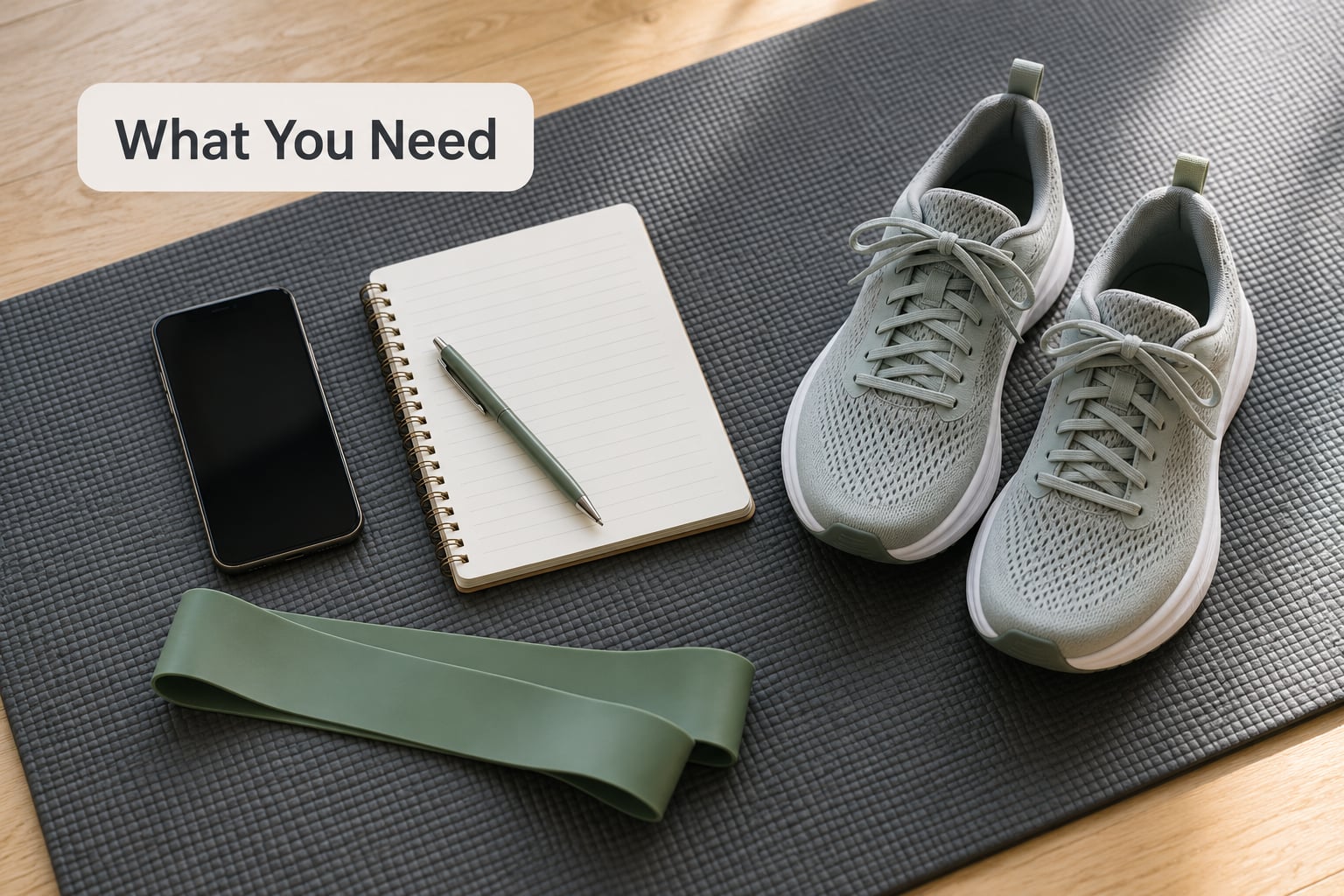
Four things, and none of them is a subscription. A tracking tool you will actually open, a place to write or store entries, a calendar showing your week, and four fields per workout.
The four fields are the same for almost every activity:
- What you did — the exercise or activity, plus sets and reps, or distance and time.
- How long it took — total session time, so you can compare like with like later.
- How hard it felt — a simple 1 to 10 effort score is enough. Nobody needs a lab to use it.
- How you recovered — energy, sleep the night before, any soreness. Two words is a valid entry.
Everything else is optional and can come months later. Beginners who try to capture eleven metrics at once usually quit in a fortnight, and people on forums say the same thing about over-engineered apps: the ones that survive are the ones you can use one-handed while holding a dumbbell.
Step-by-Step
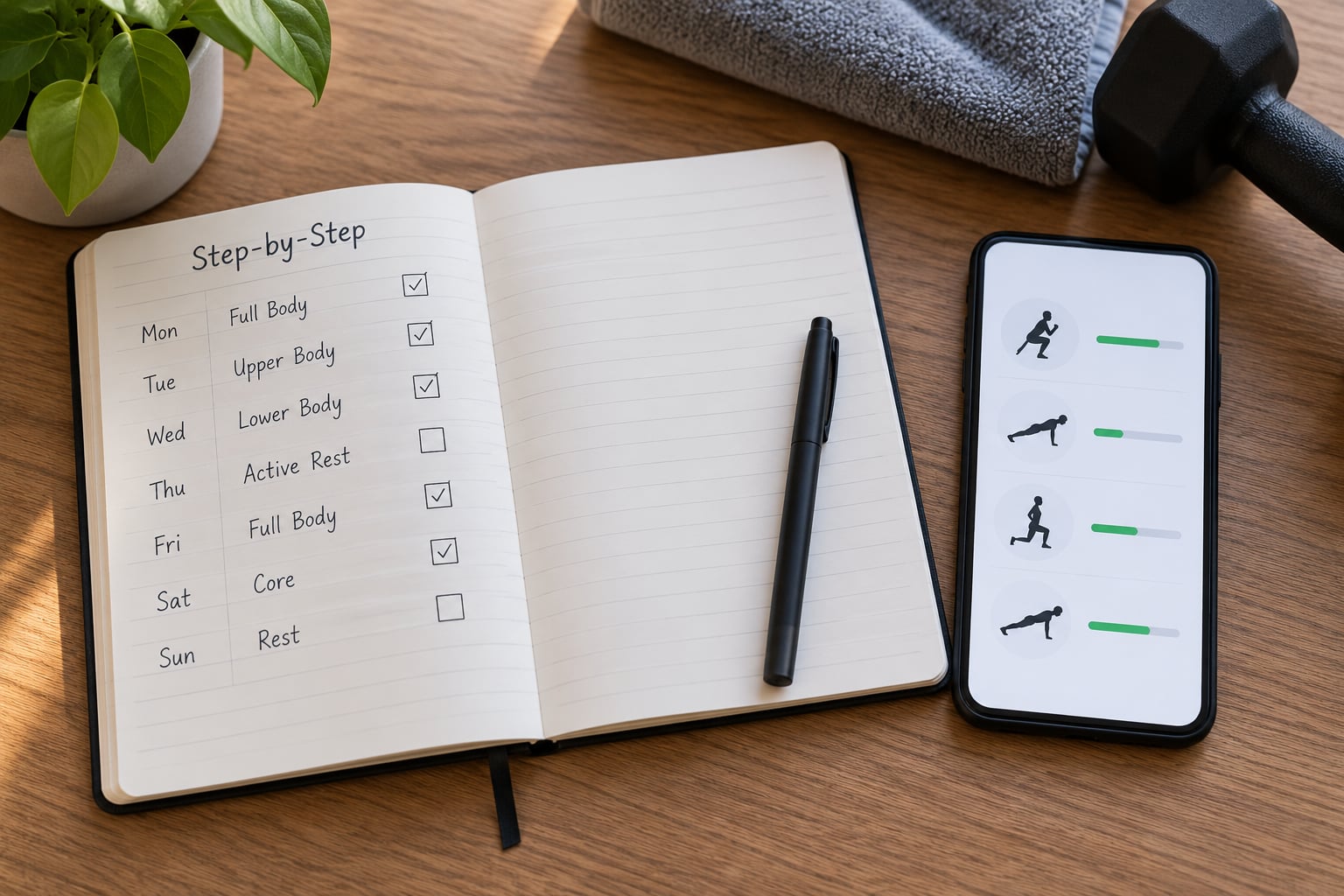
Step 1: Choose a Consistent Tracking Method
Pick one and stick with it for at least two months. Paper notebooks feel slow but never glitch, and they can be read at a glance. Spreadsheets are the best option if you want charts later, though they cost you a few minutes of setup. Apps log fastest mid-workout and draw progress graphs automatically, and plenty of lifters complain they are slow when all they want is a number typed fast.
Whichever you choose, check one thing: can you see your last session’s entry before you start? Reviewers rank that above every other feature, because memory fades fast between Wednesday and Friday. A tool that hides your history behind three taps loses to a notebook that sits open on the bench.
Whichever option you land on, agree now on your units. Pounds or kilograms, and miles or kilometres. Mixed units turn a six-week log into arithmetic homework.
Step 2: Record Each Workout Immediately
Fill in the four fields within a couple of minutes of finishing. Later means you forget the load and guess, and guessed numbers poison the whole trend.
A finished entry looks like this:
Tuesday — strength, 30 min. Squat 3×8 at 60 kg, row 3×10 at 25 kg, plank 3x45s. Effort 7. Slept 7 hours, energy good, mild quad soreness next day.
Notice what is missing: no calories, no body weight, no mood rating out of ten. The entry is short enough that you will still write it on a bad week, and it holds everything you need to compare against next Tuesday. When something goes wrong later, this level of detail is usually enough to explain it.
Step 3: Track Measures That Matter
Different goals need different numbers. Recording the wrong one is the quiet reason logs feel pointless.
| Your main goal | Track first | Useful second measure | Skip |
|---|---|---|---|
| Strength | Load for each set | Reps at the same load, effort score | Calories |
| Endurance | Distance and time | Pace per mile or kilometre | Load |
| HIIT or classes | Rounds or session length | Effort score, recovery time | Rep totals |
| Mobility or yoga | Minutes and days per week | Range of motion notes | Anything with a decimal |
| General health | Sessions completed per week | Effort score, sleep, mood | Everything else |
Two habits keep the numbers honest. Compare under similar conditions: same machine, same time of day, same order of exercises. And give any change two to three sessions before you trust it, because one bad night’s sleep can make a good week look flat.
Step 4: Review Your Progress Weekly
Set a fixed slot, Sunday morning with coffee, five minutes. Unlogged entries get filled in or marked as missed. Then answer five questions:
- How many sessions did I complete, and did that match my plan?
- What did my total volume or distance look like against last week?
- Where did I improve, even slightly?
- Which sessions did I miss, and what was the real reason?
- What does my recovery data say about this week?
Look at the pattern, not the single best session. One hard workout tells you almost nothing; four weeks of the same routine tells you whether it is working. If your numbers moved while your effort stayed flat, that is progress. If the load climbed and the effort climbed with it, the log just earned its keep.
Step 5: Adjust One Variable at a Time
When the review says something needs to change, change one thing: volume, difficulty, frequency, or recovery. Changing three at once means you will never know which one worked.
A simple rule many lifters use: when you hit the top of the rep range on every set across two sessions, add a little load and drop back to the bottom of the range. Small enough that no set feels like a failure. For cardio, the same logic points at adding a little distance or shaving a little time, not both.
If progress has stalled for three or more sessions, work down this list before changing the programme: sleep, food intake, rest days between sessions, how long you have run the same routine, and life stress. In that order, because the answer is usually in the first three and nobody likes changing a programme that was not the problem.
How to Track Workouts for Progress in a Simple Log
This is where a basic paper log earns its keep. After four to eight weeks, a single page of handwriting shows three things no app dashboard shows as clearly: whether you actually showed up, how the numbers moved, and how your recovery tracked alongside.
Count your sessions per week. Glance down the load column and you will spot the weeks you added weight and the weeks you coasted. Read the recovery notes in order and the pattern is usually obvious — the dip in performance always lines up with the short nights. That is a real finding, and you made it with a pen.
Once the pattern is visible, you have earned the right to add complexity: a spreadsheet, a heart rate monitor, tape measurements. Add one thing per month, never three.
Common Mistakes
Switching methods every few weeks. You lose the thread and cannot compare April to October. Fix: pick one method for a full training block, about eight to twelve weeks.
Recording only distance. A faster pace on the same route is progress; the same pace for longer is a different goal. Fix: log time and distance together.
Chasing personal bests. A record every session is a recipe for poor sessions and sore joints. Fix: look for a slow trend over weeks.
Treating a missed day as failure. One missed session is a Tuesday, not a wasted month. Fix: mark it and move on.
Confusing soreness with progress. Muscle soreness is a lagging, unreliable signal. Fix: judge the session by your numbers and your effort score.
Relying on one measurement. If only load matters, a deload week reads as a collapse. Fix: pair every performance number with effort and recovery.
Quick Tips
Log immediately, before you leave the gym floor. Keep units consistent to the decimal you care about. Take any body measurements under similar conditions, same time of day. Set process goals before performance goals, such as three sessions logged every week. Keep the previous session’s numbers visible during your workout. And if a session felt awful, write it anyway, because the honest bad entries are the ones that explain a stall later.
Frequently Asked Questions
What is the simplest way to track workouts for progress?
A notebook and a pen, used the same way every session. Write the activity, sets and reps or distance and time, a 1 to 10 effort score, and a short recovery note. Fill it in within a few minutes of finishing, then read the last two weeks once a week. Simplicity beats features, because a log you actually keep tells you more than a clever one you abandon.
Should I use a fitness-tracking app or a paper log?
Paper suits you if you want zero setup and fast, glanceable history. An app suits you if you want charts, timers and automatic history without typing effort scores by hand. Many lifters find apps slower for quick set logging but prefer them for reviewing trends later. Whichever you pick, the deciding factor is whether you will still be using it in three months, not which one has more features.
How often should I review my workout progress?
Once a week for about five minutes is enough for most people. Read the last seven days: sessions completed, total volume or distance, anything that improved, anything missed, and how recovery looked. Check body measurements monthly at most, since day-to-day changes are mostly water. Reviewing daily tends to produce anxiety rather than information.
What should I track if my main goal is weight loss?
Keep the focus on training consistency rather than on numbers that swing daily. Track sessions completed per week, total activity minutes, and your effort score, plus how your clothes fit or how you feel. Body weight can be logged on the same conditions each week, but treat it as background information. For a personalised plan, talk with a doctor or registered dietitian.
Does soreness mean a workout was successful?
Not reliably. Soreness reflects how unfamiliar or demanding a movement was, and it fades as your body adapts, so a tougher session can feel less sore. Use your log numbers and your effort score instead: did you complete the planned work, and did the same loads feel easier over time? Persistent pain or soreness that lasts more than a few days is a reason to see a doctor.
When should I increase my workout difficulty?
When your log shows you finishing the top of the rep range on every set across two sessions at the same load, add a small increase and return to the lower end of the range. Keep the step small so no set feels like a failure, and change only one variable at a time so you can see what worked. Pain that changes your movement should always be assessed by a professional first.
Conclusion
Do one thing tonight: pick your tracking method, write the four field headings on a fresh page, and log your next workout straight after it. Then give the log five minutes a week and change a single variable only when the pattern tells you to.
Progress tracking is not a test you pass or fail. It is a short weekly conversation with your own training, and two honest minutes is all it takes to have it.