A deload week is a planned break of 5 to 7 days where you cut your training volume or intensity by roughly 30 to 50% on purpose, so you can recover from accumulated physical and mental fatigue without losing the muscle and strength you already built.
It is a normal part of structured training, not a punishment for skipping the gym and not a sign that your program failed. Most people who use one are intermediate or advanced lifters training four to six days a week, and the whole idea is simple: train hard, then back off deliberately so you can come back stronger.
Table of Contents
- What Is a Deload Week?
- What a deload week is made of: volume, intensity, and frequency
- What a deload week is not
- Why Do People Take a Deload Week?
- How Does a Deload Week Work?
- How to Plan a Deload Week for Beginners
- Deload Week vs. Rest Week
- How Often Should You Deload?
- What Should You Do During a Deload Week?
- Signs You May Need an Easier Training Week
- Performance signs
- Physical signs
- Mental signs
- What Is a Deload Week in Strength Training?
- How to Know When to Resume Normal Workouts
- Frequently Asked Questions
- How long should a deload week last?
- Do you get weaker after a deload week?
- Do you go to failure on a deload week?
- Is it okay to skip deloading?
- Do beginners need a deload week?
- How often should I deload?
- Conclusion: Start With One Small Step
What Is a Deload Week?
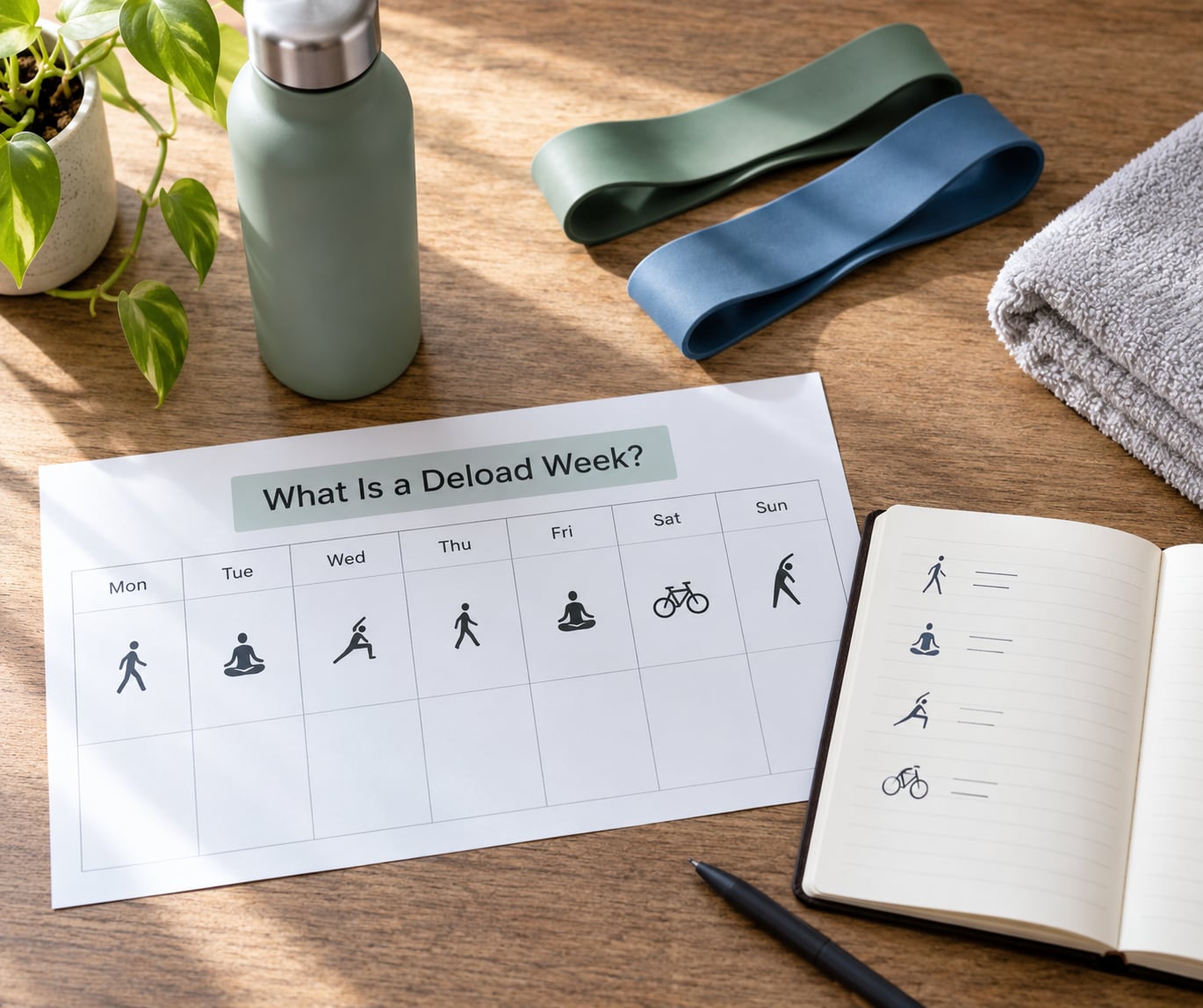
A deload week is a scheduled period of reduced training stress. You still train, you still show up, but you ask less of yourself than usual across one of three levers.
What a deload week is made of: volume, intensity, and frequency
- Volume is total working sets. Cutting volume by about half is the simplest version of a deload week.
- Intensity is load on the bar. Many people lift 60 to 70% of their normal working weight and stay far short of failure.
- Frequency is how often you train. Going from five sessions down to three is a frequency deload.
Most people combine two of the three. Halving your sets and dropping the weight to about two-thirds of normal is a very common, very workable approach.
What a deload week is not
It is not a full rest week. It is not skipping the gym for seven days. It is not a free pass to eat whatever you want, and it is not a punishment bench for feeling guilty about missing a session. A deload is a reduction in planned stress, booked in advance so it feels like training rather than quitting.
Beginners are the group that needs this explanation most. Someone with under six to twelve months of consistent training usually recovers fine between sessions and gains strength quickly without needing a deload. It becomes useful once your training volume is high enough that fatigue starts outrunning recovery.
Why Do People Take a Deload Week?
People deload to dissipate fatigue that has piled up over weeks of hard training, so the strength they have built becomes usable again.
Fatigue accumulates faster than recovery when volume climbs. Lifters hit a plateau, numbers stall or drop slightly, joints start achying, motivation dips. What looks like a lack of progress is often just accumulated fatigue sitting on top of real fitness. A deload week lets that layer thin out.
The second reason is continuity. Knowing a lighter week is coming makes the hard weeks easier to finish. The third is practical: fatigue you clear this month is fatigue you do not have to fight through for the rest of your training year.
What a deload does not do is guarantee a personal record next week. Plenty of people feel stronger and clearer right after one. Plenty of others feel about the same. Treat it as maintenance for the machine, not a promise.
How Does a Deload Week Work?
A deload works by lowering training stress below the level your body can fully absorb, which gives recovery systems time to catch up.
The idea comes from the gap between two recovery speeds. Muscle tissue recovers relatively quickly, often within 48 to 72 hours. Your nervous system and connective tissue, tendons and ligaments, adapt far more slowly and can stay irritated for weeks. Heavy training keeps stacking stress on those slower systems even while your muscles have already bounced back.
That mismatch is where plateaus come from. A deload week reduces volume, intensity, or both, so the slower systems can finish repairing. You keep the movement patterns and keep the habit, which costs you almost nothing in skill or muscle, and you come out the other side with the fatigue stripped away.
There is no single universal routine. What a deload looks like depends on your program, your training age, and what you have been doing. The only real requirement is that it is noticeably easier than your normal week.
How to Plan a Deload Week for Beginners
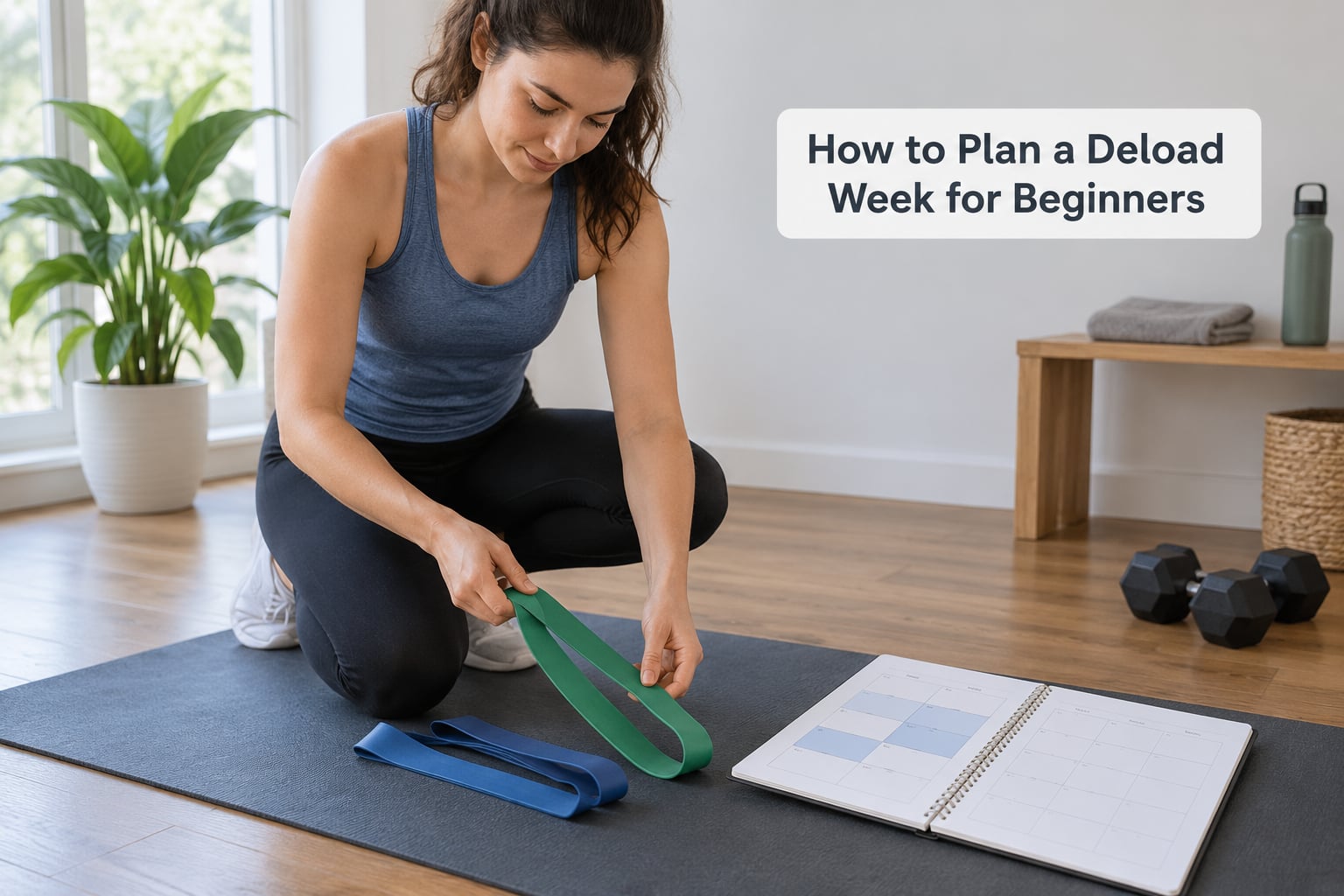
Plan a deload week by picking a week in advance, choosing one lever to cut, and keeping everything familiar so the week still feels like training.
- Pick the week before you need it. End of a training block is the easiest spot. Try not to schedule it in the same week as a competition, a deadline, or a travel stretch.
- Choose one lever first. Volume is the least ego-battle and the easiest to measure. Halve your working sets and keep the weight identical. That alone is a real deload.
- Or drop the load. Use around 60 to 70% of your usual working weight and keep a couple of good reps in reserve on every set. Do not go to failure.
- Keep your movements. Stay with the exercises you already know. Novel exercises add skill work to an already tired system.
- Cut your cardio too. If you normally do an hour of hard cardio, walk instead. Keep a short easy session if you enjoy it.
- Return gradually. Go back to your previous numbers rather than adding weight immediately. The first hard week back usually feels heavier than it is.
If you are managing an injury, a long illness, or a training plan you did not build yourself, get advice from a qualified trainer or your clinician before changing your program. Deload weeks are general training practice, not medical treatment, and pain or persistent exhaustion is a reason to talk to a professional rather than to push through a lighter week.
Deload Week vs. Rest Week
A deload week keeps you training with less stress, while a rest week stops structured training entirely. Here is how they differ.
| Factor | Deload Week | Rest Week |
|---|---|---|
| Activity level | Training continues, much easier | No structured training |
| Training structure | Same program, fewer sets or lighter loads | Program paused or replaced with walking and mobility |
| Typical duration | 5 to 7 days | 7 days or longer |
| Best for | Accumulated fatigue, stalled progress, joint achiness, burnout | Illness, injury, travel chaos, severe exhaustion |
| Muscle and strength impact | Minimal, movement patterns maintained | Small loss of conditioning after two or more weeks |
| What it addresses | Training stress that has outpaced recovery | A break from training altogether |
If your fatigue comes from the gym, a deload usually handles it. If it comes from everything else, sleep deprivation, illness, a brutal work month, a rest week or several days off is the better call. The overlap is real and plenty of lifters use one to lead into the other.
How Often Should You Deload?
Frequency depends on your training experience, your weekly volume, your workload outside the gym, and how you actually respond. There is no rule that fits everyone.
A reasonable starting point for intermediate lifters is a deload every 6 to 8 weeks, and every 4 to 5 weeks once training gets heavy. Beginners often need none at all. More frequent lifters tend to recover faster between sessions, so they can handle more stress before needing a cut.
Two approaches exist. Scheduled deloads go in your plan as a fixed interval, which is simple and works well if you already know your tolerance. Symptom-based deloads happen when your numbers, joints, or motivation tell you to. Most experienced lifters mix both, keeping a rough calendar and moving the week earlier when the signs show up.
The recurring question in lifting forums is whether to deload every fourth, fifth, or eighth week. Arguing about the calendar matters far less than noticing that you have gone hard for weeks with no change in performance.
Either way, the fear of the lighter week is usually worse than the week itself. Once you have run one, it stops being a big decision and turns into a line in the plan.
What Should You Do During a Deload Week?
Do the same movements at a lower dose, keep moving in ways that feel good, and take care of the basics that support recovery.
- Strength sessions stay in the program with roughly half your sets, or lighter loads, stopping well before failure.
- Cardio drops to easy or moderate. Walking, cycling, and swimming at a conversational pace are ideal.
- Mobility work earns its place here. Gentle range of motion and slower controlled lifts help maintain movement quality without adding fatigue.
- Walking is underrated. Daily walking supports recovery without costing you recovery capacity.
- Sleep matters more this week than most. Consistent sleep and a normal bedtime do more for a deload than any gadget.
- Food stays ordinary. Keep your usual protein intake, eat balanced meals, and drink water steadily through the day.
You do not need to eat more on a deload week because you train less, and you do not need to starve it either. Treat it as a normal week of food with slightly less training, not as a special protocol or a reason to try a supplement you have never used.
If your weight-loss plan involves a structured calorie target, keep following it as written and talk to a registered dietitian before changing anything about it. A lighter training week does not require a change to your food plan.
Signs You May Need an Easier Training Week
Common signs cluster into performance, physical, and mental signals. Two or more showing up across a few weeks is a reasonable trigger to deload.
Performance signs
- Weights that used to move feel heavy, and the same sets produce fewer reps.
- A plateau that stretches across several sessions with no upward movement.
- Warm-ups feeling unusually heavy, or technique slipping on familiar lifts.
Physical signs
- Aches in joints, tendons, or elbows that were not there before.
- Soreness that lingers far longer than it used to.
- Resting heart rate up a few beats per minute for several days running, or sleep that feels lighter than normal.
Mental signs
- Motivation disappearing and every session feeling like a negotiation.
- Irritability, a shorter fuse, or feeling flat between workouts.
- The sense that you are dragging yourself to the gym rather than going.
Everyone has an off week now and then, and one bad session means very little. Look for a pattern that persists. If fatigue comes with dizziness, chest pain, unexplained weight change, a fever, or symptoms that do not settle after lighter training, stop reading training blogs and talk to a doctor instead.
What Is a Deload Week in Strength Training?
In strength training, a deload week keeps your lifts and cuts the demand: lighter loads, fewer sets, or more reps left in reserve.
The three common versions look different on paper. A volume deload keeps the weight identical and halves your sets, which is the easiest version to measure and to stick to. An intensity deload keeps the sets and drops the load to around 60 to 70% of normal. A frequency deload keeps everything the same and simply trains fewer days.
RPE, or rate of perceived exertion, is a useful shorthand. A normal hard session might sit at RPE 9. A deload session usually lands somewhere around RPE 5 to 7, and never 10. You finish sets with reps left in the tank, which is the opposite of a normal hard week where the last set is often a fight.
The same pattern shows up again and again: weaker and slower during the deload, then stronger on the other side. Numbers that felt stuck often start moving within a session or two of going back to your previous load.
The reason it works is that strength is not purely muscle. Neural adaptations, motor unit recruitment, and technique persist with far less stimulus than new muscle does. Five easy sessions and a week of walking cost you very little of any of that.
How to Know When to Resume Normal Workouts
Return to your previous numbers when energy, movement quality, and motivation feel steady again, then build back up rather than jumping straight to a new maximum.
Look at how the week felt rather than what the scale or tape measure said. Energy back to normal, sessions that leave you feeling like you did some work but were not dragged out, and technique that looks like yours again are the practical signals.
Then go back to the load and volume you used before the deload, not above it. Your first hard week back will feel heavier than it should, partly because your body has had a week without that specific stress. Adding weight to that week is how people undo the work.
If your numbers come back and immediately drop again next week, the deload was too short or too light. Try a slightly longer cut, or cut a second lever. Most people settle into a rhythm within two or three cycles.
Frequently Asked Questions
How long should a deload week last?
Most people use 5 to 7 days, which lines up with one full week of their program. Anything from three days to ten can work if your training split is unusual, but a clean week is easier to run than a partial one. Treat it as a week, not a random lighter Tuesday.
Do you get weaker after a deload week?
You will feel weaker during it, and that is normal. Lifting lighter with fewer sets means less acute fatigue, so the bar feels light and your numbers drop. Muscle and strength are not meaningfully lost in a week. Most lifters feel stronger on the other side, though not everyone does.
Do you go to failure on a deload week?
No. Failure is the opposite of the point. Every set should stop with reps in reserve, usually landing around RPE 5 to 7 instead of the RPE 9 or 10 of a normal hard session. Training to failure keeps fatigue high, which is exactly what a deload is meant to clear.
Is it okay to skip deloading?
Yes. A missed deload is not a setback and it does not cost you progress. If your recovery is keeping up, your numbers are moving, and you feel fine, you can simply train through. The weeks that matter are the ones where your joints ache and your motivation has disappeared.
Do beginners need a deload week?
Usually not, especially in the first six to twelve months of consistent training. Your body is still adapting, and you recover between sessions without trouble. A beginner usually gains more from adding a little training consistently than from cutting it back. Revisit the idea once your weekly volume climbs.
How often should I deload?
Most intermediate lifters land somewhere around every 6 to 8 weeks, and advanced lifters every 4 to 5 weeks. Those are starting points, not rules. Judge by your own response: stalled numbers, aching joints, and dropping motivation are a stronger signal than any number on a calendar.
Conclusion: Start With One Small Step
A deload week is a planned reduction in training stress, taken on purpose so accumulated fatigue does not bury the fitness you have already built.
Start by looking back at the last month or two. If your numbers stalled, your joints ache, or you cannot summon enthusiasm for the gym, the answer is probably yes. Pick one week, cut one thing, and keep everything else the same.
Halving your sets is the easiest place to begin. You will feel lighter and slower for a few days, then come back to your previous numbers and pick up where you left off.