Gym etiquette for beginners comes down to a handful of habits: put the weights back where you found them, wipe down the machine after you use it, give people room to work, and let the next person get in as soon as you are finished. None of it is complicated. Most of it takes about ten seconds per set, and all of it makes your workout calmer and less awkward.
The rules below are the ones regulars actually notice, plus the awkward parts nobody writes down: what to say when you do not know how a machine works, and what you are allowed to get wrong in your first month. If something here feels strict, that is usually because the person who skipped it had to step over it.
Table of Contents
- What Is Gym Etiquette and Why Does It Matter?
- Essential gym rules worth remembering on day one
- How Should Beginners Prepare Before Their First Gym Visit?
- Check the layout and the posted rules
- Ask the two questions worth asking
- Pack for the room, not just the workout
- Pick your moment
- How Do You Use Cardio Equipment Respectfully?
- Ask how many sets are left, then wait nearby
- The 60-second rule
- Treadmills and bikes specifically
- Wipe, then step away
- What Are the Rules for Weights and Racks?
- Re-rack every plate and dumbbell
- Load only what you are lifting
- Do not drop or slam
- Ask for a spot, and ask for a weight take-back
- Keep the walkways clear
- How Should You Behave in Shared Spaces?
- Personal space and mirrors
- Phones, music and noise
- Change rooms, showers and saunas
- Classes
- Peak versus off-peak
- What Should Beginners Do When They Are Unsure?
- When you do not know how to use a machine
- When someone breaks a rule in front of you
- When someone corrects your form
- What beginners do not have to worry about
- Frequently Asked Questions
- Do I need to know gym etiquette before my first workout?
- Should I put my weights back after using them?
- How long should I stay on one gym machine?
- What should I do if I do not know how to use an exercise?
- Is it okay to listen to music or take calls at the gym?
- How do I handle a crowded gym or a busy rack?
- A Calm Start Makes a Better Gym Habit
What Is Gym Etiquette and Why Does It Matter?
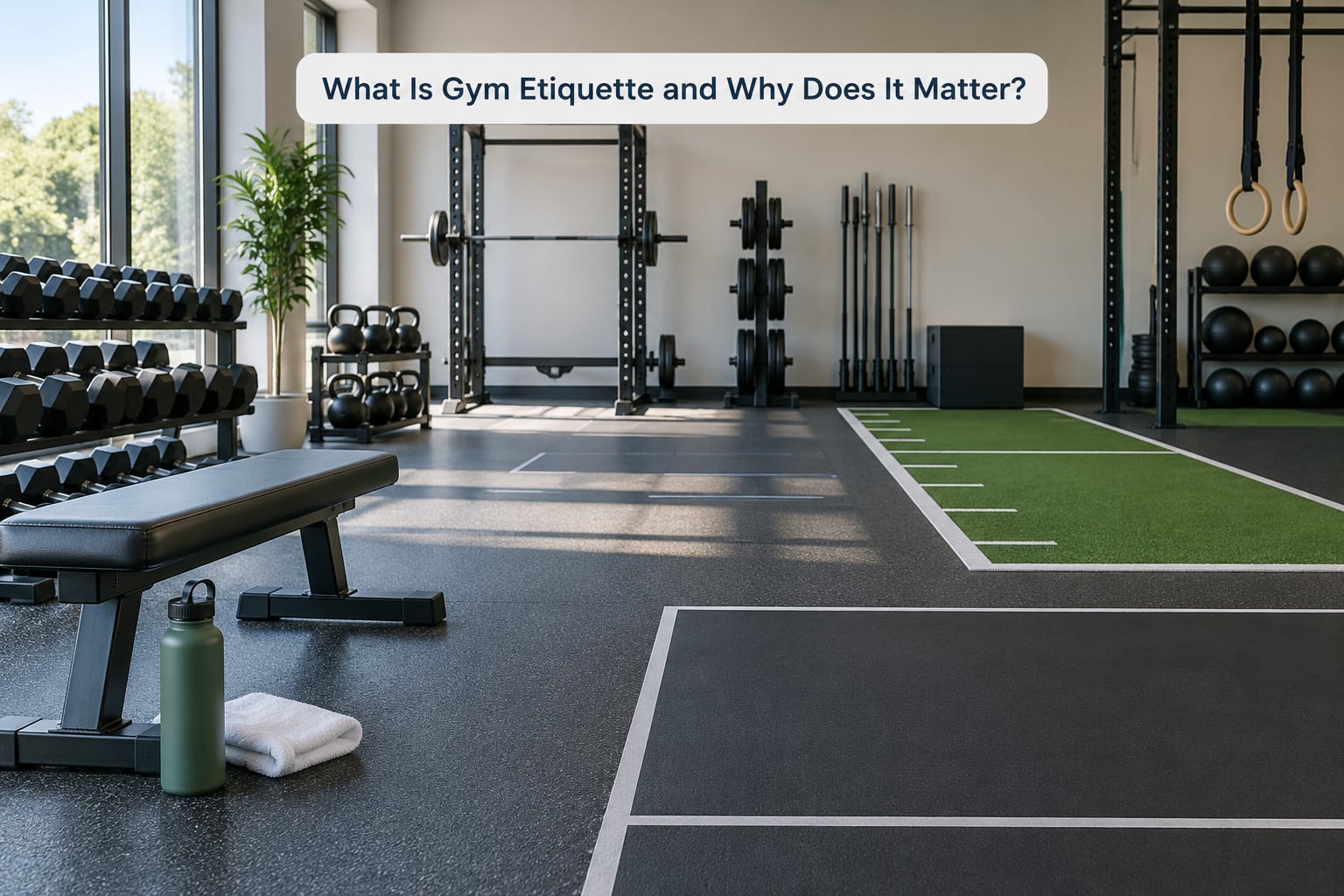
Gym etiquette is the set of unwritten courtesies that keep a shared training space safe, clean and workable for everyone in it. It covers equipment, hygiene, noise, personal space, phones and how you speak to staff and other members.
Most of it is about the person who arrives after you. A rack left loaded, a machine still damp with sweat, a phone conversation at full volume on the floor, a plate resting in a walkway. None of these are dramatic on their own, but they add up to a room where people hurry, guess and second-guess their form.
There is a practical side too. A barbell left loaded on the floor is a trip hazard. A treadmill left at high speed after you step off forces the next person to reset it. A machine blocked by a bag means the rack has fewer plates for everyone else to work with.
Essential gym rules worth remembering on day one
- Wipe down the seat, handles and any moving parts before and after your set, because the person after you should not inherit your sweat.
- Return dumbbells and plates to the rack in matching pairs, because a scattered floor slows down everyone lifting.
- Keep at least three feet between you and anyone doing the same movement, so nobody has to break a set to avoid you.
- Ask how many sets someone has left before you queue for their machine, instead of standing over them while they rest.
- Leave your phone out of sight on the floor, and take any call to the corridor or outside.
- Skip weight slamming and plate dropping, because the noise is the loudest thing in most commercial gyms.
- Work in when the room is empty and rest when it is full, which is the simplest way to keep a busy machine moving.
How Should Beginners Prepare Before Their First Gym Visit?
Ten minutes of preparation removes most of the etiquette anxiety, because almost all of it comes from not knowing where things are or what something is for. Book the induction tour if your gym offers one. It exists for exactly this, and nobody there will think it is a strange request.
Check the layout and the posted rules
On the tour, find four things: where the weights live, where the wipes and spray are kept, where the change rooms and showers are, and whether there are separate areas for machines and free weights. Most gyms post their house rules near the entrance or the free weights area. Those posted rules beat anything you read online, including this article.
Ask the two questions worth asking
Ask a staff member or a coach which machines are best for a beginner and how the re-racking works if the rack layout is unfamiliar. That is a normal first-week question and it gets a normal first-week answer. Members who trained there for years learned those things the same way.
Pack for the room, not just the workout
A small gym bag with a sweat towel, a water bottle, wipes if the gym is short on them, and flat training shoes makes most situations easier. So does picking clothes in moisture-wicking fabric rather than heavy cotton, which holds sweat and stays damp long after you stop.
Pick your moment
Your first two or three workouts are easier off-peak, when the room is quiet and there is space to read a machine’s instructions without a queue behind you. Weekday mid-mornings and early evenings just before closing are usually the calmest. Most people find the routine sticks faster when nobody is watching them learn.
How Do You Use Cardio Equipment Respectfully?
The cardio area runs on one idea: the machine belongs to whoever is on it, and to whoever is waiting. Treadmills, bikes, rowers and ellipticals all follow the same pattern, and every part of it is about not wasting someone else’s warm-up.
Ask how many sets are left, then wait nearby
Do not start a set on a machine someone is resting between. Walk over, ask how many sets they have left, and if it is more than a couple, keep moving and come back. Waiting a few feet away is fine. Standing directly over someone mid-rest is not.
The 60-second rule
If someone gets off a machine and it has sat empty for about a minute, treat it as fair game and take it. This is an informal convention that regulars recognise without discussing, and it keeps the queue moving in a busy room. If they are still wiping it down or heading to the water fountain, give it a few more seconds.
Treadmills and bikes specifically
Set your speed and incline, then reset them to the start position when you step off. Somebody who is new to the treadmill should not have to hunt for a stop button. If your workout is short, that is fine, but don’t hold a machine for twenty minutes of phone scrolling.
Wipe, then step away
Keep a towel on you and wipe the console, handles and seat before you leave. It is the single cheapest way to be liked on a gym floor.
What Are the Rules for Weights and Racks?
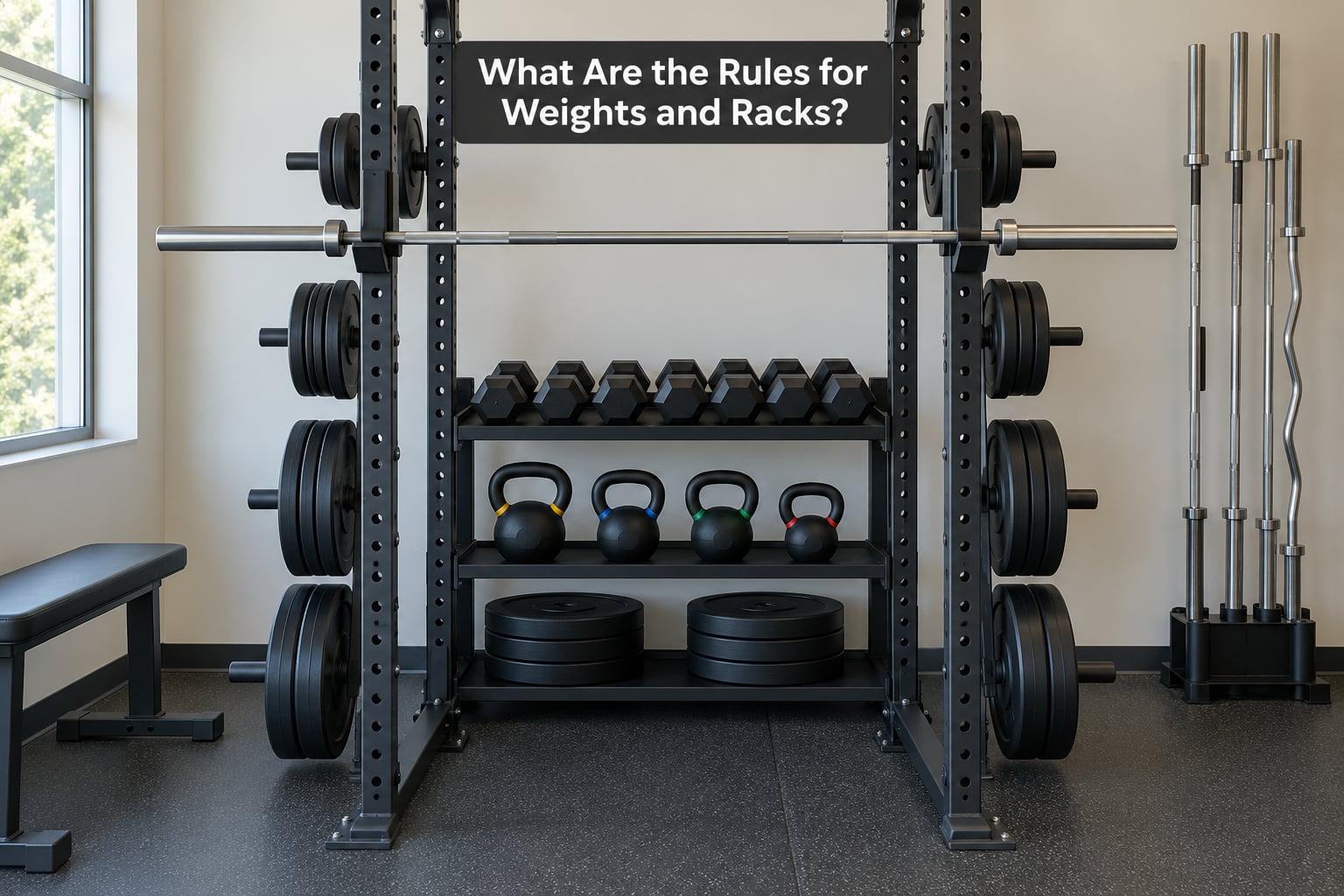
This is where most beginners hesitate longest, and the standard is simple: the free weights area should look the same before and after your session. If it does not, you left something out of place.
Re-rack every plate and dumbbell
Dumbbells go back in matching pairs, biggest at one end if that is how the rack is built. Plates go back on the tree, smallest inside if the pegs are sized that way. If you are not sure, put them back in pairs on the pegs rather than on the floor. Leaving three plates on the floor while you go to the water fountain is how a rack ends up unusable.
Load only what you are lifting
Put on two plates, not the whole set, unless you are doing the whole set. Walking to a bar with eight plates on it, then taking three off, slows down the person behind you. Beginners often load far more than their first few weeks require, so start with the smallest pair that lets you get a clean rep.
Do not drop or slam
Lower plates back onto the pegs under control. Bouncing them off the floor is loud enough to carry across the room, and it is the behaviour regulars complain about most. Same for the way you stand a dumbbell up and the space you take doing it: step back to a clear spot before you start putting plates on.
Ask for a spot, and ask for a weight take-back
Setting up for a bench press with one arm while holding a plate is where beginners hurt themselves. Wait for a lull or ask someone training near you. A useful line that works almost every time: “Mind if I rack a spot in two sets?” Or simply, “Could you take a plate off the end for me?” Neither is a big ask.
Keep the walkways clear
Stay on one side of the rack unless the floor is busy, and set your bag down against a wall, not in the space between the benches and the plates. If someone asks you to move, move.
How Should You Behave in Shared Spaces?
Most etiquette trouble is really space and noise trouble, so that is where the habits pay off fastest.
Personal space and mirrors
Leave a working gap of about three feet between two people on the same movement. If your set drifts toward a mirror, adjust rather than backing into someone else’s set. Don’t step into the space someone is using to watch their form, and don’t position yourself where they have to look past you to check their reflection. A change of angle solves it faster than a word.
Phones, music and noise
Headphones are the norm and video is usually fine at a normal volume. Voice is not. Texting between sets is fine; a five-minute call is not. Keep it on silent and in a bag or on a bench out of the way. If a call is genuinely urgent, step into the corridor.
Change rooms, showers and saunas
Bring a towel, shower promptly, and skip the long conversations in the middle of the floor where people are trying to get dressed. Check whether towels are provided before you buy your own. If there is a sauna or steam room, wash first and give it room before you go in. Phones and cameras stay out.
Classes
Arrive early, set up out of the way of the front row, and put your phone away. Follow the instructor’s cue rather than your own rhythm, and clear your space at the end. If the class format is unclear, ask the instructor at the start instead of guessing halfway through.
Peak versus off-peak
Busy hours call for shorter rests, working in on the machine you want, and dropping the weight you are not currently using rather than re-racking it between every set. Quiet hours reward doing the same thing slowly, because nobody is waiting. Most members do the same workout either way, they just manage the queue differently.
What Should Beginners Do When They Are Unsure?
Almost every etiquette problem a beginner hits has a simple answer, and all of them start with someone asking.
When you do not know how to use a machine
Ask a member of staff. That is the single most useful sentence in the building: “Sorry, how does this one work?” Nobody in a gym will think less of you for asking, and asking early beats guessing and injuring yourself. If you would rather not ask in front of anyone, walk over at a quiet moment or during off-peak hours.
When someone breaks a rule in front of you
Pick the low-stakes ones. If someone leaves the rack in a mess, re-rack it yourself and move on. If someone keeps a machine for a long stretch, ask directly: “Would you mind if I worked in after this set?” If a rule is a genuine safety problem, tell a staff member rather than confronting them. You are not the floor manager, and you do not need to be.
When someone corrects your form
Say thank you and try the cue once. Members mean well most of the time, but nobody wants unsolicited coaching mid-set. If it keeps happening, move to a different station or ask a trainer instead.
What beginners do not have to worry about
Looking clumsy, using a light weight, resting longer than you think you should, walking around the room twice with no plan, and taking longer on a machine while you work out the adjustments are all fine. Regulars were bad at all of it. Regulars are just bad at it differently now. Rest between sets is a normal part of training, not a polite thing to skip because someone is nearby.
Frequently Asked Questions
Do I need to know gym etiquette before my first workout?
You need the basics, not the full list. Put your weights back, wipe down the machine you used, keep your phone off the floor and give people room. Those four cover most of what regulars notice. Everything else you can learn over a few weeks, and asking a staff member is normal and expected.
Should I put my weights back after using them?
Yes. Re-racking dumbbells, plates and bars is the rule nearly every gym expects, and the free weights area should look the same after your session as it did before. If you are unsure where something goes, put dumbbells and plates back in pairs rather than leaving them on the floor. It takes about ten seconds per set.
How long should I stay on one gym machine?
Move on when your set is done and you have wiped the machine, which is usually well under a minute. If you want more time on the same station, take a short walk and come back. If you are working through a circuit and want to keep using the equipment, offer to let the next person cut in, then finish your round afterward.
What should I do if I do not know how to use an exercise?
Ask a member of staff. Saying sorry, how does this one work takes five seconds and gets you a proper answer instead of a guess. Off-peak hours are the easiest moment to ask, since nobody is queuing behind you. Keep asking until the movement feels familiar rather than starting heavy and working out the details mid-set.
Is it okay to listen to music or take calls at the gym?
Music through headphones is normal and nobody objects. Calls are the issue, since they carry across the floor, so take them into the corridor or outside. Checking messages between sets is fine as long as the phone stays out of the way and you are not gone for a long sit-down in the middle of a busy room.
How do I handle a crowded gym or a busy rack?
Peak hours need shorter rests, smaller weight jumps and more working in. Keep the plate you are not using on the floor until your next set rather than re-racking between every rep, then tidy before you leave. At off-peak hours, when the room is quiet, that is the easiest time to learn a new machine without a queue behind you.
A note on two other rules you may have seen: the 3-3-3 and the 5-3-1 are training benchmarks from CrossFit and powerlifting, not etiquette norms. Nobody at your gym will expect you to follow them as a beginner.
A Calm Start Makes a Better Gym Habit
Do these five things in your first week and you will already be ahead of most new members. Learn where the layout is and who to ask. Use every piece of equipment the way its instructions say, and ask before you guess. Return the weights and wipe the machine before you walk away. Keep your bag out of walkways and your phone off the floor. And when you are not sure, ask a staff member instead of waiting three weeks to find out.
That is the whole thing. The rules exist so nobody has to rush, guess or step over a plate, and following them takes less effort than the workout does. Gym etiquette for beginners stops being a separate thing to learn pretty fast. Once it is a habit, the workout is the only hard part.