You can lose weight without giving up bread. Weight change comes from your total calorie intake over weeks, not from banning one food, and bread can sit comfortably inside a deficit when you pick a high-fiber loaf, measure the portion, and pair it with protein. Most people who try to cut bread out entirely regain the weight within a few months, so a plan that keeps the food you actually enjoy tends to hold up better. Here is how to build that plan in 2026.
The short version: one or two measured slices, a better loaf than the one in your kitchen right now, and something protein-heavy on the plate next to it. Everything else is detail.
One note before we start. This is general information about food and eating patterns, not medical advice. Individual calorie needs, and anything involving diabetes, insulin resistance, a medication that affects appetite, or a history of disordered eating, are worth working through with a doctor or a registered dietitian rather than a blog post.
Table of Contents
- What You Need
- Step-by-Step: How to Lose Weight Without Giving Up Bread
- 1. Set a sustainable calorie target
- 2. Choose fiber-rich bread
- 3. Keep portions intentional
- 4. Build balanced meals and snacks
- 5. Track patterns and adjust gradually
- Common Mistakes
- Frequently Asked Questions
- Can you lose weight if you quit eating bread?
- Can I eat sourdough bread and still lose weight?
- Is two slices of sourdough a day too much while losing weight?
- What does a 100-calorie slice of sourdough look like?
- How many slices of bread can I eat in a day on a 1,500 calorie plan?
- When should I talk to a doctor or registered dietitian about my eating plan?
- The Short Version
What You Need
None of the steps below need a special membership, a meal kit, or a week of batch cooking on Sunday. What they need is a handful of ordinary things you probably already own.
- A way to read a label. Three numbers do most of the work: fiber per slice, added sugar per serving, and sodium per slice. Calories matter too, but they are only one line on the panel.
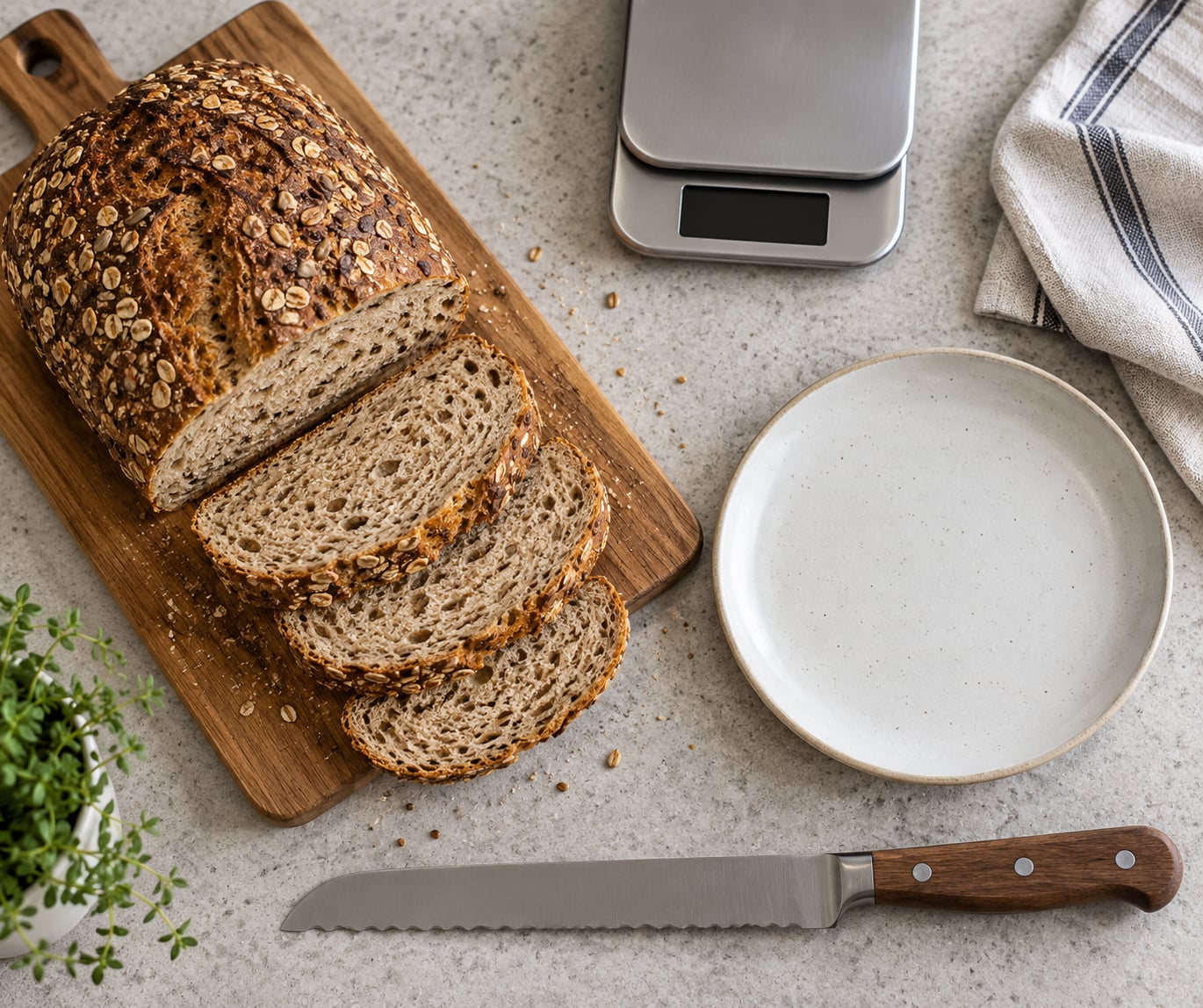
- One portion tool. A kitchen scale is ideal and inexpensive. A bread knife plus a plate also works, because slices from a wide sandwich loaf and slices from a dense round sourdough are not the same size.
- A short swap list. Decide in advance what covers for bread on the days you do not want it, so you are not making that decision at 4 p.m. when you are hungry.
- A simple log. Paper, a notes app, or a photo of each meal works. You are tracking patterns, not performing penance.
- Two weeks of patience. Big changes in the first three days produce numbers that tell you almost nothing.
If you want a broader grounding first, it helps to understand what a balanced plate looks like before you start adjusting portions.
Step-by-Step: How to Lose Weight Without Giving Up Bread
Five steps, in the order they work best. The first two change the food itself, the next two change how much of it you eat and what it comes with, and the last one tells you whether any of it is working.
1. Set a sustainable calorie target
A calorie deficit is simply eating a little less energy than your body uses each day, and you build it from your overall eating pattern rather than from one banned ingredient. Removing bread on its own rarely creates a large enough deficit to matter, which is why the advice fails within a few weeks and the weight comes back with interest.
Set a number you can defend on a bad Tuesday, not your best one. Most people find a deficit somewhere in the range of 300 to 500 calories a day works for a start, which on a typical intake translates to roughly a pound of change every one to two weeks. Slower than the internet promises, and much more likely to be real.
Anywhere the arithmetic depends on your own body, your activity level, your age, your sleep, or your medical history, stop and get it from a qualified professional. An online calculator gives you an estimate, not a prescription.
What to do instead of hunting for a number: look at the three places calories quietly accumulate. Liquid drinks, spreads and oils, and portion creep from bigger plates. Trim one of those and leave bread alone for the first two weeks.
2. Choose fiber-rich bread
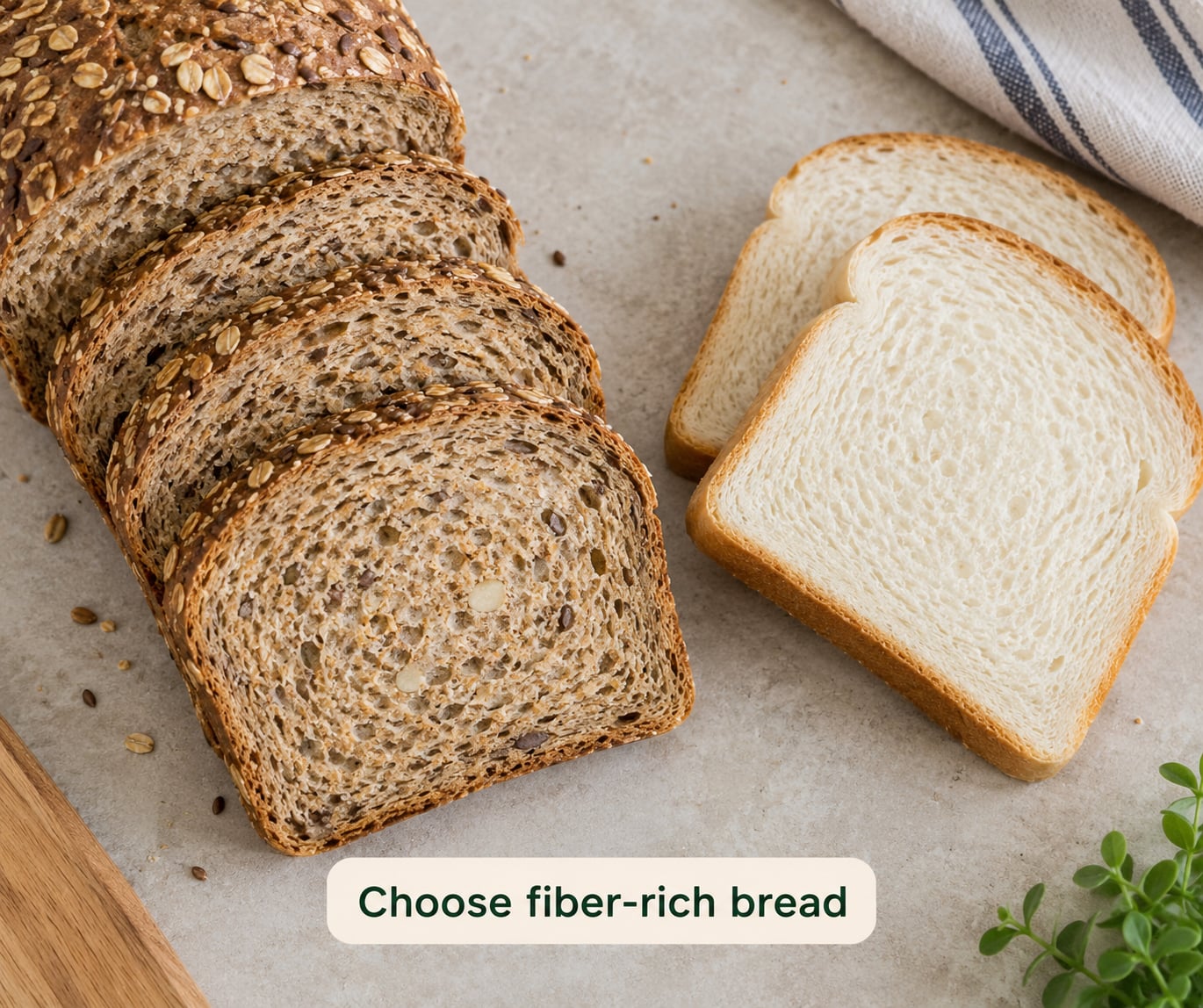
Refined white bread is not forbidden food, but it is a weak choice for a calorie-controlled plan. It is built from refined flour with the bran and germ removed, so it delivers very little fiber and protein per slice, and it digests quickly. That quick digestion is the part people notice as a mid-afternoon crash followed by hunger that feels sharper than before.
Per-slice numbers vary by brand and slice weight, so treat these as realistic ranges and check your own bag. The pattern matters more than any single number.
| Bread type | Calories per slice | Protein | Fiber | Carbs |
|---|---|---|---|---|
| White sandwich bread | 70-90 | 2-3 g | less than 1 g | 15-18 g |
| Whole wheat bread | 80-100 | 3-4 g | 2-3 g | 15-18 g |
| Sourdough (fermented, whole grain) | 90-120 | 3-5 g | 2-4 g | 18-22 g |
| Rye bread | 70-100 | 2-4 g | 2-4 g | 15-20 g |
| Whole wheat pita | 100-130 | 4-5 g | 2-3 g | 22-26 g |
| Naan | 140-180 | 4-5 g | 1-2 g | 28-34 g |
| Seeded or multigrain | 90-130 | 3-5 g | 2-4 g | 16-20 g |
| Commercially made gluten-free | 80-110 | 2-3 g | 1-2 g | 14-19 g |
Three habits make this easy. Read the first ingredient, and if it says wheat flour or enriched flour, that is a refined loaf no matter what the front of the bag says. Check that fiber lands somewhere around 2 grams or more per slice, and that added sugar is not doing the flavor work.
Sourdough earns its reputation here, with one honest caveat. A long fermentation breaks down some of the starch in the dough, and controlled trials published in Appetite have looked at whether sourdough bread changes appetite and calorie intake afterward, finding no meaningful difference versus the equivalent yeast-fermented bread. It is not a weight-loss food on its own. What it does give you is a denser crumb, a real chew, and a loaf that people tend to eat more slowly, which is a behavior, not a nutrient.
Watch out for the fake version. Lots of supermarket “sourdough” is ordinary commercial yeast dough with vinegar added for flavor, which gives you none of the fermentation behavior. Real sourdough takes time, which is the whole reason it is not a two-dollar loaf.
3. Keep portions intentional
A single slice of ordinary bread lands somewhere around 70 to 120 calories depending on density and thickness. Two slices of a dense sourdough can reach 250 before you add anything, which is a meaningful share of a 1,500-calorie day for a food that is not doing much nutritional heavy lifting on its own.
So measure instead of eyeballing. For most people one slice is a comfortable portion at lunch, two is reasonable when the rest of the meal is light, and three slices is where most people stop feeling comfortable and start feeling heavy. Cut the loaf once, weigh the whole loaf, and divide. You will find the slices you make are bigger than the ones you used to buy.
What a 100-calorie slice of sourdough actually looks like: roughly a third of a standard thick-cut slice, or two thin slices cut from the same loaf. Dense crumb holds more calories per square inch than a light supermarket loaf, which is exactly why a small dense piece and a big soft slice are not interchangeable. If the loaf is small and round, a quarter of it is about the right amount.
Then adjust to the rest of your day. A person moving more, or eating very little at lunch, can carry a larger portion in the evening. Someone at a desk all afternoon usually does better with the smaller portion at breakfast and something else at the snack time when bread cravings actually show up.
Eat bread earlier in the day when you can. Most people who keep a slice at breakfast and lunch find evening grazing drops off on its own, because they are not arriving at 9 p.m. genuinely hungry.
4. Build balanced meals and snacks
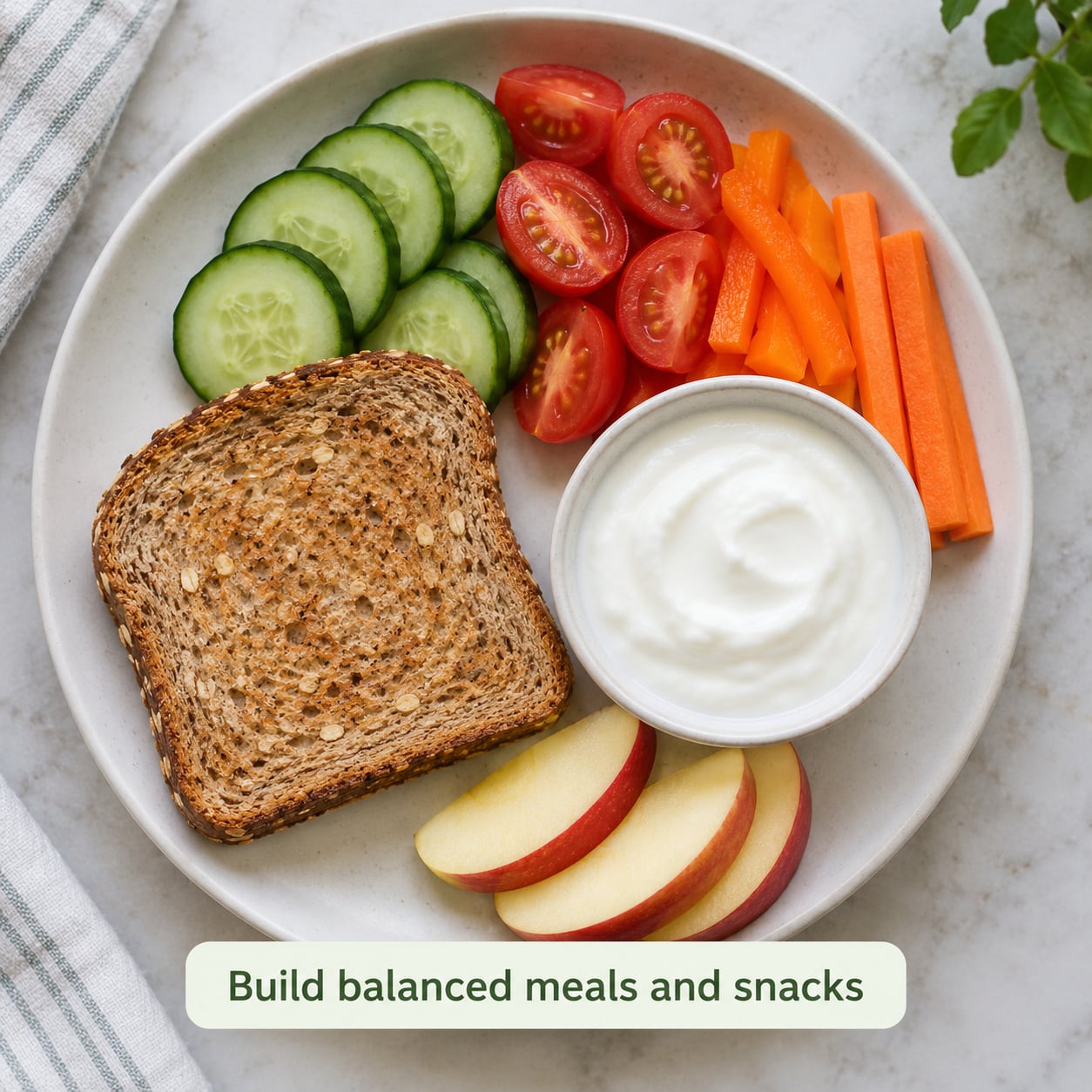
Plain bread on its own rarely keeps anyone full for more than an hour or two. Add protein and vegetables and the same slice behaves like a different food, because the meal takes longer to digest and the afternoon dip does not show up.
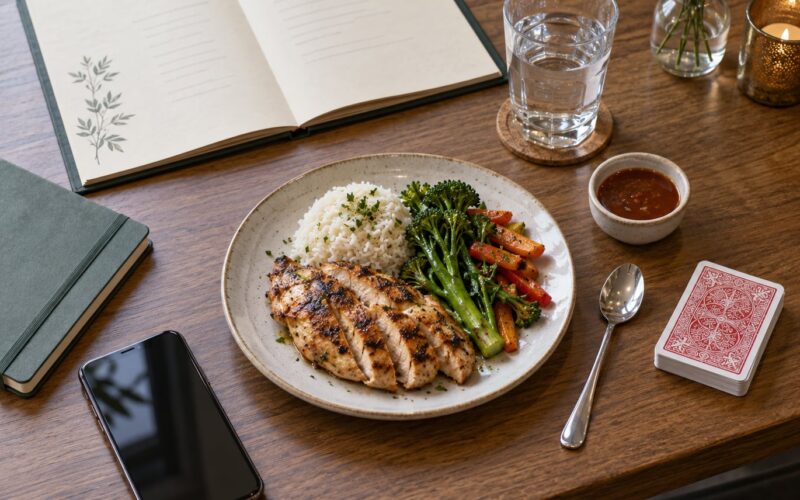
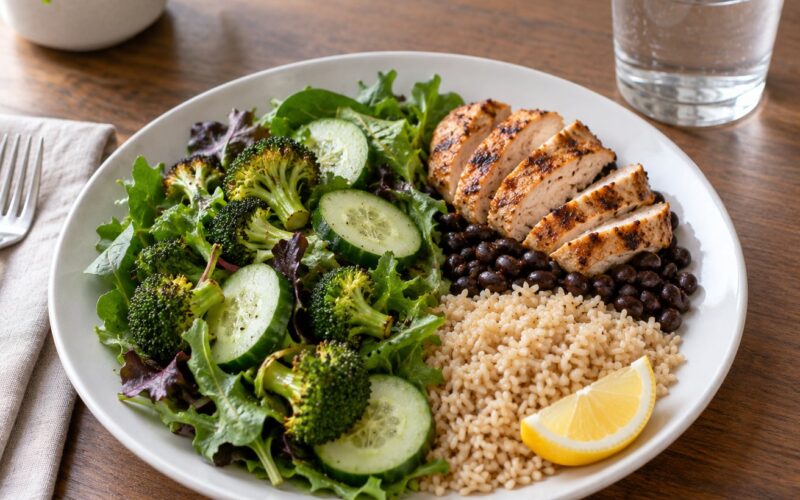
A practical rule for a bread-based meal: aim for roughly 20 to 30 grams of protein across the plate, plus a fist of vegetables. Two eggs with a slice of toast clears that comfortably. Greek yogurt with a piece of fruit alongside. Tuna or egg salad on one slice of rye with cucumber and tomato. Hummus and sliced veg on a small whole wheat pita, which counts as bread in the good sense.
On spreads, this is where a lot of hidden calories live. Butter, cream cheese, and mayonnaise are concentrated, and they are easy to underestimate. The most common version of this mistake is cutting the bread entirely rather than adjusting the topping, and losing a food you enjoy without touching the thing you actually needed to change.
Here is what a realistic day looks like when bread stays in the plan, with figures given as rough ranges rather than a prescription.
- Breakfast. Two eggs, one slice of whole-grain toast with a spoonful of yogurt-based spread, and a piece of fruit. Roughly 350 to 450 calories.
- Lunch. One slice of sourdough topped with tuna or chicken and vegetables, plus a handful of salad leaves with olive oil. Roughly 400 to 500 calories.
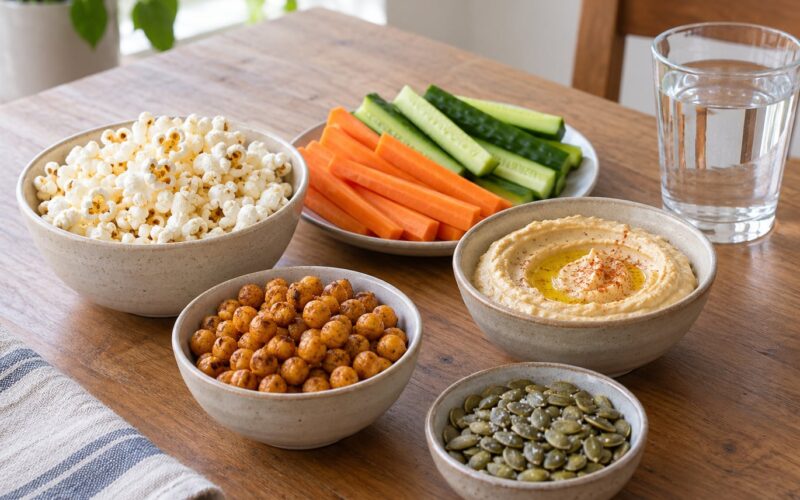
- Snack. Plain Greek yogurt with a small handful of nuts, or an apple with peanut butter measured rather than poured. Roughly 150 to 200 calories.
- Dinner. No bread. Protein, a larger portion of vegetables, and a small serving of starch if you want one. Roughly 450 to 600 calories.
For eating out, the bread basket is the interesting problem, and it is genuinely hard. Do not eat the rolls and then wonder why the numbers do not add up, but do not force yourself to sit there in discomfort either. Take one roll, use it for the meal, and leave the rest. Ask the server to skip the basket and bring it at the end if you want it. Nobody at the table is tracking your basket.
5. Track patterns and adjust gradually
Two weeks of notes tells you far more than one bad morning on the scale. Write down what you ate, when hunger showed up, how your energy felt in the afternoon, and your weight a couple of times a week at most. Daily weigh-ins mostly produce noise for most people.
Use the partial replacement method rather than a cliff. Most people eat bread five or more times a week, so for the first two weeks replace two of those occasions, not all five. Keep the ones that are genuinely satisfying, and swap the ones that happen from habit. If lunch bread makes you hungry again an hour later, that is the one to change first.
If you bake, the freshness problem is real and worth naming. A sourdough loaf is at its best for a day or two, and the pressure to finish it is a legitimate reason people overeat. Two practical habits help. Bake smaller loaves more often instead of one large one, and freeze half the loaf in slices the day you bake it, which takes that pressure off completely.
When the scale stalls for a few weeks, the problem is almost never the bread. Look at the weekend meals, the drinks, and the portion drift. People who keep bread tend to stall less often anyway, because they are not fighting a craving every single day.
Common Mistakes
Banning bread completely. It works for a short time and then rebounds, and the research on restrictive patterns is consistent that all-or-nothing rules are hard to sustain. The practical swaps that tend to survive are corn thins at lunch and a thick fruit yogurt at breakfast, not a total ban. The fix is a portion you measure, not a food you remove.
Keeping the bread and the toppings. A slice with butter, cheese, and mayo is a different order of calories than a slice of toast with an egg. Keep one rich thing on the plate and cut the rest.
Eating large portions without noticing. This is the most common version of the mistake, and it has nothing to do with the type of bread. Weigh the loaf once and you will usually find your slices were bigger than you assumed.
Choosing low-calorie food that does not satisfy you. A diet of food you do not enjoy does not last, and that is not a willpower failure, it is a design failure. Weight loss that sticks tends to include food you look forward to.
Relying on weight-loss supplements. Nothing on the shelf replaces a plan you can keep. Some products interact with prescription medicines and have their own side effects, which is a question for a pharmacist or doctor.
Changing everything at once. New bread, new breakfast, new gym schedule, no snacks. When it stops working you cannot tell which change was the problem.
Two signs suggest you have cut bread harder than you needed to. Constant snacking that does not settle, and an afternoon energy crash most days, both show up often when carbs get slashed quickly. Constipation and gut discomfort after dropping refined bread without replacing the fiber is another, and it is a sign the swap was not made, not a sign the plan is working.
Speak to a doctor or registered dietitian before going further if any of those symptoms persist, if you feel light-headed or fatigued, or if you have a condition that makes your blood sugar response a medical question rather than a kitchen one.
Frequently Asked Questions
Can you lose weight if you quit eating bread?
Yes, you can lose weight without bread, because total calories drive weight change and bread is only one part of that. But bread is the food most people cannot sustain cutting, and restriction that hard often ends in rebound eating within weeks. For most people, keeping a measured portion of a high-fiber loaf and cutting calories elsewhere is the version that holds.
Can I eat sourdough bread and still lose weight?
Yes. Sourdough is bread, so it counts toward your calories, and a dense slice can run 90 to 120 calories. Fermentation breaks down some starch and gives you a chew that slows you down, and controlled trials found sourdough did not meaningfully change appetite or later calorie intake versus yeast bread. Keep the portion measured and it fits a normal plan.
Is two slices of sourdough a day too much while losing weight?
For most people, two slices of sourdough a day sits comfortably inside a 1,500 to 1,800 calorie plan, especially if the rest of the meal is protein and vegetables. Slices are dense, so two can reach 200 to 250 calories before any topping. The right number depends on your intake and activity, so adjust from there rather than using a fixed rule.
What does a 100-calorie slice of sourdough look like?
About a third of a standard thick-cut sourdough slice, or two slices cut thin from the same loaf. Dense crumb packs more calories per square inch than a soft supermarket loaf, so a small dense piece and a large soft slice are not the same amount of food. If your loaf is small and round, roughly a quarter of it lands near 100 calories.
How many slices of bread can I eat in a day on a 1,500 calorie plan?
Most people land somewhere around two to four slices a day at 1,500 calories, which leaves room for protein, vegetables, fruit and a little room for spreads. Two slices at breakfast and two at lunch is a common pattern that works well. Slices range from 70 to 120 calories depending on density, so the count matters less than the actual thickness of your bread.
When should I talk to a doctor or registered dietitian about my eating plan?
Talk to a professional before starting if you have diabetes or insulin resistance, take a medication that affects appetite, have a history of disordered eating, or are pregnant or breastfeeding. Also worth a conversation if you feel fatigued, light-headed or constipated while cutting portions, or if the scale has not moved in several weeks despite a consistent routine.
The Short Version
Start tomorrow with two things and nothing else. Weigh your current loaf, cut it into actual slices, and see how many you get. Then swap the loaf for one with 2 grams of fiber or more per slice and a first ingredient that is not refined flour.
Keep the bread. Change the portion, change the pairing, and give the pattern two weeks before you judge it. That is how you lose weight without giving up the food you actually eat every day, and it is still working in 2026.