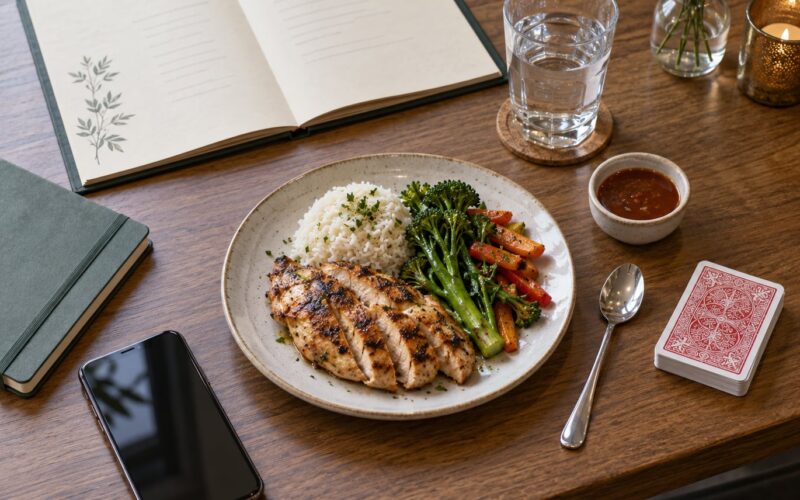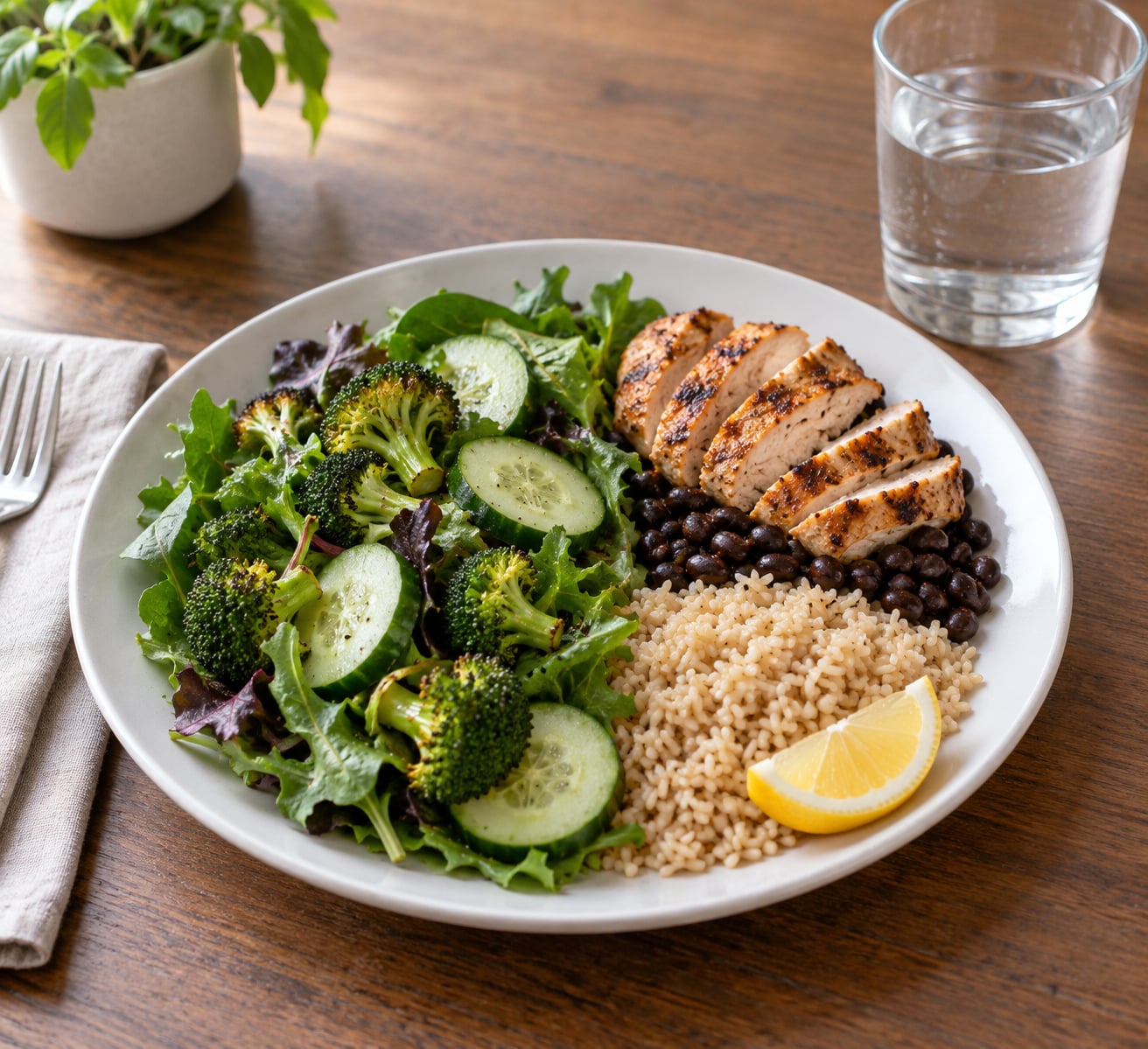
To build a healthy plate at a buffet, walk the whole line once before you pick up anything, then fill half the plate with non-starchy vegetables and fruit, one quarter with a palm-sized portion of lean protein, and the remaining quarter with a measured serving of rice, potatoes, bread or another complex carbohydrate. Everything else on the buffet, sauces, creamy dishes, fried items and dessert, is an accent you add at the end rather than the base of the plate. It takes about two minutes of planning and one trip through the line.
The reason a buffet needs a formula is that self-service removes the stopping signal. Nobody measures a scoop of rice, so portion size becomes whatever your hand decides, and the visual pile of food in front of you quietly does the rest. A fixed ratio puts one decision at the start of the line instead of ten small ones at the table.
People following a plan worry that one meal ruins a good week. It rarely does. What matters more is that you build the same plate each time, so buffets become one normal meal rather than an event that happens to you.
Table of Contents
- What You Need
- Step-by-Step: How to Build a Healthy Plate at a Buffet
- Start With a Scan Before You Serve Yourself
- Fill Half the Plate With Vegetables and Fruit
- Choose One Clear Protein Portion
- Add a Small Serving of a Carbohydrate
- Use Sauces, Creamy Dishes, and Fried Foods as Accents
- Sit Down, Eat Slowly, and Check Your Plate
- Common Mistakes
- Frequently Asked Questions
- What should I put on my plate first at a buffet?
- How much food should I take at a buffet?
- Is salad a healthy buffet choice on its own?
- How can I eat bread, desserts, or sauces at a buffet while managing portions?
- Can I take buffet food home for the next meal?
- What should I do if the buffet has few healthy food options?
- What to Do After the Buffet Meal
What You Need
You need three things, and two of them are decisions rather than equipment.
- A small plate. A 9-inch plate is more useful than a 12-inch one at a buffet. If you take a large plate, you can still use it well by only filling the middle and keeping a visible rim of empty plate around the food.
- A selection order. Decide before you reach the first dish: vegetables first, protein second, carbohydrate third. Choosing in that order means the most appealing item on the line stops being your first decision.
- A rough map of the food groups. You should be able to point to the vegetables, the protein and the grains without thinking about it.
If the buffet has no small plates, take two side dishes instead of piling one. A scoop of beans and a small plate of salad gives you more control than a heaped dinner plate, and most buffets let you mix and match sizes freely.
You also do not need any of this to be precise. A rough half-and-quarter split is enough to change the meal. If a registered dietitian has given you individual targets, follow those instead of the general split here.
Step-by-Step: How to Build a Healthy Plate at a Buffet
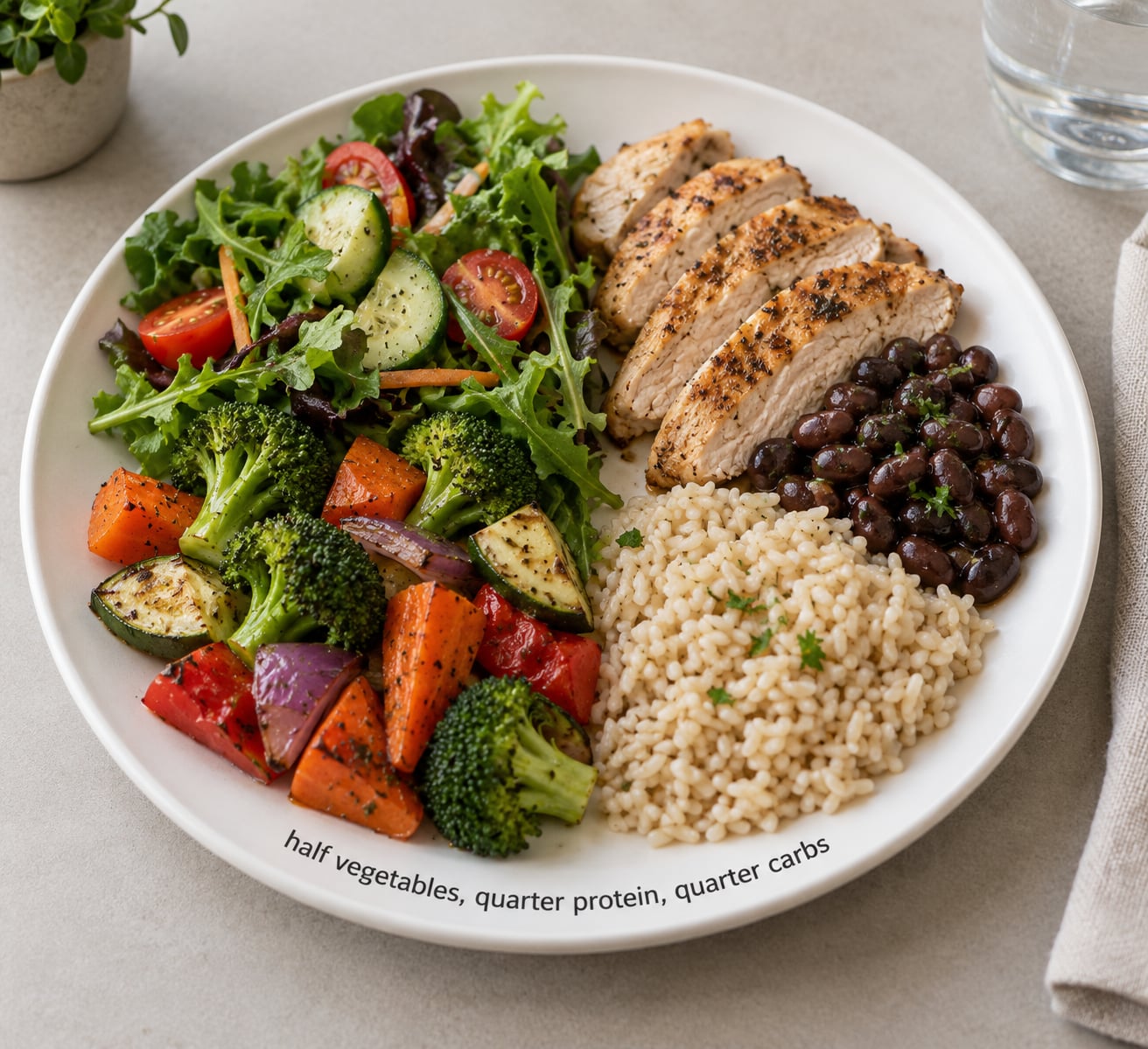
Buffets vary wildly, so the steps below describe a generic line. Adjust the order to match whatever is actually out there, but keep the sequence.
Start With a Scan Before You Serve Yourself
Walk the entire buffet once with an empty plate, or in line without serving yourself, and see what exists. Look for fresh vegetables and salad, a protein station with fish, chicken, beans or tofu, something with whole grains or rice, a bowl of fruit, and a clear broth-based soup if there is one.
That single lap prevents the most common failure, which is eight small portions of whatever came up first. It also tells you whether the line is worth the trouble before you have filled anything.
Fill Half the Plate With Vegetables and Fruit
Start with the least cooked, highest-volume food on the line. Roasted vegetables, steamed greens, cucumber, tomato, peppers, broccoli and a piece of whole fruit all work. Build a bed of these first so the protein and starch sit on top of something bulky rather than forming the foundation of the plate.
Salad greens on their own often are not enough. They are low in energy but low in protein and fiber too, so a plate of lettuce with a drizzle of dressing leaves you hungry twenty minutes later. Two or three different vegetables plus a piece of fruit gives you more color, more fiber and a fuller plate for roughly the same calories.
Broth-based soups count here as well. They add volume and warmth with very little energy, which is why they are a common pick at catered lunches.
Choose One Clear Protein Portion
Pick one protein and take a portion you can see the size of. A palm-sized piece of fish, chicken or lean meat, about three to four ounces, is a reasonable reference, as is a ladle of beans or lentils rather than a shallow scoop.
Buffet proteins are usually served generously, so the serving spoon itself can hand you double what you intended. Use the serving utensil to lift food onto your plate instead of tilting the container, and resist the second ladle.
Grilled, steamed, roasted and stir-fried options are the ones to favor. Fried or heavily battered versions can carry several times the energy of the plain version for a similar portion.
Add a Small Serving of a Carbohydrate
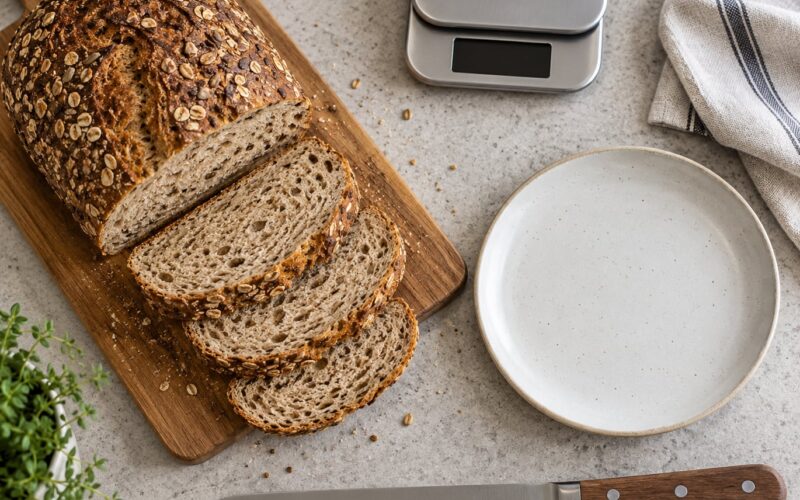
Take a measured serving of one carbohydrate. A cup of rice, a medium baked potato, one or two slices of bread or a small tortilla is enough to round out the plate and steady your energy for the rest of the afternoon.
Choose the version that is not swimming in sauce or oil, and skip the fried versions when a baked or steamed one is available. Whole grains such as brown rice, quinoa or bulgur hold up better through a long buffet lunch than white bread or a heavy pasta dish.
Keep it to one starch. The trouble at most buffets is not the rice, it is the rice plus the bread roll plus the pasta salad plus the potato.
Use Sauces, Creamy Dishes, and Fried Foods as Accents
Now add the extras, and treat them as accents. Take a spoonful of a creamy casserole, a couple of pieces of fried food, or a small ladle of a rich sauce, and let them occupy a small part of what is left on the plate.
Buffet dressing and sauce ladles have no portion markers, so they are the easiest place to add a large amount of something rich without noticing. If a dish is good but heavy, take a small serving and enjoy it rather than avoiding it entirely. The all-or-nothing rule is what tends to end in a second plate.
For drinks, water or sparkling water works, along with unsweetened tea or coffee. Sugary drinks and heavy pours of juice add energy with no fiber and no fullness, which is the part that tends to show up as weight gain the next morning rather than as fullness that night.
Sit Down, Eat Slowly, and Check Your Plate
Take the plate away from the line and sit somewhere that is not standing room. The first few bites matter most because they are eaten fast, and fullness signals need time to catch up with what you have already eaten.
Eat the vegetables and the protein before the starch and the extras. Halfway through, put the fork down and ask whether you are still hungry or just finishing what is in front of you. That pause is often where people discover they were satisfied two bites earlier.
If you want to save part of the meal for later, take that decision now rather than after three more bites, when asking a server for a container tends to feel too much like a request.
Common Mistakes
Most buffet plate problems come from the same handful of habits, and each has a straightforward correction.
Skipping vegetables entirely. If the plate is protein, starch and something creamy, energy density is high and you will want seconds before you feel satisfied. Correct it by adding two vegetables before anything else goes on the plate.
Choosing salad and stopping. A plate of greens with light dressing is not a balanced meal. Add a palm-sized protein and one carbohydrate to the salad rather than treating it as the whole plate.
Oversized protein portions. Buffet serving spoons and carving slices are sized for hospitality, not for one person. Take less than looks right, eat slowly, and add more only if you are genuinely hungry afterward.
Loading the plate with several starches. Rice, bread, potatoes, pasta and fritters at once is the most common way a balanced buffet plate becomes a heavy one. Keep one carbohydrate and send the rest back.
Grazing in the line. Tasting three things before choosing is how a small plate becomes a large one. Decide first, then serve yourself once.
Eating fast because the line is moving. Standing and eating is the reason buffets feel bigger than they were. Sit down, start with the vegetables and protein, and give the meal fifteen minutes before deciding whether you need anything else.
A few general tips round this out. Eat a normal meal earlier in the day rather than skipping food to save room, because arriving hungry is the strongest predictor of overeating. Walk the line once. Fill your plate once, then judge. And if you are counting calories, treat the buffet as a maintenance meal rather than trying to log every scoop, since labels and portion sizes are genuinely unreliable there.
Frequently Asked Questions
What should I put on my plate first at a buffet?
Start with vegetables and fruit. Non-starchy options like roasted vegetables, greens, cucumber, tomato and peppers add volume and fiber for very few calories, and they form a base that keeps protein and starch from filling the whole plate. If you want something warm, a clear broth-based soup works as the first addition. Going first with vegetables is what makes the rest of the plate easy to balance.
How much food should I take at a buffet?
One plate, built in a fixed ratio, is a good default. Fill about half with vegetables and fruit, one quarter with a palm-sized portion of lean protein, and one quarter with a measured serving of a carbohydrate such as rice or a baked potato. Buffet portions are often larger than home portions, so serving utensils rather than tilting the tray gives you a better sense of amount.
Is salad a healthy buffet choice on its own?
On its own, usually not enough. Salad greens are low in energy but also low in protein and fiber, so a plain plate of lettuce with light dressing leaves many people hungry within twenty minutes. A better version adds two or three different vegetables for color and variety, a palm-sized protein such as chicken, tuna or beans, and one carbohydrate. Then the salad is a plate rather than a side.
How can I eat bread, desserts, or sauces at a buffet while managing portions?
Give them a defined place on the plate instead of treating them as a problem. One or two slices of bread, one small dessert, or a spoonful of sauce fits comfortably in the space left after vegetables, protein and one carbohydrate. Take the amount you want, eat it with the rest of the meal rather than as an extra course, and avoid the all-or-nothing approach, which is what tends to end in a second plate.
Can I take buffet food home for the next meal?
In many cases, yes, and it is a useful way to make the meal worth its cost. Ask a server to pack what you are not eating rather than waiting until you are full and the plate looks finished. Refrigerate leftovers within two hours, and use them within three to four days. Items that sat on a warm line for a long time are better left behind, and seafood and cream-based dishes are the ones most likely not to travel well.
What should I do if the buffet has few healthy food options?
Work with what is there rather than filling the plate with the least-bad item. A plain salad, a clear broth-based soup, a baked potato, a hard-boiled egg, whole fruit and a protein dish with sauce on the side can be combined into a balanced plate even when the vegetable selection is thin. Skip the creamy casseroles and fried sides, take a smaller plate, and eat slowly. If options are genuinely poor, eat lightly and choose a lighter meal later rather than compensating the next day.
What to Do After the Buffet Meal
The rest of your day is not a penalty. Eat your next usual meal, drink water, and go back to your normal routine rather than skipping meals to make up for it.
Compensating tends to produce a worse next meal and a worse week than the buffet ever did. The useful thing to remember is the plate itself: the next time you face a buffet line, walk it once, fill half the plate with vegetables, add one palm-sized protein and one measured starch, and sit down.
This is general nutrition information. If you are managing diabetes, cholesterol or a diagnosed condition, or you are tracking calories with a specific target, a registered dietitian can adapt the ratios to your situation.