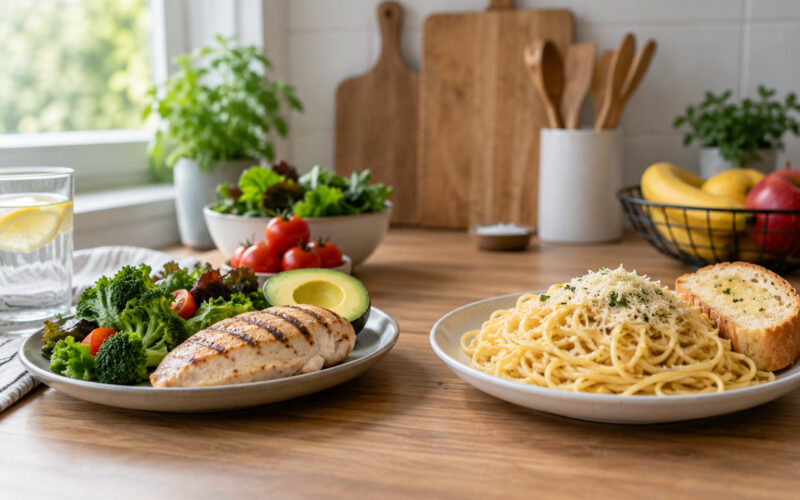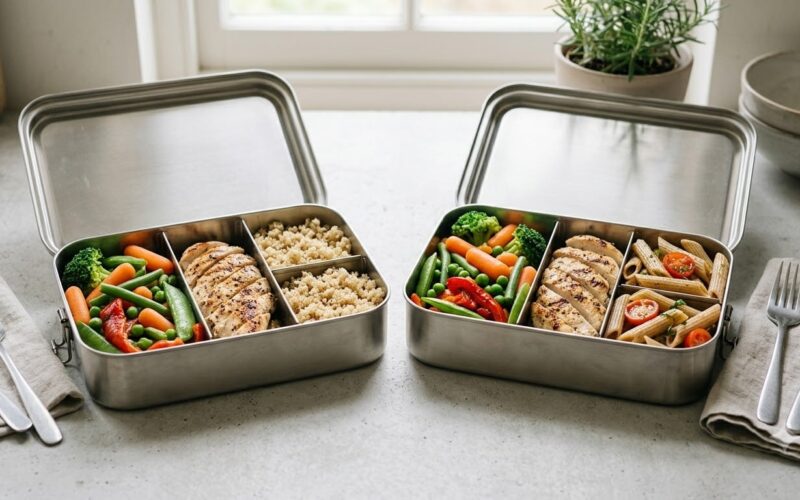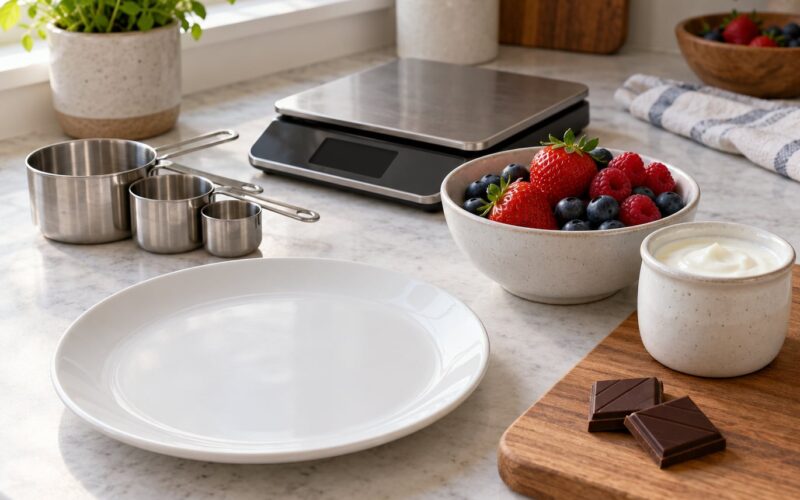
To satisfy cravings with fewer calories, eat foods that are high in water, fiber, and protein, so you get the volume and fullness signal without the calories that come with fat and sugar. Then handle the real craving with a planned, smaller portion of what you actually wanted. Most people who struggle with cravings are not short on willpower; they are short on satisfying food and a plan.
Think of it as two moves instead of one. The first move keeps you full enough that the craving never gets loud. The second move gives you a portion of the thing you genuinely want, so you are not fighting the craving for the rest of the day.
A note before we start: this is general nutrition information, not medical advice. If you have diabetes, a history of disordered eating, are pregnant, or take medication that affects appetite, talk to your doctor or a registered dietitian nutritionist before changing how you eat.
Table of Contents
- What You Need
- Step-by-Step: How to Satisfy Cravings With Fewer Calories
- 1. Identify What Kind of Craving You Have
- 2. Drink Water and Wait Ten Minutes
- 3. Build a Smaller, More Satisfying Portion
- 4. Add Protein, Fiber, or Crunch
- 5. Plan a Controlled Craving Window
- 6. Satisfy Cravings With Fewer Calories by Swapping One Thing
- 7. Plan What Happens After One Craving Episode
- Common Mistakes
- Frequently Asked Questions
- Do artificial sweeteners help me satisfy cravings with fewer calories?
- What can I eat when I crave sweets at night?
- How many calories should I eat when trying to lose weight?
- Can exercise cancel out a high-calorie craving food?
- How long should I wait before acting on a food craving?
- Conclusion
What You Need
You do not need a special diet, a supplement, or a membership in anything. You need four things within arm’s reach, and all of them are ordinary grocery items.
- Water. A glass you can drink without leaving the room. Most afternoon cravings arrive disguised as thirst.
- One high-protein food. Plain Greek yogurt, boiled eggs, edamame, cottage cheese, or string cheese. Protein is the macronutrient that keeps you full longest per calorie.
- Two or three vegetables you actually like. Cucumbers, carrots, cherry tomatoes, bell peppers. Raw or with a dip, they are the volume workhorses.
- One craving food you are willing to portion out. The chocolate, the chips, the ice cream. Keeping it out of the house entirely works for some people and fails badly for others, because a full ban is the fastest route to the restriction-then-binge loop.
If you want numbers instead of vibes, most dietitians suggest keeping a craving swap in the 100 to 200 calorie range. That is enough to feel like a real snack rather than a token.
Step-by-Step: How to Satisfy Cravings With Fewer Calories
1. Identify What Kind of Craving You Have
The mistake is treating every craving the same way. A craving for salt and a craving for chocolate do not come from the same place, and they do not respond to the same fix. Before you eat anything, write down four things in your phone: the time, how you feel, where you are, and the flavor or texture you want.
Then match the cause to the response.
- Hunger. A growling stomach, low energy, and it has been four hours or more. Eat a real meal, not a workaround.
- Thirst. Dry mouth, headache, mild fatigue. Drink water first and reassess.
- Boredom. Nothing specific sounds good, you just want something to do with your hands. This one does not need food at all.
- Stress or a hard day. The craving shows up the moment you open your laptop. It is a comfort response, not a hunger signal.
- Habit. Same time, same place, same item. You are on autopilot, not hungry.
- A true food craving. You can name the specific food and the texture. This is the one worth satisfying on purpose.
You will know the match worked because the reason you ate matches what you actually felt. If you were thirsty and you drank water, there is no follow-up craving twenty minutes later.
2. Drink Water and Wait Ten Minutes
This is the cheapest step and the one people skip. Drink a full glass of water, then set a ten-minute timer and do something that keeps your hands busy. Make tea, walk to the mailbox, brush your teeth, stand up and stretch.
The ten minutes matter more than people expect. A craving that peaks quickly also fades quickly if you do not feed it immediately. Most of the time you come back to the timer and find the intensity has dropped from a nine to a four. You can also tell whether it was thirst, because a craving born of dry mouth usually disappears entirely.
What counts as something to do with your hands: a short walk, a phone call, a glass of ice water, or simply making the next drink you were going to have anyway. What does not count: standing in front of an open refrigerator.
3. Build a Smaller, More Satisfying Portion
Once you decide you genuinely want the food, eat it. Just eat less of it and eat it properly. Put it in a smaller bowl, serve a single portion, and take at least ten or fifteen minutes to finish it. Savoring works because part of what makes a craving appealing is the ritual around it, not only the taste.
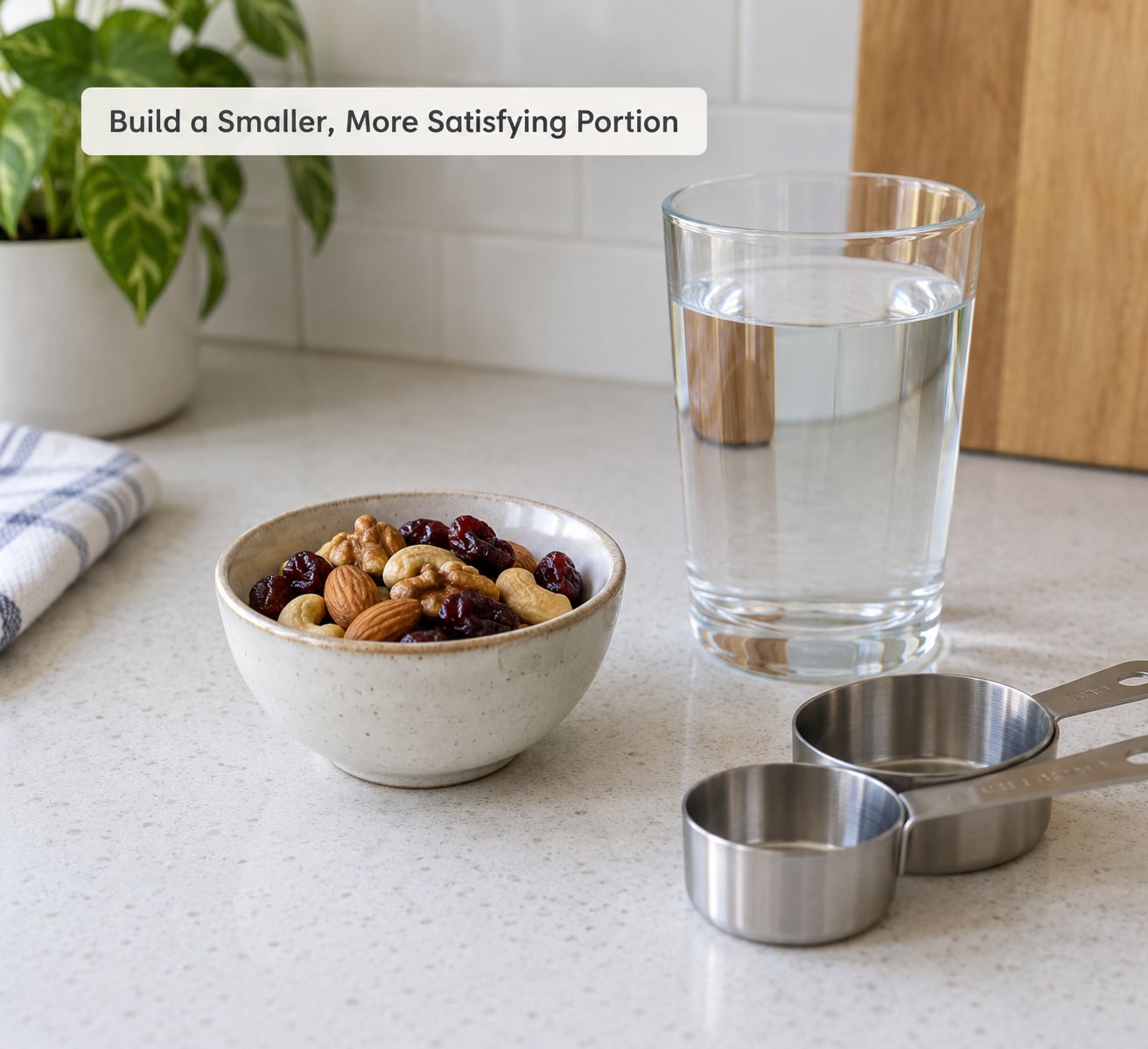
Three habits do most of the work here. Portion before you sit down, not after. Put the package back in the cabinet immediately, because an open bag on the counter is how a planned portion quietly becomes half a bag. And avoid eating it while watching something, since distracted eating is the main reason a portion feels bigger than it is.
You will know this worked if you finish the portion and stop, rather than finish it and immediately reach for more. If you are still hungry ten minutes after a smaller serving, go to the next step rather than the cupboard.
4. Add Protein, Fiber, or Crunch
Protein, fiber, water, and crunch all extend how satisfied you feel, so the same portion stretches further. This is the most direct way to satisfy cravings with fewer calories without white-knuckling it.
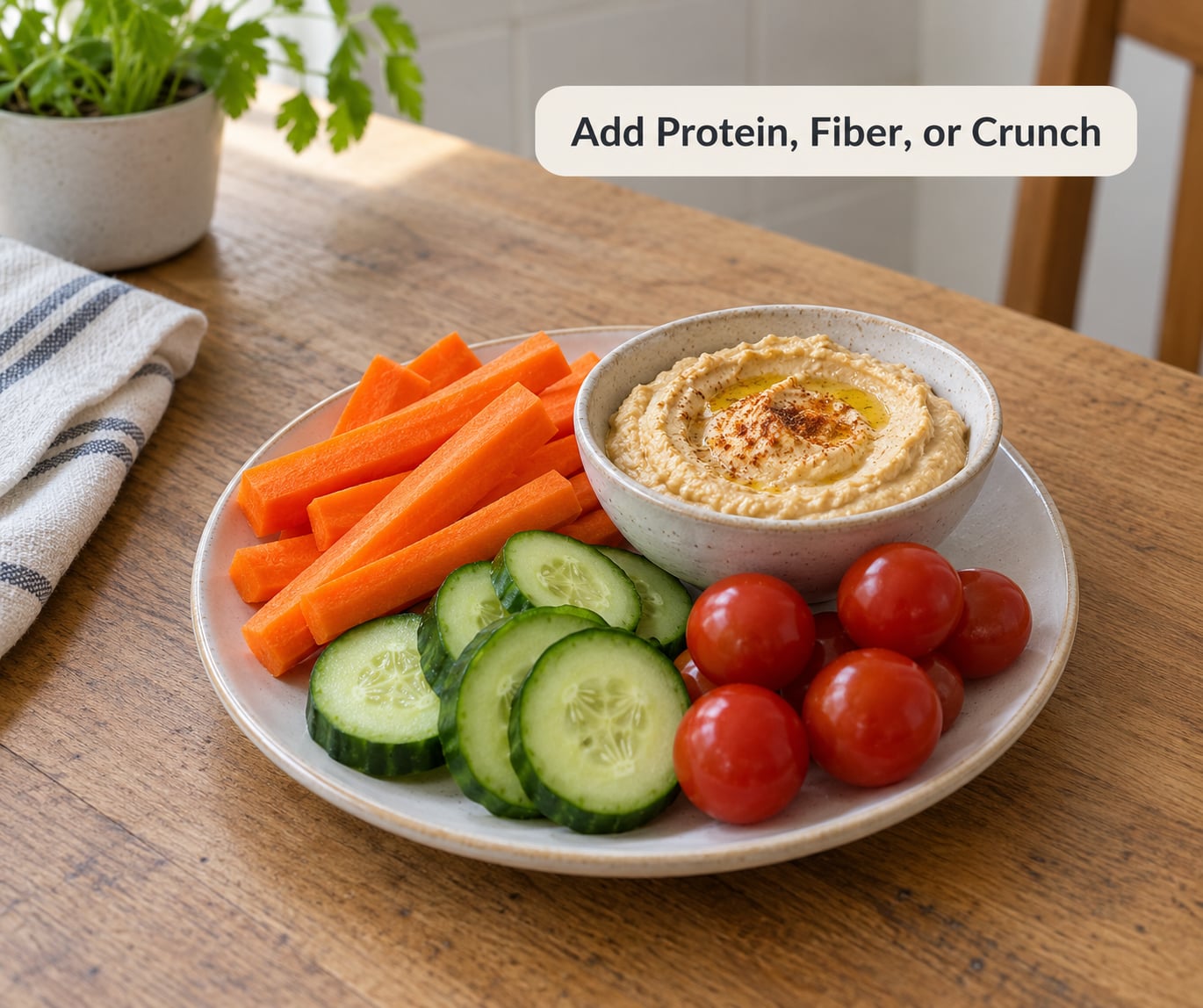
Pair the craving food with something from this list rather than eating it alone.
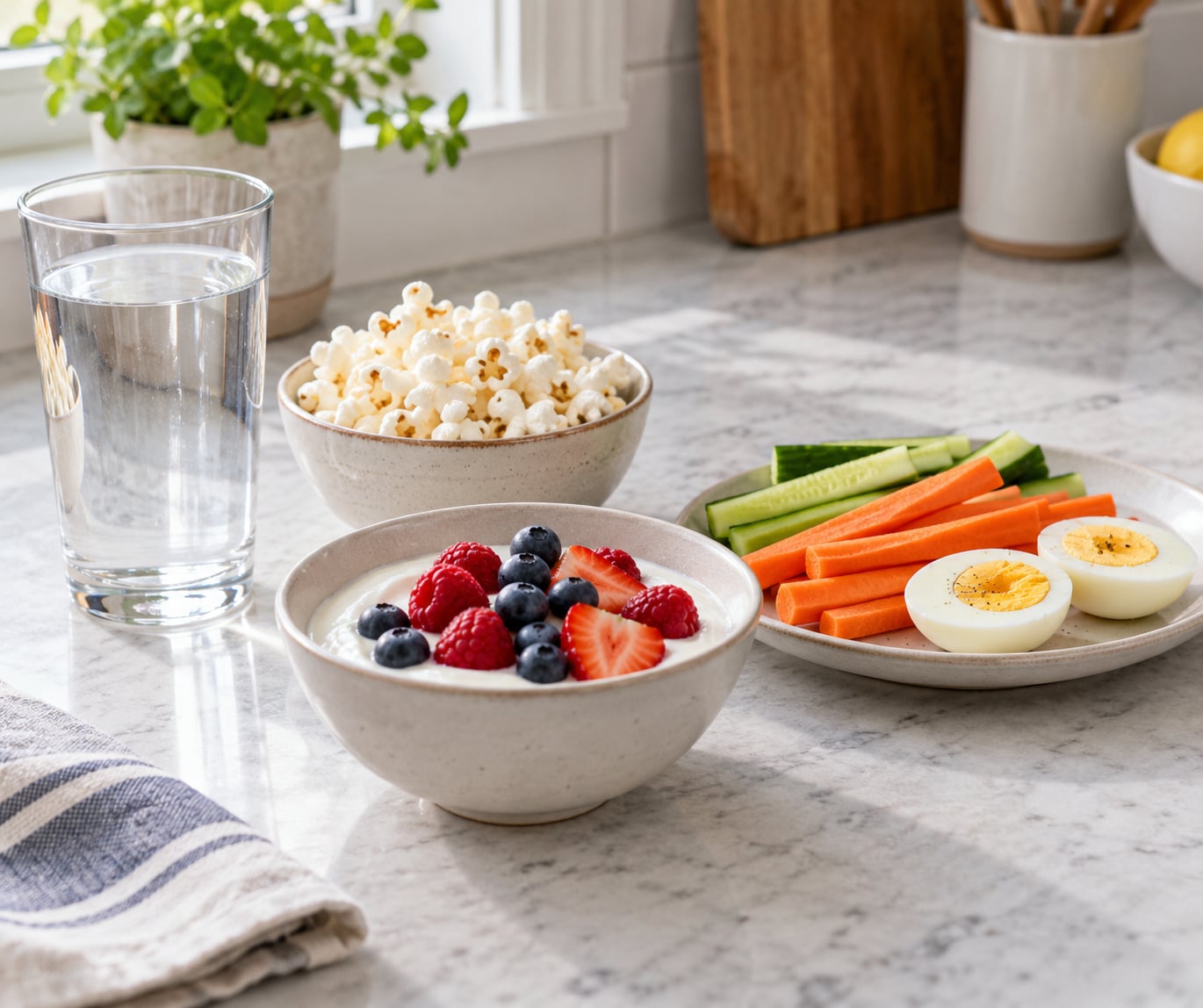
- Fruit with plain Greek yogurt instead of ice cream.
- Carrots, cucumber, or cherry tomatoes with hummus instead of chips and dip portions from the bag.
- Air-popped popcorn with a boiled egg if the craving is salty and you want volume.
- Roasted broccoli, mushrooms, or green beans tossed with a little salt, which gives you the crunch and the salt hit for roughly 30 calories per 100 grams.
- Edamame in the shell, which is protein and fiber in something that takes real time to eat.
Texture is doing more work than people expect. Forums like Reddit’s r/LowCalorieCooking and r/1200isplenty repeat the same point over and over: a swap only works when it matches what you were hungry for. Crunchy for crunchy, creamy for creamy. A crunchy vegetable with salt satisfies a potato chip craving far better than a soft baked apple chip.
5. Plan a Controlled Craving Window
Unplanned snacks are how a good day turns into a blown budget, usually because the decision gets made at 8pm when you are tired and not thinking clearly. Plan it instead. Pick the time, the place, the portion, and what happens after, and write it down. A snack scheduled for 4pm is a snack. A snack decided at 9pm while scrolling is a different event entirely.
Make the window regular, then be flexible inside it. People who keep the weight off long-term tend to describe a planned weekly treat rather than a permanent ban, and they treat it as a normal event instead of a failure to be logged.
A short walk after the planned snack works well for a lot of people. It is not about burning anything off; it is a quiet transition that ends the eating episode and moves you on to whatever comes next.
6. Satisfy Cravings With Fewer Calories by Swapping One Thing
When you want the flavor or texture of the craved food, rebuild it with a lower-calorie version. Change one or two things, not the whole dish, because a swap that tastes nothing like the original will not survive week two.
- Chocolate ice cream. Frozen banana blended with a splash of milk and a little cocoa powder. The result is creamy and chocolate-adjacent for a fraction of the calories.
- Nighttime sweets. Tea with a small amount of sweetener, or a bowl of plain popcorn with cocoa powder stirred through it.
- Chips. Air-popped popcorn with salt, or roasted vegetables tossed in oil and salt for the crunch.
- Creamy dips. Thick Greek yogurt blended with herbs, garlic, and lemon for a dip with the same scoopability.
- Sweetened yogurt and cereal. Check the label; flavored varieties can carry as much added sugar as dessert. Plain versions with your own fruit are usually the better deal.
One honest warning: homemade does not automatically mean fewer calories. A homemade version with oil, sugar, and nut butter can out-calorie the store-bought version it was meant to beat. Compare the label, or compare the recipe math, before you assume a win.
7. Plan What Happens After One Craving Episode
Everyone overshoots sometimes. What matters is what happens in the next hour. The fastest way to lose ground is the all-or-nothing response: eat a big amount, feel bad, skip meals to compensate, and end up hungrier the following day.
Instead, do three things. Note the trigger honestly, and write it down. Return to your next planned meal as if nothing happened, with no fasting and no punishing workouts. Then adjust exactly one thing for next time, because a real person changes one variable and sees whether it helps.
A single episode has almost no effect on a week’s total. A spiral that lasts three days does. Treating the first one as data instead of failure is the whole skill.
Common Mistakes
Skipping meals to “save” calories for the craving. By the time the craving arrives you are under-fueled, and under-fueled plus a trigger food is how the biggest binges happen. Fix: eat regular meals with protein, and treat the craving as a separate small event.
Assuming fat-free or diet products are automatically low calorie. Many “light” products replace sugar with fat and end up with a similar total. Fix: read the nutrition label for the actual number instead of trusting the front of the package.
Banning every favorite food. Restriction builds pressure, and pressure eventually leaks. Fix: pick one food you love, decide on a weekly portion, and let it be a normal part of the plan rather than a contraband item.
Drinking calories without noticing. Sweet coffee, juice, and flavored waters can quietly add up across a day. Fix: check what is in your mug, not just what is on your plate.
Trying to outrun food with exercise. Exercise is worth doing for itself, but using it to erase a snack tends to end in a worse evening than the snack did. Fix: eat the portion, log it, move on.
Keeping only “healthy” snacks around. Many foods marketed as healthy are calorie-dense in the handful, like nuts, granola, and crackers. Fix: keep at least one food you genuinely enjoy, in a pre-portioned amount.
Three habits do most of the maintenance work: pre-portion once a week, keep one high-protein food within reach at all times, and write the craving down before you act on it. That is enough to run on.
Frequently Asked Questions
Do artificial sweeteners help me satisfy cravings with fewer calories?
They help some people, and they are useless for others. Non-nutritive sweeteners add few or no calories, which can help when the craving is specifically about sugar and flavor. But many people find that a diet soda or a very sweet yogurt triggers more snacking afterward, and evidence on long-term use is still mixed. If you use them, keep total sweetness moderate and pair the drink or snack with protein and fiber rather than using it to stand alone.
What can I eat when I crave sweets at night?
Start with something that covers the sweetness and the ritual. A small bowl of air-popped popcorn with cocoa powder stirred through it gives you a crunchy sweet hit for about 100 calories for three cups. Plain yogurt with a spoonful of low-sugar fruit, or a small piece of dark chocolate, also works. The most reliable options are a cup of tea and a planned portion of the real thing, eaten away from the couch.
How many calories should I eat when trying to lose weight?
There is no single number that is right for every adult. Needs vary widely with age, sex, height, activity level, and health conditions, and typical weight-loss plans tend to land between 1200 and 1800 calories for most women and 1500 and 2200 for most men, according to common clinical guidance. Rather than guessing, ask your doctor or a registered dietitian nutritionist for a number based on your own situation.
Can exercise cancel out a high-calorie craving food?
Not in any useful sense. A short walk will make you feel better and can take the edge off a craving, but you would have to do a very large amount of exercise to offset a dessert, and researchers generally describe that as a poor trade. Using exercise to erase food tends to create a guilt loop rather than a habit. Walk because it helps your mood and your routine, not as a penalty.
How long should I wait before acting on a food craving?
Ten minutes is the practical minimum, and 15 to 20 minutes is closer to how long most cravings naturally peak and fade. Drink a glass of water, change rooms, or take a short walk, then check in honestly with yourself. If you are still hungry at the end of the wait, eat a planned portion rather than white-knuckling it. The goal is to notice the wave, not to suppress it.
Conclusion
Start tomorrow with one recurring craving. Write down what triggered it, what kind of craving it was, and pick a single response: a ten-minute wait, a smaller portion, or a swap that adds protein, fiber, or crunch. Then note how it went.
One good strategy applied most days beats a perfect plan followed for four days. And if cravings are running your day rather than occasionally interrupting it, that is worth raising with a doctor or registered dietitian nutritionist, who can look at sleep, stress, medication, and hormones rather than just the food.